Category: Artificial Intelligence

  • Top 8 Fastest-Growing AI Careers to Watch in 2025

    Top 8 Fastest-Growing AI Careers to Watch in 2025

    The artificial intelligence industry is evolving at an unprecedented pace, creating a wave of new, high-demand job roles. Professionals looking to future-proof their careers should consider specializing in one of these rapidly growing AI positions. Below, we break down the key roles that are shaping the future of technology.

    AI Engineer

    AI Engineers design, develop, and deploy intelligent applications that leverage machine learning, cloud platforms, and automation. They solve complex business challenges by building scalable AI systems that drive efficiency and innovation.

    Machine Learning Engineer

    Machine Learning Engineers create predictive models and self-learning algorithms that power recommendation engines, fraud detection, automated decision-making, and operational optimization across industries.

    Generative AI Engineer

    Generative AI Engineers build chatbots, virtual assistants, content generators, and enterprise solutions using large language models, prompt engineering, and retrieval-augmented generation techniques.

    Data Scientist

    Data Scientists extract actionable insights from massive datasets using statistics, machine learning, and visualization. Their work supports strategic business decisions and drives innovation.

    AI Research Scientist

    AI Research Scientists conduct advanced research in deep learning, natural language processing, and reinforcement learning to develop next-generation AI models and technologies.

    AI Product Manager

    AI Product Managers bridge business objectives and technical development. They define product strategies, coordinate teams, prioritize features, and ensure successful AI product delivery.

    Prompt Engineer

    Prompt Engineers craft optimized prompts that improve AI-generated responses, increase model accuracy, and streamline enterprise workflows across diverse applications.

    AI Ethics Specialist

    AI Ethics Specialists ensure AI systems remain fair, transparent, secure, and compliant by implementing responsible AI practices, governance frameworks, and regulatory standards.

    Computer Vision Engineer

    Computer Vision Engineers develop AI systems that analyze images and videos, enabling breakthroughs in autonomous vehicles, healthcare diagnostics, robotics, surveillance, and industrial automation.

    As AI continues to reshape industries, these roles offer exciting opportunities for growth and innovation. Staying current with emerging skills and technologies is essential for success in this dynamic field.

  • How AI Is Revolutionizing Lifelong Learning Across Industries in 2026

    How AI Is Revolutionizing Lifelong Learning Across Industries in 2026

    Artificial intelligence is reshaping lifelong learning by making education more personalized, accessible, and skill-focused in 2026. AI-powered learning platforms now adapt lessons based on individual progress, enabling learners to master concepts at their own pace.

    Professionals are leveraging AI assistants to acquire coding, business, marketing, design, and communication skills faster than ever before. Companies are adopting AI-driven training programs to help employees reskill for emerging technologies and evolving job roles. Universities and online education providers are integrating AI tutors that deliver instant feedback and personalized study support.

    Industries such as healthcare, finance, manufacturing, and retail are utilizing AI learning tools to boost workforce productivity and ensure compliance. Generative AI helps learners create summaries, practice interviews, solve problems, and prepare for professional certifications. Experts recommend balancing AI assistance with critical thinking, fact-checking, and practical experience to build lasting skills.

    As AI continues to evolve, lifelong learning is becoming an essential strategy for career growth and staying competitive across every industry.

  • Top Advanced Humanoid Robots Shaping the Future of Automation and AI

    Top Advanced Humanoid Robots Shaping the Future of Automation and AI

    The field of humanoid robotics has seen remarkable advancements, with robots now capable of performing complex tasks in industrial, research, and commercial settings. Below is a look at the world’s most advanced humanoid robots and their unique capabilities.

    Tesla Optimus

    Designed to handle repetitive workplace tasks, Tesla Optimus leverages advanced artificial intelligence, autonomous movement, and human-like dexterity for industrial applications worldwide.

    Figure 02

    Built for manufacturing environments, Figure 02 combines AI reasoning, natural conversations, precise manipulation, and autonomous task execution inside modern industrial facilities.

    Boston Dynamics Atlas

    Boston Dynamics Atlas demonstrates remarkable agility through running, jumping, lifting, balancing, and performing complex physical tasks with advanced robotic intelligence and control.

    Unitree G1

    Unitree G1 offers affordable humanoid robotics featuring agile movement, AI-powered capabilities, and versatile applications across research, education, and commercial development environments.

    Agility Robotics Digit

    Engineered for warehouse logistics, Agility Robotics Digit can lift packages, navigate obstacles, and assist human workers with repetitive operational tasks efficiently.

    Sanctuary AI Phoenix

    Sanctuary AI Phoenix focuses on general-purpose intelligence, enabling robots to perform human-like tasks using advanced AI reasoning and adaptable physical capabilities daily.

    Engineered Arts Ameca

    Engineered Arts Ameca is famous for lifelike facial expressions, realistic interactions, advanced conversational abilities, and demonstrations that showcase human-robot communication and emotional engagement effectively.

    Xiaomi CyberOne

    Xiaomi CyberOne combines AI vision, speech recognition, human motion sensing, and balanced walking to demonstrate China’s progress in humanoid robotics innovation.

    UBTECH Walker S2

    Developed for smart factories, UBTECH Walker S2 integrates autonomous mobility, object handling, collaborative operations, and intelligent manufacturing support with advanced robotic capabilities.

  • iOS 27 Public Beta Now Available: Siri AI Leads New Features—Check iPhone Compatibility

    iOS 27 Public Beta Now Available: Siri AI Leads New Features—Check iPhone Compatibility

    Apple has officially released the iOS 27 public beta, giving users an early look at the next-generation operating system ahead of its stable launch later this year. The headline feature is Siri AI, a redesigned, more intelligent assistant that brings deeper on-device processing, improved contextual understanding, and more natural conversations. The update also includes Apple Intelligence enhancements, performance improvements, and several interface upgrades.

    Siri AI: The Core of iOS 27

    The most exciting addition in iOS 27 is the new Siri AI. Unlike previous versions, this assistant can understand context, identify on-screen information, and perform complex multi-step tasks across Apple’s native apps. Users can ask Siri to locate a specific email, find a particular photo, create notes from messages, summarize content, or complete other multi-stage requests without switching apps. Natural language understanding has also been significantly improved. While the feature is available in the beta, compatibility with third-party apps will expand over time.

    This public beta offers the first opportunity for non-developers to experience Apple’s latest AI capabilities. Experts recommend backing up your device before installing the beta software.

    Other Features Coming in iOS 27

    Beyond Siri AI, iOS 27 introduces AI-powered photo editing, faster search in Photos, improvements to Camera and Messages, overall system performance optimizations, and security enhancements. Apple is clearly focused on delivering AI-driven experiences and refining performance.

    How to Download iOS 27 Public Beta

    To install the beta, sign in to Apple’s Beta Software Program with your Apple ID. Then go to Settings > General > Software Update > Beta Updates, select iOS 27 Public Beta, and begin the installation. Apple advises making a full device backup before upgrading, as beta versions may contain bugs and are incomplete.

    iPhone Compatibility

    iOS 27 supports many iPhone models, but Apple Intelligence and Siri AI require newer hardware. Older iPhones that support iOS 27 may not have access to all of Apple Intelligence’s capabilities. Check Apple’s official list to see if your device is eligible for the full experience.

  • Apple’s Biggest AI Upgrade Yet: Smarter Siri Arrives Across 5 Platforms

    Apple’s Biggest AI Upgrade Yet: Smarter Siri Arrives Across 5 Platforms

    Apple Intelligence is getting its most significant update to date, with a smarter Siri now spanning iPhone, iPad, Mac, Apple Watch, and Vision Pro. The upgrade brings enhanced conversational abilities, deeper app integration, and new features like Visual Intelligence, Live Translation, and stronger privacy protections.

    Originally introduced alongside iOS 18 in 2024, Apple Intelligence has evolved to deliver on its promise of an AI-powered personal assistant. The latest software cycle—iOS 27, iPadOS 27, macOS 27, watchOS 27, and visionOS 27—finally rolls out the previously delayed Siri improvements. Apple now positions Siri as a digital companion that understands personal context, moving beyond simple voice commands.

    Siri Gets Smarter

    The redesigned Siri can search across messages, emails, calendars, photos, and supported apps, then perform actions spanning multiple apps simultaneously. For example, it can pull restaurant recommendations from old texts, retrieve hotel confirmations from email, and locate travel photos without manual searching. For broader questions, Siri now pulls current information from the web.

    Apple Intelligence also integrates intelligent tools throughout the operating system. Writing tools offer proofreading, rewriting, summarizing, and content generation, alongside faster dictation. Image Playground generates original artwork in various styles, while Genmoji creates custom emoji from text prompts. The Photos app now includes object removal, natural language search, and AI-assisted memory creation.

    New Features Across Devices

    Visual Intelligence lets users interact with whatever appears on screen—screenshots, photos, and webpages all become searchable through plain-language prompts. Apple is also adding receipt recognition, aimed at simplifying bill-splitting in future updates. Live Translation adds real-time translation to Messages, FaceTime, and Phone calls. Shortcuts now builds automations from plain-English descriptions. Accessibility tools gain richer image descriptions, smarter Voice Control, and instant reading summaries.

    Hardware limitations remain, as the underlying models require significant processing power. Support covers iPhone 15 Pro and newer, iPad models with A17 Pro or M-series chips, and Apple Silicon Macs. Apple’s most capable on-device model is reserved for select premium hardware with higher memory.

    Privacy and Availability

    Rollout timing varies by region. Siri’s upgraded features won’t launch immediately in the European Union, citing privacy considerations, and China remains outside the initial rollout. Apple says it continues expanding language support elsewhere. Privacy remains a central focus: most requests are processed on-device, while heavier tasks route through Private Cloud Compute without retaining personal data.

  • Best AI Story Writers for Sci-Fi Worldbuilding and Long-Form Novels in 2026

    Best AI Story Writers for Sci-Fi Worldbuilding and Long-Form Novels in 2026

    Science fiction writers face unique challenges: dozens of characters, multiple planets, fictional technologies, political systems, timelines, and invented languages. Maintaining consistency across hundreds of pages is often the hardest part. AI writing assistants have evolved rapidly to address these demands, offering tools for worldbuilding, long-context memory, and story planning.

    This comparison explores the leading AI story-writing platforms—DreamGen, Sudowrite, NovelAI, NovelCrafter, ChatGPT Plus, and Claude—to help you choose the right tool for your creative projects.

    Comparison of Leading AI Story Writers

    DreamGen: Best for Complex Fictional Worlds

    DreamGen excels at creating expansive sci-fi universes. Its Scenario Codex acts as a knowledge base where writers can store characters, planets, factions, technology, and history. The platform supports interactive storytelling and role-playing, allowing multiple distinct characters to interact in the same conversation—ideal for dialogue-heavy narratives. A large context window ensures continuity across lengthy manuscripts.

    Sudowrite: Creative Guidance and Story Planning

    Sudowrite functions as a creative assistant rather than a pure text generator. Its Story Engine transforms rough ideas into structured chapter outlines, while the Story Bible stores key details about characters, locations, and timelines. Additional tools help with description, dialogue, plot twists, and scene expansion—especially useful for overcoming writer’s block without losing creative control.

    NovelAI: Privacy and Long-Form Writing Support

    NovelAI has a dedicated following among writers who value privacy and creative freedom. Its Lorebook feature lets you input repeated information about characters, groups, and worldbuilding. The AI references these entries when crafting scenes, boosting consistency in long books. Strong privacy protections make it appealing for unpublished manuscripts.

    NovelCrafter: Maximum Flexibility

    NovelCrafter takes a modular approach, allowing writers to connect different AI providers (OpenAI, Anthropic, etc.) based on preference. Its planning interface includes chapter organization, scene management, and a Codex for worldbuilding information. This flexibility suits experienced authors who want to customize every stage of their workflow.

    ChatGPT Plus: Versatile Writing Companion

    While designed for general-purpose conversations, ChatGPT Plus remains valuable for fiction writers. It excels at brainstorming story concepts, explaining scientific ideas, generating dialogue, refining prose, and editing. Writers can research astronomy, physics, space exploration, and speculative technologies. For long novels, keeping prompts and story notes organized is essential for consistency.

    Claude: Manuscript Review Specialist

    Claude stands out for processing exceptionally large documents in a single session. Writers can upload significant portions of a manuscript for analysis. Rather than generating new scenes, Claude works as an editorial assistant—identifying inconsistencies, character conflicts, pacing issues, and missing plot connections across long drafts. This broader perspective is invaluable during revision.

    Why Worldbuilding Matters in AI-Assisted Fiction

    Sci-fi readers expect consistency. A capable AI assistant should support:

    • Long-context memory for extended manuscripts
    • Character and relationship tracking
    • Worldbuilding databases or story bibles
    • Consistent writing style
    • Flexible editing and brainstorming
    • Fast scene generation without losing continuity

    These features help writers spend less time correcting inconsistencies and more time developing compelling stories.

    Key Factors Before Choosing an AI Writing Assistant

    Selecting an AI story writer involves more than comparing memory limits. Evaluate:

    • Story planning capabilities
    • Character management
    • Worldbuilding databases
    • Editing assistance
    • Pricing
    • Collaboration features
    • Export options
    • Privacy controls
    • Integration with existing writing software

    Each writer’s workflow differs, making these factors just as important as raw technical specifications.

    AI Supports Creativity, Not Replaces It

    Modern AI tools organize complex information, suggest plot ideas, generate dialogue, and maintain fictional continuity. Human creativity still shapes the story, characters, and emotional depth. The strongest results come from collaboration: writers establish the vision, define the world, and guide every major narrative decision. AI contributes speed, organization, and fresh creative possibilities.

    The Outlook for AI-Powered Storytelling

    AI capabilities for story generation are strengthening each year. Future updates will offer more memory, better worldbuilding help, and improved editing assistance. This is especially helpful for sci-fi writers managing multiple planets, timelines, characters, and invented technologies.

    Final Thoughts

    AI is becoming an indispensable partner for science fiction writing—helping create complex worlds, ensuring consistency, and generating new ideas. But the best stories will always come from the writer’s mind, with AI complementing the creative process.

    FAQ

    1. Which AI story writer is best for worldbuilding in science fiction?
    DreamGen is widely recognized for advanced worldbuilding through its Scenario Codex, allowing writers to organize characters, planets, technologies, factions, and timelines while maintaining consistency.

    2. Can AI writing assistants write an entire sci-fi novel?
    AI can generate scenes, dialogue, outlines, and editing suggestions, but successful novels still rely on the author’s creativity, storytelling decisions, emotional depth, and careful revision.

    3. Which AI tool offers the best long-context memory for fiction writing?
    Several platforms support extended context, including DreamGen, Claude, and ChatGPT Plus. The ideal choice depends on whether your priority is drafting, reviewing manuscripts, or maintaining detailed fictional continuity.

    4. Are AI writing tools suitable for beginner authors?
    Yes. AI assistants help beginners brainstorm ideas, create outlines, improve descriptions, develop believable characters, and overcome writer’s block while encouraging them to build their own storytelling skills.

    5. How do I choose the right AI story writing tool?
    Evaluate factors such as memory capacity, worldbuilding features, story planning tools, editing support, privacy, pricing, workflow compatibility, and export options before selecting the platform that best matches your writing goals.

  • 5 Key Reasons Python Remains the Top Language for AI and Machine Learning

    5 Key Reasons Python Remains the Top Language for AI and Machine Learning

    Python has become the go-to programming language for artificial intelligence and machine learning due to its simplicity, readability, and rich ecosystem of libraries. Developers can build smart applications faster, test ideas quickly, and deploy models with minimal friction.

    Why Python Leads in AI Development

    Python’s clean syntax and minimal learning curve allow developers to focus on solving problems rather than wrestling with complex code. Its extensive library collection, strong community support, and flexibility across industries make it the trusted choice for AI projects, from startups to global enterprises.

    1. Simple, Readable Code Speeds Development

    Python’s syntax is intuitive and clean. Even when reading someone else’s project, the logic is easy to follow. This simplicity reduces the time spent debugging and improves collaboration—critical when AI models frequently need updates and iteration.

    2. Powerful Libraries Save Hours of Work

    Developers don’t have to build AI features from scratch. Python offers mature libraries for every task:

    • TensorFlow and PyTorch for deep learning
    • Scikit-learn for classical machine learning
    • Pandas and NumPy for data manipulation
    • OpenCV for computer vision

    These pre-built tools let developers focus on refining models instead of rewriting boilerplate code.

    3. A Thriving Community Offers Endless Support

    Python’s huge global community means help is always just a search away. Forums, tutorials, guides, and open-source projects ensure that even complex problems have documented solutions. This collective knowledge keeps Python evolving with regular updates and new features.

    4. Versatility Across Industries and Projects

    AI is no longer confined to tech companies. Python powers applications in healthcare, finance, retail, manufacturing, agriculture, and more. The same language can drive a chatbot, a fraud detection system, a recommendation engine, or an image recognition pipeline—eliminating the need to learn a new language for each domain.

    5. Seamless Integration with Modern Infrastructure

    Building an AI model is only half the battle; deploying it matters too. Python integrates smoothly with cloud platforms, databases, APIs, and web frameworks. Many cloud services run Python natively, so moving from training to production requires minimal changes.

    Why This Matters

    Python isn’t just another language—it’s the backbone of many AI tools used daily. As companies embed AI into their products, knowing Python gives developers a durable advantage. While Python may not be the fastest language, its clarity and rapid prototyping capabilities often matter more in AI. With continuous improvements and a growing ecosystem, Python is well-positioned to remain at the center of AI innovation.

    Frequently Asked Questions

    1. Why do most AI developers choose Python?
    Python’s readability, ease of learning, and vast library ecosystem enable faster development with fewer errors.

    2. Which Python libraries are popular for AI?
    TensorFlow, PyTorch, Scikit-learn, Pandas, NumPy, Keras, and OpenCV are widely used for machine learning, deep learning, and data analysis.

    3. Is Python good for AI beginners?
    Yes, its simple syntax and abundant free resources make it one of the best starting points.

    4. Do large companies use Python for AI?
    Yes, many tech giants rely on Python for AI, data science, and automation due to its reliability and strong ecosystem.

    5. Will Python remain important for AI?
    Almost certainly. Its community continues to grow, and new AI tools consistently support Python.

  • 10 Smart Factories Driving Manufacturing Innovation in 2026

    10 Smart Factories Driving Manufacturing Innovation in 2026

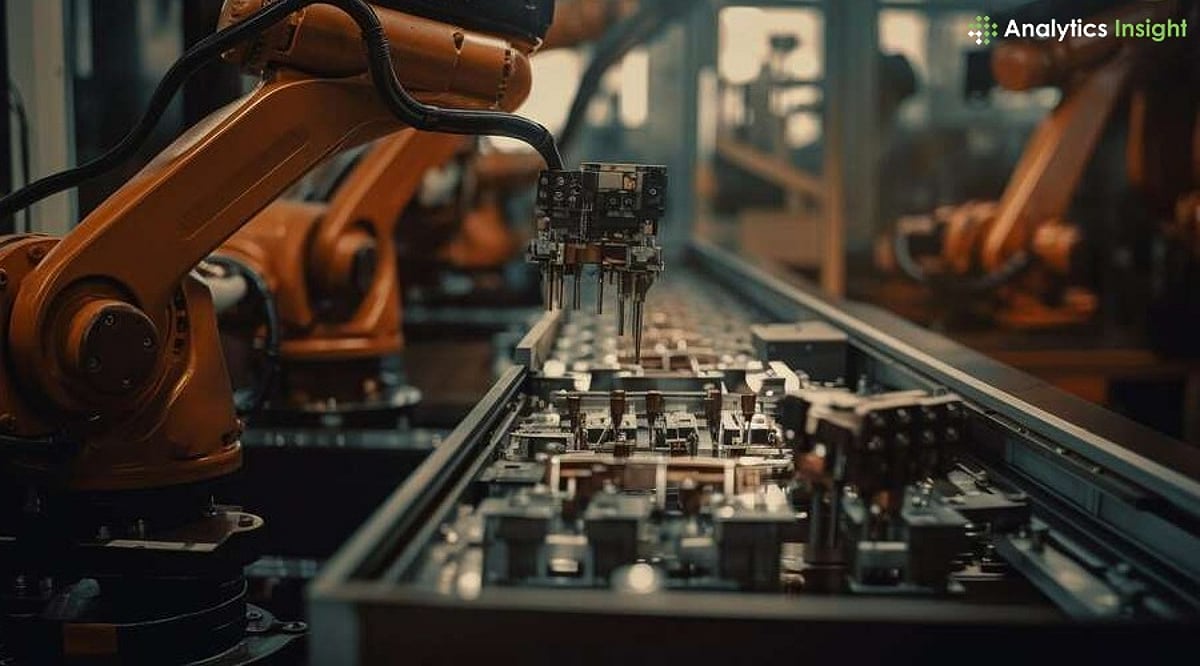
    Manufacturers are embracing smart factories to increase productivity, improve quality, and respond faster to changing market demands. In 2026, connected technologies are transforming factory operations across multiple industries. The World Economic Forum’s January 2026 Global Lighthouse Network highlights ten audited sites where AI-driven manufacturing has moved past pilot projects and into results that show up on a balance sheet. These factories demonstrate how digital innovation is reshaping manufacturing on a global scale.

    1. ACG Packaging Materials, Shirwal, India

    Pharmaceutical packaging leaves almost no room for error, and this plant used that constraint as its starting point. Engineers combined IIoT sensors, generative AI, and digital twins across more than 30 use cases. Lead times fell 40 percent and defects dropped 71 percent, gains that came without adding a single new production line to the site.

    2. Bristol Myers Squibb, Devens, USA

    Cell therapy manufacturing works with living material, which behaves less predictably than any machine part. Devens merged biopharma science with AI-driven process control across more than 30 new use cases. New product introduction time fell 42 percent while output volume rose more than 40 percent, proof that precision and scale improved together rather than trading off.

    3. Ford Otosan, Yeniköy, Turkey

    Rising demand for customized commercial vehicles forced this plant to run far more product variations without slowing its line. Engineers responded with a unified data architecture linking IoT, AI, and digital twins for real-time visibility across the value chain. Production volume doubled, and complexity grew twelvefold, all on the same physical footprint the plant started with.

    4. EVE Energy, Jingmen, China

    Battery manufacturing punishes inconsistency, and EVE Jingmen built its transformation around eliminating it. The site deployed AIoT, large language models, and predictive maintenance across more than 40 digital solutions for real-time quality diagnosis. Overall equipment effectiveness reached 88 percent, and the plant now catches quality drift hours before a batch would have failed inspection.

    5. Faurecia Automotive Systems, Yancheng, China

    Automotive interior defects, especially noise-related ones, are notoriously hard to trace to a single cause. Faurecia built a multimodal AI system that reads across sensory inputs simultaneously rather than inspecting components in isolation. Customer complaints fell 94 percent, turning what had been a persistent quality liability into one of the plant’s strongest performance metrics.

    6. HiTHIUM Energy Storage, Chongqing, China

    Battery storage prices fell more than 60 percent industry-wide, squeezing every manufacturer’s margins. HiTHIUM answered with generative AI and AIoT across more than 40 use cases, targeting near-zero defects and intelligent operations. The plant lifted its premium product ratio to 97.6 percent even as the market around it kept getting harder to compete in.

    7. Siemens Numerical Control, Nanjing, China

    This plant runs high-mix, low-volume orders under delivery windows compressed from 45 days to 10. Engineers layered a digital twin with more than 50 AI-driven use cases spanning design, production, and logistics. Lead time fell 78 percent, allowing the site to absorb monthly product changeovers that would have overwhelmed its previous workflow.

    8. Unilever, Pondicherry, India

    Rising demand and faster innovation cycles strained this South India site’s ability to stay flexible. ML-driven process control, changeover optimization, and AI-powered autonomous troubleshooting reshaped daily operations. The plant tripled its product variants within existing capacity, stretching output without a single square meter of expansion.

    9. Unilever, Gandhidham, India

    Located in water-scarce Kutch, this site built its transformation around two constraints most factories ignore: climate and water availability. AI, digital twins, and IIoT supported traceable palm oil sourcing and digitally enabled aquifer recharge. The site saved 6.12 billion liters of community water, a number that matters as much to the surrounding region as it does to the plant’s own balance sheet.

    10. Contemporary Amperex Technology (CATL), Yibin, China

    As the world’s largest battery production site scaled output, its carbon footprint and energy costs scaled with it. CATL paired an AI-driven energy transformation with micro-grid solar storage and low-carbon product R&D. The result was a 56 percent cut to its carbon footprint, plus carbon neutrality certification for 13 of its suppliers.

    Although these ten factories operate across pharmaceuticals, automotive, batteries, and consumer goods, their gains stem from the same underlying principle: data-driven decisions executed in real time, not after a shift ends or a report gets filed. Manufacturing’s biggest breakthrough in 2026 is not another machine or production technology. It is the ability of AI, connected data, and digital systems to make operational decisions in real time. That shift is redefining how factories compete on quality, speed, sustainability, and resilience.

  • 2030 Robotics Forecast: Top Trends Driving the Industry’s Next Decade

    2030 Robotics Forecast: Top Trends Driving the Industry’s Next Decade

    The robotics industry is undergoing a profound transformation. No longer confined to rigid, pre-programmed tasks, modern machines are learning, adapting, and collaborating with humans at an unprecedented pace. Driven by advances in artificial intelligence, sensor technology, and declining hardware costs, the sector is poised for explosive growth. By 2030, experts predict the global robotics market will surpass $110 billion, with some estimates reaching beyond $200 billion. Here are the top ten predictions shaping the future of robotics.

    1. Humanoid Robots Become Mainstream

    Humanoid robots, designed to navigate environments built for people, are moving from research labs into commercial settings. By 2030, these machines will be common in factories, warehouses, hotels, and healthcare facilities. Industry forecasts suggest that at least one million humanoid robots could be deployed between 2026 and 2030, though specialized robots will still outperform them in many specific tasks.

    2. AI Becomes the Brain of Every Robot

    Artificial intelligence is transforming robots from simple tools into intelligent agents. Future robots will understand voice commands, recognize objects, and make real-time decisions. The intelligent robotics market is projected to grow from $13.99 billion in 2025 to $50.33 billion by 2030, a compound annual growth rate (CAGR) of 29.2 percent.

    3. Collaborative Robots Work Alongside Humans

    Collaborative robots, or cobots, are designed to operate safely with people without extensive safety barriers. Their ease of use and lower cost make them accessible to small and mid-sized businesses. With the global stock of industrial robots reaching 4.664 million units in 2024—a 9 percent increase from the prior year—automation continues to drive productivity and address labor shortages.

    4. Smart Factories Achieve Greater Autonomy

    Factories are integrating robots, sensors, cameras, and software into unified systems that can adapt to changing demand, equipment issues, or supply chain disruptions. Digital twins and machine vision enhance quality control. Asia leads this trend, accounting for 66.6 percent of the global industrial robotics market in 2024, fueled by strong manufacturing growth and automation investments.

    5. Healthcare Robots Expand Their Role

    Robots are increasingly assisting in surgery, transporting supplies, disinfecting rooms, and supporting rehabilitation. An aging population and healthcare worker shortages are driving demand. The service robotics market is expected to grow from $26.35 billion in 2025 to $131.9 billion by 2034, at a CAGR of 19.8 percent.

    6. Warehouse Automation Accelerates

    E-commerce growth is pushing warehouses to process orders faster. Autonomous mobile robots, robotic picking systems, and smart inventory tools are becoming essential. The warehouse robotics market is forecast to rise from $6.51 billion in 2025 to $25.41 billion by 2034, a CAGR of 16.8 percent.

    7. Robot Teams Tackle Complex Tasks

    Future workspaces will rely on teams of robots that share information and coordinate tasks. This approach improves resilience—if one robot fails, others can step in. Annual industrial robot installations now exceed 500,000 units, roughly double the rate from a decade ago.

    8. Edge AI Boosts Robot Performance

    Edge AI enables robots to process data locally, reducing latency and enhancing privacy. This is critical for applications in factories, hospitals, and remote locations. The industrial robotics market could reach $60.6 billion by 2030, with edge computing and AI as key drivers.

    9. Digital Twins Speed Up Development

    Digital twin technology creates virtual replicas of machines and production lines, allowing engineers to test and refine robotic systems before deployment. This reduces costs and risks. As AI advances, digital testing will become a standard part of robot development.

    10. Robotics Becomes a Massive Global Industry

    The convergence of smarter AI, cheaper hardware, and labor shortages is fueling demand across manufacturing, healthcare, logistics, agriculture, retail, and construction. The global robotics market is expected to exceed $110 billion by 2030, and with software and service robots included, could top $200 billion. Robotics is set to become one of the most lucrative and influential technology sectors of the decade.

  • Understanding Ambient Intelligence: How It Works and Why It Matters

    Understanding Ambient Intelligence: How It Works and Why It Matters

    What Is Ambient Intelligence?

    Ambient Intelligence (AmI) refers to environments embedded with artificial intelligence, sensors, connected devices, and automation that can understand people’s needs and respond proactively. Instead of requiring constant manual input, these systems quietly adapt lighting, temperature, security, entertainment, and digital services, creating seamless, personalized experiences in homes, offices, hospitals, and public spaces.

    The Technologies Behind Ambient Intelligence

    Ambient Intelligence combines AI, the Internet of Things (IoT), edge computing, cloud services, computer vision, and voice recognition. Smart sensors continuously collect environmental data, while AI analyzes patterns to make real-time decisions. Together, these technologies allow devices to communicate with one another, automate routine tasks, and provide intelligent assistance with minimal human intervention.

    How Smart Homes Use Ambient Intelligence

    Modern smart homes showcase Ambient Intelligence through connected lighting, climate control, appliances, and security systems. AI can learn daily routines, automatically adjust room temperatures, optimize energy consumption, recognize household members, and even detect unusual activity. The goal is to improve comfort, convenience, safety, and efficiency without requiring users to constantly manage individual devices.

    Ambient Intelligence in Healthcare

    Healthcare is rapidly adopting Ambient Intelligence to improve patient care and operational efficiency. AI-powered monitoring systems can track vital signs, detect falls, remind patients to take medications, and alert caregivers during emergencies. Hospitals also use intelligent environments to optimize workflows, reduce response times, and support healthcare professionals with real-time insights and predictive analytics.

    Transforming Workplaces and Cities

    Businesses and smart cities are integrating Ambient Intelligence to enhance productivity and sustainability. Intelligent offices automatically manage lighting, meeting rooms, and air quality based on occupancy. In urban environments, AI-powered traffic systems, connected infrastructure, and smart public services help reduce congestion, improve energy efficiency, and deliver more responsive experiences for residents and visitors alike.

    Privacy and Security Challenges

    As Ambient Intelligence relies heavily on continuous data collection, privacy and cybersecurity remain major concerns. Organizations must protect sensitive personal information, secure connected devices from cyberattacks, and ensure transparent data practices. Responsible AI development, strong encryption, user consent, and regulatory compliance will be essential for building public trust in intelligent environments.

    The Future of Ambient Intelligence

    With advances in generative AI, edge AI, and increasingly capable sensors, Ambient Intelligence is expected to become even more intuitive over the coming years. Future systems will better anticipate user needs, reduce energy consumption, support aging populations, and create highly personalized experiences, making intelligent environments an increasingly important part of everyday life.