
Category: Automotive

  • Hyundai Leverages World Cup Stage to Demonstrate Humanoid Robotics Ambitions

    Hyundai Leverages World Cup Stage to Demonstrate Humanoid Robotics Ambitions

    Hyundai turned football’s biggest global stage into a robotics showcase over the weekend. During halftime of Sunday’s FIFA World Cup Round of 16 match at MetLife Stadium, where Norway edged Brazil 2-1 in front of 80,633 fans, Boston Dynamics’ humanoid robot Atlas took the field, ran through a series of soccer moves, and handed the ball back to the referee. It marked the first time a humanoid robot had appeared during a live World Cup match and the public debut of Atlas’s production version following its unveiling at CES 2026.

    Why Hyundai Put a Robot on the Pitch

    Hyundai holds the title of FIFA’s Official Robotics Partner, and Sungwon Jee, the company’s global chief marketing officer, framed the appearance as a statement of intent rather than a gimmick, saying Atlas’s performance was meant to show that robotics is already arriving rather than remaining a distant idea. The stunt fits into Hyundai’s broader ‘Next Starts Now’ World Cup campaign, which has followed Atlas learning football skills through a five-part social film series called School of Football, with a longer documentary produced alongside BBC StoryWorks still to come.

    The Technology Behind Atlas’s Moves

    Notably, Atlas wasn’t hard-coded to perform specific choreography. Boston Dynamics trained the robot using a mix of motion retargeting, reinforcement learning, and whole-body control, letting it learn celebratory moves, including ones modeled on Erling Haaland and Harry Kane, through thousands of simulated training runs before executing them live. Boston Dynamics’ director of robotics behavior, Alberto Rodriguez, noted that the same training approach used for the halftime routine mirrors how the company prepares Atlas for industrial tasks. Standing roughly 6-foot-2 and weighing close to 200 pounds, the current-generation Atlas can lift about 66 pounds and was engineered specifically for the unpredictability of factory floors, unlike its predecessor, which functioned mainly as a research platform.

    A Bigger Bet on Robotics Beyond Cars

    It draws from Hyundai’s recent takeover of Boston Dynamics and represents a new direction for the company in terms of thinking about its future. Robotic technology has been identified by Hyundai as one of their main focuses, alongside the production of electric cars, software-defined mobility, and autonomous driving technology, and they have made it clear that they intend to produce 30,000 Atlas robots per year. It shows just how seriously Hyundai is taking the idea of perception as a factor in its introduction of robotic technology that they chose to do it at a global sporting event.

    What Comes Next

    It is yet to be seen whether a memorable viral moment during the halftime show leads to faster adoption of the product by the commercial market, but it must be noted that the message conveyed by the brand itself is not necessarily a direct one. Regardless, it can be observed that there is a tendency on behalf of the technology firms to use publicly visible venues to showcase the ability of humanoid robots to function safely in a non-controlled environment.

  • Ather Energy Eyes $200 Million QIP to Boost EV Expansion in India

    Ather Energy Eyes $200 Million QIP to Boost EV Expansion in India

    Electric two-wheeler maker Ather Energy is reportedly preparing to raise approximately $200 million (around Rs 1,700 crore) through a qualified institutional placement (QIP) as the company seeks to strengthen its expansion plans following its listing on Indian stock exchanges earlier this year. According to sources familiar with the matter, the share sale could begin as early as next week.

    The Bengaluru-based EV manufacturer has reportedly appointed HSBC, Axis Capital, and Nomura to manage the institutional fundraising. While the final size and timing of the issue remain subject to market conditions, the offering is expected to attract both domestic and global institutional investors.

    Expansion Plans Drive Fundraising

    The fresh capital is anticipated to be used for expanding Ather Energy’s manufacturing capacity, widening its retail footprint, and accelerating the development of new electric vehicle platforms. The company has been progressively increasing its presence in India amid intensifying competition in the electric two-wheeler segment.

    Ather has made aggressive investments in production, dealer network expansion, and innovative product development, as it competes with both established automobile giants and emerging EV startups.

    Increasing Competition in the EV Industry

    India’s EV industry has become increasingly competitive with the entry of new players such as Ola Electric, TVS Motor, and Bajaj Auto. These companies have invested heavily in developing new products, distribution channels, and manufacturing facilities to meet rising consumer demand for electric vehicles.

    Analysts note that further investment will be required for companies to scale operations, improve profitability, and roll out products across various price segments, rather than focusing solely on one market tier.

    Shift in Focus from IPO

    Ather Energy’s new plan to raise funds through an institutional equity offering follows its recent IPO, signaling the company’s determination to push ahead with its expansion strategy despite intense industry competition. This sequence of fundraising efforts indicates a proactive approach to securing capital for growth initiatives.

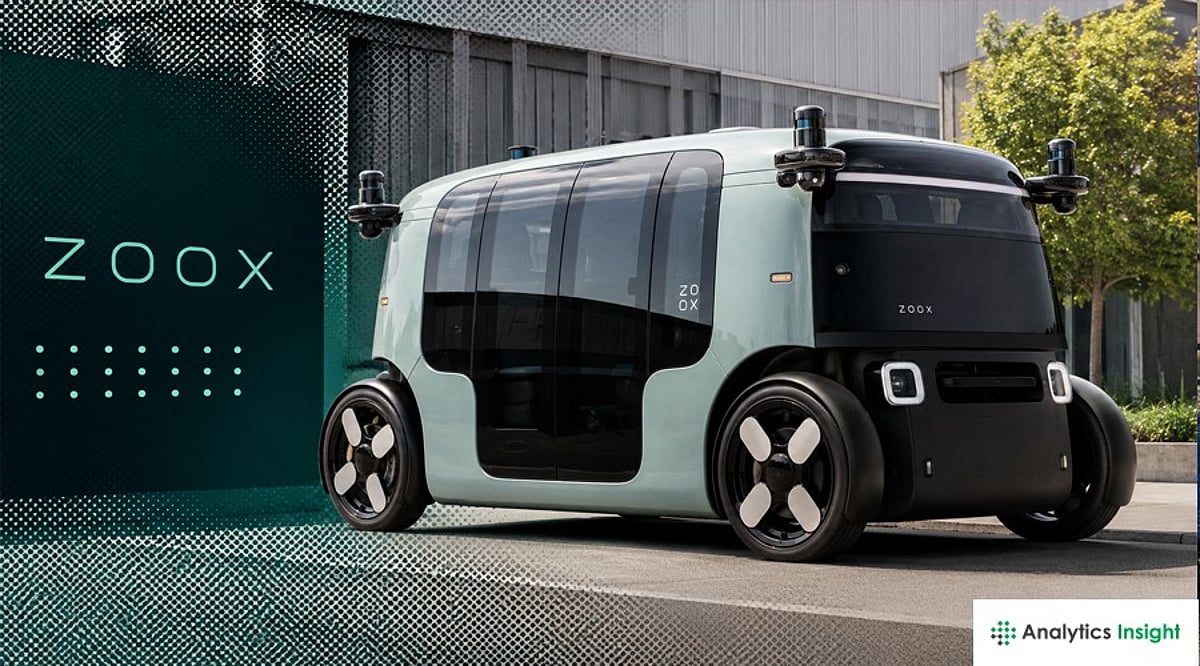
  • Zoox Unveils Updated Production-Ready Robotaxi, Targets 100 Units Per Week

    Zoox Unveils Updated Production-Ready Robotaxi, Targets 100 Units Per Week

    Amazon-owned Zoox has introduced an updated version of its purpose-built robotaxi as it prepares to ramp up production at its Hayward, California facility. The company says the new model incorporates feedback from approximately 500,000 riders and will join its autonomous ride-hailing fleet directly from the production line.

    Cabin Gets Rider-Focused Upgrades

    The updated Zoox robotaxi retains its signature face-to-face, carriage-style seating layout. Zoox has replaced the previous interior color scheme with aloe green seats, stone-grey flooring, and matching trim. The company also added more seat padding, refined the curves of the seats and headrests, and installed a brighter touchscreen. Additional daily-use improvements include larger cupholders and raised lines on the wireless charging surface to help keep phones in place. Lighter cabin materials make personal items easier to spot before riders exit, according to the company.

    Chris Stoffel, Zoox’s director of robot industrial design and studio engineering, said the new cabin aims to reduce visual distractions. “The simplicity of the elevated interior design does not demand a rider’s attention,” he noted. The updates stem from passenger feedback gathered during testing and early services.

    Exterior Enhancements for Communication and Visibility

    Zoox also refined the robotaxi’s exterior, moving and improving bidirectional reflectors to make them more visible to other road users. Since the vehicle has no fixed front or rear, these signals help indicate its direction of travel. The door interface now includes a new speaker and microphone, and the two-way audio system has been expanded for clearer communication among riders, support staff, and first responders both inside and outside the vehicle.

    The design continues to exclude a steering wheel, brake pedal, or other conventional controls, allowing for the face-to-face seating arrangement and complying with federal rules for automated vehicles without manual driving controls.

    Production Target Tied to Regulatory Approval

    Zoox plans to build the refreshed robotaxi at its 220,000-square-foot Hayward facility, which opened in 2025. The company states the site can assemble more than 10,000 robotaxis per year at full capacity and that production could reach 100 vehicles per week—though that target is subject to regulatory clearance. Zoox expects riders in Las Vegas to access the updated vehicle later in 2026, with expansion to other U.S. markets depending on vehicle supply, local plans, and approvals.

    On June 25, 2026, the National Highway Traffic Safety Administration began rulemaking that could eliminate the requirement for manual brake pedals in vehicles built exclusively for automated driving, potentially easing Zoox’s deployment path. Until the process concludes, the company’s production and deployment schedule remains conditional.

  • Top Hybrid Cars to Watch for in 2026: Toyota, Honda, Hyundai and More

    Top Hybrid Cars to Watch for in 2026: Toyota, Honda, Hyundai and More

    Hybrid vehicles continue to gain popularity in 2026 as drivers seek better fuel efficiency without relying entirely on charging infrastructure. Automakers are expanding their hybrid lineups with improved performance, lower emissions, and smarter technology. As fuel prices and sustainability remain key concerns, hybrids are expected to play a significant role in the global automotive market throughout the year.

    Toyota Expands Its Hybrid Leadership

    Toyota continues to strengthen its hybrid portfolio with new and updated models featuring fifth-generation hybrid technology. The latest systems offer smoother acceleration, improved fuel economy, and enhanced battery performance. Popular models like the Camry Hybrid, Corolla Hybrid, Prius, and RAV4 Hybrid continue to set benchmarks for reliability and efficiency.

    Honda Brings More Efficient e:HEV Models

    Honda is expanding its e:HEV hybrid lineup with refined powertrains that combine responsive performance and excellent mileage. New hybrid models feature regenerative braking, quieter operation, and advanced driver-assistance technologies. The company’s focus on practical efficiency makes its hybrids attractive for both city commuters and long-distance travelers.

    Hyundai and Kia Expand Their Electrified Range

    Hyundai and Kia are introducing more hybrid SUVs and sedans equipped with modern infotainment systems, connected-car technology, and improved fuel efficiency. Their latest hybrid platforms combine turbocharged engines with electric motors to deliver better performance while reducing fuel consumption and emissions.

    Plug-in Hybrid Models Offer Greater Flexibility

    Plug-in hybrid electric vehicles (PHEVs) continue to gain traction in 2026 by allowing drivers to complete short daily trips using electric power alone while retaining the convenience of a gasoline engine for longer journeys. Improved battery capacity and faster charging have made PHEVs a practical bridge toward full electrification.

    Safety and Smart Technology Take Center Stage

    The newest hybrid cars are equipped with advanced driver assistance systems, including adaptive cruise control, automatic emergency braking, lane-keeping assistance, blind-spot monitoring, and AI-powered infotainment features. These technologies improve both safety and overall driving comfort.

    Hybrid Vehicles Offer a Practical Path to Lower Emissions

    For buyers seeking lower running costs and reduced environmental impact without the limitations of full EV charging, hybrid cars remain an attractive option. With continuous improvements in efficiency, technology, and performance, the latest hybrid launches in 2026 provide practical solutions for a wide range of drivers.

  • Top Multi-Port Car Chargers to Buy in 2026 for Fast and Reliable On-the-Go Power

    Top Multi-Port Car Chargers to Buy in 2026 for Fast and Reliable On-the-Go Power

    Best Multi-Port Car Chargers to Buy in 2026

    Keeping your devices powered while driving is easier than ever with these top multi-port car chargers. Designed for families, professionals, and road-trippers, these options deliver fast charging, safety, and convenience. Here are our picks for 2026.

    Anker 535 Car Charger

    Features dual USB-C ports with fast charging support, delivering reliable power for smartphones, tablets, and other compatible devices simultaneously.

    UGREEN Nexode Car Charger

    Supports high-speed USB-C charging with multiple ports, making it ideal for families and professionals traveling with several gadgets daily.

    Baseus 160W Car Charger

    Offers powerful multi-device charging using USB-C and USB-A ports, supporting laptops, smartphones, and gaming devices with ease consistently.

    Belkin BoostCharge Car Charger

    Provides dependable fast charging, premium safety features, and dual-port convenience for modern smartphones and tablets during road trips.

    Spigen ArcStation Car Charger

    Compact design with USB-C Power Delivery support ensuring efficient charging speeds while minimizing dashboard clutter and cable management issues.

    ESR HaloLock Car Charger

    Combines magnetic wireless charging and USB-C connectivity, making navigation and charging more convenient for compatible smartphone users daily.

    JOOMFEEN Multi-Port Charger

    Includes multiple USB ports for passengers, delivering dependable charging performance during long-distance travel without sacrificing charging speed significantly.

    Amazon Basics Car Charger

    Affordable dual-port charger providing reliable charging performance for essential devices while maintaining compact size and durable construction for daily use.

    Scosche PowerVolt PD Car Charger

    Supports USB-C Power Delivery and Quick Charge technologies, enabling efficient charging for multiple compatible devices while driving comfortably together.

    Stay powered wherever the road takes you with these top-tier multi-port car chargers, perfect for 2026 and beyond.

  • Tesla Stock Closes Above $420 for First Time, Reigniting Meme Trading and Retail Interest

    Tesla Stock Closes Above $420 for First Time, Reigniting Meme Trading and Retail Interest

    Tesla shares closed above $420 for the first time since the company went public 16 years ago, rekindling meme-driven trading and drawing renewed attention from retail investors. The stock ended Tuesday’s session at $420.60, a milestone long associated with CEO Elon Musk and internet culture.

    According to Vanda Research, retail buying activity historically increases when Tesla trades above $420. Global macro strategist Viraj Patel noted that the average five-day retail net buying jumps from $87 million to $135 million after the stock crosses that level. Since mid-2024, retail investors have purchased more Tesla shares on nine of the 14 occasions the stock traded above $420.

    The number 420, originally tied to cannabis culture, became a widespread internet meme and later a recurring reference in Musk’s public comments. Roundhill Investments CEO Dave Mazza remarked, “I can’t believe I’m actually writing this, but it really comes down to the same two magic numbers, $420 and $69, that get the meme crowd going.”

    Tesla’s close above $420 quickly spread across social media platform X, where users shared memes and jokes. Interactive Brokers chief strategist Steve Sosnick said, “I’m surprised it took until now for Tesla to see a $420 close. It’s been a Musk-related meme for years.” The stock continued climbing Wednesday, trading near $426 ahead of the company’s second-quarter delivery report.

    The $420 level remains tied to Musk’s 2018 tweet about taking Tesla private at $420 per share with “funding secured.” That tweet led to an SEC securities fraud lawsuit, but the number has persisted as a cultural touchstone. Karobaar Capital’s Haris Khurshid noted, “Tesla has one of the most engaged retail investor bases in the market, so numbers like that tend to take on a life of their own.”

  • 2026’s Top 5 SUVs Under Rs 20 Lakh: Value, Features & Performance

    2026’s Top 5 SUVs Under Rs 20 Lakh: Value, Features & Performance

    The Indian SUV market in 2026 is brimming with options under Rs 20 lakh that deliver exceptional safety, performance, comfort, and advanced technology. From feature-packed compact SUVs to fuel-efficient hybrids, manufacturers now offer premium features once reserved for higher price brackets, making this segment fiercely competitive. Here are the top five models that stand out this year.

    Hyundai Creta: A Segment Favorite

    The Hyundai Creta remains one of India’s most popular midsize SUVs, thanks to its refined petrol and diesel engines, spacious cabin, premium interiors, and cutting-edge technology. Higher variants include dual digital displays, a panoramic sunroof, connected car technology, and Level 2 ADAS, making it a well-rounded choice for families and daily commuters alike.

    Kia Seltos: Premium Features and Performance

    The Kia Seltos continues to impress with multiple engine and transmission options, a stylish design, and feature-rich interiors. Buyers appreciate its premium cabin, large infotainment system, ventilated seats, connected technology, and a comprehensive safety package. Recent updates have further enhanced its appeal, though top variants now cross the Rs 20 lakh threshold.

    Tata Nexon: Safety and Value Leader

    The Tata Nexon attracts buyers seeking outstanding safety, multiple powertrain choices (petrol, diesel, CNG, and electric), and affordable ownership costs. It offers six airbags, modern infotainment, digital instrumentation, and practical everyday usability. Competitive pricing keeps it among the strongest value-for-money SUVs in India.

    Mahindra XUV 3XO: Tech Beyond Its Price

    The Mahindra XUV 3XO stands out by offering premium equipment rarely seen in its segment. Features include a panoramic sunroof, Level 2 ADAS, dual digital screens, powerful turbo-petrol engines, and impressive safety technology. Its blend of performance, comfort, and technology makes it one of the best-equipped SUVs under Rs 20 lakh.

    Maruti Suzuki Grand Vitara: Fuel Efficiency Champion

    For buyers prioritizing lower running costs, the Maruti Suzuki Grand Vitara is an excellent choice. Its strong hybrid technology delivers outstanding fuel efficiency while maintaining comfort and practicality. The spacious interior, modern infotainment, multiple safety features, and Maruti Suzuki’s extensive service network make it ideal for long-term ownership.

    Choosing the Right SUV depends on your priorities. The Hyundai Creta and Kia Seltos excel in premium features, the Tata Nexon leads in safety and affordability, the Mahindra XUV 3XO offers exceptional technology, and the Maruti Suzuki Grand Vitara delivers remarkable fuel efficiency. Each offers excellent value for Indian buyers in 2026.