Category: Automotive

  • How to Use Google Maps to Remember Where You Parked Your Car

    How to Use Google Maps to Remember Where You Parked Your Car

    Forgetting where you parked can be frustrating, especially in large parking lots or unfamiliar areas. Google Maps includes a parking feature that lets users save their location. Once the car is parked, users can mark the spot directly inside the app for easier access later.

    How To Save Your Parking Location

    After parking, open Google Maps and tap the blue dot representing your current location. From the available options, select “Save parking”. Google Maps then places a parking marker on the map, showing where the vehicle was left and allowing users to return to the location later.

    Add Notes To Your Parking Spot

    The saved parking location can include additional information. Google Maps lets users modify the location, share it with someone else, add notes, and set a timer. These options can be useful when parking in large complexes, airports, shopping centers, or other places where remembering the exact spot is difficult.

    Find Your Car Using Google Maps

    When it is time to return to the vehicle, open Google Maps and select the saved parking marker. The app displays the saved location on the map, helping users identify where they parked. The accuracy of the location can depend on the availability and reliability of location services.

    iPhone Can Save Parking Automatically

    Google Maps also supports automatic parking detection on iPhone and iPad. After connecting the device to a vehicle using USB, Bluetooth, or CarPlay, Maps can automatically save the parking location after the connection ends. The saved parking position can remain available for up to 48 hours.

    Enable Motion-Based Parking Detection

    iPhone users can enable a setting that allows Google Maps to use motion information for parking detection. Open Google Maps, tap the profile icon, select Settings, and then Navigation. Users can enable “Let Maps use your motion to save your parking” when the option is available.

    Remove The Parking Location Later

    Once you reach your vehicle, the saved parking location can be cleared from Google Maps. Select the parking marker and choose the option to clear it. Users can also modify or share the saved location, while timers can help track parking sessions where time limits apply.

  • LFP vs. NMC: Why India’s Hot Climate Favors Lithium Iron Phosphate EV Batteries

    LFP vs. NMC: Why India’s Hot Climate Favors Lithium Iron Phosphate EV Batteries

    Overview

    India’s high temperatures put electric vehicle batteries under constant stress. Summer heat can exceed 40°C in many regions, and a car parked in direct sunlight can get even hotter. That heat accelerates battery aging, which helps explain why lithium iron phosphate—commonly called LFP—has become a major chemistry in India’s EV market.

    LFP is not a universal solution. It trades energy density for thermal stability, durability, and lower material costs. For many mass-market EVs designed around daily city driving, that trade-off lines up well with Indian conditions.

    Why heat is hard on EV batteries

    Every charge and discharge cycle changes a battery’s internal chemistry slightly. Heat speeds up those changes. That is why EV makers include thermal management systems in battery packs regardless of where the vehicle is sold. In India, those systems often have to work harder because fast charging, stop-and-go traffic, and hot pavement all add strain.

    Battery safety and longevity are not determined by cell chemistry alone. Cooling design, battery management software, charging habits, and pack construction all play a role. Chemistry sets the baseline, but the surrounding systems determine how well a pack performs over time.

    How LFP and NMC compare

    LFP and nickel manganese cobalt, or NMC, approach the same problem from different directions. LFP offers more intrinsic thermal stability and typically costs less, while NMC stores more energy per kilogram.

    Factor LFP NMC
    Thermal stability Stronger built-in margin Depends more on pack-level cooling and controls
    Cycle life Generally strong under repeated cycling Varies by formulation and operating conditions
    Material cost No cobalt or nickel Uses cobalt and nickel
    Energy density Lower Higher
    Best fit City and short-range EVs Long-range and performance EVs

    Thermal stability and battery life

    LFP’s iron-phosphate bond is more resistant to breakdown under heat than the layered oxide structure used in NMC cells. That does not mean NMC cannot work in hot climates. NMC packs operate worldwide in warm regions, with cooling systems and battery management software managing their heat sensitivity.

    The difference is where the safety margin comes from. LFP carries more of that margin inside the chemistry itself. NMC relies more heavily on the systems built around the cells. Heat still degrades LFP over time, but LFP cells often hold up well under repeated heat exposure, especially when paired with effective cooling and sensible charging practices.

    Cost and safety considerations

    LFP cathodes avoid cobalt and nickel entirely. Both metals are expensive and depend on a limited number of global suppliers. Removing them can lower pack costs and reduce exposure to commodity price swings. In India’s price-sensitive EV market, those savings can translate into more affordable vehicles.

    Safety is broader than chemistry. Battery management, cooling design, and charging behavior all share responsibility. LFP’s additional thermal margin can provide extra headroom during demanding use, such as fast charging on a hot day. That margin supports the vehicle’s safety systems; it does not replace them.

    The energy-density trade-off

    LFP stores less energy per kilogram than NMC. A pack built to deliver the same range will generally be larger or heavier. That is why some long-range and high-performance EVs still choose NMC and manage its heat sensitivity with robust cooling systems.

    For city cars built around short daily trips, the trade-off is often easier to accept. Manufacturers can use a somewhat larger pack while gaining LFP’s cost and durability benefits. For vehicles where maximum range, low weight, or compact packaging are priorities, energy density remains a significant design consideration.

    Where LFP fits in India’s EV market

    LFP is not simply a “hot climate battery.” Its value in India comes from a combination of traits: strong thermal behavior, solid cycle life, and lower material costs, balanced against lower range per kilogram. For mass-market EVs used mainly for city commuting and short trips, that combination matches how many Indian owners actually drive.

    LFP is unlikely to replace every chemistry. Range-focused vehicles still have valid reasons to choose NMC. But for a large share of India’s EV lineup, LFP offers a practical way to balance heat resistance, cost, and durability in a single pack.

    Frequently asked questions

    Why is LFP considered suitable for EVs in India?

    LFP offers strong thermal stability, favorable cycle-life characteristics, and lower material costs. Those traits make it relevant for EVs operating in India’s hot climate, especially city-focused models.

    Are LFP batteries safer than NMC batteries?

    LFP generally has greater thermal stability and a lower tendency to release oxygen during thermal decomposition. However, EV safety also depends on cell design, battery management, cooling, and charging systems.

    Do LFP batteries degrade in high temperatures?

    Yes. High temperatures can accelerate degradation in LFP cells as well. Proper thermal management, charging practices, and battery design help control the effect.

    What is the main disadvantage of LFP batteries?

    LFP generally has lower energy density than NMC. A comparable range may require a larger or heavier battery pack.

    Can LFP batteries be used in long-range EVs?

    They can, but lower energy density can make them less attractive where maximum range, low weight, or compact battery packaging are key priorities.

  • FOXWELL HD500 Review: The Budget-Friendly Heavy-Duty Diagnostic Tablet for Everyday Repairs

    FOXWELL HD500 Review: The Budget-Friendly Heavy-Duty Diagnostic Tablet for Everyday Repairs

    For independent diesel technicians, small repair shops, and fleet managers, selecting the right diagnostic equipment often comes down to balancing features against cost. Basic code readers can retrieve fault codes but lack the comprehensive coverage and advanced functions required for modern heavy-duty vehicles. Conversely, professional OEM diagnostic systems deliver extensive capabilities but at a significantly higher price.

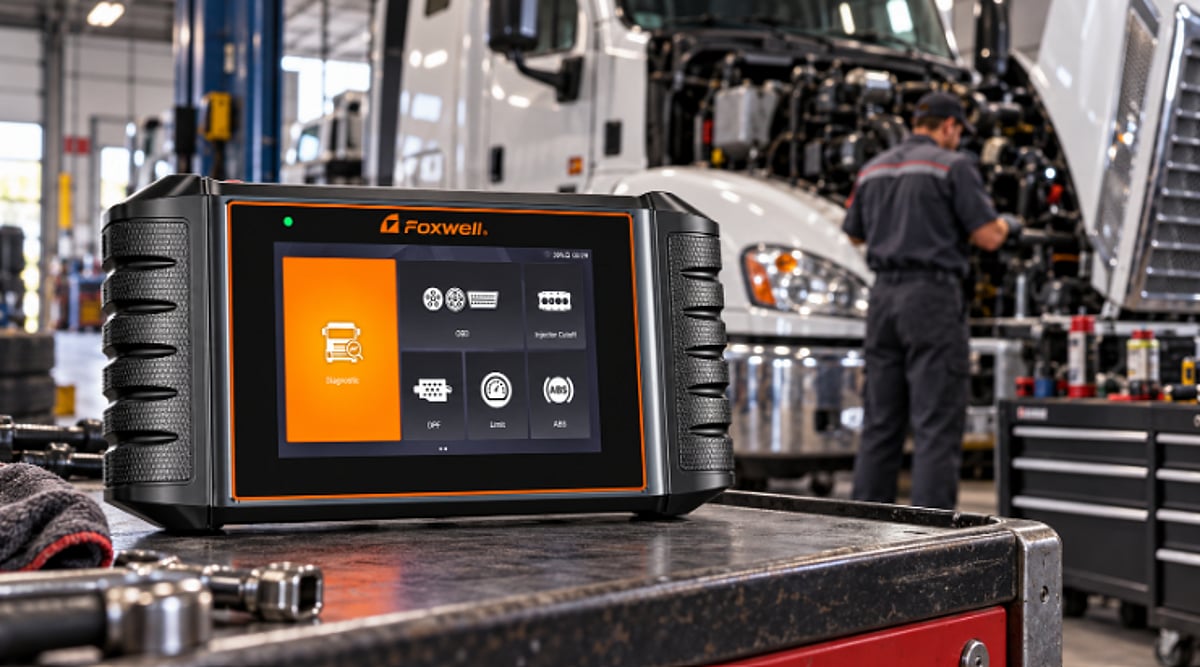
    The FOXWELL HD500 positions itself between these extremes. It is a dedicated heavy-duty diagnostic scanner designed for trucks, buses, commercial vehicles, and other diesel-powered machines. The device offers full-system diagnostics, live-data monitoring, DPF-related functions, injector testing, ABS service tools, and support for multiple heavy-duty communication protocols.

    What Is the FOXWELL HD500?

    The HD500 is a portable diagnostic tablet tailored for heavy-duty diesel applications. Unlike standard OBD-II code readers, it communicates with commercial-vehicle systems using protocols such as J1939, J1708, and J1587. It also supports standard OBD-II and EOBD functions.

    FOXWELL lists compatibility with several major manufacturers and engine platforms, including Cummins, Caterpillar, Detroit, PACCAR, International, Hino, Volvo, and others. However, the level of compatibility and available features can vary by vehicle, model year, ECU, and system setup. FOXWELL advises confirming compatibility before purchasing or performing a specific service.

    Full-System Diagnostics for Heavy-Duty Vehicles

    One of the HD500’s key advantages over a basic code reader is its broader system coverage. Instead of focusing only on the engine ECU, the HD500 accesses multiple vehicle systems on compatible vehicles. These systems may include:

    • Engine control systems
    • Transmission-related systems
    • ABS and braking systems
    • SRS systems
    • EPB and parking-brake systems
    • DPF and emissions-related systems
    • Other supported electronic control modules

    DPF Regeneration and Diesel Maintenance Functions

    DPF-related issues are among the most common reasons heavy-duty vehicle owners and technicians use a diagnostic scanner. Excessive soot buildup can trigger the DPF warning light, regeneration failures, reduced engine power, or even torque-limiting conditions.

    On compatible vehicles, the HD500 supports DPF-related diagnostic and maintenance functions, including forced DPF regeneration, DPF reset, and access to related live data.

    DPF Clogging or Excessive Soot Load

    When soot accumulates excessively, the HD500 can read fault codes and display parameters such as soot load, exhaust temperature, and differential pressure. This helps technicians evaluate DPF condition and decide whether regeneration is appropriate.

    DPF Regeneration Failure

    If a vehicle repeatedly fails automatic regeneration, the HD500 allows review of related fault codes and live data to identify causes like excessive soot buildup, abnormal temperatures, or sensor faults.

    Engine Derate or Reduced Power

    When DPF or emissions problems become severe, some vehicles limit engine RPM or torque. The HD500 helps identify related faults and, when conditions are met, perform supported regeneration or reset functions.

    Forced DPF Regeneration

    When automatic regeneration cannot complete, the HD500 supports forced regeneration on compatible vehicles. Technicians should check fault codes and live data before starting the procedure to ensure the vehicle meets required conditions.

    The HD500 also includes an Injector Cutoff function that temporarily deactivates injectors one cylinder at a time. This helps pinpoint cylinders contributing to rough idle, vibration, power loss, or excessive fuel consumption, reducing unnecessary part replacements. Availability of these special functions varies by vehicle, engine, ECU, and model year, so compatibility must be verified beforehand.

    Live Data and Graphing

    Fault codes alone don’t reveal real-time system behavior. Live data is essential for determining whether sensors and parameters are operating correctly. The HD500 displays live sensor data and can graph selected information. FOXWELL emphasizes graphical displays to make sensor data more intuitive.

    Depending on the vehicle and supported ECU, technicians can monitor parameters such as:

    • Engine RPM
    • Boost pressure
    • Fuel pressure
    • Exhaust-related parameters
    • Temperature readings
    • Sensor values
    • DPF-related data
    • Other ECU parameters

    Heavy-Duty Protocol Support

    A major difference between passenger-car tools and heavy-duty scanners is communication compatibility. The HD500 supports commercial-vehicle protocols like J1939, J1708, and J1587, along with other standards. FOXWELL states the tool is intended for a range of heavy-duty vehicle and engine manufacturers, but technicians should always check coverage for their specific vehicle before assuming advanced functions are available.

    Adapter Selection and Connectivity

    The HD500 comes with multiple diagnostic connectors for different vehicle types: 6 & 9-pin, CAT 9-pin, CAT 14-pin, and 16-pin adapters, plus additional adapters for specific Caterpillar applications. FOXWELL also promotes Wi-Fi-based software updates, offering lifetime free online updates for the HD500. Buyers should confirm the applicable update policy for their product version and market before purchasing.

    Android Touchscreen Design

    The HD500 uses a touchscreen interface rather than the button-based designs typical of older diagnostic tools. It runs on an Android-based operating environment. However, screen size and menu layout are subjective; some user feedback suggests text and graphing functions may not be as convenient in certain situations.

    Who Is the FOXWELL HD500 For?

    The HD500 suits users who regularly work on commercial diesel vehicles but don’t need a full dealer-level diagnostic setup.

    Independent Technicians

    Independent technicians gain access to standard heavy-duty diagnostic features without needing multiple basic scan tools.

    Small and Medium-Sized Repair Shops

    A smaller workshop may lack the budget or workload to justify multiple OEM diagnostic systems. A multi-brand diesel scanner like the HD500 serves as a practical alternative for routine repairs.

    Fleet Managers

    Fleet operators can use the equipment to check fault codes and monitor vehicle issues before sending trucks to external repair shops.

    FOXWELL HD500 vs. Basic Code Readers

    Basic readers typically only display and clear engine fault codes. The HD500 goes further with full-system diagnostics on supported vehicles, live data, graphical displays, DPF functions, and other service features.

    FOXWELL HD500 vs. OEM Diagnostic Tools

    OEM systems provide the deepest coverage for each manufacturer and specialized programming tools, but they are often expensive and less convenient for multi-brand workshops. The HD500 offers broad coverage and common diagnostic and maintenance functions in one device at a more accessible price.

    Is the FOXWELL HD500 Worth Considering?

    For its target audience, the HD500 delivers a practical mix of features for daily heavy-duty maintenance. Its strongest areas include multi-brand support, heavy-duty protocols, full-system diagnostics, DPF functionality, live data monitoring, and multiple diagnostic adapters.

    Pros and Cons

    Pros:

    • Designed specifically for heavy-duty and diesel applications
    • Supports J1939, J1708, and J1587 protocols
    • Offers full-system diagnostics on supported vehicles
    • Includes DPF regeneration and related features
    • Provides live data and graphical monitoring

    Cons:

    • Coverage may vary depending on vehicle, ECU, and model year
    • Not a full substitute for OEM diagnostic platforms
    • Some advanced features have manufacturer-specific limitations
    • Buyers should check compatibility before purchasing
    • Interface may require a learning curve for unfamiliar technicians

    FAQs

    1. What is the FOXWELL HD500 used for?

    The FOXWELL HD500 is a heavy-duty diagnostic scanner intended for trucks, buses, diesel vehicles, and other supported commercial uses.

    2. Does the HD500 support DPF regeneration?

    Yes. The HD500 supports DPF-related functions such as forced regeneration on supported vehicles. DPF capabilities vary by vehicle and ECU, so compatibility must be confirmed before starting regeneration.

    3. What protocols does the FOXWELL HD500 support?

    The scanner supports heavy-duty protocols like J1939, J1708, and J1587, as well as other automotive communication standards.

    4. Is the FOXWELL HD500 suitable for a small repair shop?

    It can be a good option for a small or medium-sized shop that regularly services heavy-duty diesel vehicles from different manufacturers.

    Conclusion

    The FOXWELL HD500 occupies a useful position in the heavy-duty diagnostic market. It delivers significantly more functionality than a basic code reader while avoiding the high cost and manufacturer-specific constraints of multiple OEM systems. Its combination of full-system diagnostics, DPF regeneration, live data monitoring, heavy-duty protocol support, and multi-brand coverage makes it a valuable tool for independent technicians, smaller repair shops, and fleet maintenance teams.


  • Why Engineers Intentionally Break New Factory Lines to Uncover Hidden Defects

    Why Engineers Intentionally Break New Factory Lines to Uncover Hidden Defects

    Before a new production line is cleared for volume output, it typically looks like a success story: parts come off correctly, fixtures hold, sensors read green, and inspection steps pass. The process has demonstrated it can build the thing it was designed to build. But what nobody has established is what the line would do with a part built wrong.

    Neelamegam Subramanian, a technical program manager for global fleet electrification and charging infrastructure at a major logistics and technology company, believes that gap is where most preventable defects are born. “Before a new production line is trusted to build products at volume, somebody has to deliberately try to break it,” he says. He adds that sensors and inspection steps may look complete on paper, but “the only real way to know what they’ll miss is to build a part wrong on purpose.”

    Subramanian came to this approach through quality engineering, including several years at an energy storage and electric vehicle manufacturer, where he handled casting and machining quality for a high-volume vehicle line and later led launch quality for a large-scale battery energy storage product. He earned his master’s in industrial and systems engineering at the University of Southern California.

    The practice he is known for started at line qualification. Before a new line was cleared for volume, he designed and ran fault-injection studies, introducing controlled defects into the process on purpose: misaligned welds, missing fasteners, out-of-spec fits. Then he recorded which failure modes the line caught and which passed through untouched.

    He is direct about why this is unusual. “Most quality validation at that stage focuses on whether the process can build a good part, not on actively trying to build a bad one and seeing what gets missed.” Deliberately introducing failure modes into a line about to enter production is also, as he puts it, a harder sell operationally, and there was no established playbook for it on that program.

    The studies found detection blind spots that were invisible from the process design alone. Those gaps were closed with revised inspection steps and control-plan updates before the line ever ran at full volume, which meant the failure modes never had the chance to reach a customer. The timing is the whole argument: a blind spot found at line qualification costs a revised inspection step, whereas the same blind spot found after launch costs sorting, rework, or a defect that reaches the field.

    That instinct carries into how he handles trouble once a line is already running. During the ramp of a new energy storage line, a weld-alignment defect appeared on a structural bracket, stopping the part from seating in its assembly slot. It was not a known failure mode, so nothing in the process documentation or inspection plan anticipated it, and there was no fix to reach for. Stopping the line during a critical ramp and continuing to build parts that might need rework were both bad options. Instead he built a third one: a dry-fit inspection using a dummy part to confirm fit before installation, which kept production moving while a permanent correction was engineered and validated in parallel. Roughly 500 units went through assembly that way without rework. He estimates the avoided rework at more than $1 million, and is careful to call that a rough figure rather than an audited one. The containment method was written up so the same defect would not have to be diagnosed from scratch if it appeared again.

    “How you contain a problem matters just as much as how fast you find the root cause,” he says. A good interim fix removes the choice between stopping the line and shipping something broken.

    His wider record runs along the same lines. In a quality manager role at a casting supplier site, he held defect rates under 15 parts per million, and in another role sustained 200 consecutive days without a major customer complaint. Root-cause work on a run of poor incoming quality produced lasting improvement across roughly two dozen supplier-made parts, and earlier in his career he helped cut scrap costs by more than $250,000 a year at a battery manufacturer. In two previous roles he led teams of quality engineers and technicians.

    That history is what he now applies to suppliers rather than lines. Judging whether a supplier can deliver, he says, means testing stated capability instead of taking it at face value, the same way he tested a line’s detection systems rather than trusting the design. He’s also been observing patterns he kept running into on the floor, including Foreign Object Debris (FOD) risk, weld quality variability, part-level traceability, and turning them into formal frameworks he’s now preparing for journal submission. His take on traceability cuts against the usual instinct: when a manufacturer and a supplier are looking at the same part-level data during a failure investigation, “it stops being about who’s to blame and starts being about actually fixing the problem.”

    The misconception he’s most eager to retire is treating a quality issue as a one-off. The fix that actually holds, he says, “almost always means going deep enough to change how the part is actually made or inspected, not just sorting out the bad ones as they come in.”

  • Smart Mobility: The Core Technologies Transforming Transportation and Beyond

    Smart Mobility: The Core Technologies Transforming Transportation and Beyond

    Smart mobility is often described as the quiet engine driving modern transportation systems. While much of the attention goes to electric vehicles or autonomous cars, the real transformation lies in a combination of technologies that work together to make transportation safer, more efficient, and more sustainable. From connected platforms to intelligent infrastructure, these components form the backbone of smart mobility.

    Connected Vehicle Platforms

    Connected platforms link vehicles, infrastructure, and users, enabling real-time communication, navigation updates, predictive services, and smarter transportation decisions across cities.

    Advanced Sensors

    Sensors continuously gather information about surroundings, traffic, and vehicle conditions, helping mobility systems understand environments and respond intelligently to changing situations.

    Vehicle Software

    Software increasingly controls essential vehicle functions, allowing manufacturers to deliver updates, introduce features, and improve performance throughout a vehicle’s operational lifespan.

    Intelligent Infrastructure

    Connected roads, traffic signals, and charging networks exchange information with vehicles, helping coordinate movement while improving efficiency and reducing unnecessary congestion.

    Data Analytics

    Mobility platforms analyze enormous volumes of transportation data, revealing patterns that can improve route planning, maintenance schedules, traffic management, and services.

    Electric Mobility

    Electric vehicles rely on sophisticated software, batteries, and charging networks, creating interconnected ecosystems where energy management becomes central to everyday transportation.

    Autonomous Driving

    Autonomous systems combine sensors, computing power, mapping, and artificial intelligence to interpret surroundings, support driving decisions, and gradually automate transportation tasks.

    Smart Logistics

    Connected mobility technology helps logistics operators track vehicles, optimize routes, monitor deliveries, and coordinate fleets, improving operational visibility across complex transportation networks.

    Urban Mobility

    Smart mobility extends beyond private cars, connecting public transport, shared mobility, cycling infrastructure, and pedestrian systems to create more coordinated urban transportation.

    Together, these technologies form the foundation of a smarter, more connected transportation ecosystem that goes far beyond the vehicle itself.

  • What Makes Chinese EVs So Much Cheaper Than American Models?

    What Makes Chinese EVs So Much Cheaper Than American Models?

    Chinese electric vehicles have been turning heads with price tags that undercut comparable Western models by a wide margin. While government subsidies are often cited as the main reason, the real picture is more complex. A mix of battery economics, manufacturing scale, vertical integration, and a highly localized supply chain has allowed Chinese automakers to keep production costs remarkably low.

    Battery Costs Play a Decisive Role

    Battery prices are one of the biggest factors in the final price of an EV. According to the International Energy Agency (IEA), average battery-cell prices in China were more than 20% lower than in the United States and over 30% lower than in Europe. China’s enormous scale, mature supply chains, and widespread adoption of LFP (lithium iron phosphate) technology help explain this significant cost gap.

    Massive Production Scale Drives Efficiency

    Chinese manufacturers have produced EVs and batteries at volumes far beyond their global rivals. Higher production volumes lead to greater experience, better factory efficiency, and lower per-unit costs. The IEA notes that by 2024, China had produced more than six times as many EV batteries as the United States and Europe combined.

    Vertical Integration Reduces Reliance on Suppliers

    Many Chinese EV makers control far more of their production process than Western automakers. By localizing supply chains and vertically integrating key stages of manufacturing, they reduce dependence on outside suppliers. That control translates directly into lower component costs, tighter production schedules, and the ability to price vehicles very aggressively.

    Government Support Contributes, but Only Partly

    Chinese EV manufacturers have benefited from subsidies, grants, loans, and favorable access to land. Domestic buyers have also enjoyed policies such as vehicle purchase-tax exemptions. However, research cited by BGR suggests subsidies explain only a portion of the price difference. Structural advantages are doing most of the heavy lifting.

    Lower Manufacturing and Operating Costs

    Labor costs and operational efficiencies also matter. Many Chinese EV companies concentrate their manufacturing and sales within China’s highly developed domestic ecosystem. This localized approach reduces the overhead associated with globally distributed production networks and complex supply chains.

    More Than Just Cheap Cars

    The price advantage of Chinese EVs is not the result of a single factor. It comes from the combined effect of cheaper batteries, massive scale, tight supply-chain control, manufacturing efficiency, and government support. As Chinese automakers expand internationally, these structural cost advantages are becoming a central challenge for established carmakers worldwide.

  • Consumer Reports Reveals the 9 Most Unreliable Electric Vehicles in 2025

    Consumer Reports Reveals the 9 Most Unreliable Electric Vehicles in 2025

    Consumer Reports has released its latest reliability assessments, highlighting nine electric vehicles (EVs) that fall short in predicted reliability. Based on owner surveys, recall data, and previous model performance, these models face significant concerns ranging from electrical system failures to safety-related recalls. Here’s a breakdown of the least reliable EVs according to Consumer Reports.

    Rivian R1S (2025)

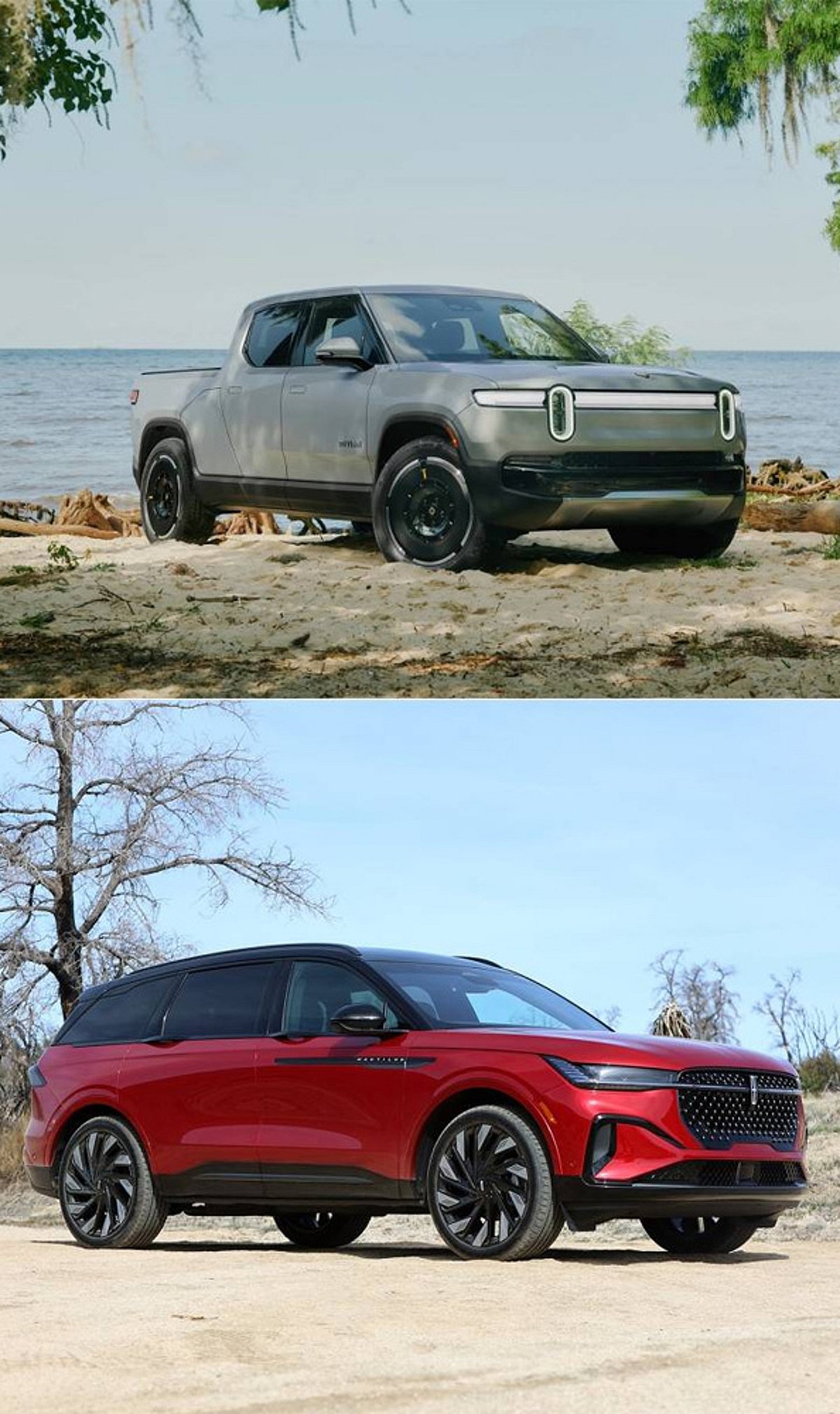
    The 2025 Rivian R1S received a low predicted reliability rating, with Consumer Reports noting seven recalls involving safety-related issues. The SUV’s complex electrical systems and assembly quality have been cited as primary concerns.

    Chevrolet Blazer EV (2024)

    The 2024 Chevrolet Blazer EV earned a low predicted reliability score, largely due to problems linked to GM’s Ultium battery technology. Early adopters have reported charging issues and electrical glitches.

    Rivian R1T (2025)

    The 2025 Rivian R1T also received a low predicted reliability rating, accompanied by six recalls affecting electrical systems, exterior lighting, and potential drive-power loss. These issues raise questions about the truck’s long-term durability.

    Lucid Air

    The Lucid Air appears among Consumer Reports’ 2026 EV reliability concerns, with its predicted reliability based partly on previous model performance. While the sedan offers impressive range and luxury, its reliability record remains uncertain.

    Hyundai Ioniq 9

    The Hyundai Ioniq 9 faces concerns surrounding Integrated Charging Control Unit (ICCU) problems, along with reported issues involving steering, braking, and the infotainment system. These faults have contributed to its low reliability rating.

    Kia EV6

    The Kia EV6 also suffers from ICCU-related charging concerns affecting its 12V battery, leading to a low predicted reliability rating. Owners have reported sudden power loss and charging failures.

    Kia EV9

    The Kia EV9 has faced ICCU issues, repair delays, and recalls involving motor shafts and missing second-row and third-row seat bolts. These manufacturing defects have hurt its reliability score.

    Consumer Reports Methodology

    Consumer Reports assigns predicted reliability ratings to recent EV models based on earlier model performance when sufficient current owner survey data is unavailable. This approach highlights the importance of tracking a model’s track record over time.

    Predicted Reliability

    Using owner survey data and previous model performance, Consumer Reports estimates reliability when current-year information remains limited. For buyers considering these EVs, it’s wise to research historical issues and factor them into purchasing decisions.

  • On-Demand Rental Car Insurance: How Insurtech Is Reshaping Travel Protection

    On-Demand Rental Car Insurance: How Insurtech Is Reshaping Travel Protection

    The travel insurance landscape is undergoing a digital transformation, and the rental car counter is where the change is most tangible. Insurtech companies are replacing the traditional, pressure-filled sales pitch with data-driven, on-demand protection that travelers can activate in seconds from their smartphones.

    The Rental Counter Shock vs. One-Tap Coverage

    Imagine arriving at a busy U.S. airport, tired from a long flight. At the rental counter, the agent offers a collision damage waiver (CDW) for $30–45 per day—an add-on that could nearly double the cost of a week’s rental. Now, imagine a traveler who, one minute before pickup, opens an app, taps “buy,” and secures standalone rental car insurance for a fraction of that price. That scenario is no longer hypothetical.

    Insurtech platforms are making on-demand rental car protection possible through mobile apps, streamlining everything from purchase to claims. According to Fairfield Market Research, the global on-demand insurance market is projected to grow from roughly $110.6 billion in 2025 to $173.7 billion by 2034, with automobile and mobility segments representing nearly 40% of that value. Rental car protection is a prime use case driving this expansion.

    CarInsuRent, a London-based digital-first provider founded in 2017, exemplifies the model. It sells single-trip and annual policies online, covering damage, theft, and items often excluded at the counter. Let’s compare the legacy rental desk model with app-based alternatives—no marketing fluff, just the numbers and mechanics that matter.

    The Legacy Model: How Traditional Rental Desk Insurance Works (and Where It Breaks)

    Car rental companies traditionally sell CDW, LDW, supplemental liability, and personal accident cover at the counter. Pricing reflects a one-size-fits-all approach:

    • CDW alone typically runs $15–30 per day in North America and Western Europe.
    • Full bundles climb to $40–60 per day—meaning rental desk insurance can cost double the rental rate over a seven-day holiday.
    • Standard waivers routinely exclude tyres, windscreens, undercarriage, keys, and administrative or loss-of-use charges.

    According to CarInsuRent, 68% of renters felt “pressured” by rental agents to make immediate decisions at the counter. Many travelers assume their personal auto insurance or credit card provides sufficient coverage, but gaps are common for international rentals, certain vehicle types, and higher excess amounts. The legacy model lacks transparency and is full of hidden costs—a challenge the industry is only now addressing.

    Because on-demand protection can be activated instantly, insurtech platforms must protect themselves against opportunistic claims. Deploying advanced AI fraud detection, behavioral biometrics, and real-time transaction scoring helps catch fraudulent claims before automated payouts occur.

    Side-by-Side: Old vs. New Rental Car Insurance Models

    The table below contrasts legacy rental car insurance with digital on-demand protection:

    Aspect Legacy Rental Desk Digital On-Demand (e.g., CarInsuRent)
    Purchase process At the counter, under time pressure Via app or web, in under 90 seconds
    Cost per day $30–60 $8–12
    Coverage exclusions Tyres, windscreens, undercarriage, keys, loss-of-use Often includes these items
    Claims process Paperwork, lengthy Digital submission, 24/7, fast reimbursement
    Flexibility One-size-fits-all Customizable by trip, vehicle, and driver
    Transparency Opaque, hidden fees Clear terms and pricing

    This digital shift eliminates rental desk friction and represents a structural overhaul of legacy insurance workflows. Automated cloud architectures and instant risk scoring enable insurtech firms to scale operations efficiently.

    Inside the Insurtech Playbook: Data, Apps, and On-Demand Car Rental Insurance

    On-demand car insurance is web- or app-based cover activated for a specific rental car, date range, and driver profile—often in under 90 seconds. The technology stack is simple in concept but powerful in execution:

    • Digital KYC verifies a driver’s license and age in seconds.
    • Real-time pricing models adjust by destination, duration, car category, and claim history.
    • Instant policy issuance delivers documentation to the customer’s phone and email—no paper, no line.
    • Claims can be submitted in under a minute via mobile apps, 24/7. Digital-first workflows can reduce waiting times from weeks to hours.

    CarInsuRent, for example, reviews claims within five business days of complete documentation, with reimbursement on a set schedule. Its coverage extends to windscreens, tyres, undercarriage, roof damage, keys, and towing. Comprehensive protection can be purchased for less than $10 per day, making the economics hard to ignore.

    Consumer Economics: Why Digital Excess Cover Beats the Counter Upsell

    Consider a 10-day rental in Florida. Legacy CDW at $30 per day totals $300—potentially double the rental rate. A standalone digital excess policy might run $8–12 per day, or $80–120 for the entire trip. Consumers save significantly by opting for insurtech alternatives.

    The cost advantage stems from global risk pooling, lower distribution costs (no counter staff or printed paperwork), and flexible product design. Annual policies cover multiple trips throughout the year, while single-trip policies are designed for one-time rentals with lower upfront costs. Insurtech solutions often act as primary coverage rather than secondary to personal auto policies, a meaningful advantage for those renting outside their home country. Renters must still follow rental agreement terms—no driving under the influence, no restricted road use—or reimbursement may be denied.

    What’s Next: Autonomous Mobility, Embedded Cover, and the Future of Travel Risk

    Autonomous vehicles, car-sharing platforms, and subscription services are reshaping what a rental car even means. Insurance coverage is shifting from days of hire to minutes of mobility—embedded insurance can automate activation based on vehicle usage and rental duration, letting travelers access coverage directly at checkout.

    Telematics data enables real-time risk assessment and usage-based pricing. Sensor-triggered claims, where a vehicle detects an accident and initiates a claim automatically, are on the horizon. Platforms like CarInsuRent can evolve into infrastructure layers, providing white-label or embedded car hire excess insurance for online travel agencies and mobility services worldwide.

    As autonomous vehicles become mainstream, car protection will shift from human drivers to vehicle hardware. AI-powered automotive systems will allow shared rental fleets to dynamically adjust coverage levels based on real-time telematics and predictive maintenance data.

    The bottom line: insurtech is turning rental car protection from an opaque afterthought into a transparent, real-time feature of digital mobility. The information is clearer, the ways to insure are simpler, and the advantage sits firmly with the consumer. For anyone still overpaying at the counter, the case for switching has never been stronger.

  • Ride Smarter: Four Android Auto Apps That Enhance Motorcycle Journeys

    Ride Smarter: Four Android Auto Apps That Enhance Motorcycle Journeys

    Android Auto isn’t just for cars. Motorcyclists can also take advantage of compatible apps through supported bike displays, bringing navigation, weather updates, and trip-planning tools directly within reach. Whether you’re commuting, heading out for a weekend ride, or planning a longer expedition, these four Android Auto apps offer motorcycle-friendly features that can make every ride more informed and enjoyable.

    Sygic: Motorcycle-Specific Navigation

    Sygic is a standout choice thanks to its dedicated Motorbike Mode. Instead of simply recommending the fastest route, it can suggest scenic, winding roads that suit two-wheeled travel. The mode also includes motorcycle-focused navigation with real-time lean angles, elevation data, speed limits, and weather information. Motorbike Mode is available through a one-time purchase of $50.

    Calimoto: Scenic Routes and Ride Tracking

    Calimoto was built specifically for motorcyclists, combining navigation with route discovery. It relies on rider-submitted routes and can track details such as speed, altitude, and lean angles. With Android Auto integration, selected routes and navigation cues appear on compatible motorcycle dashboards. That said, some user-submitted routes have drawn criticism over accuracy, so it’s wise to check reviews before following an unfamiliar path.

    AccuWeather: Real-Time Weather Alerts

    Weather can change a ride in an instant, so reliable forecasts are especially valuable for motorcyclists. AccuWeather delivers current conditions, short-range forecasts, and severe weather alerts through Android Auto. Riders can view the latest weather on compatible motorcycle displays and receive warnings when dangerous conditions approach their route.

    Campendium: Campground Discovery for Road Trips

    For riders planning outdoor-focused road trips, Campendium is a practical tool. Its database includes more than 70,000 campgrounds across the U.S. and Canada, with details on tent camping, bathrooms, and running water. It also covers BLM and Forest Service land. Android Auto integration makes it easy to navigate to campgrounds and search for nearby stops along the way.

    Choosing the Right App for Your Ride

    These four apps serve different riding needs rather than competing as simple navigation alternatives. Sygic focuses on motorcycle-specific navigation, while Calimoto centers on route discovery and ride tracking. AccuWeather helps riders stay ahead of changing weather, and Campendium supports those looking for overnight camping options. Riders seeking winding roads may prefer Sygic or Calimoto, while weather-conscious commuters could lean on AccuWeather. For camping-oriented trips, Campendium is clearly the most relevant choice. All four were selected for their useful features and Android Auto integration for motorcyclists.

  • Elon Musk’s Boring Company Proposes 200 MPH Hyperloop Tunnel Linking Austin and San Antonio

    Elon Musk’s Boring Company Proposes 200 MPH Hyperloop Tunnel Linking Austin and San Antonio

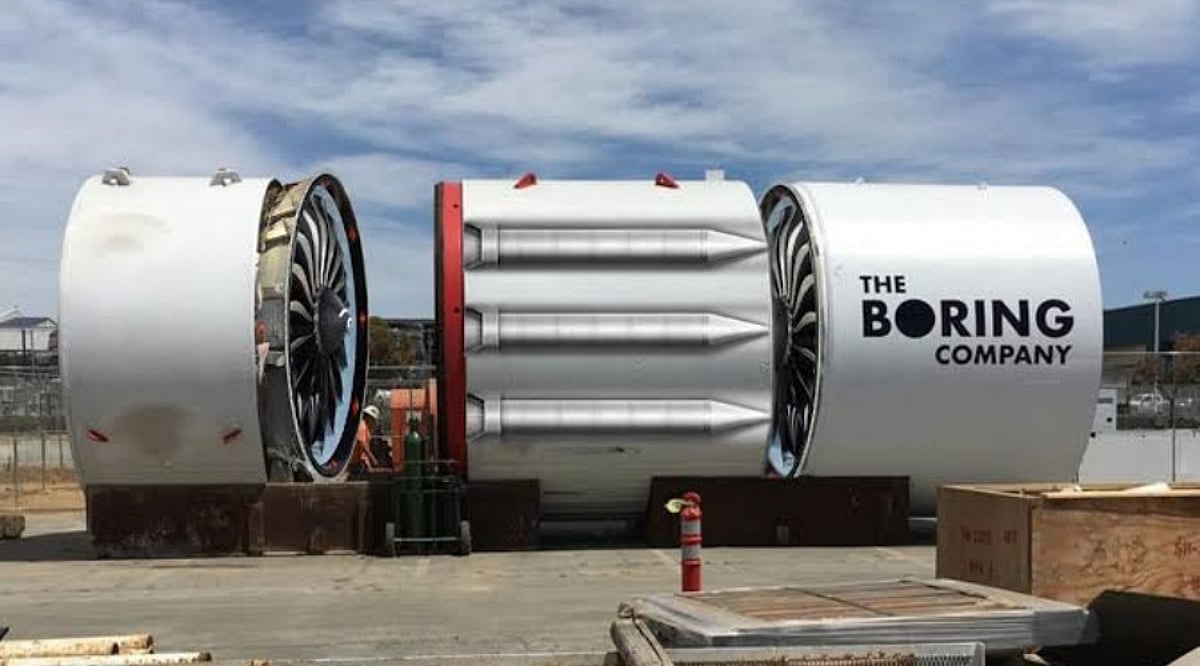
    Elon Musk’s The Boring Company has unveiled plans for a high-speed Hyperloop tunnel connecting Austin and San Antonio, Texas. The announcement came in response to a post on X (formerly Twitter) featuring an AI-generated video of futuristic human colonies. Musk reposted the video and commented, “Boring Company is working on a simple, precursor Hyperloop tunnel between Austin and San Antonio.”

    The proposed tunnel would enable speeds exceeding 200 mph, drastically reducing the current travel time of up to 2.5 hours during peak traffic. Musk emphasized that The Boring Company aims to deliver a consistent, fast commute that bypasses congestion entirely. While the concept is still in early stages, the project faces significant hurdles including regulatory approvals, funding, and the technical challenges of tunneling through urban and suburban environments.

    This is not Musk’s first Hyperloop proposal; previous attempts in other regions have encountered delays and cost overruns. However, the Austin-San Antonio corridor, one of the fastest-growing in the U.S., presents a compelling case for high-speed transit. If realized, the tunnel could transform daily commuting and set a precedent for future Hyperloop networks across Texas and beyond.