Category: Cryptocurrency

  • Australia Strikes 45 Remittance and Crypto Providers from AML Register

    Australia Strikes 45 Remittance and Crypto Providers from AML Register

    Australia’s financial intelligence agency, AUSTRAC, has removed 45 remittance and virtual asset service providers from its anti-money laundering registers over the past year. The actions included cancellations, suspensions, and refusals to renew registrations, effectively barring these businesses from offering regulated services in the country.

    AUSTRAC did not provide a detailed breakdown of how many remittance firms versus cryptocurrency exchanges faced each type of action. However, it cited reasons such as dormancy, insolvency, registration failures, missed notifications, and elevated money laundering or terrorism financing risks as grounds for the decisions.

    Providers whose registrations are canceled can no longer continue operating. AUSTRAC also referred some individuals behind affected businesses to law enforcement and regulatory partners both in Australia and overseas.

    AUSTRAC Targets Registration and Financial Crime Risks

    The regulator emphasized its authority to refuse applications, impose registration conditions, suspend providers, or cancel registrations when it identifies unacceptable financial crime risks. It also acts when businesses fail to demonstrate sufficient capacity to start or continue trading.

    AUSTRAC CEO Brendan Thomas stated that businesses in high-risk financial sectors must understand their exposure, maintain effective controls, and meet reporting obligations. “Otherwise, they may lose their ability to operate,” he warned.

    GetCoins Draws Scrutiny After Customer Complaints

    AUSTRAC singled out BA Digital Ventures Pty Ltd, trading as GetCoins, after complaints reached the National Anti-Scam Centre. The regulator then requested information about GetCoins’ operations and its ability to manage money laundering risks. AUSTRAC said organized cryptocurrency investment scams allegedly exploited GetCoins, though it did not disclose the number of complaints or financial losses involved. The regulator also did not accuse GetCoins of participating in the alleged scams.

    AUSTRAC’s virtual asset registration decisions show it canceled BA Digital Ventures’ registration on June 4. The same list records 14 other virtual asset service provider cancellations between November 2025 and March 2026.

    Public Registers Put Provider Status in Clear View

    Virtual asset providers and remittance businesses must enroll with AUSTRAC and obtain registration before offering covered services. Australia has made its VASP register public, allowing users to check a provider’s registration status directly.

    AUSTRAC has signaled that enforcement will continue. The agency’s actions underscore the increasing regulatory scrutiny on cryptocurrency and remittance firms operating in Australia.

  • XRP Surges After Scheduled 1 Billion Token Unlock in Early September

    XRP Surges After Scheduled 1 Billion Token Unlock in Early September

    XRP rallied on September 1, 2026, after Ripple’s automated escrow system released 1 billion tokens as part of its monthly schedule. Despite recurring concerns that such large unlocks could pressure the market, the price climbed as traders absorbed the event. Whale Alert tracked three separate releases: 500 million, 400 million, and 100 million XRP, totaling approximately USD 1.38 billion at the time.

    Predictable Unlock Pattern Minimizes Disruption

    Ripple has followed the same escrow process since December 2017, when it locked 55 billion XRP into time-based contracts. On the first day of each month, up to 1 billion XRP is released to Ripple-controlled wallets. Any portion not used by Ripple is returned to escrow at the end of the queue. By September 2026, the escrow balance stood at 31.28 billion XRP.

    Historical data shows that Ripple typically re-escrows 700 million to 900 million XRP each month, leaving 100 million to 300 million available for operational expenses, OTC deals, or institutional payments. While the headline unlock appears large, the net addition to circulating supply is usually modest. Seven-day price moves following past releases have ranged from a 3.1% decline to a 1.7% gain, while 30-day trading volume increased by 15% to 22%.

    Market Context Boosts Confidence

    The September release occurred during a favorable environment for XRP. The asset had just completed its strongest August in five years, with all-time high active addresses on the XRP Ledger. Spot XRP ETFs were attracting nine-figure inflows, and Ripple had recently settled its lengthy SEC lawsuit. Institutional partnerships with Deutsche Bank and JPMorgan further bolstered sentiment. Instead of falling after the unlock, XRP rose as traders treated the release as routine.

    XRPL Trading Concentrates Among Fewer Accounts

    Quarterly data from the XRP Ledger’s main exchange revealed a shift in trading behavior. While daily active accounts initiating trades fell to about 1,100 from over 1,860 a year earlier, average order-book trading jumped 79% to 3.57 million XRP per day. This translates to roughly 3,200 XRP traded per active account daily, up from 1,070 XRP the prior year. The number of assets traded against XRP also declined to 319 from 480, the lowest in six quarters.

    Evernorth, an XRP treasury company preparing for a NASDAQ listing, provided the data to CoinDesk. The numbers suggest that larger trades are being executed through fewer accounts, although it is unclear whether institutions are replacing retail participants.

  • Cardano Price Tests $0.245 Resistance After 15% Weekly Rally as Funding Turns Positive

    Cardano Price Tests $0.245 Resistance After 15% Weekly Rally as Funding Turns Positive

    Cardano (ADA) traded near $0.222 on Monday after posting a 15% gain last week, with technical momentum improving and funding rates turning positive. Buyers now face resistance between $0.231 and $0.245, a zone that could determine the next leg of the recovery.

    ADA Momentum Improves as Funding Turns Positive

    ADA traded above its 50-day and 100-day exponential moving averages, supporting a stronger short-term technical structure. A move through the $0.231-$0.245 resistance zone would extend the current recovery.

    CoinGlass data shows Cardano’s long-to-short ratio at 0.94, indicating that short positions slightly outnumber longs. However, the narrow gap points to cautious positioning rather than heavy bearish conviction.

    Funding data sends a different signal. Cardano’s open interest-weighted funding rate turned positive on Saturday and reached 0.0097% on Monday, showing stronger demand for bullish leveraged exposure.

    Wyckoff Setup Keeps December Upside in Focus

    CryptoQuant’s summary data shows large whale orders in Cardano futures, while most other tracked measures remain neutral. This mix points to increased large-trader activity without a broad bullish shift.

    Trader LuckSide Crypto said Bitcoin and ADA follow a Wyckoff accumulation pattern and currently sit in Phase D. He linked Bitcoin’s setup to a possible range breakout around September 25.

    LuckSide also cited two Bitcoin metrics: long-term holders control 75% of supply, while only 17% moved during the last three months. Bitcoin dominance has also fallen below 60%.

    According to LuckSide, the same framework could support an ADA gain of roughly 50% by December if the pattern holds. He also noted that the September 25 timing does not guarantee a breakout.

    CLARITY Vote and Cardano Activity Add Market Risks

    The Senate plans a September 15 cloture vote on the CLARITY Act, according to LuckSide Crypto. The vote would open debate rather than approve the legislation.

    The measure needs 60 votes to advance. Republicans hold 53 Senate seats, while only two Democrats have publicly backed the bill so far. Anonymous traders reportedly wagered more than $1 million on failure.

    LuckSide said a failed vote would not end US crypto policy efforts because the SEC and CFTC continue separate work. Still, a delay would remove one September catalyst for the broader market.

    Cardano network data also shows a mixed picture. Chainspect recorded about 26,500 transactions on September 4 before activity fell to 19,054 on September 6.

    Over the same period, on-chain revenue rose 1.99% to $1,261. Average transaction fees fell 2.42% to $0.06619, contrasting with a separate report that claimed ADA’s DEX volume had tripled.

    Traders will also track Cardano network activity, Bitcoin’s market structure, and the September 15 CLARITY Act cloture vote.

  • Former RBI Governor Raghuram Rajan to Speak at Ripple Swell 2026 in New York

    Former RBI Governor Raghuram Rajan to Speak at Ripple Swell 2026 in New York

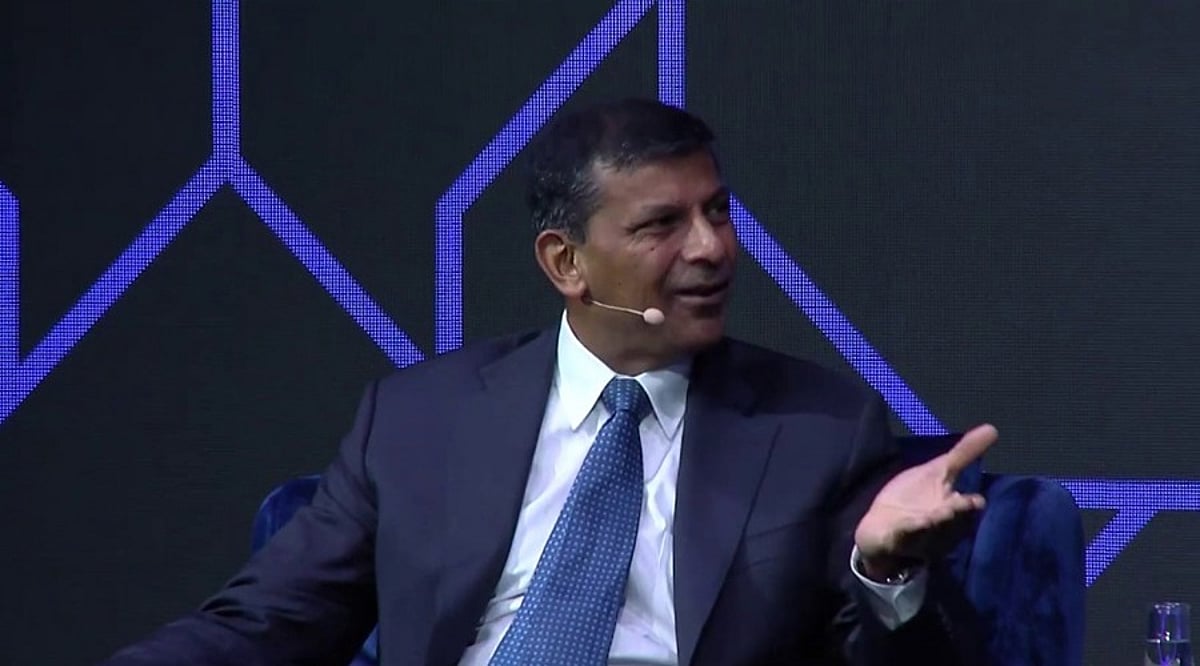
    Ripple’s annual conference, Swell 2026, is set to feature a notable addition to its speaker lineup: Raghuram Rajan, the former Governor of the Reserve Bank of India (RBI). Rajan will participate in the invitation-only Institutional Summit scheduled for October 27 in New York City, as announced by Ripple in a press release on September 4.

    The Institutional Summit is designed for leaders from banks, investment firms, payment providers, and other financial institutions. This year, Ripple is also integrating its developer-focused XRPL Apex conference with Swell, creating a combined program that bridges institutional finance and blockchain development. The events will take place at The Shed in Manhattan’s Hudson Yards, running through October 29.

    While Ripple has confirmed Rajan’s participation, the company has not yet disclosed the specific topic, session time, or format of his appearance. The conference website lists him as a speaker, but it remains unclear whether he will deliver a keynote or join a panel discussion.

    Rajan’s background is distinguished: he served as RBI Governor from September 2013 to September 2016, and prior to that, he was the Chief Economist at the International Monetary Fund (IMF). Currently, he holds the Katherine Dusak Miller Distinguished Service Professorship in Finance at the University of Chicago’s Booth School of Business and co-chairs the Federal Reserve’s task force on balance sheet policy.

    This is not Rajan’s first association with Ripple. In 2024, he became a member of Ripple’s advisory board for its RLUSD ecosystem, which provides strategic and regulatory guidance. He has also spoken about the future of stablecoins, which could soon be integrated into private payment systems.

    The full schedule for Swell 2026 is yet to be released, with Ripple expected to announce more details about Rajan’s session and other speakers. For now, his presence underscores the conference’s focus on bringing together central banking expertise and digital asset innovation.

  • Nepal Enables Crypto-Funded Humanitarian Aid via US Banking Route

    Nepal Enables Crypto-Funded Humanitarian Aid via US Banking Route

    Nepal has established a legal pathway for cryptocurrency donations to support disaster relief, using a US-based off-ramp system that converts digital assets into dollars before funds enter the country. The arrangement bypasses Nepal’s domestic ban on cryptocurrency trading and use, allowing overseas donors to contribute without sending crypto directly into Nepali financial systems.

    Under the new structure, donors worldwide can send digital currencies through platforms like Ethereum, Polygon, and Solana. US financial institutions then convert those assets into US dollars, which are transferred via SWIFT to Nepal’s official disaster relief account. As of Monday, approximately USD 500 from crypto-to-fiat conversions had reached the government fund, according to Finance Minister Swarnim Wagle. Meanwhile, NepalRelief.org has collected USD 174,831 from donors.

    The channel was developed in response to the deadly Bhotekoshi river floods. Polygon, Cross River Bank, and Engage Nepal collaborated to create NepalRelief.org, which uses Polygon’s Open Money Stack and Coinme for technical processing. Engage Nepal receives contributions through a publicly disclosed wallet and conducts audits. Cross River Bank then converts the assets into dollars and sends the funds through SWIFT.

    This approach keeps cryptocurrency entirely outside Nepal’s financial system. Nepali banks receive conventional currency rather than digital assets, ensuring compliance with local regulations. The project began after crypto companies and communities abroad sought a legal way to support flood victims. Cross River Bank executive Pravesh Rijal and Polygon Foundation founder Sandeep Nailwal discussed the proposal on August 27, focusing on converting crypto in the United States before sending money to Nepal.

    After Polygon, Cross River Bank, and Engage Nepal agreed on the structure, they approached Nepal’s government through Finance Minister Wagle. The government issued a no-objection to the arrangement. Cross River Bank assigned a 25-member team to complete the legal and technical work, launching NepalRelief.org within 24 hours.

    Other blockchain organizations have also stepped up. Ripple announced USD 300,000 for emergency response, with World Central Kitchen and Mercy Corps using those funds for food, drinking water, and sanitation supplies. The Solana Foundation and NFT marketplace Mallow raised USD 166,946 in USDC by auctioning advertising slots on Solana’s official X account. Solana will route proceeds to Nepal’s government relief fund through Engage Nepal. Blockchain for Impact has pledged USD 100,000.

    This model differs from previous crypto relief efforts that faced legal barriers inside Nepal. By keeping digital assets abroad and transferring only regulated fiat currency, the system offers a potential blueprint for other countries that restrict cryptocurrency but wish to accept crypto-funded humanitarian aid.

  • OKX Offers $100K Developer Contest for X Layer and AI Projects Amid Founder Feud with CZ

    OKX Offers $100K Developer Contest for X Layer and AI Projects Amid Founder Feud with CZ

    OKX has launched a $100,000 developer competition known as Dev Day, inviting builders to create projects using X Layer or OKX AI. Applications are open until September 11, 2026, and participants can join either in person or remotely. The contest focuses on real-world asset (RWA) infrastructure, tokenized stock applications, agent APIs, and AI-native products.

    According to OKX, the goal is to drive developer activity around X Layer, its infrastructure for tokenized real-world assets. The prize pool totals $100,000, and the competition is open to remote developers as well.

    Meanwhile, OKX founder Star Xu and Binance founder Changpeng Zhao (CZ) have reignited a decade-old public dispute. The feud resurfaced after Zhao released a memoir written during his prison term, which Xu claims contains inaccuracies about events at OKCoin (the predecessor to OKX) dating back to 2015.

    Xu pointed to a video that he says shows conflicting versions of a contract from that period, accusing Zhao of repeatedly misleading the public. The disagreement centers partly on a contract dispute involving early Bitcoin investor Roger Ver. Zhao wrote that Xu had accused him of forging a contract without warning, an allegation Zhao denied in a May 2015 Reddit post.

    The exchange escalated when Xu questioned Zhao’s marital status, referencing earlier reporting. Zhao responded by proposing a $1 billion wager on whether his divorce had been finalized, giving Xu 24 hours to accept. Xu declined, citing compliance obligations, and asked whether Zhao’s Binance ownership stake underwent a legal separation. Zhao rejected the question, calling the matter private.

    As the public spat continues, OKX is pushing forward with its developer contest, raising questions about whether the platform can maintain focus on innovation amid personal hostilities between two of crypto’s most prominent figures.

  • Pi Network Protocol 27 Upgrade Nears as PI Faces Ongoing Supply Pressure

    Pi Network Protocol 27 Upgrade Nears as PI Faces Ongoing Supply Pressure

    Pi Network is gearing up for its Protocol 27 mainnet activation on September 15, while PI continues to trade well below its 2025 peak amid daily token unlocks. The upcoming upgrade introduces smart-contract authentication, automated market maker (AMM) tools, RPC infrastructure, and decentralized exchange (DEX) features. At the same time, the project is shifting its focus from mobile mining toward utility, developer activity, and broader Open Network usage.

    Protocol 27 Brings New Infrastructure to Mainnet

    Pi Network started in 2019 as a phone-based mining app, years before PI became tradable through Open Network. Since then, 14 million users have migrated to the network, according to provided figures.

    Protocol 27 is the final planned protocol change in the project’s current development sequence. The upgrade will introduce smart-contract authentication, automated market maker liquidity pools, RPC server infrastructure, and decentralized exchange functionality.

    The decentralized exchange attracted 242,000 testers on testnet before the planned mainnet activation. Can Protocol 27 turn Pi Network’s large migrated user base into sustained on-chain activity?

    PI Price Faces Supply Pressure Without Token Burns

    PI closed August at USD 0.0909, more than 97% below the USD 2.99 high reached when Open Network enabled external trading in February 2025. As a result, price performance remains a major part of the current Pi Network discussion.

    Meanwhile, roughly 6.5 million PI unlock each day. Pi Network has never burned tokens, meaning its current supply structure does not include a mechanism that permanently removes tokens from circulation.

    A recent Pi Update post raised the possibility of a transparent token burn in the future. Still, Pi Network has not introduced such a system, so any potential effect on scarcity remains hypothetical.

    Developer Updates Shift Focus Toward Pi Network Utility

    Pi Network presented utility as the project’s next phase now that Open Network is live. The network’s focus has therefore moved beyond collecting tokens through mobile mining toward using PI across applications.

    The additions include local storage support, staking data linked to specific applications, file sharing, video sharing, and updated documentation for developers.

    These developer changes do not alter PI supply, nor do they include a new exchange listing or partnership. Meanwhile, PI already trades on OKX, Bitget, Gate.io, and MEXC.

    Binance has not listed PI despite an 86.8% community vote supporting a listing. Protocol 27 instead centers on network infrastructure as Pi Network prepares for its scheduled September 15 mainnet activation.

  • Top 7 Altcoins to Watch This Month: ETH, SOL, XRP, BNB, LINK, AVAX, SUI, and More

    Top 7 Altcoins to Watch This Month: ETH, SOL, XRP, BNB, LINK, AVAX, SUI, and More

    Top 7 Altcoins to Watch This Month

    As the cryptocurrency market continues to evolve, investors are closely monitoring a select group of altcoins that show strong potential for growth and innovation. Here are seven altcoins that are capturing attention this month, along with a bonus pick that merges blockchain with artificial intelligence.

    1. Ethereum (ETH)

    Ethereum remains the largest smart contract platform, and it continues to attract developers thanks to its robust DeFi ecosystem, NFT marketplaces, and enterprise adoption. Despite increasing competition from other blockchains, Ethereum’s network effects and ongoing upgrades keep it at the forefront of the industry.

    2. Solana (SOL)

    Solana is renowned for its high transaction speeds and low fees, making it a favorite for decentralized applications, gaming, and meme coin ecosystems. Its performance advantages continue to draw developers and users alike, solidifying its position as a top altcoin to watch.

    3. XRP

    XRP remains under the spotlight due to ongoing regulatory developments and its partnerships in cross-border payments. Its growing role in institutional financial services makes it a key asset for investors monitoring the intersection of crypto and traditional finance.

    4. BNB

    Binance Coin (BNB) powers one of the world’s largest cryptocurrency ecosystems. It offers trading discounts on the Binance exchange, supports DeFi applications, and underpins blockchain infrastructure. BNB’s utility and widespread adoption make it a staple in many portfolios.

    5. Chainlink (LINK)

    Chainlink provides decentralized oracle services that enable smart contracts to securely access real-world data across multiple blockchain networks. As the demand for reliable data feeds grows, Chainlink’s role becomes increasingly critical, making LINK a notable altcoin for investors.

    6. Avalanche (AVAX)

    Avalanche continues to expand through enterprise partnerships and scalable blockchain infrastructure. Its growing decentralized finance applications and focus on interoperability position it as a strong contender in the smart contract platform race.

    7. Sui (SUI)

    Sui is gaining attention for its high-speed blockchain architecture and developer-friendly tools. With increasing adoption among decentralized application builders, Sui is emerging as a promising platform for next-generation dApps.

    Bonus: Render (RENDER) and Artificial Superintelligence Alliance (FET)

    Render combines blockchain with decentralized GPU computing, allowing creators and AI developers to access distributed rendering power efficiently. Meanwhile, the Artificial Superintelligence Alliance (FET) focuses on AI-focused blockchain solutions, drawing attention as artificial intelligence and decentralized technologies become increasingly interconnected investment themes.

    These altcoins represent a mix of established players and emerging projects, each offering unique value propositions. As always, investors should conduct thorough research and consider their risk tolerance before diving into the volatile crypto market.

  • Institutional OTC Trading Dominates Crypto Markets, Driving Lower Volatility and Selective Capital Flows in 2026

    Institutional OTC Trading Dominates Crypto Markets, Driving Lower Volatility and Selective Capital Flows in 2026

    Institutional investors now account for the majority of cryptocurrency OTC spot trading, fundamentally altering how capital moves across digital asset markets. According to Wintermute, institutions represented 72% of spot OTC volume during the first half of 2026, up from approximately 61% in the second half of 2024. This shift indicates that professional capital now plays a much larger role in liquidity provision and asset selection.

    Institutional Capital Changes Traditional Crypto Rotation

    Wintermute notes that institutional investors typically favor assets with deep liquidity, clearer regulatory standing, and stronger long-term fundamentals. This approach contrasts sharply with retail-driven trading, which often spreads across a wide range of speculative tokens.

    In earlier crypto cycles, gains in Bitcoin typically flowed into Ethereum before cascading into smaller cryptocurrencies. However, institutional participation has disrupted that familiar pattern. Capital now concentrates within a narrower group of established digital assets. As a result, expectations for another broad altcoin rally may be based on outdated market dynamics.

    The data also shows a marked decline in realized cryptocurrency volatility, which has fallen to around 45% compared to roughly 70% during previous market cycles. Institutional investors employ stricter risk controls and longer investment horizons, reducing the rapid capital movements that characterized retail-led trading.

    OTC Markets Gain Greater Influence Over Price Discovery

    The institutional shift has elevated the importance of crypto OTC trading. These markets enable investors to negotiate large transactions privately rather than placing them directly on public exchanges, allowing major trades to execute without immediately affecting visible order books. Consequently, large transactions can occur before retail traders see corresponding movements in public markets.

    As institutional activity expands, private liquidity providers play a larger role. Wintermute operates across centralized and decentralized markets, providing liquidity for digital asset trading.

    Lower volatility may temper some of the explosive gains historically seen among smaller cryptocurrencies, but it could also limit the scale of sharp market declines. The changing structure means liquidity, volatility, and asset selection increasingly reflect professional investment strategies.

    Tokenized Assets and Derivatives Attract Institutional Capital

    Beyond spot markets, Wintermute identifies tokenized real-world assets (RWAs) as a major destination for institutional capital. The sector reached approximately $31 billion during the first half of 2026, representing roughly 50% growth from the previous period. Average monthly transfer volumes more than doubled, reaching around $9 billion.

    Activity centered on tokenized U.S. Treasury securities, money market funds, and private credit instruments. Higher transfer volumes indicate growing operational use rather than purely speculative activity.

    Institutional demand has also expanded in crypto derivatives. Wintermute reports a 3.4-fold increase in notional OTC altcoin options volume compared with the second half of 2025. Professional investors increasingly use these instruments for hedging, portfolio management, and structured investment strategies, making derivatives another pillar of the market’s growing institutional infrastructure.

    Asset managers, hedge funds, banks, and corporate treasuries have all expanded their participation across digital assets, continuing to influence liquidity, volatility, and capital allocation.

    Final Thoughts

    Wintermute’s data reveals that institutional investors are taking a larger role in crypto OTC trading while capital becomes more selective. Lower volatility, stronger RWA activity, and growing derivatives use signal a market increasingly shaped by professional strategies, deeper liquidity, and a focus on established digital assets.

  • Trump Media Abandons Crypto.com CRO Treasury and ETF Plans, Pivots to TAE Merger

    Trump Media Abandons Crypto.com CRO Treasury and ETF Plans, Pivots to TAE Merger

    Trump Media has officially terminated its planned CRO treasury venture with Crypto.com and Yorkville Acquisition, citing changing market conditions and a strategic shift in business priorities. The decision also ends a separate ETF servicing agreement with Crypto.com, and the announcement triggered a drop of up to 5% in the CRO token price.

    End of the CRO Treasury Venture

    The original plan involved creating a publicly traded entity called Trump Media Group CRO Strategy, which would accumulate Cronos’ native token and generate extra returns through staking. Under that structure, Crypto.com was set to provide $1 billion in CRO and access to a $5 billion credit facility, with the broader initiative targeting approximately $6.4 billion in CRO purchases.

    Trump Media had already bought $105 million worth of CRO in September 2025 as part of a wider relationship with Crypto.com, which also included proposed token rewards across Trump Media products. However, those plans are now shelved.

    ETF and Truth Social Crypto Plans Retreat

    The companies also scrapped a separate arrangement involving planned exchange-traded funds from Yorkville America, under which Crypto.com had expected to service certain funds. Additionally, Trump Media has scaled back its plans to integrate Crypto.com-powered prediction markets directly into Truth Social, further narrowing the scope of its earlier crypto strategy.

    This pullback follows a period when Trump-linked entities aggressively expanded their crypto footprint after the 2024 presidential election, including ETF plans, CRO accumulation, and Bitcoin holdings.

    Strategic Pivot Toward TAE Merger

    Interim CEO Kevin McGurn explained that the digital asset treasury market has become saturated, prompting Trump Media to refocus on its core strengths: media, data licensing, and technology. The company is now prioritizing its proposed merger with fusion-energy firm TAE, with hopes of completing the transaction before the end of 2026.

    The shift comes amid ongoing legislative gridlock in Washington over the CLARITY Act, which has stalled due to debates about ethics and potential conflicts involving President Donald Trump and his family’s crypto ventures.

    Despite the retreat from crypto initiatives, Trump Media still holds Bitcoin on its balance sheet. Company filings show 9,542 BTC at the end of the second quarter, with 2,628 BTC recently moved to addresses associated with Crypto.com.

    Looking Ahead

    Trump Media’s decision to end its CRO treasury and ETF partnerships with Crypto.com marks a notable reversal in its crypto strategy. By redirecting attention toward media, data licensing, technology, and the proposed TAE merger, the company is charting a new course—while still maintaining its Bitcoin position.