Category: Cryptocurrency

  • Jimothy Raccoon Meme Coin Skyrockets 331% After Elon Musk Shares Raccoon Video

    Jimothy Raccoon Meme Coin Skyrockets 331% After Elon Musk Shares Raccoon Video

    The Solana-based meme coin JIMOTHY surged 331% on Saturday after Elon Musk shared a raccoon video on X, reviving attention around the token. JIMOTHY traded at $0.0162 and reached a $16.2 million market capitalization, with 24-hour trading volume climbing to $25.4 million. Musk did not mention the token directly in his post.

    Musk Post Sends JIMOTHY Sharply Higher

    Musk shared the video early Saturday after xAI Designer and Creative Ambassador Dogan Ural created the clip. The post attracted more than 811,000 views within hours. The move echoed earlier meme coin rallies linked to Musk’s online activity. His posts and username changes have repeatedly triggered short-lived price jumps across several tokens.

    JIMOTHY launched through Solana’s Pump.fun platform in July 2026. Anonymous developers named the token after a viral Seattle raccoon that had already gained attention online.

    JIMOTHY Has a History of Attention-Driven Rallies

    Soon after launch, JIMOTHY rose about 52-fold within days as the raccoon spread across social media. A later mention from an official White House account also preceded another spike. Musk has influenced other meme coin moves. In October 2025, a Grok video from Musk lifted FLOKI by about 30%, according to the supplied data. Other rallies followed his Dogefather post and his Gorklon Rust handle change. Another token climbed 42,000% after a Musk reply, although those gains later faded as attention shifted.

    Solana Price Holds Key Support as Trend Stays Weak

    Meanwhile, Solana traded near $73.79 after a steep decline from its 2025 highs. The daily chart placed SOL inside a fragile consolidation range around $60 to $80. SOL fell from roughly $240 to $250 in late 2025 before losses accelerated during the first half of 2026. After dropping below $100, the token mostly traded between the low $60s and about $90.

    Buyers defended the lower end near $60, yet they have not pushed SOL through nearby resistance. The $80 to $90 area remains the nearest visible barrier, while $100 marks a stronger structural level. The chart also shows a descending resistance line above the price. A sustained breakout could open a corrective move toward $82 to $94. Meanwhile, a break below $64 to $68 would increase downside risk.

    The accompanying post linked Solana’s longer-term outlook to faster performance, lower inflation and greater fee burning. The supplied text treats those network claims separately from the current technical setup.

    JIMOTHY remains a micro-cap meme coin whose price depends heavily on sentiment, trading activity and sustained online interest. At the same time, SOL still needs higher highs and a resistance breakout to confirm a broader reversal.

    Final Thoughts

    JIMOTHY’s 331% rally followed Musk’s raccoon video and renewed attention around the Solana meme coin. Yet SOL remains below key resistance after its major decline. Trading volume, online interest and Solana’s ability to hold support now remain central market factors.
  • Voter Backlash Intensifies Trump Crypto Ethics Debate as TRUMP Token Weakens

    Voter Backlash Intensifies Trump Crypto Ethics Debate as TRUMP Token Weakens

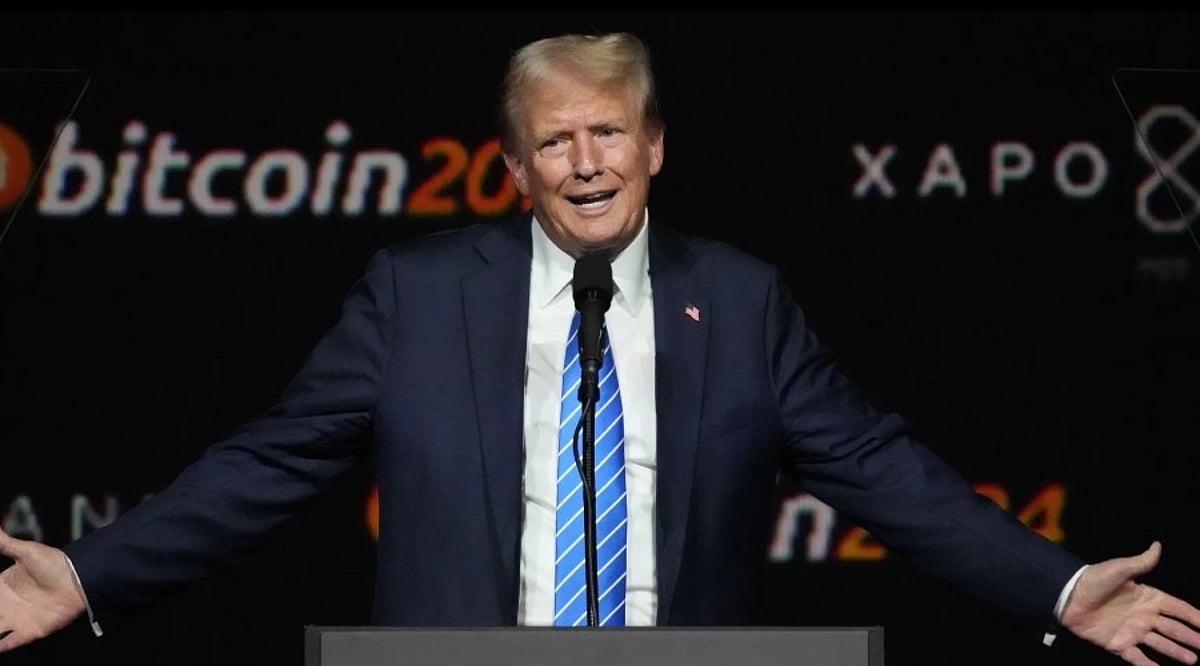
    Growing public opposition to President Donald Trump’s cryptocurrency earnings is intensifying the ethics debate in Washington, as Congress weighs comprehensive digital asset regulations. Recent polls reveal that a majority of voters support stricter limits on federal officials profiting from crypto, placing political pressure on politically linked tokens like the TRUMP token.

    Polls Show Broad Support for Crypto Ethics Limits

    Surveys cited by Democratic Senator Elizabeth Warren found that 55% of voters disapprove of Trump’s cryptocurrency-related earnings, with 44% expressing strong disapproval. A separate poll by the Progressive Policy Institute and GBAO reported even broader support for restrictions, with 71% to 75% of respondents backing limits on federal officials and their immediate family members profiting from cryptocurrency businesses. Support remained strong even after participants received information about Trump’s business background, adding momentum to an already contentious debate over political conflicts of interest in digital assets.

    Critics argue that elected officials should not financially benefit from industries they help regulate, while supporters maintain that private business ownership should not automatically disqualify individuals from public office.

    Congress Faces a Conflict-of-Interest Debate

    Congress continues to debate broader cryptocurrency legislation aimed at establishing comprehensive federal rules for digital assets. Ethics provisions have become a key sticking point in negotiations. The expansion of cryptocurrency ownership among politicians, corporations, and financial institutions has intensified calls for clearer standards on how public officials manage digital asset holdings and business interests.

    Market participants are closely watching whether public opinion will translate into legislative action. Measures restricting cryptocurrency ownership or financial interests among senior government officials could create new pressure for politically linked digital assets, while also affecting perceptions of regulatory certainty across crypto markets.

    TRUMP Token Faces Political and Regulatory Pressure

    Political uncertainty has also weighed on the TRUMP cryptocurrency token. The asset recently traded near $1.45 after falling approximately 9.4% over the past week. Politically branded tokens remain highly sensitive to legislative developments, public opinion, and election-related events. Analysts note that sentiment around public figures can move prices independently of broader cryptocurrency market conditions.

    Further restrictions on officials’ cryptocurrency interests could add downward pressure on politically linked assets. Conversely, prolonged negotiations without legislative changes could allow prices to stabilize if wider cryptocurrency conditions improve.

    The broader debate highlights how cryptocurrency has moved deeper into mainstream politics, with digital assets now central to discussions about public policy, ethics, elections, government oversight, and market confidence.

    Final Thoughts

    Public opposition to Trump’s cryptocurrency earnings is strengthening the ethics debate as Congress weighs digital asset legislation. The TRUMP token has weakened amid political uncertainty. Attention now centers on whether support for tighter rules will develop into formal restrictions on cryptocurrency interests held by senior federal officials.

  • Bybit Secures US Court Approval to Track Funds Stolen in $1.5B Lazarus Hack

    Bybit Secures US Court Approval to Track Funds Stolen in $1.5B Lazarus Hack

    In a significant legal victory, Bybit has obtained a U.S. federal court order allowing expedited discovery to trace assets linked to the $1.5 billion Lazarus Group hack. The ruling empowers the exchange to identify account holders, balances, and transaction histories from platforms operating in the United States.

    Court documents reveal that the order, issued in the District Court for the District of Columbia, permits Bybit to request detailed records before any changes occur. The lawsuit, filed under seal on June 18, targets North Korea’s Reconnaissance General Bureau, the Lazarus Group, and 20 unnamed defendants. The court approved expedited discovery the following day, while keeping certain exhibits sealed.

    To preserve identifiable assets, a temporary restraining order was issued on June 19, barring defendants from transferring specific funds. This order was renewed on July 16, and a partial preliminary injunction was granted on July 30. Bybit claims these legal steps are critical to freeze assets while the case proceeds.

    Despite these efforts, Bybit informed the court that 90.2% of the stolen assets had become untraceable by June 18. The funds were allegedly laundered through mixers, cross-chain bridges, and over-the-counter dealers, obscuring the transaction trail. Nonetheless, 9.8% of the total remains traceable, including $75.5 million that has either been frozen or returned to recovery channels.

    The February attack drained over 400,000 ETH and staked ETH from the Dubai-based exchange. Investigators linked the breach to compromised Safe Wallet infrastructure and developer credentials. The FBI officially attributed the theft to North Korea on February 26, 2025, under the operation name TraderTraitor.

    Bybit’s lawsuit seeks the return of stolen assets and $1.5 billion in compensatory damages, plus punitive and treble damages under the U.S. Racketeer Influenced and Corrupt Organizations Act. CEO Ben Zhou emphasized the company’s priority is to “protect our users first” and recover available funds, while holding those responsible accountable. Bybit plans to pursue further judicial relief and share blockchain records with investigators and regulators.

    North Korea has not publicly responded, and the defendants have yet to present a defense in unsealed filings. Parts of the proceedings remain confidential.

  • Top 6 Decentralized Prediction Markets to Watch in 2026

    Top 6 Decentralized Prediction Markets to Watch in 2026

    Top 6 Decentralized Prediction Markets to Watch in 2026

    Prediction markets have emerged as one of the fastest-growing segments in Web3, enabling users to bet on the probability of real-world events—from elections and sports to cryptocurrency prices and macroeconomic trends. By 2026, institutional participation and surging trading volumes are driving monthly activity into the tens of billions of dollars. Here are the top six decentralized prediction platforms to keep an eye on this year.

    1. Polymarket

    Polymarket remains the largest decentralized prediction market, operating on Polygon and settling in USDC. It hosts thousands of markets spanning politics, crypto, sports, economics, and global events. With deep liquidity and a strong user base, Polymarket continues to be the go-to choice for crypto-native traders seeking high-volume event trading.

    Best for: High liquidity and broad market coverage.

    2. Azuro

    Azuro is an open prediction market protocol that provides blockchain infrastructure for building decentralized prediction applications. Unlike a simple front-end, Azuro powers multiple prediction and sports forecasting platforms through smart contracts, emphasizing transparency and composability within the DeFi ecosystem.

    Best for: Developers and sports prediction markets.

    3. Predict.fun

    Built on BNB Chain, Predict.fun offers markets for crypto, politics, and sports, with integrated yield-generating mechanisms for open positions. The platform aims to merge prediction trading with DeFi incentives, allowing users to earn passive income while participating in event forecasting.

    Best for: DeFi users seeking yield and prediction opportunities.

    4. Gnosis Protocol Ecosystem

    Gnosis remains a key infrastructure player in decentralized prediction markets. While its original prediction market products have matured, its blockchain capabilities, oracle connections, and smart-contract development tools continue to power a variety of Web3 prediction platforms.

    Best for: Developers building custom prediction market solutions.

    5. Zeitgeist

    Zeitgeist is a decentralized prediction market built on the Polkadot ecosystem, allowing anyone to create markets on politics, finance, sports, and social events. It combines automated market makers with community governance, enabling permissionless market creation and decentralized dispute resolution.

    Best for: Permissionless market creation and Polkadot users.

    6. SX Bet

    SX Bet initially focused on decentralized sports betting but has expanded to predict outcomes across a range of events. It uses blockchain settlement, reduced fees, and self-custody to offer transparent event trading across many categories.

    Best for: Sports-focused decentralized prediction markets.

    Why This Matters

    Prediction markets have evolved from niche Web3 tools into multi-billion-dollar financial platforms. Understanding the leading protocols enables traders and developers to capitalize on growing institutional liquidity, permissionless event trading, and yield-generating Web3 infrastructure.

    Final Thoughts

    As blockchain infrastructure continues to advance and institutional interest grows, prediction markets are maturing rapidly. While Polymarket dominates with its liquidity and market selection, other protocols like Azuro, Zeitgeist, and Predict.fun are carving out niche use cases and providing developer-friendly infrastructure. The Web3 finance space is expanding, and decentralized prediction markets are playing a major role alongside other innovations.

    FAQs

    What is a decentralized prediction market?

    A decentralized prediction market is a blockchain-based platform where users trade on the outcome of future events. Smart contracts automatically settle payouts without relying on a central authority.

    Which is the largest prediction market platform in 2026?

    Polymarket remains the largest decentralized prediction market by liquidity and trading activity, offering thousands of markets covering crypto, politics, sports, and macroeconomic events.

    Are decentralized prediction markets legal?

    Legality depends on the country and local regulations. Some jurisdictions permit prediction markets, while others restrict or regulate them similarly to betting or derivatives platforms.

    How do prediction markets make money?

    Most platforms generate revenue by charging small trading or settlement fees. Some protocols also earn through liquidity pools, token incentives, or ecosystem services.

    What are the risks of using decentralized prediction markets?

    Users face risks including smart contract vulnerabilities, regulatory uncertainty, market volatility, oracle failures, and liquidity constraints. Conducting thorough research before participating is essential.

  • Gate DexBuilder Introduces First Event Contracts Builder and $3M Grant Program to Boost Market Ecosystem

    Gate DexBuilder Introduces First Event Contracts Builder and $3M Grant Program to Boost Market Ecosystem

    Gate, a leading global digital asset platform, has announced that its DEX infrastructure platform, Gate DexBuilder, has officially launched its first Event Contracts Builder alongside a $3 million grant program. The initiative is designed to provide project teams, developers, communities, and Web3 applications worldwide with one-stop event contract market building capabilities, further accelerating the development of the event contract market ecosystem.

    The newly launched Event Contracts Builder aims to lower the barrier to developing market products. Through modular infrastructure services, it offers partners an integrated solution covering market creation, trading, liquidity support, settlement, and operational management. Project teams no longer need to build trading systems, liquidity infrastructure, and settlement architecture from scratch, enabling them to quickly deploy event contract market products tailored to their own brand positioning.

    The service is open to brokers, comprehensive trading platforms, crypto wallets, Web3 applications, media and information platforms, community content platforms, AI Trading, AI Agents, quantitative trading platforms, as well as sports, esports, and entertainment products. Projects at the ideation, MVP, testing, or live stage are eligible to apply.

    In terms of product capabilities, Event Contracts Builder supports API and SDK integration and provides core functions including market data, order and position management, market settlement, risk controls, an operations dashboard, and multi-terminal integration. Partners can either integrate event contract market functionality into their existing products or build independently operated, branded event contract markets on Gate DexBuilder.

    Event Contracts Builder will focus on a diverse range of event contract market scenarios, including crypto assets, sports events, esports, macroeconomics, AI, and industry events. This enables more innovative teams to explore how event contract markets can be integrated with different business ecosystems and expand the boundaries of industry applications.

    Notably, Gate DexBuilder will provide selected projects with up to $3 million in funding and ecosystem support, covering key areas including product development, technical integration, liquidity building, market launch, and user growth. Outstanding Builders will also gain access to technical support, official showcases, community exposure, joint AMAs, media promotion, and ecosystem partnerships, helping accelerate projects from proof of concept to product launch and large-scale growth.

    Jason Fung, Head of Gate DexBuilder and Head of Global Partnerships, commented that the future development of event contract markets will depend not only on trading volume growth but also on broader application scenarios and open infrastructure support. Gate DexBuilder aims to provide partners across different industries with flexible and efficient building capabilities through Event Contracts Builder, accelerating the integration of event contract markets with a wider range of real-world and Web3 use cases.

    As a platform continuing to invest in Web3 infrastructure and innovative products, Gate has expanded its presence across emerging areas including event contract markets, DEXs, AI, and RWA. By opening up product capabilities and ecosystem resources, Gate continues to build a more diversified, one-stop digital asset service ecosystem. Looking ahead, Gate DexBuilder will further strengthen its event contract market infrastructure services and work with Builders worldwide to explore more innovative application scenarios, driving the event contract market ecosystem toward a more open and efficient future.

  • Bitcoin Recovery Outlook: ETF Inflows, CLARITY Act, and Technical Signals Point to Late 2026 Rebound

    Bitcoin Recovery Outlook: ETF Inflows, CLARITY Act, and Technical Signals Point to Late 2026 Rebound

    Bitcoin (BTC) is trading at $64,277.35 as of August 7, 2026, roughly 49% below its October 2025 all-time high of approximately $126,200. After a turbulent first half of the year that included a sharp June decline and a partial July rebound, the market has stabilized in a tight range. The CLARITY Act vote and ETF recovery could be the catalyst for BTC recovery.

    CLARITY Act Vote

    Senate Majority Leader John Thune, speaking through a spokesperson, confirmed the floor vote has been delayed but said the measure is expected to be considered once the Senate returns after the August recess. Thune said Democrats remained opposed to holding a vote before the recess. “The Dems are insistent on no CLARITY vote… I worked with sponsors of the bill. Senator Lummis was great, and we’re getting that queued up first thing when we come back.”

    The legislation already passed the House in 2025 by a 294-134 vote and cleared the Senate Banking Committee 15-9 in May 2026. It seeks to establish clear jurisdictional lines between the SEC and CFTC and provide a market-structure framework for digital assets.

    ETF Inflows Recover

    According to SoSoValue data, Bitcoin spot ETFs saw a total net inflow of $128.69 million yesterday. The Bitcoin Spot ETF with the highest net inflow yesterday was BlackRock’s ETF IBIT, with a daily net inflow of $128.33 million. The Bitcoin Spot ETF with the highest net outflow yesterday was VanEck’s ETF HODL, with a daily net outflow of $32.77 million. The total net asset value of Bitcoin Spot ETFs is $78.77 billion, with an ETF net asset ratio of 6.09%. The historical cumulative net inflow has reached $52.08 billion. This marks the fourth consecutive session of inflows totaling $754.69 million.

    Technical Structure

    Bitcoin has also previously bottomed out or made notable rallies in the September-October window after summer weakness. October could be a probable turning point as prices hover above $60,000-$62,000, and on-chain sentiment is near realized-price bottoms, with valuations on the rise and ETF interest returning.

    Bitcoin trades above $64,250 on Friday with a mild bearish near-term bias as BTC holds below the 50-day Exponential Moving Average (EMA) at $64,584, followed by $66,928, the 100-day EMA and the 200-day EMA at $72,410. The Relative Strength Index (RSI) stood at 51.88, which is relatively close to the neutral zone, while the Moving Average Convergence Divergence (MACD) indicator is near the zero level with a slightly negative value, suggesting lower bullish momentum.

    Immediate resistance is found at the 50-day EMA at $64,584, followed by the 100-day EMA at $66,928. On the downside, immediate support is seen near $64,004. A daily close below this level could increase the possibility of a deeper corrective phase.

    Frequently Asked Questions

    1. Why is Bitcoin trading below its all-time high?

    Bitcoin is trading around 49% below its October 2025 peak, driven by macroeconomic uncertainty, reduced risk appetite, profit-taking, and tighter monetary conditions. Despite the correction, institutional demand has remained relatively resilient through spot ETFs.

    2. How could the CLARITY Act affect Bitcoin’s price?

    If passed, the CLARITY Act could establish clearer regulatory rules for digital assets in the US by defining the roles of the SEC and CFTC. Greater regulatory certainty may encourage institutional participation and improve investor confidence.

    3. Are Bitcoin ETF inflows a bullish signal?

    Yes. Spot Bitcoin ETFs have recorded four consecutive sessions of net inflows totaling nearly $755 million, indicating continued institutional interest. Sustained inflows often support market liquidity and can strengthen long-term price trends.

    4. What technical levels should Bitcoin traders watch?

    Bitcoin faces immediate resistance near the 50-day EMA around $64,584, followed by the 100-day EMA near $66,928. On the downside, $64,004 remains the key support level, with a break below potentially leading to further weakness.

    5. When could Bitcoin begin its next recovery?

    Historically, Bitcoin has often staged meaningful recoveries during the September-October period following weaker summer performance. Continued ETF inflows, improving on-chain metrics, and regulatory developments could act as catalysts if broader market conditions remain supportive.

    Disclaimer: This article is provided for informational purposes and does not constitute investment advice. Cryptocurrencies are volatile and risky. Always conduct your own research before investing.

  • Top 7 YouTube Channels to Master Crypto Trading in India

    Top 7 YouTube Channels to Master Crypto Trading in India

    Here are seven YouTube channels that offer valuable crypto trading education tailored for Indian audiences.

    Coin Bureau

    Coin Bureau is one of the most trusted crypto education channels worldwide. It covers Bitcoin, Ethereum, altcoins, market trends, blockchain technology, and macroeconomic developments. The channel focuses on detailed research rather than trading hype, making it suitable for beginners and experienced investors seeking reliable cryptocurrency knowledge.

    Whiteboard Crypto

    Whiteboard Crypto simplifies complex blockchain and cryptocurrency concepts using engaging animations. Topics include wallets, decentralized finance, NFTs, trading basics, tokenomics, and market mechanics. Its visual teaching style makes it one of the easiest channels for beginners wanting to understand crypto before investing or actively trading.

    Crypto Banter

    Crypto Banter provides daily cryptocurrency market updates, technical analysis, expert interviews, and discussions on emerging digital assets. The channel helps viewers understand market sentiment, price movements, and trading opportunities. It is particularly useful for traders looking to stay informed about fast-changing crypto markets.

    DataDash

    DataDash focuses on cryptocurrency investing, technical analysis, macroeconomic trends, and portfolio management. The channel explains how global financial events influence digital assets while sharing long-term investment perspectives. Its educational approach helps viewers build analytical skills instead of relying solely on short-term trading signals.

    Crypto India

    Crypto India is dedicated to the Indian cryptocurrency community. It explains crypto regulations, exchange updates, taxation, blockchain developments, and beginner-friendly trading concepts. The channel also discusses important news affecting Indian investors, making it valuable for anyone entering the country’s growing crypto ecosystem.

    Trade Brains

    Trade Brains covers stock markets, personal finance, and cryptocurrency education for Indian audiences. It explains blockchain fundamentals, investment principles, crypto risks, and portfolio diversification in simple language. The practical approach helps beginners understand how cryptocurrencies fit into broader financial planning and wealth creation.

    CoinDCX Official

    CoinDCX Official publishes educational videos covering cryptocurrency basics, blockchain technology, trading tutorials, security practices, and industry updates. The content is designed for Indian users and includes practical guidance on responsible crypto participation. Beginners can learn essential concepts while staying updated with developments in India’s crypto market.

    These channels provide a strong foundation for anyone looking to learn crypto trading in India, from absolute beginners to more experienced traders.

  • XRP Price Prediction for August 2026: Can It Break the $1.03 Resistance Barrier?

    XRP Price Prediction for August 2026: Can It Break the $1.03 Resistance Barrier?

    As of August 7, 2026, XRP is trading around $1.03, having declined 1.53% in the past 24 hours and 3.85% over the last week. The cryptocurrency is consolidating after a subdued July that saw prices mostly range between $1.05 and $1.12. The token remains well below its 50-day and 200-day moving averages near $1.11 and $1.36, reflecting ongoing market caution.

    Technical Structure and Seasonal Headwinds

    August has historically been the flattest month for XRP, with an average return of just 0.43%. The token has closed lower in August for four consecutive years, marking the longest active losing streak for any month. Last August, XRP dropped 8%. While July has been positive every year since 2020—rising about 10% on average—this July saw only a 2% gain, closing at $1.06 from a starting price of $1.04. XRP can still move, but a steady catalyst is needed.

    XRP currently trades with a bearish near-term bias, staying well under the 50-day, 100-day, and 200-day exponential moving averages (EMAs) at about $1.11, $1.19, and $1.38, respectively. The Relative Strength Index (RSI) at 37.38 hovers just above oversold territory, while the Moving Average Convergence Divergence (MACD) remains below zero with a negative line, indicating fading momentum with no clear reversal signal.

    Key resistance levels are: the 50-day EMA near $1.11, the 100-day EMA around $1.19, and the flat barrier near $1.30. On the downside, near-term support sits at the psychological and structural base of $1.00. A decisive break below that level would likely open the door to further bearish moves.

    ETF Inflows, Regulatory Delays, and Market Sentiment

    According to SoSoValue, XRP spot ETFs recorded net inflows of $3.45 million. The Bitwise XRP ETF led with $2.89 million in net inflows, bringing its historical total to $510 million. The Franklin XRP ETF (XRPZ) followed with $561,600 in inflows.

    The CLARITY Act remains the primary catalyst. Senate Majority Leader John Thune confirmed that the floor vote has been delayed but is expected once the Senate returns after the August recess. “The Dems are insistent on no CLARITY vote… I worked with sponsors of the bill. Senator Lummis was great, and we’re getting that queued up first thing when we come back,” Thune said.

    Traders are closely monitoring the $1.03 support zone, with short-term long setups targeting $1.18 and longer-term perspectives emphasizing the need to reclaim $1.60 for any structural shift. Sentiment remains mixed, balancing accumulation near support against the absence of immediate catalysts.

    Overall, August 2026 is likely to deliver range-bound trading rather than a decisive move. Holders and traders should keep an eye on the $1.05 support level and volume on any attempt above $1.22.

    Frequently Asked Questions

    • Why is XRP struggling to move higher in August 2026? XRP continues to trade below its major moving averages, reflecting weak momentum and cautious investor sentiment. The absence of a major near-term catalyst has kept the token within a narrow range.
    • What are the key support and resistance levels for XRP? Immediate support lies around $1.00–$1.03, while resistance is seen near $1.11, $1.19, and $1.30. A sustained move above these levels could improve the technical outlook.
    • How could the CLARITY Act impact XRP? If passed, the CLARITY Act could provide greater regulatory clarity for digital assets in the US, potentially boosting institutional confidence and supporting broader adoption of XRP-related investment products.
    • Are XRP ETFs attracting institutional interest? Yes. According to SoSoValue, XRP spot ETFs continue to record positive inflows, led by the Bitwise XRP ETF. Continued capital inflows could strengthen long-term sentiment if the trend persists.
    • What is the outlook for XRP in August 2026? Current indicators suggest XRP may remain range-bound unless a strong catalyst emerges. A breakout above $1.22–$1.30 with higher volume would improve the probability of a broader recovery, while a break below $1.00 could trigger additional downside pressure.
  • Bitcoin ETF Inflows Surge, CLARITY Act Delayed, Cardano Wallet Hack Triggers SecondFi Closure

    Bitcoin ETF Inflows Surge, CLARITY Act Delayed, Cardano Wallet Hack Triggers SecondFi Closure

    Bitcoin ETF Inflows Surge, CLARITY Act Delayed, Cardano Wallet Hack Triggers SecondFi Closure

    Spot Bitcoin ETFs recorded $128.69 million in fresh inflows on August 6, 2026, with BlackRock’s IBIT leading institutional demand. Meanwhile, the U.S. Senate postponed consideration of the CLARITY Act until September, extending regulatory uncertainty. In a separate development, Cardano wallet provider SecondFi announced its shutdown after a $2.4 million exploit affected hundreds of user wallets. Bitcoin mining giants MARA and CleanSpark also reported double-digit revenue declines.

    Bitcoin ETF Inflows Hit $128.69 Million

    According to SoSoValue, Bitcoin spot ETFs saw a total net inflow of $128.69 million yesterday. BlackRock’s IBIT led with a daily net inflow of $128.33 million, bringing its historical total to $61.09 billion. Morgan Stanley’s MSBT followed with $14.94 million in daily inflows, accumulating $429.07 million historically. On the outflow side, VanEck’s HODL saw $32.77 million leave the fund, with a historical net inflow of $1.10 billion. The total net asset value of Bitcoin spot ETFs now stands at $78.77 billion, representing an ETF net asset ratio of 6.09%, and the cumulative historical net inflow has reached $52.08 billion.

    CLARITY Act Delayed Until September

    The U.S. Senate will wait until September to consider the CLARITY Act after lawmakers failed to reach an agreement before the August recess. Senate Majority Leader John Thune stated that Democrats opposed a pre-recess vote and wanted further negotiations on the crypto market structure bill. The delay gives senators more time to address ethics rules, banking concerns, and other disputed provisions. The bill still requires enough bipartisan support to clear the Senate’s 60-vote threshold. The Senate entered its August break without taking up the Digital Asset Market Clarity Act (H.R. 3633). Republican leaders had sought a time agreement covering items before lawmakers left Washington.

    SecondFi Shuts Down After Cardano Hack

    Cardano wallet provider SecondFi is shutting down after a software vulnerability enabled hackers to steal approximately 16.1 million ADA (valued at about $2.4 million) from hundreds of user wallets. The breach affected 374 wallets after attackers exploited a flaw in SecondFi’s transaction-signing software that exposed sensitive cryptographic information. The company said the vulnerability has since been patched but confirmed it will permanently discontinue normal operations despite securing additional customer assets before they could be compromised.

    MARA and CleanSpark See Double-Digit Revenue Drops

    Bitcoin mining giants MARA Holdings and CleanSpark reported revenue declines amid higher operational challenges and an ongoing diversification toward high-performance computing. In Q2 2026, MARA generated $174.9 million compared to $238.5 million the previous year. The company attributed much of this result to a $343 million fair-value loss on its digital assets, bringing the final net loss for the period to $611.3 million. In the same quarter of the previous year, the firm had posted a net income of $808.2 million. CleanSpark reported revenues of $138.0 million at the close of its third fiscal quarter on June 30, down from $198.6 million in the prior comparable period. The financial statement reflected a fair-value loss on its Bitcoin holdings of $116.3 million, contributing to a total net loss of $239.8 million.

    Stripe-Owned Bridge Joins EU MiCA Register

    Bridge, the stablecoin infrastructure company owned by Stripe, has joined the EU’s MiCA register, increasing the number of authorized electronic money token issuers to 42 after securing regulatory approval in Luxembourg. According to the latest update from the European Securities and Markets Authority (ESMA), Bridge Building, the Luxembourg-based entity behind Bridge, has been added as an authorized electronic money token (EMT) issuer. The addition raises the number of MiCA-authorized EMT issuers in the European Union to 42. ESMA’s update also added three new crypto-asset service providers (CASPs) from Germany, bringing the total number of authorized CASPs across the bloc to 324.

    Frequently Asked Questions

    Why are Bitcoin ETF inflows important?

    Bitcoin ETF inflows indicate growing institutional participation in the crypto market. Consistent inflows generally reflect stronger investor confidence and can provide long-term support for Bitcoin prices.

    What is the CLARITY Act?

    The CLARITY Act is proposed U.S. legislation designed to establish clearer regulatory oversight for digital assets by defining the responsibilities of agencies such as the SEC and CFTC.

    What happened to SecondFi?

    SecondFi announced it would cease operations after hackers exploited a software vulnerability that resulted in the theft of approximately 16.1 million ADA, valued at around $2.4 million, from 374 wallets.

    Why did MARA and CleanSpark report lower revenue?

    Both Bitcoin mining companies were impacted by weaker mining economics and large fair-value losses on their Bitcoin holdings, leading to double-digit revenue declines and substantial quarterly net losses.

    What does Bridge joining the EU MiCA register mean?

    Bridge’s approval under the EU’s MiCA framework allows it to operate as an authorized electronic money token issuer. The move strengthens regulatory compliance for stablecoin infrastructure and expands Europe’s regulated crypto ecosystem.

  • Highest-Earning Roles in Crypto: Top Careers and Salaries for 2026

    Highest-Earning Roles in Crypto: Top Careers and Salaries for 2026

    The cryptocurrency industry continues to offer some of the most lucrative career opportunities in technology and finance. As blockchain adoption accelerates, companies are competing for skilled professionals who can build, secure, and scale decentralized systems. Below are the highest-paying jobs in the crypto space, along with the skills and responsibilities that make them so valuable.

    Blockchain Developer

    Blockchain Developers remain among the highest-paid professionals in crypto. They build decentralized networks, create blockchain infrastructure, and improve scalability for Web3 applications. Strong skills in Solidity, Rust, Go, and distributed systems are highly valued. Experienced developers often receive six-figure salaries, token incentives, and generous remote work opportunities worldwide.

    Smart Contract Engineer

    Smart Contract Engineers develop and audit self-executing contracts that power decentralized finance, NFT platforms, and blockchain games. Their work directly impacts security and reliability, making them highly sought after. Companies reward experienced engineers with attractive salaries, equity, and token-based compensation due to the critical nature of their responsibilities.

    Crypto Security Engineer

    Crypto Security Engineers protect exchanges, wallets, and decentralized applications from hacks and exploits. They perform penetration testing, identify vulnerabilities, and strengthen blockchain infrastructure against cyber threats. As crypto attacks continue to rise, skilled security professionals command premium salaries and are among the industry’s most valuable technical experts.

    Web3 Product Manager

    Web3 Product Managers connect technical teams with business goals by planning blockchain products that meet user needs. They oversee product roadmaps, coordinate development, and ensure successful launches. Their ability to balance innovation, compliance, and user experience makes them one of the highest-paid non-coding professionals in the crypto ecosystem.

    Blockchain Solutions Architect

    Blockchain Solutions Architects design enterprise-grade blockchain systems for businesses, governments, and financial institutions. They choose suitable blockchain platforms, define technical architecture, and guide implementation strategies. Their deep understanding of blockchain technology and business requirements makes them essential for large-scale Web3 projects with substantial budgets.

    Crypto Lawyer

    Crypto Lawyers help blockchain companies navigate evolving regulations, licensing requirements, intellectual property, and compliance challenges. They advise exchanges, startups, and token issuers on legal risks across different jurisdictions. As governments introduce new crypto rules, experienced legal experts continue to enjoy strong demand and highly competitive compensation packages.

    Quantitative Analyst (Crypto Quant)

    Crypto Quantitative Analysts use mathematics, programming, and market data to build trading models and automated investment strategies. Hedge funds, trading firms, and exchanges hire them to identify profitable opportunities in volatile markets. Their combination of financial expertise and technical skills often results in some of crypto’s highest overall compensation packages.