Category: Cryptocurrency

  • RWA Perpetual Trading Volume Nearly Equals Bitcoin on Major Exchanges as Wright Reignites Protocol Debate

    RWA Perpetual Trading Volume Nearly Equals Bitcoin on Major Exchanges as Wright Reignites Protocol Debate

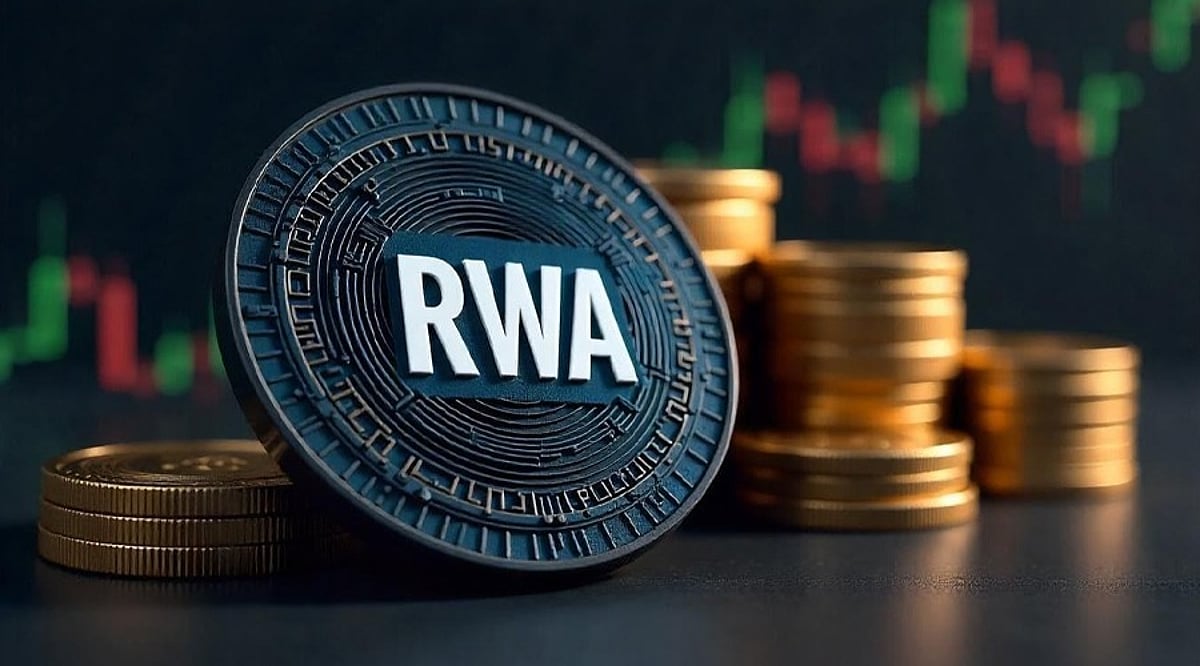
    Perpetual futures tied to tokenized stocks and commodities generated $61.7 billion in seven-day volume on Hyperliquid and Binance, nearly matching Bitcoin’s perpetual turnover. According to data from Talos, the RWA perpetual volume reached 99.2% of Bitcoin’s perpetual volume across both venues during the week ending July 31, 2026.

    Tokenized equity contracts contributed 57.8% of the tracked RWA volume, while commodities accounted for 28.2%. These contracts allow traders to gain price exposure without directly owning the underlying tokenized assets. Meanwhile, on-chain real-world asset value stood near $36.8 billion, excluding stablecoins, as reported by RWA.xyz.

    Hyperliquid recorded $25.1 billion in RWA perpetual volume from July 13 to July 19, representing about 52% of its $48.2 billion weekly total. For the first time, RWA derivatives surpassed every other perpetual category combined on Hyperliquid. The exchange relies on on-chain execution, oracle pricing, and automated liquidation systems. In contrast, Binance operates through centralized custody, exposing users to exchange counterparty risk.

    Early figures for the following week showed RWA perpetual volume reaching $37.2 billion, exceeding Bitcoin perpetual volume by about 9%, according to the Talos dashboard. Equity-linked contracts contributed $22.8 billion, commodities added $9.1 billion, and indexes produced $4.2 billion. Despite this growth, RWA perpetuals represented only about 7.5% of the broader $821.4 billion futures market tracked by Talos.

    Amid this market activity, Craig Wright revived a long-running dispute over Bitcoin governance. Wright argued that Bitcoin’s base protocol should remain permanently fixed, with competition occurring above rules that developers, miners, companies, or foundations cannot change. He accused supporters of developer-led upgrades of defending committee control while labeling fixed rules as centralized. His comments reignited debate over whether immutable rules outweigh the need to address vulnerabilities and new technical demands.

    Bitcoin traded at $63,012 on August 2, down 2.46% over seven days, with a market value near $1.26 trillion and $12.9 billion in daily volume. RWA perpetual contracts carry liquidation risks when leveraged positions move sharply against traders, and near parity with Bitcoin on two venues does not represent dominance across the entire crypto-derivatives market.
  • Ripple Backs ZILO and Licuido to Advance Tokenized Fund Infrastructure on XRP Ledger

    Ripple Backs ZILO and Licuido to Advance Tokenized Fund Infrastructure on XRP Ledger

    Ripple has made strategic investments in ZILO and Licuido, two UK-based firms, to accelerate its tokenized capital markets strategy. The deals aim to strengthen regulated fund issuance, settlement, trading, custody, and collateral mobility on the XRP Ledger (XRPL) and Ripple’s institutional infrastructure.

    Ripple Expands Regulated Fund Infrastructure

    ZILO specializes in transfer agency and fund administration systems for asset managers, wealth firms, and custodians. Its technology creates regulated digital ownership records for investors holding tokenized fund shares. The company recently announced raising $58.7 million in total equity funding. Ripple expects ZILO’s systems to support the creation and management of tokenized share classes on XRPL.

    Licuido operates an investment platform regulated by the UK Financial Conduct Authority (FCA). It facilitates the issuance, distribution, trading, and collateral use of traditional financial assets in digital form. Together, the two companies cover the full lifecycle of a tokenized fund, including investor recordkeeping, issuance, distribution, liquidity, settlement, and collateral movement.

    Nigel Khakoo, Ripple’s senior vice president for trading and markets, highlighted the importance of these investments: “ZILO and Licuido provide core capabilities that are essential to further scaling this shift: regulated digital transfer agency infrastructure and liquidity for issuance and collateral mobility.” He added, “This is just the beginning of the journey, and we see a substantial opportunity to bring huge efficiencies to the investment sector over the next decade.”

    Tokenized Funds Move Toward XRPL

    Ripple plans to integrate both companies’ services with its broader institutional infrastructure. This integration would allow financial firms to issue assets, hold them in custody, transfer ownership, and use them as collateral seamlessly. The model aims to reduce idle collateral in traditional fund structures, where newly issued fund units often face delays before becoming available for trading or financing.

    Ripple wants tokenized funds to be usable immediately upon issuance, connecting fund administration records with trading, custody, payments, and collateral systems through XRPL. This follows Ripple’s partnership with Aviva Investors, which announced plans in February to develop tokenized fund structures on XRPL. The ledger provides built-in tools for asset issuance, trading, escrow, and regulated financial activity.

    Additionally, Ripple recently launched Ripple Mint, a platform for institutional asset issuance and management. It supports the creation, redemption, and administration of tokenized securities, stablecoins, fund units, bonds, and other assets.

    RLUSD Supports Onchain Settlement

    RLUSD, Ripple’s stablecoin, is expected to serve as the cash side of transactions involving tokenized assets. Ripple plans to use RLUSD for delivery-versus-payment settlement, where the asset and payment transfer simultaneously. This reduces settlement risk, which occurs when one side of a transaction completes before the other. RLUSD already supports liquidity and settlement services for several tokenized investment products.

    XRP Price Remains Under Pressure

    Despite these positive developments, XRP’s near-term price action remains weak. XRP traded near $1.06 after falling 1.05% over 24 hours. The token has broken below a late-July symmetrical triangle and trades under key moving averages. The 50-day exponential moving average near $1.09 now acts as immediate resistance. Key support sits between $1.05 and $1.06; a break below that could bring the psychological $1.00 level into play, while a move above $1.09 may ease selling pressure.

    The broader regulatory environment also remains uncertain. The US Senate faces limited time to advance the CLARITY Act before its August recess, while lawmakers continue debating market structure, ethics, stablecoin, and consumer protection rules.

  • Coldcard Bitcoin Wallet Sweeps Top $114 Million as Replace-by-Fee Rescue Window Opens

    Coldcard Bitcoin Wallet Sweeps Top $114 Million as Replace-by-Fee Rescue Window Opens

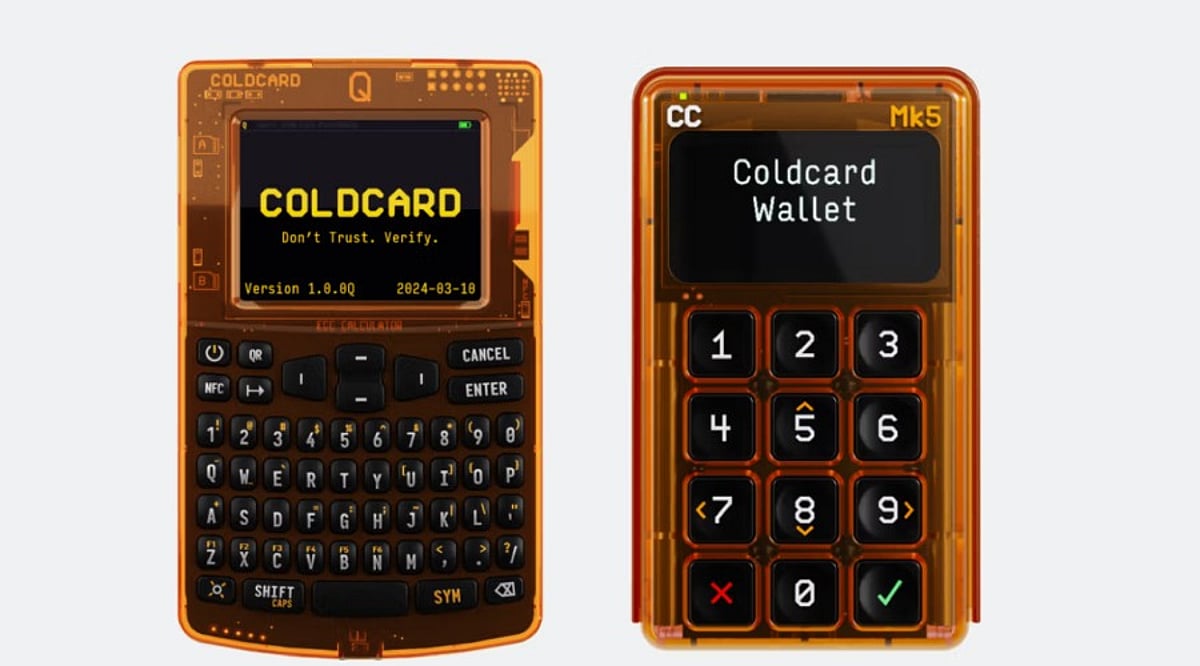
    Early Monday, a fourth wave of sweeping attacks targeted Bitcoin addresses generated by Coldcard wallets, pushing observed losses to approximately 1,816 BTC—worth around $114 million. Researchers have identified a narrow rescue window enabled by replace-by-fee (RBF), which allows victims to override unconfirmed theft transactions by paying a higher fee.

    Narrow Rescue Window

    Galaxy Research’s Alex Thorn flagged the active wave while transactions remained in Bitcoin’s mempool. He noted that attackers enabled replace-by-fee on their pending transfers, meaning victims who detect a targeted address can move their coins first by offering miners a higher fee. Thorn urged users to check balances, remove funds from affected devices, and raise transaction fees promptly.

    Thorn had no direct victim report when he published the warning. Instead, he relied on matching transaction patterns and chose speed while users still had time to respond.

    Predictable Seed Generation

    The first sweep began July 30, removing 1,083 BTC from 1,196 addresses within 41 minutes. Two weekend waves raised observed losses to 1,367 BTC across 4,585 addresses. The fourth wave lifted the possible total to about 1,816 BTC from more than 5,200 addresses. Thorn tracked activity across blocks 960,778 through 960,792.

    Researchers counted 218 transactions that targeted 462 victim addresses. The wave averaged about 14 sweeps per block, compared with 0.3 during a pre-incident control period. The flaw traces to a March 2021 firmware build that sent seed generation to a predictable software randomizer rather than the wallet chip’s hardware randomizer. As a result, anyone who identifies the relevant range can reproduce affected keys offline.

    Coinkite released emergency firmware for all affected models after the flaw was discovered. The manufacturer also instructed users who created seeds with the flawed software to move funds and use wallet addresses generated from fresh seeds.

    Transaction Patterns

    Every spent coin arrived after the Coldcard firmware boundary was identified by researchers. The attackers also sent each victim’s funds to a fresh destination with no previous transaction history. Unlike earlier waves, the fourth used one destination per victim instead of shared collector addresses, making the new activity harder to map through common destinations.

    None of the first three waves reached multisignature setups, matching a flaw tied to single-key seeds. Researchers also removed six old destination addresses as attacker-generated addresses should lack earlier activity. According to CryptoQuant Research Head Julio Moreno, small Bitcoin holders moved 39,600 BTC on July 31—transfers under 1 BTC reached about $2.5 billion that day. The last comparable total reached 39,900 BTC on November 16, 2022, days after FTX failed. Daily active addresses also climbed from 645,000 to almost one million, marking the highest level since December 2024. The increase centered on sending addresses rather than receiving addresses as news of the Coldcard flaw spread.

    Brief Roundup

    Four Coldcard-linked sweeps may have taken about 1,816 BTC from more than 5,200 addresses. Replace-by-fee gives users a narrow chance to override pending thefts. Anyone who created a seed with affected firmware should check funds, move coins to a fresh-seed wallet, and raise fees when necessary.

  • GRAM Token Drops to $1.29 After Brief Telegram App Store Removal

    GRAM Token Drops to $1.29 After Brief Telegram App Store Removal

    GRAM, the cryptocurrency associated with Telegram, fell to $1.29 on August 4 after Telegram temporarily disappeared from Apple’s App Store for several hours. Existing users were still able to use the app, but the unavailability for new downloads sparked panic selling across crypto markets.

    Apple confirmed the removal was due to a safety guideline violation involving prohibited abusive content. The brief outage triggered a sharp sell-off, as Telegram is a critical platform for crypto communities, projects, and trading groups worldwide. Traders feared reduced access could diminish Telegram’s activity and slow GRAM’s broader adoption.

    During the sell-off, trading activity surged dramatically. According to CoinGlass data, GRAM derivatives volume jumped 490% to $123.27 million, while open interest rose 1.2% to $93.28 million. Selling pressure dominated across perpetual contracts, and the Long/Short Ratio fell below one, indicating a bearish sentiment. GRAM’s Relative Strength Index dropped to 38, signaling strong selling momentum, and the token moved below its nine-day moving average near $1.40.

    Telegram returned to the App Store after nearly four hours. The company responded via its official X account, stating, “Reports of my demise are greatly exaggerated.” Apple said the app was restored after Telegram removed the reported content and banned the associated user. This easing of fears helped GRAM recover to $1.38 from its low of $1.29.

    The next price move depends on how quickly market confidence returns. If GRAM can sustain a bullish run above $1.42, it could break resistance at $1.46 and minimize further losses. Investors are closely watching the token’s trajectory as the broader crypto market reacts to the incident.

  • Kamino Launches Solana USDC Yield Vault Targeting 7-8% Returns via Commodity Trade Financing

    Kamino Launches Solana USDC Yield Vault Targeting 7-8% Returns via Commodity Trade Financing

    Kamino has introduced a new institutional yield vault on Solana, offering USDC depositors a target return of 7% to 8%. The product, launched on August 4, comes with a $25 million initial deposit cap and connects Solana-based USDC with short-term commodity trade financing through an approved fund structure.

    Unlike typical DeFi lending, the vault channels deposited USDC into real-world commodity deals rather than crypto-backed loans. A commodity trader can use the funds to bridge the gap between purchasing goods and receiving payment from the final buyer. Kamino describes the platform as “on-chain vault infrastructure connecting real-world, institutional credit markets with on-chain users.”

    Depositors receive kicUSDC tokens representing their share in the vault. The offchain lending activity is managed by a fund structure supervised by the Cayman Islands Monetary Authority. Loans are backed by physical commodities or cash held in escrow, providing a layer of security.

    However, the model introduces different risks than standard DeFi lending. Loan repayment depends on multiple external parties, including traders, banks, insurers, shipping companies, and legal agreements outside the Solana ecosystem. Users can make quick withdrawals as long as sufficient USDC remains in the vault’s liquidity buffer, but larger requests may face delays when outstanding loans must be repaid first.

    The 7% to 8% target return therefore comes with liquidity and counterparty risks. The launch gives Solana a new avenue for connecting onchain stablecoin capital with real-world credit markets. Future performance will hinge on repayment records, withdrawal reliability, and realized returns rather than the headline target alone.

  • Ex-FBI Agent Charged in Alleged $1M Cryptocurrency Theft From Investigative Wallets

    Ex-FBI Agent Charged in Alleged $1M Cryptocurrency Theft From Investigative Wallets

    A former FBI supervisory special agent has been arrested and charged with stealing nearly $1 million in cryptocurrency using access obtained through a national security investigation. The case has sent shockwaves through the law enforcement and crypto communities, raising serious questions about insider abuse of sensitive investigative tools.

    Who Is Patrick Yaroch?

    Patrick Steven Yaroch previously served as a supervisory special agent in the FBI’s Counterintelligence and Espionage Division and also worked in the bureau’s Boston office. His role granted him access to sensitive information about cryptocurrency accounts that were being monitored as part of national security investigations.

    According to court records, Yaroch told a Justice Department employee that he was frustrated the FBI “could not or would not act against adversarial cryptocurrency accounts.” He reportedly said he was upset that he couldn’t do more to disrupt cryptocurrency use by an adversarial nation during an investigation.

    In an FBI affidavit, Yaroch admitted to making “some very poor decisions” and said he “went into FBI systems and found keys needed to transfer money from wallets to himself.”

    How Was the Crypto Allegedly Stolen?

    Court documents allege that Yaroch set up a personal cryptocurrency wallet in late 2024 and obtained passphrases and other wallet-access information through FBI databases. He allegedly completed between 10 and 12 transfers beginning in late 2024 or early 2025, moving digital assets into wallets under his control.

    Federal agents later searched Yaroch’s home in Ashburn, Virginia, where they recovered devices, a hardware wallet, and handwritten notes believed to contain cryptocurrency seed phrases. Authorities eventually transferred approximately $925,000 in cryptocurrency from accounts under his control into government-controlled wallets.

    Plans to Manage the Funds

    Investigators also found conversations on Yaroch’s phone in which he explored ways to invest or manage around $1 million and considered relocating overseas. Recovered records reportedly included material connected to Portugal and plans for international travel.

    An FBI spokesperson said: “The individual has since been fired from the Bureau. We hold our employees to the highest ethical standards, and this conduct is not tolerated at the FBI. We are conducting a thorough investigation in the aftermath, and as this is an ongoing matter, we will have no further comment.”

    Federal Charges and Next Steps

    Authorities said Yaroch eventually disclosed his actions to a former colleague and contacted government officials about his conduct. He now faces federal charges related to interstate transportation of stolen property and receipt of stolen property. The allegations remain unproven, and the criminal case is ongoing.

  • Senate Majority Leader Thune Anticipates CLARITY Act Vote, but No Date Set

    Senate Majority Leader Thune Anticipates CLARITY Act Vote, but No Date Set

    Senate Majority Leader John Thune expects an initial CLARITY Act vote before the summer recess, but no vote appears on the Senate schedule. His August 3 remarks left unclear whether senators will begin full debate or take only an early procedural step.

    Thune Signals Intent Without a Firm Date

    Thune told reporters, “I think market structure we’ll get a vote on. Whether we can get on it or not, we’ll see.” He also cited other unfinished Senate business. The August 4 agenda did not name the CLARITY Act. Instead, the Senate planned to resume consideration of H.R. 6500, a vehicle for a continuing resolution. The floor log said, “There are no votes scheduled at this time.”

    Leaders can still add votes after filing a motion, reaching an agreement, or securing enough support. Still, Thune did not identify whether he expected cloture, a motion to proceed, or another procedural action.

    Procedural Vote Doesn’t Equal Passage

    Most legislation requires 60 senators to end extended debate under cloture rules. A successful vote would move the bill forward, but senators could still face amendments and further procedural votes before the final passage. The House passed the CLARITY Act by 294–134 in July 2025. The Senate Banking Committee later advanced its version by 15–9 on May 14, 2026.

    These bipartisan results offer a base for negotiations. However, Republicans cannot reach the usual cloture threshold independently, so Thune needs Democratic votes while retaining concerned Republicans. Can Senate leaders resolve the disputes quickly enough to secure 60 votes and preserve enough floor time for final passage? The current schedule provides no firm answer.

    Ethics Disputes Complicate the Recess Push

    Ethics rules remain a major obstacle. Eleanor Terrett reported on August 3 that the White House had not answered a counterproposal from Senators Thom Tillis and Ruben Gallego. Terrett cited an unnamed source, not a public White House statement. The proposal reportedly covers enforcement and may give state attorneys general a role.

    A Reuters review found that the Senate proposal would restrict certain senior figures, including the president and vice president, from sponsoring or issuing digital assets. Justice Department enforcement would apply until January 2029.

    Meanwhile, seven Democratic negotiators said the proposal was not ready for passage. Catherine Cortez Masto, Angela Alsobrooks, Cory Booker, Ruben Gallego, John Hickenlooper, Mark Warner and Raphael Warnock requested further changes.

    Their concerns cover ethics, consumer protection, illicit finance, conflicts of interest and market integrity. They also pledged to continue talks, leaving a bipartisan agreement possible but unresolved. Bernstein analysts said passage before recess looked less likely. That view can coexist with Thune’s comments because an opening vote may occur without enough time for debate and final passage.

    Government funding also competes for attention. On July 21, Thune called market-structure legislation only ‘a candidate for consideration’ and described funding as the Senate’s leading immediate priority.

    The CLARITY Act would divide digital-asset oversight between the SEC and CFTC. It also addresses fundraising, exchange registration, anti-money-laundering rules, decentralized finance, stablecoin rewards and tokenized securities. The next concrete signal would come from an updated Senate schedule or a formal motion. A cloture filing or motion to proceed would provide clearer evidence that floor action had begun.

    A Brief Roundup

    Thune expects an initial vote on the CLARITY Act, but the Senate has yet to schedule one. Ethics negotiations, the 60-vote cloture hurdle and competing funding work still threaten full passage before recess. Readers should watch for a cloture filing, motion to proceed, or updated floor schedule.

  • American Bitcoin Expands BTC Reserve in Q2 Despite Revenue Miss and Stock Slump

    American Bitcoin Expands BTC Reserve in Q2 Despite Revenue Miss and Stock Slump

    American Bitcoin significantly expanded its Bitcoin holdings and mining output during the second quarter, even as revenue fell short of expectations and its stock continued to decline sharply. The company increased its reserve by 981 BTC (14%) to 8,002 BTC by June 30, up from 7,021 BTC at the end of March.

    Outstanding shares rose about 3% during the quarter, yet Bitcoin backing per share climbed from 9,943 satoshis to 10,989 satoshis. Management highlighted this metric as the company’s primary treasury goal, with CEO Mike Ho reiterating a focus on increasing Bitcoin per share. He stopped short of committing to selling Bitcoin to fund equity buybacks.

    Co-founder and Chief Strategy Officer Eric Trump doubled down on the company’s Bitcoin-centric strategy, calling the firm “absolute Bitcoin maximalists” during the earnings call. He also reflected on American Bitcoin’s rapid growth, noting that “a little over a year ago, American Bitcoin was just an idea.”

    Record Mining Output and Expanding Hashrate

    American Bitcoin mined a record 932 BTC in Q2. Mining revenue rose 8% to $67 million from $62.1 million in the prior quarter, though revenue per Bitcoin mined fell 5% to $71,900 as Bitcoin’s price dropped 12% during the period. Mining costs edged up slightly to $36,500 per Bitcoin.

    The company maintained a gross margin near 50%, offsetting weaker prices and higher energy costs with increased production. It also energized 11,298 next-generation ASIC miners at Hut 8’s Drumheller site, adding 3.05 exahashes per second (EH/s) of capacity.

    By quarter-end, American Bitcoin controlled 89,242 miners with 28.1 EH/s total capacity, operating 58,999 miners at 25 EH/s with an efficiency of 14.1 J/TH.

    Earnings Miss and Stock Decline

    Revenue came in at $67.015 million, below analysts’ $73 million estimate. The company posted a loss of $0.80 per share, far worse than the consensus forecast of a $0.15 loss. American Bitcoin continued to combine mining output with market purchases of Bitcoin.

    The stock fell 7.38% in the latest 24-hour period and has lost more than 80% over the past year. A Bloomberg report estimated that recent market performance erased about $600 million in company value. Shares have dropped 95% since their NASDAQ debut in September 2025.

    Despite the stock’s struggles, American Bitcoin now holds 8,300 BTC worth approximately $527 million, making it the 16th-largest corporate Bitcoin holder.

    Conclusion

    American Bitcoin delivered on its promise of expanding Bitcoin reserves and mining output in Q2, boosting per-share Bitcoin exposure. However, revenue missed forecasts, losses widened, and the stock remained under severe pressure. Investors face a stark contrast between the company’s strengthening Bitcoin position and its deteriorating market performance.

  • Coldcard Wallet Hack Exceeds $100 Million: 1,596 BTC Stolen Across 7,300 Addresses

    Coldcard Wallet Hack Exceeds $100 Million: 1,596 BTC Stolen Across 7,300 Addresses

    Galaxy Research has revised its estimate of the Coldcard wallet hack, now linking 1,596 Bitcoin (BTC) — worth over $100 million — to the exploit. The attack targeted approximately 7,300 addresses across three major waves and 14 smaller incidents. A suspected fourth wave could push total losses to 2,055 BTC, or roughly $130 million.

    Galaxy Raises Confirmed Theft Estimate

    Researchers at Galaxy received reports from 73 victims, which helped verify the three primary attack waves. The reports also revealed smaller transaction patterns that may involve other attackers exploiting the same vulnerability. The updated figure far exceeds the initial estimate of $70 million, as investigators continued to identify new addresses, victims, and transaction groups while the attacks unfolded.

    The first major wave began on July 30, draining approximately 1,082.65 BTC from 1,196 addresses in just 41 minutes. At the time, that Bitcoin was valued at about $70.2 million. Two subsequent waves followed. By August 2, researchers had traced roughly 1,367 BTC across 4,585 addresses. The third wave took about 208 BTC from 1,912 smaller accounts.

    Galaxy noted that each wave followed a consistent pattern, suggesting a single operator, but researchers could not definitively link every wave to the same attacker. It remains possible that additional attackers joined after the vulnerability was disclosed.

    Weak Seeds Exposed Private Keys

    The attackers did not compromise the Bitcoin network itself. Instead, they targeted recovery seeds generated by certain Coldcard firmware versions that used weak random data. A hardware wallet should generate a recovery seed from secure, unpredictable information — a process that creates entropy and protects private keys from offline guessing.

    Coldcard introduced the flaw during a firmware update in March 2021. Seed generation shifted from the device’s hardware random-number generator to software within the libNgU and MicroPython stack. An integration error then routed the process to MicroPython’s deterministic fallback, which relied heavily on device details and timing values. This drastically reduced the number of possible seeds, allowing attackers to generate candidate seeds offline, derive related Bitcoin addresses, and compare them with addresses on the blockchain — all without physical access to a victim’s device.

    Coinkite Lists Affected Firmware Versions

    Coinkite estimates that affected Mk2 and Mk3 wallets produced only about 40 bits of effective entropy. Mk4, Mk5, and Q models reached approximately 72 bits, still below the intended 128 bits. The advisory covers Mk2 and Mk3 firmware versions 4.0.1 through 4.1.9, Mk4 and Mk5 standard firmware before 5.6.0 and Edge firmware before 6.6.0X, and Coldcard Q standard firmware before 1.5.0Q and Edge firmware before 6.6.0QX. TAPSIGNER, OPENDIME, and SATSCARD use separate codebases and are not affected.

    The alert coincided with heavy movement from small Bitcoin addresses. Transfers below 1 BTC reached 39,600 BTC in one day, according to CryptoQuant research head Julio Moreno — the highest daily movement in that category since November 2022, when users moved about 39,900 BTC shortly after FTX collapsed. While not every transfer came from a Coldcard user, the timing suggests that some holders shifted funds to new wallets or exchanges after the security warning.

    Conclusion

    Galaxy Research has confirmed 1,596 BTC in losses across three attack waves and 14 smaller incidents. The flaw weakened recovery-seed randomness in several Coldcard firmware versions. Users with affected devices should follow Coinkite’s advisory and move funds to wallets created with secure, updated software.

  • DOGE Price Analysis: Dogecoin Steadies Near Key Support as Derivatives Turn Optimistic

    DOGE Price Analysis: Dogecoin Steadies Near Key Support as Derivatives Turn Optimistic

    DOGE Price Stabilizes After Weekly Decline

    Dogecoin (DOGE) held near the $0.070 support level on Tuesday after posting a 3.5% decline last week. While the broader technical structure remains bearish, improving derivatives data and bullish momentum divergences suggest selling pressure may be easing.

    DOGE continued to trade below its 50-day, 100-day, and 200-day exponential moving averages (EMAs), which sit at $0.075, $0.083, and $0.100, respectively. The price action has left traders watching for a decisive break above or below the current range.

    Gokhshtein Defends Established Meme Coins

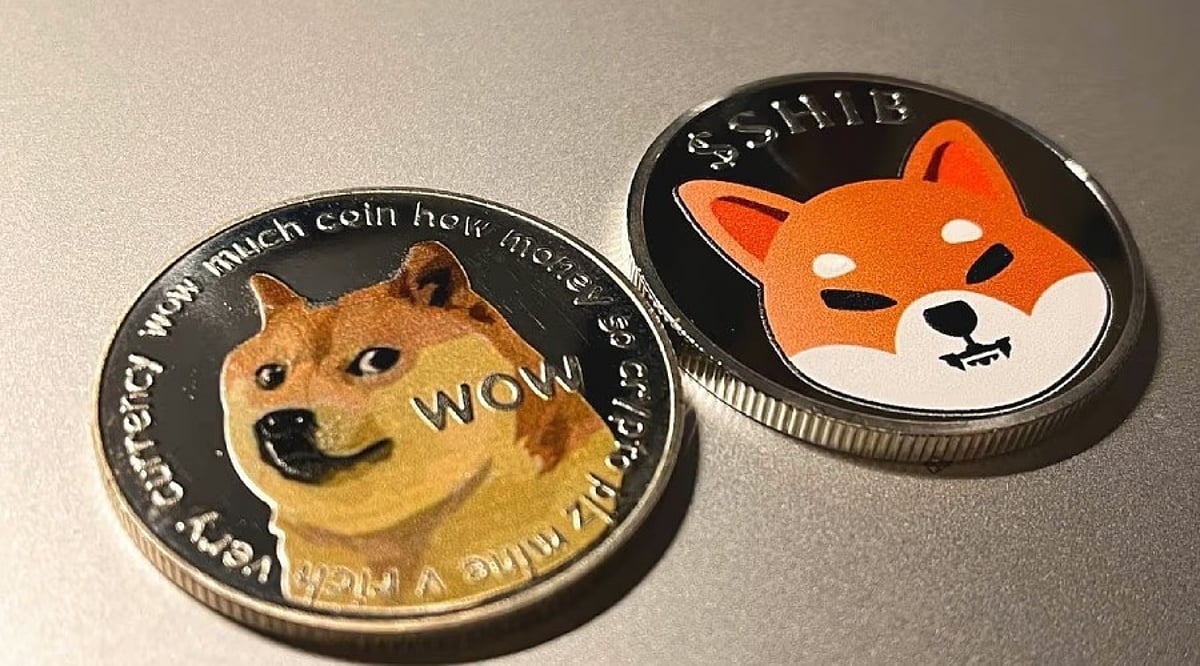
    Cryptocurrency commentator David Gokhshtein pushed back on Monday against traders hunting for the next Dogecoin or Shiba Inu while ignoring the market’s leading meme assets. In a post on X, Gokhshtein said some traders were “disrespecting” DOGE, SHIB, and PEPE in their search for another token with similar upside potential.

    According to Gokhshtein, the meme coin sector will only rally when its largest names gain traction. He also noted that some market participants may want DOGE and SHIB to fail without understanding the potential ripple effects on other projects.

    Meme Coin Market Faces Persistent Selling Pressure

    SHIB and PEPE have outperformed the broader cryptocurrency market recently. Over the past month, the total crypto market capitalization fell 4.61%, while Dogecoin has not matched the relative strength seen in other major meme coins. The MarketVector Meme Coin Index is down nearly 40% year to date and slipped 2.64% in the past month.

    The index carries heavy exposure to DOGE and SHIB and is calculated as a dollar-based index rather than a tradable stock or exchange-traded fund. Data from CryptoQuant also shows $1.21 billion in cumulative net meme coin selling pressure on Binance since Bitcoin reached its latest all-time high last October.

    Derivatives Data Points to Possible Stabilization

    CoinGlass data shows Dogecoin’s long-to-short ratio at 1.25 on Tuesday, its highest reading in over a month. A ratio above 1.0 means long positions outnumber short positions, indicating that more traders are positioning for a price increase.

    Dogecoin’s funding rate also turned positive on July 24 and reached 0.0074% on Tuesday. Positive funding implies long traders are paying short traders, which is often viewed as a sign of bullish sentiment.

    Technical Indicators Show Bullish Divergence

    The daily Relative Strength Index (RSI) formed a higher low while DOGE posted a lower price low on August 1. This bullish divergence points to weaker downside momentum. The Awesome Oscillator displayed a similar pattern, with recent lows rising even as Dogecoin’s price stayed near support.

    Key Levels to Watch

    Immediate support sits at $0.070, followed by the yearly low at $0.067. A daily close below those levels could expose $0.065. On the upside, initial resistance is at $0.075, followed by $0.080 and $0.083. Higher barriers remain at $0.088, $0.100, and $0.102.