Category: Cryptocurrency

  • BlockDAG and RedotPay Launch Crypto Super App as Ethereum and Worldcoin Face Critical Price Levels

    BlockDAG and RedotPay Launch Crypto Super App as Ethereum and Worldcoin Face Critical Price Levels

    Fresh trading data highlights key digital coins approaching essential chart levels. Ethereum is nearing a critical point where clearing $2,500 is necessary to build upward momentum, while falling short could push it toward deeper support zones. Meanwhile, Worldcoin hovers near $0.30, a key level that must hold to prevent further declines, even though oversold signals create room for a short bounce if buyers step in.

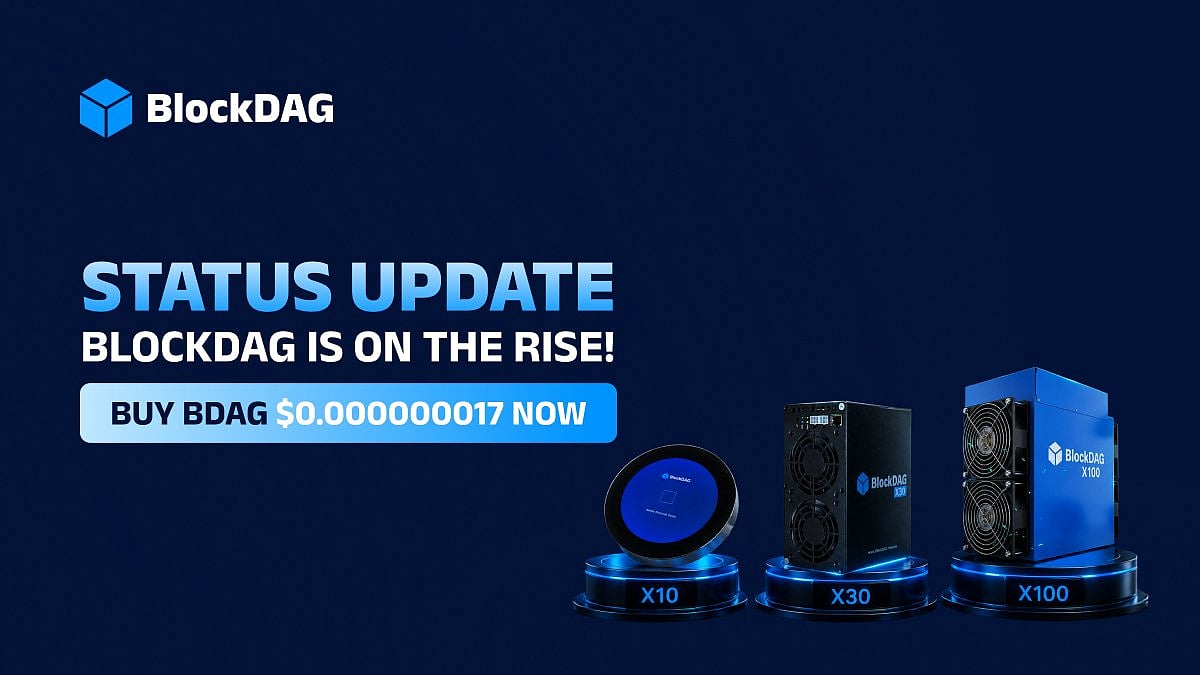
    BlockDAG is taking a different path by expanding real-world usability through its partnership with RedotPay and the upcoming unified Super App. With BDAG valued at $0.000000017, the system merges mining, payments, staking, trading, and spending into one platform while its active user base grows. These milestones help explain why BlockDAG is positioning itself as a top crypto to buy right now.

    Ethereum Near a Key Breakout

    Ethereum recently bounced off lower levels, but price charts show it remains stuck in a firm downward trend. Many overhead supply zones still sit above current trading values, leaving the asset at an uncertain junction. To signal a real trend change, Ethereum must achieve a clean push above the $2,500 barrier with heavy trading activity. Success would open a path toward previous peaks. However, another rejection at this level could send the coin sliding back toward $1,500 or $1,000 floors. Network activity, spot ETF demand, and future tech upgrades will set the direction.

    Worldcoin Searches for Stability

    Worldcoin recently encountered heavy selling pressure, sitting near $0.30 as technical charts indicate a shaky market stance. Short-term indicators hint that the token could start another downward slide if sellers remain in control. To steady itself, Worldcoin must defend support between $0.29 and $0.30 to avoid dropping toward $0.26. Moving averages look weak, but oversold gauges show space for a quick rally if buyers push past $0.35 resistance. Future moves depend on fresh buying power, broader market health, and reduced token unlock pressure.

    RedotPay and BlockDAG Team Up to Launch a Crypto Super App

    Strong partnerships often separate real projects from those struggling to find their place, and BlockDAG has entered that group through its fresh alliance with RedotPay. Together, the projects are creating a Super App that brings mining, claiming, staking, trading, storage, games, global transfers, payment cards, and daily purchases into one clear system. This transforms BDAG from a simple held token into a practical daily currency.

    This deal matters because BlockDAG brings a massive active community. Over 4 million users rely on the X1 mobile mining software, and community members have locked up nearly 10 billion coins for weekly rewards. RedotPay adds a real-world spending layer, giving users something most Layer 1 networks fail to offer. The underlying technology easily matches these big plans. BlockDAG handles roughly 7,000 transactions per second with block finality in about two seconds, while maintaining full compatibility with Ethereum developer tools.

    Together with a live on-chain casino and physical X-series mining gear shipping out to buyers, the RedotPay connection serves as the bridge that connects every feature into one smooth flow. The token value sits at $0.000000017, featuring a 22% Live Swap discount alongside $0.025 Buybacks currently running. With the Super App releasing this month and top-tier exchange listings set to follow, this partnership acts as the primary spark that places BDAG high on the list as a top crypto to buy right now.

    Final Thoughts

    Ethereum still needs to break past $2,500 with solid volume to confirm strong growth, while Worldcoin must hold the $0.29 to $0.30 range before aiming for any steady recovery. Both coins rely heavily on broader market action and continuous buying momentum. BlockDAG, however, pairs fast growth with clear results through its RedotPay deal, over 4 million X1 users, nearly 10 billion staked tokens, 7,000 TPS speed, 2-second finality, Ethereum compatibility, an active casino, X-series miner shipments, a $0.000000017 price, Live Swap discounts, buybacks, and its strong pitch as a top crypto to buy right now.

    Disclaimer: This article is for informational purposes only and does not constitute investment advice. Cryptocurrency investments are risky and may result in total loss. Always do your own research before making any investment decisions.
  • Bitcoin Holds Above $63,800 Amid Coldcard Flaw, ETF Outflows, and Hawkish Fed

    Bitcoin Holds Above $63,800 Amid Coldcard Flaw, ETF Outflows, and Hawkish Fed

    Bitcoin traded near $63,812.96 on Tuesday, up 1.73% over the past 24 hours, as the market absorbed a mix of bearish headwinds and resilient price action. The token shrugged off a choppy start to August, with ETF outflows, a Coldcard hardware wallet firmware bug, and a hawkish Federal Reserve hold keeping sentiment cautious.

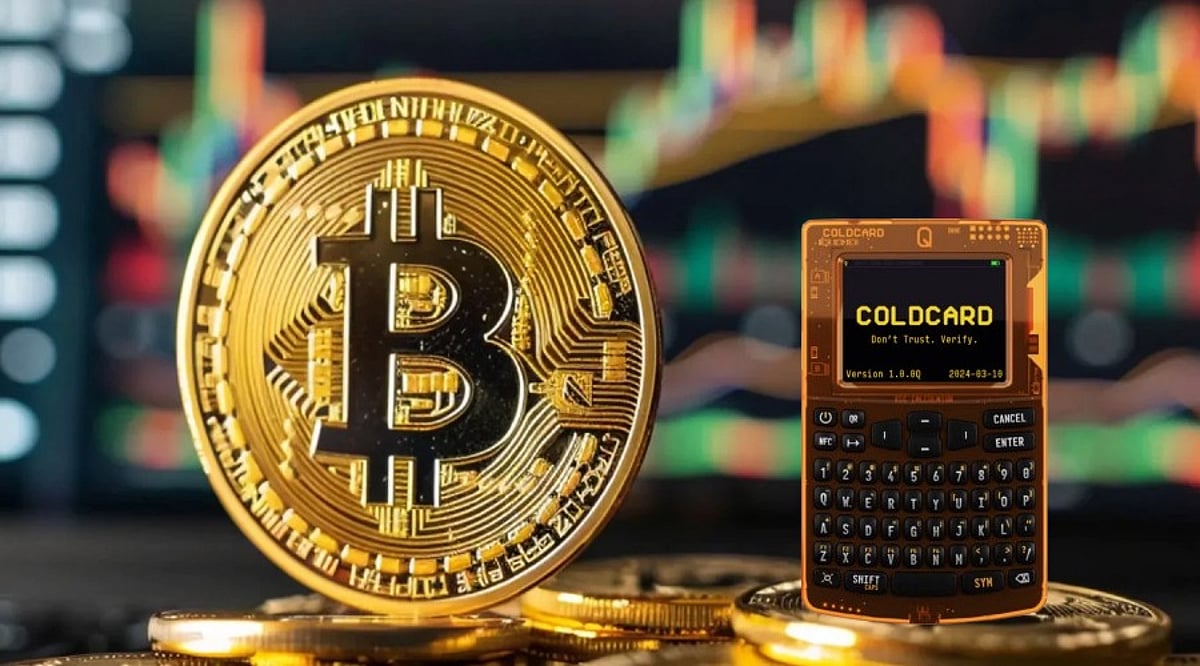
    Spot Bitcoin ETFs ended a three-week inflow streak with $61.53 million in net outflows for the week ending July 31, led by a sharp single-day withdrawal from BlackRock’s IBIT fund. Meanwhile, a firmware flaw linked to Coldcard wallets has been tied to nearly $70 million in stolen Bitcoin this month, prompting emergency firmware updates and warnings that affected holders must generate fresh recovery phrases.

    The Federal Reserve held rates steady but with a 9-3 vote split as three officials favored an increase, lifting September rate hike odds above 60%. The CLARITY Act remains stalled on the Senate calendar ahead of the August recess, with Democrats pushing for tougher ethics language. Traders now watch Friday’s jobs report for fresh direction.

    Bitcoin Price Today

    Bitcoin’s market cap stands near $1.28 trillion, with 24-hour trading volume at $26.81 billion. Analysts highlight $65,000 as key resistance, with support at $62,300 and $60,000 below.

    Analyst Insights

    Akshat Siddhant, Lead Quant Analyst at Mudrex: Bitcoin traded in the $63,000-$64,000 range amid growing macro uncertainty. A stronger yen, backed by an estimated $59 billion in intervention, has sped up carry trade unwinding. Strategy sold 1,638 BTC, its second largest sale this year. Bitcoin needs to reclaim $65,000 to lift sentiment, while $60,000 stands as major support.

    CoinSwitch Markets Desk: BTC approached $64,000 after the ISM Manufacturing PMI rose to 55.6, its highest since 2022. Sustained readings above 55 have historically coincided with strong altcoin performance. Near term, $64,000 is resistance, $63,000 is key support.

    Riya Sehgal, Research Analyst at Delta Exchange: Bitcoin holds between $63,500 and $64,000. Stronger US manufacturing data strengthens the case for the Fed to stay tight. Bitcoin needs to break and hold above $64,250 to improve momentum. Support at $62,300. ETH defends $1,820-$1,845 zone.

    Vikram Subburaj, CEO of Giottus: Bitcoin near $63,700, up 0.9%. Lower oil prices and improving global risk sentiment support the market. Weak spot demand and inconsistent ETF flows cap the recovery. Resistance at $64,000-$64,100.

    Nischal Shetty, founder of WazirX: Bitcoin gained 0.47% to around $63,602. Ethereum rose 0.34%. American Bitcoin reported record quarterly production of 932 BTC. Bitcoin futures traders watch $63,750-$64,300 recovery zone, with $63,000 as nearest support.

    Top 10 Coins at a Glance

    Biggest Gainers: Hyperliquid (+4.03%), BNB (+1%), TRON (+1%). Hyperliquid led major gainers with a daily jump, extending its strong weekly run. BNB and TRON also posted solid gains.

    Biggest Losers: Stablecoins (Tether, USDC) barely moved. Ethereum and Solana posted modest gains.

    Key Headlines Impacting Prices

    • Coldcard Firmware Flaw: A firmware bug drained nearly $70 million in Bitcoin. CEO Rodolfo Novak apologized. Emergency firmware rolled out, but affected users must generate new recovery phrases.
    • Bitcoin ETFs Snap Inflow Streak: $61.53 million in net outflows for week ending July 31. Spot Ether ETFs extended their four-week inflow streak with $27.42 million.
    • Fed Holds Rates: 9-3 vote split with three officials favoring a hike. September rate hike odds above 60%.
    • CLARITY Act Stalled: Senate recess deadline narrows legislative window. Democrats push for ethics language.
    • Strategy Sells 1,638 BTC: Second largest sale this year, adding selling pressure.
    • ISM Manufacturing PMI: Rose to 55.6 in July, highest since 2022, reducing expectations of near-term Fed cuts.

    Market Outlook

    Bitcoin holds above $63,800 as traders weigh ETF outflows, a hawkish Fed, and stalled legislation. A close above $64,250 could open a path to $65,000 resistance. A slip below $62,300 risks exposing $60,000. Next moves hinge on ETF flows, Fed rate signals, and Friday’s jobs report. The Senate recess deadline and upcoming inflation data are key catalysts.

  • How to Select the Best Crypto Exchange in 2026: Essential Factors for Investors

    How to Select the Best Crypto Exchange in 2026: Essential Factors for Investors

    Over the last few years, the collapse of several crypto platforms has changed investors’ outlook on cryptocurrency exchanges. Security is no longer about enabling two-factor authentication (2FA). Investors should seek exchanges that publish Proof of Reserves (PoR), store customers’ funds in cold wallets, provide withdrawal protections, and undergo frequent third-party security audits.

    According to CoinMarketCap’s June 2026 Exchange Report, the reserves of all tracked exchanges totaled approximately $192.6 billion. Binance leads with 67.7% of all tracked reserves, highlighting the significance of reserve transparency.

    Check Liquidity, Fees, Available Features

    Security on the exchange is just one part of the equation. Liquidity is key, as higher trading volumes will typically lead to tighter spreads and quicker order execution, particularly in volatile markets.

    Before you sign up, have a look at the maker and taker fees, the deposit and withdrawal charges, check available cryptocurrencies, staking opportunities, and advanced trading features. If you are an active trader, API access, recurring purchases, and auto investment plans are also potential benefits.

    Industry reviews increasingly evaluate exchanges across trading features, transparency, fees, and security rather than relying solely on the number of listed cryptocurrencies.

    Regulatory Compliance

    With governments increasingly tightening regulations for digital assets, adherence to regulatory standards is emerging as a crucial metric for platform security. Choosing exchanges that adhere to KYC requirements, anti-money laundering (AML) procedures, and tax reporting requirements can minimize operational risks for Indian investors.

    Compliance also helps enhance banking access and ensures seamless tax filing as per the cryptocurrency norms in India. The regulation around crypto exchanges, known as the Markets in Crypto-Assets (MiCA) framework, has been tightened by several jurisdictions, including the European Union, making it more crucial than ever for exchanges to ensure they can be compliant with the evolving regulatory landscape.

    Customer Support & User Experience

    A good exchange should offer more than just competitive trading fees. Fast customer support, a stable mobile application, educational resources, and transparent communication during periods of market stress can significantly improve the user experience.

    A simple interface with INR deposit and withdrawal features is essential for beginners, while advanced charting, derivatives, institutional trading platforms, and portfolio management are preferred for experienced traders.

    Final Thoughts

    When it comes to selecting the right cryptocurrency exchange, it’s not just about which platform offers the most coins. When placing a deposit, investors must thoroughly consider security, proof of reserves, liquidity, regulatory compliance, fee structure, and customer support.

    Risk-free exchanges don’t exist, and diversification is important. For larger holdings, security experts still recommend using a personal hardware wallet to manage long-term investments instead of storing them on exchanges. One of the more secure methods for cryptocurrency investors is to adopt a balanced strategy that includes a trusted exchange and robust self-custody practices.

    FAQs

    1. What is the most important factor when choosing a cryptocurrency exchange? Security should be the top priority. Look for exchanges that offer Proof of Reserves (PoR), cold wallet storage, two-factor authentication (2FA), regular security audits, and strong withdrawal protection to safeguard user funds.
    2. Why is liquidity important in a crypto exchange? High liquidity ensures faster trade execution and lower price slippage, especially during periods of market volatility. It also allows investors to buy or sell cryptocurrencies at prices closer to the market rate.
    3. Should Indian investors choose only KYC-compliant exchanges? Yes. Exchanges that comply with KYC, AML, and Indian tax regulations generally offer better banking support, improved security, and smoother compliance with the country’s cryptocurrency tax framework.
    4. Is it safe to keep cryptocurrencies on an exchange? Exchanges are suitable for active trading, but storing large holdings on them carries risks. For long-term investments, experts recommend transferring crypto assets to a personal hardware wallet for enhanced security.
    5. What additional features should traders compare before choosing an exchange? Besides security and fees, compare supported cryptocurrencies, staking services, API access, recurring investment options, customer support quality, mobile app performance, and advanced trading tools before selecting an exchange.
  • Crypto Roundup: Bitcoin ETF Inflows Hit $170M, XRP Gains RLUSD Lending, TRON Surpasses 15B Transactions

    Crypto Roundup: Bitcoin ETF Inflows Hit $170M, XRP Gains RLUSD Lending, TRON Surpasses 15B Transactions

    Bitcoin Spot ETFs See $170 Million in Net Inflows

    According to data from SoSoValue, U.S. spot Bitcoin ETFs recorded a total net inflow of $170.09 million yesterday. BlackRock’s IBIT led the charge with $111.43 million in daily net inflows, bringing its historical total to $60.59 billion. Fidelity’s FBTC followed with $33.36 million, reaching a cumulative net inflow of $9.95 billion. The overall net asset value of Bitcoin spot ETFs now stands at $77.58 billion, reflecting an ETF net asset ratio of 6.06% and a historical cumulative net inflow of $51.49 billion.

    XRP Holders Can Now Borrow RLUSD on Ethereum

    Flare has integrated FXRP into Sentora’s $280 million RLUSD vault on Morpho, enabling XRP holders to use their assets as collateral to borrow Ripple’s RLUSD stablecoin—without selling their XRP. This marks the first time an XRP-based asset has been accepted as collateral in an institutionally curated lending vault on Ethereum mainnet, opening the door for XRP to participate in institutional decentralized finance (DeFi). Holders can convert XRP into FXRP, bridge it to Ethereum, deposit it into the vault, and borrow RLUSD, thereby increasing capital efficiency.

    TRON Crosses 15 Billion Transactions

    TRONSCAN data shows the network has processed more than 15 billion confirmed transactions as of press time, with over 12.56 million transactions in the preceding 24 hours. Total registered accounts reached 396.74 million, after adding about 158,871 accounts in the same period. The milestone reflects cumulative network operations including token transfers, smart contract calls, and staking activity. TRON DAO reported that the blockchain processed 950 million transactions in Q1 2026, a 0.62% increase from the previous quarter.

    Former FBI Agent Accused of Stealing $1 Million in Crypto

    Patrick Steven Yaroch, a former FBI agent, has been charged with interstate transportation of stolen goods and receipt of stolen goods after allegedly stealing approximately $1 million in cryptocurrency from wallets under FBI custody. Court documents indicate that the thefts occurred between early 2025 and July 2026, during which Yaroch worked in the Counterintelligence and Espionage Division with Top Secret security clearances. He is accused of accessing internal systems to retrieve recovery phrases for wallets seized in investigations targeting a foreign adversary.

    Tether Reports Strong Q2 2026 Operating Profits

    Tether announced $1.5 billion in net operating profit for Q2 2026, a 50% quarter-on-quarter increase. USDT supply grew to $184.6 billion, and the global user base surpassed 650 million. The company’s Q2 attestation showed $187.75 billion in assets against $183.64 billion in liabilities, resulting in a $4.11 billion surplus. Tether also added 14 tons of gold during the quarter, pushing its gold reserves past 146 tons, and increased its Bitcoin holdings to 98,932 BTC, valued at $5.8 billion.

  • Crypto Privacy Tools Can Bolster Both Security and Compliance, New Report Reveals

    Crypto Privacy Tools Can Bolster Both Security and Compliance, New Report Reveals

    For years, mainstream crypto design prioritized absolute on-chain transparency, treating financial privacy as a liability rather than a necessity. A new joint report by digital asset management and crypto loan provider CoinRabbit and crypto super app ChangeNOW challenges that assumption, concluding that public ledgers create dangerous privacy leaks for businesses and physical safety risks for individual holders.

    Presented by Decrypt, Financial Privacy in the Digital Age synthesizes data from TRM Labs, Chainalysis, CertiK, and Statista to make a pragmatic case: Web3 privacy tools are essential infrastructure for basic security, while law enforcement leverage actually sits at regulated fiat gateways, not upstream transaction histories.

    Key Highlights

    • $124.1M lost to physical attacks. Public wallet addresses act as unintended net-worth registries, exposing investors to targeted extortion and social engineering.
    • Corporate vulnerabilities & $4.44M breach costs. Transparent ledgers allow competitors to reconstruct vendor contracts, payroll, and treasury balances, impacting the 36% of board members who consider internal data exposure their top operational threat.
    • Enforcement targets gateways, not on-chain history. Authorities combat illicit flows at centralized fiat off-ramps, exchange KYC databases, and stablecoin issuer freezes rather than through continuous public surveillance.
    • Privacy tools already operating within compliance. The report highlights CoinRabbit’s custodial model and ChangeNOW’s private crypto transfers as benchmarks for privacy-preserving infrastructure.

    The Corporate and Personal Risks of Open Ledgers

    While permanent ledger visibility makes protocol audits efficient, it presents severe liabilities for mainstream business adoption. Unlike traditional bank accounts, public blockchain addresses broadcast complete cash flows and account balances to anyone with an internet connection. Competitors can easily monitor corporate wallets to deduce profit margins, supplier pricing, and internal payroll cadence. With Statista estimating average data breach costs at $4.44 million, broad ledger exposure creates a structural weakness for corporate treasuries moving on-chain.

    For private investors, that visibility carries physical consequences. “Public blockchain transparency lets anyone audit your net worth in real time, turning private wealth into public information,” said Walter Barrett, Chief Strategy & Growth Officer at CoinRabbit.

    The security data back up that warning. CertiK recorded 52 verified physical extortion (“wrench”) attacks in the first half of 2026. In France, which accounted for 33 of those incidents, breaches at public agencies allowed criminal networks to cross-reference residential addresses with suspected crypto holdings. In response, 30% of surveyed high-net-worth holders now hire data-broker removal services to break the link between their identities and wallet addresses.

    How Investigators Track Illicit Capital

    Skeptics often frame financial privacy as an enclave for illicit finance, pointing to TRM Labs data that places 2025 illicit crypto inflows at $158 billion, with Chinese-language laundering networks accounting for over $100 billion. However, investigative data shows that raw ledger transparency is rarely the decisive factor in asset recovery or criminal attribution. Instead, law enforcement leverage is concentrated at centralized touchpoints: exchange KYC registries, court subpoenas, stablecoin blacklist functions, and fiat off-ramps.

    “Successful blockchain investigations rely on the combination of on-chain analysis, behavioral patterns, KYC information, exchange cooperation, stablecoin issuer interventions, and traditional investigative methods. In practice, attribution is achieved by connecting multiple sources of evidence rather than relying on blockchain transparency alone,” noted Albert Quehenberger, founder of AQ Forensics.

    Because enforcement operates primarily at these regulated checkpoints, the authors argue that base-layer privacy tools can protect legitimate user data without disabling the mechanisms authorities use to police market abuse.

    Rethinking Financial Transparency in Web3

    The report calls for a fundamental redesign of Web3 architecture, urging developers to replace mandatory public broadcasting with permissioned, selective disclosure. “The privacy debate starts from the wrong assumption that ordinary users must prove they have nothing to hide by exposing everything,” said Pauline Shangett, Chief Strategy Officer at ChangeNOW. “That is not how any mature financial system works.”

    Yet as crypto pushes for institutional adoption, this tension between default visibility and basic confidentiality remains one of Web3’s thorniest policy battlegrounds. While developers press for selective disclosure tools to protect commercial secrets, global regulators continue to push for tighter oversight of self-custodial flows. How the industry resolves that pushback will determine whether digital assets can offer a viable financial infrastructure for traditional finance, or whether privacy and compliance remain locked in an ongoing tug-of-war.

    Disclaimer: This article is for informational purposes only and does not constitute financial or investment advice. Cryptocurrencies are risky assets; always conduct your own research before investing.

  • Whale Accumulates $1M in Worldcoin (WLD) as Token Holds Key Support Level

    Whale Accumulates $1M in Worldcoin (WLD) as Token Holds Key Support Level

    Worldcoin (WLD) has captured market attention after a large investor, commonly referred to as a whale, accumulated 3.32 million WLD tokens worth approximately $1.028 million through a series of purchases on Binance. The tokens were acquired at an average price of roughly $0.3095, placing the buys near WLD’s critical support zone.

    Instead of executing a single large trade, the investor spread the purchases across multiple transactions over different time intervals. This strategy likely reduced slippage and allowed the wallet to build a substantial position without triggering an immediate price spike.

    Adding to the significance of the move, the same wallet had previously purchased approximately $10.41 million worth of WLD before selling nearly $10 million, generating an estimated realized profit of around $670,000. The renewed accumulation suggests the investor sees value at current levels, but broader market indicators show that one large buyer alone has not yet confirmed a recovery.

    Spot Selling Pressure Remains Strong

    Despite the million-dollar purchase, Worldcoin’s spot-market order flow remained dominated by sellers. The Spot Taker Cumulative Volume Delta (CVD) continued to show that aggressive sell orders exceeded market buys. This indicates that sellers absorbed the whale’s demand without allowing WLD to produce a significant breakout. The muted price reaction also suggests that broader market participants remain cautious and have not followed the investor with comparable buying activity.

    For a more sustainable recovery, spot buyers would need to regain control of order flow. Until then, the whale purchase may remain an isolated accumulation event rather than evidence of a market-wide shift.

    Retail Trading Activity Increases

    Retail participation rose sharply after the whale activity gained attention. The Trading Frequency Surge indicator entered the ‘Too Many Retail’ zone, signaling a rapid increase in smaller trades. Higher retail interest can help liquidity, but it may also increase short-term volatility. Retail traders tend to jump in after major wallet movements become public, so the market can react more sharply to headlines and quick shifts in mood.

    A stronger trend would likely require continued accumulation from larger investors alongside consistent spot buying, rather than a rally driven mainly by short-term retail speculation.

    WLD Holds Critical $0.30 Support

    Worldcoin stabilized near $0.30 after several weeks of declines. The token remains below the major resistance level at $0.40, but bearish momentum appears to be weakening. The Moving Average Convergence Divergence (MACD) indicator is still under its signal line, although the two lines are starting to converge. Meanwhile, the shrinking negative histogram hints that the selling push is losing steam.

    A bullish crossover, paired with WLD holding support at $0.30, could increase the recovery chances toward $0.40. However, if the price slips under $0.30, that would invalidate the setup and might drag the correction further.

    Frequently Asked Questions

    How much Worldcoin did the whale purchase?

    The investor accumulated 3.32 million WLD tokens worth approximately $1.028 million. The purchases were executed on Binance at an average price of around $0.3095.

    Why is the whale purchase considered bullish?

    The investor has a profitable history of trading WLD and appears to view current prices as attractive. However, one large purchase alone is not enough to confirm a wider market recovery.

    What does Spot Taker CVD indicate for WLD?

    Spot Taker CVD remains seller-dominant, meaning aggressive sell orders continue to exceed market buys. This suggests broader demand remains weak despite the whale’s accumulation.

    What are the key support and resistance levels for WLD?

    The major support level is around $0.30, while the immediate resistance is near $0.40. Holding support and forming a bullish MACD crossover could improve the chances of a move higher.

    Is Worldcoin ready for a rebound?

    WLD shows early signs of stabilization, including weakening bearish momentum and support near $0.30. A sustainable rebound would still require stronger spot buying and continued institutional accumulation.

  • Top Crypto Wallets by User Base: How Millions Manage Digital Assets

    Top Crypto Wallets by User Base: How Millions Manage Digital Assets

    Crypto wallets are essential tools that allow users to store, send, and receive digital assets securely. As cryptocurrency adoption grows, these wallets are becoming more accessible and user-friendly, enabling millions of people worldwide to manage their investments and participate in decentralized finance (DeFi) and Web3 ecosystems.

    Binance Wallet

    Integrated into the Binance exchange, this wallet serves millions globally, providing easy access to trading, DeFi services, and comprehensive digital asset management.

    MetaMask

    MetaMask remains one of the most popular Ethereum wallets, allowing users to connect seamlessly with decentralized applications (dApps), NFTs, tokens, and blockchain-based financial platforms.

    Trust Wallet

    Trust Wallet supports thousands of cryptocurrencies across multiple blockchains, giving users full control over their assets with strong built-in security features.

    Coinbase Wallet

    Coinbase Wallet offers self-custody storage, enabling users to manage cryptocurrencies, NFTs, and dApps without relying on centralized exchanges.

    Phantom Wallet

    Originally built for Solana, Phantom now supports multiple blockchain networks, making token management, staking, and NFT trading fast and convenient.

    OKX Wallet

    OKX Wallet provides multi-chain compatibility, allowing users to access DeFi, swap tokens, and explore Web3 applications through a single platform.

    Ledger Live

    Ledger Live works with Ledger hardware wallets, combining offline cold storage with an intuitive interface for securely managing digital assets and staking.

    Why Wallets Matter

    Crypto wallets continue to grow in importance as blockchain adoption increases. They help millions of people safely manage investments, digital collectibles, and decentralized financial opportunities worldwide.

  • Age-Based Crypto Adoption: Which Generations Are Investing in Digital Assets?

    Age-Based Crypto Adoption: Which Generations Are Investing in Digital Assets?

    Cryptocurrency adoption varies significantly across age groups, with each generation approaching digital assets differently. Here’s a breakdown of how different demographics are engaging with crypto.

    Gen Z (18–27)

    Young investors are drawn to cryptocurrency for its innovative potential, long-term growth prospects, and decentralized finance opportunities. They are early adopters of new blockchain technologies and platforms.

    Millennials (28–43)

    Millennials remain the largest group of crypto investors, using digital assets as a tool for wealth creation and portfolio diversification. They are comfortable with technology and seek alternatives to traditional investments.

    Gen X (44–59)

    Gen X investors are increasingly viewing Bitcoin and major cryptocurrencies as alternative investment assets. They tend to be more cautious but recognize the potential for long-term value.

    Baby Boomers (60–78)

    Older investors are cautiously entering the crypto space through ETFs and regulated investment platforms. They prefer lower-risk exposure to digital assets.

    Institutional Investors

    Professional fund managers continue to increase their crypto exposure through regulated financial products, signaling growing mainstream acceptance.

    High-Net-Worth Individuals

    Wealthy investors are allocating portions of their portfolios to Bitcoin and blockchain-based assets as a hedge and diversification strategy.

    Retail Investors

    Easy-to-use exchanges and mobile apps have made crypto investing more accessible than ever, attracting a broad range of individual investors.

    Emerging Markets

    Younger populations in developing countries increasingly use crypto for payments and financial access, bypassing traditional banking infrastructure.

  • Bitcoin ETF Outflows, Coldcard Exploit Wave, and Bitget’s Japan Exit: Crypto Market Update

    Bitcoin ETF Outflows, Coldcard Exploit Wave, and Bitget’s Japan Exit: Crypto Market Update

    Bitcoin ETF Outflows Continue as Market Shows Mixed Signals

    Last week, US spot Bitcoin ETFs experienced net outflows of $61.53 million, according to data from SoSoValue. Fidelity’s FBTC led the withdrawals with $85.18 million in net outflows, bringing its total historical net inflows to $9.92 billion. Grayscale’s GBTC followed with $52.63 million in outflows. In contrast, BlackRock’s IBIT saw the largest net inflow of $86.90 million, highlighting investor preference for larger, more established funds.

    The total net asset value of spot Bitcoin ETFs now stands at $76.29 billion, with an ETF net asset ratio of 6.04%. Cumulative historical net inflows have reached $51.32 billion.

    Bitget Withdraws from Japan Amid Regulatory Pressure

    Bitget, a Seychelles-registered cryptocurrency exchange, has announced its withdrawal from the Japanese market. The decision comes as Japan’s Financial Services Agency (FSA) requires crypto service providers to register with the agency to operate legally. Bitget has frozen new registrations for Japan-based users immediately. Existing users who are potential Japanese residents must complete Level 2 KYC verification, including proof of address, by November 1, 2026, to continue using the platform.

    Coldcard Exploit: Fourth Wave Suspected

    Galaxy Research’s head, Alex Thorn, has warned of a likely fourth coordinated attack wave targeting Coldcard users. The exploit, which involves a random number generator (RNG) vulnerability, has already been linked to 1,367.05 BTC stolen from 4,585 addresses across three confirmed waves. Thorn identified 218 transactions between blocks 960,778 and 960,792 that moved over 380 BTC from 462 suspected victim addresses. The transaction rate of 13.8 per block is about 45 times higher than the normal rate of 0.3, indicating a systematic sweep.

    The Smarter Web Company Expands Bitcoin Treasury

    The Smarter Web Company has added 11.89 BTC to its corporate treasury, bringing its total holdings to 2,712 BTC. This purchase moves the company to 28th place in the Bitcoin 100 ranking of public companies by bitcoin holdings. Earlier in July, the company repaid its $11.7 million Smarter Convert instrument nearly two weeks early by selling 177.89 BTC at an average price of $65,762 per coin.

    CLARITY Act Faces Senate Deadline

    The Digital Asset Market Clarity Act, also known as the CLARITY Act, was not on the Senate’s published schedule for Monday, Aug. 3, leaving little time for floor action before the summer break. The Senate is scheduled to begin its state work period on Aug. 10, which lasts until Sept. 11. The absence of the bill from the schedule does not formally block it, but it leaves lawmakers without a confirmed vehicle to advance the legislation before the break.

    Frequently Asked Questions

    How much did Bitcoin ETFs lose last week?

    US spot Bitcoin ETFs recorded $61.53 million in weekly net outflows last week, with Fidelity’s FBTC and Grayscale’s GBTC leading the withdrawals, while BlackRock’s IBIT saw the largest inflows.

    Why is Bitget leaving Japan?

    Bitget is exiting Japan because the country requires crypto service providers to register with the Financial Services Agency. The exchange paused new registrations and requested existing users to complete additional KYC checks.

    What happened in the Coldcard exploit?

    A suspected RNG vulnerability has been linked to multiple coordinated attack waves affecting Coldcard users. The latest suspected wave moved over 380 BTC from hundreds of potentially compromised addresses.

    How much Bitcoin does Smarter Web Company hold?

    The company added 11.89 BTC, raising its total treasury to 2,712 BTC, placing it 28th among publicly listed companies by bitcoin holdings.

    Why is the CLARITY Act deadline important?

    The bill was not included in the Senate’s schedule, limiting time for action before the summer recess. Further delays could postpone consideration until after September.

  • On-Chain Activity Surges for Ethereum, Solana, and Avalanche Despite Steep Token Price Declines

    On-Chain Activity Surges for Ethereum, Solana, and Avalanche Despite Steep Token Price Declines

    Ethereum, Solana, and Avalanche have recorded significantly higher on-chain activity and lower transaction costs over the past year, even as their native tokens lost roughly half or more of their value. A new staking report from Bitwise attributes the improvement to larger blockspace, cheaper transactions, and rising institutional participation. However, token prices remain far below their 2025 peaks, signaling that blockchain performance and market sentiment are no longer moving in lockstep.

    More Activity at Lower Cost

    Bitwise found that activity expanded while user fees declined across all three proof-of-stake networks. The report attributes this shift mainly to protocol upgrades rather than weaker demand. Ethereum, Solana, and Avalanche increased network capacity to process more transactions at lower cost. As a result, users gained cheaper access while developers received more room to build applications.

    Previous market cycles often treated congestion and expensive transactions as signs of strong demand. Now, greater capacity allows networks to handle heavier use without creating the same fee pressure. Lower costs also reduced protocol revenue because the networks earn much of their direct income from transaction fees. Developers accepted that trade-off to improve scalability and encourage wider adoption.

    Institutional Staking, Declining Yields

    Proof-of-stake networks depend on validators who lock digital assets to secure transactions and receive staking rewards. Institutional investors drove much of the additional Ethereum entering validator pools during the second quarter. Exchange-traded products, corporate treasuries, and other large holders increased their staking exposure.

    More than 40 million ETH—roughly one-third of Ethereum’s circulating supply—had entered staking by the end of the period. BitMine, the largest public Ethereum treasury company, reported staking nearly 4.9 million ETH from total holdings of about 5.8 million ETH.

    However, staking yields continue to decline because rewards now reach a larger group of validators. More participants share the available token issuance and transaction-fee income. Bitwise estimates that about 93% of Ethereum staking rewards and more than 90% of Solana rewards came from newly issued tokens.

    That structure increases token supply and dilutes holders who do not stake. Meanwhile, lower fee revenue raises further questions about long-term staking economics.

    Liquid staking products also continue attracting attention because they let holders earn rewards while retaining usable tokenized assets. Investors can deploy those assets as collateral, supply them to lending markets, or place them in liquidity pools. Institutions can therefore combine staking income with broader capital use.

    Token Market Performance

    Developers continue launching applications, institutions add staked assets, and users remain active across decentralized finance platforms despite weaker token valuations. The trend suggests that practical blockchain use now plays a larger role in network activity. Meanwhile, token prices remain tied to market sentiment and wider economic conditions.

    For developers, lower fees and greater capacity support broader adoption. For investors, falling yields, inflation-funded rewards, and weaker fee income create different measures for assessing returns.

    Ethereum, Solana, and Avalanche processed more activity at lower costs despite sharp token-price declines. Institutional staking also expanded, although yields and protocol revenue fell. The data show that investors must evaluate network usage, token issuance, fee income, and staking returns separately from short-term market performance.