Category: Cryptocurrency

  • Leading Non-Custodial Crypto Neo Banks Reshaping Digital Finance in 2026

    Leading Non-Custodial Crypto Neo Banks Reshaping Digital Finance in 2026

    Non-custodial crypto neo banks are gaining momentum as more users demand full control over their digital assets. These platforms blend traditional banking features with self-custody, offering services such as crypto payments, DeFi access, staking, and debit cards — all while keeping private keys in the user’s hands. With over 700 million crypto users worldwide and the self-custody market growing at 20–25% annually, these banks are set to become a cornerstone of digital finance. Here are the top platforms to watch in 2026.

    Bitwala: Banking Meets Self-Custody

    Based in Germany, Bitwala combines a traditional bank account with a non-custodial Bitcoin wallet. Users can save, spend via a Visa debit card, and transfer funds via SEPA, all while retaining control of their private keys. The platform serves 29 EEA countries and has raised approximately €42 million.

    Argent: Simplified Crypto Banking

    Argent simplifies the wallet experience with social recovery instead of seed phrases, reducing the risk of losing assets. It offers direct access to DeFi, stablecoin payments, and Ethereum Layer-2 networks. With over 2 million app downloads, it’s a favorite among newcomers.

    Safe: Enterprise-Grade Multi-Sig Security

    Formerly Gnosis Safe, Safe is trusted by businesses and DAOs for multi-signature security. The ecosystem protects over $100 billion in digital assets, making it one of the largest self-custody platforms globally.

    Ledger Live: Beyond Hardware Wallets

    Ledger’s Ledger Live app now offers buying, swapping, staking, and NFT management. With over 7 million hardware devices sold, it leverages a vast user base to expand into crypto financial services.

    Trust Wallet: Largest Self-Custody Community

    Trust Wallet supports over 100 blockchains, thousands of tokens, NFTs, and staking. With more than 220 million users, it’s the most widely used non-custodial wallet, offering a comprehensive mobile experience.

    Coinbase Wallet: Full Ownership Within the Coinbase Ecosystem

    Coinbase Wallet is a fully non-custodial wallet that integrates with the Coinbase exchange while supporting DeFi, NFTs, and multiple blockchains. Users get exchange services without sacrificing control.

    Blockchain.com Wallet: A Trusted Veteran

    Blockchain.com has evolved from a blockchain explorer to a full crypto platform with self-custody, trading, and rewards. With around 39 million verified wallets, it remains a reliable choice.

    Rabby Wallet: DeFi Power User’s Choice

    Rabby Wallet excels for DeFi enthusiasts, offering seamless network switching, transaction previews, and security alerts. Though smaller, it’s rapidly gaining traction in the DeFi community.

    Best Wallet: Rapidly Growing Newcomer

    Best Wallet launched recently but already offers portfolio management, token discovery, cross-chain swaps, and staking. Upcoming features like MEV protection and gas optimization aim to challenge larger players.

    Ctrl Wallet: Multi-Chain Compatibility

    Ctrl Wallet focuses on cross-chain operations, including swaps, NFT management, and dApp access via browser extensions and mobile. Its broad compatibility suits users who move assets across ecosystems.

    The Road Ahead

    Future innovations like account abstraction, MPC security, stablecoin payments, and regulatory frameworks (e.g., MiCA) will drive growth. With a $300 billion stablecoin market and $150–200 billion locked in DeFi, non-custodial crypto neo banks are poised to lead global digital finance.

    FAQs

    1. What is a non-custodial crypto neo bank? A digital platform where users control their private keys while accessing banking-like services.
    2. Why are they popular? Users prefer full ownership over trusting third parties.
    3. Which has the largest user base? Trust Wallet with over 220 million users.
    4. Can they handle everyday payments? Yes, many offer debit cards, stablecoin payments, and fiat transfers.
    5. What trends will shape them in 2026? Account abstraction, MPC security, stablecoin adoption, and stronger regulation.
  • Must-Follow Crypto Security Tips for Every Investor in 2026

    Must-Follow Crypto Security Tips for Every Investor in 2026

    Why Crypto Security Matters More Than Ever

    The crypto market has grown more advanced, but so have the threats. Cybercriminals now use AI-powered tools like deepfakes, voice cloning, and phishing to trick investors. Strong security habits are just as important as smart investment choices. A few simple steps can protect years of savings.

    Choose a Hardware Wallet for Long-Term Storage

    A hardware wallet keeps private keys offline, making it much harder for hackers to steal your assets—even if your computer is infected with malware. It also requires on-device approval for every transaction, stopping fake transfers. Keep only trading funds on exchanges; store long-term holdings in cold storage with a trusted hardware wallet.

    Protect Your Recovery Phrase at All Costs

    Your recovery phrase gives full control of your wallet. Never store it online—no cloud storage, email, notes apps, or screenshots. Write it on paper or a metal backup device. Recent attacks have targeted cloud services like Google Drive to steal recovery phrases.

    Stronger Authentication: Move Beyond SMS

    SIM swap attacks are rising, making SMS two-factor authentication risky. Use authenticator apps, passkeys, or physical security keys instead. Also, create strong, unique passwords for every exchange and wallet.

    Verify Every Transaction Before Approving

    Hackers often use fake approvals to gain control of your assets. Read all on-screen details—wallet addresses, token amounts, and smart contract permissions. Use transaction simulation tools available in many crypto wallets.

    Use Separate Wallets for Different Activities

    Spread your crypto across multiple wallets: one for long-term investments, one for trading, and another for DeFi or NFTs. This limits damage if one wallet is compromised.

    Stay Alert to AI-Powered Scams

    AI enables convincing fake videos, voice calls, emails, and websites. If you receive a message urging immediate action, pause. Visit the official website directly instead of clicking links. A few minutes of verification can save your assets.

    Secure Your Devices and Online Activity

    Malware can replace wallet addresses, steal passwords, or log keystrokes. Keep your OS, wallet software, and hardware firmware updated. Download apps only from official sources, remove unused browser extensions, and avoid pirated software. Use a dedicated browser profile for crypto to reduce risk.

    Review Permissions and Exchange Security

    Revoke old smart contract approvals after you stop using a DeFi platform. Enable withdrawal whitelists on exchanges to limit withdrawals to approved addresses. Remember: exchanges are for trading, not long-term storage. Not your keys, not your coins.

    Don’t Ignore Physical Security

    Protect your hardware wallet and recovery phrase from theft, fire, and water damage. Store backups in secure, separate locations. Avoid sharing details about your crypto holdings on social media or with strangers.

    Final Thoughts

    Crypto security depends on smart habits, not expensive technology. Combine hardware wallets, offline recovery phrases, strong authentication, careful transaction checks, and separate wallets. Stay vigilant against AI scams, malware, and hidden approvals. No single step stops every threat, but these layers greatly reduce risk.

    FAQs

    1. Why is a hardware wallet safer than a software wallet?
    Hardware wallets keep private keys offline, making them resistant to online hacks and malware.

    2. Is SMS two-factor authentication still safe in 2026?
    No—SIM swap attacks are common. Use authenticator apps, passkeys, or security keys.

    3. Why should I use different wallets for different activities?
    Separate wallets limit risk. If one is compromised, your other assets remain safe.

    4. What are AI-powered crypto scams?
    Scams that use AI to create fake videos, voice calls, emails, and websites that appear genuine.

    5. Should I keep all my crypto on an exchange?
    No. Exchanges are for trading; long-term holdings belong in a self-custody hardware wallet.

  • XRP Sentiment Hits Five-Week High as Whales Accumulate and Institutional Interest Grows

    XRP Sentiment Hits Five-Week High as Whales Accumulate and Institutional Interest Grows

    XRP has seen a clear improvement in market sentiment, with trader confidence reaching its highest level in five weeks. After a long phase of slow price movement and cautious trading, many investors now expect the digital asset to recover. The latest market data shows that conversations around XRP have become much more positive, which has helped improve the overall mood across the crypto market.

    Better Market Mood Brings Fresh Hope

    The recent change in sentiment comes after XRP spent several weeks below its earlier highs. During that time, many traders waited on the sidelines as the market lacked strong momentum. Now, the situation has started to change as buying interest slowly returns.

    Many analysts believe that improving confidence could support a price recovery if the broader cryptocurrency market remains stable. A stronger market mood often attracts more buyers, especially when other important indicators also begin to improve.

    Institutional Interest Remains Strong

    Another reason behind the growing optimism is the continued interest from large financial players. Ripple’s payment network and blockchain services continue to attract attention from institutions that see long-term value in the ecosystem.

    Reports also show that investment products linked to XRP continue to receive fresh capital. This steady flow of money suggests that professional investors still view XRP as an asset with long-term potential, even after recent price weakness. Their confidence has helped support the market during periods of high volatility.

    Large Investors Continue to Accumulate XRP

    On-chain data also paints a positive picture. Large XRP holders, often called whales, have continued to add more tokens to their wallets during the recent market slowdown. The number of wallets that hold large amounts of XRP remains close to record levels.

    This trend is important since major investors usually make decisions based on long-term expectations rather than short-term price swings. Their continued accumulation suggests that they expect higher prices in the future instead of preparing to sell.

    Lower Exchange Supply Supports the Market

    Another encouraging signal comes from cryptocurrency exchanges. Recent data shows that fewer XRP tokens remain available on exchanges compared to earlier periods. This means more investors have moved their holdings into private wallets instead of keeping them ready for sale.

    A lower exchange balance can reduce selling pressure as fewer coins are immediately available for trading. If buying demand continues to grow while available supply remains lower, prices may receive additional support.

    Futures Market Shows Rising Confidence

    The derivatives market also reflects stronger interest in XRP. Futures trading volume has increased, while open interest has continued to move higher. Rising open interest means that new money has entered the market rather than existing traders simply closing and reopening positions.

    Technical Picture Begins to Improve

    Technical analysts have also noticed signs of strength. XRP has managed to hold several important support levels after weeks of sideways trading. Buyers have repeatedly stepped in whenever the price moved close to these areas.

    As long as these support zones remain intact, many analysts believe XRP has a better chance of testing higher resistance levels. A successful move above those barriers could attract additional buyers and increase upward momentum.

    Stronger Crypto Market Adds More Support

    The wider cryptocurrency market has also played an important role in improving XRP’s outlook. Bitcoin and Ethereum have both attracted fresh buying interest after earlier corrections. When the two largest cryptocurrencies perform well, investors often move part of their capital into large altcoins such as XRP.

    This rotation of funds has historically benefited XRP during previous market recoveries. If overall market confidence continues to improve, XRP could receive additional support from broader investor demand.

    Ripple Expands Its Ecosystem

    Ripple has also continued to strengthen its business outside of price action. The company recently joined projects that focus on open payment standards for artificial intelligence and digital payment systems. This step highlights Ripple’s effort to expand the real-world use of blockchain technology.

    Risks Still Remain

    Despite the stronger sentiment, risks have not disappeared. Cryptocurrency markets remain highly volatile and continue to react to global economic conditions, interest rate expectations and regulatory news.

    Market experts also warn that very high optimism can sometimes lead to short-term price corrections. When too many traders expect prices to rise, the market may pause before the next major move. For that reason, investors continue to watch trading volume, on-chain activity and institutional demand for confirmation that the recent optimism has solid support.

    Why This Matters

    Retail euphoria historically serves as a contrarian indicator; thus, the stark divergence between XRP’s five-week sentiment peak and its stagnant price action demands immediate caution, despite a 3.02 bullish ratio.

    Outlook Remains Positive

    Several indicators can influence XRP’s trajectory in the next few weeks. Some of the primary drivers of further progress include continued institutional inflows, a broader adoption of the technology, the formation of new payment partnerships and favorable regulatory updates. Simultaneously, higher levels of activity and a break above the critical resistance thresholds would strengthen arguments for a sustained rally.

    FAQs

    1. Why has XRP sentiment improved? Positive social media discussions, whale accumulation, and stronger market activity have boosted investor confidence.
    2. What does the 3.02 bullish-to-bearish ratio mean? It means there are about 3.02 positive comments for every negative comment about XRP on social media.
    3. Why are whale wallets important? Large investors often make long-term investment decisions, so their accumulation is viewed as a positive market signal.
    4. How do lower exchange balances affect XRP? Fewer coins on exchanges can reduce selling pressure if buying demand continues to increase.
    5. Can positive sentiment guarantee a price rally? No. Positive sentiment supports optimism, but price movements also depend on market conditions, trading volume, and broader economic factors.
  • Cardano Whales Accumulate Ahead of Van Rossem Hard Fork as ADA Eyes Key Resistance

    Cardano Whales Accumulate Ahead of Van Rossem Hard Fork as ADA Eyes Key Resistance

    Cardano (ADA) traded near $0.161 on Thursday after a slight decline, but on-chain data and derivatives activity suggest growing investor confidence ahead of the van Rossem hard fork set for Saturday. Large holders have been accumulating, while futures open interest and funding rates have improved. However, ADA remains below key technical levels, leaving traders watching for a breakout or a retest of support.

    Whale Accumulation Grows as Network Upgrade Nears

    According to Santiment, wallets holding between 100,000 and 100 million ADA now control over 25.65 billion ADA—the highest level since February 2023. In contrast, smaller wallets (under 100 ADA) reduced holdings by about 0.7% over the past four months, highlighting a divergence between large investors and retail traders.

    Cardano’s development roadmap advanced this week after Intersect confirmed the van Rossem hard fork activation on Saturday, following governance ratification. The upgrade introduces new Plutus functionality and protocol improvements designed to enhance smart contract performance, developer tools, and network efficiency.

    Futures Data Reflects Improving Market Sentiment

    Derivatives data from CoinGlass shows Cardano futures open interest rising from $422 million on Monday to $445 million on Thursday. Rising open interest alongside stable prices often indicates new capital entering the futures market rather than position closures. Additionally, ADA’s funding rate turned positive at 0.0042%, meaning long traders are willing to pay a premium to maintain their positions.

    Technical Barriers Continue to Limit ADA

    Despite positive fundamentals, ADA remains below key moving averages: the 50-day EMA at $0.179, 100-day EMA at $0.208, and 200-day EMA at $0.276. It also trades below the 23.6% Fibonacci retracement at $0.173 and trendline resistance near $0.207.

    Momentum indicators are mixed. The RSI is near 46 (neutral), while the MACD has turned slightly positive, suggesting bearish momentum is weakening but no sustained reversal is confirmed yet.

    If buyers regain control, resistance levels are at $0.179, then the $0.207–$0.208 region, followed by $0.2135 (50% Fibonacci). On the downside, immediate support is at $0.1500, with a break below potentially exposing the June 25 swing low of $0.1382.

    What’s Next?

    Cardano is trading below major resistance despite improving market signals. The van Rossem hard fork and whale accumulation provide a bullish backdrop, but technical resistance remains a hurdle. Traders will be watching whether ADA can break above key levels or revisit support.

  • Dogecoin Shows Resilience Amid Price Crash as Ecosystem Development and Payment Expansion Drive Long-Term Growth

    Dogecoin Shows Resilience Amid Price Crash as Ecosystem Development and Payment Expansion Drive Long-Term Growth

    Dogecoin remains one of the cryptocurrency market’s most resilient digital assets despite suffering one of its largest price declines. An investor who bought $10,000 worth of DOGE near its all-time high of about $0.74 would now hold roughly $1,000 after the sharp correction. Even so, More Crypto Online noted that Dogecoin has outlasted many newer cryptocurrencies with more advanced technical features.

    Community Support and Network Strength Continue to Drive Dogecoin

    Dogecoin launched in 2013 as a parody cryptocurrency. Nevertheless, the project has remained active for more than a decade and continues to rank among the largest cryptocurrencies by market capitalization. Meanwhile, the project maintains one of crypto’s most active grassroots communities. Community members organize charitable initiatives, support online creators through tipping, and keep Dogecoin visible across social media platforms.

    Moreover, Dogecoin offers relatively low transaction fees and faster confirmation times than Bitcoin. Those features continue to support small payments and digital tipping across different platforms. Besides that, nearly every major cryptocurrency exchange lists DOGE. Strong liquidity allows investors to buy and sell the token more easily than many smaller cryptocurrencies with limited trading activity.

    Security also remains one of Dogecoin’s key strengths. The network uses merged mining with Litecoin, allowing both blockchains to share mining power while improving protection against certain attacks.

    Furthermore, public support has kept Dogecoin in focus during several market cycles. Elon Musk has mentioned the cryptocurrency many times, while discussions surrounding possible payment integration into X continue attracting renewed attention.

    Development Efforts Expand the Dogecoin Ecosystem

    Dogecoin developers, the Dogecoin Foundation, and community groups continue building new tools designed to increase real-world utility across the ecosystem. One proposed initiative introduces a dual-track model. The proposal keeps Dogecoin on Proof of Work while adding Layer 2 community staking features inspired by concepts previously discussed by Vitalik Buterin.

    At the same time, developers continue building DogeOS. The Layer 2 network aims to support smarter applications and faster payment capabilities.

    Likewise, Dogecoin Fractal seeks to introduce real-world asset tokenization through a dedicated sidechain connected to the Dogecoin ecosystem. Core infrastructure also continues improving. Development teams keep enhancing LibDogecoin and GigaWallet to improve efficiency and reduce transaction confirmation times.

    Payment Expansion and Ecosystem Growth Continue

    House of Doge recently began trading on Nasdaq under the HODO ticker after completing its public merger. The company also raised more than $225 million to support future ecosystem development. Additionally, House of Doge partnered with MoonPay to launch ÐOGE Pay. The payment platform targets more than 6,000 merchants worldwide as part of its expansion strategy.

    Meanwhile, community developers continue improving the MyDoge Wallet. Future updates are expected to introduce decentralized finance features alongside AI-powered assistance.

    Finally, several independent developer groups continue exploring solar-powered mining projects. These initiatives seek to improve environmental sustainability while supporting Dogecoin’s expanding ecosystem.

    What’s Next?

    Dogecoin has remained a leading cryptocurrency despite a steep decline from its all-time high. Strong community support, broad exchange availability, merged mining with Litecoin, and ongoing projects such as DogeOS, ÐOGE Pay, and infrastructure upgrades continue expanding the network’s utility and ecosystem.

  • XRP Dips to $1.10 as XRP Ledger Surpasses 8 Million Accounts

    XRP Dips to $1.10 as XRP Ledger Surpasses 8 Million Accounts

    XRP traded near $1.10 after falling 1.71% in 24 hours, tracking Bitcoin’s 1.89% decline and a broader crypto market pullback. The move occurred without major XRP-specific negative news, leaving broader risk sentiment as the primary driver.

    Meanwhile, the XRP Ledger crossed eight million activated accounts, a milestone that has renewed debate over whether rising adoption can support the XRP price while technical resistance and regulatory uncertainty limit short-term gains.

    XRP Price Tracks Bitcoin During Market Pullback

    XRP’s daily loss closely matched Bitcoin’s decline, showing the token still moves with the wider market during risk-off periods. Bitcoin traded around the mid-$64,000 range on July 16 as softer inflation data competed with geopolitical concerns. XRP lacked a separate catalyst strong enough to break that market link.

    Technical pressure also limited recovery attempts. XRP failed to move above a group of moving averages near $1.14 to $1.15, where sellers have blocked recent rallies. The $1.10 level now acts as an important short-term pivot. A hold could support another test of $1.13 to $1.15, while a break may expose the $1.06 area.

    XRP Ledger Crosses 8 Million Accounts

    The XRP Ledger Foundation said the network crossed eight million activated accounts. An activated account holds the minimum XRP reserve needed to send transactions and use services on the ledger. The figure measures funded accounts, but it does not equal 8 million individual users since one person or company may control several addresses.

    Network use has expanded beyond payments. The ledger now supports tokenized assets, stablecoins, decentralized finance tools, and automated transactions. Reports cited by the foundation place tokenized real-world assets on the network above $4 billion, while AI agents have completed more than one million transactions. Still, daily active addresses and new account growth have slowed from earlier peaks.

    XRP Forecasts Split Between $3 and Higher Targets

    The account milestone has brought XRP price predictions back into focus. Motley Fool analyst Dominic Basulto said the token’s upside ‘might be capped at $3,’ partly due to competition from dollar-backed stablecoins in cross-border payments. From $1.10, XRP would need to rise about 173% to reach that target.

    Technical analyst Javon Marks has presented a much stronger forecast. He said XRP ‘can be setting up’ for a move toward $21 and raised a longer-term level above $152. Those targets depend on XRP repeating parts of its 2017 price structure. A $21 price would require a gain of about 1,809% from $1.10, while $152 would require an increase above 13,700%.

    Regulation remains another near-term factor. The Senate Banking Committee advanced the CLARITY Act by a 15-9 vote in May, but the full Senate vote has not yet been scheduled. The bill still needs bipartisan support, while lawmakers discuss ethics and stablecoin provisions.

    Near-term charts offer a mixed view. Some analysts point to a bull flag and falling wedge breakout after months of consolidation, with $1.24 as a possible target if former resistance becomes support. Analysts also highlighted a possible head-and-shoulders pattern with a neckline near $1.06. A daily close above $1.18 could weaken the bearish setup, while a high-volume break below $1.10 may increase downside pressure over coming sessions.

  • Bitcoin Nears $65,000 Resistance After Rebounding to $64,900 – Key Levels to Watch

    Bitcoin Nears $65,000 Resistance After Rebounding to $64,900 – Key Levels to Watch

    Bitcoin has staged a strong recovery from the $64,500 support zone and is now trading around $64,870–$64,900. The cryptocurrency is once again testing the critical $65,000 resistance level, with bulls hoping to break through and open the door to further gains.

    Market Overview

    Bitcoin traded near $64,870 during the latest session, posting a modest gain after buyers stepped in near the $64,400–$64,500 area. The price recovered most of its earlier losses and now sits above several key moving averages, signaling renewed buying interest. The battle between sellers and buyers continues around $64,900, but the market tone has clearly improved.

    Technical Analysis

    The short-term chart looks promising for Bitcoin. The price has moved above its 20-day and 50-day moving averages, indicating buying dominance. Bitcoin also tested the 200-day moving average around $64,870, which acts as the most immediate resistance. A clean break above this level could trigger a push to $65,000 and beyond. However, failure to follow through might cause a brief consolidation.

    The Relative Strength Index (RSI) remains above 60, currently near 69, reflecting good market strength. This reading also suggests the rally has been rapid and the market may need time to absorb gains before continuing higher. Volume surged during the recovery, indicating strong conviction among traders.

    Key Price Levels

    • Immediate resistance: $64,900, followed by the psychological $65,000 level.
    • Upside targets: $65,200 and then $65,400 if $65,000 is breached.
    • Immediate support: $64,700, then $64,500 (the level where buyers previously stepped in).
    • Secondary support: $64,300.

    Market Sentiment

    Confidence has improved after Bitcoin recovered from earlier weakness. Buyers defended the $64,500 support and pushed the price back into a crucial resistance zone. The formation of higher lows suggests demand is strengthening. Still, a move above $64,900 is necessary to confirm a stronger rally. As long as Bitcoin holds above $64,500, the short-term outlook remains optimistic.

    Latest Bitcoin Market Data

    Bitcoin is trading around $64,850–$64,900. The total market capitalization stands near $1.3 trillion, with daily trading volume exceeding $27 billion. These figures indicate continued strong interest from traders and investors despite recent volatility.

    The broader cryptocurrency market also received support from softer-than-expected US inflation data, which eased fears of aggressive interest rate hikes. A weaker US dollar further bolstered demand for Bitcoin.

    Institutional Activity and Regulatory News

    Spot Bitcoin ETFs have recorded fresh net inflows after a period of withdrawals, signaling renewed institutional interest. Investors are also closely watching the progress of cryptocurrency regulation in the United States. Any advancements in regulatory clarity could significantly influence future institutional participation and the overall digital asset market.

    Price Outlook

    Bitcoin is at a critical juncture. The technical picture has improved, but the market needs a decisive close above $64,900–$65,000 to ignite the next rally. If buyers succeed, the price could target $65,200 and $65,400. If sellers defend the current resistance, Bitcoin may retreat to $64,700 or $64,500 before another attempt. The RSI near 69 suggests strong momentum but also hints at potential short-term profit-taking.

    Final Thoughts

    Bitcoin has staged a solid rebound from the day’s low, backed by increasing volume and a move above key moving averages. Buyers successfully defended the $64,500 support, which now acts as the short-term trend anchor. Breaking above $65,000 will be the next big test. A successful breakout would confirm bullish momentum, while a failure may lead to renewed testing of support levels in the coming sessions.

    Frequently Asked Questions

    1. What is Bitcoin’s current price?
    Bitcoin is trading around $64,850–$64,900.
    2. What is the next major resistance level?
    The immediate resistance is $64,900, followed by the key psychological level at $65,000.
    3. Where is the strongest support?
    The main support zone is around $64,500, with additional support near $64,300.
    4. Why did Bitcoin recover?
    The recovery was driven by strong buying near support, higher trading volume, ETF inflows, and improved market sentiment following softer US inflation data.
    5. What should traders watch next?
    Watch whether Bitcoin can close above $65,000. A successful breakout could push the price toward $65,200 and $65,400.
  • Solana Price Forecast 2026: Could SOL Reach $100? Expert Analysis and Key Levels

    Solana Price Forecast 2026: Could SOL Reach $100? Expert Analysis and Key Levels

    Solana (SOL) remains one of the most closely watched cryptocurrencies in 2026. After a sharp correction earlier this year, the token has shown fresh signs of strength, and traders are now focused on one key question: Can SOL return to the $100 mark before the end of 2026?

    At the time of writing, Solana trades near $77, with a market capitalization of approximately $45 billion and daily trading volumes exceeding $2 billion. Large investors, crypto funds, and retail traders continue to monitor Solana closely, given it hosts one of the most active blockchain ecosystems in the market.

    Key Takeaways

    • Solana trades near $77 with strong support between $70 and $77.
    • A breakout above $84 could open the path toward the $100 milestone.
    • Healthy ecosystem growth and institutional interest continue to support long-term optimism.

    Solana Price Shows Signs of Stability

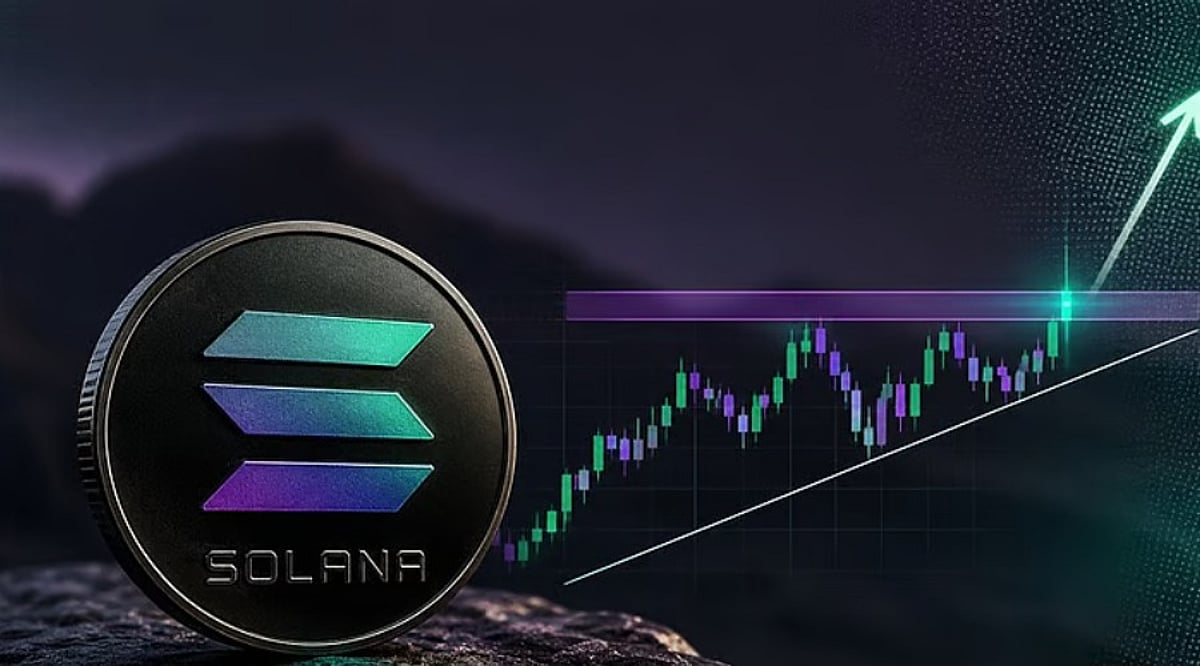
    The latest daily TradingView chart presents a market that has calmed significantly after weeks of heavy price swings. SOL trades around $76.98, very close to its 20-day moving average at $77.53. This indicates that buyers and sellers currently have nearly equal control over the market.

    The Bollinger Bands also show that price has entered a healthy range. The upper band sits near $84, while the lower band stands close to $71. Since the price remains between these two levels, Solana has room for a move in either direction. A close above the upper band could bring fresh buying interest, while a fall below the lower band may invite another round of selling.

    The Relative Strength Index (RSI) stands near 51, pointing to a balanced market. This level does not suggest SOL is overbought or oversold. After the weak momentum seen in June, this recovery in RSI reflects improved market confidence.

    The $84 Level Has Become the Key Barrier

    The resistance zone between $80-$84 is clearly visible on the chart. SOL has struggled to push past this zone for several weeks. If buying pressure does push the price beyond this level, market sentiment could shift very quickly. This level carries important value because many traders place orders around round numbers, and breaking $84 might convince those waiting for confirmation to enter the market. Below $75-$77, strong support exists at $70-$71.

    Strong Network Activity Supports Solana

    Price is only one part of the story. Solana continues to show healthy growth across its blockchain network. Activity within decentralized finance (DeFi), stablecoins, and tokenized real-world assets remains strong. Many developers still choose Solana for its fast transaction speed and low costs.

    Institutional Interest Remains Strong

    Large financial firms continue to watch Solana closely. Throughout 2026, reports have linked fresh buying interest to possible exchange-traded fund (ETF) developments and stronger participation from institutional investors. These investors typically focus on projects with active ecosystems and reliable technology. Solana fits both criteria, and this steady institutional attention has helped improve market confidence after the weakness seen earlier this year.

    Recent Ecosystem Growth Adds More Confidence

    Several key Solana milestones have occurred in 2026. The ecosystem has continued to grow steadily in terms of usage and number of users. Increased usage implies a continued high degree of user trust in the network.

    What Could Stop SOL From Reaching $100?

    Despite the positive outlook, several risks exist. Global economic uncertainty can reduce demand for risky assets like cryptocurrencies. Profit-taking near the $84 to $90 area could also slow any rally. Another factor is future token unlocks: if additional SOL enters the market while demand remains weak, selling pressure may increase temporarily. Regulatory decisions across major economies also remain an important factor for every cryptocurrency project.

    Expert Price Prediction for 2026

    Current technical signals and network growth suggest Solana has a realistic chance to reach $100 during 2026. The chart shows a market that has recovered from June’s weakness and started building a stronger base.

    • Bearish case: SOL trades between $65 and $75 if the overall crypto market loses momentum again.
    • Base case: A move toward $85 to $95 as adoption continues at its current pace.
    • Bullish case: Solana reaches between $100 and $115 if buyers clear the important $84 resistance with strong trading volume.

    Why This Matters

    Solana’s consolidation near $77 highlights its resilience after earlier volatility. Successfully breaking the key $84 resistance could trigger a massive wave of buying momentum, positioning SOL for a realistic run toward the psychological $100 milestone.

    Final Outlook

    Solana enters the back half of 2026 from a vastly more confident and comfortable standpoint than even a few weeks ago. Chart evidence shows greater price resilience, a balanced distribution of upward/downward pressure, and an identifiable base around $70. Moreover, the network remains consistently healthy, and investor interest—including continued institutional support—is solid.

    In the coming weeks, the market needs to make a definitive move. An aggressive break above $84 could quickly shift sentiment and begin targeting $100 again. While such a move is pending, Solana is in a sound consolidation period rather than bearish territory.

    All told, technical indicators support the possibility that Solana could visit $100 in 2026. As long as the broader crypto market does not falter, buyers may find it within their means to defend $70 and push toward the triple-digit mark.

    FAQs

    What is Solana’s current price and market standing?
    Solana is trading around $77 with a market capitalization of approximately $45 billion and robust daily trading volumes exceeding $2 billion.

    Can Solana reach $100 in 2026?
    Yes. Technical indicators and steady network growth suggest a return to $100 is highly achievable in 2026, provided SOL breaks through key immediate resistance levels.

    What is the most critical price level to watch?
    The $84 mark is the crucial resistance barrier. Pushing past this zone is expected to shift market sentiment rapidly from cautious consolidation to highly bullish.

    What is backing Solana’s underlying value?
    Beyond price action, Solana’s valuation is supported by thriving DeFi activity, expanding stablecoin volumes, and rising interest from institutional asset managers.

    What risks could prevent SOL from hitting triple digits?
    Potential roadblocks include broader macroeconomic downturns, sudden regulatory shifts, and profit-taking pressures as the price nears the $84 to $90 range.

    Disclaimer: This article is for informational purposes only and does not constitute investment advice. Cryptocurrencies are volatile and involve financial risk. Always conduct your own research (DYOR) before investing.

  • CoinRemitter Redefines Crypto Payments with Low Fees, Instant Settlements, and No KYC

    CoinRemitter Redefines Crypto Payments with Low Fees, Instant Settlements, and No KYC

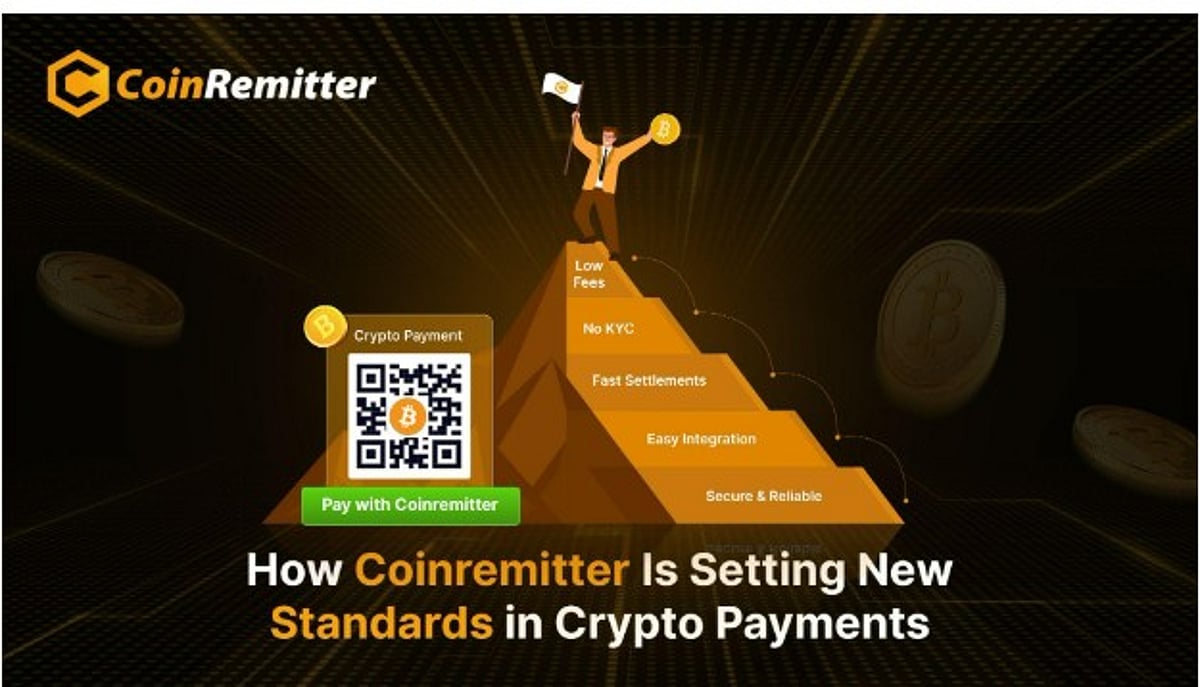
    For years, merchants have accepted payment processing fees around 2.9% plus $0.30 per transaction, waited three to five days for settlements, and submitted endless KYC paperwork. But a new standard is emerging. CoinRemitter, a crypto payment gateway, is challenging these norms with lower costs, faster access to funds, and a privacy-first approach. Here is how the platform is reshaping what businesses should expect from payment processing.

    Fees That Actually Make Sense

    Traditional payment gateways charge 2.9% plus $0.30 per transaction, meaning a $1,000 sale costs $29.30 in fees. CoinRemitter charges just 0.23% processing fees. The same $1,000 sale costs only $2.30 — a savings of $27 per transaction. For international transactions, the difference is even starker: cross-border credit card fees can reach 4.4% plus fixed charges, while CoinRemitter’s 0.23% remains constant regardless of location.

    Near-Instant Settlements

    Cash flow is critical for online businesses. Traditional gateways hold funds for three to five business days, leaving merchants waiting for their own money. CoinRemitter settles payments in 30 minutes, and crypto transactions confirm in just a few minutes. This means immediate access to revenue, no more cash flow gaps, and a completely new standard for speed.

    Privacy as a Default, Not an Option

    KYC procedures are not just inconvenient — they pose a genuine privacy risk. Merchants must hand over ID documents and proofs of address, which are stored on servers vulnerable to data breaches. CoinRemitter requires no KYC. Users sign up with only a name and email, eliminating document uploads, verification delays, and privacy concerns.

    Security Without the Fine Print

    Chargebacks cost businesses billions annually. Credit cards have a 0.47% fraud rate, while crypto transactions are final — no reversals, no disputes, no chargeback fees. CoinRemitter boasts a zero-hack record in eight years of operation, with no customer funds lost. Features like crypto API withdrawal controls and daily limits add extra layers of protection. Accepting crypto also means merchants store less sensitive data, reducing breach risk.

    Integration That Anyone Can Handle

    Old integration methods required hiring a developer, waiting weeks, and spending thousands. CoinRemitter offers ready-made plugins and a well-documented API. Adding three lines of code can get a merchant live in 12 minutes. For non-coders, visual widgets — Payment Button, Pricing Widget, Payment Page, Presale Widget — can be configured and published instantly. No developer required.

    Conclusion

    The old payment standards were designed for banks, not businesses. CoinRemitter is building standards that serve merchants: lower costs, faster access to funds, real privacy, and genuine security. Ready to experience payment processing that works for you? Sign up for CoinRemitter today and start accepting crypto in 12 minutes with no KYC, no hidden fees, and no waiting.

  • KuCoin App to Livestream Tomorrowland Belgium 2026 Across Both Festival Weekends

    KuCoin App to Livestream Tomorrowland Belgium 2026 Across Both Festival Weekends

    Fans unable to attend Tomorrowland in Boom, Belgium this summer can still experience the festival in real time. KuCoin has announced that the official livestream of Tomorrowland Belgium 2026 will be available directly through the KuCoin App, granting a global audience access to the Mainstage and Freedom Stage across all six festival days.

    As Tomorrowland’s official exclusive crypto exchange and crypto payments partner, KuCoin will carry the stream on July 17–19 and again on July 24–26. The lineup for those two stages includes some of electronic music’s biggest names: David Guetta, Martin Garrix, Calvin Harris, Hardwell, Armin van Buuren, Alok, Sebastian Ingrosso, and The Chainsmokers, among others.

    Access is available through a dedicated Tomorrowland page inside the app. Each day’s stream runs for approximately eleven hours. Broadcast windows, listed in UTC, span from 14:00 to as late as 01:00 depending on the day, covering both opening and closing sets across the two weekends.

    The livestream is part of a larger rollout this year. KuCoin’s partnership with the festival also includes the debut of a new stage called Celestia, the return of a costumed presence known as the KuCoin Guardians, and a set of activations tied to the exchange’s ninth anniversary, which falls on July 24—right in the middle of the festival’s second weekend.

    KuCoin CEO BC Wong framed the livestream as an extension of Tomorrowland’s mission to bring people together through music and shared experience. Wong said the exchange wanted to extend that sense of connection to its global user base, regardless of their location. While the technical addition of a stream inside an existing app is modest, it signals a broader trend: crypto platforms positioning themselves less as trading venues and more as connective layers between global users and the cultural moments they care about.

    For KuCoin, the timing aligns with the exchange’s efforts to extend beyond core financial products, following the same trajectory as its Robinhood Chain wallet support and earlier real-world asset integrations. Tomorrowland, meanwhile, gains a distribution channel that reaches far beyond the roughly 400,000 attendees over the two weekends. Whether this translates into deeper engagement or simply broader reach will be determined by this year’s viewership numbers.