Category: Cryptocurrency

  • Solana Hits Record Activity With 1B Weekly Transactions, Yet SOL Price Stalls Below Key Resistance

    Solana Hits Record Activity With 1B Weekly Transactions, Yet SOL Price Stalls Below Key Resistance

    Key Takeaways

    • Solana processed over 1 billion non-vote transactions in one week.
    • Tokenized assets on Solana have reached around $3.3 billion.
    • SOL remains below a major resistance zone despite strong network growth.

    Solana has entered another period of strong network expansion. Fresh blockchain data shows that user activity, transaction volume, and adoption continue to rise at a fast pace. The network has become one of the busiest blockchain ecosystems in the crypto market, thanks to its fast transaction speed and low fees. While these achievements have improved confidence in the project, the price of SOL has not matched the pace of this growth. Instead, the token continues to face heavy resistance on the price charts.

    This gap between network performance and market value has become one of the biggest talking points among crypto investors. Many believe the blockchain looks stronger than ever, but the token still needs a major push before it can start a sustained rally.

    Record Transaction Numbers Show Higher Adoption

    One of the biggest highlights is Solana’s transaction count. The blockchain recently processed more than 1 billion non-vote transactions in just one week, one of the highest weekly totals in its history. This number matters as it shows real activity across the network instead of transactions created only to support blockchain operations. More people now use Solana for decentralized exchanges, blockchain games, NFT platforms, payment services, and other applications. The rise in active wallet addresses also supports this trend, which suggests that new users continue to join the ecosystem while existing users remain active. These figures show that demand for Solana’s network continues to grow even during periods when the broader crypto market remains uncertain.

    Tokenized Assets Become a Major Growth Driver

    Another important development comes from tokenized real-world assets. Solana now hosts around $3.3 billion worth of tokenized assets on its blockchain. The network also handles almost 97% of all on-chain tokenized equity trading. This is a major achievement since tokenized assets allow traditional financial products, such as company shares, to move onto blockchain networks. Solana has become a preferred choice for these projects as transactions settle quickly and cost very little. As more financial companies explore blockchain technology, this sector could become one of Solana’s strongest long-term advantages.

    Stablecoin Supply Continues to Rise

    The rise in stablecoin activity is a growing trend in the Solana network. The increased supply of stablecoins means that there is an increased pool of capital from which to trade, lend, borrow, and utilize decentralized finance services. Higher liquidity allows for easier movement of funds between different platforms. This also creates a better trading environment on decentralized exchanges. Stablecoin activity has always been resilient even when there were considerable fluctuations in the markets.

    Institutional Interest Remains Strong

    Large investors also continue to watch Solana closely. Optimism around possible spot Solana exchange-traded products has helped improve long-term market sentiment. Although these expectations have not yet pushed SOL into a major rally, they show that institutional interest continues to build. Many investment firms now see Solana as one of the leading blockchain networks given its ability to process large numbers of transactions without high costs. This growing attention could become an important factor if broader market conditions improve.

    SOL Price Struggles Below Major Resistance

    Despite all these positive developments, SOL has not managed to break above an important resistance level. The token continues to trade below its 100-day exponential moving average, which many traders consider a key technical barrier. Each attempt to move higher has attracted selling pressure. This has limited the token’s ability to build strong upward momentum even as network activity reaches new highs. The contrast between strong blockchain growth and weak price action has surprised many market participants.

    Technical Indicators Show Mixed Signals

    The Relative Strength Index (RSI) remains below levels that usually signal strong buying pressure. At the same time, the Moving Average Convergence Divergence (MACD) points to weaker bullish momentum. These indicators suggest that buyers have not yet taken full control of the market. Until stronger demand returns, resistance levels could continue to slow any price recovery.

    Important Price Levels to Watch

    Analysts believe the $78 to $79 range remains the most important resistance zone for SOL. A successful move above this area could open the door for a rally toward the mid-$90 range. However, another rejection could send the price back toward support between $73 and $74. These levels may decide the next major move for the token over the coming weeks.

    Strong Network Does Not Always Lift the Token Price

    One reason behind this difference is Solana’s fee structure. The network charges very low transaction fees, which makes it attractive for developers and users. However, higher blockchain activity does not always create enough buying demand for SOL itself. As a result, network growth alone cannot guarantee immediate price gains. Investors often wait for stronger market demand before the token begins a sustained upward move.

    Why This Matters

    This divergence proves that record-breaking blockchain adoption does not automatically increase token price. Solana’s massive scaling wins show it is a primary hub for financial activity, but its low-fee model struggles to generate enough token demand to easily shatter major market resistance.

    Long-Term Outlook Remains Positive

    Despite the short-term challenges faced by SOL, the network is continuing to improve in various aspects. Developer activity remains good, validator participation keeps growing, transaction volumes are high, and user adoption is increasing. These indicators make Solana one of the leading Layer-1 blockchains in the industry. Its increasing importance in DeFi, payment software, gaming, NFTs, and tokenized assets means the ecosystem has many possibilities for future growth. At the moment, the blockchain continues to achieve new milestones, but the token still has to reach a point of stable breakthrough from its resistance level before the price performance will fully reflect the network’s potential.

    FAQs

    1. Why is Solana’s network growing? The ecosystem is expanding due to high user transaction counts, low fees, rapid developer adoption, and massive growth in tokenized assets and decentralized finance infrastructure.
    2. How many transactions did Solana recently process? The blockchain achieved a massive performance milestone by processing more than 1 billion non-vote transactions within the span of a single week.
    3. How large is Solana’s tokenized asset market? Real-world tokenized assets built directly on the network have climbed to an aggregate value of approximately $3.3 billion, claiming dominant sector share.
    4. Why is SOL facing resistance? Despite immense network activity, the token remains stuck under key moving averages because low fees mean high throughput does not translate into enough buying pressure.
    5. What could support the next SOL rally? A sustained upward push requires buyers to clear the $78 to $79 resistance zone, backed by broader market volume and spot ETF developments.

  • Shiba Inu Exchange Reserves Plunge by 1.4 Trillion SHIB: Implications for Price

    Shiba Inu Exchange Reserves Plunge by 1.4 Trillion SHIB: Implications for Price

    Shiba Inu’s exchange reserves have dropped by 1.4 trillion SHIB over the past ten days, reducing the supply available on centralized exchanges to approximately 86.48 trillion SHIB. This on-chain signal suggests investors are moving tokens to private wallets, decreasing immediate selling pressure.

    Why Exchange Reserves Matter

    Lower exchange reserves often indicate fewer coins ready for quick sale, which can reduce selling pressure and improve market balance. However, a price rally typically requires broader market support, including strong demand and favorable conditions.

    SHIB Price Remains Under Pressure

    As of the latest update, SHIB trades at $0.00000425, below key resistance levels and its 20-day and 50-day exponential moving averages. While the Relative Strength Index (RSI) has recovered from oversold territory, buying activity needs to strengthen for sustained upward momentum.

    Whale Accumulation Continues

    Large holders, or whales, are moving significant SHIB amounts away from exchanges, indicating long-term confidence. This reduces available supply and helps SHIB avoid deeper declines despite a weak overall crypto market.

    Historical Context

    Similar reserve declines earlier this year led to price stabilization and modest gains. While past performance doesn’t guarantee future results, falling exchange reserves often support price stability.

    Broader Market Influence

    SHIB’s price remains tied to Bitcoin and overall market sentiment. Favorable Bitcoin movements can boost altcoins, but SHIB needs both internal momentum and positive market conditions for a recovery.

    Ecosystem Development

    The Shiba Inu project continues expanding with updates to Shibarium, AI initiatives, and community growth, focusing on long-term value rather than short-term price action.

    Conclusion

    The 1.4 trillion SHIB reserve drop reduces selling pressure and, combined with whale accumulation and ecosystem developments, strengthens SHIB’s foundation. However, higher trading volume and buying interest are essential for a sustained price rally. For now, lower reserves signal investor preference to hold, improving the long-term outlook.

  • Ethereum Node Concentration in US and EU Raises Network Resilience Concerns, Cambridge Study Finds

    Ethereum Node Concentration in US and EU Raises Network Resilience Concerns, Cambridge Study Finds

    Ethereum’s decentralization is facing renewed scrutiny as new research shows that nearly one-third of node activity sits in the United States. The Cambridge Centre for Alternative Finance said about 31% of Ethereum node activity is hosted in the U.S., while roughly 39% sits across the European Union, excluding the United Kingdom.

    Researchers said the network remains globally distributed overall. Even so, they warned that concentration across jurisdictions and cloud providers needs close monitoring.

    Geographic clustering draws attention

    The Cambridge Centre for Alternative Finance said Ethereum’s node activity is spread across several regions. Still, the U.S. and EU account for a large share of the network’s infrastructure. That distribution matters as Ethereum’s consensus design depends on broad participation. The network can tolerate many failures, but researchers noted that if more than one-third of validators go offline at once, finality can stop.

    The study also said validators sit behind different nodes, which makes exact measurement difficult. As a result, researchers said the link between hosting location and validator concentration remains hard to map with precision.

    Cloud providers enter the debate

    The report also found strong concentration among commercial cloud providers. Hetzner, Amazon Web Services, and OVHcloud host a significant share of Ethereum nodes, according to the research. That pattern raises resilience questions beyond the blockchain protocol itself. If a few providers carry much of the load, infrastructure risk can grow even when the network code remains distributed.

    The findings also revive a legal debate that has followed Ethereum for years. In 2022, the U.S. Securities and Exchange Commission argued in court filings that Ethereum transactions could fall under U.S. securities jurisdiction since much of the validation activity occurred in the United States.

    Energy use falls after The Merge

    The Cambridge research also updated Ethereum’s environmental profile after its shift to Proof-of-Stake. It estimated annual electricity use at about 7.9 gigawatt-hours. That figure marks a drop of roughly 99.98% from Ethereum’s energy use before The Merge in 2022. The network’s transition sharply reduced its power demand.

    Researchers also estimated that more than 56% of the network’s electricity now comes from sustainable sources. That share exceeds the current global average. Ethereum moved from Proof-of-Work to Proof-of-Stake in September 2022. Since then, the network has drawn more institutional attention through tokenization, stablecoins, and decentralized finance.

    The Cambridge Centre for Alternative Finance periodically studies blockchain infrastructure, energy use, and decentralization. Its latest report extends that work by examining both geographic distribution and hosting concentration.

    What’s Next?

    Cambridge research found that Ethereum node activity remains globally distributed but is concentrated in the United States and the European Union. The study also identified reliance on major cloud providers and confirmed Ethereum’s lower energy consumption after The Merge. Monitoring infrastructure distribution remains important as blockchain adoption expands.

  • CLARITY Act Faces Senate Hurdle as Democrats Demand Stronger Crypto Ethics Rules

    CLARITY Act Faces Senate Hurdle as Democrats Demand Stronger Crypto Ethics Rules

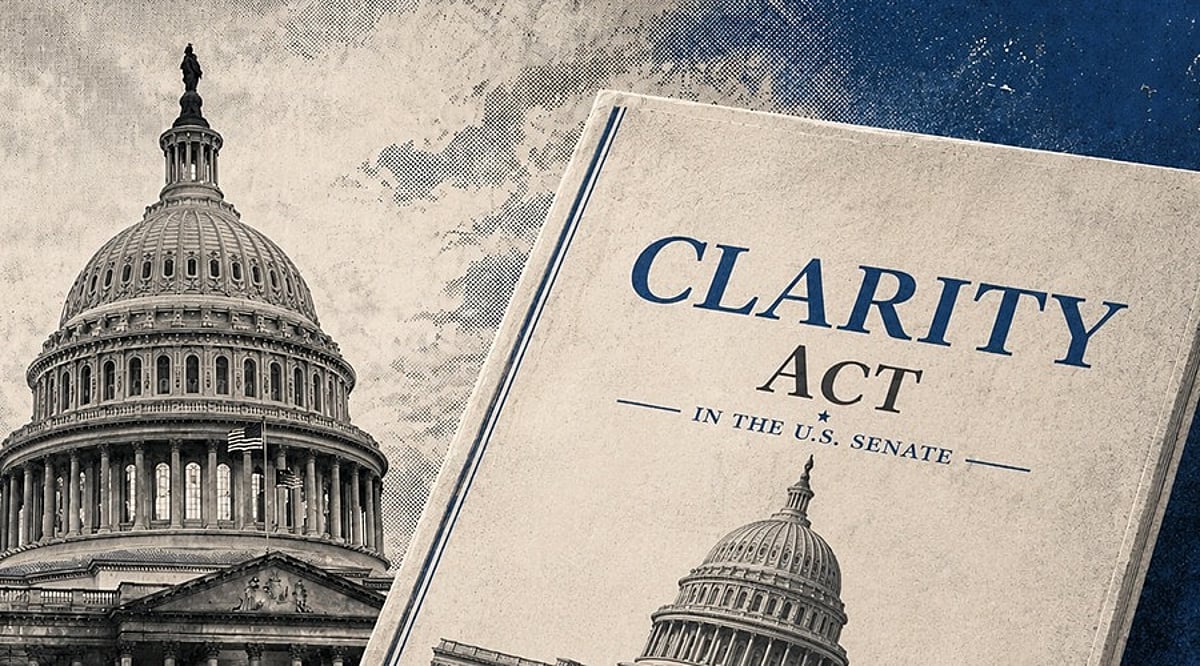
    The Senate’s latest effort to establish a comprehensive crypto market structure, the CLARITY Act, is encountering significant resistance from Democratic lawmakers who insist on stricter ethics provisions covering President Donald Trump’s cryptocurrency interests.

    Republican senators briefed President Trump at the White House on Thursday, with plans to release updated text of the bill shortly thereafter. However, Democrats were notably absent from the meeting and have signaled they will oppose the current draft unless it includes more robust ethics rules.

    Senator Bernie Moreno indicated that the updated regulatory text could be released following the White House meeting. Senator Cynthia Lummis echoed this sentiment, expressing hope that the draft would become public after lawmakers consulted with Trump, though she did not confirm a specific timeline.

    Moreno noted that lawmakers have spent months engaging with Democrats and argued that the Senate should move toward a vote before the August recess. Yet Democratic senators contend that the expected version does not reflect a bipartisan agreement, accusing Republicans of taking ethics language to Trump before concluding negotiations with Democratic lawmakers.

    Senator Cory Booker emphasized that talks remain active. “I hope they’re not going to drop something before we finish our negotiation,” Booker said. “The only way to get this done is a bipartisan pathway.”

    The core dispute revolves around ethics rules for public officials with financial ties to crypto companies, tokens, and digital asset projects. Democrats are pushing for firm limits that prevent senior officials from profiting from crypto ventures while in office.

    Senator Ruben Gallego described the ethics language he reviewed as “very weak,” stating it gives the president “a lot of latitude” to continue earning from crypto interests without adequate consumer protection. Gallego warned that Democrats would not provide the necessary votes without stronger rules. “At the end of the day, we don’t have strong ethics,” he said. “You’re not going to have the Democratic votes.”

    Republicans dispute this characterization. Moreno insists the bill includes strong ethics measures, and the White House supports rules covering all elected officials but has resisted language perceived as targeting Trump exclusively.

    A Democratic Senate aide claimed the Republican proposal is weaker than what Democrats would accept, adding that Democratic negotiators had not approved the version shown to the White House.

    The CLARITY Act would divide digital asset oversight between the Securities and Exchange Commission (SEC) and the Commodity Futures Trading Commission (CFTC). It would also establish registration and operating rules for exchanges, brokers, and other crypto businesses. Supporters argue the framework would help firms classify digital assets and meet federal requirements.

    Republicans currently lack the 60 votes needed to overcome a potential filibuster, making Democratic support essential. While some Democrats backed earlier versions during committee work, those votes do not guarantee support for the final measure. Opposition from key negotiators now complicates the vote count.

    The Senate calendar adds further urgency, as lawmakers must complete other major bills before the August recess. Any Senate version would also require House approval or further negotiations between both chambers.

    Crypto companies have urged Congress to pass market structure legislation, citing ongoing uncertainty over token listings, custody, registration, and trading services. Without a new law, firms continue to rely on agency guidance, court decisions, and enforcement actions to determine whether a digital asset falls under SEC or CFTC oversight.

    The next step depends on the wording released after the White House meeting. Democrats want stronger guardrails, while Republicans push for a vote before the recess. Until both sides reach an agreement, the CLARITY Act faces a difficult path through the Senate.

  • Pi Network Revamps Mining App and Prepares for Protocol V25 Launch Amid Token Price Weakness

    Pi Network Revamps Mining App and Prepares for Protocol V25 Launch Amid Token Price Weakness

    Pi Network has rolled out a redesigned mining app interface, improving navigation and user experience, while confirming that Protocol V25 will go live on July 22. The update introduces long-awaited features like dark mode and reorganizes key ecosystem tools into a single, streamlined menu. However, the PI token continues to face selling pressure as large token unlocks loom.

    Pi Network Mining App Redesign

    The Core Team announced that the redesign is the first phase of a broader refresh for the mining application. Users can now access the new menu via the hamburger icon at the top-left corner of the app. The consolidated menu groups the Mainnet Checklist, mining information, featured Pi Apps, and other ecosystem services, eliminating the need to navigate through multiple screens. A dark mode option has also been added, a feature frequently requested by the community.

    According to the team, the redesign was driven by extensive feedback from the over 60 million engaged Pioneers. To ensure stability, the changes are being rolled out gradually, with future updates planned to refine the interface further while preserving existing functionality. The developers intend to collect additional community feedback before expanding the redesign.

    Protocol V25 Privacy Upgrades

    Pi Network has confirmed that Protocol V25 will activate on July 22, focusing on network stability, reliability, and privacy-preserving smart contracts. The upgrade introduces BN254 cryptography and Poseidon hashing, enabling developers to build zero-knowledge applications that protect sensitive information while keeping private data off the public blockchain.

    The Core Team emphasized that the upgrade should improve smart contract efficiency as more decentralized applications join the ecosystem. This could give developers greater flexibility in building privacy-focused services on Pi Network. However, the long-term impact will depend on developer adoption, ecosystem growth, and network performance after deployment.

    PI Token Under Pressure

    Despite the technical progress, the PI token remains under pressure. The token recently lost the crucial $0.10 support level, falling to a record low slightly above $0.07. A brief recovery pushed the price toward $0.085, but sellers quickly regained control, sending PI back to around $0.073 before a modest recovery to $0.078.

    Data from PiScan indicates that nearly 130 million PI tokens are set to unlock over the next month. This additional supply could intensify short-term selling pressure if more holders decide to move their tokens to the market.

    What Lies Ahead

    Pi Network is combining product development with infrastructure upgrades as it prepares for Protocol V25. While the redesigned app and forthcoming privacy features are positive steps, the market will likely await stronger ecosystem growth and sustained developer activity before confirming any lasting recovery in the PI token. Participants will closely monitor the upgrade’s impact on adoption and network activity.

  • Trump’s $1.4B Crypto Income Stalls Senate Action on CLARITY Act

    Trump’s $1.4B Crypto Income Stalls Senate Action on CLARITY Act

    President Donald Trump’s 2025 financial disclosure reveals more than $1.4 billion in crypto-related income, reigniting a Senate debate over ethics provisions in the Digital Asset Market Clarity Act (CLARITY Act). The filing, released by the Office of Government Ethics on June 30, details earnings from the TRUMP memecoin and World Liberty Financial, placing the president’s digital asset profits at the center of a legislative standoff.

    The disclosure shows $635 million from the TRUMP memecoin, over $520 million from World Liberty Financial token sales, and more than $250 million from business interest sales. Combined, these sources generated nearly $800 million for entities tied to World Liberty Financial, with portions shared among family members. While golf clubs, resorts, and property licensing added other revenue, crypto accounts for the majority of Trump’s reported income.

    The CLARITY Act, which would divide crypto oversight between the Securities and Exchange Commission (SEC) and the Commodity Futures Trading Commission (CFTC), advanced from the Senate Banking Committee on a 15-9 vote in May. However, Democrats—including Senators Ruben Gallego and Angela Alsobrooks—have signaled that their support hinges on stronger ethics rules covering senior officials who own, issue, or profit from digital assets while shaping federal policy.

    Former acting OGE director Don Fox called Trump’s filing “a clear sign that additional ethics reforms are overdue.” The White House has denied any conflict of interest, stating that “neither the President nor his family has ever engaged” in improper conduct.

    With Republicans holding 53 Senate seats and most major legislation requiring 60 votes, the bill’s fate depends on cross-party support. Without agreed ethics language, the CLARITY Act may lose the Democratic votes it gained during the committee stage. Senate leaders aim for a vote before the August recess, but the tight calendar leaves little room for prolonged negotiations. Any changes made in the Senate may also require further House action before reaching the president’s desk.

    The next milestone is the release of revised Senate text. Its ethics provisions will determine whether negotiators can secure enough Democratic support while maintaining Republican backing for the broader crypto market structure framework.

  • GoMining Merges VIP and Referral Programs to Boost Community Rewards

    GoMining Merges VIP and Referral Programs to Boost Community Rewards

    GoMining has announced a major overhaul of its rewards ecosystem, merging its VIP and referral programs into a single, unified system. The update introduces a new pathway to VIP status based on referral activity, while referral rewards increase with each VIP tier, reaching up to 15% for top-level members.

    This is one of the most significant updates to GoMining’s loyalty program since its inception. Previously, users could advance to VIP levels only by purchasing more Digital Miners or locking GOMINING tokens. Now, referrals are also considered for VIP advancement, creating a direct correlation between community growth and platform benefits.

    The change also brings increased referral bonuses. The referring user earns daily electricity bonuses based on qualified purchases of Digital Miners from the main GoMining marketplace. Meanwhile, the referred user receives extra mining power, one month of access to the Platinum+ subscription plan, and other bonuses.

    By combining VIP advancement and referrals under the same system, GoMining aims to make it easier for users to earn benefits and grow their presence on the platform.

  • DOG Mode Proposal Seeks to Loosen Bitcoin Relay Rules as BIP 110 Fails to Gain Traction

    DOG Mode Proposal Seeks to Loosen Bitcoin Relay Rules as BIP 110 Fails to Gain Traction

    A new Bitcoin client proposal has emerged just days after BIP 110 failed to attract meaningful miner support for restricting non-financial data on the network. On Friday, Runestone co-founder Leonidas announced DOG Mode, an open-source Bitcoin client that would loosen Bitcoin Core’s relay policies without requiring a consensus vote.

    Unlike BIP 110, which seeks a consensus change through a user-activated soft fork, DOG Mode would simply alter how participating nodes relay transactions. The proposal introduces larger transaction relay limits and a lower dust threshold while leaving Bitcoin’s consensus rules unchanged.

    DOG Mode Targets Bitcoin Core Relay Policies

    Leonidas said DOG Mode would remove two restrictions currently enforced by Bitcoin Core. One limits the maximum standard transaction size that nodes relay. The other defines the minimum Bitcoin value an output must contain before nodes forward it.

    Bitcoin’s consensus rules determine whether a block remains valid across the network. By contrast, relay policy only controls which transactions an individual node shares with neighboring nodes. Therefore, transactions rejected under relay policy can remain valid under Bitcoin’s consensus rules.

    Since most Bitcoin nodes run Bitcoin Core, its default relay settings effectively shape network behavior. Nevertheless, miners can still include non-standard transactions if they receive them directly. Services such as MARA’s Slipstream already help users submit those transactions to miners.

    DOG Mode would increase the maximum standard transaction size from 400,000 weight units to 3,900,000 weight units. Since a Bitcoin block holds four million weight units, the proposed limit would allow nodes to relay transactions occupying almost an entire block.

    Meanwhile, the proposal would lower the dust limit from 294-546 satoshis to just one satoshi. As a result, smaller transaction outputs could move through participating nodes without meeting today’s higher threshold.

    Proposal Could Affect Ordinals and Runes

    Ordinals store images and text inside Bitcoin transactions. Likewise, Runes allows users to issue tradable tokens on the Bitcoin network. Both systems currently add extra Bitcoin to outputs so they satisfy Bitcoin Core’s dust requirement.

    Leonidas said removing the dust limit would free about $25 million currently locked as padding within those ecosystems. According to his statement, those funds could return to the related markets if the lower threshold gains adoption.

    Even so, DOG Mode does not require approval from miners or a formal activation process. Instead, any node operator can choose to run the software. If enough nodes adopt it and a miner accepts the transactions, they can enter confirmed blocks.

    BIP 110 Faces a Different Path

    BIP 110 follows a different approach by seeking to restrict arbitrary data through a user-activated soft fork. The proposal requires support from 55% of miners before activation. Current tracking data shows BIP 110 has received no miner support during the ongoing signaling period. Furthermore, it has never exceeded roughly 1% support during previous periods, according to the BIP 110 monitor.

    Support for BIP 110 mainly comes through Bitcoin Knots, an alternative Bitcoin client favored by developers who support stricter data controls. In contrast, Leonidas described DOG Mode as a Core fork that would diverge less from Bitcoin Core than Knots.

    DOG Mode currently exists only as an announced initiative. Leonidas invited developers to build the first release, encouraged miners to support it, and asked users to promote the project. As of Friday, no public code repository, software version, or benchmark existed.

    Runes creator Casey Rodarmor developed the protocol, while Leonidas helped promote it and co-founded Runestone, the project behind the DOG token. DOG traded little changed following Friday’s announcement and fell 1.2% over the previous 24 hours.

    What’s Next?

    DOG Mode proposes broader Bitcoin relay rules without requiring miner approval or a consensus vote, while BIP 110 continues to seek support for stricter data limits through a soft fork. The proposals present different approaches to Bitcoin transaction relay policies as developers and node operators monitor future adoption.

  • Crypto Market Slumps in Q2 2026 as Prediction Markets and NFTs Surge

    Crypto Market Slumps in Q2 2026 as Prediction Markets and NFTs Surge

    The cryptocurrency market experienced a sharp decline in the second quarter of 2026, with total market capitalization dropping by 12.6% to $2.1 trillion. Despite this broader downturn, prediction markets and tokenized collectibles posted record growth, defying the negative trend. Bitcoin and Ethereum suffered steep losses, while stablecoins saw their first quarterly contraction since 2023.

    Crypto Market Extends Quarterly Decline

    According to CoinGecko, the total crypto market capitalization fell by $304.8 billion during Q2 2026, marking the third consecutive quarterly decline and the lowest level since September 2024. The market remains about 52% below its October 2025 peak. June saw the sharpest correction of the quarter, driven by a hawkish Federal Reserve stance, shifting U.S.-Iran tensions, and Strategy’s symbolic Bitcoin sale. Bitcoin declined 14.2% during the quarter, while Ethereum fell 25.4%, underperforming U.S. equities. Stablecoins also contracted by 1.6% to $305.1 billion, ending a streak of growth since Q3 2023. Trading activity slowed significantly: spot trading volume on the ten largest centralized exchanges dropped 27.9% to $1.95 trillion, and perpetual futures volume declined 10% to $12.7 trillion.

    Prediction Markets Reach Record Activity

    Prediction markets emerged as the strongest-performing sector in Q2 2026. Notional trading volume surged 48.7% to $113.8 billion, with June alone generating $52.8 billion—92% above the previous five-month average of $27.5 billion. The FIFA World Cup, NBA Finals, and Wimbledon fueled much of this activity. Kalshi expanded its market share from 42.4% to 58.9%, while Polymarket’s share dropped to 30.2%. Rothera, the joint venture between Robinhood and SIG, secured fourth place with $2.1 billion in quarterly volume.

    Tokenized Collectibles Rise as Bitcoin Faces More Pressure

    Tokenized collectibles also recorded strong growth, with segment volume reaching $1.4 billion—a 143% increase from Q1 2026. June accounted for $646 million of that activity. Collector Crypt drove most of the expansion, with monthly volume climbing from $97 million in January to $406 million in June, capturing 62.8% of the collectibles market. OpenSea recorded only $32.7 million in NFT sales during June. CoinGecko noted that about 98% of collectibles trading volume came from gacha mechanics rather than secondary market transactions. Meanwhile, NYDIG warned that Bitcoin’s correction increasingly resembles the major bear markets of 2014, 2018, and 2022. The firm attributed the weakness to soft spot demand, rising leverage, and changing institutional behavior. Bitcoin finished the first half of 2026 down 32.9%, including a 13.4% decline in Q2. In contrast, technology stocks gained 43.5% and the Nasdaq 100 advanced 27.7% over the same period. NYDIG estimated that Bitcoin could decline toward $38,000 to $39,000 before establishing a cycle bottom, having already fallen nearly 50% from its October 2025 record high near $126,000.

    What’s Next?

    The crypto market extended its decline in Q2 2026 as Bitcoin, Ethereum, stablecoins, and trading volumes weakened. Meanwhile, prediction markets and tokenized collectibles delivered strong growth despite the broader downturn. Investors will closely watch whether these sectors sustain their momentum as Bitcoin searches for a potential market bottom.