Category: Cryptocurrency

  • How XRP Ledger’s Native AMM and Order Books Could Power Institutional Tokenized Markets

    How XRP Ledger’s Native AMM and Order Books Could Power Institutional Tokenized Markets

    Why XRP Ledger Is Building for Tokenized Finance

    The XRP Ledger (XRPL) is increasingly positioning itself as a foundation for tokenized financial assets. Unlike networks that depend heavily on external smart contracts to run decentralized exchanges, XRPL embeds both an order-book DEX and an Automated Market Maker (AMM) directly into the protocol. This native integration of trading, token issuance, and permissioned access gives institutions a distinct set of tools for building compliant tokenized markets.

    Order Books and AMMs: Two Liquidity Engines on One Ledger

    XRPL’s DEX lets participants create offers that specify the exact assets and prices they are willing to trade. In parallel, the protocol’s AMMs supply liquidity through pooled reserves, with exchange rates set algorithmically. When a trade is routed through the open DEX, it can tap order-book offers, AMM liquidity, or both to find the most efficient execution path.

    Liquidity providers who deposit into an AMM receive LP tokens representing their share of the pool and earn income from trading fees. It is also worth noting that on XRPL, only one AMM is permitted for any given asset pair, a design choice that simplifies the pool landscape.

    Permissioned DEX: Adding an Institutional Gate

    Institutional markets often require strict control over who can trade with whom. XRPL’s Permissioned DEX approach uses permissioned domains and credentials to create controlled trading environments. A domain acts like an allow-list, while credentials prove that a participant meets the requirements needed to access restricted trading.

    Trades in this permissioned setting are matched only with offers in the same domain. Hybrid offers offer more flexibility by interacting with both a designated permissioned DEX and the open DEX. However, one important limitation is that permissioned trades cannot directly consume AMM liquidity. That creates a potential trade-off between regulatory compliance and unfettered liquidity access.

    Multi-Purpose Tokens: Built-In Compliance Controls

    XRPL’s Multi-Purpose Tokens (MPTs) are designed for fungible assets that need institutional-grade controls. MPTs can support supply caps, transfer fees, holder authorization, freezing, and clawbacks—capabilities that map naturally to tokenized funds, debt, or other regulated assets where issuers need meaningful oversight of ownership and transfers.

    Native MPT trading on the DEX is still being developed under the MPTokensV2 proposal. If implemented, it would extend order-book offers, cross-currency payments, and AMM support to MPT-based assets.

    Institutional Pilots Are Already Underway

    In February 2026, Aviva Investors and Ripple announced plans to explore tokenizing traditional fund structures on XRPL. The initiative marks Aviva Investors’ first foray into blockchain-based fund tokenization and signals growing interest in XRPL as a settlement layer for regulated assets.

    Technology Alone Won’t Build Institutional Markets

    Protocol features are only part of the equation. Tokenized assets still require regulated issuers, qualified custody providers, professional market makers, reliable pricing sources, clear legal frameworks, and enough buyers and sellers to sustain deep secondary-market liquidity.

    XRPL advertises settlement in roughly three to five seconds and transaction costs of fractions of a cent. But institutional adoption will ultimately hinge on whether compliant markets using those rails can achieve real depth.

    Why This Matters

    Institutional tokenization is not just about putting traditional assets on-chain. XRPL’s combination of order books, AMMs, permissioned trading, and token controls could provide the connective tissue between compliant issuance and secondary-market liquidity—making tokenized financial products more practical for institutional participants.

    The Bottom Line

    XRP Ledger brings together native order books, AMMs, credentials, and tokenization controls in one settlement environment. The tools are compelling, but their success depends on liquidity, issuer adoption, regulatory clarity, custody standards, and how smoothly permissioned and open-market infrastructure integrate.


  • Crypto Matures: Arc and Prosper Take Opposite Routes to Institutional Trust

    Crypto Matures: Arc and Prosper Take Opposite Routes to Institutional Trust

    Crypto has spent years chasing the same goal from two directions: more real economic activity, more serious capital, without becoming either fully permissioned finance or a pure speculative casino. This week produced two answers to that problem, launched a day apart, and neither one looks like the other.

    Circle’s Arc: Permissioned Trust via Institutional Validators

    Circle’s answer is Arc. The Layer 1 network went live with a founding validator cohort that reads like a partial list of global finance itself: BlackRock, the Depository Trust & Clearing Corporation, ICE, Mastercard, MoneyGram, SBI Group, Standard Chartered, Sumitomo, Visa, Worldpay and Galaxy. The chain is explicitly permissioned. Circle presents that as a selling point, pairing it with a defined governance perimeter it says lets banks use a public chain for treasury, trading and confidential payments. USDC, with roughly $74 billion in circulation, is wired in as the network’s gas token. The company also completed the genesis mint of ARC this week, all 10 billion tokens created at once, while being careful to say the mint is not a commitment to a public launch. It’s a technical step toward a possible move to proof of stake, not a trading debut. Arc’s bet is that institutions will trust a public chain more readily if the validator set looks like the institutions themselves.

    Prosper’s Performance Markets: Permissionless Transparency

    Prosper’s answer is close to the opposite bet. Performance Markets, launched on Pharos the same week, keeps everything public and permissionless. Any curator with an onchain track record can deploy a vault. There’s no validator gate, no cohort of institutional backers, no allocation set aside for insiders on the token side. Instead of importing trust through recognizable names, Prosper tries to manufacture it through transparency: every vault’s NAV, fees, and buybacks are verifiable onchain, and a high-water mark — the standard hedge-fund mechanism that only credits gains above a fund’s previous peak — governs when a share of performance fees buys back and burns the vault’s token.

    What that token is, and isn’t, is the part worth sitting with. Laura Shi, Chief Business Officer at Pharos, where she leads business architecture, RealFi innovation and ecosystem expansion, frames it this way:

    “Think of p{VAULT} as a token built around a public track record, not a share in a fund. Anyone can see how the Curator and the strategy are performing onchain, and use that information to decide what the token is worth. Strong results may build confidence; weak results may reduce it. But there is no automatic one to one link to the Vault’s NAV. Buyback and burn affects supply, it does not promise price support.”

    That’s the core difference between the two experiments. Arc is trying to earn trust by putting familiar institutions in the room. Prosper is trying to earn it by putting the data in the open and letting the market decide what a track record is worth, without wrapping that decision in an ownership claim.

    Which Model Will Prevail?

    Neither model has proven itself yet. Arc’s real test is whether the institutions that signed on as validators actually route meaningful volume through the chain, rather than treating the launch as a pilot. Prosper’s real test is narrower and more mechanical: whether curators show up in numbers, and whether the first vaults clear their high-water marks publicly — the moment the buyback mechanism actually has fees to work with.

    Watching which of these gains traction first won’t settle which model is “right.” But it will say something concrete about what kind of trust crypto’s next phase actually runs on: borrowed from institutions, or built from data anyone can check.

  • Coinbase Launches Retail IPO Access for US Users, Kicking Off with Oura Smart Ring

    Coinbase Launches Retail IPO Access for US Users, Kicking Off with Oura Smart Ring

    Coinbase has officially opened initial public offering (IPO) access to eligible retail customers in the United States, marking a significant expansion beyond its core cryptocurrency trading services. The new feature allows users to request shares at the IPO price before public trading begins, with smart-ring maker Oura being the first company available through the program.

    Coinbase Starts Retail IPO Access With Oura

    Announced on September 21, the IPO service is accessible through a dedicated section in the Coinbase app. Eligible customers must fund their accounts before indicating the number of shares they wish to request. After the company publishes an expected price range, users can submit a ‘Conditional Offer to Buy,’ which can be canceled or revised while the order book remains open. However, submitting a request does not guarantee an allocation; available shares depend on customer demand and the amount supplied to Coinbase.

    “This new feature is yet another step toward growing the Everything Exchange, as our US customers now gain early exposure to high-interest companies before they hit public exchanges,” Coinbase said in a statement.

    Oura IPO Details: Price Range and Share Structure

    Oura plans to list its common stock on the NASDAQ Global Select Market under the ticker OURA. Its amended registration statement shows an expected IPO price between $40 and $44 per share. The offering covers 50 million shares: Oura will sell 13.5 million new shares, while existing shareholders will offer another 36.5 million shares. Underwriters may also purchase up to 7.5 million additional shares from selling shareholders.

    Once the order book closes, Coinbase will allocate shares through its internal method. Customers may receive the full requested amount, a smaller allocation, or no shares. Allocated stock will be deposited into the customer’s account at the final IPO price and become tradable when public trading begins.

    Coinbase Discourages Quick IPO Share Sales

    Coinbase’s allocation system will favor customers who appear willing to hold their shares. A customer who sells allocated stock within 30 days may lose access to new IPO offerings for the next 60 days. Repeated sales within this period could also lead to smaller or less frequent allocations. These rules are designed to limit short-term flipping and distribute shares to longer-term investors.

    The exchange has not disclosed every factor used by its allocation system. Coinbase Capital Markets will operate the service as a FINRA-registered broker-dealer, aggregating customer orders and routing them through Apex Clearing Corporation. The broker will act as an agent and will not underwrite an offering, hold shares in inventory, or trade against customers. Users must also complete a standard FINRA eligibility questionnaire.

    Anthropic Access Not Yet Confirmed

    The launch comes as investors monitor reports about a possible Anthropic public offering. However, Coinbase has not named Anthropic as an upcoming deal or confirmed that its customers will receive shares in any future listing. The company said it plans to add more IPOs when selling-group allocations become available, with Oura remaining the only confirmed offering at launch.

    Meanwhile, COIN shares rose during the session as cryptocurrency prices and related stocks also gained. The stock movement coincided with Bitcoin reaching an eight-month high near $85,000.

  • 7 Essential Controls to Protect Crypto Assets from Insider Theft

    7 Essential Controls to Protect Crypto Assets from Insider Theft

    Institutions holding crypto assets face significant risks from insider theft. To mitigate these threats, they implement a range of controls designed to prevent unauthorized access and movement of funds. Below are seven key measures that help safeguard digital assets.

    Multi-Party Approval

    Requiring multiple approvals for sensitive transactions reduces the risk of a single employee moving funds alone. This creates a clear audit trail and makes unauthorized transfers harder to execute.

    Strict Access Controls

    Access to crypto wallets, private keys, and trading systems is limited based on employee roles. Strong authentication, separate accounts, and regular access reviews further minimize the risk of credential theft or misuse.

    Cold Storage

    Storing the majority of crypto assets offline in cold storage reduces exposure to online attacks and internal threats. Only funds needed for daily operations are kept online, with additional checks required for any transfers between storage systems.

    Private Key Management

    Private keys are protected using dedicated management systems, secure storage, and strict recovery procedures. Splitting key control among multiple authorized parties prevents any single employee from gaining enough control to move assets independently.

    Transaction Monitoring

    Continuous monitoring helps detect unusual wallet activity, large transfers, or transactions outside normal patterns. Security teams set alerts for risky actions and maintain detailed logs for investigation.

    Regular Security Audits

    Independent audits assess wallet controls, permissions, key storage, and procedures to identify weaknesses. Regular reviews ensure safeguards remain effective as roles, systems, and threats evolve.

    Separation of Duties

    Dividing responsibilities across custody, approval, security review, and reconciliation prevents any single employee from controlling an entire transaction. This creates multiple checkpoints and improves accountability.

  • Ethereum Price Prediction: $3,000 Target in Sight as ETH Holds Above $2.7K and MemeToro Presale Gains Steam

    Ethereum Price Prediction: $3,000 Target in Sight as ETH Holds Above $2.7K and MemeToro Presale Gains Steam

    Ethereum is holding near $2,745 after breaking out of a bull flag pattern. The move comes as the wider crypto market pushes higher and a reported $666 million in short liquidations adds fresh momentum to altcoins. For ETH holders, the next major focus is whether the breakout can carry price toward $3,000 and then the $3,250 target.

    The Ethereum price prediction is gaining strength because ETH is trading above its recent breakout zone. Some year-end models now point toward $3,454, showing how quickly bullish expectations are building around the second-largest crypto asset.

    This pumping market is also encouraging buyers to look for earlier entries. The MemeToro presale is one project gaining attention as $MT holds at $0.00430 in Stage 7 and passes $145K raised. MemeToro gives buyers a chance to enter before its AI launch tools, fair-launch contracts, and BNB Chain trading ecosystem reach the wider market.

    Ethereum’s Breakout Puts $3,000 Back in Focus

    Ethereum’s bull flag breakout is a major technical signal for the altcoin market. A bull flag forms when an asset rises strongly, pauses for a short period, and then breaks higher as buyers return. ETH has now moved above $2,700, putting the $3,000 level firmly back on the market’s radar.

    The short-term Ethereum price prediction points to $3,250 if the current momentum continues. A broader year-end model near $3,454 adds another bullish level for traders to watch. These targets reflect growing confidence as capital flows back into major layer-1 networks.

    Ethereum also has a strong fundamental base. Its network supports decentralized finance, stablecoins, NFTs, gaming, and many other blockchain applications. Staking can also reduce the amount of ETH actively available for trading, which may strengthen price moves when demand increases.

    How MemeToro’s AI Agent Opens a New BNB Chain Opportunity

    Ethereum gives buyers exposure to a mature network with a massive existing ecosystem. MemeToro gives them access to a much earlier story focused on the fast-moving memecoin market. The project is building an AI agent that aims to help creators turn online trends into structured BNB Chain token launches.

    The planned AI system is designed to track social conversation, public news, and fast-rising narratives. When it identifies a trend, it can help produce a launch package that includes a token concept, branding direction, allocation design, and funding mechanics. This can make token creation easier for people who have an idea but do not have deep technical skills.

    The proposed workflow is simple:

    • The AI scans for a trend with growing attention
    • The creator reviews the token concept and launch plan
    • Smart contracts apply the selected fair-launch rules
    • Traders discover and follow new memecoin launches

    This gives MemeToro a powerful product angle. Rather than creating another token with no platform purpose, it is building tools that could bring new creators and traders into one BNB Chain ecosystem. As the memecoin sector grows, a platform that helps users identify trends and launch tokens quickly could capture meaningful activity.

    Why MemeToro’s Public Fair-Launch Code Strengthens $MT

    MemeToro has backed its AI launchpad story with public development work. The project has released 1,373 lines of Solidity code across 17 files, including a FairLaunchEscrow contract, interfaces, tests, and supporting documentation. This gives the community a clear look at the framework behind its planned launch system.

    The stated contract design is built to lock launch settings when a token is created. It is also designed to remove insider allocations from the fair-launch split and direct funds toward refunds or planned liquidity routes. For memecoin buyers, these rules can create a cleaner entry experience.

    The planned structure gives users several advantages:

    • AI-guided token concepts based on live trend signals
    • Fixed launch terms visible before funding begins
    • Wallet caps and fairer participation rules
    • Future memecoin trading tools for discovering launches
    • $MT utility across platform access, rewards, and staking

    $MT is intended to power the wider ecosystem. The token is planned for premium tools, platform transactions, launch funding, staking, rewards, prediction markets, and the MemeToro news hub. This creates several potential demand channels as more users interact with the platform.

    Final Words

    Ethereum’s push above $2,700 has brought the $3,000 level back into view and strengthened the wider altcoin market. A $3,250 target now gives traders a clear next milestone, while the broader year-end outlook near $3,454 shows how positive sentiment has become. Ethereum remains a leading market name, but its scale means early buyers may search for smaller opportunities with more room to grow.

    MemeToro offers that early-stage angle. $MT is still priced at $0.00430 in Stage 7, the presale has crossed $145K, and the project is building an AI-driven BNB Chain launchpad supported by public fair-launch code. With token creation, trading, staking, prediction markets, and news tools planned around $MT, MemeToro is shaping up as the best crypto presale project for the next memecoin cycle.

    FAQs

    What is Ethereum’s next key price target?
    Ethereum’s current breakout has put $3,000 in focus, with $3,250 acting as the next major short-term target. Some year-end models place ETH near $3,454.

    What is the current $MT presale price?
    $MT is priced at $0.00430 in Stage 7. MemeToro has raised more than $145K in its presale.

    More Information on MemeToro ($MT) Presale Here:

    • Website: https://memetoro.com/
    • X: https://x.com/memetoro_mt
    • Telegram: https://t.me/memetoro_mt
    • YouTube: https://www.youtube.com/watch?v=gY0jgWy_DtA

    Disclaimer: Analytics Insight does not provide financial advice or guidance on cryptocurrencies and stocks. Also note that the cryptocurrencies mentioned/listed on the website could potentially be risky, i.e. designed to induce you to invest financial resources that may be lost forever and not be recoverable once investments are made. This article is provided for informational purposes and does not constitute investment advice. You are responsible for conducting your own research (DYOR) before making any investments. Read more about the financial risks involved here.

  • Solana App Revenue Hits $143M in August: How On-Chain Services Generate Income

    Solana App Revenue Hits $143M in August: How On-Chain Services Generate Income

    Solana’s on-chain economy is far larger than the fees paid to validators. Applications built on the network are generating substantial revenue from decentralized trading, token launches, lending, wallets, liquid staking and other financial services. Understanding where this revenue comes from helps distinguish raw blockchain activity from services users are actually willing to pay for.

    Recent data underscores the scale of that economy. During August 2026, Solana applications generated $143.23 million in protocol revenue, representing approximately 38% of all tracked application revenue across blockchains that month.

    How Trading and Token Launches Drive Revenue

    Decentralized exchanges (DEXs) charge fees when users swap tokens. Part of those fees compensates liquidity providers, while the protocol retains another portion. Additional revenue streams come from trading interfaces, routing services, perpetual trading and other offerings. Launchpads generate fees through token creation, bonding curves and subsequent trading activity.

    Pump.fun is a prime example. According to DeFiLlama, Pump-related protocol revenue reached roughly $58 million over the latest 30-day period, sourced from bonding-curve activity, graduation fees, PumpSwap and other products.

    Solana’s revenue base is also broadening. Applications such as Jupiter, Raydium, Axiom and newer trading platforms contribute through aggregation, automated market makers (AMMs), trading interfaces and other fee-generating services. On September 12, 2026, Solana applications collectively hit $7.935 million in daily protocol revenue—the highest single-day total of the year at that point.

    Revenue vs. Trading Volume: A Critical Distinction

    Trading volume measures the value of assets exchanged, not what an application earns. If a DEX processes $1 billion in volume with an effective 0.10% fee, gross fees would be $1 million. However, some of those fees may go to liquidity providers, referral programs or other participants.

    DeFiLlama therefore separates fees (total paid by users) from protocol revenue (the portion kept by the protocol). This distinction is essential when comparing applications with different business models.

    Network Fees Are Separate from Application Revenue

    Application revenue should not be confused with Solana’s underlying network economics. A single decentralized trade can create multiple economic flows: the application collects a trading fee, liquidity providers receive compensation, and the blockchain collects transaction-related fees. Consequently, $1 of application revenue does not mean $1 flows directly to SOL holders.

    How Revenue Reaches Token Holders

    Protocols decide how retained revenue is deployed—funding operations, accumulating in treasuries, financing incentives, or supporting token buybacks. DeFiLlama estimates roughly $38.7 million in holder revenue across Solana-based protocols over 30 days. Pump.fun accounts for about $25.2 million, while Jupiter and Raydium also direct portions of revenue toward token buybacks.

    This underscores why application revenue and token-holder value accrual are not identical metrics.

    Key Takeaways

    Solana applications generate revenue through trading, token launches, lending and other on-chain services. With app revenue reaching $143.23 million in August 2026, the ecosystem demonstrates substantial fee-generating activity. However, evaluating its economics requires separating trading volume, user fees, protocol revenue, network fees and the portion that ultimately reaches token holders.

  • How AI-Powered Apps Are Revolutionizing Cryptocurrency Trading

    How AI-Powered Apps Are Revolutionizing Cryptocurrency Trading

    Artificial intelligence is rapidly becoming a cornerstone of cryptocurrency trading infrastructure. AI-powered applications can process price action, derivatives data, blockchain activity, news, and sentiment far faster than any individual trader. While some systems only generate signals, newer agentic tools can connect directly to exchanges or wallets and execute transactions autonomously. However, these systems produce probabilistic decisions, not guaranteed forecasts.

    AI Combines Multiple Data Sources

    Conventional technical analysis typically relies on price, volume, and indicators. AI, on the other hand, analyzes vast datasets including Bitcoin momentum, order-book depth, funding rates, open interest, liquidations, exchange flows, and volatility. Machine learning identifies historical relationships associated with specific market events, while natural language processing (NLP) incorporates financial news, regulatory announcements, and social media discussions. The result: systems can classify market conditions as bullish, bearish, or neutral, assign probabilities to potential movements, or rank possible trading sequences.

    From Signals to Autonomous Execution

    AI analysis is increasingly extending beyond recommendations. Applications connected to exchange APIs can convert trading signals into orders, adjust position sizes, and monitor positions continuously. This trend became more visible in 2026: Kraken launched its CLI in March with 134 commands supporting spot trading, futures, staking, transfers, and WebSocket streaming. Kraken said the system was designed for developers and AI agents to access crypto markets directly. Coinbase introduced Agentic Wallets in February 2026, providing infrastructure that lets AI agents autonomously spend, earn, and trade while using built-in security guardrails.

    Historical Performance Can Be Misleading

    Machine learning models depend heavily on training data. A strategy optimized during a Bitcoin bull market may identify relationships that weaken during sideways or declining markets. Overfitting is another risk: a model can perform exceptionally well against historical observations but deteriorate once deployed with live capital. Trading costs—exchange fees, bid-ask spreads, slippage, and execution latency—can reduce or eliminate profits suggested by backtests. The CFTC warns that AI cannot predict sudden market changes and urges skepticism toward bots or signal services promising guaranteed or unusually high returns.

    Risk Controls Remain Essential

    Automated execution makes risk management particularly important, as errors can be repeated quickly. Position limits, stop-loss rules, exposure controls, model monitoring, and independent validation help constrain losses. The CFTC’s Innovation Task Force, announced in 2026, specifically includes artificial intelligence and autonomous systems among the technologies for which it is developing regulatory frameworks.

    Why This Matters

    The crypto market operates 24/7 and generates vast real-time data. While AI can process and respond rapidly, the need for reliable models, transparent strategies, and robust risk management increases proportionally.

    Final Thoughts

    AI can play a significant role in monitoring the cryptocurrency market, identifying trends, and executing trades, but it cannot eliminate trading uncertainty. Performance still depends on data quality, model design, changing market conditions, transaction costs, and disciplined risk controls.

    Frequently Asked Questions

    1. How does AI analyze cryptocurrency markets?
    AI systems process price movements, volume, order books, funding rates, open interest, liquidations, and blockchain activity simultaneously. NLP also incorporates financial news, regulatory developments, and social media sentiment.

    2. How do AI-powered apps generate crypto trading signals?
    Machine learning models search historical and real-time datasets for patterns associated with particular market conditions. They classify conditions as bullish, bearish, or neutral, calculate probabilities, or rank potential trading opportunities.

    3. Can AI automatically execute cryptocurrency trades?
    Yes. AI applications connected to exchange APIs or compatible wallets can convert signals into orders, determine position sizes, and monitor positions. Newer agentic infrastructure makes autonomous execution increasingly accessible.

    4. Can AI accurately predict Bitcoin and cryptocurrency prices?
    AI identifies patterns and estimates probabilities but cannot reliably predict future prices. Unexpected events, changing variable relationships, poor training data, and overfitting can cause previously successful models to fail.

    5. What are the major risks of using AI for crypto trading?
    Key risks include overfitting, inaccurate signals, sudden market changes, automation errors, slippage, and transaction costs. Position limits, stop-loss rules, exposure controls, and continuous model monitoring remain critical when automated systems trade.

  • Understanding Crypto Custody: MPC, Multisig, and HSM Security Models Compared

    Understanding Crypto Custody: MPC, Multisig, and HSM Security Models Compared

    What Is Crypto Custody?

    Crypto custody refers to the protection and management of private keys and digital assets. Three prominent security models—Multi-Party Computation (MPC), Multisignature (Multisig), and Hardware Security Modules (HSM)—each employ distinct approaches to reduce the risk of private key compromise. Understanding how these models work helps organizations evaluate security architecture, transaction controls, and operational requirements.

    Multi-Party Computation (MPC)

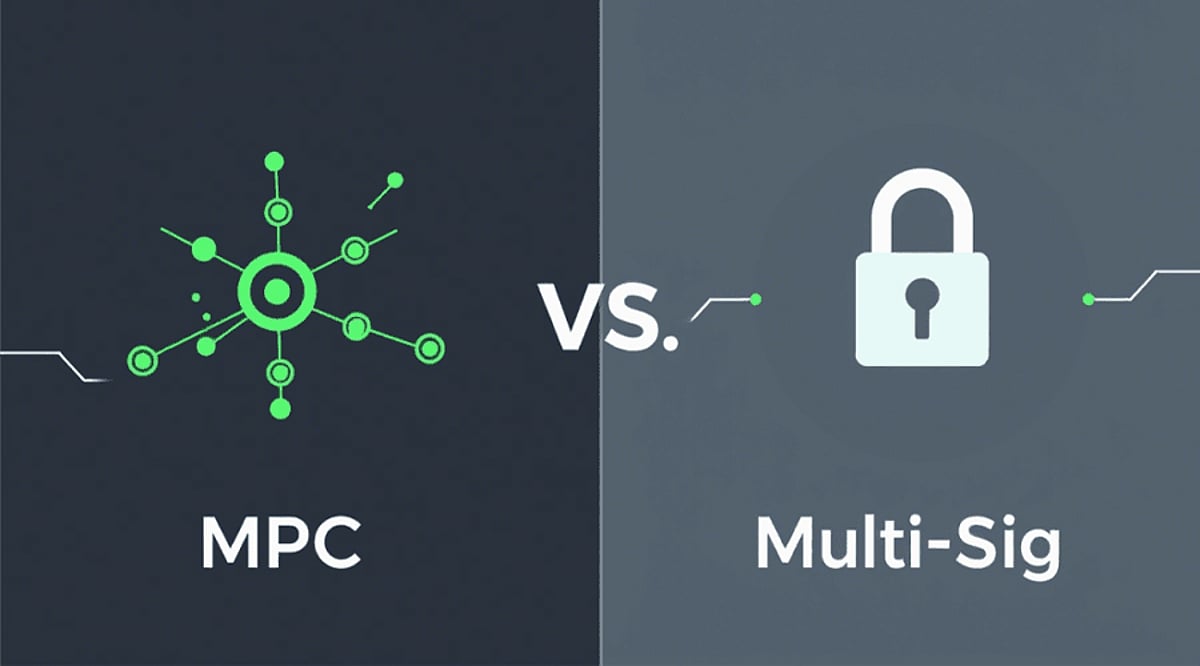
    MPC distributes cryptographic operations across multiple parties or devices so that no single complete private key exists in one location. Transactions require cooperation among participants to authorize, significantly reducing the risk associated with storing a full private key in a single place.

    Multisignature (Multisig)

    Multisig requires multiple authorized private keys or signatures to approve a transaction. For example, a wallet can require two out of three designated signers before any funds move. This adds an extra approval layer and reduces reliance on any single individual or private key.

    Hardware Security Module (HSM)

    An HSM is a specialized physical device designed to securely generate, store, and use cryptographic keys. It restricts access to sensitive cryptographic operations and is widely used in security-conscious environments. Its protection model relies on dedicated hardware and controlled operational procedures.

    MPC vs Multisig

    Both MPC and multisig distribute control, but they differ technically. Multisig records multiple signatures as part of transaction authorization, whereas MPC distributes the cryptographic computation itself. Their implementation, blockchain compatibility, and operational workflows can vary significantly.

    MPC vs HSM

    MPC and HSM address key security through different technical approaches. MPC distributes cryptographic control among participants, while HSM provides hardware-based protection for keys and operations. Organizations should evaluate factors such as infrastructure, recovery procedures, access controls, transaction workflows, and integration needs when choosing between them.

    Choosing the Right Custody Model

    No single custody architecture suits every organization. MPC, multisig, and HSM-based systems involve different approaches to key management, transaction approval, infrastructure, and recovery. The appropriate model depends on asset type, operational structure, security requirements, blockchain compatibility, governance procedures, and the organization’s overall risk management framework.

  • Crypto ETFs in 2026: Bitcoin Funds Expand Into XRP, Solana, Staking, and Active Strategies

    Crypto ETFs in 2026: Bitcoin Funds Expand Into XRP, Solana, Staking, and Active Strategies

    Cryptocurrency exchange-traded products have evolved considerably since the first spot Bitcoin ETFs launched in early 2024. By 2026, investors can choose from ETFs tracking Bitcoin, Ethereum, XRP, Solana, and other digital assets — plus staking-enabled funds, multi-asset indexes, and actively managed crypto portfolios. Regulatory changes have also made it easier for issuers to bring new products to market.

    Bitcoin and Ethereum Were Just the Beginning

    US spot Bitcoin ETFs set the model in January 2024, followed by spot Ethereum products later that year. Those products gave investors exposure to crypto prices through traditional brokerage accounts, without needing to manage wallets or private keys.

    By 2026, the lineup has widened sharply. Franklin Templeton offers Bitcoin, Ethereum, XRP, and Solana ETFs alongside its Crypto Index ETF. As of September 15, its XRP ETF held roughly USD 363.11 million in net assets, while its Bitcoin ETF held about USD 421.22 million.

    Bitwise’s September 2026 lineup also spans multiple assets, including Bitcoin, Ethereum, XRP, Solana, and Chainlink ETFs — another sign that exchange-traded crypto exposure now extends well beyond the two largest cryptocurrencies.

    Staking and Active Management Change the Product Mix

    The expansion isn’t just about adding more coins. Some new ETFs incorporate crypto-native features. Franklin Templeton’s Solana ETF, for example, seeks to track SOL while staking as much of the fund’s Solana as practicable, up to 100%, and lists a monthly distribution frequency. That marks a structural shift from spot-only products.

    Active management has also arrived. The SEC approved the listing of the T. Rowe Price Active Crypto ETF in June 2026. Its prospectus describes an actively managed ETP that aims for long-term capital growth through eligible crypto assets, rather than passively tracking a single cryptocurrency.

    SEC Rule Changes Accelerated ETF Expansion

    A major regulatory milestone came in September 2025, when the SEC approved generic listing standards for qualifying commodity-based ETPs holding spot commodities, including digital assets. Products meeting these standards can now be listed without exchanges submitting an individual Section 19(b) proposed rule change for each product. The SEC simultaneously approved the Grayscale Digital Large Cap Fund for exchange listing.

    Earlier, in July 2025, the SEC permitted in-kind creations and redemptions for crypto ETPs. Authorized participants can now exchange underlying crypto assets for ETP shares instead of relying solely on cash creation and redemption.

    ETF Flows Show Capital Spreading Across Assets

    Recent flows show investors are no longer choosing only between Bitcoin and Ethereum. According to SoSoValue, on September 21, 2026, US Bitcoin ETFs saw roughly USD 998 million in net outflows, Ethereum ETFs added USD 269 million, Solana ETFs added USD 26.10 million, and US ZEC ETF added USD 2.6 million. XRP products recorded no new capital that day.

    These numbers show that ETF flows can be a useful gauge of capital movement, but a single session shouldn’t be read as a long-term institutional-demand trend.

    Derivatives Infrastructure Is Growing Alongside ETFs

    Institutional crypto exposure is also expanding through regulated derivatives. CME Group reported cryptocurrency average daily volume of 175,000 contracts in August 2026, representing USD 12 billion in daily notional value.

    ETFs and derivatives increasingly complement each other in traditional finance: ETFs offer packaged investment exposure, while futures and options support hedging, price discovery, and risk management.

    Why This Matters

    Crypto ETFs have moved from simple Bitcoin wrappers to a broader investment category covering multiple assets, staking, and active strategies. That gives traditional investors more ways to access crypto and pushes digital assets deeper into established portfolio infrastructure.

    Final Thoughts

    By 2026, cryptocurrency ETFs have evolved well beyond Bitcoin and Ethereum to include XRP, Solana, diversified indexes, and actively managed strategies. Regulatory standardization has accelerated product development, but crypto ETFs still carry volatility, management fees, and tracking risks — and they lack many functions available through direct ownership of native tokens.

    FAQs

    How have cryptocurrency ETFs changed in 2026?

    Crypto ETFs have expanded beyond Bitcoin and Ethereum to include exposure to assets such as XRP and Solana. The market now also includes multi-asset, staking-enabled, and actively managed products, offering more diversified ways to access digital assets.

    What changed with US crypto ETF listing rules?

    In September 2025, the SEC approved generic listing standards for qualifying commodity-based ETPs, including digital-asset products. Eligible products can now be listed without the same individual Section 19(b) proposed rule-change process used for many earlier launches.

    Can cryptocurrency ETFs generate staking rewards?

    Some newer products incorporate staking. Franklin Templeton’s Solana ETF, for instance, states that it seeks to stake as much of its SOL holdings as practicable, showing how ETF structures are beginning to include crypto-native yield mechanisms.

    Why are cryptocurrency ETF flows important?

    ETF flows show how much capital is entering or leaving exchange-traded crypto products during a given period. They provide insight into investor allocation trends, although a single day of inflows or outflows does not establish a longer-term trend.

    What risks remain when investing through cryptocurrency ETFs?

    Crypto ETFs simplify brokerage access and custody but do not eliminate the underlying volatility of cryptocurrencies. Investors can also face management fees, tracking differences, and market risks, while ETF shares generally lack the on-chain functionality available through directly held tokens.

  • 7 Critical Security Challenges in Cross-Chain Crypto Custody for Institutions

    7 Critical Security Challenges in Cross-Chain Crypto Custody for Institutions

    As institutions increasingly adopt cross-chain cryptocurrency custody solutions, they expose themselves to a unique set of security risks. Unlike single-chain custody, cross-chain operations rely on bridging protocols, multiple validators, and complex smart contracts, expanding the attack surface. Below are seven key security problems that every institution must manage when handling digital assets across multiple blockchains.

    1. Blockchain Bridge Risk: Cross-chain bridges are frequent targets for attackers. Vulnerabilities in smart contracts, compromised validators, or insecure infrastructure can lead to asset theft during transfers between chains.
    2. Private Key Exposure: Managing private keys across several networks increases operational complexity. Each additional key creates a new opportunity for unauthorized access, theft, or accidental loss.
    3. Smart Contract Vulnerabilities: Cross-chain custody depends on intricate smart contracts. Coding flaws or logic errors can be exploited, putting institutional assets at risk.
    4. Validator Security: Many cross-chain systems rely on validators or external networks. If validators are compromised, collude, or act maliciously, funds can be stolen or frozen.
    5. Transaction Verification: Incorrect cross-chain transfers can result in permanent loss. Institutions must carefully verify destination networks, addresses, and transaction details before finalizing any transfer.
    6. Network Compatibility: Different blockchains use distinct standards, transaction models, and security mechanisms. Ensuring consistent custody controls across diverse environments is a major challenge.
    7. Access Control and Monitoring: Multiple custody platforms and networks require strict role-based permissions. Continuous monitoring is essential to detect unusual transfers, suspicious wallet activity, bridge exploits, and security breaches promptly. Additionally, regulatory compliance is complicated by the need to maintain records and identify counterparties across ecosystems.

    Institutions that address these risks proactively can better protect their digital assets and maintain trust in their custody operations. Implementing robust security protocols, regular audits, and comprehensive monitoring are critical steps toward safe cross-chain crypto management.