Category: Finance

  • FTSE 100 Opens Flat at 10,670 Ahead of ECB Decision; Brent Crude Holds Above $100

    FTSE 100 Opens Flat at 10,670 Ahead of ECB Decision; Brent Crude Holds Above $100

    The FTSE 100 opened flat at 10,670.04 ahead of a European Central Bank decision, as a US Treasury announcement on bond buybacks failed to impress. Brent crude futures rose 0.09% to USD 101.3 per barrel. US West Texas Intermediate (WTI) advanced 0.22% to USD 96.26 per barrel.

    Sterling traded at USD 1.3354 on Thursday, falling from USD 1.3548 at the time of the London equities close on Tuesday. Versus the euro, it fell to EUR 1.1641.

    Gainers & Losers

    On the upside, Whitbread climbed 1.98% to 2,366p. Compass Group advanced 1.87% to USD 31.10, while Aberdeen Group gained 1.53% to 252.40p. JD Sports Fashion rose 1.21% to 80.60p, Fresnillo added 1.08% to 3,082p, and ICG increased 0.94% to 1,943p.

    On the downside, Associated British Foods fell 9.31% to 1,832p. Computacenter declined 2.99% to 5,035p, while Endeavour Mining dropped 1.39% to 4,605p. Rio Tinto slipped 0.84% to 7,538p, Lion Finance Group lost 0.74% to 13,350p, and Games Workshop Group edged 0.51% lower to 17,480p.

    Q1 Recorded 7% Sales Increase

    Currys reported like-for-like revenue growth of 7% in Q1, with UK and Ireland sales up 6% and the Nordics up 9%. The retailer said it is “comfortable with market consensus” and left full-year guidance unchanged. Despite this, shares in the group fell 1.3%. Recurring Services revenue continued to grow, with flexpay adoption up 30 basis points year-on-year to 23.6% and iD Mobile subscribers rising 16% to more than 2.7 million.

    In the Nordics, sales growth was led by white goods and mobile, supported by continued momentum in new categories, B2B and Services, with market share gains in most countries against soft comparatives.

    KKR Acquired Eleco

    Private equity firm KKR has snapped up construction software provider Eleco in a deal that values the company at around GBP 208 million. The takeover gives shareholders GBP 235 per share, representing a 74.7% premium over the previous day’s closing price. Investors holding just over 45.2% have already pledged support for the takeover, which is expected to close in early 2027.

    THG Recorded Revenue Rise

    Ecommerce company THG posted a 7% rise in revenue in the first half of the year after a boost in sales in both its beauty and nutrition divisions. The company said revenue across the group was GBP 828.7 million in the period, up 7.2% year on year and above guidance of 6.5%. THG Beauty, which includes brands like Lookfantastic and Cult Beauty, delivered 5.9% revenue growth while THG Nutrition sales rose 9.2%.

    Global Market View

    In the US, the Dow Jones Industrial Average dropped 405.41 points, or 0.77%, to end at 52,380.66. The S&P 500 shed 0.48% to close at 7,636.36, while the Nasdaq Composite fell 0.64% to 26,253.34. In Asia on Thursday, Tokyo’s Nikkei 225 advanced 0.2% to 65,270.95, while China’s Shanghai Composite fell 0.43%. Hong Kong’s Hang Seng declined 1.26%, and South Korea’s Kospi declined 0.25%. In India, both the Nifty 50 and the Sensex rose by 0.03% and 0.047%, respectively.

    Also Read: Stock Market Update: Nifty 50 Opened 0.06% Higher, Sensex Fell 21.69 Points Amid Rising Oil Prices

    Join our WhatsApp Channel to get the latest news, exclusives and videos on WhatsApp.

    Disclaimer: Analytics Insight does not provide financial advice or guidance on cryptocurrencies and stocks. Also note that the cryptocurrencies mentioned/list on the website could potentially be risky, i.e. designed to induce you to invest financial resources that may be lost forever and not be recoverable once investments are made. This article is provided for informational purposes and does not constitute investment advice. You are responsible for conducting your own research (DYOR) before making any investments. Read more about the financial risks involved here.


  • From Zero to Millions: 6 Self-Made Millionaires Who Started With Almost No Capital

    From Zero to Millions: 6 Self-Made Millionaires Who Started With Almost No Capital

    From Almost Nothing to Millions

    Big businesses do not always begin with big bank accounts. Some entrepreneurs started with tiny shops, personal skills, borrowed resources, or early customer revenue. Their stories show how execution and persistence can sometimes matter more than having a huge starting budget.

    Sara Blakely: Solving a Simple Problem

    Sara Blakely started Spanx with about $5,000 of her own savings. She handled much of the early work herself and focused on solving a simple problem for women. Spanx eventually became a major shapewear brand, turning Blakely into a billionaire entrepreneur.

    Daymond John: From Queens to Global Fashion

    Daymond John started FUBU from his mother’s house in Queens with limited resources. He and his partners began making and selling clothing themselves. The brand eventually grew into a major fashion business, while John became a well-known entrepreneur and investor.

    Jan Koum: Building WhatsApp Without Expensive Ads

    WhatsApp co-founder Jan Koum came from a modest immigrant background and experienced financial hardship while growing up. He later built WhatsApp with Brian Acton, focusing on simple messaging rather than expensive advertising. Facebook eventually acquired the company in a multibillion-dollar deal.

    Richard Branson: Reinvesting His Way to a Virgin Empire

    Richard Branson began building his Virgin business empire with relatively modest resources, starting with a student magazine before entering the music business. He repeatedly reinvested earnings into new ventures. Virgin later expanded into airlines, telecom, media, and numerous other industries.

    Michael Dell: Selling Directly From a Dorm Room

    Michael Dell began selling upgraded computers from his university dorm room. Instead of building a traditional retail network, he focused on selling directly to customers. The direct-sales model helped Dell grow rapidly and eventually created one of the world’s best-known computer companies.

    John Paul DeJoria: $700 and a Hair-Care Vision

    John Paul DeJoria had limited financial resources when he entered the beauty business with Paul Mitchell. The pair reportedly started with about $700 and sold their products directly to salons. The business grew into a global hair-care company, making DeJoria a billionaire.

    Conclusion

    These founders prove that starting capital is not the only predictor of success. Resourcefulness, focus, and the ability to move quickly can turn a modest beginning into a major enterprise.

  • Top 7 FinTech Innovations Reshaping Financial Services

    Top 7 FinTech Innovations Reshaping Financial Services

    The financial services industry is undergoing a profound transformation driven by cutting-edge technologies. From artificial intelligence to blockchain, these innovations are enhancing efficiency, security, and accessibility. Below are the seven biggest FinTech innovations that are changing the way we manage money and conduct transactions.

    AI-Powered Finance

    Artificial intelligence is revolutionizing financial operations by automating fraud detection, credit assessments, customer support, and personalized financial advice. AI tools process vast amounts of data in real time, improving speed and accuracy while strengthening overall decision-making.

    Blockchain Technology

    Blockchain provides a decentralized ledger for transaction records, smart contracts, and digital assets. By reducing the need for intermediaries, it enhances settlement efficiency, transparency, and trust across financial markets.

    Real-Time Payments

    Real-time payment systems enable instant fund transfers and immediate availability of money. This innovation helps consumers and businesses manage cash flow with greater speed and convenience, reducing reliance on traditional banking delays.

    Embedded Finance

    Embedded finance integrates payments, lending, insurance, and banking services directly into non-financial platforms. This makes financial tools accessible within everyday digital experiences, such as shopping or ride-hailing, while maintaining security.

    Open Banking

    Open banking leverages APIs and customer-permitted data sharing to connect financial accounts across institutions. This enables personalized services, broader product choices, and smarter financial decisions for consumers.

    Digital Identity

    Digital identity technologies streamline customer onboarding and authentication while reducing fraud. They help financial institutions verify users securely across increasingly digital channels, enhancing both convenience and security.

    RegTech

    Regulatory technology (RegTech) automates compliance monitoring, reporting, screening, and risk controls. It enables financial institutions to respond faster to regulatory requirements and reduce operational burdens.

    Additional innovations such as asset tokenization and agentic AI are also gaining traction, offering fractional ownership of real-world assets and autonomous execution of multi-step tasks like reconciliation and compliance checks. Together, these technologies are shaping the future of finance.

  • UPI or Forex Card: What’s the Cheaper Way to Pay Internationally?

    UPI or Forex Card: What’s the Cheaper Way to Pay Internationally?

    Travelers now have more ways than ever to pay abroad, and UPI is expanding into international markets. The Unified Payments Interface is available across 11 countries, letting users scan QR codes and confirm payments in seconds without carrying large amounts of foreign cash or relying on plastic cards.

    But convenience doesn’t always mean lower cost. The true expense of an international UPI transaction depends on several factors beyond the payment fee itself. Exchange rates, currency conversion charges, bank fees, and the account linked to UPI can all shift the final amount you pay.

    What Drives the Cost of International UPI Payments?

    When you pay with UPI abroad, the transaction is processed using the exchange rate available at that moment. Currency conversion charges may be embedded in the rate or appear as a separate fee on your statement. The linked bank account matters too, since financial institutions apply different markups and service charges.

    Akshay Mehrotra, MD and Group CEO of Fibe, told NDTV that consumers should compare the total cost of a transaction rather than assuming one method is always cheaper. The cheapest option depends on the merchant, the destination country, and the amount being spent.

    Exchange Rates Can Change the Final Bill

    The amount debited from your bank account is the number that matters most. A checkout screen may show a foreign-currency amount, but the final INR equivalent depends on the exchange rate applied by your provider. Even a small rate difference can become significant across hotel stays, restaurant meals, shopping, and other large payments.

    Before completing a payment, compare the offered rate with the prevailing market rate. Check whether your bank or payment provider adds a separate forex markup on top of the conversion.

    Forex Cards Offer More Certainty

    Forex cards can give travelers greater predictability. When you load foreign currency onto the card, the exchange rate is generally locked in, protecting you from unfavorable rate movements during the trip. That makes forex cards appealing for longer holidays or planned expenses where budget certainty matters.

    However, forex cards are not automatically cheaper. Issuance fees, reload charges, ATM withdrawal costs, and maintenance fees can add up quickly. Travelers should compare these charges against the total cost of UPI payments before choosing a method.

    Cards and Cash Still Have a Place

    International credit and debit cards can compete with UPI, especially cards offering low or zero forex markup. Travelers should also watch for dynamic currency conversion at the point of sale and try to pay in the local currency whenever possible to avoid extra fees.

    Cash remains essential for taxis, small shops, local markets, and vendors that do not accept digital payments. But cash comes with its own drawbacks, including exchange spreads, ATM withdrawal fees, and security risks.

    Why Travelers Shouldn’t Rely Only on UPI

    UPI’s international expansion adds flexibility, but acceptance varies by country, city, and merchant. Before traveling, users should confirm that international UPI is enabled on their account, review transaction limits, and understand the currency conversion process.

    Security is just as important as cost. Travelers should use legitimate merchant QR codes, verify merchant names and transaction amounts, never share their UPI PIN, and avoid approving unexpected payment requests. Comparing the full cost of each payment option will help travelers get the best value without sacrificing safety.

  • Acutaas Chemicals Stock Surges 7% on JM Financial ‘Buy’ Rating and Rs 3,800 Target

    Acutaas Chemicals Stock Surges 7% on JM Financial ‘Buy’ Rating and Rs 3,800 Target

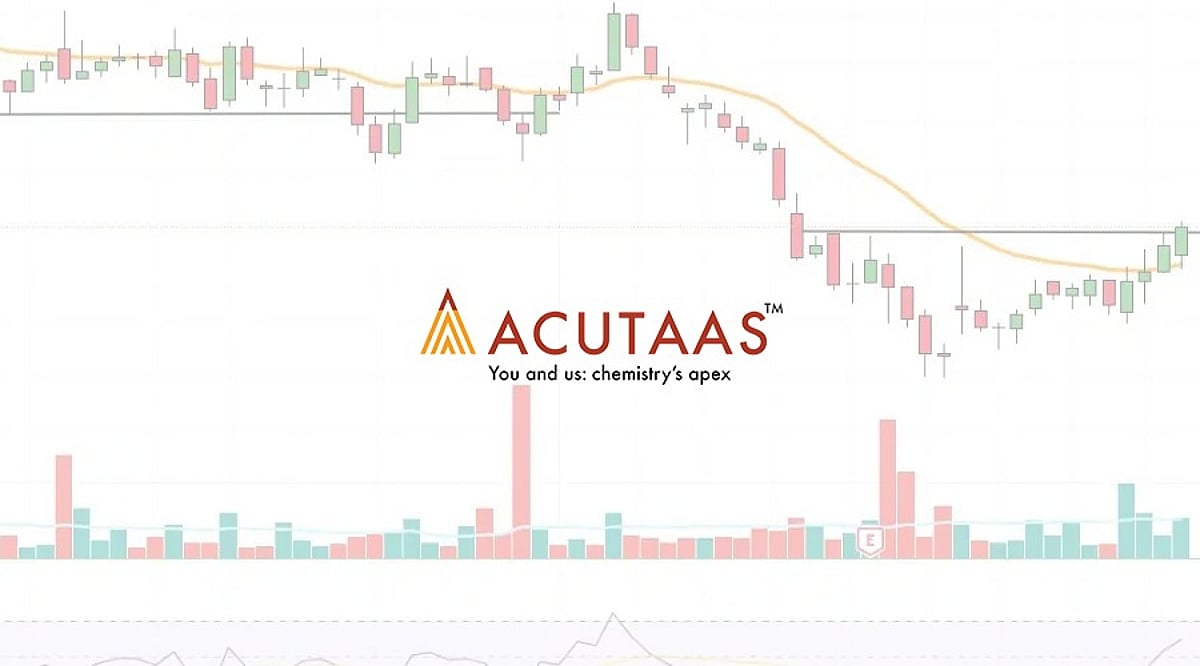
    Acutaas Chemicals Ltd shares surged nearly 7% on Thursday after JM Financial resumed coverage on the specialty chemicals firm with a ‘Buy’ rating. The brokerage upgraded its previous ‘Add’ call and set a target price of Rs 3,800 per share, indicating roughly 17% upside from the level considered in its report.

    The Acutaas Chemicals share price rose as much as 6.73% to Rs 3,451.05 during the session. JM Financial based its rating on expected growth in the company’s contract development and manufacturing organization (CDMO) business and new chemical segments.

    JM Financial Sees Growth in Specialty Chemicals Business

    Acutaas Chemicals has started shifting its specialty chemicals business away from products such as methyl paraben and salicylic acid. Instead, the company is expanding into electrolyte additives, semiconductor chemicals, and electronic chemicals.

    JM Financial said, “Electrolyte additives could address a 150,000 MTPA global market by CY30E.” The brokerage added that Acutaas has already contracted capacity for VC and FEC. Along with two other additives, JM expects these products to generate about Rs 400 crore in revenue by FY30.

    The brokerage also expects semiconductor chemicals to support growth. Acutaas has exposure to photoresist chemicals through BFC and Indichem. However, the revenue forecast depends on the planned ramp-up of the Korean facility, according to JM Financial.

    JM expects specialty chemicals revenue to rise from around Rs 170 crore in FY26 to Rs 730 crore by FY30, representing a compound annual growth rate of about 45%. The brokerage expects electrolyte additives and semiconductor chemicals to account for much of this expansion.

    CDMO Business Expected to Support Acutaas Chemicals Earnings

    JM Financial expects the Acutaas Chemicals CDMO business to grow at a compound annual rate of about 28% between FY26 and FY30. The brokerage linked this forecast to existing operations and new molecules entering the company’s portfolio.

    Acutaas currently has four new CDMO molecules across cardiovascular and oncology applications. According to JM Financial, each molecule could generate annual revenue of Rs 50 crore to Rs 100 crore.

    The brokerage expects combined revenue from these four molecules to reach about Rs 320 crore by FY30. These estimates remain forecasts and depend on commercial scale-up, customer demand, and execution during the period.

    Apixaban Opportunity Could Aid Legacy Pharma Business

    JM Financial also expects the legacy pharmaceutical intermediates business to recover as Pfizer’s Apixaban approaches patent expiry in November 2026. The brokerage estimates a potential opportunity for Acutaas Chemicals if demand for related intermediates increases.

    “Assuming Pfizer retains 20 per cent market share, we estimate an addressable opportunity of Rs 440 crore for Acutaas,” JM Financial said.

    The brokerage expects Apixaban intermediates to help support the legacy pharma segment after the company’s portfolio changes. It forecasts this business could grow at a 12% compound annual rate between FY26 and FY30.

    JM Financial estimates legacy pharma revenue could reach about Rs 880 crore by FY30. Meanwhile, the brokerage expects newer businesses, CDMO products, and specialty chemicals to contribute more to Acutaas Chemicals’ revenue mix over the coming years.

    The Rs 3,800 share price target reflects JM Financial’s forecasts and assumptions. Actual revenue growth, margins, and the Acutaas Chemicals share price may vary based on business performance and market conditions.

  • How AI Agents Are Revolutionizing Banking and Financial Services in 2026

    How AI Agents Are Revolutionizing Banking and Financial Services in 2026

    Artificial intelligence is moving far beyond simple chatbots in the banking sector. As of 2026, AI agents are handling complex tasks across credit assessment, fraud detection, customer service, and capital markets, fundamentally reshaping how financial institutions operate. A global study conducted by Cambridge Judge Business School, the Bank for International Settlements, the International Monetary Fund, and the World Economic Forum reveals that 81% of financial firms now use AI at some level, though only 14% consider it transformational for strategy and competitive advantage. This indicates widespread adoption but limited deep integration.

    AI Agents Go Beyond Chatbots

    The most significant shift is the emergence of AI agents that can perform multi-step tasks. Unlike chatbots that only answer questions, agents can review documents, check policy rules, identify missing data, prepare credit cases, and route them for human approval. Citi has developed Arc, an internal platform for AI agents used in research and task execution. Fiserv launched agentOS, a platform with policy controls, audit trails, and human oversight. This evolution positions AI as a work partner rather than a mere information source.

    Faster and Smarter Credit Decisions

    AI is transforming credit assessment by analyzing cash flow, account activity, income patterns, business data, and repayment history together—far beyond traditional forms and fixed checks. This wider view enables lenders to make faster decisions with less paperwork. BCG highlights agent-led credit journeys, faster credit review, and more personalized collections as key AI opportunities. Better data usage also helps lenders identify risk earlier.

    The AI Fraud Race

    Fraud detection has become an AI-versus-AI battle. Criminal groups use AI for fake identities, deepfakes, and phishing at scale. Banks now combine rules, machine learning models, graph analysis, and generative AI to detect unusual activity. The Federal Reserve has endorsed this multi-layered approach. Systems assess transactions alongside account links, device signals, merchant activity, and past behavior to reveal patterns missed by single-transaction checks.

    Customer Service: From Answers to Action

    AI assistants now go beyond answering balances and fees. They can help set savings targets, review expenses, and suggest plans. With proper permissions, they can even execute tasks like moving money or paying bills. Visa introduced an AI Financial Assistant in July 2026 for banks, noting that over 66% of surveyed Americans who used generative AI had sought financial advice through it. This creates a path from advice to approved action.

    Specialist AI in Capital Markets

    Banks use specialized models for market research, risk checks, liquidity forecasts, portfolio management, and foreign exchange. In August 2026, Citi, HSBC, and Standard Chartered adopted Ant International’s Falcon Time-Series Transformer Model 2.0, which reportedly cuts FX hedge and allocation costs by over 60%. Specialist AI models now play a stronger role across financial markets.

    Trust and Control Matter More Than Ever

    AI brings serious risks: model errors, data access issues, fraud, cyber threats, and poor decisions. The Financial Stability Board issued a June 2026 consultation on responsible AI use in finance, focusing on generative and agentic AI. The UK Financial Conduct Authority also warned about risks to firm operations, customer journeys, competition, fraud, and cybersecurity. Strong controls are as important as model quality.

    The Next Bank Model

    The next major change will come when AI agents gain secure access to core bank systems. A customer could grant an agent a clear task, expense limit, and permission to act, allowing it to compare products, move money, pay bills, or manage cash within set rules. This transforms AI from support to core system component. The strongest banks will combine robust data capabilities, modern infrastructure, useful AI agents, and firm controls. The central race now is about safe AI use at scale.

    Key Takeaways

    • AI agents now handle complex banking tasks across credit, fraud, research, and customer service.
    • Banks use AI to improve speed, accuracy, and personalization across financial services.
    • Strong governance, cybersecurity, privacy, and human oversight remain essential for safe AI adoption.

    Frequently Asked Questions

    How is AI changing banking in 2026?

    AI is transforming credit decisions, fraud detection, customer service, compliance, research, and other core banking processes.

    What are AI agents in banking?

    AI agents can complete multi-step tasks such as checking documents, applying rules, and preparing cases for human approval.

    Can AI improve fraud detection?

    Yes. Banks combine AI models, rules, and graph analysis to identify unusual transaction patterns and potential fraud.

    How does AI affect customers?

    AI provides faster support, personalized financial guidance, and with proper approval, helps customers complete financial tasks.

    What are the main risks of AI in finance?

    Key risks include cyber threats, data privacy issues, model errors, fraud, and poor decisions without suitable human oversight.

  • Large-Cap Stocks: Understanding Their Risk Profile in 2026

    Large-Cap Stocks: Understanding Their Risk Profile in 2026

    What Are Large-Cap Stocks?

    Large-cap stocks represent shares of major companies with substantial market capitalization—calculated by multiplying the current share price by the total number of outstanding shares. These firms are typically industry leaders with established track records, diverse revenue streams, and significant financial resources.

    How Large-Cap Stocks Compare to Smaller Companies

    Investors often view large-cap stocks as a safer bet than small-cap stocks due to their stability and lower volatility. However, the 2026 market performance illustrates that size alone does not guarantee superior returns or immunity from downturns. As of September 8, 2026, the S&P 500—a benchmark for large-cap U.S. stocks—closed at 7,673.52, down 0.58% for the day but still up 12.1% year-to-date. In contrast, the Russell 2000, which tracks small-cap companies, gained a stronger 19.3% over the same period. This divergence highlights that while large-caps may offer more stability, they can lag in growth phases.

    Market Capitalization and Index Composition

    The S&P 500 provides a clear picture of the large-cap landscape. As of August 31, 2026, the index comprised 503 companies, with a median market value of $44.73 billion. The largest company in the index boasted a market cap of approximately $5.35 trillion. Notably, the top 10 companies accounted for 37.8% of the index’s total value, with heavyweights like NVIDIA, Apple, Microsoft, Amazon, Alphabet, Broadcom, Meta, Micron, and Tesla leading the pack.

    Why Size Can Mitigate Certain Risks

    Large-cap companies typically enjoy several advantages that can reduce business-specific risks:

    • Stronger cash reserves and better access to credit markets
    • Diversified product lines and geographic presence
    • Established brand loyalty and customer bases
    • Greater resilience during economic downturns

    These factors can help large firms weather storms that might sink smaller competitors. However, they do not eliminate market risk, valuation concerns, or sector-specific vulnerabilities.

    The Concentration Problem in the S&P 500

    A new risk has emerged in the large-cap space: concentration. According to BlackRock, the top 20 S&P 500 companies now represent 49% of the index’s value and contributed 64% of its five-year return. This means that a broad index fund holding 503 stocks can still see its performance heavily influenced by just a handful of mega-cap firms. The information technology sector, comprising 73 companies in the index, posted a 22.44% year-to-date price return through August 31, 2026, driven largely by AI demand. But this same momentum carries significant valuation risk if earnings fail to meet lofty expectations.

    Real-World Market Shocks Still Hit Large-Caps

    Even the largest companies are not immune to sudden market shocks. On September 8, 2026, the S&P 500 fell 0.58% as oil prices surged and fresh concerns about AI valuations hit software stocks. Salesforce, Intuit, and ServiceNow each dropped between 4% and 5%. Brent crude approached $100 per barrel, reigniting inflation fears. Additionally, the U.S. 10-year Treasury yield hovered near 4.8%, raising borrowing costs for corporations and making bonds more attractive relative to equities—pressures that affect even the biggest firms.

    Analyst Outlook and Risks

    HSBC projects the S&P 500 could reach 8,100 by the end of 2026, citing expectations of more than 25% earnings-per-share growth in the second half of the year, supported by strong corporate results and AI infrastructure spending. However, the bank also flags risks from persistent inflation, interest rate volatility, geopolitical tensions, and stretched stock valuations.

    Conclusion: Large-Cap Means Lower Risk, Not No Risk

    Large-cap stocks can provide a more stable foundation for an equity portfolio compared to small-caps, thanks to their financial strength, market reach, and liquidity. Yet, they are not risk-free. Valuation, debt levels, sector exposure, and broader economic conditions all play critical roles in determining performance. For investors, the key takeaway is to look beyond the “large-cap” label and examine the underlying composition of their holdings. A portfolio that appears diversified may still be heavily concentrated in a few mega-cap tech names, amplifying risk. As always, thorough research and a clear understanding of your risk tolerance are essential before making any investment decisions.

    Frequently Asked Questions

    1. What are large-cap stocks?

    Large-cap stocks are shares of companies with very high market capitalization, calculated by multiplying the share price by the total number of outstanding shares.

    2. Are large-cap stocks less risky?

    Generally, large-cap stocks are less volatile than smaller companies, but they still carry significant market risk and can experience sharp declines.

    3. Why can large-cap stocks still fall sharply?

    High valuations, weak earnings, economic shocks, rising interest rates, sector problems, and geopolitical events can all push large-cap shares lower.

    4. Is the S&P 500 a large-cap index?

    Yes. The S&P 500 provides broad exposure to major U.S. companies and serves as a key benchmark for the large-cap market.

    5. Does large-cap mean safe?

    No. Large-cap status can indicate greater business strength and stability, but it does not guarantee protection from investment losses.

  • MCX Gold Slips 0.14% to Rs 1,52,370 as Middle East Tensions and Fed Rate Hike Expectations Weigh

    MCX Gold Slips 0.14% to Rs 1,52,370 as Middle East Tensions and Fed Rate Hike Expectations Weigh

    Gold prices moved lower on the Multi Commodity Exchange (MCX) on September 9, pressured by rising inflationary concerns after fresh attacks on ships in the Middle East and growing expectations of a US interest rate hike. October gold futures fell 0.14% to Rs 1,52,370 per 10 grams, while September silver futures declined 0.13% to Rs 2,39,113.

    Oil Prices Edge Higher

    Brent crude futures climbed 1.46% to USD 99.35 per barrel, while US West Texas Intermediate (WTI) rose 1.30% to USD 94.24 per barrel, adding to inflation worries in global markets.

    Fed Rate Hike Expectations

    According to the CME FedWatch Tool, markets currently price in a 39.5% probability that the Federal Reserve will keep rates unchanged in September, and a 60.5% chance of a rate hike. The possibility of higher borrowing costs continues to cap gold’s upside momentum.

    Domestic Gold Prices

    In the Indian domestic market, 24K gold fell by Rs 104 to Rs 1,54,310 per 10 grams, while 22K gold declined by Rs 95 to Rs 1,41,450. City-wise, Mumbai and Kolkata quoted gold at Rs 1,54,310, Delhi at Rs 1,54,460, and Chennai at Rs 1,54,310.

    US Gold Prices and Other Metals

    In the international market, spot gold rose 0.56% to USD 4,380.01 per ounce. US gold futures for December delivery dropped 0.38% to USD 4,422.31. Spot silver gained 0.73% to USD 66.23 per ounce, platinum rose 0.78% to USD 1,833.60, and palladium firmed 0.28% to USD 1,349.50.

    Key Levels to Watch

    “Gold is range-bound because it is capped by a higher probability of raising interest rates, which continues to hinder momentum in the market,” said Daniel Pavilonis, senior market strategist at Stone X.

    Ahmad Assiri, market strategist at Pepperstone Group Ltd, noted: “A softer reading will be a relief for gold traders, as it would support the case for holding rates steady. The greater risk lies in an upside inflation surprise, which would likely strengthen the case for a hike, creating what could be massive pressure on the precious metal.”

    Internationally, gold is likely to find support at USD 4,400–USD 4,365 per troy ounce, with resistance at USD 4,474–USD 4,510. Silver support is at USD 65.80–USD 64.70, while resistance is placed at USD 68–USD 69.10 per troy ounce.

    On the MCX, gold has support at Rs 1,51,500–Rs 1,50,150 and resistance at Rs 1,53,300–Rs 1,54,100. Silver is expected to find support at Rs 2,37,700–Rs 2,35,000, with resistance at Rs 2,41,400–Rs 2,44,000.

  • Streamlining High-Volume Onboarding: How KYC Automation Accelerates Identity Verification

    Streamlining High-Volume Onboarding: How KYC Automation Accelerates Identity Verification

    Digital onboarding can become difficult to manage when application numbers climb. Every new customer may need to provide information and prove their identity before gaining access to an account or service. When too much of that work depends on manual processing, higher demand can quickly create longer queues.

    KYC automation changes how businesses handle those repeatable checks. It can process information, support identity verification, and direct unusual cases for further attention. This helps businesses manage larger onboarding volumes while keeping necessary checks within the customer journey.

    Manual KYC Creates Friction as Application Volumes Rise

    Manual KYC processes require people to handle tasks that occur again and again during onboarding. Staff may need to inspect submitted information, review identity documents, or investigate inconsistencies. That workload can be manageable with a limited number of applications, but the pressure changes when hundreds or thousands arrive within a short period.

    The operational bottleneck becomes clearer as those applications accumulate. Businesses can track the percentage of applications sent to manual review, average handling time, and queue length to see where capacity is being stretched. If applications are entering manual review faster than employees can process them, waiting times increase even when each individual check takes only a few minutes.

    Those delays can also have a direct financial impact. Customers who encounter a lengthy verification process may abandon an application before opening an account or accessing the service. Tracking onboarding drop-off alongside processing times can help businesses identify where verification delays are contributing to lost conversions.

    Hiring more reviewers can increase capacity, although staffing alone doesn’t remove repetitive work from the process. KYC automation approaches the problem differently. Routine steps can be processed digitally, allowing businesses to increase onboarding capacity without requiring every additional application to produce the same amount of manual work.

    Automating Identity Checks: Removing a Major Onboarding Bottleneck

    KYC slows down when identity checks sit in separate steps. A document may be reviewed in one place, a selfie match in another, liveness results somewhere else, and fraud signals passed to a manual team before a decision can move forward. Even when each check works, the workflow itself can create delays.

    Automation helps by bringing those checks into a connected sequence. Organizations can reduce that friction by connecting document checks, facial matching, biometric liveness, and fraud signals inside one onboarding workflow. That does not remove human review. It makes the review process more selective by separating routine applications from cases that need closer attention.

    A well-structured workflow may include:

    • Document validation to assess identity documents and the information they contain,
    • Facial matching to compare the applicant with the portrait on the submitted document,
    • Biometric liveness to establish that a real person is present during verification,
    • Fraud detection to identify suspicious or manipulated identity signals.

    Incode identity verification is one example of this workflow-led approach. Incode is an enterprise AI-powered identity verification platform built to enable instant digital trust through unified biometric verification, fraud prevention, and regulatory compliance. It features built-in KYC and AML workflows that automate compliance checks. This helps regulated businesses keep onboarding moving at volume without removing the review controls needed for uncertain or higher-risk applications.

    Risk-Based Workflows Keep Manual Review Focused

    Some KYC cases are straightforward, while others need closer examination. Treating both in exactly the same way can make onboarding inefficient. If every application waits for the same level of manual attention, employees spend time reviewing routine cases while more complicated ones compete for the same resources.

    Automated workflows can help separate cases according to established criteria before every application reaches a manual queue. An application that completes required checks without producing an issue may continue through the process. Certain issues can trigger escalation to manual review. These include a low-confidence document check, failed liveness verification, a data mismatch, or suspected fraud.

    This approach makes human involvement more targeted. Review teams can concentrate on situations where context, investigation, or judgement is needed instead of repeatedly performing predictable tasks that can be automated. Human oversight therefore remains part of the process without becoming a mandatory stopping point for every applicant.

    That distinction matters when volumes suddenly rise. A business may experience a surge following a product launch or expansion into a new market. If routine applications can continue moving while reviewers concentrate on exceptions, increased demand is less likely to produce an equally large increase in manual queues.

    Faster Onboarding Still Depends on Effective Controls

    Speed alone isn’t a useful measure of an effective KYC process. An onboarding journey that moves quickly because important checks have been removed creates a different problem. Automation works best when it reduces unnecessary waiting and repetitive handling while supporting the controls the business has determined are necessary.

    Accuracy matters just as much when automated processes are making assessments at scale. Businesses can monitor metrics such as false rejection rate, manual-review rate, approval rate, and fraud catch rate to judge whether faster processing is producing the intended results. A high false rejection or manual-review rate, for example, may indicate that legitimate applicants are encountering unnecessary friction.

    Privacy deserves similar attention. Digital KYC can involve identity documents, personal details and, in some processes, biometric information. Organisations need to consider how that information is collected, processed and protected throughout the onboarding journey. Faster processing doesn’t remove those responsibilities.

    The practical goal is to make the process efficient without treating every second saved as an improvement. Automation can reduce repetitive work and shorten unnecessary queues, while appropriate controls and escalation routes ensure that cases requiring closer attention still receive it.

    Scaling Onboarding Without Scaling Every Manual Step

    High-volume digital onboarding creates a simple operational challenge: more applicants mean more checks. When every check requires individual employee involvement, processing capacity can struggle to keep pace with customer demand. Automation changes that relationship by allowing repeatable parts of KYC to move through digital workflows.

    The result can be a more scalable onboarding process where human attention is concentrated where it adds the most value. Routine identity and data checks can move more efficiently, while uncertain cases still receive additional scrutiny. For businesses handling large application volumes, that balance can shorten customer waiting times without making speed the only priority.

  • FTSE 100 Dips 18 Points as Rising Oil Prices and US-Iran Tensions Weigh on Sentiment

    FTSE 100 Dips 18 Points as Rising Oil Prices and US-Iran Tensions Weigh on Sentiment

    The FTSE 100 opened 18.66 points lower at 10,793 on Wednesday, dragged down by rising oil prices and ongoing uncertainty surrounding the US-Iran conflict. Brent crude futures climbed 1.60% to $99.49 per barrel, while US West Texas Intermediate (WTI) advanced 1.39% to $94.32 per barrel.

    Sterling traded at $1.3351, down from $1.3548 at Tuesday’s London close, and remained steady against the euro at €1.1643.

    Gainers & Losers

    Gainers: Computacenter rose 3.00% to 5,320p; Aberdeen Group advanced 2.10% to 252.80p; BP gained 1.80% to 560p; SSE added 1.50% to 2,430p; Centrica increased 1.44% to 154.55p; and Reckitt Benckiser Group rose 1.35% to 5,114p.

    Losers: Lion Finance Group fell 1.39% to 13,510p; London Stock Exchange Group declined 1.10% to 8,620p; Coca-Cola HBC dropped 1.00% to 4,544p; Games Workshop Group slipped 0.94% to 17,830p; Diploma lost 0.70% to 7,120p; and Coca-Cola Europacific Partners edged 0.51% lower to 7,830p.

    Energean Profit Jumps 45% in H1

    Energean shares surged over 4% in early trade after reporting first-half earnings ahead of forecasts. Total revenue from production fell 8% to $743 million, and adjusted EBITDAX declined 5% to $478 million, but both beat the $410 million estimate. A 29% rise in realized liquids prices lifted liquids revenue 14% to $267 million. Profit after tax reached $160 million, up 45% from $110 million a year earlier, as free cash flow rose 35% to $250 million on lower capital expenditure.

    Gym Group’s Profit Doubles

    The Gym Group doubled its pre-tax profit to £4.3 million in the first half of the year, improving 48% year-on-year, as revenue jumped 10% to £133 million. The company noted that Gen Z consumers are increasingly prioritizing fitness in their spending.

    Aberdeen Names New Chairman

    Aberdeen Group appointed Torbjörn Magnusson as chairman, replacing Douglas Flint who moved to insurer Prudential. Magnusson previously served as CEO and President of Sampo Group for six years until 2025. Interim Chairman Jonathan Asquith praised Magnusson’s “particularly strong track record of delivering growth and creating shareholder value.”

    Global Market View

    In the US, the Dow Jones Industrial Average tumbled 628.18 points (1.18%) to 52,786.07, the S&P 500 fell 0.58% to 7,673.52, and the Nasdaq Composite declined 0.32% to 26,421.41. In Asia, Tokyo’s Nikkei 225 dropped 0.19% to 65,142.78, China’s Shanghai Composite rose 0.33%, Hong Kong’s Hang Seng fell 0.33%, and South Korea’s Kospi advanced 1.4%. India’s Nifty 50 and Sensex declined 0.65% and 0.69%, respectively.

    Disclaimer: Analytics Insight does not provide financial advice. This article is for informational purposes only. Always conduct your own research before investing.