Category: Finance

  • France’s E-Invoicing Mandate: Is Your Business Ready for the 2026 Deadline?

    France’s E-Invoicing Mandate: Is Your Business Ready for the 2026 Deadline?

    The digitalization of tax administration is accelerating globally, and Europe is at the forefront. France’s Ministry of Economy, Finance, and Digital Sovereignty is implementing a groundbreaking digital tax reform that will fundamentally change how businesses handle invoicing and reporting. If your company operates in France, trades with French companies, or is subject to French VAT, understanding these new obligations is critical.

    The reform has two main components: mandatory electronic invoicing for domestic B2B transactions and mandatory e-reporting for cross-border, B2C, and overseas activities. Companies must adapt their ERP and accounting processes well before the implementation deadlines.

    Understanding the Core Architecture of France’s E-Invoicing Reform

    The French mandate rests on two pillars: mandatory electronic invoicing and dynamic e-reporting. The French tax administration (Direction Générale des Finances Publiques – DGFiP) aims to deter VAT fraud, reduce administrative burdens, and gain real-time access to economic activity.

    Unlike traditional paper or unstructured PDF invoices sent via email, e-invoicing under the new framework requires structured digital formats that enable automated machine processing. Invoices will no longer be sent directly from supplier to buyer; they must pass through validated digital channels that extract key tax data and transmit it to a national central hub.

    1. Electronic Invoicing (E-Invoicing)

    Mandatory e-invoicing targets all domestic Business-to-Business (B2B) transactions between companies established in France. Every tax-registered company must be capable of receiving structured electronic invoices, and sellers must issue them in standardized formats such as UBL 2.1, CII (Cross Industry Invoice), or Factur-X (a hybrid format combining a human-readable PDF with embedded XML data).

    2. Electronic Reporting (E-Reporting)

    Transactions outside domestic B2B scope are governed by e-reporting rules. This includes:

    • Business-to-Consumer (B2C) Transactions: Domestic and international sales to end consumers.
    • Cross-Border B2B Transactions: Intra-EU acquisitions, cross-border sales, and international import/export activities.
    • Payment Status Data: For services, payment date status must be reported to enable accurate VAT collection on an accrual or cash-received basis.

    The Regulatory Timeline: Phased Implementation Schedule

    The French government has established a phased implementation roadmap to allow businesses to progressively integrate necessary software and test data flows. While mandatory issuance is tiered by company size, every business in France must be equipped to receive structured e-invoices starting in September 2026. Waiting until 2027 is risky even for smaller enterprises, as receipt capability demands functional integration, system updates, and employee training today.

    Technical Infrastructure: PDP, PPF, and OD

    The operational framework relies on a Y-shaped architectural ecosystem designed by the French tax authority:

    • Public Billing Portal (Portail Public de Facturation – PPF): The state-run central repository that aggregates transaction data for tax oversight, provides basic free invoicing services, and routes data directly to the tax authority.
    • Partner Dematerialization Platforms (Plateformes de Dématérialisation Partenaire – PDP): Third-party certified service providers that convert non-compliant formats, validate invoice integrity, exchange invoices between platforms, and automatically route tax data to the PPF.
    • Dematerialization Operators (Opérateurs de Dématérialisation – OD): Uncertified technology vendors that can generate or process electronic invoices but cannot connect directly to the PPF or other PDPs without relying on an accredited PDP or manual intervention.

    Key Compliance Takeaway: For multinational businesses with complex ERP ecosystems like SAP, Microsoft Dynamics, or Oracle, partner integration with an accredited PDP is essential to automate high-volume invoice routing, schema transformation, and status tracking without breaking existing business logic.

    Operational Challenges and How to Prepare Your Business

    Transitioning to full compliance requires more than installing a simple software plugin. It impacts core finance, procurement, tax governance, and IT infrastructure. Organizations should undertake a systematic implementation strategy focused on:

    1. Data Governance and Master Data Cleanup

    E-invoicing validation engines rigorously inspect mandatory fields. Errors in SIREN, SIRET, or intra-community VAT numbers, customer addresses, or incorrect tax classification codes will cause instant invoice rejection. Establishing robust master data governance is step one.

    2. ERP and Financial System Alignment

    Assess your current ERP stack. Does your billing system support structured formats such as Factur-X or UBL? Does it track mandatory invoice lifecycle statuses (e.g., Deposited, Approved, Refused, Received, Payment Complete)? ERP systems must be configured to process real-time status feedback loops.

    3. Cross-Border Tax Strategy

    Ensure your tax technology stack can differentiate between domestic B2B flows (requiring e-invoicing) and cross-border or B2C flows (requiring structured e-reporting). Misclassifying transactions will result in compliance gaps and potential tax penalties.

    Future-Proofing Compliance with Integrated Solutions

    Given the shift toward real-time transaction management, maintaining separate systems for each country is unsustainable. Enterprises need scalable solutions that integrate easily with existing ERP environments. SNI Technology offers comprehensive, fully automated solutions for SAP-based compliance, helping businesses meet French e-invoicing and e-reporting requirements through automation of invoice creation, format transformation, validation, and routing via certified PDP channels.

  • Wall Street Futures Drop as Brent Crude Surges Past $100, Reviving Inflation Fears

    Wall Street Futures Drop as Brent Crude Surges Past $100, Reviving Inflation Fears

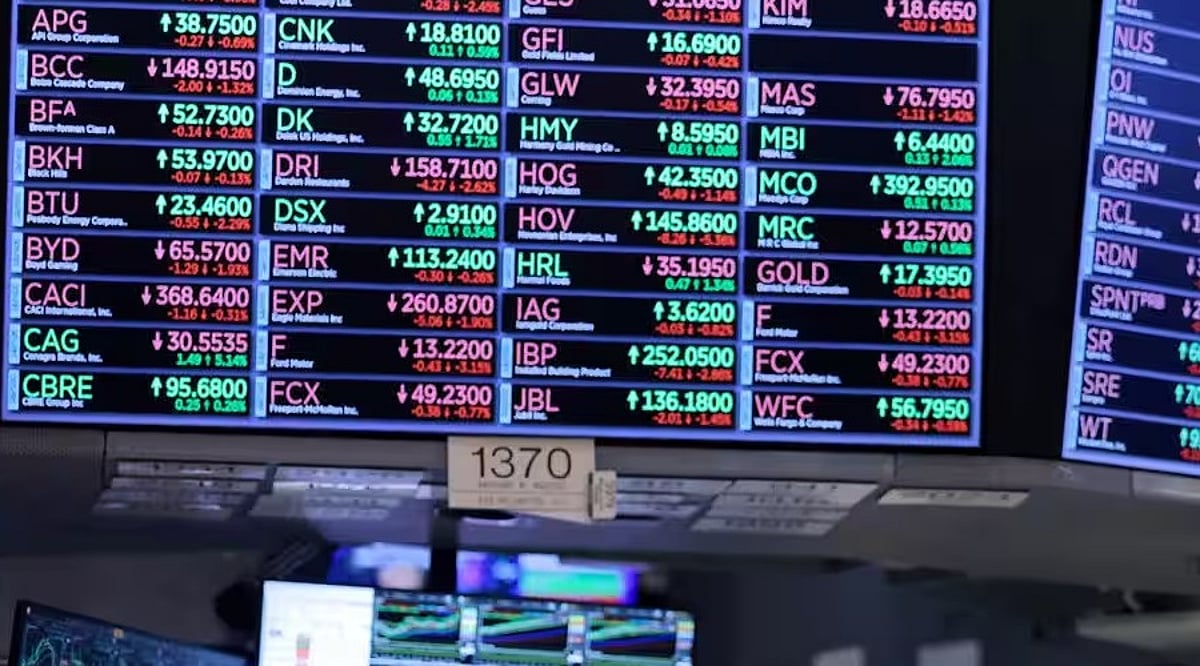
    US stock futures declined on Wednesday as Brent crude oil prices climbed above $100 per barrel for the first time since July, reigniting concerns about inflation ahead of key economic data releases. Investors are closely monitoring rising oil prices, elevated Treasury yields, and the Federal Reserve’s upcoming policy decision.

    Dow Jones Industrial Average futures fell approximately 331 points, or 0.6%, while S&P 500 futures dropped 0.4%. NASDAQ-100 futures also declined 0.5%. The losses followed a weak session on Tuesday, when the Dow dropped 1.2%, its largest one-day decline in nearly three weeks. The S&P 500 fell 0.6%, and the NASDAQ Composite lost 0.3%.

    Brent crude rose more than 2%, briefly surpassing $100 per barrel. The surge was driven by escalating tensions between the United States and Iran, which raised worries about energy supplies from the Middle East. Reports of attacks involving oil tankers and military assets heightened concerns about shipping through the Strait of Hormuz.

    Kara Murphy, chief investment officer at Kestra Investment Management, described the market move as “a little bit of a speed bump.” She noted that with fewer earnings reports to follow, investors are focusing more on macroeconomic risks.

    Treasury yields also rose, with the 10-year US Treasury note briefly exceeding 4.8% on Tuesday. Higher yields can pressure stock valuations by making government bonds more attractive relative to equities.

    Investors are now preparing for two critical inflation reports: the Producer Price Index on Thursday and the Consumer Price Index on Friday. These data points will help shape expectations ahead of the Federal Reserve’s September policy meeting. Market pricing currently implies about a 60% probability of a 25-basis-point rate increase. A stronger-than-expected inflation reading could boost those expectations, while a softer reading might support holding rates steady.

    Fed Chair Kevin Warsh and other policymakers have continued to emphasize inflation in their recent communications, keeping oil prices and inflation data at the center of trader attention.

    Global markets also reflected the cautious mood. European stocks traded lower, with the Stoxx 600 falling 0.7%. Germany’s DAX and France’s CAC 40 declined, while Italy’s FTSE MIB recorded a steeper drop. The UK’s FTSE 100 also moved lower. In Asia, results were mixed: Japan’s Nikkei 225 closed 0.19% lower, South Korea’s Kospi gained 1.4%, Australia’s S&P/ASX 200 fell 0.11%, and China’s CSI 300 rose 0.3%.

    The Cboe Volatility Index (VIX) remained near 15, below its long-term median of 17.6, suggesting that while near-term volatility is low, traders face several risk events in the coming weeks, including inflation data, the Federal Reserve meeting, and further developments in the US-Iran conflict.

  • Best Stock Market Websites for Aspiring Investors in 2024

    Best Stock Market Websites for Aspiring Investors in 2024

    Whether you’re a novice investor or a seasoned trader, having access to reliable financial data, analysis, and educational resources is crucial. The right websites can help you understand market trends, evaluate stocks, and build a solid investment strategy. Here are some of the top stock market websites that offer comprehensive tools and insights for investors worldwide.

    Investopedia

    Investopedia is an excellent starting point for beginners, offering easy-to-understand investing guides, financial definitions, and tutorials. It covers a wide range of topics including stocks, funds, trading, and personal finance, making it a valuable resource for building foundational knowledge.

    Yahoo Finance

    Yahoo Finance provides a wealth of market data, company information, and financial news. It includes stock charts, portfolio management tools, and research resources, making it a versatile platform for investors who need up-to-date information and analytics.

    TradingView

    For those focused on technical analysis, TradingView offers interactive charts, market data, and a suite of technical analysis tools. Its community features allow investors to share insights and strategies, making it a collaborative environment for studying global financial markets.

    Morningstar

    Morningstar is renowned for its in-depth investment research, fund analysis, and ratings. It provides portfolio tools and educational resources that help investors evaluate securities and develop long-term investment strategies based on reliable data.

    Seeking Alpha

    Seeking Alpha is a hub for market analysis and investment ideas, featuring earnings coverage, financial data, and commentary from a community of investors. It covers numerous global companies, offering diverse perspectives and actionable insights.

    Reuters Markets

    Reuters Markets delivers timely financial news and market developments, with a focus on company coverage and economic updates. Its professional insights are useful for investors who want to stay informed and make well-grounded investment decisions.

    MarketWatch

    MarketWatch offers stock market news, investing analysis, and economic coverage. It also provides financial data and educational content, making it a comprehensive resource for investors tracking global markets.

    Nasdaq

    Nasdaq provides market information, company data, and financial news, along with educational resources focused on equities and broader markets. It is a trusted source for investors looking for reliable data and investing insights.

    Moneycontrol

    For investors interested in the Indian market, Moneycontrol offers extensive coverage of stocks, financial news, and analysis. It includes portfolio tools and educational resources, making it a valuable platform for learning about investing in India.

    These websites offer a mix of educational content, real-time data, and analytical tools to help investors at all levels enhance their knowledge and make informed decisions. Explore them to find the ones that best suit your investment style and goals.

  • Indian Stock Market Tumbles: Sensex Plunges 555 Points as US-Iran Tensions Push Crude Prices Higher

    Indian Stock Market Tumbles: Sensex Plunges 555 Points as US-Iran Tensions Push Crude Prices Higher

    Indian equity markets came under severe pressure on September 8, as escalating hostilities between the United States and Iran in the Persian Gulf drove crude oil prices higher and exacerbated concerns over the weakening rupee. The benchmark Sensex fell 555 points to close at 75,577, while the broader Nifty declined 144 points to end at 23,635.

    The latest decline extends the Sensex’s one-month loss to nearly 3,000 points, or 3.8%, and the Nifty’s drop to 949 points, or 3.9%. Foreign funds continued to offload Indian stocks, adding to the negative sentiment on Dalal Street.

    Foreign Investor Selling Accelerates in September

    Foreign investor activity had been cautious since mid-August, with net purchases of Rs. 2,953 crore from August 10 through the end of the month, according to combined data from NSDL and BSE. However, the trend reversed sharply in September, with foreign funds net selling stocks worth approximately Rs. 12,700 crore so far this month, further pressuring the market.

    Rupee Weakens Amid Risk-Off Mood

    The Indian rupee also remained under pressure, falling 34 paise to close at 94.83 per U.S. dollar, despite a record $136 billion inflow through the Reserve Bank of India’s special dollar deposit scheme for NRIs. According to Dilip Parmar of HDFC Securities, the rupee fell in a risk-off environment because of high crude oil prices and aggressive dollar buying.

    Market Experts Comment on Rising Tensions

    Ankur Punj, Managing Director at Equirus Wealth, noted that renewed hostility between the U.S. and Iran pushed investors toward a low-risk stance on equity assets. “Mirroring weak global cues, domestic markets extended their losing streak Tuesday amid selling in banking, IT, oil and gas, and realty shares. Increasing tension in West Asia triggered a sharp rise in crude oil prices, while depreciation in the local currency against the dollar also dampened the overall market sentiment,” he said.

    Investors Lose Rs. 35,000 Crore in a Single Day

    The sharp decline in market values resulted in losses of approximately Rs. 35,000 crore for investors on that day. The total market capitalization of BSE stood at Rs. 486.2 lakh crore. Among Sensex stocks, ICICI Bank, HDFC Bank, and Reliance Industries contributed the most to the decline. However, purchases in BEL, Hindustan Unilever, and Adani Ports helped stem further losses.

  • Fairfax Faces Valuation Dispute in IDBI Bank Stake Buy, Deal Likely Delayed

    Fairfax Faces Valuation Dispute in IDBI Bank Stake Buy, Deal Likely Delayed

    Fairfax Financial Holdings’ proposed acquisition of a controlling 60.72% stake in IDBI Bank is at risk of delay as the Indian government reviews the Canadian investor’s valuation offer of approximately Rs. 81 per share. The deal, valued at nearly Rs. 53,000 crore for the entire stake, has hit a snag after a high-level meeting at the Finance Ministry failed to reach an agreement.

    Finance Ministry Reviews Fairfax Offer

    On Monday, a high-level meeting convened by the Finance Ministry assessed Fairfax’s reported offer to determine if it aligns with the government’s valuation expectations. The stake sale is a key part of the Centre’s broader disinvestment strategy, and its success is critical for planned fiscal targets. Sources indicate that the government is not satisfied with the Rs. 81 per share figure, which matches the stock’s closing price of Rs. 81.12 after a 10.56% decline on Tuesday.

    Wider Banking Consolidation Plans

    Fairfax, led by Prem Watsa, intends to merge its existing banking operations with IDBI Bank if the acquisition goes through. The group already holds about 40% of CSB Bank and could combine the two lenders under a single banking license. However, funding remains a question. Speculation that Fairfax would sell its stake in IIFL Finance to help finance the deal was denied by IIFL Finance on Wednesday, which stated that no such negotiations are underway.

    The delay underscores the challenge of valuing state-owned banking assets amid market volatility and regulatory hurdles. Investors will closely watch for further developments as the government and Fairfax continue talks.

  • Adyen Expands India Operations, Betting Big on Digital Payment Growth

    Adyen Expands India Operations, Betting Big on Digital Payment Growth

    Dutch payments company Adyen is significantly ramping up its presence in India, signaling strong confidence in the country’s long-term digital payments and cross-border trade market. While global rivals Stripe and PayPal have retreated from parts of the Indian market due to regulatory hurdles, Adyen is pursuing an aggressive expansion strategy.

    Gary Yang, Adyen’s Asia-Pacific president, confirmed that the company will continue to grow its Indian workforce. Although specific future hiring numbers or revenue targets were not disclosed, the trajectory is evident: Adyen’s staff count in India has grown tenfold since 2023. The company employed approximately 120 people in the country during the first half of 2026.

    A Different Path in a Tough Market

    India’s payments landscape is known for its strict regulations, which have caused difficulties for several international players. Stripe exited India in 2024, while PayPal limited its India operations to cross-border payments in 2021, abandoning domestic services.

    Adyen chose a different route. In 2024, it obtained a payment aggregator license, authorizing it to handle both domestic and cross-border payments in India. The company also established a technology hub in Bengaluru to support its local operations and product development.

    Adyen’s financial performance in India underscores its optimism. Pre-tax income from its India business more than doubled in 2025, rising to EUR 3.18 million from EUR 1.45 million in 2024. Globally, Adyen reported a net income of EUR 1.06 billion in 2025.

    Building for What Comes Next

    Adyen collaborates with global firms such as Adobe on their Indian payment strategies and assists Indian companies like travel platform Oyo in expanding abroad. The company has adapted its systems to comply with Indian regulations, including data localization laws, recurring payment mandates, and support for UPI, the country’s dominant payment system.

    Looking forward, Adyen is exploring “agentic commerce,” where artificial intelligence tools could eventually search for products and execute payments on behalf of users. The company’s India strategy revolves around expanding local operations and enabling payment services for both Indian and international businesses.

  • Indian Rupee Slips to 94.95 as Brent Crude Approaches $100 Amid US-Iran Tensions

    Indian Rupee Slips to 94.95 as Brent Crude Approaches $100 Amid US-Iran Tensions

    The Indian rupee fell 21 paise to 94.95 against the US dollar on Wednesday, September 9, 2026. Rising crude prices and escalating US-Iran tensions pressured the rupee during early trading in Mumbai.

    The currency opened at 94.80 before touching 94.95 in the interbank foreign exchange market. Tuesday’s session ended at 94.74, marking an 18-paise decline against the American currency.

    Brent crude climbed 1.41% to USD 99.30 per barrel as tensions raised supply disruption concerns. The Strait of Hormuz remains a major concern for markets tracking global oil supply routes. Anuj Choudhary, research analyst at Mirae Asset Sharekhan, highlighted the pressure on crude prices. “Indian rupee opened lower on escalating geopolitical tensions and surge in crude oil prices,” Choudhary said.

    The analyst expects USD-INR to remain under pressure while crude prices continue moving higher. He expects the USD-INR spot rate to trade between Rs. 94.70 and Rs. 95.15. A weaker dollar could provide some relief if global risk sentiment remains fragile.

    The dollar index slipped 0.03% to 98.76, offering limited support for the rupee.

    Indian equities also opened sharply lower as investors reacted to rising oil and geopolitical risks. The Sensex dropped 500.25 points, while the Nifty declined 129.40 points during early trading. Higher crude prices could increase India’s import bill and intensify inflation concerns. Investors now await inflation data from India and the US for fresh monetary policy signals. Persistent oil pressure could keep the rupee, equities, and broader markets volatile in coming sessions.

  • ITAT Quashes ₹1.23 Lakh Tax Demand Over Consultant’s Form 10-IEA Mix-Up

    Filing Error Leads to Unwanted Tax Demand

    The Bengaluru bench of the Income Tax Appellate Tribunal (ITAT) has canceled a Rs 1.23 lakh tax demand after finding that a consultant mistakenly filed Form 10-IEA. The taxpayer, Mr Shah, had declared income of Rs 32.55 lakh and prepared his income tax return under the New Tax Regime.

    However, on September 30, 2025, his consultant submitted Form 10-IEA, which indicated a choice for the old tax regime. The Centralised Processing Centre (CPC) then processed the return under the old regime, creating the additional tax demand.

    Taxpayer Stuck With Old Regime Despite Clear ITR

    Mr Shah later filed his ITR on October 24, 2025, clearly calculating tax under Section 115BAC(1A). That return showed a consistent New Tax Regime choice, even though the earlier Form 10-IEA had been filed. Despite this, the CPC processed the return under the old regime on January 29, 2026, relying on the submitted form.

    The Commissioner of Income Tax (Appeals) rejected Mr Shah’s plea, prompting him to approach ITAT Bangalore.

    ITAT Calls It a Bona Fide Procedural Mistake

    The tribunal examined the ITR and Mr Shah’s overall conduct. It noted that he never attempted to claim benefits under both tax regimes at once. It also found no evidence suggesting a deliberate intention to change the selected regime.

    Relving on the principle established by the Pune ITAT in Akshay Nitin Malu v. ITO, the tribunal gave importance to the regime choice shown in the subsequently filed ITR. Chartered Accountant Suresh Surana explained the significance of the ruling, noting that “a bona fide procedural mistake” should not force a taxpayer into another regime.

    Order and Impact

    ITAT Bangalore set aside the order of the Commissioner of Income Tax (Appeals) and directed the CPC to recompute Mr Shah’s tax liability. The tribunal also ordered deletion of the Rs 1.23 lakh demand linked to the old regime calculation.

    The ruling offers useful clarity for taxpayers: an unintentional filing mistake should not override a clear and consistent choice made in the income tax return. The tribunal also noted that Form 10-IEA no longer applies from April 1, 2026, for Tax Year 2026-27 onwards.

  • How Nithin Kamath Leveraged Tech to Make Investing Accessible for Millions of Indians

    How Nithin Kamath Leveraged Tech to Make Investing Accessible for Millions of Indians

    Investing in stocks was once a complex, intimidating process reserved for the wealthy. High broker fees, mountains of paperwork, and a general fear of the unknown kept most middle-class families away from equities for decades. That picture has changed dramatically over the last fifteen years, and much of the credit goes to Nithin Kamath, co-founder and CEO of Zerodha. He built India’s largest stock brokerage on a simple idea: technology should remove barriers to investing, not create new ones.

    Today, Zerodha serves more than 1.6 crore customers and accounts for close to 15 percent of daily retail trading volumes in the country. This article explores how Kamath used technology to reshape investing for ordinary Indians and why his approach continues to matter.

    A Discount Broker Built on Technology, Not Middlemen

    Kamath started as a self-taught trader, buying his first penny stocks at age 17. Working through the early 2000s, he saw how traditional brokers charged hefty commissions and often had little incentive to help small investors succeed. In 2010, along with his brother Nikhil, he launched Zerodha. The name combines “zero” with “rodha,” the Sanskrit word for barrier. Instead of charging a percentage of every trade, Zerodha introduced a flat-fee model—a move almost unheard of in Indian broking at the time. Building the entire back-end in-house gave the company control over speed, reliability, and cost, three things that mattered enormously to retail traders tired of clunky platforms and hidden charges.

    Kite: Simplifying the Trading Experience for Millions

    Zerodha’s trading platform, Kite, became one of the clearest examples of Kamath’s technology-first thinking. Built to be lightweight and fast, Kite stripped away the clutter that made older trading terminals intimidating for first-time users. A student or shopkeeper with no finance background could open the app, place an order, and track a portfolio without needing a broker on the phone. This ease of use drove Zerodha’s rapid customer growth, especially during the pandemic when lakhs of young Indians opened their first demat account from home. Data from the past year shows demat account additions rose by over 20 percent, taking the industry total past 4.9 crore accounts, and platforms like Kite played a direct role in that surge.

    Varsity and Rainmatter: Investing in Financial Literacy

    Technology alone does not make confident investors. Kamath understood this early and built Varsity, a free educational platform that breaks down everything from stock market basics to advanced options strategies. Millions of users have gone through its modules, many stepping into the market for the first time with a clearer understanding of risk. Alongside Varsity, Zerodha runs Rainmatter, a fintech incubator and fund that backs startups working on financial inclusion, wealth management tools, and sustainability projects. Rainmatter has supported more than 50 startups, extending Kamath’s mission of democratizing finance well beyond Zerodha’s own platform.

    A Bootstrapped Model That Puts Users First

    One thing that sets Kamath apart from most tech founders is his refusal to raise external funding. Zerodha has remained completely bootstrapped since day one, funding its own growth through profits rather than venture capital. This decision keeps the company answerable to its customers rather than to investors chasing quick returns. Kamath has spoken openly about staying cautious on an IPO too, preferring independence over the pressure of public markets. This model has not been without bumps—regulatory changes around derivatives trading led to a sharp drop in brokerage revenue—yet Zerodha continues to expand into asset management and lending to diversify its income.

    Why This Approach Matters for India’s Financial Future

    India’s investing culture is still young compared to more developed markets, and a large part of the population remains outside formal financial systems. Kamath’s work tackles two problems at once: cost and confidence. Lower fees bring more people to the table, and better education keeps them there without falling into risky bets they don’t understand. As a member of a SEBI advisory committee, Kamath has also shaped market policy, pushing for reforms that protect smaller investors. His influence extends into how an entire generation of Indians thinks about money, savings, and long-term wealth creation.

    Final Thoughts

    Nithin Kamath’s journey from a self-taught trader to the head of India’s biggest brokerage reflects a larger shift in how the country approaches investing. Through low-cost trading, an accessible platform in Kite, free education through Varsity, and continued investment in fintech innovation via Rainmatter, he has helped bring capital markets within reach of everyday Indians. As more people in smaller towns and cities come online, Kamath’s technology-driven model looks set to keep shaping the next chapter of India’s investing story.

    Frequently Asked Questions

    1. What is Zerodha known for?

    Zerodha is India’s largest stock brokerage, known for pioneering the flat-fee discount brokerage model and building its own technology in-house rather than relying on third-party platforms.

    2. What is Kite in Zerodha?

    Kite is Zerodha’s trading platform, designed to be simple and fast so that even first-time investors with no finance background can trade and track their portfolios easily.

    3. What is Varsity by Zerodha?

    Varsity is a free educational platform by Zerodha that teaches users about the stock market, from basic concepts to advanced options strategies.

    4. Why has Zerodha never raised external funding?

    Nithin Kamath chose to keep Zerodha bootstrapped so the company stays accountable to its customers rather than to investors seeking quick returns.

    5. What is Rainmatter?

    Rainmatter is Zerodha’s fintech incubator and fund, which has backed over 50 startups working on financial inclusion, wealth management, and sustainability.

  • Fed Rate Hike Fears Trigger Sell-Off in Indian IT Stocks: TCS, Infosys, HCLTech Under Pressure

    Fed Rate Hike Fears Trigger Sell-Off in Indian IT Stocks: TCS, Infosys, HCLTech Under Pressure

    Indian IT stocks experienced a sharp decline on September 7 as stronger-than-expected US jobs data reignited concerns about further Federal Reserve interest rate hikes. The Nifty IT index dropped 2.28% to close at 29,995.20, falling 699.90 points from its previous close of 30,695.10. The index hit a high of 30,377.10 and a low of 29,847.25 during the session, now sitting about 25.6% below its 52-week high of 40,301.40.

    Top IT Stocks Take a Hit

    Among the major players, Infosys suffered the steepest decline, losing 3.76% to close at Rs. 1,087.50. TCS fell 1.48% to Rs. 2,270, while HCLTech slipped 0.82% to Rs. 1,282.80. The broader IT sector also faced pressure, with Tech Mahindra, Wipro, LTIMindtree, Mphasis, and other key names declining.

    Strong US Jobs Data Revives Rate-Hike Fears

    The trigger was the US jobs report for August, which showed the economy added 162,000 jobs—far exceeding the market expectation of around 56,000. The unemployment rate held steady at 4.1%. The robust data bolstered the view that the US economy remains strong enough for the Federal Reserve to maintain higher rates or even raise them again.

    Markets now price a 58% chance of a rate hike at the September 16 Fed meeting, with the probability for an October move reaching about 70%, according to data from Reuters and Moneycontrol. The next major test will be the US August inflation report, due on Friday.

    How Higher US Rates Impact Indian IT Firms

    The US is the largest market for Indian IT companies. Higher interest rates increase borrowing costs for American corporations, making them more cautious with technology budgets. This can lead to delays or cancellations of large-scale projects, especially discretionary ones that don’t require immediate action.

    Two Pressure Points

    • Demand pressure: Higher borrowing costs may prompt US clients to postpone software upgrades, digital initiatives, and consulting engagements.
    • Valuation pressure: Rising US bond yields reduce the present value of future earnings, putting additional strain on technology stocks.

    This sell-off reflects more than a knee-jerk reaction to a single jobs report. Investors are now confronting a tougher policy backdrop while Indian IT companies already face headwinds from weak demand, artificial intelligence disruption, and slower growth.

    Infosys Leads the Decline

    Infosys was the hardest hit among the three largest IT firms, closing 3.76% lower at Rs. 1,087.50. The stock is now roughly 37% below its 52-week high of Rs. 1,727.85. TCS showed relative resilience with a 1.48% drop, and HCLTech fared best with a 0.82% decline. However, HCLTech also remains well below its 52-week peak of Rs. 1,780.10.

    These moves indicate that while the sector-wide pressure is visible, individual stocks have reacted differently. The overarching concern remains US demand, interest rate trajectory, and the future of technology spending.

    AI Adds Another Layer of Uncertainty

    Beyond central bank policy, artificial intelligence continues to weigh on the sector. Investors are debating whether AI will drive additional technology demand or reduce the need for traditional IT services. AI can cut the time and cost for coding, testing, support, and other software tasks. At the same time, companies require external partners for AI deployment, system integration, governance, and modernization.

    This creates both a risk and an opportunity for firms like TCS, Infosys, and HCLTech. The market now seeks evidence that AI-led demand can offset pressures on legacy service models. Deal wins, client budgets, margins, and management guidance will be critical for the next phase of the IT sector.

    September Fed Meeting in Focus

    The upcoming Federal Reserve meeting is the most significant near-term event for Indian IT stocks. UBS has revised its forecast and now expects two 25-basis-point rate hikes in 2026—one in September and another in December—reversing its earlier view of no change this year.

    A softer US inflation report could ease rate-hike fears and trigger a relief rally. Conversely, a hot inflation reading could push bond yields higher and intensify selling pressure.

    The sharp decline on September 7 marks a critical test for TCS, Infosys, and HCLTech. The next move will likely depend more on US inflation data and the Fed’s decision than on the single-day sell-off.

    FAQs

    1. Why did Indian IT stocks fall on September 7?

    Indian IT stocks declined after strong US jobs data revived fears of additional Federal Reserve rate hikes.

    2. Which major IT stock fell the most?

    Infosys recorded the sharpest drop among TCS, Infosys, and HCLTech, falling 3.76% to Rs. 1,087.50.

    3. How do higher US interest rates affect Indian IT companies?

    Higher rates can encourage US companies to tighten spending and delay discretionary technology projects, potentially reducing demand for IT services.

    4. What additional risk is affecting Indian IT stocks?

    Artificial intelligence is creating uncertainty over traditional IT services while also opening opportunities in AI implementation, integration, and modernization.

    5. What should investors watch next?

    The US inflation report and the Federal Reserve’s September policy decision are key near-term triggers for IT stocks.