Category: Finance

  • 5 IPOs to Open for Subscription This Week: Shah Investor’s Home, SRIT India, and More

    5 IPOs to Open for Subscription This Week: Shah Investor’s Home, SRIT India, and More

    Primary Market Heats Up With Five IPO Openings

    The Indian primary market is set for a busy week as five initial public offerings (IPOs) open for subscription between September 28 and September 30. Investors will have the opportunity to bid on a mix of SME and mainboard issues across sectors.

    Shah Investor’s Home IPO Opens September 28

    Shah Investor’s Home kicks off its IPO on September 28, with the subscription window closing on September 30. The company has set a price band of ₹159–167 per share and aims to raise ₹90.17 crore. Shares are expected to list on the exchanges on October 6.

    In the unofficial grey market, the company’s shares were trading at a premium of ₹10–12 during September 23–26, according to trackers. Grey market premiums are speculative and do not guarantee listing prices.

    SRIT India IPO Also Opens September 28

    SRIT India’s ₹218.40-crore IPO also opens on September 28 and closes on September 30. The price band has been fixed at ₹123–130 per share, with listing scheduled for October 6.

    Grey market interest grew through last week. IPO Watch reported a GMP of ₹13 on September 24, ₹22 on September 25, and ₹32 on September 26.

    Three More IPOs Open on September 30

    Nityas Gems & Jewellery

    Nityas Gems & Jewellery will open its ₹108.35-crore IPO on September 30 and close on October 5. The price band is ₹70–75, with listing scheduled for October 8. Its reported GMP stood at ₹0 on September 27.

    Vishal Nirmiti

    Vishal Nirmiti’s IPO also opens September 30 and closes October 5. The price band is fixed at ₹208–220 per share. The issue includes a fresh issue of up to 69.71 lakh shares and an offer for sale of 15 lakh shares, bringing the total issue size to ₹178 crore at the upper price band.

    Paramount Syntex

    Paramount Syntex is scheduled to open on September 30 and close on October 6. This SME IPO carries a price band of ₹119–127 and an issue size of ₹81.79 crore. Its shares are slated to list on October 9.

    IPO Activity to Remain Elevated

    With all five issues entering their subscription windows this week, investors will gain fresh demand data as bidding progresses. Last week, most of these companies were in the pre-IPO phase, with grey market activity providing unofficial signals. Actual subscription figures will be available once the IPOs open.

    Stay tuned for updates on these and other primary market offerings.

  • Key Sectors Investors Are Monitoring Amid Shifting Market Conditions

    Key Sectors Investors Are Monitoring Amid Shifting Market Conditions

    As market conditions evolve, investors are keeping a close watch on several major sectors that influence earnings, valuations, and growth expectations. Below is an overview of the sectors currently under the spotlight.

    Banking and Financial Services

    Banks and financial companies remain closely watched as interest rates, credit growth, asset quality, and economic activity influence earnings and valuations.

    Information Technology

    IT stocks remain important as global technology spending, artificial intelligence adoption, outsourcing demand, and currency movements shape revenue growth expectations.

    Automobiles

    Automobile stocks are influenced by consumer demand, input costs, interest rates, vehicle launches, electric mobility, and changing purchasing preferences across India.

    Pharmaceuticals

    Pharmaceutical companies attract attention as investors track healthcare demand, export opportunities, regulatory developments, drug pipelines, and changing global market conditions.

    Energy

    Energy stocks remain sensitive to crude oil prices, government policies, global demand, refining margins, and the transition towards cleaner energy sources.

    Infrastructure

    Infrastructure companies are being watched amid continued spending on roads, railways, airports, construction, and urban development across India’s expanding economy.

    Consumer Goods

    Consumer companies depend heavily on household spending, inflation, rural demand, urban consumption, and input costs that can influence margins and growth.

    Telecommunications

    Telecom stocks remain significant as companies invest in network expansion, 5G services, data consumption, and digital infrastructure while managing capital requirements.

    Metals and Mining

    Metal and mining companies are affected by commodity prices, global industrial demand, infrastructure activity, export conditions, and fluctuations in production costs.

  • Amazon (AMZN) Stock Price Today: Key Market Data, Q2 2026 Results, and AI Investment Outlook

    Amazon (AMZN) Stock Price Today: Key Market Data, Q2 2026 Results, and AI Investment Outlook

    Amazon Stock Price and Market Data

    Amazon shares closed at USD 249.38 on September 24, 2026. The stock opened at USD 245.97 and reached a high of USD 250.43 during the session, with an intraday low of USD 245.60. Trading volume was approximately 32.7 million shares. The current 52-week range is USD 196.00 to USD 287.20, and Yahoo Finance lists Amazon’s market capitalization at about USD 2.69 trillion with a beta of 1.44.

    Recent Price Movement

    Amazon shares have trended lower during September. After closing at USD 266.43 on August 28, the stock ended August at USD 259.77. September opened with a decline to USD 254.92, falling further to USD 245.96 on September 16. The stock recovered to USD 258.45 on September 21 before closing at USD 249.27 on September 23. The latest close shows little change from that session. These moves occurred amid an active period for technology stocks, with AI spending, bond yields, oil prices, and market sentiment remaining key themes.

    Q2 2026 Financial Performance

    Amazon reported second-quarter results on July 30, 2026. Net sales reached USD 200.6 billion, up 20% year over year. Operating income rose 43% to USD 27.5 billion. North America sales increased 16% to USD 116.2 billion, while international sales rose 15% to USD 42.2 billion.

    AWS remained a major growth engine, with revenue reaching USD 42.2 billion, a 37% increase from the prior year. AWS operating income reached USD 16.6 billion. Advertising services also grew strongly, with revenue increasing 26% to USD 19.8 billion. Amazon reported USD 62.6 billion in net income, which included USD 53.4 billion of non-operating income, much of it from investments in Anthropic.

    AWS Growth and AI Infrastructure Spending

    AI infrastructure has become central to Amazon’s investment plans. The company raised its 2026 capital spending outlook to approximately USD 220 billion. AWS demand remains strong, with its contract backlog reaching USD 496 billion at the end of June. However, heavy spending is affecting free cash flow: Amazon’s trailing-twelve-month free cash flow was negative USD 7.6 billion, driven by increased purchases of property and equipment. The company is balancing infrastructure expansion with cash generation, and investors are watching whether AI spending will produce durable revenue growth.

    Advertising and AI Shopping

    Amazon’s advertising business has become an important revenue source, generating USD 19.8 billion in the second quarter. The company is also expanding AI-assisted shopping through Alexa for Shopping, which combines shopping assistance with product discovery and comparisons. Additionally, Amazon Ads recently announced an integration with ChatGPT, allowing selected U.S. advertisers to test conversational advertising. Amazon is also navigating the shift toward agentic commerce, where AI systems could increasingly influence product discovery and purchasing decisions.

    What Investors Are Watching Next

    Amazon’s next reported earnings are expected on October 29, 2026. The company has guided for third-quarter sales between USD 197 billion and USD 202 billion. Beyond revenue, AWS growth, advertising growth, operating margins, and capital spending will remain closely watched. Investors may also track Amazon’s free cash flow trajectory, as AI infrastructure requires heavy investment before its full returns appear. Broader factors such as technology valuations, bond yields, consumer spending, tariffs, energy costs, and currencies can also move the shares.

    This article provides market information and is not investment advice.

  • No-Cost EMI: Who Really Pays the Interest and What to Check Before You Buy

    No-Cost EMI: Who Really Pays the Interest and What to Check Before You Buy

    What a no-cost EMI actually means

    A no-cost EMI lets a buyer split a purchase into equal monthly payments while the offer advertises zero interest. In practice, the lender may still charge interest, and the merchant or platform offsets that amount through an upfront discount, a merchant contribution, or another promotional adjustment. The customer may not pay interest as a separate line item, but the transaction can still include fees, taxes, or conditions that change the real cost.

    In India, the Reserve Bank of India requires credit-card issuers to disclose the principal, interest, and upfront discount behind a no-cost EMI before converting a purchase. The same details must appear separately on the card statement. That disclosure matters because it lets borrowers see how the offer is structured instead of relying on the monthly payment alone.

    How the interest is offset

    Consider a Rs. 60,000 product with a six-month EMI. A regular EMI would include principal and interest. Under a no-cost offer, the lender may calculate interest, while the merchant provides a discount that offsets it. The exact arrangement varies by lender, merchant, product, and promotion.

    Because the discount may reduce the effective purchase price, two offers with the same monthly payment can have different total costs. Borrowers should compare the cash price, the discount, the interest calculation, the processing fee, taxes, and the total of all installments.

    Who pays the interest?

    The customer may not pay the interest separately, but that does not mean the interest disappears. The merchant or platform often absorbs it through a discount or contribution. In some cases, the cost is built into the product price or promotion. The key point is that no-cost EMI describes the interest structure, not a guarantee that every cost is zero.

    Where extra costs can appear

    • Processing fees: Lenders may charge a one-time fee to set up the EMI.
    • Taxes: Applicable taxes may apply to interest, fees, or the transaction, depending on the lender and location.
    • Late-payment penalties: Missing an installment can trigger charges and affect the account.
    • Foreclosure or cancellation terms: Closing an EMI early or cancelling a purchase may involve conditions or charges.
    • Credit-limit impact: On a credit card, the purchase can reduce available credit until the EMI is repaid.

    No-cost EMI versus a regular EMI

    A regular EMI normally includes both principal and interest, so the borrower repays the purchase price plus financing cost over time. A no-cost EMI tries to offset the interest through a discount or merchant contribution. The final structure can differ from one offer to another, so the safest comparison is the total amount repaid.

    Check the product’s cash price, the advertised discount, any fees or taxes, the EMI tenure, and the sum of all monthly payments. If the total EMI cost is higher than the cash price after adjustments, the offer is not truly cost-free.

    What to check before accepting an EMI offer

    • Confirm the original price and the final amount payable.
    • Ask whether the discount is applied upfront or adjusted later.
    • Review the interest rate, processing fee, taxes, and EMI tenure.
    • Check the total repayment amount, not just the monthly installment.
    • Confirm cancellation, refund, and early-closure conditions.
    • For credit cards, check available credit and how the EMI will affect the limit.
    • For loans, review the annual percentage rate and other cost-of-credit disclosures.

    When a no-cost EMI may make sense

    A no-cost EMI can help spread a large purchase across several payments, but it should fit the borrower’s budget without relying on the promotional label. Multiple EMIs can quickly increase monthly obligations. Before signing, compare the total EMI cost with paying upfront and make sure each installment is comfortably affordable.

    The practical rule is simple: no-cost EMI may describe how interest is handled, but it does not mean every charge is zero. Read the full offer, compare the final repayment amount, and verify all fees before accepting.

    FAQs

    Does no-cost EMI really have zero interest?

    The lender may still calculate interest. Under a no-cost structure, a discount or merchant contribution can offset that interest. Borrowers should review the transaction details rather than assume no interest is involved at any stage.

    Who pays the interest on a no-cost EMI?

    The merchant or platform may effectively absorb it through a discount or contribution. The customer may not pay it as a separate cost, but the arrangement varies by lender, merchant, product, and promotion.

    Can a no-cost EMI include extra charges?

    Yes. Processing fees, taxes, late-payment penalties, and other conditions may apply. Check the complete terms before accepting the offer.

    Does no-cost EMI affect a credit card limit?

    Yes. The purchase can reduce available credit until the EMI is repaid. Check the remaining limit before making another large purchase with the same card.

  • Power Constraints Delay Oracle-Blue Owl AI Data Center, Raising Financing Questions

    Power Constraints Delay Oracle-Blue Owl AI Data Center, Raising Financing Questions

    A New Mexico AI Campus Hits a Snag

    A large data center project tied to Oracle and Blue Owl is facing a potential one-year delay, putting a spotlight on the financial and operational risks behind the AI infrastructure boom. The campus, known as Jupiter, is being developed by a Blue Owl unit, STACK Infrastructure, to support AI infrastructure linked to OpenAI.

    Oracle has issued a force majeure notice related to possible delays at the site. People familiar with the matter told Reuters that securing enough power for the facility was a central concern.

    Why Power Is the Bottleneck

    AI data centers consume vast amounts of electricity, making reliable power access a critical part of infrastructure planning. When power contracts or grid connections slip, construction timelines and expected returns can move with them.

    Billions in Equity and Debt at Stake

    Blue Owl has roughly $3 billion of equity invested in the project, according to a person familiar with the terms cited by Reuters. Oracle is responsible for covering the project’s debt costs. A delay of about a year could affect when the facility becomes operational and when project-linked returns begin to scale.

    Investors Scrutinize Contract Protections

    The situation is being watched across the AI infrastructure financing market. Bankers and investors are reviewing how contracts allocate risks from unexpected delays. Lenders are also looking more closely at how AI infrastructure risks are shared, even as demand for computing capacity remains strong. Higher U.S. interest rates are adding pressure to financing economics.

    A Wider Ripple Effect

    The delay has reportedly influenced discussions around other proposed data center financings, including an Ohio project involving SB Energy and OpenAI. That suggests the Oracle-Blue Owl case could become a reference point for how the market prices and structures large AI infrastructure deals.

    The takeaway: AI’s buildout is not only a technology race. It is also a test of power procurement, construction execution and financial risk management.

  • OFSS Shares Slide as Oracle Flags Power Delays at Project Jupiter AI Campus

    OFSS Shares Slide as Oracle Flags Power Delays at Project Jupiter AI Campus

    Oracle Financial Services Software (OFSS) shares fell more than 5% intraday on Friday, September 25, after parent Oracle issued a force majeure notice covering possible power delays at its Project Jupiter data center in New Mexico. The campus is intended to provide AI computing capacity for OpenAI.

    The stock touched Rs. 10,332 on the National Stock Exchange before recovering to Rs. 10,572, down 3.2% for the session. For the week, OFSS was down about 11%, putting it on track for its steepest weekly decline since January 2025, when it fell more than 12%.

    Why Oracle issued the notice

    Blue Owl’s STACK Infrastructure is developing the 1,400-acre Jupiter campus in Doña Ana County. A person familiar with the agreement told Reuters that Oracle issued the notice because of possible delays in securing power. Under the contract, Oracle is responsible for arranging power for the site.

    Bloomberg reported that Oracle aims to delay certain payments if Jupiter misses its planned 2028 opening. Oracle is not seeking to exit as the campus’s main tenant, and a person familiar with the agreement said the company cannot terminate the lease.

    Oracle said Jupiter remains on its planned schedule. Blue Owl said the notice does not change the companies’ financial commitments. Both companies maintain they remain committed to the project.

    Financing and project pressures

    Jupiter has already faced setbacks involving a planned natural gas pipeline and challenges related to water and air-quality permits. The campus is part of Stargate, the AI infrastructure initiative involving OpenAI, Oracle, SoftBank and other partners. Securing power remains a key step toward opening the facility.

    Blue Owl has about $3 billion of equity in Jupiter, while Oracle is responsible for debt costs, according to a person familiar with the agreement. Blue Owl earns a lower return during construction and expects a higher return after completion. A later opening would push back the start of those higher payments.

    Concerns about financing have also weighed on the project. Last week, banks quoted about $18 billion in loans tied to the campus at 89 to 91 cents on the dollar, as worries about Oracle’s borrowing and site setbacks made the debt harder to sell to investors.

    Near-term revenue impact

    Brokerage William Blair expects limited near-term effects on Oracle despite the power and regulatory concerns. It said Jupiter will contribute no revenue in Oracle’s fiscal 2027, leaving that year’s revenue unaffected by the campus’s delivery timetable.

    The notice has renewed attention on the costs and schedules behind large AI data centers. It does not indicate that OpenAI has reduced its demand for computing capacity. For OFSS, the development added to a week of sharp share losses as investors track Jupiter’s power supply and its planned 2028 opening.

  • Air India Shareholders Greenlight Rs. 17.74 Crore Payout for Departing CEO Campbell Wilson

    Air India Shareholders Greenlight Rs. 17.74 Crore Payout for Departing CEO Campbell Wilson

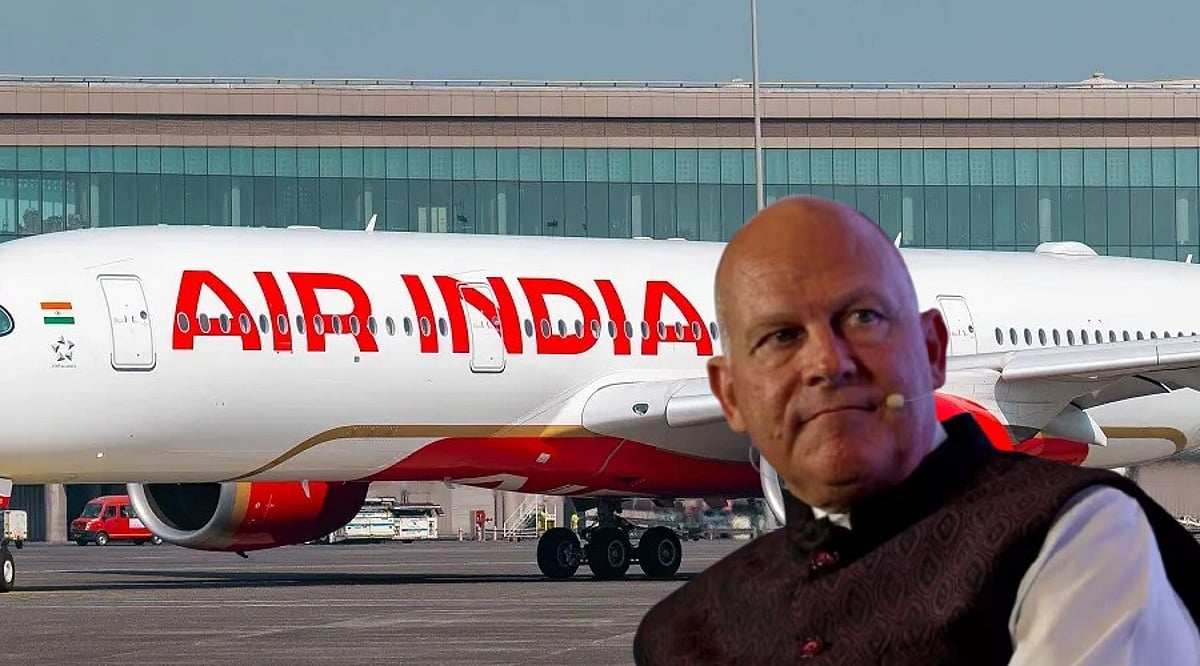
    Air India shareholders have approved a Rs. 17.74 crore cash payout for outgoing chief executive officer Campbell Wilson. The amount includes Rs. 15.24 crore in lieu of shares due under a long-term incentive plan and a separate Rs. 2.5 crore reward for fiscal year 2025, as reported by Business Standard. The approval comes as the airline prepares for a leadership change after a year of widening losses.

    Why Did Air India Approve the Cash Payout?

    Shareholders Tata Sons and Singapore Airlines approved the revised terms at Air India’s annual general meeting on August 10. The Rs. 15.24 crore portion replaces shares Wilson was entitled to receive under the airline’s long-term incentive plan for FY23 through FY25. Under the original terms, shares would have made up half of that incentive.

    Air India’s board approved the cash replacement and the Rs. 2.5 crore one-time reward on May 7, following a recommendation from its nomination and remuneration committee. The company then sought shareholder approval because the changes differed from Wilson’s previously approved pay terms.

    The approval establishes the amount Wilson can receive, but it does not confirm payment. Moneycontrol said it could not independently verify whether Air India had disbursed the money. The August resolution covers incentives through FY25 and does not disclose a similar cash replacement or one-time reward for FY26.

    How Was Wilson’s Pay Structured?

    Wilson became Air India’s CEO and managing director in July 2022, after the Tata Group acquired the airline from the government. His initial annual compensation was set at Rs. 21.5 crore for three years. That package included Rs. 8.5 crore in fixed pay, a potential Rs. 6.5 crore annual bonus, and Rs. 6.5 crore under the long-term incentive plan.

    A revised package effective April 2025 allowed annual compensation of up to Rs. 27.75 crore. It comprised Rs. 11.1 crore in fixed pay, about Rs. 8.32 crore in a performance-linked bonus, and a similar amount in long-term incentives. These figures describe his pay arrangements; they do not establish how much he received in any given year.

    Air India’s FY26 annual report did not give a separate breakdown of Wilson’s remuneration. It showed that salaries and allowances for all key managerial personnel rose from Rs. 29.9 crore in FY25 to Rs. 39.9 crore in FY26. That group includes Wilson, the chief financial officer, and the company secretary.

    What Happened During Wilson’s Final Year?

    Air India’s consolidated loss more than doubled to Rs. 22,238 crore in FY26 from Rs. 10,859 crore in FY25. Consolidated revenue fell to Rs. 71,870 crore from Rs. 78,636 crore. Both figures include Air India Express. Passenger numbers also declined, from 43.8 million to 36 million.

    In its annual report, the airline said airspace closures, longer flight times, payload restrictions, and geopolitical volatility affected long-haul operations. It also cited U.S. visa and tariff constraints. Following the June 2025 crash of flight AI171 near Ahmedabad, Air India paused some operations for safety checks and reviews.

    During Wilson’s tenure, Air India placed orders for 600 aircraft, including a 470-plane order in 2023. The airline announced his resignation on April 7, 2026, and named former Ethiopian Airlines chief Tewolde Gebremariam as its next CEO and managing director on August 5. Wilson’s appointment had originally been due to run until July 2027.

  • FTSE 100 Opens Higher at 10,717.59 Despite Global Bond Sell-Off; Brent Crude Holds Above $106

    FTSE 100 Opens Higher at 10,717.59 Despite Global Bond Sell-Off; Brent Crude Holds Above $106

    The FTSE 100 opened Friday’s session 37.60 points higher at 10,717.59, shrugging off continued pressure from a global bond sell-off that pushed the 10-year gilt yield to its highest level in more than a week. Investor attention remains fixed on escalating tensions in the Middle East following fresh Houthi missile attacks on Saudi Arabia, while oil prices hovered near recent levels.

    Oil and currency movements

    Brent crude futures edged down 0.29% to USD 106.3 per barrel, while US West Texas Intermediate dropped 1.11% to USD 93.56. In currency markets, sterling was quoted at USD 1.3219 early Friday, up slightly from USD 1.3214 at the London equities close on Thursday. Against the euro, the pound eased to EUR 1.1620 from EUR 1.1628.

    Leading gainers and losers

    Computacenter led the FTSE 100 risers, climbing 3.15% to 5,405p. Smiths Group advanced 2.25% to 2,819p, while Standard Chartered gained 1.86% to 2,299p. Aberdeen Group rose 1.83% to 245.40p, followed by Endeavour Mining and Glencore, which each added 1.57%.

    On the downside, BP slipped 2.47% to 557.70p, British American Tobacco dropped 1.11% to 4,196p, and Unilever declined 1.00% to 4,661.50p. Reckitt Benckiser and Shell each fell 0.41%, while Admiral Group retreated 0.39%.

    Gilt yields hit multi-day high

    The 10-year gilt yield reached 5.38% on Thursday, its highest level in over a week, as bond markets around the world came under selling pressure. Higher bond yields tend to raise borrowing costs for companies and governments, and traders are closely watching whether the Bank of England will respond. Reuters reported that markets now expect at least one 25-basis-point rate hike from the BoE this year.

    FT and Bloomberg UK profits rise

    Company filings show that the UK operations of the Financial Times and Bloomberg posted higher profits in 2025. The Financial Times increased its profit by GBP 6 million to just under GBP 15 million for the year. Bloomberg Index Services, a UK subsidiary of the US firm that supplies data through the Bloomberg Terminal, saw profit rise by $12 million to around USD 125 million (GBP 94 million). Bloomberg attributed its 10% increase in turnover to ‘growth from new business and the expansion of existing customer relationships,’ while the FT cited growth in digital subscriptions and sales from live events.

    Harworth backs Peel Holdings takeover

    Land developer Harworth has recommended that shareholders accept a GBP 632 million takeover offer from its largest shareholder, Peel Holdings. The 187p-per-share bid represents a 30% premium over Harworth’s closing price on the day Peel first made its offer. The firm told investors the deal gives them the ‘opportunity to realise the entirety of their interests in cash against the current uncertainty presented by a weak macroeconomic backdrop.’

    Global markets mixed

    In the US, the Dow Jones fell 161.61 points, or 0.31%, to 51,349.98. The S&P 500 slipped 0.02% to 7,704.13, while the Nasdaq Composite edged up 0.01% to 26,939.37. In Asia, Tokyo’s Nikkei 225 gained 1.3% to 66,364.2. China’s Shanghai Composite declined 1.22%, Hong Kong’s Hang Seng fell 1.03%, and South Korea’s Kospi rose 0.9%. In India, both the Nifty 50 and the Sensex finished lower.

    This article is for informational purposes only and does not constitute investment advice.

  • Why Global Investors Are Flocking to the UAE: Key Growth Drivers

    Why Global Investors Are Flocking to the UAE: Key Growth Drivers

    The United Arab Emirates has emerged as one of the most attractive destinations for international capital. With a sharp rise in foreign direct investment (FDI) and a clear push toward economic diversification, the country is positioning itself as a hub for long-term opportunity beyond traditional energy markets.

    Foreign Investment Is Surging

    FDI inflows into the UAE jumped 48.7% in 2024, reaching $45.6 billion compared to $30.7 billion the previous year. This surge reflects growing global confidence in the country’s business climate, modern infrastructure, and expanding investment landscape.

    An Economy Moving Beyond Oil

    The UAE is actively building a more diversified economy. Sectors such as tourism, finance, transport, construction, and technology are playing increasingly important roles. The World Bank expects non-oil activity to remain a key growth driver, supported by structural reforms, investment incentives, and infrastructure development.

    AI and Digital Infrastructure Take Center Stage

    Artificial intelligence is becoming a cornerstone of the UAE’s economic strategy. Significant investments in data centers, cloud computing, GPUs, and digital networks are advancing the country’s push toward an AI-driven economy. The World Bank has recognized the UAE as one of the Gulf’s leaders in digital transformation and AI readiness.

    Infrastructure Built for Global Business

    The UAE continues to invest heavily in infrastructure that connects businesses to international markets. Transport networks, logistics hubs, digital services, and financial systems are all being upgraded to support its status as a global business gateway. Abu Dhabi’s long-term economic vision also prioritizes resilient financial markets and world-class infrastructure.

    Fintech and Emerging Sectors Expand Opportunity

    Financial technology is another growing area of interest. The UAE’s official Investor Navigator highlights fintech as a high-potential sector, alongside ICT, logistics, tourism, manufacturing, renewables, gaming, and smart cities. This diverse mix offers investors far more than traditional real estate and energy plays.

    Trade Agreements Open New Markets

    The UAE’s investment story is closely tied to its role as a major trading hub. Economic policies are focused on boosting exports and expanding market access. Comprehensive Economic Partnership Agreements with countries across Asia, Europe, and beyond are strengthening trade connectivity and business activity.

    A Long-Term Bet on Diversification

    Ultimately, the UAE’s appeal lies in its long-term economic transformation. The country’s 2031 vision targets a larger economy, higher non-oil exports, stronger tourism, and expanded foreign trade. For investors, the narrative is clear: this is a story built on diversification, technology, infrastructure, and global connectivity.

  • Artemis Medicare Stock Hits Record High, Surges 14% on Heavy Trading Volume

    Artemis Medicare Stock Hits Record High, Surges 14% on Heavy Trading Volume

    Shares of Artemis Medicare Services reached a new all-time high on Friday, September 25, climbing as much as 14% to Rs. 378.40 on the BSE. The rally pushed the stock past its previous peak of Rs. 361.50, set on September 10, and extended a strong year for the hospital operator.

    The stock has gained nearly 40% in 2026, while the broader Sensex index has dropped around 12% over the same period. From its 52-week low of Rs. 202.85 touched in April, Artemis Medicare has now recovered approximately 87%.

    Heavy Trading Drives the Rally

    Trading volumes were notably high on Friday. Around 11:38 AM, the stock was trading 10% higher at Rs. 365.55 even as the broader market remained flat. Approximately 12.75 million shares changed hands across the NSE and BSE, representing nearly 8% of the company’s total equity.

    Artemis Medicare operates more than 800 hospital beds, primarily in the Delhi-NCR region. Its flagship hospital in Gurugram has over 700 beds and holds both JCI and NABH accreditation. The company also runs a cardiac-care joint venture with Philips and has a presence in Mauritius.

    The Gurugram facility continues to benefit from improved bed utilization, higher earnings per bed, and steady demand for specialized treatments. A new hospital in Raipur, which opened in July, adds another growth market. International patients from the Middle East, Africa, and the CIS region continue to contribute to demand.

    Brokerage Sees More Room to Grow

    InCred Equities has initiated coverage on the stock with a target price of Rs. 437. The brokerage expects revenue, EBITDA, and profit to grow between 23% and 28% annually through FY28, supported by new beds from the Raipur hospital and the upcoming Gurgaon Tower IV project.

    Artemis has also approved a plan to raise up to Rs. 700 crore through a qualified institutional placement (QIP) for future acquisitions, though no specific deal has been announced yet. With new capacity coming online and funds available for acquisitions, Artemis Medicare appears well-positioned to remain in the spotlight in the coming months.