Category: Finance

  • Tata Sons Considers NCLT Intervention to Proceed with AGM Amid Trust Quorum Impasse

    Tata Sons Considers NCLT Intervention to Proceed with AGM Amid Trust Quorum Impasse

    Tata Sons is preparing to hold its annual general meeting (AGM) within the next month, a gathering that is critical for voting on the reappointment of N Chandrasekaran as a director. However, the company may face the same quorum hurdle that forced the adjournment of its August 18 meeting, as restrictions on the Sir Ratan Tata Trust (SRTT) remain in place. If the quorum cannot be met, Tata Sons is likely to seek directions from the National Company Law Tribunal (NCLT) under Section 97 of the Companies Act.

    Background: The Reappointment Vote

    Chandrasekaran’s reappointment as a director requires shareholder approval at a valid AGM. After the August meeting was stalled due to a lack of quorum, the Registrar of Companies granted Tata Sons a three-month extension. The company has yet to announce a new date. According to executives familiar with the company’s rules, Chandrasekaran would remain a director even if the AGM fails again, with his reappointment pending until a valid meeting can be convened.

    The urgency of the meeting also follows a reported disagreement at a recent Tata Sons board meeting. Tata Trusts chairman Noel Tata opposed both Chandrasekaran’s reappointment as chairman and the proposed listing of Tata Sons, while other directors supported both proposals. It is important to note that the chairmanship matter and the shareholder vote on directorship are separate issues.

    The Quorum Problem

    Tata Sons’ articles require at least five members to attend a general meeting in person. Additionally, if the Tata Trusts collectively hold at least 40% of the company’s paid-up ordinary share capital, an authorized representative jointly nominated by SRTT and the Sir Dorabji Tata Trust (SDTT) must be present. SDTT holds 27.98% and SRTT holds 23.56% of Tata Sons, giving them a combined stake of 51.54%—well above the threshold.

    However, the Maharashtra Charity Commissioner has restricted SRTT from holding meetings or making decisions. This restriction prevented the trusts from jointly nominating a representative for the August AGM, leading to its adjournment. The restriction remains in effect, meaning the same quorum issue could derail the upcoming meeting unless SRTT is able to make the nomination. Tata Sons has not commented on its reported plan.

    Seeking NCLT Directions

    If the quorum requirement cannot be satisfied, Tata Sons may approach the NCLT for guidance. Section 97 of the Companies Act empowers the tribunal to direct that an AGM be held and to specify the manner in which it must be conducted. However, legal experts have differing views on the scope of such an order.

    Shafaq Uraizee Sapre, a lawyer quoted by The Economic Times, noted that the NCLT could deem a single member present sufficient for the meeting, but it cannot lift the Charity Commissioner’s restrictions on SRTT. Shreni Shetty considered it “extremely unlikely” that the tribunal would override a shareholder’s quorum rights under Tata Sons’ rules. Vimal Taparia, a partner at Morphis Management Services, added that an affected shareholder could challenge an AGM held under such an order or the resolutions passed there.

    For now, both the date of the AGM and the path to a valid shareholder vote remain uncertain. Tata Sons has not announced any application to the NCLT, but the option remains on the table.

  • PayGlocal Receives IFSCA In-Principle Approval for GIFT City Payment Services Subsidiary

    PayGlocal Receives IFSCA In-Principle Approval for GIFT City Payment Services Subsidiary

    PayGlocal, a Bengaluru-based fintech company, has secured in-principle approval from the International Financial Services Centres Authority (IFSCA) to establish a wholly owned subsidiary as a Payment Service Provider (PSP) in GIFT City. The proposed entity is designed to serve businesses operating in international markets, with plans to offer cross-border money transfers, account services, and merchant payment solutions.

    Scope of the IFSCA Approval

    The IFSCA approval enables PayGlocal to issue e-money accounts, facilitate cross-border transfers, and provide merchant acquisition services—allowing businesses to accept payments seamlessly. The company has not yet announced when operations will commence or whether final authorization has been obtained.

    PayGlocal intends to develop international payment services through its GIFT-IFSC entity while continuing its technology and operational work from India. The subsidiary will serve as a base for these services once all required approvals are in place.

    Existing Regulatory Permissions

    The GIFT City approval adds to PayGlocal’s existing regulatory footprint. Last year, the company received final authorization from the Reserve Bank of India (RBI) to operate as a Payment Aggregator-Cross Border, covering both inward and outward payments. Additionally, PayGlocal has registered as a Money Services Business with the U.S. Financial Crimes Enforcement Network (FinCEN), supporting its expansion into the American market.

    CEO’s Vision and Future Plans

    Prachi Dharani, co-founder and CEO of PayGlocal, emphasized the company’s mission to simplify cross-border money movement for businesses. “PayGlocal is building something from India that can become a trusted part of how businesses transact with the world,” she said. Dharani added that the company aims to make cross-border payments feel as straightforward as domestic transactions.

    Looking ahead, PayGlocal plans to help Indian merchants reach overseas customers, enter new markets, and develop localized options for collecting and making payments. The company did not disclose specific markets or a launch timeline.

    Company Background

    Founded in 2021, PayGlocal serves businesses in exports, retail, travel, education, and software services. Its product suite includes multi-currency accounts, payment gateways, and solutions for international merchants to accept payments from Indian customers via UPI, cards, and netbanking. The platform supports over 130 currencies and more than 40 global and local payment methods. PayGlocal has not specified which of these services the GIFT City entity will offer initially.

  • FTSE 100 Opens Higher as US-Iran Talks Resume; JD Sports Profit Falls, Airtel Money Plans London IPO

    FTSE 100 Opens Higher as US-Iran Talks Resume; JD Sports Profit Falls, Airtel Money Plans London IPO

    The FTSE 100 opened 40.75 points higher at 10,749.08 on Wednesday, as investors welcomed signs of renewed diplomacy between the United States and Iran. The positive start came ahead of a fresh batch of flash PMI data from Europe, the UK, and the US.

    Market Movers

    Brent crude futures fell 0.43% to USD 98.82 per barrel, while U.S. West Texas Intermediate (WTI) advanced 0.99% to USD 89.62. Sterling rose to USD 1.3382 early Wednesday from USD 1.3372 late Tuesday, and edged up against the euro to EUR 1.1661 from EUR 1.1658.

    Gainers

    • Rentokil rose 2.40% to 324.20p
    • Sage Group advanced 1.41% to 1,003.50p
    • Standard Chartered gained 1.24% to 2,294p
    • InterContinental Hotels Group rose 1.14% to USD 155.85
    • London Stock Exchange Group added 1.10% to 8,244p
    • 3i Group increased 1.09% to 2,702p

    Losers

    • Smiths Group fell 1.11% to 2,752p
    • Spirax Group dropped 0.76% to 7,220p
    • Severn Trent declined 0.71% to 3,086p
    • Admiral Group slipped 0.54% to 3,686p
    • AstraZeneca fell 0.36% to 12,626p
    • Next edged 0.34% lower to 14,640p

    US-Iran Diplomacy

    US President Donald Trump said envoys held a ‘very good’ three-hour meeting with an Iranian delegation on the sidelines of the United Nations General Assembly in New York. Special Envoy Steve Witkoff confirmed talks took place through mediators who “shuttled between the two sides throughout the day,” describing the round as “successfully completed” and indicating a further meeting is expected within days. Iran’s conditions, communicated through Qatari mediators, include a halt to hostilities on all fronts, removal of the US naval blockade, and the return of frozen funds, according to Esmaeil Baghaei, spokesperson of the Ministry of Foreign Affairs of Iran.

    JD Sports H1 Profit Declines

    British sports and fashion retailer JD Sports reported a 19.7% decline in first-half profit, driven by weakness in its North American market. The group maintained its full-year earnings outlook. Shares are down 10% over the past year. Profit before tax and adjusting items was GBP 282 million, slightly above the GBP 279 million consensus estimate. Revenue fell to GBP 5.90 billion from GBP 5.94 billion a year earlier. Like-for-like sales fell 2.8%, while organic sales dipped 0.7%. JD Sports left its full-year profit before tax and adjusting items guidance at GBP 700 million to GBP 800 million and its free cash flow forecast unchanged at GBP 460 million to GBP 520 million.

    Airtel Money Confirms London IPO

    Airtel Money confirmed plans for a London IPO. The African mobile payments business is reportedly seeking a valuation as high as $9 billion (GBP 6.8 billion). The fintech, with more than 50 million active customers, aims to raise as much as $800 million. CEO Ian Ferrao said, “A London listing will underpin our next wave of growth. The opportunity ahead of us is substantial and, importantly, there are many demographic and digital tailwinds within the markets that we serve. This listing will give us the platform to continue transforming financial services across Africa and to keep building value for our customers, our partners, African governments and our shareholders.”

    Global Market View

    In the US, the tech-heavy Nasdaq climbed 0.45% to a record close of 27,244.28, supported by a nearly 7% gain in shares of SanDisk. The S&P 500 was marginally lower at 7,764.64, while the Dow Jones Industrial Average shed 0.36% to finish at 51,863.69. In Asia on Wednesday, Tokyo’s Nikkei 225 was closed, while China’s Shanghai Composite dipped 0.4%. Hong Kong’s Hang Seng declined 0.96%, and South Korea’s Kospi edged up 0.9%. In India, both the Nifty 50 and the Sensex rose by 0.53% and 0.52%, respectively.

    Disclaimer: This article is provided for informational purposes only and does not constitute investment advice. Readers are encouraged to conduct their own research before making any financial decisions.

  • Credit Card Spending Surges: HDFC, SBI Card, ICICI, and Axis Drive Rs 1.58 Lakh Crore in July 2026

    Credit Card Spending Surges: HDFC, SBI Card, ICICI, and Axis Drive Rs 1.58 Lakh Crore in July 2026

    India’s top four credit card issuers recorded a combined spending of nearly Rs 1.58 lakh crore in July 2026, underscoring the dominance of major banks in the country’s expanding card payments market. HDFC Bank, SBI Card, ICICI Bank, and Axis Bank continued to account for the bulk of transactions as overall card usage stayed above the Rs 2 lakh crore mark for the third straight month.

    HDFC Bank Leads the Pack

    HDFC Bank remained India’s largest credit card issuer by spending in July 2026, with transactions worth approximately Rs 60,218 crore. The bank captured nearly 28.9% of the country’s total credit card spending, recording a 1.3% increase from June and an 11.9% rise year-on-year.

    SBI Card Holds Strong Despite Monthly Dip

    SBI Card reported around Rs 39,592 crore in credit card spending during July 2026. While spending slipped 3.6% from June, the issuer still logged robust annual growth of roughly 21.6%. SBI Card held about 19% of the overall credit card spending market, according to industry data.

    ICICI Bank Shows Strong Monthly Recovery

    ICICI Bank’s credit card spending reached approximately Rs 34,025 crore in July 2026. The lender posted one of the strongest monthly recoveries among the leading issuers, with spending climbing 8.3% from June. However, July spending remained below the year-ago level, based on RBI data.

    Axis Bank Posts Solid Monthly Growth

    Axis Bank recorded around Rs 23,825 crore in credit card spending during July. Its spending rose 7.4% month-on-month, a stronger monthly performance than HDFC Bank and SBI Card. Axis accounted for about 11.4% of total industry spending, and its credit card base remained among India’s largest.

    India’s Total Credit Card Spending Remains Above Rs 2 Lakh Crore

    Overall credit card spending in India reached roughly Rs 2.08 lakh crore in July 2026, up 3.4% from June and 7.4% from July 2025. The total stayed above the Rs 2 lakh crore threshold for the third consecutive month, signaling continued momentum in card-based payments.

    Credit Card Base Continues to Expand

    India had around 12.29 crore credit cards outstanding by July 2026. Banks added a net 1.26 million cards during the month, an 11.5% increase over June additions. Transaction volumes climbed 24.5% year-on-year to about 60.5 crore, while the average transaction value declined to nearly Rs 3,440.

  • Elevate Campuses IPO Opens with 5% Subscription on Day One; Brokerages Issue Neutral Ratings

    Elevate Campuses IPO Opens with 5% Subscription on Day One; Brokerages Issue Neutral Ratings

    Elevate Campuses, a student accommodation and K-12 education asset manager, launched its Rs. 2,100-crore initial public offering (IPO) on September 23, 2026. By midday, the issue had attracted bids for only 5% of the shares on offer, reflecting cautious investor sentiment. The price band is set at Rs. 343–Rs. 362 per share, and the subscription window remains open until September 25.

    Day One Subscription Details

    As per NSE data at 12:08 p.m. IST, investors bid for 15,98,836 shares against the total 3,36,73,468 shares available. The retail portion saw 7% subscription, while non-institutional investors subscribed to 12% of their allocation. A later update at 12:40 p.m. maintained the overall subscription at 5%, with retail at 8% and non-institutional at 13%. The qualified institutional buyer (QIB) portion had received no bids at that time. These figures are midday snapshots and may change before the issue closes.

    Price Band, Lot Size, and Listing Timeline

    The IPO consists entirely of fresh equity shares with no offer-for-sale component. At the upper end of the price band, the company aims to raise Rs. 2,100 crore. The minimum bid is 41 shares, costing Rs. 14,842 at Rs. 362 per share. The company is expected to list on the NSE and BSE on September 30, subject to completion of the offer process.

    Proceeds from the IPO will be used to acquire K-12 education entities and campuses, repay borrowings, and meet other corporate needs. The company has allocated Rs. 750 crore for debt repayment or prepayment. Prior to the public issue, Elevate Campuses raised Rs. 945 crore from anchor investors.

    About Elevate Campuses

    Elevate Campuses owns and manages student accommodation at higher education institutions and also owns K-12 school assets. Its services include housing, dining, safety, and campus operations. As of March 31, 2026, the company’s owned student accommodation portfolio covered seven campuses with over 20,000 beds, and it managed an additional 14 campuses with more than 55,000 beds. The company reported capacity to serve 80,255 students across 15 Indian cities and one city in the UAE as of FY26.

    Planned expansions include adding 2,128 beds at IIT Madras and UPES Dehradun, as well as growth in the managed portfolio and K-12 assets. These additions are part of the company’s growth strategy but do not affect the midday subscription figures.

    Brokerage Views and Concerns

    Brokerages have issued neutral calls on the IPO. SBI Securities assigned a ‘neutral’ rating, noting that debt would remain elevated despite the planned Rs. 750-crore repayment and preferring to track the company’s performance post-listing. Swastika also gave a ‘neutral’ call, citing leverage, client concentration, and the proposed use of proceeds for a related-party acquisition.

    Swastika highlighted that Elevate Campuses’ FY26 profit after tax of Rs. 173.8 crore included an exceptional gain of about Rs. 105 crore from an asset sale. Excluding that gain, profit is estimated at around Rs. 68–70 crore, making the valuation appear demanding.

    Meanwhile, the unofficial grey market price was reported at Rs. 367, a premium of Rs. 5 over the top of the IPO band. Grey market prices are unofficial and do not determine the listing price.

  • Stock Futures Hold Near Flat Ahead of Trump-Xi Summit and Iran Negotiations

    Stock Futures Hold Near Flat Ahead of Trump-Xi Summit and Iran Negotiations

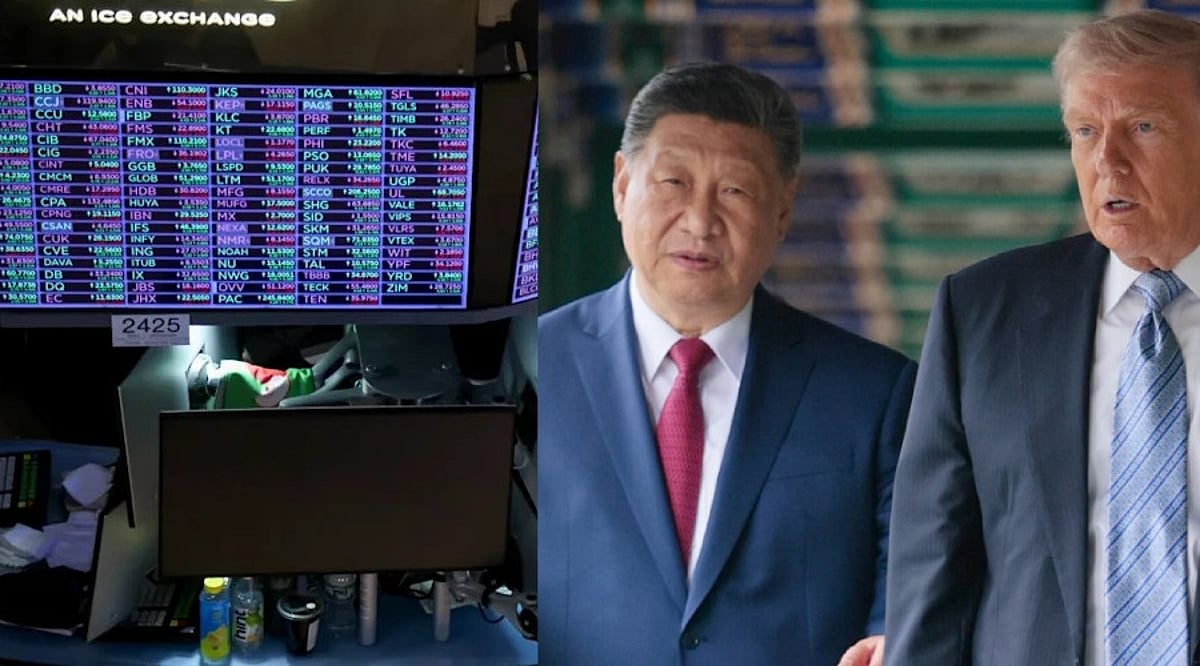
    U.S. stock futures were little changed early Wednesday, September 23, following a record close for the Nasdaq Composite. Investors kept their focus on oil price movements, ongoing U.S.-Iran discussions, and the anticipated meeting between President Donald Trump and Chinese President Xi Jinping.

    Futures Show Modest Declines

    At 7:50 a.m. ET, Dow futures slipped 31 points, or 0.31%, while S&P 500 futures gave back 0.13% and Nasdaq-100 futures fell 0.33%. All three contracts remained close to Tuesday’s closing levels as markets awaited fresh catalysts from geopolitics and economic data.

    The flat open followed a mixed session on Wall Street. The Nasdaq Composite rose 0.45% to 27,244.28 for its second consecutive record close, while the S&P 500 finished essentially unchanged at 7,764.64. The Dow Jones Industrial Average dropped 0.36% to 51,863.69. Chip stocks outperformed, with Micron advancing about 5% and SanDisk gaining nearly 7%.

    However, gains were uneven. Six of the S&P 500’s 11 sectors fell on Tuesday, led by financials. JPMorgan Chase and Wells Fargo each lost more than 3%. The divergence between tech strength and financial weakness remained a key theme on Wednesday.

    Oil Prices and U.S.-Iran Talks

    Brent crude traded below $100 per barrel during the morning, easing 0.40% to $98.83. Reports indicated that Saudi Arabia had restarted operations at its East-West Pipeline and might resume exports from the Red Sea port of Yanbu, helping to ease supply concerns.

    Market participants were also parsing the latest U.S.-Iran talks held on the sidelines of the United Nations General Assembly. President Trump described the meeting as “very good,” but his U.N. speech mentioned a choice between reaching a deal and “annihilating” the country, leaving traders uncertain about the path to an agreement. Oil prices are a key market driver because fuel costs influence business expenses and inflation readings.

    Trump-Xi Meeting on Trade and AI

    President Xi is scheduled to arrive in Washington on Wednesday ahead of a Thursday meeting with Trump. The agenda is expected to cover the U.S.-China trade truce, artificial intelligence regulation, and U.S. arms sales to Taiwan. Xi is also slated to meet executives from General Motors, Meta, Apple, Amazon, and Tesla.

    The talks come as AI-related stocks boost the Nasdaq. Strong interest in Meta’s Muse assistant has supported AI infrastructure providers, while some investors worry that task-performing assistants could disrupt consumer businesses, contributing to losses in financial and travel-related shares on Tuesday.

    Investors are watching the summit for any policy announcements, though no new agreement has been confirmed. The Nasdaq’s record close remains the most recent confirmed market result.

    Economic Data and Fed Speakers Ahead

    S&P Global’s September purchasing managers’ index is due Wednesday, with economists polled by Reuters expecting continued expansion in U.S. business activity. Federal Reserve Governor Michael Barr is also scheduled to speak, offering further clues on monetary policy after last week’s rate increase.

    Boston Fed President Susan Collins expressed support for the rate hike due to inflation concerns. According to CME Group’s FedWatch tool, futures traders currently price in a high chance of another 25-basis-point hike next month, a view that could shift with upcoming data and Fed commentary.

  • NSE IPO Set for BSE Debut on September 24: Grey Market Premium Drops to Rs 45.5

    NSE IPO Set for BSE Debut on September 24: Grey Market Premium Drops to Rs 45.5

    NSE’s Long-Awaited Public Debut

    The National Stock Exchange of India (NSE) is set to begin trading on the BSE on September 24, after its Rs 22,562 crore initial public offering attracted solid demand from both retail and institutional investors. The IPO closed on September 21, and the listing marks NSE’s first appearance as a publicly traded company.

    Because the offering is structured as an offer for sale (OFS), the proceeds will go to existing shareholders rather than to the exchange itself. The issue carried a price band of Rs 1,700 to Rs 1,785, with eight shares per lot.

    GMP Cools Ahead of Listing

    Heading into the debut, the grey market premium (GMP) has cooled sharply, signaling more measured expectations among unofficial market participants. Moneycontrol reported a GMP of around Rs 45.5 on September 22, implying a listing price of roughly Rs 1,830 — about 2.55% above the upper end of the IPO price band.

    Earlier estimates had been stronger, with Business Standard reporting a Rs 68 GMP and Mint later citing Rs 81. These unofficial premiums can change quickly before shares begin trading, and the actual listing price may differ from grey market expectations.

    Subscription Highlights

    According to exchange data, the NSE IPO was subscribed 5.71 times by the final bidding day. Institutional demand led the way:

    • Qualified institutional buyers: 12.68 times
    • Non-institutional investors: 6.55 times
    • Retail investors: 1.39 times

    What to Watch on Listing Day

    Trading is expected to begin around 10 AM IST on Thursday, September 24, with the BSE hosting the debut. Market observers have highlighted NSE’s strong position across Indian capital markets and its diversified financial infrastructure.

    Shivani Nyati of Swastika Investmart said the IPO could deliver “minor listing gains,” while also emphasizing the company’s long-term investment case. The opening price will show whether strong institutional participation can overcome the recent cooling in grey market sentiment.

  • Global Gold Reserves: Top 7 Countries Holding the Most Bullion

    Global Gold Reserves: Top 7 Countries Holding the Most Bullion

    Global Gold Reserves: Top 7 Countries Holding the Most Bullion

    Central banks around the world hold gold as a cornerstone of their foreign exchange reserves, providing stability and confidence in times of economic uncertainty. This article ranks the top seven countries by their official gold holdings, highlighting the sheer scale of these reserves and their significance in each nation’s financial strategy.

    1. United States – 8,133.5 Tonnes

    The United States holds the largest official gold stock in the world, with approximately 8,133.5 tonnes. This accounts for a staggering 81.4% of its foreign exchange reserves. Gold has been a long-term reserve asset for the U.S., reflecting its historical role as a pillar of the global financial system.

    2. Germany – 3,350.3 Tonnes

    Germany holds about 3,350.3 tonnes of gold, representing 81.0% of its foreign exchange reserves. The Bundesbank’s substantial gold holdings underline the country’s commitment to maintaining a robust and diversified reserve portfolio, making it one of the largest official gold holders globally.

    3. Italy – 2,451.8 Tonnes

    Italy ranks third with roughly 2,451.8 tonnes of gold, which constitutes 77.0% of its foreign exchange reserves. The Bank of Italy’s gold reserves are among the largest in the world, underscoring gold’s enduring importance as a monetary asset in the country’s financial framework.

    4. France – 2,437.0 Tonnes

    France holds approximately 2,437 tonnes of gold, making up 78.5% of its foreign exchange reserves. The Banque de France’s gold stock is a key component of the nation’s reserve assets, reflecting a long-standing tradition of gold accumulation among major European central banks.

    5. China – 2,366 Tonnes

    China’s official gold holdings stand at about 2,366 tonnes, but this represents only 8.0% of its massive foreign exchange reserves. This highlights the contrast between total gold tonnage and its proportion within the reserve mix, as China’s overall reserves are vast, with gold playing a relatively smaller but still significant role.

    6. Russia – 2,277 Tonnes

    Russia holds around 2,277 tonnes of gold, which accounts for 41.4% of its foreign exchange reserves. This relatively high share indicates gold’s strategic importance in Russia’s economic policy, especially as the country has steadily increased its gold purchases over the past decade.

    7. India – 880 Tonnes

    India rounds out the list with approximately 880 tonnes of gold, representing 16.8% of its foreign exchange reserves. The Reserve Bank of India’s gold holdings form a vital part of the country’s reserve assets, complementing its foreign currency and other reserve components, and reflecting gold’s cultural and economic significance in India.

    These figures underscore the enduring role of gold as a safe-haven asset and a key component of national financial security. As global economic conditions evolve, central banks are likely to continue relying on gold to diversify their reserves and mitigate risks.

  • The Startup Playbook: Scaling, Raising Capital, and Preparing for an IPO

    The Startup Playbook: Scaling, Raising Capital, and Preparing for an IPO

    Every startup begins with a vision and a founder’s willingness to invest time, effort, and often personal funds. The journey from that humble bootstrap to a public listing on a stock exchange is complex, demanding, and full of critical decisions. Along the way, startups must prove their viability, attract the right type of capital at each stage, and build the operational and governance infrastructure that public market investors expect.

    Bootstrapping: The Foundation of Proof

    Bootstrapping means relying primarily on founder capital and revenue from early customers rather than external funding. This approach keeps control in the founder’s hands and forces a laser focus on cash management, pricing, customer demand, and product quality. It also builds the first layer of proof that the business can survive and grow organically.

    Once repeat customers appear and revenue starts to climb, the company demonstrates clear market demand. At that point, outside capital—like venture funding—can accelerate expansion into new hires, product development, sales, technology, and market entry. However, each subsequent funding round demands stronger evidence than the last.

    How Capital Needs Evolve

    The funding landscape for startups has shifted dramatically. In the first quarter of 2026, Carta reported that startups on its platform raised USD 30.4 billion. Over 60% of that capital flowed into artificial intelligence companies, highlighting a major divergence between AI startups and other sectors in private-market valuations.

    While the traditional path from Seed to Series A, B, and beyond still exists, the bar rises at every stage. Early investors may be satisfied with product-market fit and initial traction. Later investors look at revenue growth, margins, cash flow, market size, and competitive positioning. The key is to show consistent, measurable progress that justifies the next round of funding.

    The IPO Market Rebounds

    After a quiet period, the global IPO market has reopened with vigor. According to EY, the first half of 2026 saw 483 global IPOs—down slightly from 546 in the same period of 2025—but total proceeds jumped to USD 186.8 billion, nearly triple the USD 62.1 billion raised a year earlier. This indicates that fewer companies are going public, but those that do are raising substantially more capital.

    AI, infrastructure, and technology firms have attracted the strongest investor interest. For startups, this means the public markets offer access to major capital pools, but coming to market with merely a compelling story is no longer enough. Investors demand financial rigor and sustainable business models.

    India’s Growing IPO Pipeline

    India has emerged as a hotbed of startup activity with a robust IPO pipeline. Inc42 reported on September 20, 2026, that 29 Indian startups had filed draft prospectuses with SEBI, and more than 25 others were at various stages of IPO preparation. The focus has shifted noticeably toward profitability and responsible cash management.

    A perfect example is RentoMojo, which posted a profit after tax of Rs. 104.3 crore in FY26, up from Rs. 43.1 crore in FY25. Revenue grew 45.5% to Rs. 387 crore from Rs. 266 crore in the same period. Such figures show why public investors look beyond customer growth or valuation buzzwords; they want proof of revenue quality, profit, and disciplined use of capital.

    IPO Readiness Begins Long Before Filing

    Becoming a public company involves far more than a high valuation. It requires accurate financial records, robust internal controls, clear ownership documentation, legal compliance, and strong corporate governance. The finance team must be capable of producing reliable reports on a strict schedule. Employee equity records must match company records, intellectual property must sit with the correct legal entity, and related-party transactions need tight controls.

    The board of directors must have a formal structure with defined responsibilities. The U.S. Securities and Exchange Commission emphasizes dependable accounting systems, internal controls, experienced advisers, sufficient cash reserves, and a clear growth strategy as essential to IPO readiness. Waiting until the last minute to put these in place is a recipe for disaster.

    Multiple Paths to Capital

    The startup-to-IPO journey is no longer a single, linear track. Companies can blend customer revenue with venture capital, debt, strategic investment, private equity, and other funding sources. Secondary sales and tender offers allow early shareholders and employees to cash out part of their stakes before a public offering. This flexibility lets founders decide when and how to raise capital based on their specific circumstances and market conditions.

    Some startups may choose to postpone an IPO to improve profitability, expand their customer base, strengthen governance, or wait for a more favorable market window. The ability to pivot funding strategies is a valuable advantage in an unpredictable economic landscape.

    Public Markets Demand a Stronger Business

    An IPO marks a fundamental shift in how a company is evaluated. Private investors might focus on a startup’s growth potential and future prospects, but public investors scrutinize quarterly financials and operational performance. There is little tolerance for errors. The company must go beyond rapid growth; it must demonstrate sustainable revenue generation, sound unit economics, strong governance, and a compelling reason for investors to own its shares.

    In essence, the transition from bootstrapping to IPO is about building a resilient, well-managed enterprise. The role of money is central, but so is the discipline to spend it wisely and the foresight to prepare for a public lifecycle.

    Key Takeaways

    • Capital evolves with growth: startups can move from bootstrapping to VC, debt, strategic investment, and private equity as needs change.
    • Proof matters at every stage: investors scrutinize revenue quality, profitability, cash flow, market opportunity, and competitive strength.
    • IPO readiness starts early: strong financial reporting, internal controls, governance, and legal compliance are essential well before listing.

    Frequently Asked Questions

    What is bootstrapping in a startup?

    Bootstrapping means building a company using primarily founder capital and customer revenue rather than relying heavily on external funding.

    When should a startup consider venture capital?

    A startup may seek venture capital after demonstrating meaningful customer demand and a business model where additional funding can accelerate growth.

    What factors do later-stage investors evaluate?

    They often look at revenue growth, margins, cash flow, market size, customer quality, competitive position, profitability, and the ability to scale operations.

    What does a startup need before an IPO?

    Key areas include reliable financial reporting, internal controls, corporate governance, legal compliance, accurate ownership records, intellectual-property ownership, and experienced advisers.

    Does a startup have to follow a fixed path from seed funding to IPO?

    No. Companies can combine customer revenue with venture capital, debt, strategic investment, private equity, and secondary transactions, depending on their objectives and circumstances.

  • Indian Stock Market Opens Lower: Sensex Plunges 500 Points, Nifty Falls 200 Points as NSE Listing Takes Center Stage

    Indian Stock Market Opens Lower: Sensex Plunges 500 Points, Nifty Falls 200 Points as NSE Listing Takes Center Stage

    Indian equity markets opened sharply lower on Thursday, with the BSE Sensex plunging more than 500 points and the NSE Nifty falling over 200 points. The decline was attributed to weak global cues, rising bond yields, and expensive crude oil. The much-anticipated listing of the National Stock Exchange (NSE) on the bourses remained the key domestic event of the day.

    On Wednesday, the Nifty had rebounded 0.62%, driven by a 2.4% surge in metals. However, experts warned that market volatility would remain elevated with sharp intraday swings. The total market capitalization of BSE Sensex companies stood at Rs 4,83,54,454 crore.

    Overnight, US markets ended mixed, with the Nasdaq hitting a fresh record close, while the S&P 500 was nearly flat and the Dow Jones fell sharply.

    The main focus on Thursday was the listing of NSE shares on the BSE and the Metropolitan Stock Exchange of India (MSEI). NSE’s shares were expected to see a modest gain of 2-3%. On the BSE Sensex website, the pre-open status of NSE Ltd. stood at Rs 1,735 at 9:22 am. The NSE IPO was priced in a band of Rs 1,700-1,785 per share, with Rs 1,785 being the upper end. However, GIFT Nifty futures were at 23,270 points in the morning, indicating a negative start for the Nifty 50 index.

    Among the 30 Sensex firms, major winners included Tata Steel, Bajaj Finance, ITC, UltraTech Cement, Power Grid, and Larsen & Toubro. On the other hand, HCLTech, Infosys, Tata Consultancy Services, Titan, and Mahindra & Mahindra were among the laggards.

    Disclaimer: This article is for informational purposes only and does not constitute investment advice. Analytics Insight does not provide financial advice or guidance on stocks. Readers are encouraged to conduct their own research before making investment decisions.