Category: Finance

  • AI Investment Surge Raises Concerns of a New Financial Bubble

    AI Investment Surge Raises Concerns of a New Financial Bubble

    Investment in artificial intelligence continues to accelerate in 2026, with businesses, governments, and investors pouring billions of dollars into AI technologies. From massive infrastructure projects to cutting-edge startups, the race to dominate AI is reshaping the global tech landscape.

    Major technology companies are ramping up spending on AI data centers, advanced semiconductor manufacturing, and cloud computing capabilities. This wave of capital expenditure is driving record funding rounds for AI startups, as venture capitalists and institutional investors compete to back the most promising models, platforms, and enterprise solutions.

    However, rapidly rising valuations have sparked heated debate among analysts and economists. Some argue that the current AI investment boom mirrors the dot-com bubble of the late 1990s, warning that inflated expectations may not align with realistic long-term growth. Others contend that AI represents a fundamental technological shift with sustained demand across industries, from healthcare to finance to logistics.

    Strong demand for AI chips, automation tools, and cloud services continues to fuel revenue growth for many companies. Yet, investors are increasingly cautious, shifting focus toward firms with proven profitability rather than those riding the wave of AI hype alone.

    Potential risks include excessive valuations, slowing adoption rates, tighter regulatory scrutiny, and intensifying competition. While many experts believe AI will remain a major growth sector for years to come, disciplined investing and portfolio diversification are essential to navigate the uncertainties.
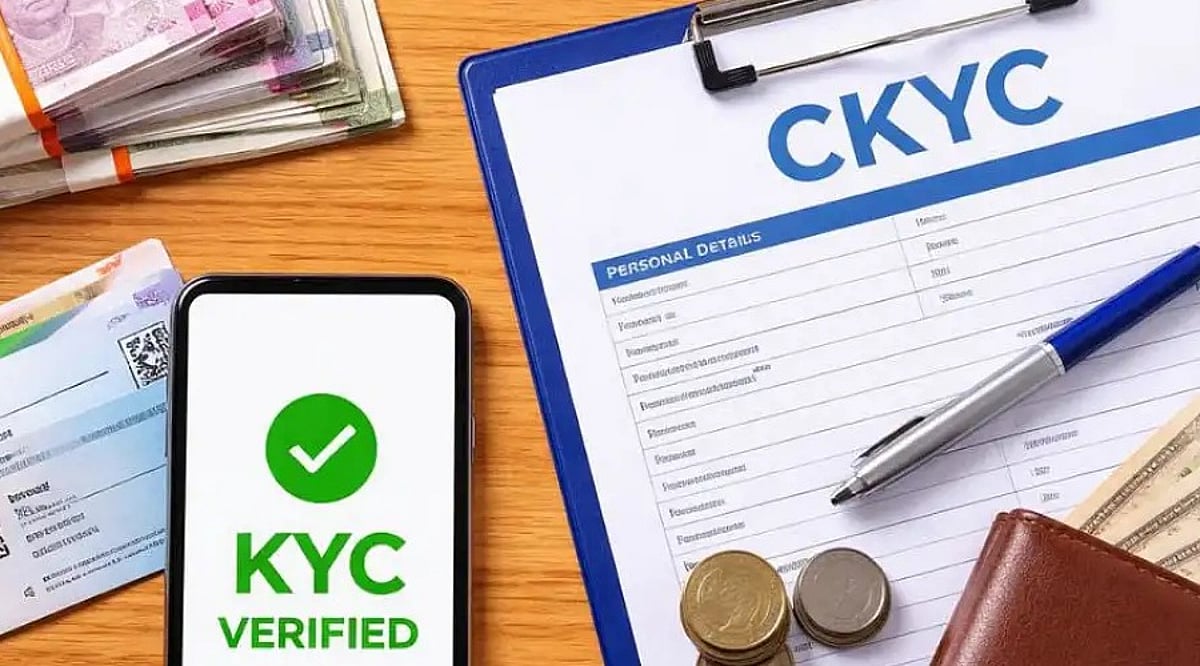
  • CKYC Number: How a Single 14-Digit ID Streamlines Banking and Reduces Paperwork

    CKYC Number: How a Single 14-Digit ID Streamlines Banking and Reduces Paperwork

    The Central Know Your Customer (CKYC) Number is revolutionizing the way Indians access banking and financial services. This unique 14-digit identifier stores verified KYC records in a single centralized registry, eliminating the need to repeatedly submit documents like PAN, Aadhaar, and address proof when opening accounts or applying for financial products.

    What Is the CKYC Number?

    Issued under the Central KYC Records Registry (CKYCR), the CKYC Number acts as a permanent ID linked to an individual’s verified identity documents. Once a bank, NBFC, mutual fund, or insurance company completes the initial KYC process, the verified data is uploaded to the central database. With the customer’s consent, any other regulated financial institution can access the same record, making subsequent verifications instant and paperless.

    Key Benefits

    The CKYC system dramatically cuts down on paperwork and reduces account opening times from days to minutes. It also enhances security by ensuring that only authenticated records are used across institutions. For customers, this means faster access to banking, loans, insurance, and investments without the hassle of submitting the same documents repeatedly.

    How to Find Your CKYC Number

    According to the Reserve Bank of India (RBI), customers can obtain their CKYC Number by contacting their bank, giving a missed call to 7799022129, or visiting the official CKYC portal. The central bank continues to promote financial awareness through its campaign, “RBI Kehta Hai, Jaankar Baniye, Satark Rahiye” (RBI Says, Be Informed, Stay Alert).

    Experts view the CKYC framework as a major step toward a more efficient and secure financial ecosystem in India. By centralizing KYC records, it benefits both consumers and institutions, paving the way for smoother digital transactions and broader financial inclusion.

  • 8 Indian Fintechs Including BharatPe and Paytm Make CNBC-Statista Global Top 2026 List

    8 Indian Fintechs Including BharatPe and Paytm Make CNBC-Statista Global Top 2026 List

    Eight Indian fintech companies have been recognized in the CNBC-Statista World’s Top Fintech Companies 2026 list, underscoring the country’s expanding influence in the global financial technology sector. The featured firms are BharatPe, Paytm, PhonePe, Razorpay, Cashfree, Freecharge, MobiKwik, and Skydo, all placed in the payments category, which remains the largest segment in this year’s rankings.

    Compiled annually by CNBC and market research firm Statista, the list identifies leading fintech companies across multiple business segments worldwide. Payments accounted for 115 companies, or 23% of the 500 firms featured, reaffirming its dominance. The report notes that payment companies are now expanding beyond digital checkouts to focus on real-time domestic and cross-border money movement, reflecting evolving customer and business needs.

    Wealth technology was the second-largest category with 75 companies (15% of the list), followed by enterprise fintech and alternative financing, each comprising 12%. This year’s rankings introduced a separate regtech category, which along with digital assets remained one of the smallest segments, signaling increased focus on regulatory compliance as artificial intelligence becomes more prevalent in financial services.

    Statista evaluated approximately 3,500 fintech companies using over 25,000 data points, assessing indicators such as revenue growth and employee headcount. The final list features companies headquartered in more than 50 countries and territories, listed alphabetically within their categories rather than assigned numerical positions.

    According to McKinsey, the global fintech industry generated $650 billion in revenue in 2025, a 21% year-on-year increase, compared to 6% growth for the broader financial services industry. The report also noted 31 fintech IPOs in 2025, with the combined market capitalization of listed fintech companies reaching a record $850 billion.

    The inclusion of eight Indian companies highlights the country’s growing role in global fintech. As digital payments continue to expand and companies diversify their offerings, Indian firms are strengthening their position alongside established global players.

  • Best Smart Budgeting Apps for 2026: Features, Market Growth, and Expert Picks

    Best Smart Budgeting Apps for 2026: Features, Market Growth, and Expert Picks

    Smart budgeting apps have transformed how people manage income, expenses, savings, and subscriptions. Instead of juggling multiple bank accounts or keeping paper records, these tools consolidate everything into one screen, often with automatic bank syncing and detailed reports. Below, we explore seven popular apps, their standout features, and the latest market figures shaping personal finance.

    Key Takeaways

    • Wallet by BudgetBakers delivers detailed cash-flow tracking with automatic bank synchronization.
    • YNAB follows a zero-based budgeting approach that supports disciplined financial planning.
    • Rocket Money helps identify unwanted subscriptions and reduce unnecessary monthly expenses.

    Market Overview

    The global smart budgeting app market reached about US$1.21 billion in 2024 and is projected to grow to around US$6.6 billion by 2034, at a compound annual growth rate (CAGR) of 18.4%. Mobile apps hold 72.6% of the market, while expense tracking and financial planning account for nearly 49.8% of total usage. Individual consumers represent 68.4% of users, highlighting that personal money management drives this growth.

    Top Budgeting Apps in Detail

    Wallet by BudgetBakers – Complete Money Tracking

    Wallet by BudgetBakers is a strong choice for users who want a clear picture of their finances. It combines multiple tools in one app and creates detailed reports to show where money goes each month. Forbes recently ranked it among the best budgeting apps for cash-flow monitoring thanks to its practical features and reliable bank synchronization. The app connects with multiple bank accounts, automatically records transactions, supports shared wallets for household budgeting, and offers cash-flow forecasts to help users prepare for future expenses.

    YNAB (You Need a Budget) – Builds Disciplined Habits

    YNAB follows a zero-based budgeting method that assigns every dollar to a specific category before spending. This approach promotes planning over impulsive spending. Widely regarded as one of the most popular budgeting apps, YNAB helps users achieve long-term financial goals by cutting costs and improving savings systematically.

    Monarch Money – Household Finances Together

    Monarch Money focuses on complete financial management, combining budgets, investments, savings goals, and net worth into one dashboard. It is especially useful for couples and families, as shared financial planning keeps everyone updated. Investment tracking adds extra value for users who want both budgeting and wealth management in one platform.

    Rocket Money – Reduce Unnecessary Expenses

    Rocket Money targets forgotten subscriptions and unnecessary monthly payments. It identifies recurring charges before they become costly. Besides subscription management, it offers spending analysis, budget planning, bill negotiation, and credit score monitoring, helping users gain better financial control.

    Copilot Money – Smart Automation for Apple Users

    Copilot Money has gained traction among Apple users due to its intuitive interface and smart automation. It automatically categorizes expenses and provides insights into financial behaviors. Instant identification of recurring payments reduces manual work, and visual dashboards make finances easy to understand at a glance.

    Goodbudget – Digital Envelope Method

    Goodbudget brings the traditional envelope budgeting method into a digital format, creating virtual envelopes for groceries, transport, shopping, savings, and more. With over 3 million downloads, it supports shared budgets and cross-device synchronization, making it ideal for families. Goal-based saving envelopes encourage regular saving without complexity.

    PocketGuard – Safe Daily Spending

    PocketGuard answers a simple question: how much money is safe to spend today? It calculates available funds after bills, savings goals, and recurring expenses are allocated. The Safe-to-Spend feature helps users avoid unnecessary purchases, and automatic budgeting reduces manual effort while providing clear financial guidance.

    Smart Features Shaping Budgeting Apps

    Modern budgeting apps go beyond simple expense tracking. Artificial intelligence enables smarter categorization and personalized advice. Subscription tracking has become essential as more people pay for multiple online services. Other features include real-time bank synchronization, automatic savings goal management, investment monitoring, cash-flow forecasting, and collaborative household budgeting. These developments make contemporary apps increasingly powerful for financial planning.

    Frequently Asked Questions

    1. What is a smart budgeting app? A smart budgeting app helps track income, expenses, savings, and bills while providing financial insights through automation and reports.
    2. Which budgeting app is best for beginners? Wallet by BudgetBakers is a strong choice given its simple interface and detailed expense tracking.
    3. Which app works well for subscription management? Rocket Money specializes in identifying recurring subscriptions and helping reduce unnecessary monthly payments.
    4. What makes YNAB different from other budgeting apps? YNAB follows a zero-based budgeting method that assigns every dollar a specific purpose before spending begins.
    5. How fast is the smart budgeting app market growing? The market was valued at about US$1.21 billion in 2024 and is projected to reach around US$6.6 billion by 2034, growing at a CAGR of 18.4%.
  • Nifty 50 Opens 0.15% Lower, Sensex Drops 210 Points as Geopolitical Tensions and Crude Prices Weigh on Indian Markets

    Nifty 50 Opens 0.15% Lower, Sensex Drops 210 Points as Geopolitical Tensions and Crude Prices Weigh on Indian Markets

    The Indian stock market opened lower on Wednesday, weighed down by elevated crude oil prices and persistent geopolitical tensions. At the opening bell, the Nifty 50 fell 37.25 points, or 0.15%, while the Sensex declined 210 points. The Bank Nifty also dipped 66.95 points, or 0.12%.

    On Tuesday, the Sensex had dropped 238.41 points, or 0.31%, to close at 77,470.11, while the Nifty 50 fell 50.80 points, or 0.21%, to end at 24,187.70. The Indian rupee opened lower at Rs. 96.36 per dollar on Wednesday, compared to Tuesday’s close of Rs. 96.24.

    Foreign institutional investors (FIIs) turned net buyers on July 21, purchasing equities worth Rs. 1,650.16 crore. In contrast, domestic institutional investors (DIIs) were net sellers, offloading equities worth Rs. 656.88 crore.

    Sensex Outlook

    Technically, the Sensex formed an indecisive candle on the daily chart, indicating that the current range could break in either direction. “A decisive break will be confirmed only if the market surpasses 78,700 or slips below 76,800 on a closing basis. Until then, the market is likely to remain stock-specific with limited movement. The preferred strategy remains unchanged: reduce weak long positions in the 78,300-78,600 zone, while selectively accumulating quality stocks on declines,” said Shrikant Chouhan, Head of Equity Research at Kotak Securities.

    Nifty 50 Outlook

    The Nifty 50 continued to consolidate in Tuesday’s session and closed near the 24,200 mark after range-bound movement throughout the day. “Going ahead, the index is expected to extend the recent consolidation and trade in the broad range of 23,800-24,350 in the coming sessions. Within the consolidation, 24,000-24,100 is the immediate support. We expect the index to hold above that and head toward the upper band of the range and last week’s high of 24,370,” said Bajaj Broking.

    The brokerage added that a decisive breakout above 24,370 could pave the way for the index to move toward 24,600. On the downside, the 24,000-23,800 zone remains a crucial support area.

    Bank Nifty Outlook

    Bank Nifty formed a Doji candle with a long upper shadow, indicating profit booking at higher levels after recent gains. “Going ahead, only a move above the June high of 58,700 would confirm a breakout from the ongoing consolidation and could trigger the next leg of the rally toward 59,300 and eventually 60,000 levels in the coming weeks. Failure to do so will signal an extension of the last six weeks’ consolidation,” said Bajaj Broking.

    Analysts believe the banking index is likely to remain range-bound unless it manages to break above the key resistance level of 58,700.

    Disclaimer: This article is for informational purposes only and does not constitute investment advice. Readers are encouraged to conduct their own research before making any investment decisions.

  • Gold Prices Surge 1.07% on MCX to Rs 1,44,408 as Middle East Tensions Boost Brent Crude Above $92

    Gold Prices Surge 1.07% on MCX to Rs 1,44,408 as Middle East Tensions Boost Brent Crude Above $92

    Gold futures on the Multi Commodity Exchange (MCX) climbed sharply on July 22, tracking a positive global trend and rising crude oil prices driven by escalating US-Iran tensions. The August gold contract rose by 1.07% to settle at Rs 1,44,408 per 10 grams, while September silver futures gained 0.94% to Rs 2,25,886.

    In the international oil market, Brent crude futures advanced 1.20% to $92.10 per barrel, and US West Texas Intermediate (WTI) edged up 1.08% to $85.25 per barrel. The rally in oil prices was fueled by geopolitical uncertainty in the Middle East, which also supported safe-haven demand for gold.

    Domestic Gold Prices

    In the Indian physical market, 24K gold rose by Rs 229 to Rs 1,46,510 per 10 grams, while 22K gold increased by Rs 210 to Rs 1,34,300. Regional prices were largely uniform: Mumbai and Kolkata quoted Rs 1,46,510, Delhi Rs 1,46,560, and Chennai Rs 1,46,510.

    US Gold Prices

    In the US markets, spot gold hit a two-week high, climbing 1.6% to $4,139.64 per ounce. August gold futures jumped 1.7% to $4,144.20. The rally was attributed to technical buying and heightened uncertainty over the widening Middle East conflict, as traders awaited the US Federal Reserve meeting scheduled for next week. According to the CME FedWatch Tool, the probability of a September rate hike now stands at 64%.

    Spot silver rose 1.9% to $59.87 per ounce, platinum gained 2.4% to $1,667.22, and palladium advanced 3% to $1,320.75.

    Key Levels and Analyst Outlook

    “Buyers have been stepping in seeking a value play after the recent pullback, while hopes for diplomatic progress between the US and Iran are also assisting price moves,” said Tim Waterer, chief market analyst at KCM Trade.

    On the MCX, gold is seen with support at Rs 1,42,000 and Rs 1,41,400, while resistance is at Rs 1,44,000 and Rs 1,45,500. Silver has support at Rs 2,21,600 and Rs 2,18,800, with resistance at Rs 2,26,000 and Rs 2,28,800.

    Manoj Kumar Jain of Prithvi Finmart Commodity Research advised traders to trail stop losses in long positions and book profits around Rs 1,44,400–Rs 1,45,500 for gold and Rs 2,27,000–Rs 2,30,000 for silver.

  • Paytm Shifts Focus from Bonus Shares to Wealth Management with Rs. 100 Crore Investment in Paytm Money

    Paytm Shifts Focus from Bonus Shares to Wealth Management with Rs. 100 Crore Investment in Paytm Money

    One97 Communications, the parent company of Paytm, is trading at around Rs. 1,265.20 after its board withdrew the proposed bonus share issue and approved an investment of up to Rs. 100 crore in its wholly owned subsidiary, Paytm Money. While the decision disappointed investors expecting a bonus issue, it signals a notable shift in the company’s capital allocation strategy.

    Rather than opting for a corporate action that could have boosted short-term market sentiment, Paytm is channeling fresh capital into its wealth management business, underscoring its confidence in the segment’s long-term growth potential and ability to drive future profitability.

    Capital Allocation Reflects a Long-Term Strategy

    Dividend stocks are generally seen as an indication of confidence since they boost shareholders’ holdings without requiring any further investments. Nevertheless, they do not create new funds, enhance performance levels, nor help to improve competitiveness. Paytm’s board has instead chosen to deploy capital into Paytm Money, signaling that expanding its wealth management business is a higher strategic priority than issuing bonus shares. The Rs. 100 crore investment, to be made through a rights issue, will enable the subsidiary to strengthen its business while remaining wholly owned by One97 Communications. The move indicates that the company is prioritizing sustainable growth over short-term market enthusiasm.

    Paytm Money Emerges as a Strategic Growth Engine

    India’s payments ecosystem has reached a point where there is no dearth of users but little scope for monetization. There is continued pressure on transaction margins owing to the level of competition and regulations. In such a scenario, it makes more sense to focus on wealth management, which generates revenue from various avenues like equity trading, mutual funds, ETFs, IPOs, advisory services, and margin lending. Such a business generates high margins and increases the lifetime value of the customer.

    Paytm Money has gradually added more products in the investment domain over the past few years, making it a critical part of the Paytm financial services suite. The new round of funding will help with product development and regulatory compliance.

    Technology and AI Are Driving Platform Expansion

    Artificial intelligence has started playing a vital role in the development of online investment applications, and the Paytm Money application is one of them. The company has been utilizing AI features to make the investment process easier and more personalized for customers. These features help investors analyze their portfolios and make decisions, which will not only improve the customer experience but also lower the cost of serving customers. In addition, AI enhances operational efficiency, making it possible to scale up without increasing costs.

    Margin Trading Strengthens the Revenue Model

    A similarly important element driving trust in Paytm’s wealth management products is the growing importance of the Margin Trading Facility (MTF) service offered by the company. While traditional brokerage depends on trading volumes, the margin facility gives Paytm the chance to make money through interest generated by clients’ borrowed capital used to buy shares. Thus, the improved profit stream is why margin financing may become one of the most lucrative sources of income for Paytm Money.

    Beyond Payments: Expanding to a Multifunctional Financial Services Platform

    This trend corresponds to the overall strategy in India’s fintech sector. Firms that built their business model on a digital payments platform gradually started offering wealth management, lending, and insurance services to increase profits. In the case of Paytm, the ultimate goal is not only processing payments but also leveraging its large user base to cross-sell investments and financial services, generating higher profits.

    Improved Financial Performance Supports Expansion

    This improved financial stability allows the company to make such moves. Recently, Paytm posted a net income of Rs. 220 crore against an annual revenue growth of 28% to Rs. 2,448 crore. With its improved profitability, the company’s balance sheet is now stronger, and it can invest in companies with long-term growth potential.

    Strategic Implications

    While the pullback of the bonus share proposal might have hogged most of the limelight, the more important thing here is Paytm’s changing strategy. What the company is telling us is that any future growth will not come through expanding its payments business, but rather through improving its high-margin financial services. With an investment of Rs. 100 crore in Paytm Money, the company is focusing more on a business area with better earning potential and monetization. If the company succeeds in converting its huge payments base into an investing base, this move could turn out to be much more rewarding than even a bonus share proposal.

  • FTSE 100 Rises Above 10,598 Despite UK Inflation Data; Brent Crude Jumps to $94.22

    FTSE 100 Rises Above 10,598 Despite UK Inflation Data; Brent Crude Jumps to $94.22

    The FTSE 100 traded 12.33 points higher at 10,598.24 on Wednesday, defying cooler-than-expected UK inflation data that boosted the likelihood of near-term Bank of England rate cuts. Investors weighed rising oil prices and ongoing US-Iran tensions, with Brent crude futures surging 3.53% to $94.22 per barrel and US West Texas Intermediate (WTI) gaining 3.53% to $87.32 per barrel.

    Gainers and Losers

    Top gainers:

    • Endeavour Mining: +2.34% to £36.37
    • Fresnillo: +1.29% to £25.99
    • Shell: +1.15% to £32.92
    • Admiral Group: +1.13% to £35.78
    • Reckitt Benckiser: +0.75% to £49.75
    • AstraZeneca: +0.45% to £125.48

    Top decliners:

    • Games Workshop Group: -2.43% to £196.50
    • London Stock Exchange Group: -1.86% to £84.40
    • Halma: -1.72% to £35.54
    • Experian: -1.52% to £26.59
    • Next: -1.51% to £147.25
    • Pershing Square Holdings: -0.95% to £37.54

    Mulberry Narrows Losses

    Mulberry reported a sharp reduction in annual losses and a return to revenue growth, with trading accelerating into the new financial year. Pre-tax losses narrowed to £8.9 million from £32.2 million, as revenues grew 4% to £125.5 million. Growth accelerated to 11% in the second half. The company swung to positive EBITDA of £0.8 million, compared with a £16.8 million loss a year earlier.

    Bloomsbury Expects Cash from Anthropic Settlement

    Bloomsbury, the publisher of Harry Potter, expects a significant payout from the $1.5 billion settlement paid by Anthropic following a copyright dispute. The firm will receive $3,000 for each of its 14,087 books included in the claim, putting it in line to take as much as $42 million (£32 million). Settlement payments will begin in the second half of this financial year. Bloomsbury shares jumped 1.5% to £652 at Wednesday’s market open.

    Fresnillo’s Gold Production Declines

    Fresnillo reported a decline in gold production in the first half of the year, despite an increase in the second quarter. The miner saw a 7.3% fall in production in the six months to end of June, while second-quarter volumes were up 13.8% compared to the first quarter. The firm stated it will continue to focus on efficiency, cost control, and consistent volume performance. Fresnillo shares have fallen by almost a quarter since the start of the year.

    Global Market Overview

    In the US, stocks closed sharply higher, with semiconductor stocks leading the Nasdaq to a 1.3% gain to 25,837. The S&P 500 rose 0.9% to 7,509, and the Dow Jones added 0.7%. In Asia on Wednesday, Tokyo’s Nikkei 225 fell 0.18% to 66,115.6, while China’s Shanghai Composite advanced 0.07%. Hong Kong’s Hang Seng fell 1.13%, and South Korea’s Kospi gained 0.74%. In India, both the Nifty 50 and the Sensex fell by 0.84% and 0.97%, respectively.

  • Stock Market Wrap: Sensex Drops 567 Points, Nifty Slips Below 24,100 During Broad Sell-Off

    Stock Market Wrap: Sensex Drops 567 Points, Nifty Slips Below 24,100 During Broad Sell-Off

    Indian benchmark indices ended Wednesday’s session in the red, as selling pressure across banking, IT, and pharmaceutical stocks dampened investor sentiment. Rising crude oil prices, escalating geopolitical tensions in the Middle East, and global trade uncertainties fueled a risk-off mood, extending the recent losing streak for both the BSE Sensex and NSE Nifty50 despite selective gains in auto stocks.

    Market Performance

    The BSE Sensex closed at 76,903.37, down 567 points (0.73%), while the NSE Nifty50 settled at 24,021.75, losing 166 points (0.69%). Selling was widespread, with 15 of the 16 sectoral indices finishing in negative territory. Pharma stocks tumbled amid new US tariff concerns, while bank stocks declined on weak earnings reports. Midcap and small cap indices also ended lower.

    Top Gainers and Losers

    Top Gainers: Some stocks posted gains, though exact percentage changes were not disclosed in the end-of-day summaries. Notably, the automobile sector delivered decent quarterly results despite the broader market weakness.

    Top Losers: Banking, IT, and pharma stocks were among the worst performers, dragged by profit-taking and external headwinds.

    Market Trends and Key Takeaways

    Wednesday’s decline underscores the heightened sensitivity of Indian equities to global developments. Tensions in the Strait of Hormuz pushed crude oil prices above $92 per barrel, raising concerns about India’s import bill, inflation, and corporate profitability. Additionally, new US tariff proposals on imported drugs weighed heavily on pharmaceutical companies.

    The trading session also highlighted the importance of earnings reports: while the auto sector posted decent results, overall sentiment remained cautious. Moving forward, investors will closely monitor geopolitical events, crude oil price movements, foreign institutional investor (FII) activity, and the ongoing earnings season. Market volatility is likely to persist until clearer signals emerge.

  • HDFC Bank Dips to Rs 766.35: Why Analysts Stay Bullish on Long-Term Growth

    HDFC Bank Dips to Rs 766.35: Why Analysts Stay Bullish on Long-Term Growth

    HDFC Bank shares slipped to Rs. 766.35 for a second consecutive session, as earnings concerns weighed on market sentiment. Despite the correction, analysts remain optimistic, citing the bank’s strong fundamentals, healthy asset quality, and long-term growth prospects.

    Stock Under Pressure Despite Positive Street View

    HDFC Bank continued to drag the Nifty amid further profit-taking after the bank announced its latest quarterly results. Despite the current underperformance, various domestic and international brokerage firms have reaffirmed their confidence in the bank’s long-term potential. The stock opened at Rs. 769.15, reached a high of Rs. 772.50, and fell to a low of Rs. 765.20. High trade volumes indicate involvement from both institutions and individual investors.

    Market observers believe the current weakness is more due to profit-taking from earnings fears than any fundamental deterioration in the bank’s business.

    Chart Signals Weakness, But Key Support Holds

    Technical indicators suggest HDFC Bank continues to trade under selling pressure after failing to sustain its recovery above the Rs. 820 mark earlier this month. The stock has been making lower highs on the daily chart, indicating that bears remain in control in the short term.

    However, the Rs. 760 zone is emerging as an important support level. A decisive breach below this could trigger fresh selling, while a move back above Rs. 800–820 may improve sentiment and pave the way for a stronger recovery.

    Why Brokerages Remain Positive

    Despite the ongoing correction, analysts continue to favor HDFC Bank owing to its strong franchise, healthy balance sheet, and leadership in retail banking. The bank is expected to benefit from steady credit demand, improving deposit mobilization, and its ability to maintain stable asset quality.

    Brokerages also believe that integration-related challenges following the HDFC Ltd merger are gradually easing, allowing the lender to focus on improving profitability and business growth over the coming quarters. While earnings growth may remain moderate in the near term, most analysts see meaningful upside over the longer horizon.

    Opportunities and Risks

    While the recent correction has weighed on investor sentiment, analysts continue to highlight HDFC Bank’s structural strengths that support its long-term growth story. Key factors include strong franchise value, robust capital position, and a diversified loan portfolio.

    What Investors Should Watch Next

    The next few trading sessions are likely to determine whether HDFC Bank can stabilize near current levels or witness another leg of correction. Investors will closely monitor management commentary, loan growth, deposit mobilization, and margin trends for fresh direction.

    From a trading perspective, sustained buying above Rs. 800 could improve momentum, while a break below Rs. 760 may invite additional selling pressure. Long-term investors, however, continue to focus on the bank’s earnings potential rather than short-term market fluctuations.

    Conclusion

    The decline in HDFC Bank to Rs. 766.35 appears to reflect a more cautious mood among investors after the recent earnings season, rather than a significant change in the bank’s business outlook. Even with near-term pressures like margin compression and profit booking, many analysts believe the lender’s long-term growth narrative remains intact.

    Meanwhile, the broader banking sector shows a mixed picture. Some lenders like ICICI Bank have moved up after stronger-than-expected earnings, while stocks including HDFC Bank, Axis Bank, and Kotak Mahindra Bank face selling pressure. This has happened as traders reassess valuation levels and growth expectations. Still, the Indian banking segment continues to draw support from steady credit demand, improving asset quality, and solid capital buffers. Market experts generally view this correction as stock-specific and earnings-driven, not a sign of fragility across the entire banking space. Banks with strong fundamentals are expected to continue benefiting as India’s long-term economic growth continues.

    FAQs

    1. Why did HDFC Bank shares fall for the second consecutive session? HDFC Bank shares declined due to profit booking, earnings concerns, margin pressures, and cautious investor sentiment despite positive long-term brokerage outlooks.
    2. What is HDFC Bank’s current share price? HDFC Bank shares traded around Rs. 766.35 during Tuesday’s session, making it one of the biggest losers on the Nifty index.
    3. Are analysts still bullish on HDFC Bank stock? Yes. Most brokerages remain optimistic, citing strong fundamentals, healthy asset quality, robust capital position, and long-term earnings growth potential.
    4. What levels should investors watch in HDFC Bank shares? Analysts see support around Rs. 760, while sustained buying above Rs. 800–820 could improve near-term market sentiment and momentum.
    5. How are banking stocks performing overall? Banking stocks remain mixed, with earnings driving stock-specific moves, though strong fundamentals continue supporting the sector’s long-term growth outlook.