Category: Finance

  • Wall Street Braces for Jobs Data Amid Tech Turbulence and Fed Rate Uncertainty

    Wall Street Braces for Jobs Data Amid Tech Turbulence and Fed Rate Uncertainty

    Wall Street enters a holiday-shortened week with investors closely monitoring June jobs data, rising Federal Reserve rate-hike expectations, and heightened volatility in technology shares. The S&P 500 has posted a solid gain of more than 7% in the first half of 2026, but June brought weaker trading and wider daily swings, leaving markets on edge.

    The June payrolls report, scheduled for release on Thursday, July 2, will provide a critical measure of economic strength. Economists anticipate the addition of approximately 135,000 jobs, following a gain of 172,000 in May. A stronger-than-expected reading could reinforce the view that the economy can withstand higher borrowing costs, while a weaker report might ease pressure on the Federal Reserve to tighten policy soon.

    Markets have already raised the odds of a Fed rate increase by September, a sharp reversal from early 2026 when traders expected rate cuts. Doug Huber of Wealth Enhancement noted, “If we do get a really good jobs number, my guess is the market’s not going to treat that as good news,” reflecting concerns that robust growth could fuel rate hikes rather than support stock gains.

    Inflation remains a key concern, having moved above 4% for the first time in three years, driven by higher energy costs linked to the Middle East conflict. The Fed’s latest meeting underscored a strong focus on price stability, with investors viewing the tone as more hawkish than anticipated. Brad Conger of Hirtle & Co. commented, “Even if the jobs data is not a big surprise, it can tilt the Fed in one direction or the other.”

    Technology shares faced renewed selling pressure as investors reassess high spending on artificial intelligence infrastructure. Micron Technology, Advanced Micro Devices, Intel, and Oracle all traded lower on Friday, dragging the NASDAQ Composite toward a weekly loss. The Philadelphia Semiconductor Index, which had surged more than 90% from its late-March low, has recently declined, raising questions about whether the rally outpaced fundamentals.

    Adding to AI sector concerns, a report that OpenAI may delay its initial public offering until 2027 has weighed on chip and software stocks. Adam Crisafulli of Vital Knowledge said the reported delay “could slow the pace of infrastructure spending,” as investors worry about the heavy capital needs across the AI landscape. Traders will watch whether the selling pressure extends beyond semiconductors and software companies.

    Oil prices have fallen toward $70 a barrel after trading near $100 a month earlier, with Brent crude dipping below $73 on Friday. Investors are closely watching whether the Middle East ceasefire holds and whether lower energy costs ease inflation pressures. Meanwhile, the European Central Bank’s annual forum will draw attention from currency and bond markets, and Nike’s upcoming earnings report will offer an early view of consumer demand ahead of the broader second-quarter reporting season in July.

    As Wall Street navigates a shortened trading week, all eyes remain on the jobs report, tech volatility, and global policy signals that could shape market direction for the remainder of 2026.

  • OpenAI Weighs IPO Delay to 2027 Amid $1 Trillion Valuation Skepticism

    OpenAI Weighs IPO Delay to 2027 Amid $1 Trillion Valuation Skepticism

    OpenAI is reportedly considering delaying its initial public offering until 2027, as financial advisers question whether current market conditions can support a $1 trillion valuation. The ChatGPT developer had been preparing for a possible listing in late 2026 after filing confidential paperwork with the U.S. Securities and Exchange Commission.

    The potential shift follows notable volatility in technology shares. SpaceX’s stock, which soared after its June 2026 IPO, has since fallen sharply, raising concerns about investor appetite for high-valuation tech offerings.

    Advisers Flag Concerns Over 2026 IPO Timing

    OpenAI has engaged bankers and legal teams to explore a public listing. CEO Sam Altman reportedly directed the team to target a $1 trillion market capitalization, exceeding OpenAI’s most recent private valuation of roughly $852 billion. However, advisers cautioned that public markets may not show sufficient enthusiasm for the deal under current conditions.

    According to sources familiar with the discussions, two paths were presented: wait until 2027 to pursue the full valuation, or accelerate the timeline in 2026 at a lower price. Altman described any valuation reduction as a “nonstarter.” OpenAI confirmed it has filed confidential IPO documents but emphasized it has not committed to any specific timeline.

    Financial Readiness and Spending Pressures

    OpenAI generated approximately $13 billion in revenue last year while reporting a net loss of about $21 billion. The company expects sustained heavy spending on computing infrastructure, chips, data centers, and hardware through 2030. CFO Sarah Friar has voiced concerns about whether OpenAI is prepared for the rigorous public reporting requirements, including regular financial statements, risk disclosures, and cost guidance.

    Meanwhile, OpenAI is exploring new revenue streams. It has tested advertising within ChatGPT and is pursuing commerce partnerships with Shopify and Stripe. The company has also scaled back spending on some loss-making projects, such as parts of its Sora video business, as part of a broader cost-review initiative.

    SpaceX Market Activity Reshapes IPO Sentiment

    SpaceX went public on June 12 in a record-breaking IPO that raised more than $85 billion. Shares initially surged above $225 but later dropped to around $153, demonstrating how quickly investor sentiment can shift after a high-profile debut. This volatility has become a key reference for OpenAI’s advisers, reinforcing that a strong first trading day does not guarantee sustained support at elevated valuations.

    Broader weakness in the technology sector has also made investors more cautious toward capital-intensive companies. Anthropic, another AI firm, has filed confidentially for its own IPO, and other companies like Discord, Kraken, Strava, and Oura have also entered the IPO pipeline, creating a crowded market.

    OpenAI has not made a final decision. The company could still list in late 2026 at a lower valuation, or postpone to 2027. Any update will depend on its financial performance, spending trajectory, market stability, and investor confidence in the $1 trillion target.

  • Apple Shares Tumble 6% After Raising MacBook and iPad Prices Globally

    Apple Shares Tumble 6% After Raising MacBook and iPad Prices Globally

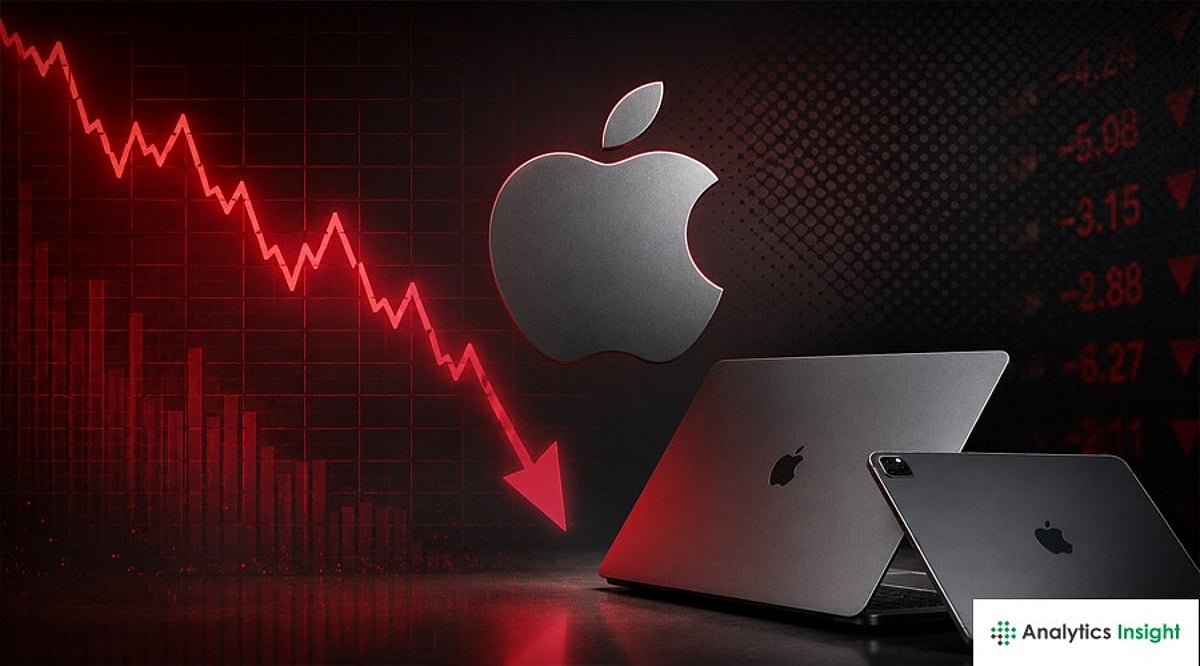
    Apple shares fell more than 6% on Thursday after the company raised prices across its MacBook and iPad lineup worldwide. The move marks Apple’s first major response to rising memory and storage costs, which have been intensified by surging demand from AI data centers. The iPhone, however, escaped a price hike for now.

    MacBook and iPad Price Hikes in Detail

    Apple increased the starting price of the MacBook Neo from $599 to $699. The MacBook Air with 512GB of storage rose from $1,099 to $1,299, while the 14-inch MacBook Pro with 1TB of storage now starts at $1,999, up from $1,699. The iPad lineup also saw significant increases: the 11-inch iPad Air jumped from $599 to $749, and the 13-inch model climbed from $799 to $949. The 11-inch iPad Pro now costs $1,199 ($999 at launch), and the 13-inch iPad Pro went from $1,299 to $1,499.

    Memory Costs Driving the Price Surge

    Apple attributed the price adjustments to an “unprecedented challenge” in the consumer electronics industry, as AI data centers consume more memory and storage components. CEO Tim Cook had warned earlier in May that rising component prices were pressuring Apple’s margins. In a later interview, he called the price increases “unavoidable” and described the shortage as a “hundred-year flood.”

    Memory and storage prices have spiked as suppliers redirect capacity toward high-bandwidth memory for AI servers, reducing supply for consumer devices. Microsoft, Sony, Nintendo, and other computer makers have also raised prices on select products. Apple has historically managed costs by discontinuing cheaper models—last month it stopped selling the $599 Mac mini with 256GB of storage, leaving buyers with fewer low-cost options.

    Investor Reaction and Market Implications

    The stock’s steep decline—its worst single-day drop in over a year—wiped an estimated $250 billion to $265 billion off Apple’s market value. Investors are concerned that higher prices could dampen demand for Macs and iPads, especially as households tighten discretionary spending. Apple’s iPhone lineup remains price-protected for now, though analysts warn that higher memory requirements for on-device AI could eventually drive up production costs for future iPhones.

    Looking Ahead: New Hardware and Software

    Apple is preparing a refreshed Siri experience with enhanced conversational abilities and in-app actions, but a European Union launch date remains unannounced. The company plans to introduce a base M6 processor for entry-level Macs later this year (current models use M5 chips). Analysts also expect Apple to enter the premium foldable phone market, which could raise average selling prices across the segment. The stock slide comes as Apple navigates a crucial balance between protecting margins and sustaining demand in a cost-sensitive environment.

  • Best IPO Index Funds in India to Watch in 2026

    Best IPO Index Funds in India to Watch in 2026

    India’s fast-growing IPO market has sparked strong interest in funds that offer exposure to newly listed companies. While pure IPO index funds are still limited in the country, several mutual fund and index fund options provide compelling access to recent public offerings and emerging market leaders. This guide explores the top choices for investors in 2026.

    Why IPO-Related Funds Are Gaining Traction

    India is experiencing one of its strongest IPO cycles, with major companies preparing for public listings. Upcoming issues like Jio Platforms (expected over Rs. 30,000 crore) and the National Stock Exchange (also around Rs. 30,000 crore) have fueled retail and institutional enthusiasm. SBI Funds Management has also received regulatory approval for its IPO. These large listings could attract global investment and broaden retail participation, making IPO-focused funds a key wealth creation theme.

    IPO-related funds allow investors to participate in early growth stages after a company’s stock market debut, without the uncertainty of direct IPO allotment. They offer diversification and professional management, though they carry higher risk due to the volatility of newly listed companies.

    Top IPO Index and Mutual Funds in India (2026)

    1. Edelweiss Recently Listed IPO Fund

    This is the closest option to a dedicated IPO fund in India. It invests primarily in companies listed within the last three years, offering exposure to their early growth phase. The fund has an AUM over Rs. 1,000 crore, a NAV near Rs. 31.95, and a minimum SIP of just Rs. 100. Its portfolio spans technology, healthcare, financial services, and manufacturing. Risk is high due to the focus on new companies.

    2. Nippon India Nifty Next 50 Index Fund

    Though not a direct IPO fund, this passive fund tracks the Nifty Next 50 index, which includes companies just below the top 50. Many successful IPOs eventually enter this category before moving to larger indices. It offers low expense ratios and strong institutional backing, making it a cost-effective way to gain indirect IPO exposure.

    3. UTI Nifty 50 Index Fund

    This trusted passive fund provides long-term exposure to India’s largest companies. While it doesn’t directly invest in IPOs, it automatically benefits when newly listed firms grow and enter the Nifty 50. With over Rs. 27,000 crore in AUM, low expense ratio, and minimal tracking error, it’s ideal for stable, diversified growth.

    4. HDFC Nifty Next 50 Index Fund

    Similar to the Nippon fund, this one focuses on companies with potential to become blue-chip stocks. Many recent IPOs enter this index after successful expansion. It offers higher growth potential than Nifty 50 funds, with the advantages of passive management and no stock selection bias.

    5. Motilal Oswal Midcap and Emerging Index Funds

    These funds target midcap and emerging companies, many of which are recent IPOs in sectors like electric vehicles, fintech, manufacturing, and consumer technology. They provide indirect access to India’s IPO ecosystem, as newly listed firms often start in the midcap space before ascending to large-cap status. Several 2026 IPOs have delivered listing gains of 70% to 150%.

    Final Outlook for 2026

    India’s stock market stands at a pivotal stage with rising public listings and strong investor participation. While pure IPO index funds remain scarce, the options above—focused on recently listed companies, emerging businesses, and future leaders—offer viable pathways. Investors should weigh the higher risk against potential rewards and consider their long-term goals.

    Frequently Asked Questions

    1. What is an IPO index fund?
    It’s a fund that gives exposure to newly listed companies after their IPO launch.

    2. Does India have dedicated IPO index funds?
    India has limited direct IPO funds, but several funds focus on recently listed companies.

    3. Which fund is closest to an IPO fund in India?
    The Edelweiss Recently Listed IPO Fund is one of the closest options available.

    4. Are IPO-related funds risky?
    Yes, these funds usually carry high risk because new companies can show price volatility.

    5. Why are IPO funds popular in 2026?
    Large upcoming IPOs and strong stock market growth have increased investor interest.

  • Indian Stock Market Set to Open Higher as Brent Crude Drops 1.80% to $72.41 – Nifty, Sensex Outlook

    Indian Stock Market Set to Open Higher as Brent Crude Drops 1.80% to $72.41 – Nifty, Sensex Outlook

    The Indian stock markets are expected to open higher on Thursday, supported by mixed global cues and a sharp decline in oil prices. GIFT Nifty was trading at 24,133.5, indicating a gap-up start with a premium of 110.5 points over the previous Nifty futures close.

    Brent crude futures fell 1.80% to $72.41 a barrel, while US West Texas Intermediate (WTI) dropped 1.59% to $69.22 a barrel. The fall in crude prices is seen as a positive for India, a major oil importer, as it helps reduce input costs and inflation pressures.

    Previous Session Recap

    On Wednesday, the Sensex surged 790.54 points, or 1.04%, to close at 76,991.22, while the Nifty 50 advanced 197.55 points, or 0.83%, to settle at 24,021.65. Foreign Institutional Investors (FIIs) remained net sellers, offloading shares worth Rs. 1,843 crore. Domestic Institutional Investors (DIIs) net bought Rs. 3,637 crore, providing support to the market.

    Sector-wise, Realty and IT indices outperformed, rallying over 2%, whereas the Defence index was the worst performer, shedding over 2%.

    Sensex Technical Outlook

    Technically, the Sensex formed a promising reversal pattern on intraday charts and a bullish candle on daily charts. Shrikant Chouhan, Head of Equity Research at Kotak Securities, said, “We are of the view that as long as the market is trading above 76,700, the pullback formation is likely to continue. On the higher side, the rally could extend to 77,500-77,700. On the flip side, below 76,700, sentiment could change. Below this level, the market could retest 76,400-76,200.”

    Nifty 50 Technical Outlook

    The Nifty 50 staged a strong rebound on Wednesday and managed to close above the psychologically important 24,000 level. On the daily chart, the index formed a bullish piercing line candlestick pattern, indicating strong buying demand near the support zone around 23,800. This support area is significant as it coincides with the previous gap zone and the confluence of the 20-day and 50-day exponential moving averages (EMAs).

    Bajaj Broking Research noted, “Nifty managed to hold above the support area of 23,800 and witnessed a pullback. Going ahead, bias remains positive and the index is expected to head higher towards last week’s high of 24,190 levels in the coming session. Dips, if any, towards 23,900 should be used as a buying opportunity.” Immediate support is seen around 23,900, while stronger short-term support is placed in the 23,500-23,600 zone. On the upside, the next major resistance is near 24,600.

    Bank Nifty Technical Outlook

    The Bank Nifty rose 966.60 points, or 1.69%, to close at 58,150.35, forming a bullish engulfing pattern on the daily chart. Bajaj Broking said, “Going ahead, bias remains positive and the index is expected to gradually head towards 59,200 levels in the coming sessions, being the measuring implication of the recent range breakout and the 138.2% external retracement of the previous decline 57,456-52,783.” Technical indicators continue to support the positive outlook. The lows recorded over the past two weeks near 57,000 remain a crucial support zone, and the index is expected to maintain its bullish bias as long as it holds above this level.

    Disclaimer: This article is for informational purposes only and does not constitute investment advice. Readers are encouraged to conduct their own research before making any investment decisions.

  • MCX Gold Slides to ₹1,40,748 as US Dollar Index Remains Firm Above 101; Fed Rate Hike Outlook Weighs

    MCX Gold Slides to ₹1,40,748 as US Dollar Index Remains Firm Above 101; Fed Rate Hike Outlook Weighs

    Gold prices traded lower on the Multi Commodity Exchange (MCX) on June 24, as the US dollar index held above the 101 mark amid growing expectations of additional monetary tightening by the Federal Reserve. August gold futures declined 0.37%, settling at ₹1,40,748 per 10 grams. Meanwhile, July silver futures slipped 1.07% to ₹2,10,801.

    In the international market, Brent crude futures fell 1.68% to $72.50 a barrel, while US West Texas Intermediate (WTI) crude dropped 1.46% to $69.31 a barrel. The CME FedWatch Tool indicates that traders now anticipate three rate hikes from the US Federal Reserve this year, with a 67% probability of a September increase.

    Domestic Gold Prices

    In the domestic spot market, 24K gold fell by ₹278 to ₹1,40,130 per 10 grams, and 22K gold decreased by ₹255 to ₹1,28,450. City-wise rates were largely uniform: Mumbai and Kolkata quoted ₹1,40,130, Delhi ₹1,40,280, and Chennai ₹1,45,630.

    US Gold Prices

    US gold prices extended their losses on Thursday, trading near a more than seven-month low touched in the previous session. Spot gold dropped 0.4% to $3,985.89 per ounce, while US gold futures for August delivery eased 0.2% to $4,001.60 per ounce.

    Spot silver fell 0.2% to $57.33 per ounce, platinum lost 0.2% to $1,575.85, and palladium gained 0.3% to $1,170.25.

    Key Levels to Watch

    According to independent metals trader Tai Wong, “The market is pricing a rate hike as soon as September due to a hawkish Fed. A surging dollar and lower inflation expectations are weighing on precious metals.” Wong added that while a collapse is unlikely, gold may remain in a prolonged consolidation phase due to weak demand.

    On MCX, gold has support at ₹1,40,000 and ₹1,38,800, and resistance at ₹1,42,400 and ₹1,43,350. Silver has support at ₹2,09,100 and ₹2,05,000, with resistance at ₹2,16,600 and ₹2,21,000.

  • Indian Stock Market Rally: Sensex Surges 527 Points, Nifty Rises on Auto and Realty Strength

    Indian Stock Market Rally: Sensex Surges 527 Points, Nifty Rises on Auto and Realty Strength

    The Indian stock market traded sharply higher on Thursday, June 25, 2026, driven by robust buying in auto and realty shares. Positive cues from Asian markets further bolstered investor sentiment, pushing benchmark indices into positive territory for the entire session.

    Benchmark Indices Climb

    The Nifty50 rose 0.69% or 166.85 points to settle at 24,187.45, while the Sensex gained 526.77 points or 0.68% to reach 77,517.99. Both indices remained in the green throughout the day, reflecting broad-based buying activity and positive market mood.

    Auto and Realty Lead the Rally

    The Nifty Auto index emerged as a top performer, buoyed by strong buying in automobile stocks. Optimism around demand and solid quarterly performance drove the sector higher. The Nifty Realty index also outperformed, driven by positive sentiment around housing demand and business expansion. These two sectors were instrumental in lifting the overall market.

    Top Gainers: Shriram Finance, Mahindra & Mahindra, InterGlobe Aviation

    Among individual stocks, InterGlobe Aviation, Shriram Finance, and Mahindra & Mahindra led the gains on the Nifty50. InterGlobe Aviation attracted strong buying on growth optimism, while Shriram Finance benefited from investor confidence in the financial sector. Mahindra & Mahindra rode the broader auto rally to emerge as a key contributor.

    Broader Markets Also Positive

    Broader market indices also showed strength. The Nifty MidCap index rose 0.39%, and the Nifty SmallCap index gained 0.25%. This indicates that investor confidence was not limited to large-caps but spread across mid- and small-cap segments, signaling healthy market participation.

    Metal and Media Underperform

    Not all sectors fared well. The Nifty Metal index underperformed due to weak buying interest, while the Nifty Media index remained under pressure as traders stayed cautious. Despite these drags, strong gains in auto and realty helped the market maintain its upward momentum.

    Overall, the session reflected steady strength, supported by global cues and domestic buying. The market’s positive trend remains intact, with auto and realty leading the charge.

  • BPCL Stock at Rs 313.80: Should You Buy Oil Stocks After Brent Crude Decline?

    BPCL Stock at Rs 313.80: Should You Buy Oil Stocks After Brent Crude Decline?

    Bharat Petroleum Corporation Ltd. (BPCL) was trading at Rs. 313.80 on the NSE during Thursday’s session, down 0.60 percent after touching an intraday high of Rs. 320.85. Despite the marginal decline, the stock remains one of the biggest beneficiaries of Brent crude slipping below its pre-Iran conflict levels, with the global benchmark hovering around USD 72 per barrel. The decrease in geopolitical risks in the Middle East has eased fears of supply disruptions, creating positive sentiment toward oil marketing companies in India.

    Low oil prices are economically beneficial for India, since the country meets about 85 percent of its crude oil needs through imports. In other words, it reduces import costs and helps prevent price levels from jumping. Moreover, lower oil prices tend to boost profits for downstream operators, as production costs fall and margins improve for refineries and oil marketing outfits. Among the public-sector OMCs, BPCL has been getting more investor focus lately, mainly because its execution has improved.

    Why Brent Crude’s Decline Matters

    There was an initial surge in Brent crude earlier this year amid heightened geopolitical tensions in the Middle East, raising concerns about disruptions to crude oil flows through the Strait of Hormuz, a crucial passageway for global crude exports. With improved diplomacy and stable crude oil flows, these worries have been addressed. Brent crude is currently trading below pre-Iran conflict levels, thereby reducing the geopolitical risks associated with oil prices. This news will be favorable for India’s downstream petroleum industry, as falling crude oil prices reduce their procurement costs and help them plan their profits well in advance.

    BPCL’s Chart Signals a Recovery in Progress

    BPCL’s one-year daily chart shows a stock gradually rebuilding momentum after a sharp correction. Earlier this year, BPCL climbed close to Rs. 390 before geopolitical tensions and rising crude prices triggered heavy selling across the sector. The stock eventually slipped below Rs. 280 during March and April as investors worried about shrinking refining margins and rising input costs. The trend has changed over the past two months. A wide trading range has been created for BPCL between Rs. 285 and Rs. 315, and buyers have consistently emerged when the stock has touched the lower end of the range. The presence of lower lows suggests a considerable reduction in the selling pressure. The increase in volume suggests an accumulation of institutions.

    Although BPCL was trading at Rs. 313.80 in the last session, it has touched a higher level of Rs. 320.85. It signifies buying interest near an important resistance level. A breakout above Rs. 320-321 will strengthen the uptrend and pave the way towards Rs. 340-350, with Rs. 300 as the important support level. From a technical perspective, BPCL is shifting its posture from correction to recovery.

    Lower Crude Prices Could Boost BPCL’s Profitability

    BPCL is among the major gainers when crude oil prices drop, given its downstream nature. While upstream businesses tend to benefit from higher crude oil prices, BPCL is more focused on refining crude and bringing its petroleum products to market. So when Brent crude is lower, BPCL usually sees reduced production costs, which tends to improve refinery and fuel margins, as long as fuel prices stay roughly where they are. That part happens because inventory costs can be down, working capital needs become lighter, and the operating cash flow picture tends to look cleaner. Should Brent crude remain below USD 75 per barrel, then the company is expected to perform well in future quarters.

    Other Oil Stocks Also Benefited

    The positive sentiment extended across India’s oil marketing sector as investors anticipated stronger profitability from lower crude prices. Hindustan Petroleum Corporation Ltd. (HPCL) advanced 0.9 percent to Rs. 416.85, supported by expectations of improving refining spreads and lower input costs. Indian Oil Corporation (IOC) edged 0.1 percent higher to Rs. 146.47, as investors anticipated better inventory management and stronger cash generation from its integrated refining and fuel retailing operations. The rally was also visible beyond the oil sector. InterGlobe Aviation, the parent company of IndiGo, climbed 4.49 percent to Rs. 5,443, benefiting from expectations that lower aviation turbine fuel (ATF) costs would improve operating margins.

    Low Oil Prices Provide Broad Economic Advantages

    The advantages of falling crude prices go well beyond oil marketing firms. Falling oil prices help reduce India’s import expenditure, thereby narrowing its current account deficit and easing inflationary pressures. Falling oil prices will also cut costs for companies operating in sectors such as aviation, logistics, chemicals, manufacturing, and transportation, leading to improved bottom lines. A benign crude situation also gives the authorities room on the monetary policy front, thus creating a conducive environment for economic growth and equities.

    Risks that Could Alter Outlook

    Even with the optimistic mood, investors need to watch out for international events. Geopolitical risks in the Middle East, supply disruptions via the Strait of Hormuz, or a sudden reduction in production from the OPEC+ coalition can turn the situation around very rapidly. Local factors such as changes in fuel price structures, excise duties, or government intervention in fuel prices may also influence BPCL’s profitability.

    Investment Outlook

    Brent crude oil prices are currently correcting again, and it is bringing investors’ focus back to the Indian oil marketing industry, sort of like BPCL, as the one stock to watch. Even with its current share price of Rs. 313.80 in the latest trading session, BPCL has bounced back strongly from the recent April lows, especially as crude prices have been easing. In the meantime, BPCL should be in a position to benefit from better refining margins and marketing upside as long as crude stays under USD 75, and there is no geopolitical risk hanging over. Sure, both HPCL and IOC will also benefit if crude prices rise, however, BPCL still looks like the stock to watch given its technical strength and earnings visibility.

  • FTSE 100 Edges Up 12 Points to 10,474 as Oil Slips Below $73; 3i Group Leads Gains

    FTSE 100 Edges Up 12 Points to 10,474 as Oil Slips Below $73; 3i Group Leads Gains

    The FTSE 100 opened 12 points higher at 10,474 on Thursday, buoyed by optimism surrounding US-Iran diplomatic talks and a decline in oil prices that pressured energy giants BP and Shell. Brent crude futures dropped 1.32% to $72.70 per barrel, while US West Texas Intermediate (WTI) fell 0.97% to $69.66.

    Gainers & Losers

    3i Group surged 9.11% to £2,480, Barratt Redrow advanced 4.70% to £294.20, and SSE climbed 2.81% to £2,414. Aberdeen Group gained 2.67% to £238.20, Persimmon rose 2.47% to £1,119.50, and Polar Capital Technology Trust added 2.42% to £719.50.

    On the downside, London Stock Exchange Group fell 2.34% to £8,086, Endeavour Mining dropped 2.03% to £3,678, Experian slipped 1.88% to £2,503, and Fresnillo declined 1.44% to £2,733. Shell eased 0.58% to £2,929.50, while BP edged lower by 0.83% to £476.05.

    Halfords Returns to Profit

    Halfords posted a pre-tax profit of £43.6 million for the year to April, beating analyst forecasts of £40.3 million and reversing last year’s £30 million loss. Revenue grew 5% to £1.8 billion, with autocentre operations seeing like-for-like sales jump 6% to £740 million.

    3i Reports Slower Growth for Action

    3i Group noted that its largest portfolio company, European discount retailer Action, delivered like-for-like sales growth of 3.3% in the year to 21 June, down from 3.6% in the first quarter and below the full-year guidance of 4%–5%. Despite the slowdown, the company remains on track for a good second quarter.

    Serco Revenue Expected to Rise

    Serco anticipates a 3% revenue increase to around £2.5 billion, with underlying operating profit climbing to roughly £155 million as margins improve above 6%. CEO Anthony Kirby highlighted the company’s global footprint and sector diversity as core strengths amid geopolitical tensions. Shares were flat in early trading.

    Global Market Roundup

    In the US, the tech-heavy Nasdaq fell 0.4% for a third straight session, the S&P 500 slipped 0.1%, but the Dow Jones gained 0.4%. South Korea’s Kospi surged 6.3% above 9,000 points, led by SK Hynix (up 15.6%) and Samsung Electronics (up 4.7%). Japan’s Nikkei 225 rose 4.6% to 72,403.2 points, Taiwan’s TAIEX added 0.4%, and India’s Nifty 50 and Sensex both advanced 0.7%.

  • How Digital Invoice Templates Streamline Business Financial Management

    How Digital Invoice Templates Streamline Business Financial Management

    In today’s fast-paced business environment, efficiency and accuracy in financial operations are more critical than ever. Companies of all sizes—from freelancers to large enterprises—depend on structured invoicing systems to maintain steady cash flow and professional client relationships. Invoicing is not just a billing procedure; it reflects a business’s credibility and organizational strength.

    With the rise of digital tools and automation, paper-based invoicing has largely given way to digital solutions. These tools enable businesses to generate, customize, and send invoices rapidly while minimizing human error. Among these, invoice templates have become especially popular for providing a simple, efficient way to manage billing without requiring advanced accounting knowledge.

    The Evolution of Invoicing Systems

    Invoicing has come a long way from handwritten or manually typed documents, which were time-consuming and error-prone. The advent of spreadsheet software and word processors marked a major leap in accuracy and efficiency. Today, digital invoice templates and automated systems let users create professional invoices in just a few clicks. The shift to digital invoicing has also been accelerated by globalization and remote work, as businesses need standardized, shareable financial documents for cross-border operations.

    Why Invoice Templates Are Essential

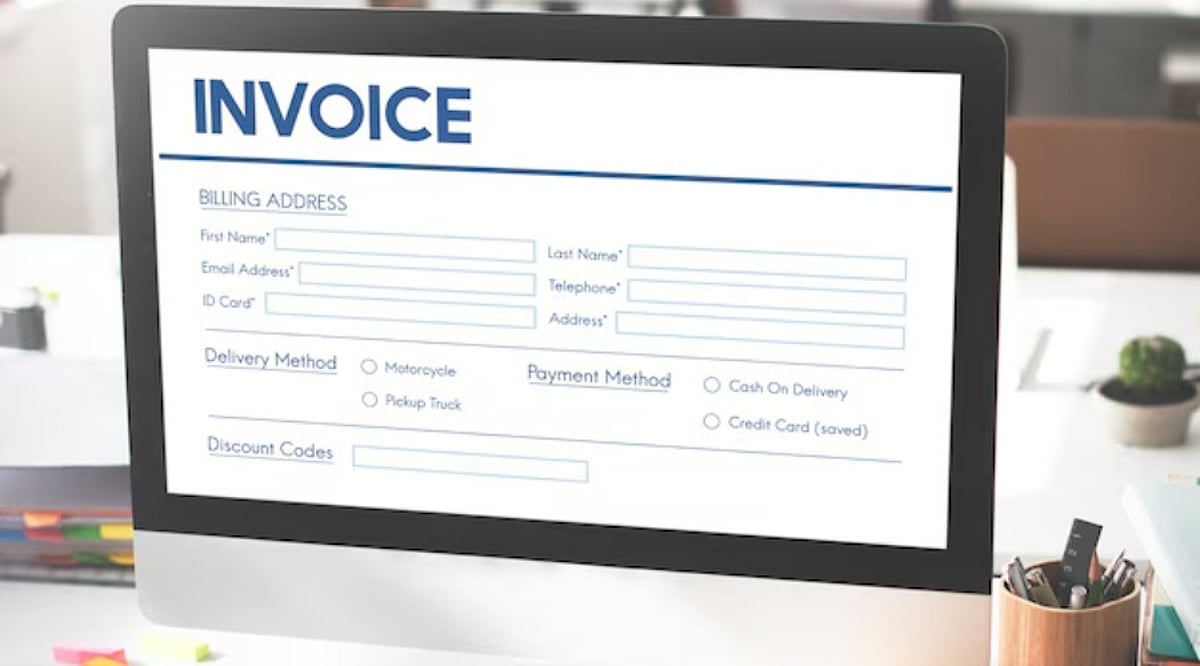
    Invoice templates provide a predefined format covering all essential sections: client details, descriptions of goods or services, pricing, taxes, and payment terms. Their primary advantage is time savings—no need to design invoices from scratch, just fill in the data for a polished invoice in minutes. This is especially valuable for small businesses and freelancers managing multiple clients. Consistency is another key benefit: templates ensure every invoice meets the same professional standard.

    The Role of Excel in Modern Invoice Management

    Spreadsheet applications like Excel remain popular for invoicing due to their flexibility. Customizable templates allow businesses to adapt formats to their specific needs. Automatic calculations reduce manual errors in pricing and totals. Excel-based invoice templates are particularly useful for small to medium-sized companies seeking a straightforward invoicing method. These templates can be customized, duplicated, and saved for future use, and they are compatible with other financial tools and accounting systems.

    Digital Invoice Solutions and Business Efficiency

    Digital invoice solutions have transformed billing processes by eliminating manual data entry and reducing administrative workload. Many modern platforms offer customizable templates with features like automatic tax calculations, currency conversion, and payment tracking. This automation boosts efficiency and accuracy. For example, solutions such as Luzenta provide user-friendly invoice templates tailored for startups and freelancers who need reliable yet simple invoicing.

    Benefits of Using Digital Invoice Templates

    • Speed: No time wasted on formatting or designing invoices.
    • Accuracy: Automatic calculations prevent common mistakes.
    • Record-keeping: Easier storage and retrieval of transaction data for audits or reviews.
    • Eco-friendliness: Reduces paper usage, supporting sustainability.

    Improving Cash Flow Through Better Invoicing Practices

    Timely and accurate invoicing directly supports cash flow by ensuring payments arrive without unnecessary delays. Clear payment terms and well-structured invoices help clients understand their obligations, making payments smoother. Automated reminders further streamline cash management.

    Frequently Asked Questions

    What is an invoice template?

    An invoice template is a pre-designed document with standard billing fields like client info, item descriptions, prices, and payment terms.

    Why should businesses use digital invoice templates?

    They save time, reduce errors, improve consistency, and simplify financial record-keeping.

    Is Excel good for creating invoices?

    Yes—Excel allows customization, automated calculations, and easy data management.

    How do invoice templates improve cash flow?

    They ensure timely, accurate billing, leading to faster payments and stable cash flow.

    Can invoice templates be customized?

    Yes, most digital templates can be tailored to match branding, structure, and specific requirements.

    Conclusion

    Invoice templates are essential tools for any business aiming to handle finances efficiently and professionally. The digital revolution has made powerful invoicing tools accessible to all. Structured, automated invoicing improves financial health, reduces administrative burden, and fosters positive client relationships. Platforms like luzenta.com offer a variety of templates to simplify financial management. Effective invoicing is a cornerstone of modern business success.