
Category: Finance

  • Microsoft Stock on Track for Worst Monthly Drop Since 2000 as AI Spending Surge Eclipses Strong Earnings

    Microsoft Stock on Track for Worst Monthly Drop Since 2000 as AI Spending Surge Eclipses Strong Earnings

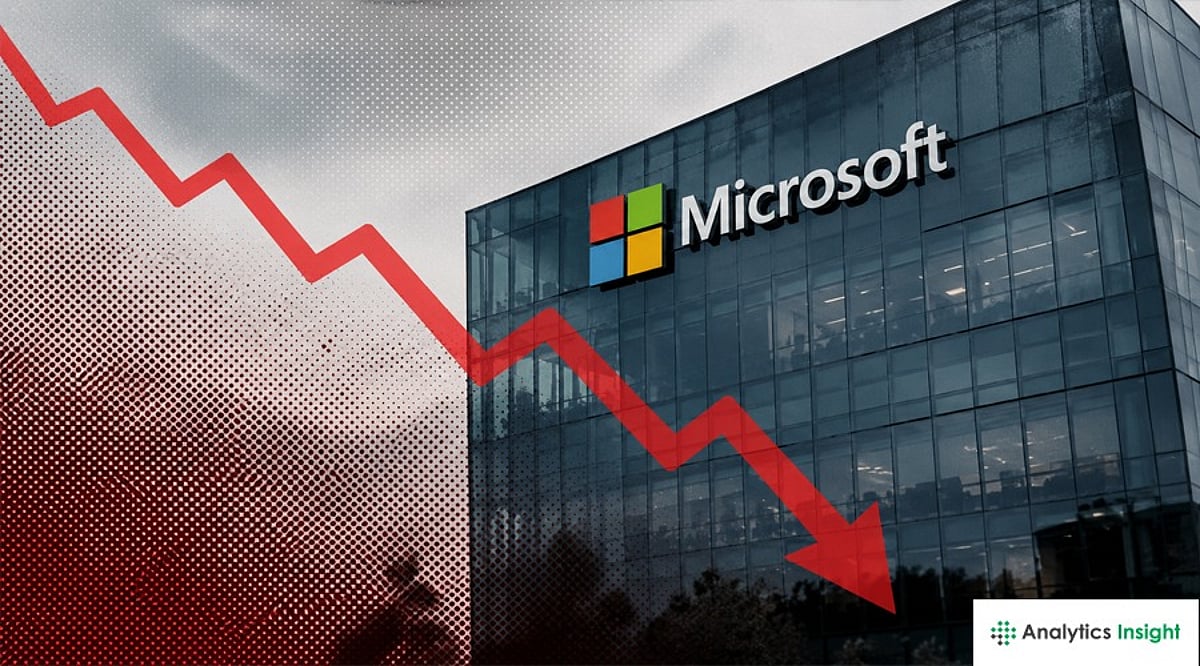
    Microsoft Corp. is heading toward its weakest monthly stock performance in more than two decades, even as the company continues to report steady revenue growth and earnings that exceed Wall Street expectations. Investors have shifted their attention from quarterly results to the rising cost of expanding artificial intelligence infrastructure.

    AI Investment Costs Overshadow Earnings Beat

    Microsoft has delivered year-over-year revenue growth of 16% to 18% for eight consecutive quarters and consistently beaten analyst earnings estimates. Yet these strong results have done little to support the share price. The market is now laser-focused on spending rather than revenue.

    Capital expenditure has become the primary metric investors watch. Microsoft spent approximately $38 billion on capital projects in the latest quarter, much of it directed toward expanding AI data centers. Bank of America estimates the company’s capital spending could approach $190 billion in 2026. This surge is not unique to Microsoft—Amazon, Alphabet, Meta Platforms, and Oracle are also pouring billions into AI infrastructure, with combined spending by the five largest hyperscale cloud providers projected to exceed $700 billion in 2026.

    As more companies build data centers, demand for advanced chips and memory continues to rise, driving up equipment costs and extending investment cycles. Investors are now questioning how quickly these projects can generate meaningful financial returns.

    Cash Flow and Shareholder Returns Under Pressure

    Microsoft’s capital spending increased 63% from a year earlier, while free cash flow declined 10%. With more operating cash funneled into infrastructure, less remains available for share repurchases and dividend growth. Bank of America notes that hyperscaler capital spending has risen from roughly 70% of operating cash flow in 2025 to nearly 100% in 2026, raising concerns that large technology companies may have fewer resources for direct shareholder returns while AI investment remains elevated.

    Stifel lowered its Microsoft price target to $400, forecasting that Azure’s expansion will reduce gross margins by 100 to 150 basis points each quarter through fiscal 2027. Analysts estimate Microsoft’s fiscal 2027 gross margin could fall to about 63%, and earnings per share may trail actual results if spending continues at the current pace.

    Meanwhile, semiconductor companies have benefited from the AI investment cycle. Since January, the semiconductor sector has outperformed many large technology stocks as demand for AI hardware continues to increase.

    Technical Levels Under Scrutiny

    Technical analysts are also watching Microsoft’s stock price action closely. John Roque, a technical strategist at 22V Research, noted that the stock has struggled to stay above its 200-day moving average after repeated failures near resistance levels. He warned that a break below long-term support around $350 could trigger further weakness. “A break below $350 would, on his math, open the path to $250 — measured down from the stock’s failure near $450 in early June,” Roque said. That projection represents roughly 30% below recent trading levels, though it remains a technical scenario rather than a forecast.

    Outlook: AI Returns Remain the Key Question

    Current market conditions draw comparisons to earlier technology investment cycles, including the period following the dot-com boom. Many investors continue to monitor whether Microsoft’s expanding AI business, cloud platform, and related services will eventually generate returns that justify the record level of infrastructure spending. Until then, AI investment costs remain one of the biggest drivers of sentiment surrounding the company’s stock.
  • Zerodha Files for SEBI Merchant Banking License as Revenue Hits ₹8,847 Crore

    Zerodha Files for SEBI Merchant Banking License as Revenue Hits ₹8,847 Crore

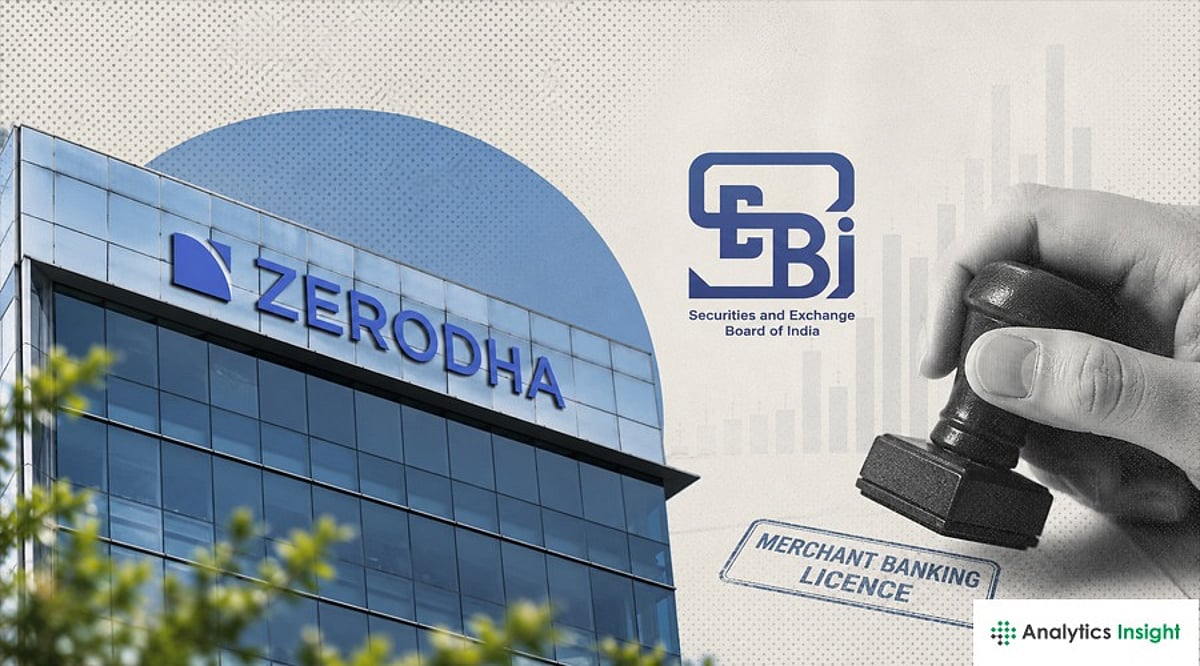
    Zerodha, India’s largest stockbroker by active clients, is taking a significant step beyond its core business. The Bengaluru-based fintech company has applied for a Category I merchant banking license from the Securities and Exchange Board of India (SEBI), seeking to offer services such as initial public offering management, corporate advisory, and fund-raising. The application was submitted in April and awaits regulatory approval, a company spokesperson confirmed, adding that more details will be shared once the license is granted.

    Strategic Expansion into Investment Banking

    The move positions Zerodha to tap into India’s booming IPO pipeline, as dozens of startups and new-age companies prepare to go public over the coming years. A merchant banking license would allow Zerodha to help these firms navigate public offerings, raising capital through the stock market. This expansion comes as the company already offers a wide array of financial services—mutual funds, lending, asset management, startup investments via Rainmatter, international investing, and fixed deposits through its Coin platform.

    By adding investment banking to its portfolio, Zerodha aims to diversify revenue streams and reduce its reliance on brokerage income. In FY25, the company reported revenue of ₹8,847 crore and net profit of ₹4,237 crore, underscoring its financial strength as it ventures into new territory.

    Competition and Market Impact

    Zerodha’s entry into merchant banking could intensify competition in a sector traditionally dominated by established players such as JM Financial, Kotak Mahindra Capital, Axis Capital, and ICICI Securities. Industry experts believe that a digital-first approach from Zerodha may appeal especially to technology companies and startups, potentially improving service quality and offering more choices for businesses raising capital.

    The application aligns with a broader trend of fintech companies moving into conventional financial services. As India’s public markets continue to attract new issuers, more firms are seeking merchant banking licenses, which could foster a more dynamic capital market ecosystem.

    What This Means for Zerodha’s Future

    If SEBI approves the license, Zerodha will join a growing list of full-service financial companies. The company recently launched fixed deposit investments on its Coin platform, allowing customers to invest across partner banks from a single interface. Expanding into investment banking would further solidify its presence in the capital markets and create new income sources, supporting long-term growth.

    Zerodha’s latest move highlights how fintech innovators are reshaping traditional finance. With strong fundamentals and a loyal user base, the company is well-positioned to compete for IPO and fund-raising mandates in the years ahead—pending the regulator’s green light.

  • Gold Prices Dip on MCX to ₹1,43,350 as Middle East Tensions Stoke Inflation Fears

    Gold Prices Dip on MCX to ₹1,43,350 as Middle East Tensions Stoke Inflation Fears

    Gold futures on the Multi Commodity Exchange (MCX) declined on June 24, 2026, amid renewed hostilities between the US and Iran that sent oil prices higher and reignited inflation concerns. The escalation is prompting traders to bet on tighter monetary policy from the US Federal Reserve.

    August gold futures on MCX fell 0.56% to ₹1,43,350 per 10 grams. July silver futures also slipped 0.7% to ₹2,19,863. In the international market, Brent crude futures edged down 0.67% to $72.47 a barrel, while US West Texas Intermediate (WTI) crude dropped 1.80% to $70.05 a barrel.

    According to the CME FedWatch Tool, traders now anticipate three rate hikes from the US Federal Reserve this year, with an 80% probability of a December hike.

    Domestic Gold Prices

    In the domestic spot market, 24K gold fell by ₹93 to ₹1,43,020 per 10 grams, and 22K gold dropped by ₹85 to ₹1,31,100. Regional variations were minimal: Mumbai and Kolkata both quoted ₹1,43,020, Delhi ₹1,43,170, and Chennai ₹1,45,090.

    US Gold Prices

    US gold prices also eased on Monday as recent US-Iran strikes in the Gulf pushed oil prices higher. Spot gold was down 0.6% at $4,062.89 per ounce, while US gold futures for August delivery lost 0.5% to $4,077.50. The metal is heading for a fourth consecutive monthly loss of 10.4%.

    Spot silver fell 1.2% to $58.47 per ounce. Platinum gained 0.2% to $1,617.15, and palladium rose 0.4% to $1,213.60.

    Key Levels to Watch

    Tim Waterer, chief market analyst at KCM Trade, commented: “US and Iran were at it again over the weekend, with fresh military strikes reported from both parties, which casts further doubt over how long oil can stay at these subdued levels and therefore over the broader inflation and interest rate outlook.”

    Waterer added: “Gold could see the $5,000 level again this year, but this would be based on further de-escalation, oil having a sustained move to pre-war levels to dull the inflationary impact of the conflict, and a softer dollar.”

    Internationally, gold has support at $4,055 and $4,010, while resistance is at $4,135 and $4,180 per troy ounce. Silver has support at $57.40 and $55.80, with resistance at $61.20 and $62.80 per troy ounce.

    On MCX, gold has support at ₹1,43,300 and ₹1,42,400 and resistance at ₹1,45,150 and ₹1,46,200. Silver has support at ₹2,20,000 and ₹2,16,600 and resistance at ₹2,26,000 and ₹2,29,100.

    Stay updated with the latest gold price movements and market insights.

  • Pharma and Healthcare Stocks Propel Nifty50 Past 24,000 as Sensex Holds Steady at 77,083

    Pharma and Healthcare Stocks Propel Nifty50 Past 24,000 as Sensex Holds Steady at 77,083

    Indian stock markets traded mixed on Monday, June 29, with pharmaceutical and healthcare stocks providing a solid foundation for benchmark indices. While the Nifty50 climbed above the 24,000 mark, the Sensex remained nearly flat, reflecting cautious optimism among investors. The broader market, however, faced selling pressure, particularly in mid- and small-cap segments.

    Market Overview

    At the time of writing, the Nifty50 rose 0.1 percent, gaining 24.6 points to reach 24,073.60. In contrast, the Sensex slipped marginally by 0.02 percent, or 16.72 points, settling at 77,083.75. The mixed movement highlights selective buying, with sector-specific trends shaping the day’s trading direction.

    Pharma and Healthcare Lead the Rally

    The strongest support came from the pharmaceutical and healthcare sectors, which saw steady buying interest. This defensive rotation helped keep the benchmark indices in positive territory despite weakness in other areas. The Nifty Pharma and Nifty Healthcare indices emerged as the top sectoral performers, reflecting sustained investor confidence in healthcare-related businesses.

    Nifty50 Top Gainers

    Several stocks in the Nifty50 index recorded strong gains:

    • Dr. Reddy’s Laboratories led the gainers, benefiting from the overall strength in pharma shares.
    • Shriram Finance also posted notable gains as financial stocks attracted selective buying.
    • Eternal joined the top gainers, adding further momentum to the benchmark index.

    Broader Markets Under Pressure

    While large-cap indices held firm, the broader market showed weakness.

    • The Nifty MidCap index slipped 0.23 percent.
    • The Nifty SmallCap index fell 0.66 percent, indicating sharper declines among smaller companies.

    IT Sector Faces Selling Pressure

    Sectoral performance was mixed. The Nifty IT index recorded the steepest fall, as technology shares faced selling pressure that limited overall market gains.

    IPO Market Stays Active

    The primary market remained vibrant with several new offerings:

    • Aastha Spintex IPO opened for subscription, aiming to raise ₹170 crore.
    • Adon Agro Commodities IPO and Twinkle Papers IPO are both book-built issues worth ₹44.03 crore and ₹27.52 crore, respectively.
    • Crazy Snacks IPO entered its second day of subscription, targeting ₹31.47 crore.
    • CSM Technologies IPO and Sri Priyanka Geo Commex IPO are in their final subscription days, with fundraising goals of ₹145.78 crore and ₹94.51 crore, respectively.

    Conclusion

    Overall, the stock market remained mixed. Pharma and healthcare shares provided strength, while weakness in broader markets and IT stocks kept sentiment cautious. Investors are closely watching for further sectoral rotations and upcoming IPOs.

  • Key AI Trends Reshaping the Banking Sector by 2026

    Key AI Trends Reshaping the Banking Sector by 2026

    Artificial Intelligence has moved from experiment to reality in the banking industry. AI is already a part of the onboarding, lending, compliance, customer service and fraud detection workflows, and it’s being deeply integrated into bank operating models.

    The Gartner CIO and Technology Executive Survey 2026 revealed that more than 2,300 banking CIOs and technology executives surveyed indicated that their organizations had already implemented generative AI, with 55% stating they had done so by the end of 2025 and 26% expecting to do so within 12 months. This shows that AI adoption in banking is entering a faster and more operational phase.

    1. AI Application Development Platforms

    Banks are increasingly moving away from isolated AI tools and investing in common AI application development platforms. Gartner projects that over 40% of banks globally will be investing in these platforms in 2026. The platforms can enable banks to develop reusable AI modules, manage models, leverage approved data, and safely expand AI throughout the bank. Wells Fargo’s Enterprise Open Source Data Science Platform and BNY’s Eliza platform are examples of this shift.

    2. Multi-Agent Systems

    The latest trend in banking AI is the use of multi-agent systems. Gartner reports that 17% of banking CIOs already have an AI agent in place and 41% are aiming to deploy them within 12 months. Such systems enable several AI agents to collaborate with each other on intricate tasks like loan pre-approvals, investment analysis, identifying anomalies, and resolving disputes. By the end of 2027, multi-agent systems will independently drive 30% of all day-to-day banking decisions, according to Gartner.

    3. Domain-Specific Language Models

    The large language models used by banks are transitioning from general to domain-specific. By 2028, over 60% of generative AI models being used by banks will be industry-specific, compared to 30% in 2025. These models help lower the risk of hallucination and enhance accuracy in areas like compliance, fraud monitoring, customer service and risk assessment.

    4. Physical AI in Branches

    Physical AI is slowly starting to appear in branches, ATMs and customer service lobbies. Humanoid robots and AI-powered ATMs and facial recognition tools are already on trial in banks like China Construction Bank, HSBC, and CaixaBank. Gartner estimates that by the end of 2027, around 10% of banks will have physical AI in their branches or operations, compared with around 3% currently.

    5. AI Security Platforms

    With the increasing adoption of AI, the security threats are increasing as well. AI security platforms may become a core part of the investment needed to prevent 75% of data breaches by 2028 due to the use of AI and agentic AI by banks.

    6. Agentic AI in Banking Operations

    Agentic AI is stepping into the real banking business in 2026. Accenture calls this the change to “unconstrained banking,” one where smaller teams manage AI workers to provide greater operational scale. To ensure multiple agents use the same data, policies and to remain fully auditable is the key challenge.

    7. AI-Powered Onboarding

    KYC and KYB onboarding remain expensive and slow for banks. AI agents can streamline these processes and minimize friction, such as document checks, data extraction, verification, and account activation. Banks that adopted coordinated AI workflows witnessed a transformation in lending and onboarding decision cycles, accelerating them from weeks to days, and in some instances, hours.

    8. Relationship Manager Productivity

    Relationship managers usually spend less than 30% of their time in front of the client. AI can help with that by providing pre-reading on the client brief, risk assessment of the portfolio and cross-selling opportunities before meetings. This will allow the relationship manager to focus more time on counseling the clients and less time on moving between systems.

    9. AI Credit Decisioning and Compliance

    AI credit decisioning is improving loan and exception management, along with loan pre-approvals. The companies behind the AI origination tools claim to have seen a 10-15% conversion rate improvement and a 25-35% cost saving for banks.

    10. AI Fraud Detection and the ‘10x Bank’

    Fraud detection is now blending in with ID verification and compliance. AI is used to identify deepfakes, synthetic identities and account takeover fraud throughout the customer lifecycle.

    Why this Matters

    AI is becoming core banking infrastructure rather than an experimental tool. Banks that adopt secure, domain-specific AI can improve efficiency, reduce costs, strengthen fraud detection, accelerate lending and onboarding, and deliver faster, more personalized customer experiences while remaining compliant with regulations.

    What’s Next?

    In banking, AI adoption is shifting from pilot runs to actual core operations, and it brings many changes in onboarding, lending, fraud detection, regulatory compliance, and customer service. By 2026, banks that put money into secure AI platforms, use models built for specific domains, and tie operations together through unified data systems are more likely to be set up well for higher efficiency, lower expenses and quicker customer experiences.

    FAQs

    1. What are the top AI trends in banking in 2026? The top AI trends include AI application development platforms, multi-agent systems, domain-specific language models, AI security platforms and AI-powered onboarding.
    2. How many banks have adopted generative AI? According to the Gartner CIO and Technology Executive Survey 2026, 55% of surveyed banking CIOs and technology executives had already deployed generative AI by the end of 2025.
    3. Why are multi-agent systems important for banks? Multi-agent systems allow several AI agents to work together on complex banking tasks such as loan pre-approvals, dispute resolution and anomaly detection.
    4. How can AI improve customer onboarding in banks? AI can speed up KYC and KYB onboarding by automating document checks, data extraction, verification and account activation.
    5. What are the risks of AI adoption in banking? The biggest risks include data breaches, compliance failures, hallucinations, prompt injection and misuse of autonomous AI agents. That is why banks are investing in AI security platforms, domain-specific models and unified data systems to keep AI use controlled and auditable.
  • Kotak Mahindra Bank Shares Decline as CEO Ashok Vaswani Plans Departure by Late 2026

    Kotak Mahindra Bank Shares Decline as CEO Ashok Vaswani Plans Departure by Late 2026

    Kotak Mahindra Bank shares experienced a dip on Monday, trading near Rs. 398.95 on the NSE after CEO Ashok Vaswani confirmed he will step down at the end of his tenure on December 31, 2026. The stock touched an intraday high of Rs. 410.95 and a low of Rs. 398.95, reflecting investor caution over the leadership transition.

    Leadership Transition Sparks Selling Pressure

    The announcement that Ashok Vaswani will not seek another term as Managing Director and CEO raised concerns among investors about the future leadership of one of India’s largest private lenders. The bank’s management clarified that Vaswani will remain in his role until the end of his tenure and will collaborate closely with the board to ensure a smooth succession. Succession planning is already underway, subject to regulatory approval.

    Investors Eye Succession Clarity

    While the bank has reiterated its unchanged long-term strategy, the unexpected news has affected market sentiment. A leadership change often brings uncertainty, especially as Vaswani had been driving the company’s transformation. Investors are now focused on the board’s selection process for a new CEO, which will be critical in restoring confidence in the coming months.

    Analysts See Temporary Impact

    Despite the sharp decline, several brokerages maintain a positive outlook on Kotak Mahindra Bank, viewing the downturn as temporary. Nomura and Jefferies, among others, remain bullish on the stock, citing strong capitalization and solid fundamentals. Analysts believe that once the board identifies a suitable successor, attention will shift to profitability and growth. Such management changes are common in the banking industry.

    Growth Strategy Remains Intact

    Vaswani’s departure comes as the bank accelerates its growth strategy following the removal of regulatory restrictions on its digital business. Over the past year, the company has enhanced its technology framework, compliance systems, and focused on expanding retail lending. The bank continues to explore opportunities in consumer banking, wealth management, commercial lending, and digital financial services. With one of the strongest balance sheets in the private banking sector, Kotak Mahindra Bank is open to organic and inorganic growth avenues, including loan portfolio acquisitions. These strategic initiatives are institutionally supported and likely to continue irrespective of the leadership change.

    Smooth Succession as Key Catalyst

    From an investor perspective, a successful succession process will be the primary catalyst for rebuilding confidence and removing current uncertainties surrounding the share price. Analysts expect share price movements to remain tied to succession-related news. However, most market professionals view the bank’s capital adequacy, technological advancements, growing credit book, and high profitability as strong indicators for long-term investment. While the leadership announcement has introduced volatility, the underlying business remains robust.

  • FTSE 100 Opens Lower at 10,495 as Oil Prices Climb and BoE Warns on Inflation

    FTSE 100 Opens Lower at 10,495 as Oil Prices Climb and BoE Warns on Inflation

    The FTSE 100 opened 13 points lower at 10,495 amid easing US-Iran tensions, while the Bank of England’s chief economist warned against complacency on inflation. Labour leadership frontrunner Andy Burnham is also set to unveil a major devolution plan. Meanwhile, Brent crude futures rose 0.67% to $72.47 a barrel. US West Texas Intermediate (WTI) advanced 1.80% to $70.05 a barrel.

    Gainers & Losers

    On the upside, Lion Finance Group rose 3.22% to £11,220, while Entain advanced 2.70% to £593.40. BT Group gained 1.59% to £198.10, and Scottish Mortgage Investment Trust moved higher by 1.56% to £1,433. Pershing Square Holdings added 1.22% to £3,812, while Computacenter climbed 0.89% to £4,292.

    On the downside, Endeavour Mining declined 2.36% to £3,761, while British American Tobacco slipped 1.37% to £4,686. Next edged lower by 0.27% to £14,575, and AstraZeneca fell 0.28% to £14,278. Unilever moved lower by 0.87% to £4,560.50, while 3i Group eased 1.58% to £2,492.

    CPI Above BoE’s Target

    Bank of England’s chief economist Huw Pill told the Press Association that policymakers “should not be complacent” about inflation, after the Consumer Prices Index remained above the Bank’s 2% target in May, at 2.8%. “I think it should be seen as problematic, because our mandate is very clear; inflation at 2% at all times. I do fear a little bit that, because we saw inflation go to 11%, policy discussion becomes, oh, inflation at 3% is not so bad.” Pill was one of two policymakers to vote for a rate hike when the Bank’s monetary policy committee split 7-2 to hold rates earlier this month.

    AstraZeneca Secures EU Approval for Breast Cancer Drug

    AstraZeneca has secured EU approval for its breast cancer drug Datroway after studies found it was able to improve survival rates for patients. The drug targets the especially aggressive form of cancer known as metastatic triple-negative, and was able to improve the average survival of the disease by five months. Today, only 15% of patients with metastatic triple-negative breast cancer survive beyond five years, making the disease one of the hardest to treat. AstraZeneca had already secured approval for the drug in the US in May.

    Bridgepoint Group Shares Rose

    Bridgepoint Group shares jumped 7.9% in early trade, hovering at £251, but shares remain down 10.2% since January. The group is acquiring real estate investment platform Kayne Anderson for $1.4 billion (£1 billion), comprising $759 million in cash and roughly $189 million in newly issued Bridgepoint shares. The deal is anticipated to “strengthen Bridgepoint’s position” in global private markets and increase the group’s assets under management (AUM) to $117 billion. This includes $40 billion in private equity, $30 billion in infrastructure and $22 billion in real estate.

    Global Market View

    In the US, the tech-heavy Nasdaq closed 0.24% down. The S&P 500 was nearly flat at 7,354.02, while the Dow declined 0.09%. In Asia, South Korea’s Kospi fell 0.2% to 8,394.65. Japan’s Nikkei 225 rose 0.15% to 69,468.11 points. Taiwan’s TAIEX dipped 0.96%. India’s Nifty 50 and Sensex both fell 0.41% and 0.5%, respectively.

    Disclaimer: Analytics Insight does not provide financial advice or guidance on cryptocurrencies and stocks. Also note that the cryptocurrencies mentioned/listed on the website could potentially be risky, i.e. designed to induce you to invest financial resources that may be lost forever and not be recoverable once investments are made. This article is provided for informational purposes and does not constitute investment advice. You are responsible for conducting your own research (DYOR) before making any investments.

  • India Stock Market Wobbles: Sensex Sinks 372 Points, Nifty Drops Below 24,000 as Profit Booking Deepens

    India Stock Market Wobbles: Sensex Sinks 372 Points, Nifty Drops Below 24,000 as Profit Booking Deepens

    Indian equity markets ended Monday’s session sharply lower, reversing early gains as broad-based profit booking and IT stock weakness dragged benchmarks. The Sensex plunged 372 points to close at 76,728.37, while the Nifty slipped below the crucial 24,000 mark, settling at 23,978. Persistent Systems led the losers, tumbling nearly 8% after announcing its $1.14 billion acquisition of Germany’s Nagarro.

    Market Overview

    Markets opened on a positive note after a long weekend, but selling pressure accelerated through the morning. The Sensex turned negative within the first hour, losing over 200 points, and continued to slide as the session progressed. The Nifty tested the 24,050 level early on but failed to hold support, closing below 24,000 for the first time in several sessions.

    Key Movers

    • Persistent Systems crashed nearly 8% after announcing its proposed $1.14 billion acquisition of Nagarro. Analysts noted long-term strategic benefits but flagged near-term integration costs.
    • HDFC Bank recovered above Rs. 800 after months of selling pressure, providing some support.
    • Ajanta Pharma hit a fresh all-time high above Rs. 3,400, extending its bullish momentum.
    • Anubhav Plast surged over 623%, leading the gainers list amid extreme volatility.

    Broader Market

    The Nifty Smallcap index fell for a second consecutive session, reflecting continued selling in mid- and small-cap stocks. Volatility was elevated, with stocks like Uhm Vacation, IITL Projects, and Euphoria Infotech witnessing sharp swings.

    Key Triggers This Week

    Investors are closely monitoring:

    • First-quarter earnings season
    • Progress of the monsoon
    • Crude oil prices and US-Iran tensions
    • Foreign institutional investor (FII) flows
    • Reserve Bank of India measures
    • Global economic data

    Analyst Views

    Shrikant Chouhan of Kotak Securities highlighted key support at 24,000 for Nifty and 76,800 for Sensex. A break below could trigger further weakness, while sustained trade above may push indices toward 24,200 and 77,500. LKP Securities’ Rupak De recommended a buy-on-dips strategy, with short-term trend remaining positive above 23,800.

    Other Market Developments

    • GIFT Nifty traded marginally higher at 24,098.50, indicating a flat-to-positive start for Tuesday.
    • The Indian rupee opened nearly flat at 94.35 per US dollar.
    • Gold prices declined, while crude oil edged higher amid geopolitical uncertainty.
    • Delhi Cabinet approved a new Electric Vehicle Policy, effective July 1.
    • Adani Energy Solutions board will meet on July 1 to consider fundraising.
    • Power Grid revoked a ban on KEC International, allowing fresh bids.

    The session ended with broad-based weakness, and market participants now await fresh domestic and global cues for direction.

  • Indian Stock Market Rebound: Sensex Ends Near 77,000, Nifty Closes Above 24,000 with Broad-Based Rally

    Indian Stock Market Rebound: Sensex Ends Near 77,000, Nifty Closes Above 24,000 with Broad-Based Rally

    Indian equity markets staged a strong recovery on June 24, rebounding sharply after the previous session’s selloff. The BSE Sensex surged over 830 points to reclaim the 77,000 mark, while the Nifty 50 crossed the 24,000 level, supported by broad-based buying across sectors.

    Key highlights from the session:

    • Benchmark gains: Sensex closed at 76,991.22, up 790.54 points (1.04%), and Nifty settled at 24,021.65, gaining 0.83%.
    • Top movers: Trent led gainers with nearly 4% rise, followed by ICICI Bank (up 2.29%) and HDFC Bank (up 1.30%). Tata Motors rebounded nearly 4%.
    • Sector performance: Banking stocks dominated volumes, with ICICI Bank and HDFC Bank among the most traded. The Nifty IT weight fell to a record low below 7.6% amid AI concerns.
    • Market breadth: MidCap and SmallCap indices lagged, while India VIX declined, signaling easing volatility.
    • Global cues: Easing crude oil prices and mixed US Fed expectations improved sentiment. Japan’s Nikkei fell 0.88% on Fed rate fears.
    • Corporate and other news: Rashi Peripherals to acquire 67% of VDA Infosolutions for ₹368 crore; EMA Partners India acquires Taggd for ₹95 crore; Amitabh Bachchan sold 0.79% stake in DP Wires; Adani Group announced nuclear energy entry targeting 10 GW by 2035.
    • Currency and commodities: Rupee strengthened marginally to 94.6650/USD. Gold, crude oil, copper, and natural gas traded lower.
    • Market closure: Indian exchanges will remain shut on June 26 for Muharram.

    The recovery was driven by return of buying in heavyweight stocks, improved risk appetite, and positive domestic developments. Analysts noted that sustained support from large caps and stable global conditions remain crucial for maintaining momentum.

  • Sensex Holds 77,000, Nifty Targets 24,500 – Key Levels and Market Outlook

    Sensex Holds 77,000, Nifty Targets 24,500 – Key Levels and Market Outlook

    The Indian equity benchmarks are expected to open on a flat note Monday, tracking weakness in global markets amid renewed Middle East tensions. GIFT Nifty traded at 24,093, a discount of 9 points from the previous Nifty futures close, signaling a cautious start.

    Friday’s Market Wrap

    On Friday, the Sensex gained 109.25 points (0.14%) to end at 77,100.47, while the Nifty 50 rose 34.35 points (0.14%) to settle at 24,056. The rupee opened marginally stronger at ₹94.35 per dollar versus Thursday’s close of ₹94.40.

    Foreign Institutional Investors (FIIs) turned net buyers in Indian equities after five consecutive sessions of selling. On June 25, 2026, FIIs net sold shares worth ₹384 crore, while Domestic Institutional Investors (DIIs) net bought ₹5,748 crore.

    Sensex Outlook

    The Sensex formed a High Wave candle on the weekly chart for the second straight week, signaling indecision among traders. However, the index held above the 77,000 mark, keeping the near-term tone positive.

    Resistance: 77,800–78,000 — a clean break above this zone would strengthen the bullish case, according to Aakash Shah, Research Analyst at Choice Equity Broking.

    Support: 76,200–76,400 — expected to attract buying interest from positional investors. A sustained move below this band could trigger consolidation and short-term profit-booking.

    Nifty 50 Outlook

    The Nifty 50 formed a small bearish candle with a long upper shadow on the daily chart, indicating profit booking after a strong intraday rally.

    • Immediate resistance: 25,250–25,300 (confluence of last week’s high and the gap-down area of May 8, 2026).
    • Immediate support: 23,900–23,800 — Bajaj Broking advises using dips as buying opportunities.
    • Key short-term support zone: 23,500–23,600.
    • Major resistance: 24,600.

    The brokerage expects the Nifty to gradually move toward the 24,500–24,600 range over the coming weeks, supported by a positive overall market structure.

    Bank Nifty Outlook

    Bank Nifty rose 26.70 points (0.05%) to close at 58,177.05 on Friday, forming a small-bodied candle with an upper wick, suggesting profit booking at higher levels.

    Target: 59,200 — the 138.2% external retracement of the previous decline from 57,456 to 52,783.

    Support: 57,000 — the cluster of last two weeks’ lows. As long as the index holds above this level, the short-term trend remains favorable.

    Disclaimer: This article is for informational purposes only and does not constitute investment advice. Readers should conduct their own research before making any investment decisions.