Category: Leadership

  • Revamp Your Weak Resume: Top Mistakes Recruiters Spot and How to Fix Them

    Revamp Your Weak Resume: Top Mistakes Recruiters Spot and How to Fix Them

    A strong resume is more than a career summary—it is a marketing tool. In today’s competitive job market, even qualified candidates are overlooked because of a weak resume. Recruiters spend as little as 10 seconds scanning your resume before deciding. And with Applicant Tracking Systems (ATS) screening most applications, poor formatting, vague descriptions, or missing keywords can cost you an interview. This guide walks you through the most common resume mistakes, practical fixes, and ATS-friendly strategies to help you stand out.

    Overview

    • Discover common resume mistakes recruiters instantly notice, along with practical solutions to fix them effectively.
    • Learn ATS-friendly formatting techniques to improve resume visibility in automated recruitment screening.
    • Showcase measurable achievements, relevant skills, and tailored content to increase interview opportunities significantly.

    Top Three Mistakes People Make While Job Seeking

    The first mistake is sending the same generic resume to every employer. While convenient, it rarely includes the keywords and skills required by each job description. ATS measures how well your resume matches the posting.

    Another common error is treating your resume like a job description—listing responsibilities such as “managed a team” or “answered client questions” without showing real achievements or results. Recruiters want evidence that you can deliver outcomes.

    Why Formatting Deserves More Attention

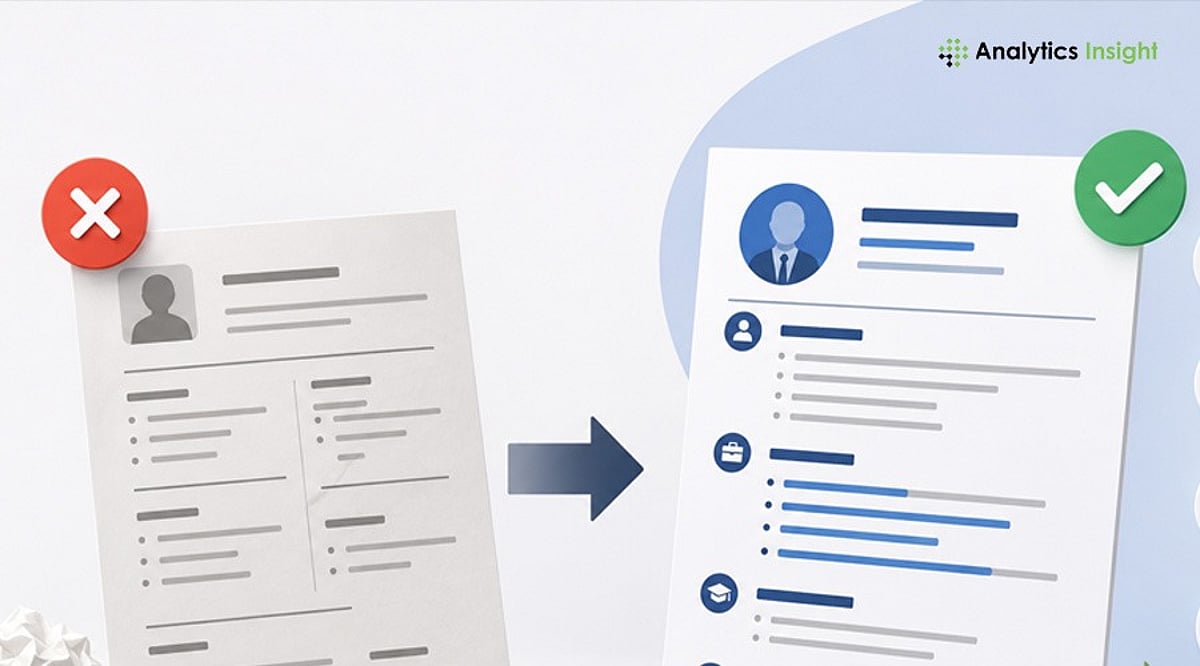
    A good-looking resume isn’t always effective. Overly designed templates with images, icons, tables, or text boxes can confuse ATS software, causing it to skip critical information. Stick with a clean, well-organized layout.

    Follow these formatting rules:

    • Use standard section headings like Work Experience, Skills, and Education.
    • Use a single font style throughout.
    • Avoid headers or footers for contact details.
    • Use bullet points instead of long paragraphs.
    • Upload your resume in the requested file format.

    Achievements Speak Louder Than Responsibilities

    Replace task-oriented statements with achievement-oriented ones. Numbers add context and credibility. For example:

    Instead of: “Accountable for managing social media accounts.”
    Write: “Increased social media engagement rate by 42% within six months.”

    Specify the time or effort saved wherever possible. This helps recruiters gauge your potential impact.

    Tailor Every Application

    Tailoring your resume is no longer optional. Study each job posting to identify required skills, certifications, and experience. Include relevant keywords naturally—overstuffing can trigger red flags even with sophisticated ATS.

    Small Details Make a Big Difference

    Spelling errors, incorrect dates, poor formatting, and overused buzzwords like “excellent” or “outstanding” without evidence can derail an otherwise strong application. Use clear, concise language and strong action verbs such as Led, Developed, Implemented, Designed, and Delivered. Avoid passive phrases like “Responsible for.”

    Quick Fixes That Instantly Strengthen a Resume

    Before submitting, ensure your resume:

    • Aligns with the specific job description.
    • Includes accomplishments wherever possible.
    • Has an ATS-friendly format.
    • Highlights relevant skills.
    • Features a professional summary (not a long objective).
    • Is free of grammar and spelling mistakes.
    • Does not contain unnecessary or outdated information.

    Bottom Line

    A poorly written resume doesn’t mean a weak candidate—it often means the candidate hasn’t presented their achievements, skills, and career path in a way that resonates with recruiters. With ATS screening resumes before they reach human eyes, your resume must do more than list past jobs. Treat it as a marketing tool that highlights your value and the achievements you can bring to a prospective employer.

    Frequently Asked Questions

    1. Why is an ATS-friendly resume important?

    An ATS-friendly resume improves visibility during automated screenings, increasing your chances of reaching recruiters and securing interviews.

    2. How long should a resume ideally be?

    Most professionals should aim for one page. Experienced candidates may use two pages if the additional achievements justify the length.

    3. Should I customize my resume for every job application?

    Yes. Tailoring your resume with relevant keywords and skills improves ATS rankings and shows alignment with the role.

    4. What should I include instead of listing job responsibilities?

    Focus on measurable achievements, quantifiable results, and business impact. Use action verbs to demonstrate value.

    5. How often should I update my resume?

    Update every six months or after significant achievements, certifications, promotions, or role changes to keep it competitive.

  • The Practical Habits That Turn Managers Into Exceptional Leaders

    The Practical Habits That Turn Managers Into Exceptional Leaders

    Great leadership is built through consistent actions rather than authority alone. By fostering trust, encouraging clear communication, empowering teams, and developing sound judgment, managers can transition into effective leaders who inspire growth, improve decision-making, and create resilient, high-performing organizations.

    Leadership Starts with Letting Go of Control

    Most new leaders struggle with the same instinct: the urge to stay close to every decision. It worked when they were individual contributors, however, it breaks down the moment a team grows beyond what one person can personally oversee. Senior executives often describe this as the hardest internal shift to make: trusting a team to arrive at a good decision even if it isn’t the exact decision the leader would have made. The leaders who scale well learn to intervene on outcomes, not on process, and to reserve their attention for the decisions that genuinely need it.

    Clarity is a Leadership Skill, Not a Personality Trait

    Ambiguity is expensive. Teams that don’t know what matters most end up spreading effort thin across too many priorities, and the resulting drop in output is often mistaken for a motivation problem when it’s actually a clarity problem. Effective leaders repeat priorities more often than feels necessary, because what sounds redundant to the person saying it usually lands as reinforcement to the people hearing it. A team that can state its top priority without hesitation is usually being led by someone who has said it out loud, consistently, for weeks.

    Great Leaders Build Judgment, Not Just Output

    A manager measures a team by what gets shipped. A leader measures a team by how well it makes decisions when no one is watching. This distinction matters because leaders cannot scale by staying in every room; they scale by building people who can make the same calls the leader would make, even in their absence. That means investing time in explaining the reasoning behind decisions, not just the decisions themselves, so the thinking becomes transferable rather than dependent on one person.

    Feedback is a System, Not an Event

    Annual reviews and occasional praise are not a substitute for a real feedback culture. The leaders who develop strong teams treat feedback as a routine, not a formality, addressing small issues while they’re still small, and being specific enough that the person receiving it knows exactly what to repeat or change. This requires a level of directness that many new leaders find uncomfortable at first, particularly when it involves someone they consider a friend or a strong performer overall. Avoiding that discomfort tends to cost more in the long run than confronting it early.

    Self-Awareness Separates Good Leaders from Great Ones

    Executives who have led through both growth and crisis often point to the same trait as the one that predicts long-term success: the ability to recognize one’s own blind spots before they become team-wide problems. This includes knowing when a leader’s strength—decisiveness, optimism, attention to detail—has tipped into a liability, such as decisiveness turning into impatience or optimism into denial. Leaders who actively seek out dissenting opinions, rather than surrounding themselves with agreement, tend to catch these blind spots earlier.

    The Best Teams are not Afraid to Speak

    Have you ever sat in a meeting where nobody wanted to say what they were really thinking? That is usually a warning sign. Strong teams are different. People ask questions. They challenge ideas. They share concerns early. This happens because the leader has created an environment where people feel comfortable speaking honestly. Employees should not feel that every mistake will be used against them. When people feel safe sharing ideas, better decisions follow. Many business problems could have been avoided if someone had felt comfortable speaking up sooner.

    Consistency Builds Trust that Titles Cannot

    None of the traits above matter if they show up inconsistently. Teams calibrate their trust in a leader based on patterns, not individual moments—how that person behaves under pressure, in ambiguity, and when a decision doesn’t go their way. A leader who is fair on good days and reactive on bad ones will be remembered for the bad days. The managers who successfully leap into leadership are usually the ones who treat consistency itself as the discipline worth practicing, long before they have the title to prove it.

    Why This Matters

    Leadership directly influences employee engagement, business performance, and organizational culture. Managers who develop strong leadership skills create teams that are more productive, adaptable, and motivated, enabling organizations to navigate change, solve problems effectively, and achieve sustainable long-term success.

    FAQs

    What makes a great leader?

    A great leader inspires trust, communicates clearly, empowers others, and makes thoughtful decisions. Rather than controlling every task, effective leaders develop people, encourage collaboration, and create an environment where employees feel confident, valued, and motivated to perform at their best.

    What is the difference between a manager and a leader?

    Managers primarily focus on planning, organizing, and delivering results, while leaders inspire people, build trust, and shape long-term direction. A strong leader develops future leaders, encourages innovation, and helps teams grow beyond simply completing assigned tasks.

    Why is communication important in leadership?

    Clear communication ensures everyone understands goals, expectations, and priorities. Leaders who communicate consistently reduce confusion, improve teamwork, strengthen accountability, and help employees stay aligned with organizational objectives, resulting in better performance and stronger workplace relationships.

    How can managers develop leadership skills?

    Managers can strengthen leadership skills by practicing active listening, seeking feedback, improving decision-making, mentoring employees, communicating openly, and learning from experienced leaders. Consistent self-improvement and real-world experience are essential for becoming a confident and effective leader.

    How does feedback improve team performance?

    Regular, constructive feedback helps employees understand their strengths and areas for improvement. Timely guidance prevents small issues from becoming larger problems, encourages continuous learning, improves engagement, and creates a culture focused on growth and accountability.

  • Kunal Shah Appointed WhatsApp Global Head: The Entrepreneurial Journey Behind the Meta Move

    Kunal Shah Appointed WhatsApp Global Head: The Entrepreneurial Journey Behind the Meta Move

    Kunal Shah, the Indian entrepreneur who built FreeCharge and CRED, has been appointed as the new global head of WhatsApp by Meta. The move marks a significant milestone for Indian entrepreneurship and signals a growing appetite for founder-led leadership in global technology companies. Alongside the appointment, Meta invested $900 million in CRED, valuing the fintech platform at $4.5 billion.

    From FreeCharge to a Landmark Exit

    Shah co-founded FreeCharge in 2010, a mobile recharge platform that became one of India’s early digital payment successes. In 2015, Snapdeal acquired FreeCharge for roughly $400 million, one of the largest acquisitions in the Indian startup ecosystem at the time. The deal cemented Shah’s reputation as a founder with deep insights into consumer behavior in a market where digital trust was still emerging.

    Building CRED Into a Fintech Powerhouse

    Rather than resting on his first success, Shah launched CRED in 2018 with a unique value proposition: rewarding users who pay their credit card bills on time. The platform quickly evolved into a diversified financial services company covering payments, lending, insurance, and wealth management. Meta’s recent $900 million investment brought CRED’s valuation to $4.5 billion and solidified its position as a key player in India’s fintech landscape.

    The Cold Email That Changed Everything

    According to Bloomberg, Shah’s path to WhatsApp started with a conversation. Meta’s Chief Product Officer, Chris Cox, was seeking perspectives on WhatsApp’s future from entrepreneurs in key markets like India, Brazil, and Mexico. Shah’s vision for the platform impressed Cox enough to turn a discussion into a leadership opportunity. The story underscores how public engagement and industry reputation can open doors that formal applications rarely can.

    Why Meta Chose a Builder, Not a Manager

    Meta CEO Mark Zuckerberg praised Shah for building “one of India’s most important technology companies” and emphasized the “builder mentality” and global perspective the company wanted for WhatsApp’s next phase. The appointment reflects a strategic shift: importing a founder’s product instincts into a business that has struggled to convert its massive scale into commerce and payments revenue, especially in India where WhatsApp Pay lags behind PhonePe and Google Pay.

    Startup Leadership vs. Big Tech Opportunities

    Shah’s move is part of a larger trend in the tech industry where rising AI capabilities and market dynamics force leaders to choose between entrepreneurial ambition and the resources of large tech companies. Industry experts note that WhatsApp’s main challenge is not its user base but monetization beyond business applications. Shah inherits a platform with unparalleled scale but an incomplete recipe for commerce.

    Lessons From Shah’s Journey

    Shah’s career offers clear lessons for entrepreneurs and CXOs: reinvention can be practiced repeatedly. From exiting the payments field to building CRED from scratch and now leading the world’s largest messaging platform, Shah emphasizes maintaining visibility and engagement in the industry regardless of current projects. For executives observing this career move, it illustrates how founder-driven thinking is becoming more valued in top global tech companies.

    Why This Matters

    Kunal Shah’s appointment to lead WhatsApp reflects a broader shift in the technology industry where global companies increasingly value entrepreneurial thinking alongside operational leadership. His journey demonstrates how innovation, resilience, and a deep understanding of consumer behavior can open opportunities beyond startup success. For entrepreneurs, executives, and aspiring founders, his career highlights the growing influence of Indian technology leaders on the global stage.

  • How Leading Companies Are Redefining Leadership Development in 2026

    How Leading Companies Are Redefining Leadership Development in 2026

    The definition of corporate leadership is rapidly evolving. By 2026, organizations are no longer grooming executives simply to deliver quarterly results. Instead, they are cultivating leaders who can drive digital transformation, navigate uncertainty, harness artificial intelligence, and build resilient teams. As technology reshapes every industry, leadership development now revolves around lifelong learning, mentorship, global exposure, and data-driven decision-making.

    Companies that excel in this arena create work environments that encourage experimentation, collaboration, and strategic thinking. Below, we explore how nine of the world’s most influential organizations are setting the benchmark for next-generation leadership.

    Leadership Development Moves Beyond Traditional Training

    The era of classroom-only leadership training is over. Today’s best employers embed learning into daily operations through AI-powered learning platforms, executive coaching, cross-functional projects, and international assignments. Employees gain hands-on experience solving real business problems rather than working through theoretical case studies. Equally important is the renewed emphasis on soft skills: emotional intelligence, adaptability, communication, ethical judgment, and resilience are now as critical as technical expertise.

    Companies Setting the Benchmark

    Microsoft

    Microsoft continues to position itself as a leadership powerhouse by fostering an AI-first workplace culture. Employees have access to advanced learning resources, leadership coaching, and opportunities to collaborate with global teams. The company’s relentless focus on innovation allows individuals to deepen their technical skills while sharpening strategic thinking.

    Amazon

    Amazon’s famous Leadership Principles remain central to employee development. Team members are expected to take ownership, think long term, and make customer-centric decisions. Internal mobility and challenging business assignments help professionals gain the experience needed before stepping into senior leadership roles.

    Alphabet

    Alphabet encourages leadership growth by giving employees autonomy to innovate, experiment, and learn from outcomes. A collaborative culture sparks creative thinking and cross-functional teamwork, even when projects are complex. Exposure to cutting-edge tools and technologies prepares emerging leaders to tackle tough business problems with confidence.

    NVIDIA

    With the rapid rise of AI, NVIDIA has become a hub for technological innovation. Employees work in a fast-paced environment where agility, technical rigor, and continuous learning are paramount. This exposure helps future leaders build strategic decision-making skills in highly competitive markets.

    JPMorgan Chase

    As banking embraces AI and digital modernization, JPMorgan Chase has broadened its leadership development beyond traditional finance. Employees now lead technology-driven initiatives while reinforcing strong risk controls, innovative thinking, and customer-centric judgment.

    Deloitte

    Deloitte’s consulting ecosystem offers professionals ongoing exposure to diverse industries, clients, and real-world business challenges. This breadth sharpens strategic thinking, communication, and problem-solving abilities, making employees well-suited for leadership roles in a changing sector.

    PwC

    PwC invests heavily in structured learning tracks focusing on digital skills, sustainability, and responsible leadership. Employees receive mentoring, certifications, and team-based projects that build the ability to lead transformation efforts effectively.

    EY

    EY emphasizes inclusive leadership and future-ready capabilities. Employees participate in leadership academies, global mobility programs, and innovation-driven assignments, equipping them to manage diverse teams and navigate shifting business environments.

    IBM

    IBM remains a strong supporter of technology leaders. Combining decades of enterprise expertise with ongoing investment in AI, cloud computing, and digital skills, IBM enables employees to develop leadership strengths alongside technical excellence.

    Common Traits Behind Their Success

    Despite operating in different industries, these organizations share several characteristics: a commitment to continuous learning, mentorship, cross-functional collaboration, and real-world problem-solving. They prioritize emotional intelligence and adaptability as much as technical prowess.

    Why This Matters

    For professionals planning long-term careers, choosing the right employer is akin to choosing the right learning environment. Organizations that invest in leadership development offer smoother career progression, stronger mentoring relationships, and more opportunities to lead high-impact initiatives. As AI continues to reshape industries, leadership will depend less on hierarchy and more on adaptability, shared thinking, and a commitment to growth.

    By building these strengths now, companies are not only preparing their teams for the future—they are shaping the next generation of executives who will define the global business landscape.

  • 7 Essential Leadership Skills for Business Success in 2026

    7 Essential Leadership Skills for Business Success in 2026

    Artificial intelligence is transforming workplaces, hybrid teams are becoming the norm, and economic uncertainty continues to test businesses worldwide. In this era, leadership is no longer measured solely by experience and decision-making capabilities. Today’s leaders must keep people engaged, customers satisfied, and the business competitive amid rapid technological change.

    The best business leaders in 2026 combine digital and human skills. They are proficient with technology yet never neglect empathy, ethical values, and innovation. Below are the key leadership skills every business leader needs to thrive.

    1. AI Literacy

    Leaders need to understand how artificial intelligence impacts processes, client communication, and decision-making. Technical expertise isn’t required, but knowing where AI can add value is essential.

    2. Strategic Thinking

    Organizations operate in ever-changing environments. Leaders must analyze market trends, anticipate threats, evaluate opportunities, and make strategic decisions to guide their firms.

    3. Emotional Intelligence

    Self-awareness, empathy, and relationship management are critical. Leaders with high emotional intelligence build effective, resilient teams and foster trust and collaboration.

    4. Adaptability

    The capacity to pivot in response to technological disruptions, regulatory changes, and customer demands is vital. Adaptable leaders embrace change rather than resist it.

    5. Effective Communication

    Clear communication ensures everyone understands organizational goals and priorities. Transparency earns trust and aligns teams toward shared objectives.

    6. Ethical Decision-Making

    Responsible leadership is a competitive advantage. Leaders must ensure technology adoption is ethical, protecting privacy and fairness to maintain reputation and customer trust.

    7. Employee Development

    Today’s leaders act as mentors, not just supervisors. Developing employees improves retention and prepares the workforce for future challenges.

    Why Human Skills Still Matter in the AI Era

    While AI excels at repetitive tasks, it lacks empathy, judgment, ethics, and the ability to inspire. Technology becomes far more productive when guided by leaders who understand people. The ideal combination of automation and emotional intelligence delivers superior results.

    Organizations must also ensure ethical use of AI: considering threats, complying with regulations, protecting private data, and maintaining transparency. Those that fail risk reputation damage and loss of client trust.

    Conclusion

    Leadership in 2026 goes beyond hierarchies. AI literacy alone is insufficient; emotional intelligence, ethics, adaptability, and strategy distinguish great leaders from good managers. Companies that cultivate these attributes will innovate, attract talent, navigate uncertainty, and grow in the digital age.

  • Why ‘Deck Talk’ Is the Biggest Threat to Thought Leadership by 2026

    Why ‘Deck Talk’ Is the Biggest Threat to Thought Leadership by 2026

    In an era where polished presentations dominate corporate communication, the rise of “Deck Talk”—an over-reliance on slick slides and automated content—poses a serious risk to genuine thought leadership. As we approach 2026, professionals must recognize how this trend undermines authentic expertise and meaningful dialogue. Here’s why deck-driven discourse is becoming the biggest challenge to lasting influence.

    The Problem with Deck Talk

    Excessive reliance on polished presentations replaces original thinking, reducing authentic expertise and meaningful conversations across modern workplaces globally. When every leader uses the same templated decks, unique voices are lost.

    AI-generated slides increase content volume but often dilute unique perspectives, making leadership voices appear repetitive and interchangeable to audiences. Automation may save time but sacrifices depth.

    Surface-level insights are common when beautiful slides prioritize aesthetics over substance. This limits deeper analysis, critical thinking, and actionable business recommendations for decision-makers.

    Why Authenticity Matters More

    Authentic storytelling—sharing genuine experiences, failures, and lessons—resonates more effectively than perfectly designed presentation decks packed with generic business frameworks alone.

    Audience fatigue is growing as professionals increasingly disengage from repetitive slide presentations lacking originality, practical value, or meaningful interaction during meetings and conferences worldwide.

    Trust deficits emerge when overproduced presentations lack demonstrated expertise. Audiences question whether leaders truly understand their stated subjects deeply when the focus is on flashy visuals rather than substance.

    A Better Path Forward

    Conversation-led leadership encourages fresh perspectives, collaboration, and stronger engagement than one-way presentation formats dominating corporate communication today.

    Original research—publishing unique insights, case studies, and firsthand data—strengthens credibility far beyond recycled slides or generic AI-generated business content.

    Long-term influence requires consistent expertise, transparent communication, and valuable contributions instead of polished presentation aesthetics alone. True thought leaders invest in substance over style.

  • How AI Is Transforming Jobs, Leadership, and Business Strategy for the Future of Work

    How AI Is Transforming Jobs, Leadership, and Business Strategy for the Future of Work

    Artificial intelligence is reshaping business strategy, workforce planning, and leadership priorities. While many organizations have yet to realize measurable gains from AI, others are seeing significant improvements in productivity and job redesign. This article explores expert insights and the latest research on AI’s growing impact on jobs, business strategy, and the future of work.

    Two Tracks Are Opening — and They’re Pulling in Opposite Directions

    PwC’s research describes a two-track labor market. Some roles are being ‘professionalized’ by AI — made more expert, complex, and valuable. These roles are growing twice as fast as those being ‘democratized,’ made simpler and accessible to less-skilled workers. The wage gap between the two tracks has widened 42% since 2021. For business leaders, the strategic read is uncomfortable: AI is amplifying the gap between high-value and low-value work, not compressing it.

    The most striking data point from PwC: junior roles in the most AI-exposed jobs are now seven times more likely to require skills traditionally associated with senior-level work — leadership, strategic thinking, and stakeholder management. The career ladder is compressing. Entry-level roles in AI-exposed organizations are no longer genuinely entry-level in terms of the demands they entail.

    Why Most Organizations Are Getting Zero Return

    Despite the $40 billion investment in generative AI, 95% of organizations are getting zero return as of 2025. The limiting factor isn’t model quality or access to tools — it’s leadership structure. Microsoft’s Work Trend Index, surveying 20,000 workers across ten countries, found that organizational factors (culture, management support, governance) account for twice the variance in AI impact compared to any individual skill or effort.

    According to the WEF Chief Strategy Officers Dialogue 2026, the future of jobs will be shaped less by technology than by leadership choices — particularly around inclusive reskilling, responsible AI, and the ability to anticipate signals from technology, policy, and labor markets.

    What the Research Actually Agrees On

    BCG’s April 2026 workforce analysis makes a point that cuts through both optimism and alarm: task automation is not the same as job loss. Most roles will remain, but their content will shift substantially. A BCG framework distinguishes between roles where AI absorbs expert tasks (which tends to lower wages and increase employment) versus roles where AI absorbs routine tasks (which tends to raise wages and reduce headcount). The accounting clerk versus inventory clerk comparison illustrates this precisely: both roles saw routine task automation, but accountants saw wages rise and headcount fall, while inventory clerks saw wages fall and headcount grow.

    The implication for strategy: organizations that treat AI as a simple automation question — ‘what can we eliminate?’ — will get the wrong answer. The correct question, which MIT researchers frame explicitly, is whether a given task should be automated at all — and what happens to the expertise level of the remaining work if it is.

    Where the Leadership Gap Actually Sits

    Only 26% of AI users surveyed by Microsoft said their leadership is clearly aligned on AI strategy. That statistic has stayed roughly constant for two years. Leadership teams that talk about AI in strategy documents but haven’t changed performance metrics, incentive structures, or onboarding programs are experiencing what Microsoft calls the Transformation Paradox: employees ready to work differently, inside systems still rewarding the old way.

    The WEF’s blueprint is blunt on what closes this gap: connecting strategy to skills, shifting from services to IP-led value creation, and redesigning work so people and AI perform together. The organizations getting results aren’t treating AI as a cost-cutting project. They’re treating it as a capability redesign — and building the human skills that make the AI capabilities worth having.

    Why This Matters

    Artificial intelligence is no longer just a technology initiative — it has become a business transformation priority. Leaders who successfully integrate AI into strategy, talent development, and operations will be better positioned to improve productivity, strengthen competitiveness, and prepare their organizations for the evolving future of work.

    Frequently Asked Questions

    How is artificial intelligence changing the future of work?

    Artificial intelligence is changing the nature of work by automating repetitive tasks, supporting better decision-making, and increasing demand for skills such as leadership, creativity, and critical thinking. Most experts believe AI will redesign jobs rather than replace them entirely, requiring continuous learning and workforce adaptation.

    Will AI replace jobs or create new opportunities?

    Current research suggests AI is more likely to transform existing roles than eliminate them. While certain routine tasks may be automated, organizations are also creating new positions focused on AI management, governance, data analysis, and human-AI collaboration, resulting in evolving career opportunities.

    What skills will become more valuable in an AI-driven workplace?

    Leadership, communication, strategic thinking, creativity, emotional intelligence, problem-solving, and collaboration are becoming increasingly valuable. As AI automates routine work, employees who can make complex decisions, manage teams, and apply human judgment will become even more important to organizations.

    How should business leaders prepare their workforce for AI?

    Business leaders should invest in continuous learning, reskilling programs, responsible AI governance, and organizational change management. Preparing employees to work alongside AI technologies helps improve productivity while ensuring businesses remain competitive as technology continues to evolve rapidly.

    What industries are experiencing the biggest impact from AI?

    Industries including finance, healthcare, manufacturing, retail, customer service, technology, and professional services are experiencing significant AI-driven transformation. These sectors are using AI to improve operational efficiency, automate repetitive tasks, enhance customer experiences, and support better business decisions.

  • 10 Must-Watch TED Talks for Students to Build Leadership Skills and Confidence

    10 Must-Watch TED Talks for Students to Build Leadership Skills and Confidence

    Most leadership advice aimed at students is either too vague to act on or too corporate to feel relevant when you’re juggling group projects and student council elections, not boardrooms. These ten TED Talks are different—short enough to watch between classes, specific enough to use the same week, and popular enough that their core ideas have shaped how an entire generation thinks about leading without a title.

    Start With Why You’re Doing It

    Simon Sinek’s “How Great Leaders Inspire Action” is the obvious starting point, and it’s earned that spot with close to 61 million views. Built around his “Golden Circle” idea—people don’t follow what you do; they follow why you do it—this talk reframes everything for a student leading a club or a project: explain your purpose before your plan, and people commit harder.

    Confidence is Partly a Skill, Not Just a Trait

    Amy Cuddy’s “Your Body Language May Shape Who You Are” remains one of the most-watched TED talks of all time, with around 67 million views. She argues that posture before a high-stakes moment can shift how confident you actually feel. While some of Cuddy’s original “power posing” findings have faced reproducibility questions, which she’s acknowledged directly, the talk is still genuinely useful as a confidence ritual before a presentation—treat it as a psychological warm-up, not settled science.

    Vulnerability and Persistence Aren’t Opposites of Strength

    Brené Brown’s “The Power of Vulnerability” (around 60 million views) makes the case that admitting uncertainty builds more trust than projecting false certainty ever does—a genuinely counterintuitive lesson for students who think leadership means never looking unsure. Angela Duckworth’s “Grit” (29 million views) pairs naturally with it: her research found that passion sustained over years, not raw talent, predicts who actually finishes what they start.

    All Ten, At a Glance

    Here’s a quick overview of the remaining talks:

    • Simon Sinek (second entry): “Why Good Leaders Make You Feel Safe” argues that trust outperforms authority—useful for any student suddenly put in charge of peers.
    • Dan Pink: “The Puzzle of Motivation” shows that autonomy and purpose drive people harder than rewards do, which matters when you’re trying to motivate a team that isn’t getting paid.
    • Julian Treasure: “How to Speak So That People Want to Listen” offers practical communication techniques.
    • Susan Cain: “The Power of Introverts” makes a compelling case for introverted leadership, pushing back against the assumption that leaders must be the loudest person in the room.
    • Carol Dweck: Her talk on growth mindset reveals how believing you can improve fuels resilience and success.
    • Sheryl Sandberg: “Why We Have Too Few Women Leaders” addresses structural barriers and encourages all students to lean into challenges.

    How to Actually Use These Talks

    Watching ten talks back to back changes nothing by itself. Pick one a week. After each, write down one sentence: what would I do differently in my next group project, presentation, or club meeting because of this? That single habit—turning a 15-minute talk into one specific behavior change—is what separates students who genuinely build leadership skills from those who just collect inspiring video recommendations.

    Why This Matters

    Leadership skills begin developing long before entering the workplace. By learning from experienced leaders, researchers, and educators, students can build confidence, communicate more effectively, motivate teams, and develop resilience. These skills not only improve academic performance but also prepare students for internships, higher education, and future professional success.

  • 10 Proven Leadership Strategies to Enhance Your Professional Impact

    10 Proven Leadership Strategies to Enhance Your Professional Impact

    Leadership is not defined by authority or title. In today’s fast-changing business environment—shaped by artificial intelligence, hybrid work models, and shifting employee expectations—effective leadership has become a dynamic art. Research consistently shows that interpersonal skills such as communication, emotional intelligence, adaptability, and strategic thinking are as critical as technical expertise. Emotionally intelligent leaders foster productive, team-oriented cultures and build stronger relationships. Whether you are a new manager, an entrepreneur, or a seasoned executive, honing these skills will sharpen your decision-making and amplify your influence.

    10 Strategies to Develop Your Leadership Skills

    Here are ten actionable ways to become a more effective leader, strengthen communication, improve decision-making, and build high-performing teams.

    1. Build Self-Awareness

    Self-awareness is the foundation of leadership. Understanding your strengths, weaknesses, values, and leadership style guides better decisions. Regular self-evaluation and seeking honest feedback help identify blind spots, boosting confidence and credibility. Self-awareness is the cornerstone of emotional intelligence and authentic leadership.

    2. Hone Communication Skills

    Clear communication creates harmony and trust within a team. A great leader articulates expectations, listens actively, encourages open dialogue, and delivers constructive feedback. Strong communication fosters collaboration across departments and prevents misunderstandings.

    3. Develop Emotional Intelligence

    Emotional intelligence (EQ) enables leaders to manage their own emotions and empathize with others. High-EQ leaders handle conflicts gracefully, motivate employees, and cultivate a positive work environment. Numerous studies confirm the direct link between EQ and leadership effectiveness.

    4. Learn to Delegate Effectively

    No leader can do everything alone. Delegating tasks based on team members’ strengths boosts productivity, develops their skills, and frees up your time for strategic thinking. Trusting your team with responsibility empowers them and builds ownership.

    5. Improve Decision-Making

    Leaders frequently face tough choices that affect their teams and organizations. Strong decision-makers evaluate data, weigh risks, consider multiple perspectives, and remain objective. Practice gathering diverse input before making high-stakes decisions.

    6. Pursue Continuous Education

    Leadership is a lifelong learning journey. Technological advances, market shifts, and workforce trends require constant updating. Read books, attend workshops, enroll in executive training, or seek mentorship to stay ahead.

    7. Set an Example

    Actions speak louder than words. Leaders who demonstrate integrity, accountability, professionalism, and resilience inspire their teams to follow suit. Consistent ethical behavior builds trust and reliability across the organization.

    8. Master Conflict Resolution

    Disagreements are inevitable in any workplace. An effective leader addresses conflicts early, remains objective, listens empathetically, and focuses on solutions. This preserves team harmony and strengthens relationships.

    9. Develop Your Team

    Investing in your team’s growth pays dividends. Mentoring, coaching, training, and recognizing achievements motivate employees and boost loyalty. Well-developed teams are more creative, productive, and engaged.

    10. Be Flexible

    Modern organizations face constant change from technology, economics, and global competition. Flexible leaders adapt quickly, innovate when necessary, and remain open to new strategies—even when old approaches fail.

    Conclusion

    Leadership is a continuous process, not a final destination. By cultivating self-awareness, emotional intelligence, communication, adaptability, and decision-making, leaders can build effective teams and drive business success. While leadership styles vary, they all share a common thread: commitment to self-development and the growth of others. Investing in leadership skills is one of the most valuable investments you can make in today’s world.

    Why This Matters

    Strong leadership leads to better teamwork, faster decision-making, higher employee engagement, and sustained business growth. Developing these skills helps professionals navigate change, inspire confidence, and deliver consistent results in any workplace.

  • Narayan Iyer Named Managing Director and Chair of Randstad India Management Council

    Narayan Iyer Named Managing Director and Chair of Randstad India Management Council

    Bengaluru, 29 June 2026 – Randstad India, the country’s and world’s leading talent company, today announced the appointment of Narayan Iyer as its new Managing Director for India and Chair of the Randstad India Management Council. He will lead all four Randstad specializations – Operational, Professional, Digital and Enterprise – in India and have indirect responsibility for Randstad’s three India-based shared service centers.

    Narayan brings more than three decades of diversified expertise and leadership in the IT services and consulting industry, having most recently served as the President of Bajaj Technology Services, the Technology Business Unit of Bajaj Finserv Direct Limited. Narayan will be responsible for driving Randstad India’s next phase of growth, sharpening its digital-first capabilities, and strengthening the company’s position as the partner for talent across India.

    Myriam Beatove Moreale, Executive Board Member, Randstad said: “We are pleased to welcome Narayan Iyer as the Managing Director of Randstad India. He has a strong track record of driving growth for large-scale enterprises and leading strong teams across global markets. His IT and digital experience will be vital as we accelerate the implementation of our Partner for Talent strategy. We also extend our deepest gratitude to Vishy (Viswanath PS) for his exceptional service over the past 12 years. His leadership and passion for our business have created the strong foundation we stand on today.”

    Narayan Iyer, Managing Director, Randstad India and Chair of the India Management Council, added: “The Indian talent ecosystem is undergoing an exciting transformation, driven by rapid technological advancements and evolving workforce expectations. I am thrilled to join Randstad at this pivotal juncture. By leveraging our deep industry specializations and accelerating our digital capabilities, we will continue to deliver scalable, high-impact talent solutions and anchor India’s position as a premier global talent destination.”

    For over 30 years, Randstad has been a leading force in the Indian talent ecosystem. Randstad India is committed to providing equitable opportunities to people from all backgrounds and helping them remain relevant in the rapidly changing world of work. The organization has a deep understanding of the labour market to help clients create high-quality, diverse, and agile workforces they need to succeed. In the process, the organization helps talent secure meaningful roles, develop relevant skills, and find purpose and belonging in their workplace.

    About Randstad

    Randstad is the world’s leading talent company with the vision to be the world’s most equitable and specialized talent company. We are a partner of choice for talent and clients. We have a deep understanding of the labor market and through our four specializations – Operational, Professional, Digital and Enterprise – help our clients create the high-quality, diverse and agile workforces they need to succeed. We are committed to providing equitable opportunities to people from all backgrounds and help them remain relevant in the rapidly changing world of work. Through the value we create, we are committed to making the world of work better for all. Headquartered in the Netherlands, Randstad operates in 39 markets and has approximately 38,000 employees. In 2025, we supported nearly 150,000 clients and over 1.7 million talent, generating a revenue of €23.1 billion. Randstad N.V. is listed on the Euronext Amsterdam. For more information, see www.randstad.com.

    Media Contact:
    Manjulakshmi: manjulakshmi.p@randstad.in
    Arnab Ray: arnab.ray@randstad.in
    Tanima Das: tanima.das@adfactorspr.com
    Dwaipayan Gupta: dwaipayan.gupta@adfactorspr.com