Category: Leadership

  • How to Outsource Marketing Successfully: A Strategic Blueprint for Modern Brands

    How to Outsource Marketing Successfully: A Strategic Blueprint for Modern Brands

    Consider a medium-sized firm facing declining sales through conventional means, whereas online sales are rising. To cope with this change, outsourcing marketing can be a strategic move rather than forming an internal department. Ten years ago, traditional methods like print ads were sufficient for reaching older demographics. However, according to Forbes, consumers aged 65 and above now greatly favor online shopping. Additionally, Insider Intelligence estimates that global revenue through online business will reach $54.01 billion by 2026.

    This data underscores one critical fact: having a digital presence is imperative. When faced with high customer demands, the initial reaction often involves recruiting staff to build a department. This approach is highly costly, both financially and in terms of diverting attention from core business activities. External expertise offers a cost-effective solution and helps companies remain competitive by providing modern tools.

    Why Modern Brands Rely on External Teams

    Many executives assume that keeping every core function in-house is the safest path to growth, but the reality of modern digital commerce tells a different story. A strong internet presence has shifted from a nice bonus to an absolute requirement for survival. With worldwide e-commerce projected to hit $54.01 billion by 2026, and older consumers increasingly shopping online, companies must update their digital strategies. Assembling and maintaining a complete internal staff frequently proves inefficient, creating massive operating costs that pull attention away from core goals. Choosing to outsource marketing provides a budget-friendly way to expand capabilities, utilize new technology, and stay competitive while keeping internal expenses low.

    Defining the Boundaries of External Marketing Support

    The average corporate hiring process now takes 36 days, according to the Society for Human Resource Management. This delay is a major roadblock for growing companies. Instead of enduring this sluggish recruitment cycle, companies can shift advertising duties to an outside provider. When you outsource marketing, you essentially rent a complete group of experts under a monthly fee structure rather than a traditional payroll system. This bypasses the heavy burdens of finding, training, and supervising permanent staff.

    Moving Beyond Simple Project Execution

    A standard agency often handles isolated tasks or single deliverables. However, an external department operates differently. These professionals integrate deeply into daily operations, attend internal meetings, and learn the unique details of the business. Their main goal is sustained expansion over time. This relationship is a true partnership, not a simple vendor transaction.

    Flexible Structures for Outside Help

    Several adaptable structures exist to fit different corporate needs. First, you can hand over every promotional duty to a fractional group, acting as a complete department replacement. Alternatively, you might only need specialized skills to cover internal weaknesses, such as SEO, video creation, or email campaigns. Finally, a blended approach works well for many organizations, where outside strategists collaborate directly with current employees to balance the daily workload while providing high-level guidance.

    Range of Available Capabilities

    An external partner brings a massive variety of skills, including comprehensive strategy planning, data tracking, performance reviews, digital advertising, SEO, website building, user experience improvements, content creation (blogs, white papers, videos), social media management, automated email sequences, and digital public relations with influencers.

    Signs You Need an External Marketing Partner

    Recognizing Employee Burnout

    Are your current promotional efforts driving revenue or just draining resources? Many companies struggle to answer this because workers are stretched too thin. A single person might try to manage customer support, daily operations, and promotional campaigns simultaneously, leading to erratic execution and ignoring long-term planning. Superside reports that 76% of internal departments feel overcommitted. Outsourcing marketing to dedicated professionals prevents staff exhaustion and lets internal employees focus on primary duties.

    Flat Growth and Poor Returns

    Organizations sometimes invest massive amounts into promotional activities without seeing real payoff—flat website traffic, weak lead generation, or stagnant sales. These outcomes indicate that existing approaches don’t work. An outside agency brings a fresh, unbiased viewpoint and the specific technical abilities to identify flaws in the current setup, stimulating genuine commercial expansion.

    Managing Turnover and Skill Shortages

    The loss of a key promotional director can bring everything to a stop, leading to inconsistency and loss of institutional memory. Hiring an external firm provides an immediate premium solution. This is also valuable during transitions, such as marketing a new product in an unknown area where in-house expertise is lacking.

    Strategic Benefits of Choosing External Teams Over Internal Hires

    Building every capability internally often traps companies in a cycle of expensive hiring mistakes, causing financial drain and slow execution. Outsourcing marketing bypasses these burdens and unlocks distinct advantages.

    Uncovering the True Expenses of Employee Recruitment

    A basic salary represents only a fraction of an employee’s actual cost. Internal hires also require recruitment agency fees, training programs, benefits, National Insurance contributions, physical workspace, software licenses, equipment, and turnover costs. These fixed obligations accumulate faster than most leaders anticipate.

    Moving Faster and Adapting to Market Changes

    Waiting months for a new hire to serve notice or complete onboarding slows progress. External agencies maintain high momentum from day one, arriving with established workflows, premium tools, and proven templates. This readiness allows rapid campaign launches and the ability to test fresh concepts and adjust tactics instantly based on real-time data.

    Gaining Immediate Access to Specialized Professionals

    It’s rare to find one person who masters every aspect of modern digital promotion. Partnering with an external provider instantly gains a diverse group of specialists, including CMOs, strategic directors, designers, and developers—all for roughly the same price as a single mid-level staff member. You pay for elite, specialized knowledge exactly when projects require it.

    Navigating Common Worries About External Partnerships

    Maintaining Authority Over Daily Operations

    Bringing in outside help doesn’t require surrendering leadership. You still dictate the broader vision and authorize major initiatives. The external group carries out the planned strategy. To keep the agency aligned, establish specific performance metrics, schedule routine progress meetings, and clarify mutual standards from the start.

    Solving the Niche Knowledge Problem

    Company executives often doubt whether an outside firm can grasp specific market nuances. This hesitation can be resolved through a thorough initial training phase. External specialists manage campaigns across many sectors, allowing them to introduce innovative concepts and an unbiased perspective that internal staff might overlook.

    Finding the Ideal External Marketing Partner

    Setting Clear Goals and Boundaries

    All good partnerships begin with self-knowledge. Before contacting a firm, know precisely what your company needs—whether it’s an overall strategic rethinking or help with certain everyday activities. Define present needs and future goals, and come up with a way to judge performance. Asking for a detailed assessment when needs aren’t entirely clear is always helpful.

    Crucial Questions for Prospective Vendors

    During evaluation, ask about specific industry expertise, request relevant case studies, understand client onboarding procedures, know who will manage your account, inquire about software platforms used, and understand meeting frequency and tracked metrics.

    Spotting Positive and Negative Indicators

    Positive traits include absolute transparency on pricing and workflow, a tailor-made solution, and solid experience with testimonials. Watch out for vendors who promise quick results.

    How We Ensure Success With External Agencies

    Stepping back completely guarantees failure. To truly benefit from an outsourced marketing arrangement, actively integrate these professionals into your operations.

    Providing Deep Context During Onboarding

    Deliver a thorough introduction to your business, including messaging structures, visual identity rules, historical performance data, and detailed competitor research.

    Setting Rules for Collaboration

    Outline exactly who handles which tasks, agree on deadlines, major project phases, and final outputs. Schedule consistent check-ins to ensure the outside firm operates like a genuine part of your staff.

    Monitoring Performance and Financial Returns

    Define precise success metrics and track essential figures like website visitor volume, prospect quality, sales conversion percentages, and total project profitability to ensure your financial commitment produces measurable business value.

    Understanding the Costs of External Partnerships

    Comprehensive support like fractional executive leadership typically requires a monthly investment of $8,000 to $15,000 or more. This is highly efficient because it delivers an entire department’s power for less than direct hiring. For narrower goals, you might spend $2,000 to $6,000 monthly on targeted SEO or content projects. This flexible pricing lets you adjust spending as business needs shift.

    Deciding Your Next Steps for External Growth

    By outsourcing, you get an extremely flexible, cost-effective solution with access to high-end specialists, powerful software, and quick campaign deployment. Maximize reach and boost income through proper agency selection, strict criteria, and clear communication lines. This saves you from the huge costs of hiring employees. Ultimately, assess how much you can rely on your employees and what kind of return on investment you currently have.

  • How Stock Incentives Drive $200 Million CEO Paydays: Inside the Debate Over Executive Compensation

    How Stock Incentives Drive $200 Million CEO Paydays: Inside the Debate Over Executive Compensation

    The debate over executive compensation has intensified as CEO pay packages continue to hit unprecedented levels. Across the United States, a handful of corporate leaders are earning compensation worth more than $200 million annually, driven largely by stock awards and long-term performance incentives. However, while firms argue that these compensation packages align executives’ and shareholders’ interests, many people wonder whether such remuneration is reasonable, given income disparities and the need to reduce labor costs.

    These days, the world’s highest-paid chief executives are not earning large salaries. Rather, they earn money through a complex compensation system that depends on the company’s growth expectations and its market capitalization performance.

    Stock Awards Drive Billion-Dollar Wealth

    Executive compensation has changed significantly over the last decade. The trend is toward replacing fixed pay with equity compensation, which may be highly rewarded through increased value in the event of strong share performance.

    Performance Share Units (PSU), Restricted Stock Units (RSU), stock options, and long-term incentive programs are the main methods of executive compensation today. They pay the CEO not for financial success but for creating value for the shareholders.

    Such a method results in very large compensation, exceeding $200 million per year, especially for technology, media, and manufacturing companies in fast-growing markets.

    The CEOs Leading the Pay Rankings

    Several corporate leaders have topped global compensation charts in recent years.

    Hock Tan, Broadcom

    The CEO of Broadcom is known to be one of the highest-paid CEOs in the world. The pay packets he receives have always exceeded $200 million due to stock awards tied to high revenues and returns on shareholder investments. With Hock Tan’s guidance, Broadcom has become the world’s most valuable semiconductor company.

    Tim Cook, Apple

    The CEO of Apple, Tim Cook, is another example of a highly paid executive who occasionally earns more than $200 million due to the vesting of long-term stock awards. While he receives a relatively modest salary, the significant reward comes from equity awards linked to Apple’s performance.

    Nikesh Arora, Palo Alto Networks

    The cybersecurity firm Palo Alto Networks has one of the most expensive compensation packages for its CEO, Nikesh Arora. His earnings were mainly linked to the stocks he received for growth in the cybersecurity industry.

    David Zaslav, Warner Bros. Discovery

    David Zaslav, the media executive, is known for having an expensive compensation package, worth hundreds of millions of dollars, despite the company’s restructuring, layoffs, and cuts in content production budgets.

    Why Boards Approve Massive Compensation

    Boards have claimed that outstanding leadership provides immense value for stakeholders. A chief executive officer who can provide tens of billions of dollars of market capitalization can deserve a pay package of a few hundred million dollars.

    There has also been increased competition for seasoned managers. Organizations fear losing talented leadership to competitors, especially in sectors such as technology, artificial intelligence, medicine, and finance.

    The performance-based pay system enables the board to protect the generous pay by emphasizing that managers will earn their compensation through shareholder benefits.

    Growing Shareholder Pushback

    However, despite all the above-mentioned arguments, executive remuneration is being increasingly scrutinized. Institutional shareholders have become more inclined to vote down executive remuneration schemes deemed excessively generous in ‘Say on Pay’ votes. Even proxy advisors have recommended reviewing executive incentives that seem out of touch with financial results.

    Furthermore, employee organizations have continued to raise doubts about the growing disparity between CEOs’ earnings and those of ordinary workers. Nowadays, in many multinational companies, a CEO’s earnings are several hundred times those of an average employee.

    The criticism becomes particularly sharp when companies announce layoffs, cost reductions, or weak financial results while awarding executives record compensation.

    Global Trend Beyond Silicon Valley

    Although US executives dominate the highest-paid rankings, generous compensation packages are increasingly appearing worldwide. Companies in Europe and Asia have adopted performance-based equity incentives slowly to attract talented people from around the world.

    On the other hand, regulations are tighter outside the United States because many countries require increased transparency, shareholder approval, and disclosure of CEO-worker compensation ratios.

    Future of Executive Compensation

    AI, digitalization, and semiconductor revolutions are transforming corporate leadership goals. As competition within such spheres intensifies, companies need to offer generous compensation packages to attract top-notch executives.

    However, there is also a demand for accountability. In the future, reward packages will be designed based on corporate success and shareholders’ interests.

    The issue of $200 million paychecks for CEOs is not going away any time soon. While their advocates see such compensation programs as a way of investing in outstanding leadership that will deliver billions in value to the company, their opponents interpret them as a sign of economic inequality.

    Why This Matters

    Executive pay reflects corporate priorities, investor confidence, and governance standards. As CEO compensation reaches record highs, the debate over fairness, accountability, and the widening gap between executives and employees grows stronger.

  • Why Adaptive Leadership Is the Key to Business Survival in 2026

    Why Adaptive Leadership Is the Key to Business Survival in 2026

    Adaptive leadership has become a critical business capability in 2026 as organizations navigate AI disruption, economic uncertainty, workforce transformation, and rapidly changing market conditions. Unlike traditional leadership models that rely on fixed plans and hierarchical decision-making, adaptive leadership emphasizes learning, agility, trust, and informed judgment. Leaders who can respond effectively to evolving challenges, align teams during uncertainty, and make decisions with incomplete information are better positioned to drive long-term business success.

    Executive coaching programs are reporting a strange pattern this year. Leaders arrive wanting certainty: a clear answer, a fixed plan, a five-year strategy they can defend at the board level. Most of them leave wanting something different: a faster way to learn when the plan breaks. That shift, from certainty-seeking to learning-seeking, is the actual story behind adaptive leadership now.

    The term itself is not new. Ronald Heifetz and Marty Linsky developed adaptive leadership at Harvard decades ago, building on a specific distinction: technical problems have known solutions that you can delegate to an expert, while adaptive challenges require the people facing the problem to change how they think and work. What has changed is not the framework. It is how badly organizations are failing to apply it, at exactly the moment they need it most.

    The Problem Isn’t Information. It’s Attention.

    Most executives are not short on data now. They are short on the mental space to use it well. Research from Microsoft and the University of London found that constant digital interruptions can reduce effective IQ in the moment by 10 to 15 points, roughly equivalent to functioning on no sleep. Layer that onto a senior leader’s week and the math gets uncomfortable fast: Harvard Business School research shows executives spend up to 23 hours a week in meetings, and rate more than half of that time as low-value.

    This is not a productivity complaint. It is a leadership capability problem. Adaptive leadership depends on judgment, noticing what’s changed, naming the real problem before reaching for a familiar fix. That judgment requires attention; most leaders’ calendars are actively stripping away from them, one recurring meeting at a time.

    Why AI Is Exposing Leadership Gaps, Not Closing Them

    Half of CEOs reportedly believe their jobs are on the line if AI does not deliver a return, and companies plan to roughly double AI spending as a share of revenue this year. That pressure is producing a predictable but telling gap: frontline leaders are three times more likely than executives to express real concern about AI, according to DDI’s research; a readiness divide that stalls transformation precisely where it needs traction most, on the ground, not in the boardroom.

    As AI takes on more routine execution and analysis, the actual value a leader provides shifts upstream toward judgment, not authority. A better model does not rescue a leader who cannot adapt their thinking. They get exposed by one, faster than they would have been five years ago.

    What Adaptive Leadership Actually Requires

    Strip away the conference-circuit language, and the practical requirements are fairly specific. A 20,000-executive study from Wharton researchers identified six concrete skills that separate leaders who navigate uncertainty well from those who don’t: the ability to anticipate, challenge assumptions, interpret ambiguous signals, decide without full information, align people around a direction, and learn fast from what goes wrong.

    None of those six is about technology fluency. They are about judgment under incomplete information, which is precisely the skill traditional, hierarchy-based leadership models were never built to develop, because they assumed someone above you already had the answer.

    The Trust Gap Sitting Underneath All of This

    Adaptive leadership cannot function without trust, and current data suggests that trust is thin. Only one in ten employees believes their feedback ever leads to visible action, a gap that quietly tells teams their input doesn’t matter, regardless of what’s said in town halls. More than half of leaders globally report feeling “used up” by the end of an average day, and DDI’s research names this pattern “quiet cracking,” a slow erosion of motivation that looks fine on the surface until performance drops without warning.

    That combination of exhausted leaders, unconvinced employees, and AI pressure compounding both is the real 2026 leadership environment. Adaptive leadership is not a competitive advantage layered on top of business as usual. For a growing number of organizations, it is the only model left standing once the certainty-based one stops working.

    Why It Matters

    Organizations today are facing challenges that cannot be solved through traditional management practices alone. AI, shifting market conditions, changing workforce expectations, and global economic uncertainty require leaders to make decisions without having complete information. In this environment, the ability to learn quickly and adapt becomes more valuable than the ability to predict every outcome. Adaptive leadership helps businesses respond faster to emerging risks, identify opportunities earlier, and build stronger trust across teams. It encourages continuous learning, open communication, and greater organizational flexibility. Companies led by adaptive leaders are often better equipped to manage transformation initiatives, navigate disruption, and maintain employee engagement during periods of change.

  • Ishan Technologies Names Saibal Roy as COO to Drive Operational Excellence and Enterprise Growth

    Ishan Technologies Names Saibal Roy as COO to Drive Operational Excellence and Enterprise Growth

    Ishan Technologies, a leading pan-India ICT and digital infrastructure provider, has appointed Mr. Saibal Roy as its Chief Operating Officer. The move strengthens the company’s leadership as it expands its digital infrastructure capabilities and enhances operational excellence.

    About Saibal Roy

    Mr. Roy is a seasoned enterprise leader with over three decades of experience in India’s ICT and telecommunications industry. He has led large-scale businesses, developed successful go-to-market strategies, and built high-performing teams across complex and competitive markets.

    During his nearly 14-year tenure at Bharti Airtel, he held leadership roles across Government Business, Enterprise Business, and Carrier Wholesale, driving sustained growth in each segment. Prior to joining Ishan Technologies, he served as India Vertical Head for Manufacturing, Retail, and Distribution at ServiceNow India. His career also includes leadership positions at Tata Communications, HFCL, and Tulip Telecom, giving him deep expertise in enterprise connectivity, digital transformation, and customer-centric growth. He holds a bachelor’s degree in Electronics Engineering and is an alumnus of ISB Hyderabad and INSEAD Fontainebleau.

    Leadership Perspectives

    Commenting on the appointment, Mrs. Purvi Kotecha, Director of Ishan Technologies, said: “Over the past 25 years, we have built a business that our customers trust. As we continue to grow, strengthening our operational capabilities becomes increasingly important. Saibal brings extensive leadership experience, a deep understanding of the enterprise technology landscape, and a proven ability to build scalable organisations. We are confident that his expertise will play a significant role in supporting Ishan Technologies’ next phase of growth.”

    Mr. Saibal Roy, Chief Operating Officer, Ishan Technologies, added: “Ishan Technologies has built a strong reputation through its customer-first approach, robust digital infrastructure, and deep market understanding. I look forward to working with the team to further strengthen operational excellence and build capabilities that support the company’s long-term growth ambitions.”

    About Ishan Technologies

    Founded in 2000, Ishan Technologies is a leading ICT company with a strong pan-India presence, enabling organisations to build and scale digital infrastructure for the AI era. The company delivers integrated solutions across network connectivity, data centre services, cloud, and AI-ready digital platforms, serving enterprises, government institutions, and retail customers. With over 25 years of expertise, Ishan Technologies is committed to building secure, scalable, and sovereign digital ecosystems that power India’s next phase of digital and AI growth.

    For more information, visit: www.ishantechnologies.com

  • MIT Administration Updates: Governance, Appointments, and Strategic News

    MIT Administration Updates: Governance, Appointments, and Strategic News

    MIT’s administration encompasses the governance, leadership appointments, and institutional strategies that drive the Institute forward. The following are key highlights from recent MIT News coverage on the administration topic, covering board elections, faculty hires, financial reports, and the evolving role of science and education.

    • MIT Corporation elects 10 term members, two life members for 2026 – The term members will each serve five years on MIT’s board of trustees. (May 28, 2026)
    • 3Q: Why science is curiosity on a mission – VP for Communications Alfred Ironside describes how a new initiative from MIT seeks to remind Americans of the value and power of curiosity-driven research. (May 14, 2026)
    • Q&A: MIT SHASS and the future of education in the age of AI – As the School of Humanities, Arts, and Social Sciences marks 75 years, Dean Agustín Rayo reflects on how AI is reshaping higher education and why SHASS disciplines continue to be central to MIT’s mission. (April 14, 2026)
    • Desirée Plata appointed associate dean of engineering – Faculty member in civil and environmental engineering will advance research and entrepreneurial initiatives across the School of Engineering. (April 8, 2026)
    • The strength of “infinite hope” – MIT Dean of Engineering Paula Hammond keynotes the 52nd MLK Celebration, with a message of resilience and determination. (February 17, 2026)
    • Maria Yang named vice provost for faculty – Design leader brings extensive interdisciplinary track record to key role supporting faculty across the Institute. (February 12, 2026)
    • Brian Hedden named co-associate dean of Social and Ethical Responsibilities of Computing – He joins Nikos Trichakis in guiding the cross-cutting initiative of the MIT Schwarzman College of Computing. (February 4, 2026)
    • Keeril Makan named vice provost for the arts – An acclaimed composer and longtime MIT faculty member, Makan will direct the next act in MIT’s story of artistic leadership. (January 28, 2026)
    • MIT in the media: 2025 in review – MIT community members made headlines with key research advances and their efforts to tackle pressing challenges. (December 22, 2025)
    • MIT community in 2025: A year in review – Top stories highlighted the Institute’s leading positions in world and national rankings; new collaboratives tackling manufacturing, generative AI, and quantum; how one professor influenced hundreds of thousands of students around the world; and more. (December 22, 2025)
    • NIH Director Jay Bhattacharya visits MIT – In a conversation with Rep. Jake Auchincloss, Bhattacharya focused on the agency’s policy goals and funding practices. (December 8, 2025)
    • Paula Hammond named dean of the School of Engineering – A chemical engineer who now serves as executive vice provost, Hammond will succeed Anantha Chandrakasan. (December 5, 2025)
    • MIT releases financials and endowment figures for 2025 – The Institute’s pooled investments returned 14.8 percent last year; endowment stands at $27.4 billion. (October 10, 2025)
    • At convocation, President Kornbluth greets the Class of 2029 – “We believe in all of you,” MIT’s president said at the welcoming ceremony for new undergraduates. (August 25, 2025)
    • Marcus Stergio named ombudsperson – Offering confidential, impartial support, the Ombuds Office helps faculty, students, and staff resolve issues affecting their work and studies at MIT. (August 22, 2025)

    For the most recent administration news, visit the MIT News Administration topic page.

  • Jinhua Zhao Appointed Lead of MIT’s Urban Studies and Planning Department

    Jinhua Zhao Appointed Lead of MIT’s Urban Studies and Planning Department

    Jinhua Zhao MCP ’04, SM ’04, PhD ’09, a renowned transportation planner and educator, has been appointed head of the Department of Urban Studies and Planning (DUSP) at MIT, effective July 1. Zhao, the Class of 1941 Professor of Cities and Transportation, brings deep expertise in behavioral science and transportation, combined with artificial intelligence and public policy, to tackle urban challenges.

    MIT School of Architecture and Planning Dean Hashim Sarkis praised Zhao as a rare scholar who moves fluidly between cutting-edge research and real-world policy. ‘His work with governments and transportation agencies around the world is a model for what MIT’s impact can look like beyond our campus,’ Sarkis said. Zhao succeeds Professor Christopher Zegras, who served as department head since 2020.

    Zhao earned all three of his advanced degrees at MIT before joining the faculty. He noted that the Institute’s unconventional culture and interdisciplinary connectivity were key attractions. ‘We have fewer boundaries than other universities — intellectually and physically. Our infinite corridor literally connects us to so many disciplines,’ he said.

    Globally, Zhao has shaped mobility systems through collaborations with Transport for London, Hong Kong’s Mass Transit Railway, Japan Railways, and U.S. agencies like the MBTA, Chicago Transit Authority, and Washington Metropolitan Area Transit Authority. He has also guided autonomous vehicle deployment strategy in Singapore and the Middle East. ‘Every city I’ve worked with faces the same tension: The technology is moving faster than the institutions designed to govern it,’ Zhao explained. ‘My work has been about closing that gap.’

    At MIT, Zhao founded the MIT Mobility Initiative and hosts the weekly MIT Mobility Forum, which has grown from a small internal list to a global platform drawing over 200 practitioners, policymakers, and researchers weekly. He also directs the JTL Urban Mobility Lab, which unites behavioral science and transportation technology, and is a lead principal investigator with the Mens, Manus, and Machina initiative exploring AI, work, and learning.

    As department head, Zhao aims to accelerate the transfer of DUSP research to city leaders, planners, and engineers who make decisions on issues like aging infrastructure, AI integration, and congestion. ‘We know a great deal about how cities grow, how people move, and how that will change. The question is whether the people responsible for making these changes can access what we know, when they need it,’ he said.

    Zhao’s appointment underscores MIT’s commitment to addressing urgent urban challenges through interdisciplinary research and practice.

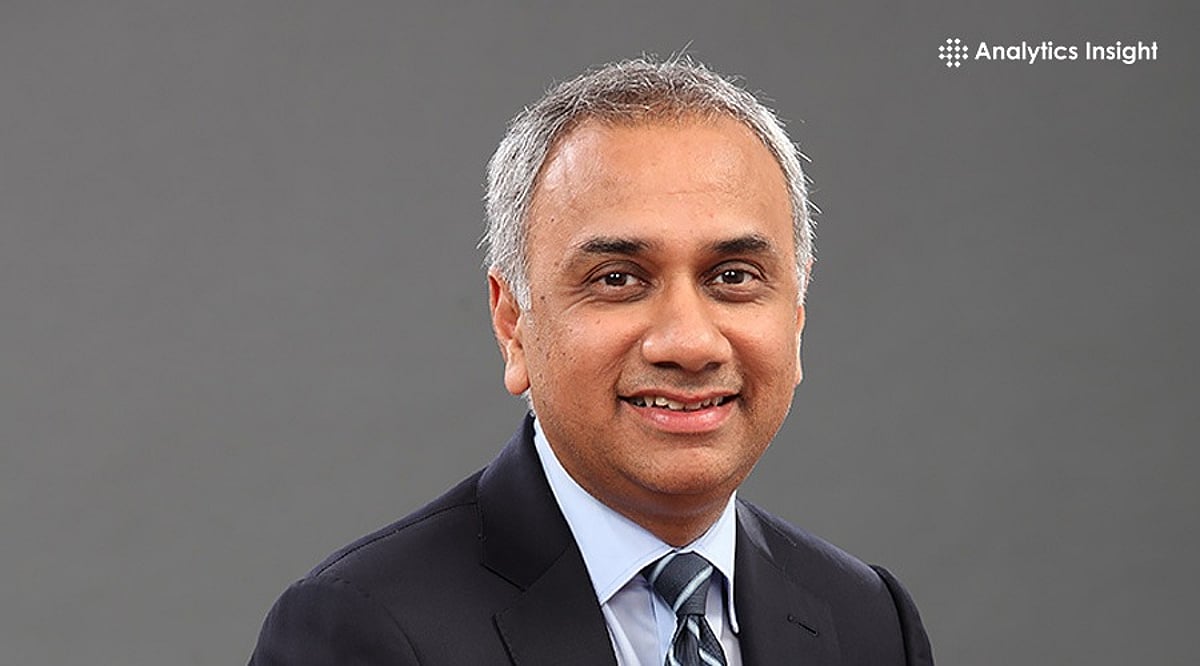
  • How Salil Parekh Quietly Built a Legacy of Steady Leadership at Infosys

    How Salil Parekh Quietly Built a Legacy of Steady Leadership at Infosys

    While many tech leaders chase headlines, Salil Parekh has built Infosys with calm leadership, steady decisions, and long-term thinking. From AI growth to global uncertainty, the company continued expanding quietly under his balanced and practical leadership style. His journey shows that strong leadership is not always loud—consistency, patience, and stability often matter more than constant visibility.

    Leading Without the Noise

    In an industry that rewards loud personalities and bold declarations, Salil Parekh has built his reputation doing the opposite. No viral statements, no constant media appearances, no carefully curated social media presence. Yet over the years, he has quietly become one of the most respected names in India’s IT industry, leading Infosys through one of the most turbulent periods in global technology.

    Since taking charge of Infosys in 2018, Parekh has helped the company grow amid rapid changes in the tech industry. Cloud computing, AI, automation, and digital services have become a much bigger part of business across the world. Through all these changes, Infosys has continued to grow steadily.

    The Journey Before Infosys

    Before joining Infosys, Parekh spent many years at Capgemini, handling different leadership roles and working with global clients across industries. Those years gave him experience in technology, consulting, and business operations. When Infosys announced him as CEO in 2018, the company was going through a difficult period with leadership changes and internal disagreements. Many people felt the company needed stability and calm leadership. Parekh entered quietly and focused on the work instead of creating headlines.

    A Different Kind of CEO

    One thing many people notice about Salil Parekh is his calm personality. He is not the kind of business leader who tries to dominate every conversation. He usually speaks in a simple and measured way. Even during difficult times, he rarely appears reactive or dramatic. That style has helped him build trust over time. Inside Infosys, many employees see him as practical and balanced, often described as someone who listens carefully and focuses on long-term goals instead of short-term excitement.

    Infosys Under His Leadership

    Infosys has changed a lot during Parekh’s time as CEO. The company expanded its digital and cloud services as businesses around the world started moving more operations online. Infosys also increased its work in AI and automation as demand for those services grew. The company continued to sign large global deals and strengthen relationships with international clients. Employee training became important as technology evolved rapidly, and Infosys invested in helping workers learn new skills and adapt to shifting industry needs. The company’s global presence also became stronger during these years.

    Difficult Times Along the Way

    The tech industry has not had an easy few years. Economic uncertainty affected business spending in many countries. Competition in the IT sector intensified, with companies vying hard for major contracts. Managing large teams across different countries brought challenges, especially during remote work periods. Then came the rapid rise of AI, pressuring technology companies to move faster and adapt quickly to changing customer demands. Through these periods, steady leadership became very important. Instead of reacting with panic, Parekh kept the company focused on stability and long-term growth.

    Why His Leadership Gets Attention

    Many business leaders today are known for high visibility. Salil Parekh is respected for almost the opposite reason. He keeps a low profile and focuses more on execution than publicity. Clients trust consistency, employees value stability, and investors often look for leaders who stay calm during uncertain times. Over the years, Parekh has built that kind of image. His leadership style may not always create headlines, but it has helped Infosys stay strong during a fast-changing period for the global tech industry.

    Final Thoughts

    Salil Parekh embodies a quieter style of leadership that many people still deeply value. He does not try to be the loudest voice in the room. Instead, he focuses on steady work, long-term growth, and keeping the company prepared for the future. As AI, cloud services, and automation continue changing the tech world, Infosys is moving through that shift under his leadership. His story is a reminder that leadership is not always about visibility—sometimes calm thinking, patience, and consistency can matter even more.