Category: Software Development

  • Best Backend Frameworks for 2026: FastAPI, Django, NestJS, and More

    Best Backend Frameworks for 2026: FastAPI, Django, NestJS, and More

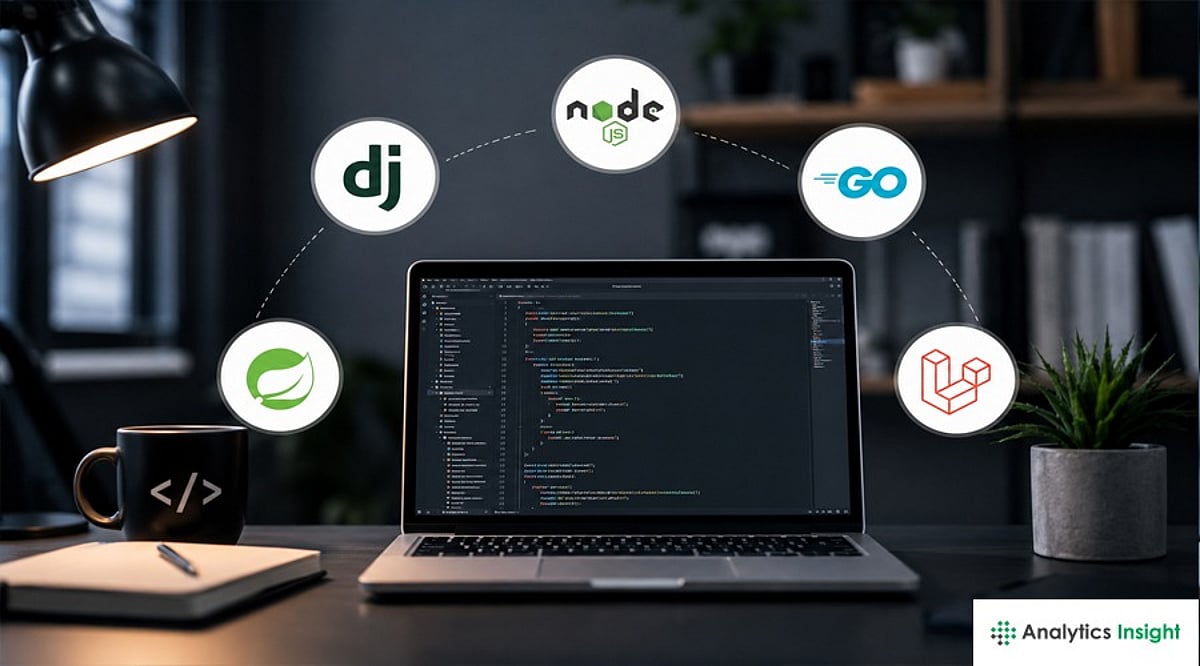
    Backend frameworks continue evolving alongside AI, cloud-native computing, and edge applications. Understanding the strengths of FastAPI, Django, NestJS, Express.js, Spring Boot, Laravel, Go, and ASP.NET Core helps developers choose the right technology for modern, scalable, and enterprise-ready backend systems.

    AI-driven workloads, edge computing, and container-native deployment have pulled backend development in different directions at once. With more than 50 actively maintained backend frameworks in circulation, here’s where developer attention is genuinely concentrated in 2026.

    FastAPI Has Become Python’s Fastest-Growing Framework

    FastAPI has overtaken Django in adoption among Python web developers, now used by an estimated 38-40% of them, driven largely by its performance and native fit for AI-integrated backends. Built on Starlette and Pydantic, FastAPI handles roughly 30,000-40,000 requests per second compared to Django’s 8,000-12,000, and its async-first, ASGI-based architecture processes concurrent I/O-bound requests far more efficiently. For teams building API-first products, inference services, or anything that touches machine learning, FastAPI has become the default starting point.

    Django and Laravel Remain the Fast-Delivery Standard

    Despite FastAPI’s momentum, Django hasn’t lost relevance: its batteries-included philosophy, built-in admin panel, ORM, and mature security defaults still make it the stronger choice for full-stack applications, content-heavy platforms, and anything needing an admin interface out of the box. Laravel occupies a similar role in the PHP ecosystem, prized for its Eloquent ORM and MVC structure that lets small teams ship production applications quickly without excessive boilerplate.

    Node.js Splits Between Minimalism and Structure

    Express.js is still the most popular Node.js framework, loved for building minimalistic backends. On the other hand, NestJS represents an approach based on Angular architecture with modules, decorators, and dependency injection. New players like Hono are gaining popularity for edge computing deployments, growing from approximately 1,000 weekly downloads in 2022 to 20 million in 2026.

    Enterprise and Compliance Still Favor Established Players

    For regulated industries such as banking, insurance, and healthcare, framework choice also serves as a compliance decision. Spring Boot and ASP.NET Core continue to dominate financial services due to mature security tooling and strong vendor support. NestJS is gaining ground here, particularly in open banking implementations where API-first design and faster developer velocity are becoming as important as enterprise pedigree.

    Go Is Becoming the Default for Cloud-Native Microservices

    With businesses investing more in containerized and distributed systems, frameworks built in Go—such as Gin and Echo—offer low memory consumption, high speed, and good concurrency support. These make them ideal choices for microservices, IoT backends, and fast-paced cloud systems. While Go does not directly compete with Django and NestJS in full-stack development, it excels when performance under heavy loads is critical.

    Choosing the right backend framework improves developer productivity, simplifies maintenance, enhances security, and ensures applications remain reliable as business requirements evolve.

  • Top 10 C# Projects to Build in 2026 for Every Developer Level

    Top 10 C# Projects to Build in 2026 for Every Developer Level

    Mastering C# goes beyond learning syntax—it requires hands-on experience building real applications. With the release of C# 14 and .NET 10 (the new LTS version), developers now have access to modern features like extension members, field-backed properties, and performance improvements that transform how apps are built. Below are ten practical C# projects organized by skill level to help you strengthen your fundamentals, architecture skills, API development, and real-world software engineering experience in 2026.

    Beginner Projects: Learning the Fundamentals

    Start with projects that build comfort with syntax, control flow, and object-oriented programming before tackling architectural concerns.

    • Task Manager Application – Read and write tasks to a text or JSON file. This teaches file I/O and data persistence.
    • Console Calculator – Support operator precedence and error handling. Builds parser skills early.
    • Quiz Application – Track scores across different questions. Reinforces classes, collections, and user input handling.

    Intermediate Projects: Applying Core .NET Concepts

    Once fundamentals feel comfortable, work with databases, APIs, and more complex application structure.

    • Personal Finance Tracker – Use Entity Framework Core and SQLite to manage CRUD operations and data persistence patterns.
    • Weather App – Consume a public REST API with async/await and JSON deserialization. Introduces asynchronous programming.
    • URL Shortener Service – Build with ASP.NET Core Minimal APIs, which now support source-generated OpenAPI documentation without extra attributes.

    Advanced Projects: Architecture and Real-World Complexity

    Focus on architectural design decisions rather than just functionality.

    • Multi-Tenant SaaS Application – Use ASP.NET Core, EF Core, and Blazor to enforce authentication, authorization, and separation of concerns.
    • Real-Time Chat App – Implement WebSocket communication with SignalR, handling connections and message broadcasting.
    • E-Commerce Backend with Microservices – Orchestrate services with .NET Aspire to learn inter-service communication and observability.

    Bonus Project: Native AOT Command-Line Tool

    Write a small command-line application using Native AOT, continuously optimized in .NET 10. This exposes you to limitations around reflection, code generation, and dependencies—an excellent learning experience outside typical server/desktop deployment.

    Getting the Most Out of These Projects

    The projects that teach the most are the ones you finish and revisit. Build the same weather app twice: once with basic async calls and once refactored with proper error handling and retry logic. Pick a project slightly outside your comfort zone and push it toward production quality—that’s the real difference between a tutorial exercise and a genuinely useful learning project.

    Why This Matters

    Practical projects help developers apply programming concepts beyond tutorials. Building real-world C# applications develops problem-solving abilities, software design skills, and hands-on experience with modern .NET technologies that employers value in software engineering and backend development roles.

  • Software Architects and Tech Leads: 7 Essential Books for 2026

    Software Architects and Tech Leads: 7 Essential Books for 2026

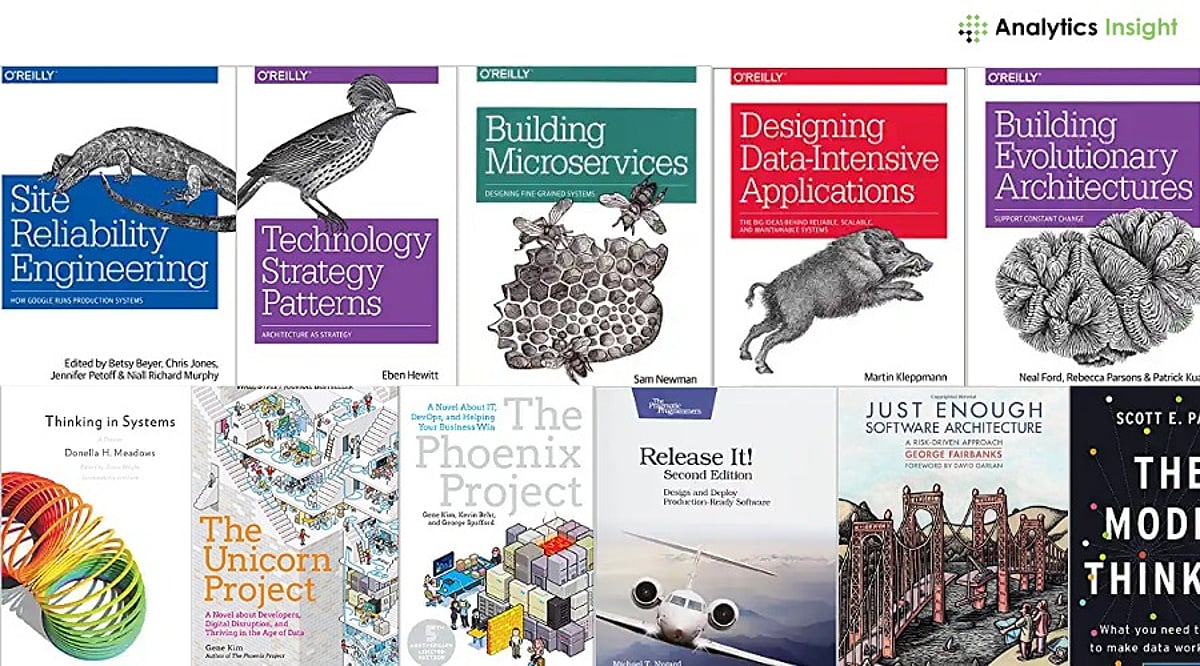
    Software architecture isn’t just about designing systems anymore. Today’s architects are expected to make decisions that affect scalability, security, cloud adoption, AI integration, and even business outcomes. As companies continue to modernize their technology stacks, experienced software architects and tech leads are becoming harder to find. According to the Stack Overflow Developer Survey 2025, more than 84% of developers already use or plan to use AI tools in their workflows, making strong architectural thinking more valuable than ever. If you’re planning to step into an architecture role or simply want to become a better technical leader, these seven books deserve a place on your reading list.

    1. Designing Data-Intensive Applications

    Martin Kleppmann’s classic explains distributed systems, databases, replication, and scalability in an understandable way. Essential for cloud-native and large-scale data systems.

    2. Fundamentals of Software Architecture

    Mark Richards and Neal Ford cover architecture patterns, trade-offs, and decision-making for developers transitioning to leadership roles.

    3. Software Architecture: The Hard Parts

    Neal Ford, Mark Richards, Pramod Sadalage, and Zhamak Dehghani explore real-world trade-offs in distributed transactions, event-driven systems, and evolutionary architecture.

    4. Clean Architecture

    Robert C. Martin emphasizes separating business logic from dependencies to build maintainable, long-lasting software.

    5. Software Engineering at Google

    Titus Winters, Tom Manshreck, and Hyrum Wright share Google’s engineering culture insights on code reviews, testing, documentation, and technical debt—applicable anywhere.

    6. Building Microservices (Second Edition)

    Sam Newman provides practical guidance on microservices boundaries, API management, and cloud-first architecture.

    7. Head First Software Architecture

    Raju Gandhi and Mark Richards offer a visually engaging introduction to architecture fundamentals for aspiring architects.

    Looking Ahead

    The role of a technical leader today involves having good judgment, communicating ideas well, and knowing system design. Technologies will change, but the principles in these books will remain valid for years.

    FAQs

    Which book is best for beginners? Head First Software Architecture is excellent for transitioning developers.

    Why should software architects read books in 2026? To stay current with AI, cloud, and distributed systems best practices.

    Is Clean Architecture still relevant? Yes, its principles of maintainability and separation of concerns endure.

    Which book is best for distributed systems? Designing Data-Intensive Applications is the go-to resource.

    Can these books help developers become tech leads? Absolutely, they build technical knowledge and leadership skills.

  • Top 7 Technical Writing Books to Master Documentation Skills in 2026

    Top 7 Technical Writing Books to Master Documentation Skills in 2026

    Technical writing has quietly become one of the most valuable skills in today’s workplace. Every software application, cloud platform, AI tool, medical device, or engineering product depends on clear documentation that users can actually understand. That demand is creating new opportunities for technical writers across industries.

    According to Grand View Research, the global books market is expected to reach USD 162.6 billion, while the technical documentation and content services market continues to expand as businesses invest in better customer support and developer experiences.

    Read Better, Write Better, Document Everything With Confidence: Top 7

    Whether you’re starting out or looking to sharpen your writing, these seven books deserve a place on your shelf:

    Technical Writing Process by Kieran Morgan

    If you’re looking for one book that explains technical writing without overwhelming jargon, this is it. Morgan breaks down the entire documentation process, from understanding your audience to publishing polished manuals and guides. The practical examples make it especially useful for software writers and professionals transitioning into technical communication.

    Handbook of Technical Writing by Gerald J. Alred, Charles T. Brusaw, and Walter E. Oliu

    Few books have stood the test of time like this one. Rather than reading it cover to cover, you’ll keep returning to it whenever you need guidance on grammar, document structure, reports, proposals, or professional correspondence. It’s the kind of reference every technical writer eventually owns.

    The Insider’s Guide to Technical Writing by Krista Van Laan

    Technical writing is about much more than putting words on a page, and Krista Van Laan understands that well. She explains how documentation teams collaborate with developers, product managers, and designers and offers honest advice on building a successful career. The conversational tone makes it an easy and enjoyable read.

    Docs Like Code by Anne Gentle

    Documentation has changed dramatically over the past decade. Today’s writers often work with Git, version control, and automated publishing pipelines. Anne Gentle explains these modern workflows in a way that feels approachable, helping writers become valuable members of agile development teams instead of simply producing manuals.

    Every Page Is Page One by Mark Baker

    Most people no longer read documentation from beginning to end; they search for answers. Mark Baker builds his entire book around that simple idea. His approach encourages writers to create independent, searchable topics that solve problems quickly, making the book particularly relevant for modern knowledge bases and help centers.

    Technical Communication by Mike Markel and Stuart A. Selber

    Used in universities and corporate training programs around the world, this book covers nearly every aspect of professional communication. From instructions and reports to presentations and visual design, it combines academic depth with practical examples that readers can immediately apply at work.

    Microsoft Manual of Style

    Every writing team needs consistency, and Microsoft’s style guide has become an industry benchmark. It covers everything from terminology and grammar to accessibility and inclusive language. Even if you never write software documentation, the principles inside will make your writing cleaner, clearer, and easier to follow.

    Why These Books Remain Industry Essentials

    AI can draft content in seconds, but it cannot replace the judgment that good technical writers bring to the table. Someone still has to verify information, organize complex ideas, ask the right questions, and write with the reader in mind. That’s why experienced technical writers remain in demand across software, healthcare, engineering, finance, and manufacturing.

    The best professionals aren’t necessarily the fastest writers; they’re the clearest communicators. These books help build that skill through experience, proven techniques, and practical advice that has stood the test of time.

    The Road Ahead

    Technical writing is not confined to thick user manuals. It extends to API documentation, cloud platforms, AI products, cybersecurity, SaaS applications, and interactive knowledge bases. As companies continue investing in digital products, the need for people who can explain complex technology in simple language will only grow. For professionals willing to keep learning, technical writing remains one of the most stable and rewarding career paths in the technology industry.

    Frequently Asked Questions

    Which book is best for beginners in technical writing?
    Technical Writing Process by Kieran Morgan is an excellent starting point because it explains documentation basics, audience analysis, writing workflows, and publishing practices using practical examples that are easy to understand.

    Are technical writing books still useful in the age of AI?
    Yes. While AI can assist with drafting content, these books teach critical thinking, information organization, accuracy, clarity, and audience-focused communication—skills that remain essential for professional technical writers.

    Which technical writing book is best for software documentation?
    Docs Like Code by Anne Gentle and Microsoft Manual of Style are excellent choices for software documentation, covering version control, documentation workflows, consistency, accessibility, and modern developer documentation practices.

    Can these books help improve career opportunities?
    Absolutely. Strong technical writing skills are valued across software, healthcare, engineering, finance, manufacturing, and SaaS industries, helping professionals create clearer documentation and advance into higher-paying communication roles.

    What skills can I learn from technical writing books?
    These books teach document planning, technical editing, information architecture, grammar, usability, API documentation, visual communication, and writing techniques that help explain complex concepts in simple, reader-friendly language.

  • Top Java Books to Master Programming and Software Development in 2026

    Top Java Books to Master Programming and Software Development in 2026

    Java remains one of the most versatile and widely used programming languages in the world. Whether you’re a beginner looking to build a strong foundation or an experienced developer aiming to deepen your expertise, the right books can make all the difference. Here are the best Java books for 2026 that cover everything from best practices and concurrency to algorithms and enterprise development.

    • Effective Java – Joshua Bloch: Covers Java best practices, design patterns, generics, concurrency, and performance optimization through practical examples for professional developers.
    • Head First Java – Kathy Sierra & Bert Bates: Uses visual explanations and interactive exercises, making Java concepts easy for beginners while building strong programming fundamentals quickly.
    • Core Java Volume I – Cay S. Horstmann: Explains Java syntax, object-oriented programming, collections, exceptions, and modern language features with detailed examples and practical exercises.
    • Core Java Volume II – Cay S. Horstmann: Focuses on advanced Java topics including networking, databases, XML, security, modules, and enterprise-level application development for experienced programmers.
    • Java: The Complete Reference – Herbert Schildt: Provides comprehensive coverage of Java language features, APIs, libraries, multithreading, networking, and application development in one authoritative resource.
    • Java Concurrency in Practice – Brian Goetz: Helps developers understand multithreading, synchronization, thread safety, and concurrent programming techniques for building efficient Java applications.
    • Clean Code – Robert C. Martin: Teaches developers to write readable, maintainable, scalable, and efficient code using software engineering principles applicable across Java projects.
    • Spring in Action – Craig Walls: Introduces Spring Framework fundamentals, dependency injection, Spring Boot, REST APIs, security, and enterprise application development with practical implementation guidance.
    • Grokking Algorithms – Aditya Bhargava: Simplifies algorithms and data structures using illustrations, helping Java developers improve logical thinking and coding interview preparation with confidence.

    These books are essential additions to any Java developer’s library in 2026, offering both foundational knowledge and cutting-edge techniques to excel in software development.

  • Perplexity Enters AI Coding Assistant Arena to Challenge Claude Code

    Perplexity Enters AI Coding Assistant Arena to Challenge Claude Code

    Perplexity, the AI-powered search company, is reportedly developing a coding assistant designed to compete head-to-head with Anthropic’s Claude Code and other popular developer tools. According to recent reports, the tool, internally named Teammate, has been tested by Perplexity’s own engineers for several months and is expected to be model-agnostic, giving developers the flexibility to choose the underlying AI model that best fits their workflow.

    Unlike some rivals that lock users into a single AI system, Perplexity’s approach emphasizes choice. Developers may be able to switch between models—such as Anthropic’s Claude, OpenAI’s GPT, or others—depending on the task. This flexibility could be a key differentiator in the increasingly crowded AI coding assistant market.

    Teammate Already in Internal Use

    Sources indicate that Teammate has been assisting Perplexity’s in-house engineers with code writing, bug detection, and other aspects of software development for the past few months. The company has not officially announced a public release date, but the internal testing suggests a launch could be forthcoming as Perplexity seeks to expand beyond search into everyday productivity tools.

    Competing with Claude Code and Others

    Claude Code, built by Anthropic, has gained popularity for its deep reasoning capabilities and ability to handle large code datasets. Perplexity, meanwhile, is best known for its search engine that provides quick, source-backed answers. With Teammate, Perplexity aims to target the same professional developer audience but with a multi-model twist that could give it a competitive edge.

    If Perplexity succeeds in launching a broad, model-agnostic coding assistant, it could shake up the AI coding landscape and force established players to consider offering more flexible integrations. The race for AI-powered developer tools is heating up, and Perplexity’s entry signals that the battle is far from over.

    For now, developers and industry watchers await an official announcement from Perplexity regarding Teammate’s availability and pricing.

  • Best Backend Frameworks for Modern Web Development in 2025

    Best Backend Frameworks for Modern Web Development in 2025

    Choosing the right backend framework is critical for building scalable, secure, and maintainable applications. Below is an overview of the most popular frameworks across different programming languages, each offering unique strengths for modern development.

    Django

    A high-level Python framework that emphasizes rapid development and clean, pragmatic design. It comes with built-in security features, an ORM (Object-Relational Mapping) for database interaction, authentication support, and proven scalability for enterprise applications and content-driven websites worldwide.

    Express.js

    A lightweight and flexible Node.js framework that simplifies building web applications and APIs. It offers powerful routing, middleware integration, and excellent performance for scalable RESTful services, making it a go-to choice for fast development.

    Spring Boot

    Built on Java, Spring Boot streamlines enterprise application development with auto-configuration, dependency injection, and robust support for microservices. It provides production-ready capabilities, making it ideal for large-scale business applications.

    Laravel

    Laravel is a PHP framework known for its elegant syntax and developer-friendly tools. It includes built-in authentication, an MVC architecture, database migrations, and a rich ecosystem for building secure and maintainable web applications.

    ASP.NET Core

    Microsoft’s cross-platform framework delivers high performance, cloud integration, and advanced security features. With built-in dependency injection and support for a wide range of operating systems, it is well-suited for scalable enterprise development.

    Ruby on Rails

    A Ruby framework that follows convention-over-configuration principles, enabling rapid development with minimal setup. It offers robust database management, testing support, and a strong emphasis on maintainable code for startups and established companies alike.

    FastAPI

    A modern Python framework designed for building APIs with high performance. It supports asynchronous processing, automatic interactive documentation (OpenAPI), type validation, and efficient handling of concurrent requests—ideal for scalable backend services.

    NestJS

    A TypeScript-based Node.js framework that brings modular architecture and enterprise-grade structure to backend development. It leverages decorators, dependency injection, and strong typing to create maintainable and testable applications and APIs.

    Phoenix

    Built on Elixir, Phoenix is designed for fault-tolerant, real-time applications with high concurrency. It delivers exceptional performance under heavy traffic, making it perfect for systems that require reliability and low latency.

    Each framework has its strengths, and the best choice depends on your project’s requirements, team expertise, and scalability needs.

  • Web Developer Resume Templates for Freshers: Must-Have Sections and Design Tips

    Web Developer Resume Templates for Freshers: Must-Have Sections and Design Tips

    Starting your career as a web developer? Your resume is your first chance to make a strong impression on recruiters. Here are the essential elements every fresher should include in a web developer resume template.

    ATS-Friendly Format

    Use a clean, single-column layout with standard fonts and headings. This improves compatibility with applicant tracking systems (ATS) and ensures easy reading by recruiters.

    Professional Summary

    Write a concise summary that highlights your technical skills, career goals, and enthusiasm for web development. A strong opening creates a compelling first impression.

    Technical Skills Section

    Showcase programming languages, frameworks, tools, and databases such as HTML, CSS, JavaScript, React, Git, and SQL. Organize them into clear categories for quick scanning.

    Project Showcase

    Include academic, freelance, or personal projects. For each, list the technologies used, objectives, and measurable outcomes. This demonstrates practical web development expertise effectively.

    Education Details

    Mention your degree, institution, graduation year, CGPA, and relevant coursework. This establishes your academic background and technical foundation.

    Certifications

    List industry-recognized certifications from trusted platforms. They validate your knowledge and show commitment to continuous learning.

    Internship Experience

    Highlight internships with responsibilities, technologies used, and achievements. Even limited professional experience can showcase your readiness for the workplace.

    Portfolio Links

    Add links to your GitHub, LinkedIn, and personal portfolio website. This allows recruiters to review your code quality and completed projects.

    Simple Visual Design

    Choose a professional template with balanced spacing, readable fonts, and subtle colors. The design should enhance readability without distracting from your qualifications.

    By including these elements, freshers can create a resume that stands out to both automated systems and human recruiters.

  • Programming Languages That Excel in the AI Era: Python, TypeScript, and More

    Programming Languages That Excel in the AI Era: Python, TypeScript, and More

    Artificial intelligence has fundamentally changed how software is built, but it hasn’t made programming languages obsolete. According to the GitHub Octoverse 2025 report, TypeScript became the top language for GitHub projects in August 2025, while Python remained the dominant choice for AI and data science tasks. The volume of public repositories also grew significantly year-over-year, with developers contributing to over 1.1 million public repositories. Here are the programming languages that thrive alongside AI.

    Python

    Python continues to anchor the AI landscape. Instead of writing core algorithms from scratch, developers leverage its massive ecosystem to handle complex data processing and model training. The language’s dominance is clear: it attracted 2.6 million contributors in 2025 alone, cementing its status as the standard for data science and automation.

    TypeScript

    TypeScript’s rise mirrors the explosion of AI-generated code. By bringing static typing to JavaScript, it catches errors early and secures large codebases. This utility pushed TypeScript past both Python and JavaScript in August 2025 to become the most-used language on GitHub. The milestone followed a 66% surge in its user base, adding 1 million contributors in a single year, underscoring a major shift toward typed languages for building AI software.

    JavaScript

    JavaScript remains strong because most AI products require user interfaces. It is frequently used in chatbots, AI dashboards, browser extensions, SaaS tools, and web-based automation platforms. JavaScript was used by 66% of all respondents on GitHub, making it highly relevant for developing AI-powered web applications.

    Java

    Enterprise adoption of Java is holding steady in AI. It is still used for backend systems, APIs, Android apps, and high-volume platforms at banks, insurance companies, telecom firms, and large corporations. The language is important for use cases beyond AI—many companies are augmenting their existing apps with AI capabilities rather than replacing legacy systems. Java experienced steady enterprise-driven growth, bringing the total number of contributors to approximately 174,705 over the past year, according to GitHub.

    C++

    C++ is crucial in AI where performance is key. It is applied in inference engines, robotics, embedded systems, games, computer vision, and high-performance computing. When speed, memory control, and hardware-level optimization are required, C++ is invaluable. In July 2026, TIOBE named C++ as one of the three most popular programming languages in the world, trailing only Python and C. This indicates that performance-oriented languages remain in high demand even in the AI era.

    C#

    C# is used in enterprise software, cloud apps, desktop apps, and game development, and continues to grow. It leverages Microsoft’s ecosystem, including Azure, .NET, Visual Studio, and AI tools. In 2025, C# brought in approximately 136,735 contributors and saw a 22.22% increase compared to the previous year, according to GitHub. It is a useful language for enterprise and interactive products relying on artificial intelligence, particularly in business applications and game engines.

    Final Thoughts

    The programming languages that will thrive alongside AI are not only those used to build models. Python dominates AI development, while TypeScript and JavaScript dominate modern AI applications. Java is well-suited for enterprise use, C++ for systems requiring performance, and C# for Microsoft-backed and interactive systems.

    Frequently Asked Questions

    1. Which programming language is best for AI development?

    Python is widely considered the best language for AI development due to its simple syntax and strong ecosystem. Libraries like TensorFlow, PyTorch, Pandas, NumPy, and Scikit-learn make it useful for machine learning, data science, and automation.

    2. Why is TypeScript growing in the AI era?

    TypeScript is growing because AI-generated code needs structure, type safety, and easier maintenance. Its static typing helps developers reduce bugs and manage large AI-powered applications more efficiently.

    3. Is JavaScript useful for AI applications?

    Yes, JavaScript is useful as most AI tools need web-based interfaces. Chatbots, AI dashboards, browser extensions, SaaS platforms, and automation tools often rely on JavaScript frameworks and runtime environments.

    4. Why does C++ remain important with AI?

    C++ remains important because it offers high performance, memory control, and hardware-level optimization. It is commonly used in robotics, inference engines, computer vision, gaming, embedded systems, and high-performance computing.

    5. Should beginners learn Python first for AI?

    Yes, beginners interested in AI should usually start with Python as it is easier to learn and has strong AI libraries. After Python, they can learn JavaScript, TypeScript, Java, C++, or C# depending on their career goals.

  • Top 10 Java Certifications to Advance Your Career and Salary in 2026

    Top 10 Java Certifications to Advance Your Career and Salary in 2026

    10 Best Java Certifications to Boost Your Career and Salary in 2026

    Java remains one of the most in-demand programming languages globally. Earning a recognized certification can significantly enhance your technical credibility, employability, and earning potential. Here are the top 10 Java certifications to consider in 2026:

    • Oracle Certified Professional Java SE — Industry-recognized certification validating advanced Java programming expertise, improving employability, technical credibility, and long-term software development career prospects.
    • Oracle Certified Associate Java SE — Ideal beginner certification covering Java fundamentals, object-oriented programming concepts, and core development skills for aspiring professionals entering technology.
    • Oracle Certified Foundations Associate — Introduces essential Java programming principles, syntax, and logical thinking, creating a strong foundation for advanced certification pathways.
    • Spring Professional Certification — Demonstrates expertise in Spring Framework development, dependency injection, microservices, and enterprise Java applications widely used across industries.
    • Oracle Java EE Certification — Focuses on enterprise application development, web technologies, APIs, and scalable Java solutions for professional software engineering environments worldwide.
    • Apache Kafka for Java Developers — Validates event-driven programming skills using Java and Kafka, supporting careers in distributed systems and modern data-intensive applications.
    • Jakarta EE Developer Certification — Covers enterprise Java standards, cloud-ready applications, RESTful services, and modern backend development for large-scale business software solutions.
    • Java Multithreading Certification — Strengthens concurrent programming expertise, improving performance optimization skills required for complex enterprise and high-performance Java applications.
    • Maven and Gradle Certification — Demonstrates proficiency in Java build automation, dependency management, project configuration, and efficient software development workflow optimization.

    Join our WhatsApp Channel to get the latest news, exclusives and videos on WhatsApp.