Category: Startups

  • Why Founders Should Embrace Rejection: Turning No into Startup Success

    Why Founders Should Embrace Rejection: Turning No into Startup Success

    Rejection is often the first step toward startup success. By treating investor and customer feedback as valuable insights, founders can refine ideas, strengthen product-market fit, pivot strategically, and build resilient businesses capable of long-term growth.

    Key Takeaways

    • Rejection reveals hidden customer needs and strengthens product-market fit through continuous learning and validation.
    • Investor feedback exposes execution gaps, helping founders refine business strategies before scaling sustainably.
    • Successful startups transform setbacks into opportunities by adapting quickly, learning continuously, and building resilient businesses.

    For every startup that becomes a billion-dollar success, thousands disappear before finding their first paying customer. While funding shortages, competition, and execution challenges often take the blame, one factor quietly shapes the journey of almost every successful founder: rejection.

    Whether it comes from investors declining a pitch, customers ignoring a product, or mentors questioning an idea, rejection is rarely the end of the road. More often than not, it becomes the starting point for building a stronger business. In today’s startup ecosystem, where speed often overshadows validation, the ability to learn from rejection may be a founder’s most valuable competitive advantage.

    Rejection Tests the Problem Before the Product

    Entrepreneurs sometimes become obsessed with finding a solution before fully understanding the problem they need to address. Even an impressive application or innovative technology might be captivating; however, unless the entrepreneur comes up with something that truly hurts, it won’t work for its target audience.

    Being rejected early on pushes entrepreneurs to reconsider their assumptions. If customers refuse to pay, use the product, or promote it, there is no question that the entrepreneur is not doing enough marketing; rather, the solution is irrelevant. Analyzing objections can provide valuable market insights at little cost.

    Investors Often Reject Execution, Not Vision

    One myth about first-time entrepreneurs is that their ideas are rejected for a lack of originality. However, venture capital firms consider far more than innovation when making decisions: execution capability, addressable market size, competitive positioning, customer traction, and profitability.

    A rejection from an investor is not necessarily an indication that the idea has no future. It may mean the business has failed to provide sufficient evidence to support its growth story. Entrepreneurs who seek feedback after being rejected at pitches tend to be better prepared for fundraising, focusing on customer acquisition, unit economics, and scalability.

    Customer Feedback Is the Ultimate Validation

    While investors’ opinions are important, customers remain the final judges of any startup’s prospects. Good remarks may encourage, but they never reveal what’s wrong with the product. It is only through criticism that usability problems, pricing issues, missing features, and missed expectations come to light.

    The most successful entrepreneurs create a feedback loop rather than wait for quarterly reviews and declining sales. Each complaint, cancellation, and failed sign-up provides an opportunity to improve the product. Often, customer rejection highlights areas internal teams would not have discovered.

    Pivoting Is a Sign of Learning

    Too often, pivoting is mistaken for a sign of failure. Instead, many of the most profitable companies pivoted when they realized their assumptions about user behavior were wrong. A declined feature, low engagement rate, or unexpected user habits may indicate more interesting opportunities in another area.

    Entrepreneurs willing to pivot have a better future than those who remain loyal to their initial idea. In modern business, flexibility plays an important role, especially in rapidly evolving areas such as artificial intelligence, fintech, climate tech, or health tech.

    Evidence Before Scaling

    Scaling has never been more tempting for entrepreneurs. With easy access to cloud infrastructure, AI technologies, and global digital platforms, founders can create products faster than ever before. Still, scaling too fast before establishing product-market fit can lead to rapid failure.

    Best practice among experienced entrepreneurs is to validate customer needs before investing resources in hiring, marketing, and geographic expansion. Solid evidence of customer adoption makes for a much stronger base of operations. The startups that survive are usually focused on building evidence before scaling.

    Turning Rejection into Strategy

    Successful entrepreneurs rarely see rejection as a personal failure. Rather, they view it as structured feedback to refine their product, pricing, positioning, and overall business model. Rejection is more valuable when it comes in clusters than from a single source. This is why entrepreneurs learn from rejections by numerous people, whether venture capitalists or potential customers. Ultimately, the process of entrepreneurship becomes iterative with this attitude toward rejection.

    Bottom Line

    In an ecosystem where breakthrough ideas attract headlines, resilience often determines long-term success. Every rejection offers founders an opportunity to question assumptions, strengthen execution, and better understand their customers. The startups that endure are not necessarily those with flawless first ideas—they are the ones who listen carefully, adapt quickly, and treat every ‘no’ as another step toward building a business the market truly wants.

  • Lucida AI Secures €6.1M in Seed Funding as User Base Hits 3 Million

    Lucida AI Secures €6.1M in Seed Funding as User Base Hits 3 Million

    UK-based Lucida AI has raised €6.1 million in seed funding to expand its speech-native AI platform across new countries and languages. The investment will help the company improve its technology, grow its enterprise business, and accelerate product development. The latest round brings Lucida AI’s total funding to €7.24 million.

    Velocity Capital led the investment round, with participation from Next Tier Ventures, Look AI Ventures, Bogazici Ventures, Yapı Kredi Frwrd Ventures, and Ünlü & Co. Lucida AI’s founders, Mustafa Girgin and M. Sait Demirci, said artificial intelligence has become a global race, making robust voice-based technology more important than ever.

    Lucida AI Builds a Speech-First Learning Platform

    Founded in 2024, Lucida AI focuses on helping people communicate naturally through speech instead of typing. The platform allows users to have real-time conversations with artificial intelligence while receiving instant feedback on pronunciation, fluency, and speaking clarity. The system adjusts every conversation to match the user’s skill level, creating a more natural learning experience.

    The company built its platform using its own Speech Language Model, which supports smooth voice conversations without scripts or complex menus. Users simply speak with the AI, making language practice feel more like a real conversation. The platform also creates everyday situations, including ordering coffee, attending business meetings, giving presentations, and speaking with clients.

    Enterprise Growth and Global User Expansion

    Lucida AI serves both individual users and businesses. Consumers can access the platform through its mobile application, while enterprise customers receive secure deployment options with end-to-end encryption and on-premises hosting. These features make the platform suitable for organizations that need strong data security while using enterprise AI solutions.

    The startup has grown quickly since launching only fifteen months ago. Lucida AI now has more than three million users worldwide and has recorded over 2.2 billion minutes of spoken conversations across Europe, the United States, and several emerging markets. Investors believe this growth shows rising demand for practical speech AI tools that improve real-world communication.

    Look AI Ventures said Lucida AI stands out by focusing on spoken language instead of basic text-based AI systems. The investor also noted that the company’s pronunciation engine provides more accurate feedback than many general AI language tools currently available.

    Growing Demand for Speech AI Solutions

    Lucida AI’s latest funding shows investors are putting more money into AI products that solve real communication problems. Companies across education, business, and customer service increasingly need faster and more natural voice-based communication. This growing demand continues driving investment in speech-native AI and other voice technologies.

    The funding also reflects a larger trend across Europe. Several startups working in voice technology, AI-powered language learning, and conversational automation have raised major investments during 2026. This growing activity shows investors see strong long-term potential in AI platforms built for global communication instead of only text-based chat.

    Lucida AI now plans to use its new funding to enter more international markets, support additional languages, improve its speech technology, and expand its enterprise services. As competition grows in the AI sector, the company hopes its voice-first approach will help it build a stronger position in the fast-growing speech AI market.

  • CheQ Elevates Bipin Toro and Vished Banger to Co-Founders as Startup Hits Profitability

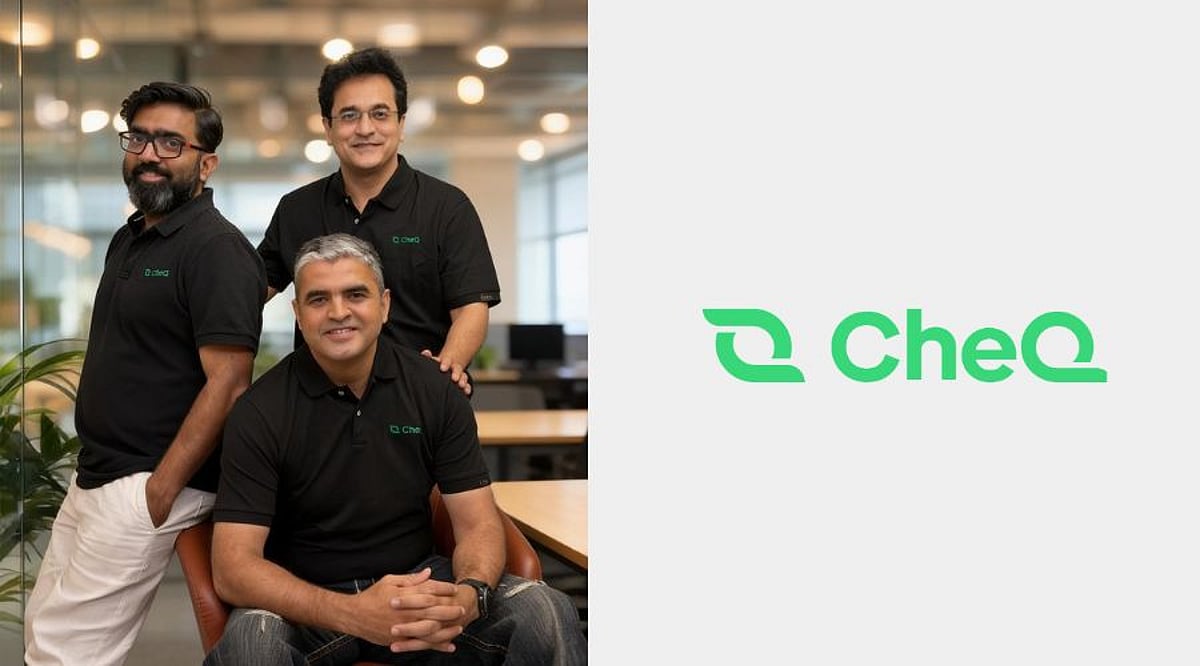
    CheQ Elevates Bipin Toro and Vished Banger to Co-Founders as Startup Hits Profitability

    CheQ, India’s leading credit card management platform, has announced the elevation of Bipin Toro and Vished Banger as Co-Founders. The move recognizes their instrumental contributions to building and scaling the company since its inception in 2022.

    The announcement comes at a pivotal moment for CheQ, as the company closed FY26 with full-year profitability and surpassed $40 million in annual recurring revenue (ARR). This milestone underscores the platform’s rapid growth and the leadership team’s commitment to long-term value creation.

    Since joining in CheQ’s early days, Toro and Banger have played key roles in transforming the startup from an ambitious vision into one of India’s fastest-growing consumer credit platforms. Toro, now Co-Founder & CTO, has been central to building CheQ’s technology foundation and engineering culture, developing a scalable platform that serves millions of users. Banger, elevated to Co-Founder & CBO, has been a key architect of the company’s business strategy, financial management, and operational excellence.

    Aditya Soni, Founder and CEO of CheQ, said: “Building a company is never the work of one individual. Bipin and Vished have been an integral part of CheQ’s story from the very beginning, helping build the foundation of the company, shape its culture, and contribute meaningfully to every major milestone. Their elevation to Co-Founder recognizes the impact they have already created and the important role they will continue to play.”

    Bipin Toro commented: “Technology has always been at the heart of creating meaningful consumer experiences. Over the last few years, we have built a robust and scalable platform capable of serving millions of users. What excites me most is leveraging technology, AI, and data to make credit more transparent, accessible, and rewarding for every Indian consumer.”

    Vished Banger added: “Building a sustainable business requires a balance of innovation, operational excellence, and long-term thinking. As we enter the next phase of growth, I am excited to continue driving strategic expansion, strengthening partnerships, and building a category-defining company that consumers trust.”

    Founded with a mission to simplify credit engagement in India, CheQ started as a credit card bill payment and rewards platform. It has since evolved into a comprehensive credit ecosystem offering credit card management, credit health insights, premium rewards, utility bill payments, AI-powered assistance via Wisor, personal loans, loans against mutual funds, UPI payments, and the CheQ AU Credit Card—India’s first LED credit card.

    With an expanded founding team and strong business momentum, CheQ is poised for its next phase of innovation, scale, and product expansion, aiming to become India’s most trusted destination for everything credit.

  • Leading OpenCV Innovators: Top Companies and Startups for 2026

    Leading OpenCV Innovators: Top Companies and Startups for 2026

    OpenCV (Open Source Computer Vision Library) continues to power groundbreaking innovations across industries. In 2026, several companies and startups stand out for their advanced computer vision solutions built on OpenCV. Here are the top innovators:

    OpenCV.ai

    Develops enterprise computer vision solutions for manufacturing, healthcare, retail, quality inspection, and AI-powered visual automation across diverse industries globally.

    Roboflow

    Simplifies computer vision development through dataset management, annotation, model training, deployment tools, and collaborative AI workflows for developers everywhere.

    LandingAI

    Builds industrial computer vision solutions enabling manufacturers to automate inspections, improve quality assurance, and optimize production using artificial intelligence.

    V7 Labs

    Offers advanced image annotation platform accelerating AI model development with automated labeling, collaboration features, and computer vision workflow optimization.

    Covariant

    Develops AI-powered robotics using computer vision for warehouse automation, object recognition, logistics optimization, and intelligent robotic picking operations globally.

    AnyVision

    Provides facial recognition and visual intelligence technologies supporting security, retail analytics, smart infrastructure, and enterprise computer vision deployments responsibly worldwide.

    Deep Vision AI

    Delivers custom computer vision applications for healthcare, manufacturing, surveillance, and automation using advanced OpenCV-powered artificial intelligence technologies effectively.

    Scandit

    Specializes in smart barcode scanning, augmented reality, inventory management, and mobile computer vision solutions enhancing enterprise productivity and customer experiences.

    Viso.ai

    Enables organizations to deploy, manage, and scale computer vision applications through cloud-based infrastructure supporting enterprise artificial intelligence initiatives efficiently.

  • Validate Your Startup Idea with AI: A Step-by-Step Framework Before You Build

    Validate Your Startup Idea with AI: A Step-by-Step Framework Before You Build

    One of the primary reasons startups fail is the lack of genuine market demand. While this challenge has remained largely unchanged, the way entrepreneurs validate business ideas has evolved significantly. Today, artificial intelligence enables founders to conduct market research, analyze customer needs, assess competition, and validate business concepts in a fraction of the time traditional methods require. However, while AI can accelerate the validation process, it should be supported by real customer feedback and market testing. The most successful startups combine AI-driven insights with direct engagement to ensure their ideas address genuine market needs.

    Where AI Genuinely Earns Its Place

    The honest case for AI in validation rests on speed, not judgment. A founder can now scan tens of thousands of Reddit threads, forum posts, and review sites for unprompted complaints about a problem in the time it used to take to schedule a single customer interview. Tools built specifically for this pull from real community posts rather than simply asking an AI to guess—they examine evidence people left before you ever asked them anything, which is a meaningfully different signal than a survey response.

    Market sizing is another area where AI moves fast. TAM/SAM/SOM estimates, competitor mapping, and go-to-market sketches that used to take research analyst days now come back in minutes. That’s useful for deciding whether an idea is even worth two more weeks of your attention.

    The Trap: AI Is Built to Be Agreeable

    Here’s the problem nobody selling a validation tool wants to lead with. Large language models lean optimistic by default, and surveys—AI-run or otherwise—systematically overestimate willingness to pay by around 21%. Ask an AI to evaluate your idea and describe it with any enthusiasm at all, and there’s a real chance it reflects your enthusiasm back at you with extra confidence attached.

    Synthetic customer panels make this worse, not better, when used carelessly. They can genuinely speed up early-stage thinking, but research has been blunt about the failure mode: these AI-generated personas often produce false-positive validation signals precisely because they inherit the same optimism bias as the model generating them. A digital twin of your target customer who will never use your product can still tell you it loves the idea.

    Three-Stage Framework That Actually Holds Up

    Strip out the marketing language from a dozen validation tools, and the same basic structure keeps surfacing. It works because each stage tests something different, and AI’s usefulness changes at every step.

    • Stage 1: Market Discovery — Use AI tools such as ChatGPT, Perplexity AI, and Google Trends to analyze market demand, identify competitors, and research customer pain points from public discussions.
    • Stage 2: Messaging and Positioning — Test your value proposition and messaging with AI-driven tools like Semrush for keyword and competitor insights, then refine based on early signals.
    • Stage 3: Demand Validation — Collect early user feedback using Typeform AI and other survey tools, but always follow up with real customer conversations to verify willingness to pay and genuine need.

    What This Costs, Realistically

    A rigorous three-stage validation, done properly, runs somewhere between free and roughly $500 total, and takes two to four weeks once you include the human conversations AI can’t shortcut. That’s a genuinely small price against the alternative: CB Insights’ long-running research on startup failure keeps landing on the same number—no market need as the single most common reason ventures shut down. Compare a few hundred dollars and a month of focused work against months of building something nobody asked for, and the maths isn’t close.

    The One Rule Worth Keeping

    Use AI to compress the research you’d have done anyway: the desk research, the market sizing, the first-pass competitor scan. Do not let it replace the ten to twenty real conversations with people who might actually buy what you’re building. If an AI validation report and a real customer interview disagree, believe the human, every time. The tools are fast. They are not yet honest in the specific way a skeptical stranger telling you your idea has problems is honest.

    Why This Matters

    Building a product without validating customer demand remains one of the leading reasons startups fail. AI offers founders an efficient way to reduce uncertainty by accelerating research and identifying opportunities early. However, combining AI-generated insights with real customer conversations is essential for making informed business decisions and improving the chances of long-term success.

  • 14-Year-Old Prodigy Jainam Jain Launches AI Startup from Burj Khalifa

    14-Year-Old Prodigy Jainam Jain Launches AI Startup from Burj Khalifa

    At an age when most teenagers are focused on school assignments, 14-year-old Jainam Jain has built an artificial intelligence startup that now operates from one of the world’s most iconic business addresses—the Burj Khalifa in Dubai. His remarkable journey from coding enthusiast to global tech founder has captured widespread attention and underscores a growing trend of young Indian entrepreneurs making their mark in the AI sector.

    From Coding Curiosity to AI Business

    Jainam developed a deep passion for technology from a very young age. Rather than treating programming as a mere hobby, he devoted years to mastering software development and AI automation tools. His startup now develops AI solutions designed to streamline business processes, and it has already expanded beyond India, establishing a physical presence in Dubai’s Burj Khalifa.

    Expanding Beyond India’s Startup Ecosystem

    Operating from the Burj Khalifa places the startup at the heart of one of the region’s leading business hubs. This strategic location is expected to help the company connect with international clients, investors, and technology partners. The move also reflects a broader trend of Indian startups venturing into global markets from the outset, particularly in AI and automation.

    Young Innovators Drive India’s AI Momentum

    Jainam’s story is part of a larger shift in India’s startup landscape, where younger entrepreneurs are increasingly entering the technology space. As artificial intelligence becomes essential to businesses worldwide, students and teenagers are building viable solutions long before traditional graduation age. While the long-term success of Jainam’s venture remains to be seen, his achievement proves that age is no barrier to launching a tech company. His journey highlights how AI is reshaping industries and creating fresh opportunities for young innovators on a global stage.

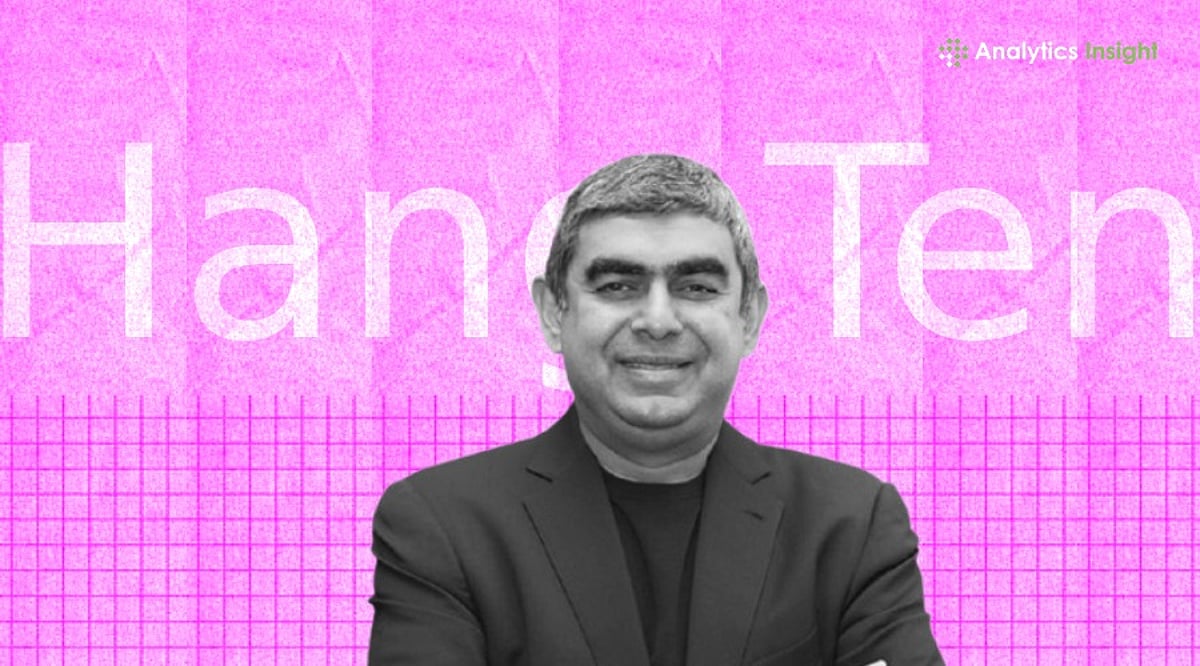
  • Vishal Sikka’s AI Startup Hang Ten Raises $32M to Transform Enterprise Software Development

    Vishal Sikka’s AI Startup Hang Ten Raises $32M to Transform Enterprise Software Development

    Former Infosys CEO Vishal Sikka has launched a new artificial intelligence venture, Hang Ten Systems, which has secured $32 million in seed funding. The round was led by venture capital firm Mayfield, with participation from Aramco Ventures and a group of angel investors.

    Based in Palo Alto, California, Hang Ten Systems aims to help large enterprises adopt AI more effectively by building and operating software using an AI-native delivery model. The company seeks to reduce the time, cost, and complexity traditionally associated with enterprise software development and deployment.

    In an official statement, Hang Ten explained: “Hang Ten offers a different operating model – software built, changed, and run at a fraction of the cost and time, continuously – with specialized capabilities in enterprise transformations, finance, HR, and new product development, supported by an expert FDE (forward deployed engineer) bench, re-usable skills library, and agentic code generation.”

    Hang Ten positions itself as a company offering a fresh perspective on IT services and enterprise software deployment. By leveraging agentic code generation, an AI library, and the right engineering skills, it can build and operate enterprise software more efficiently. Sikka noted that while companies are spending heavily on AI, many still fail to derive value from their investments. Hang Ten bridges that gap by enabling enterprises to design and modify their software quickly and cost-effectively.

    This is Sikka’s latest AI venture after founding Vianai Systems following his departure from Infosys in 2017. Before leading Infosys, Sikka served as Chief Technology Officer at SAP, where he was deeply involved in product innovation.

    During the announcement, Sikka stated that artificial intelligence is an incredible power for firms, and that Hang Ten’s mission is to enable enterprises to “succeed in the era of AI.” This comes at a time when the enterprise AI industry continues to expand, and companies are seeking measurable returns from their AI investments.

  • Gautam Adani Launches Vande Bharatam Initiative to Empower Entrepreneurs Across India

    Gautam Adani Launches Vande Bharatam Initiative to Empower Entrepreneurs Across India

    Adani Group Chairman Unveils National Program to Discover and Support Innovators

    Gautam Adani, Chairman of the Adani Group, has launched the Vande Bharatam initiative, a national effort to identify and nurture entrepreneurs, innovators, and problem-solvers from all corners of India. The program, announced on Adani‘s 64th birthday (June 25, 2026), aims to democratize access to mentorship, investor connections, and growth opportunities.

    “When I began my journey, I had nothing. Everything I am and everything I have achieved was given to me by the soil of Bharat. There is no shortage of talent in our nation, but opportunity has not always reached every corner of the country,” Adani said in a statement.

    What is the Vande Bharatam Initiative?

    The initiative is open to anyone with an idea, innovation, or entrepreneurial ambition—regardless of age, profession, education, or stage of development. Participants can apply with a concept, prototype, early-stage venture, or even an established business. A registered startup is not required.

    “India has built one of the world‘s largest startup ecosystems, yet most founders still emerge from a handful of cities. Vande Bharatam is our effort to discover the innovators, problem-solvers, and entrepreneurs whose ideas deserve recognition, support, and a larger platform,” Adani noted.

    How Will It Support Entrepreneurs?

    The program will span all 36 states and union territories, covering over 800 districts and multiple languages. Applications opened on June 24 at vandebharatam.org. A structured evaluation process will assess innovation, entrepreneurial potential, impact, and scalability. Detailed criteria, jury composition, and selection stages will be announced later.

    Entries are invited from sectors including technology, manufacturing, sustainability, agriculture, traditional crafts, and community-led solutions. Dedicated pathways will encourage participation from women entrepreneurs, tribal entrepreneurs, rural innovators, Divyang (differently-abled) entrepreneurs, and community-based innovators.

    From Regional Evaluation to Grand Finale

    After state and regional evaluations, 75 finalists will be invited to Ahmedabad for an intensive program featuring mentorship, industry interactions, and engagement with investors and business leaders. The Grand Finale is scheduled around India‘s Independence Day and will mark the start of an ongoing engagement platform connecting participants with mentors, investors, industry leaders, and fellow innovators.

    “If I can do it, any Indian can do it. All they need is an opportunity and a stage,” Gautam Adani said.

    What This Means for the Startup Ecosystem

    The Vande Bharatam program promises to open fresh avenues for emerging entrepreneurs by expanding access to mentorship, networks, and capital. As India’s startup ecosystem continues to grow, such initiatives can provide a much-needed boost for innovation and confidence.

  • MIT Spinout Ferveret Uses Nuclear-Inspired Cooling to Slash Data Center Energy and Water Use

    MIT Spinout Ferveret Uses Nuclear-Inspired Cooling to Slash Data Center Energy and Water Use

    Data centers are expanding rapidly to support the rise of artificial intelligence, and their energy consumption is projected to account for up to 17 percent of U.S. electricity by the end of the decade. Currently, about one-third of that power goes toward cooling the chips that run AI models. A new startup founded by two MIT researchers aims to change that by adapting a technique originally designed for nuclear reactors.

    Ferveret, co-founded by former MIT postdoc Reza Azizian and MIT Professor Matteo Bucci, has developed a liquid cooling system that uses no water and significantly less electricity than traditional air-based methods. The system submerges computer servers in a specialized fluid that absorbs heat far more efficiently than air. What sets it apart from other liquid cooling solutions is the size and behavior of the bubbles it generates: Ferveret’s Adaptive Phase Cooling (APC) technology produces much smaller bubbles that detach from the server surfaces more frequently, accelerating the heat transfer process.

    The company is already testing its technology with several major players, including CleanSpark, FuriosaAI, and Switch, one of the largest data center operators in the U.S. In collaboration with UCLA’s computer science department, Ferveret demonstrated that its APC solution improves computational power efficiency by 15 percent compared to state-of-the-art liquid cooling. When combined with the startup’s power control software, the system can boost the number of tokens generated per watt by up to 35 percent, according to the company.

    “Our goal is to make data centers as sustainable as possible and help them use every single watt of power to generate tokens, which are the most useful outputs,” says Azizian. “Our system enables the operation of more powerful chips, it helps data centers waste a lot less energy, and it accomplishes all that with zero water consumption.”

    The founders’ journey began during Azizian’s postdoc at MIT in 2013, where he worked with Bucci on heat transfer in nuclear reactors. After stints at Microsoft and Nvidia, Azizian realized the cooling inefficiencies in data centers firsthand. “I thought, ‘Holy crap, this is not how you cool facilities,’” he recalls. The pair founded Ferveret in 2021, applying decades of knowledge from nuclear engineering to optimize heat removal in computing environments.

    Ferveret’s system uses a liquid with a low boiling point and no toxic PFAS chemicals. The process, inspired by subcooled boiling in reactors, creates bubbles that quickly recondense, hastening the cooling cycle. The modular design—each server fits into a small box—makes deployment easier than traditional immersion tanks. The company also offers control software that dynamically adjusts power to each server for maximum efficiency.

    Beyond energy savings, the water-free cooling opens new possibilities for data center location. “The sun shines in places where you don’t have much water, so the advantage of us being water-free is we allow you to build data centers where you have solar energy but nothing to cool the data center down,” says Bucci. This could enable data centers in regions like Africa, the Middle East, and parts of America that lack water resources.

    Ferveret is part of Nvidia’s Inception program and is in talks with major cloud computing companies. The startup plans to announce expanded partnerships later this year as it scales its technology to support the growing AI industry without straining the planet.

  • India’s AI Startup Ecosystem Expands Beyond Bengaluru: Key Hubs and Specializations

    India’s AI Startup Ecosystem Expands Beyond Bengaluru: Key Hubs and Specializations

    India’s artificial intelligence ecosystem has entered a new phase. Bengaluru still dominates the funding charts and deep-tech innovation, but the country’s AI growth story no longer revolves around a single city. Hyderabad, Mumbai, Pune, Delhi-NCR, Chennai, and emerging cities like Kochi, Chandigarh, Ahmedabad, and Kolkata are developing specialized strengths in enterprise AI, fintech, healthcare, industrial automation, and language technologies.

    Why Bengaluru Continues to Lead India’s AI Economy

    Bengaluru remains the country’s biggest AI startup destination because of its unmatched scale. The city hosts India’s deepest pool of engineers, startup founders, venture capital firms, and multinational R&D centers. AI companies working on foundational models, cloud infrastructure, and enterprise software continue to choose Bengaluru as their primary base. Notable startups include Sarvam AI, Observe.AI, Mad Street Den, and Uniphore. Global firms have also strengthened Bengaluru’s position, driven by engineering talent and startup density.

    How Hyderabad Turned into India’s Fastest-Growing AI Hub

    Hyderabad has rapidly transformed from an IT outsourcing destination into one of India’s most ambitious AI ecosystems. Government-backed initiatives, better infrastructure, and lower operational costs have encouraged startups to expand aggressively. HITEC City and T-Hub have played a major role in building the ecosystem around enterprise technology and AI innovation. The city has gained traction in conversational AI, enterprise automation, and cloud technologies.

    Why Mumbai’s AI Ecosystem Focuses on Finance and Media

    Mumbai’s AI startup landscape reflects the city’s larger economy. Unlike Bengaluru’s engineering-heavy ecosystem, Mumbai specializes in fintech, advertising technology, and consumer-facing AI products. Banks, financial institutions, media companies, and large enterprises create strong demand for AI-driven analytics and automation tools. AI firms in Mumbai work on fraud detection, financial analytics, personalized advertising, and generative content systems.

    How Delhi-NCR Became a Major AI Innovation Corridor

    Delhi-NCR has quietly emerged as one of India’s strongest AI startup regions. The ecosystem spreads across Gurugram, Noida, and Delhi, creating a large network of enterprise software firms, logistics platforms, and edtech startups. AI companies operating in automation, mobility, and cloud infrastructure are increasingly based in the region. The region also benefits from access to policymakers and government-backed technology initiatives.

    Why Pune is Becoming an Engineering and Industrial AI Center

    Pune’s AI rise comes from its strong engineering and manufacturing base. The city is home to major automotive companies, industrial firms, and educational institutions, creating demand for AI-powered automation and predictive technologies. Startups in robotics, supply-chain optimization, and industrial analytics are increasingly choosing Pune. Lower operating costs and access to skilled engineering talent further strengthen its ecosystem.

    How Chennai Built a Strong Presence in Healthcare and Industrial AI

    Chennai’s AI ecosystem has developed around manufacturing, mobility, and healthcare. The city’s long-standing automotive and industrial network created early demand for AI-led automation. Healthcare technology has emerged as another important sector, with AI startups working on diagnostics, medical imaging, and hospital management systems. Engineering institutions and research centers continue supporting innovation in robotics, mobility technology, and semiconductor research.

    Why Ahmedabad is Emerging as a Growing AI Startup Destination

    Ahmedabad represents the expansion of India’s AI economy beyond Mumbai into western India. The city’s strong business culture and manufacturing ecosystem have encouraged startups building automation and analytics solutions for SMEs and industrial firms. AI companies in Ahmedabad focus on retail intelligence, logistics, and operational software. Lower business costs and faster operational execution are major advantages.

    How Kolkata is Building a New AI Startup Identity

    Kolkata entered the AI startup race later than most major cities, but the ecosystem has begun to show steady growth. Lower operating costs and a strong technical education network have helped several startups emerge in analytics, edtech, and language technologies. University incubators and state-backed innovation programs continue to support early-stage companies. Founders focus on niche areas such as regional-language AI and civic technology.

    Why Kochi and Chandigarh are Attracting the Next Generation of Founders

    India’s AI boom isn’t restricted to metros anymore. Kochi and Chandigarh have started luring startups because of cheaper costs, better infrastructure, and remote work capabilities. Kochi’s ecosystem revolves around health-tech, digital products, and marine technologies. Chandigarh has evolved into a thriving hub for SaaS and enterprise software startups targeting northern India. Remote working practices have lowered the need to recruit from Bengaluru-centric centers.

    Why India’s AI Future Now Belongs to Multiple Cities

    The AI ecosystem in India is slowly breaking free from centralized control. While Bengaluru continues to lead in funding, talent, and startups, other cities have found their own ways to attract entrepreneurs and venture capitalists. Hyderabad comes across as the key city for business development. Mumbai acts as the engine for AI implementation by businesses. Pune serves as the engine for industrial AI research and development. The Delhi-NCR region acts as the engine for both business software and governance technology. Smaller cities are now part of the conversation. The current Indian startup ecosystem has transformed into a diverse network of innovation centers, each developing specialized capabilities to drive progress in the artificial intelligence economy.