Category: Startups

  • MIT Affiliates Shine in Boston Globe’s Tech Power Players List, Underscoring State’s Leadership Potential

    MIT Affiliates Shine in Boston Globe’s Tech Power Players List, Underscoring State’s Leadership Potential

    The Boston Globe released its 2026 “Tech Power Players” list on June 9, recognizing 50 influential leaders in technology and business across Massachusetts. Eight MIT affiliates are among the honorees, including President Sally Kornbluth, CSAIL Director Daniela Rus, Professors Regina Barzilay, Yet-Ming Chiang, and Max Tegmark, along with Ana Bakshi (Executive Director of the Martin Trust Center for MIT Entrepreneurship), Katie Rae (CEO of Engine Ventures), and Senior Lecturer Brian Halligan. The list also features numerous MIT alumni.

    The coverage goes beyond individual accolades, spotlighting MIT’s research labs, innovation culture, industry ties, new AI initiatives, and the Institute’s commitment to maintaining Massachusetts’ technological edge. “Massachusetts can absolutely lead in this next wave,” President Kornbluth told the Globe, emphasizing opportunities in manufacturing, life and health sciences, quantum technologies, and energy.

    AI and Entrepreneurship at the Forefront

    MIT is driving artificial intelligence forward in sectors where the region excels, from biotechnology and robotics to defense and clean energy. The Institute is also broadening entrepreneurship through a “dorm-to-startup” push, creating a pipeline of support services that include hackathons, venture funding, and more than 150 courses and 85 centers dedicated to fostering entrepreneurial ventures.

    President Kornbluth is reinvigorating MIT’s support for the local innovation ecosystem by unveiling new online AI classes—offering free entry-level courses for anyone—and encouraging more on-campus entrepreneurship. The Globe notes that these free courses could help local tech leaders ensure that people, not just corporations, benefit from AI.

    MIT is carving a specialty in applied AI, sometimes called “AI+X,” deploying the technology to help businesses, hospitals, and research institutions supercharge productivity and innovation. Aman Narang ’04, CEO of Toast, commented, “The superpower has always been the university system. The best thing Boston can do is keep these people around.”

    To further support student entrepreneurs, President Kornbluth and Provost Anantha Chandrakasan formed the Committee on Accelerating Translation and Entrepreneurship (CATE) to explore how MIT can accelerate the movement of ideas from research into new ventures. Applications for the Martin Trust Center’s startup accelerator program have doubled from last year, and nearly 800 undergraduates attended a recent startup career fair.

    Startups Driving Innovation Beyond Campus

    MIT startup Liquid AI is developing models inspired by the brain structure of a simple worm, which could significantly reduce AI energy consumption. The models, capable of detecting financial fraud and piloting autonomous drones, require far less electricity than large language models. Liquid AI recently signed a deal with Mercedes-Benz to integrate its technology into vehicles sold in North America.

    In energy, Professor Yet-Ming Chiang’s lab is developing long-duration batteries that enable greater use of wind, solar, and other clean energy sources. The lab and other MIT research centers are also working on innovations in microchips, critical minerals, fusion technology, and defense tech—examples of “tough tech” that Chiang says are in the sweet spot of the Boston ecosystem.

    Eighty MIT students will work as summer interns at GE Vernova through the MIT-GE Vernova Climate and Energy Alliance, a $50 million, five-year collaboration funding internships and research projects. GE Vernova CEO Scott Strazik emphasized the importance of plugging into MIT’s innovation culture.

    Quantum and the Future

    When asked about the most promising aspect of the Greater Boston tech scene, Daniela Rus pointed to talent: “Boston has the best AI researchers in the world, and they’re producing genuinely new ideas, not incremental ones.” Bob Mumgaard SM ’15, co-founder of Commonwealth Fusion Systems, noted that Massachusetts’ expertise in engineering and manufacturing made it the only place he could build his fusion energy company. “The ecosystem has the building blocks,” he said. “Massachusetts is the strongest in the nation in innovation in energy.”

    President Kornbluth highlighted quantum science and technology: “There isn’t a more important technological field right now than quantum science and technology, and the Boston area has the greatest concentration of quantum talent anywhere in the world.”
  • From IIT to AI Search: The Unconventional Rise of Perplexity’s Aravind Srinivas

    From IIT to AI Search: The Unconventional Rise of Perplexity’s Aravind Srinivas

    In early 2025, Perplexity entered India through a major partnership with Bharti Airtel, giving millions of users access to Perplexity Pro almost overnight. On the surface, it looked like another telecom-AI announcement. Inside the technology industry, however, the deal carried a different meaning.

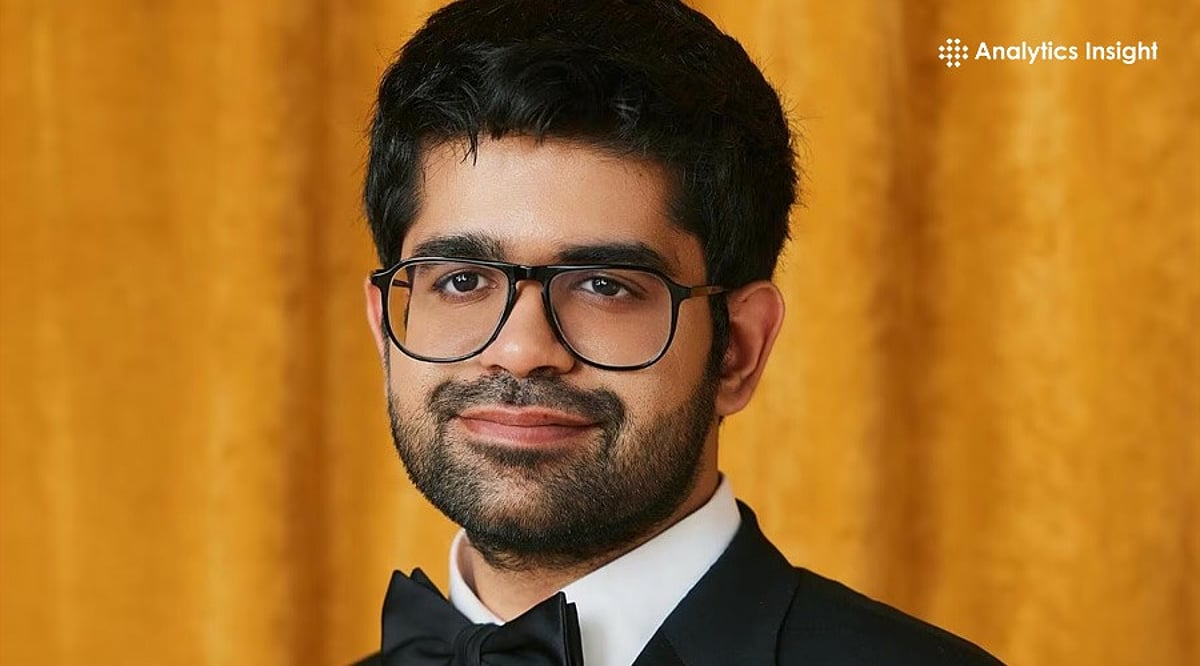
    A startup founded in 2022 was now entering India at a massive scale while positioning itself as an alternative to Google’s dominance in online search. Leading that company was Aravind Srinivas, a Chennai-born engineer who joined IIT Madras in electrical engineering and was unable to transfer into computer science after narrowly missing the required GPA cutoff.

    Perplexity’s rise has been unusually fast, even by Silicon Valley standards. According to reports citing investor discussions, the company reached multi-billion-dollar valuations within roughly two years of launch as investors rushed toward generative AI startups. At the same time, the company has faced growing scrutiny over attribution, scraping practices, and the legal boundaries surrounding AI-generated information products.

    What makes Aravind Srinivas’s story compelling is how imperfect and unpredictable it feels. His journey has been shaped by ambition, self-doubt, deep focus on research, strong product instinct, and constant public scrutiny, rather than a smooth path to success. Srinivas grew up in Chennai in a family where academic achievement was highly valued.

    In a conversation on the Lex Fridman Podcast, he spoke about the culture surrounding IIT admissions and the pressure attached to engineering entrance exams in India. By the time he entered the country’s competitive coaching ecosystem, academic performance had already become central to his life. That unexpected shift changed the direction of his learning.

    Instead of depending entirely on departmental coursework, he began teaching himself programming outside the classroom. He learned Python independently, enrolled in machine learning coursework available outside his department, and became involved in AI research under Professor Balaraman Ravindran.

    While still an undergraduate, Srinivas contributed to research connected to major AI conferences, including NeurIPS, AAAI, and ICLR. The experience exposed him early to deep learning research during a period when modern AI systems were still largely confined to academic labs rather than mainstream products. By the end of his undergraduate years, Srinivas had already moved across mathematics, coding, AI research, and systems thinking. The combination would later become central to his work in AI.

    He started pursuing his PhD in computer science at the University of California in 2017, where he worked on machine learning systems, generative models, and transformer-related research. Between 2019 and 2021, he interned at OpenAI, DeepMind, and Google Brain during the period just before large language models entered mainstream public attention. Those experiences became some of the most defining moments of his career.

    In podcast interviews, Srinivas said that when he entered environments filled with highly skilled engineers and researchers, he realized that he needed to improve his programming skills and ability to solve problems from the basics. He described the experience as motivating rather than discouraging.

    Instead of retreating from the field, he immersed himself more deeply in large language models and scaling systems research. The tone of those interviews felt very different from the polished image often associated with Silicon Valley founders. In those interviews, Srinivas spoke less about confidence and more about aggressively closing gaps in his own knowledge.

    In 2022, Aravind Srinivas co-founded Perplexity with Denis Yarats and Johnny Ho. Computer scientist Andy Konwinski also became an early supporter and close collaborator. The timing was important. Interest in generative AI was growing quickly, but internet search still mostly worked the same way it had for years, with users typing keywords and receiving pages of links.

    Perplexity tried to simplify that experience. Rather than functioning as a traditional search engine, the company positioned itself as an answer engine that used large language models (LLMs) to generate conversational responses while retrieving information from live web sources.

    Citations became an important part of Perplexity’s identity since many AI products were already facing criticism for hallucinations, where systems generate false or unsupported information. To separate itself from competitors, Perplexity designed its interface to display source links alongside AI-generated answers.

    Perplexity grew quickly as millions of users started using it for research, summaries, coding help, and everyday questions. Its partnership with Bharti Airtel later showed that the company’s strategy was not only focused on improving research quality but also on reaching more users through wider accessibility, especially in markets where smartphone usage was growing faster than traditional desktop search habits.

    But Perplexity’s rapid rise also brought intense criticism. In 2024, Forbes and WIRED reported that Perplexity had plagiarized paywalled content without giving enough credit to the original publishers. The Verge separately reported concerns around scraping practices that appeared to bypass publisher-set restrictions such as robots.txt preferences.

    Some publishers responded with legal threats, arguing that AI-generated summaries could reduce the value of original journalism. The issue soon grew into a larger debate about copyright, fair compensation, and the future of online publishing in the AI era.

    In posts published on X during mid-2024, Srinivas acknowledged shortcomings in Perplexity’s early attribution systems and said the company was working on improving citation visibility and publisher relationships.

    At the same time, he defended AI-powered search as an inevitable shift in how people would consume information online. That tension now sits at the center of Perplexity’s identity. The company is simultaneously viewed as one of the most promising consumer AI startups and one of the clearest examples of the unresolved conflicts shaping the modern AI industry.

    Aravind Srinivas’s rise from IIT classrooms to the center of Silicon Valley’s AI race does not offer a simple formula for success. His journey shows that the AI industry now values people who can quickly combine research, engineering, and product thinking, even without following a traditional career path.

  • Why India’s Next Startup Wave Is Hidden in Supply Chains: Piper Serica’s Ajay Modi on Deeptech Investing

    Why India’s Next Startup Wave Is Hidden in Supply Chains: Piper Serica’s Ajay Modi on Deeptech Investing

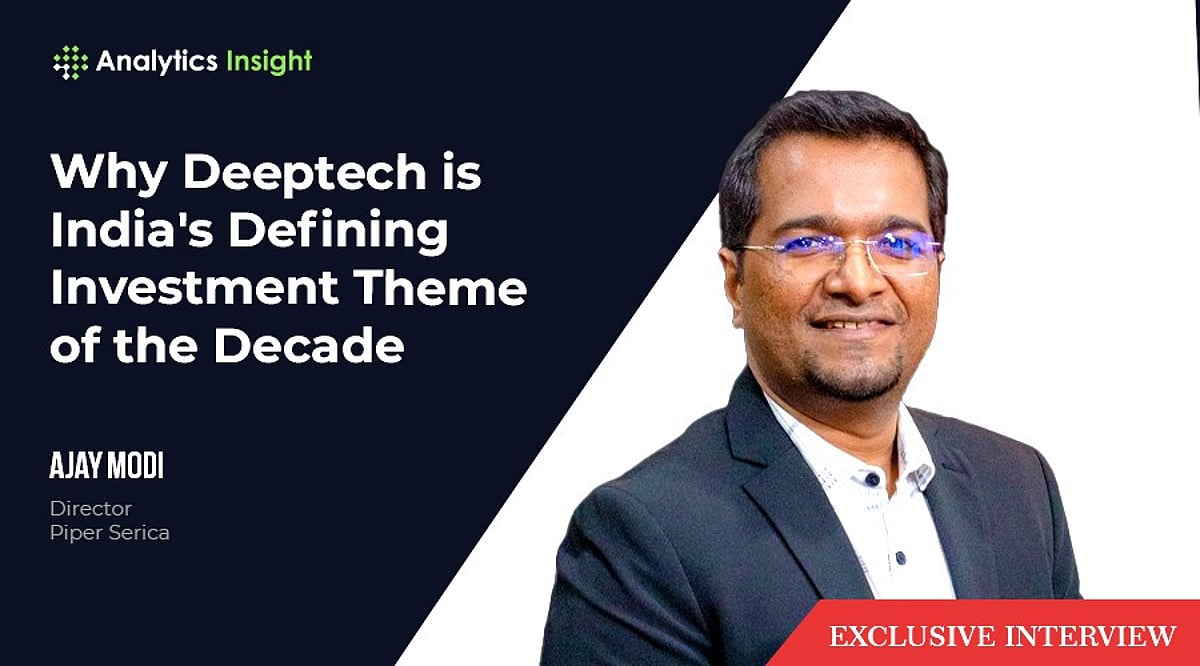
    India’s venture capital story is being rewritten. The capital that once chased consumer internet growth at any cost is now flowing toward deep engineering, sovereign technology, and industrial capability. Ajay Modi, Director at Piper Serica, has been at the center of this shift. His firm’s portfolio spans laser space communication, edge AI chips, underwater robotics, airport operating systems, and India’s first resonance-based rocket ignition system.

    In this exclusive conversation with Analytics Insight, Modi breaks down why deeptech has become the defining investment theme of India’s next economic cycle and what it takes to build companies that matter inside strategic industries.

    How Venture Capital Priorities Are Evolving in India

    Indian tech startups raised about $7.4 billion in 2024, up 23 percent from 2023, with deeptech alone drawing around $1.6 billion and growing roughly 78 percent in a year. Nasscom and Zinnov now count more than 4,000 deeptech startups within a base of 32,000–35,000 tech ventures.

    Piper Serica’s Fund I has backed over 33 companies across deeptech, spacetech, defence, semiconductors, fintech infrastructure, and mobility. Newer deals concentrate in IP-led hardware, firmware, and system software. First founder meetings now open with orbit plans, chip architectures, or reliability data—not only GMV charts.

    This shift follows a reset after the 2020–2021 liquidity cycle, when capital largely chased consumer internet businesses that scaled fast on subsidies and marketing. Investors saw that scale without defensible capability created fragile companies once acquisition costs rose and capital tightened. Deeptech has become a clear winner from this correction.

    What Drives Interest in Spacetech, Semiconductors, Robotics, Defence, and Precision Manufacturing?

    Investor interest in these sectors rises where three lines meet: national policy support, large end demand, and a rewiring of global supply chains. India’s space economy stands near $8–8.5 billion and targets $40–45 billion by the early 2030s. More than 400 space startups have attracted over $500 million. In semiconductors and electronics, the Semicon India and component PLI stack targets around $300 billion of electronics output with deeper local value addition.

    On the talent side, founders now come from ISRO, DRDO, global chip companies, and top IIT labs. Piper Serica’s portfolio reflects this mix across spacetech, chip design, mobility electronics, cyber security, and industrial software.

    How India’s Manufacturing and Self-Reliance Push Shapes VC Decisions

    Electronics output in India has grown from about $10 billion in 2014 to roughly $115 billion today. Local factories now meet close to $110 billion of the $140 billion of domestic demand. Programmes like iDEX and IN-SPACe’s Technology Adoption Fund lower early revenue risk and lengthen runway for hardware and industrial companies.

    Piper Serica now treats such programs almost like demand pipelines. For venture investors, capital is shifting from funding user acquisition to funding companies that can become long-term infrastructure layers inside strategic industries.

    Opportunities in Aviation, Infrastructure, Electronics Systems, and Advanced Industrial Tech

    The next three to five years can be India’s most important industrial buildout in decades. In aviation, real value will sit in software and airport tech. At Chennai airport, Piper Serica’s portfolio company Blunav cut runway occupancy time by 22 percent across more than 3,500 flights. Electronics systems offer a second wave, while robotics, industrial AI, and autonomous inspection represent a third wave. The most valuable companies may be those hidden inside supply chains, compounding quietly through efficiency.

    How Evaluation Frameworks Differ for Industrial and Deeptech vs. Consumer

    Consumer investing focuses on speed and metrics like CAC, retention, and growth rate. Tech investing is engineering-led—investors test whether the core system works, is defensible, and runs reliably in demanding real-world settings. Diligence goes into IP strength, field reliability, manufacturing repeatability, regulatory paths, certifications, and integration risk. Timelines differ: consumer products can ship in weeks; deeptech teams may spend years hardening hardware and software. Competitive moats come from engineering depth and long contracts embedded inside customer operations.

    Technology Depth and Industrial Relevance Over Scale-Focused Growth

    India’s “easy growth” phase is over. Profitability, resilience, and defensibility sit at the centre of investment debates. Thrustworks Dynetics, a Piper Serica portfolio company, test-fired India’s first resonance-based rocket ignition system with only about ₹7 crore of seed funding—a sharp example of deep hardware success. Scale still matters, but the most sought-after companies now pair scale with hard engineering, proprietary systems, and real industrial relevance.

  • India’s Tech Titans and AI Frontier: Analytics Insight’s June 2026 Issue Highlights

    India’s Tech Titans and AI Frontier: Analytics Insight’s June 2026 Issue Highlights

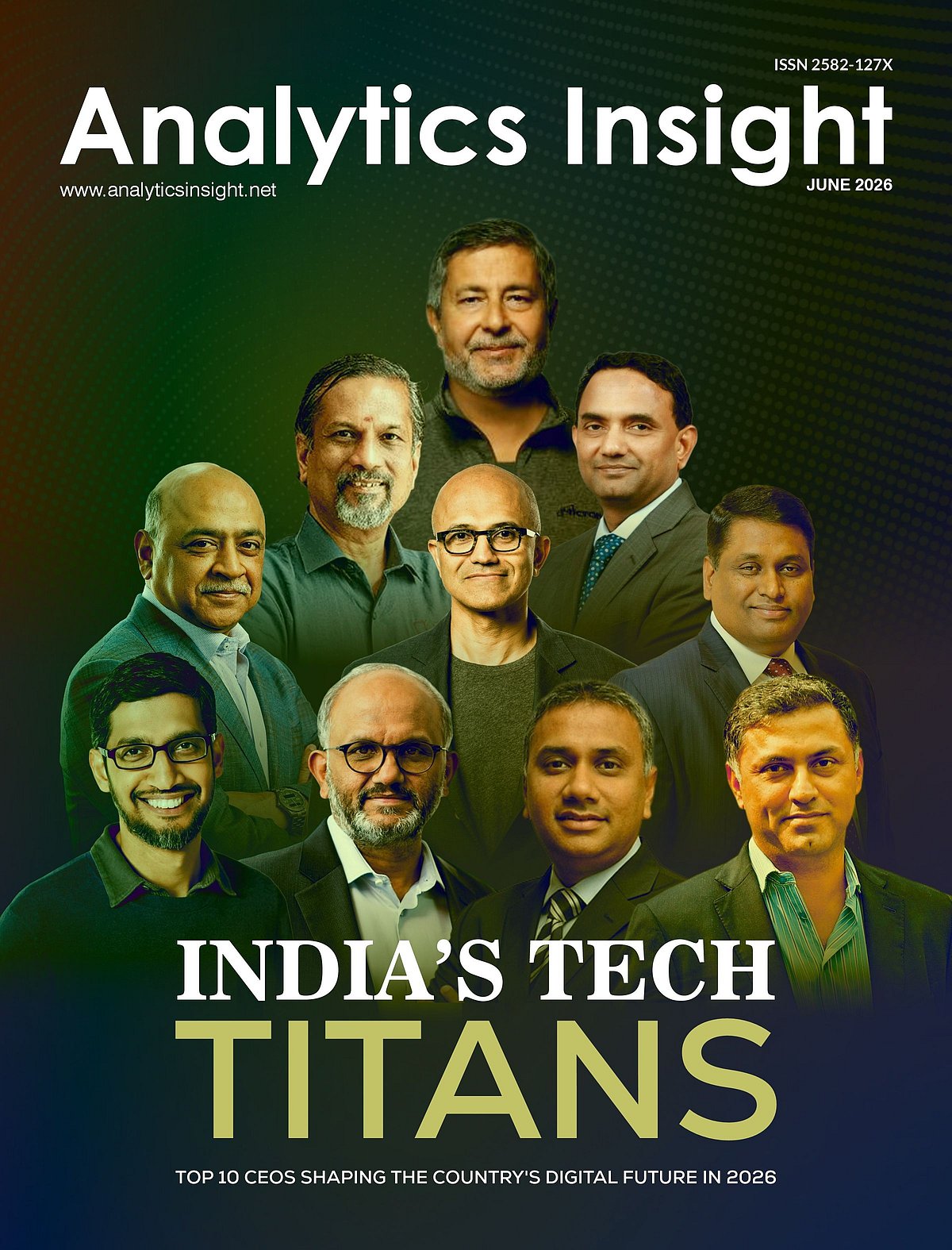
    Analytics Insight’s June 2026 issue delivers a comprehensive look at India’s rapidly evolving technology landscape, profiling the nation’s top 10 tech CEOs who are shaping the digital future—from Sundar Pichai to Bhavish Aggarwal. The edition dives deep into semiconductors, space startups, fintech, and AI leadership readiness.

    Key Articles in This Issue

    • Capability Over Scale: Piper Serica’s Ajay Modi argues that India’s most important startups are hidden inside supply chains.
    • Aravind Srinivas and the Rise of Perplexity: From IIT classrooms to the center of the AI search race.
    • Leading Without the Noise: The Salil Parekh way.
    • Semiconductor Dreams: Can India build a chip industry from scratch?
    • Roshni Nadar Malhotra’s Journey: From media to HCLTech leadership.
    • How Small-town India Became the World’s Most Exciting Fintech Market.
    • Building Intelligence for a Billion Voices: Vivek Raghavan’s next national infrastructure bet.
    • Bhavish Aggarwal’s Journey: From Ola Cabs to Ola Electric and Krutrim AI.
    • India’s Private Space Startups: Who will be the country’s SpaceX?

    This issue underscores India’s ambition to lead in AI, semiconductors, and space technology, with detailed analysis and exclusive interviews. Whether you’re tracking the fintech revolution or the rise of indigenous AI models, the June 2026 edition is a must-read.

  • Comparing Generative AI Coding Tools: Which Offers the Most Value for Developers in 2026?

    Comparing Generative AI Coding Tools: Which Offers the Most Value for Developers in 2026?

    Generative AI coding tools are becoming a standard part of software development. They help developers write, review, and improve code more efficiently. Comparing their features and workflows reveals which tools deliver the greatest value in 2026.

    Overview

    Windsurf and Amazon Q Developer, two familiar AI coding brands, will have each moved into different product areas by mid-2026, reshaping the competitive landscape. GitHub Copilot, Cursor, Claude Code, and Kiro have emerged as the four tools that are actually shaping how developers choose AI coding help today. Pricing across the category has shifted from flat subscriptions to usage-based credits, changing how teams should evaluate cost.

    Choosing an AI coding tool is now much harder than choosing a programming language. The names of the tools developers trusted a year ago have changed, merged, or shifted their direction. Windsurf is now part of Devin Desktop, and Amazon is moving developers from Q Developer to Kiro. The bigger change, however, is that AI coding tools now serve very different workflows. Comparing them by brand alone is no longer enough.

    AI Coding Tools at a Glance

    Claude Code: Built for Complexity

    Claude Code runs from the terminal, not inside an editor. This is a deliberate design choice rooted in a specific philosophy: for genuinely complex engineering work, the file you are editing is rarely the whole problem. It reads the entire codebase, plans changes across multiple files, and refactors code by understanding how everything works together. Its large context window is the engine behind this. For backend systems, infrastructure work, or legacy codebases where cross-file relationships pose the real challenge, Claude Code operates at a depth that editor-based tools rarely reach.

    Cursor: The IDE Reimagined

    Cursor does not add AI to an existing editor. It builds the editor around AI from the start. Multi-file editing, repository-wide context, and conversational assistance are not features you enable. They are simply how the tool works. For developers who spend most of their day inside an IDE, Cursor reduces the need to switch between tools. Developers can edit multiple files, understand repository context, and generate new code without leaving the IDE.

    GitHub Copilot: The Reliable Standard

    GitHub Copilot remains the easiest AI coding assistant to adopt. It works inside popular editors such as VS Code, JetBrains, and Neovim without changing existing workflows. Teams already on GitHub can adopt it with almost no friction. Newer tools have pushed further into deep repository reasoning. But for the work that makes up most of a developer’s day, Copilot remains consistent, fast, and dependable.

    Kiro: Amazon’s Next Move

    Kiro approaches development from a different angle entirely. It starts from structured specifications rather than open-ended prompts, and it integrates directly with AWS services in ways that general-purpose tools cannot replicate. For teams building cloud-native applications on AWS, that specificity is a genuine advantage. Amazon is positioning Kiro as the successor to Q Developer, and the direction is clear, even if the ecosystem is still maturing.

    What the Benchmarks Now Measure

    Reliable code completion is now common across leading AI coding tools. The real difference lies in how well each tool understands the entire project before making changes. Benchmarks like SWE-bench Verified now test whether an AI can resolve a complete software issue end-to-end. That is a harder test and a more honest one.

    Choosing the Right Tool

    Pick GitHub Copilot for fast, reliable completion that fits into your current setup. Pick Cursor for an AI-first editing experience with real multi-file capability. Pick Claude Code for large-scale codebases, enterprise systems, and complex engineering where project-wide understanding matters. Pick Kiro when AWS is your primary environment and cloud-native integration is a priority. No single tool wins across every context. The best choice is the one that fits how you actually build software, not the one with the most visible brand.

    Why This Matters

    AI coding tools are changing how developers build software by speeding up development, improving code quality, and reducing repetitive work. Knowing the strengths of each tool helps individuals and teams choose the right assistant, improve productivity, control costs, and build better applications with greater confidence.

    Final Thoughts

    AI coding tools have moved well beyond simple code completion. They now help developers understand entire projects, refactor code, and automate complex development tasks. That makes choosing the right tool less about finding the biggest brand and more about matching the tool to the way a team builds software. The strongest choice is the one that fits the workflow, development environment, and scale of the projects being built.

  • June 2026 Issue: India’s Top Tech CEOs and the Rise of Semiconductor, Fintech & Space Startups

    June 2026 – Analytics Insight

    Analytics Insight’s June 2026 issue delivers a comprehensive look at India’s digital transformation, featuring in-depth interviews, industry analyses, and exclusive stories. The spotlight is on the country’s top ten tech CEOs—from Sundar Pichai to Bhavish Aggarwal—who are redefining the global tech landscape. Alongside these leadership profiles, the issue dives into groundbreaking developments in semiconductors, space startups, fintech, and AI readiness.

    Top Articles in This Issue

    • Capability Over Scale: Ajay Modi of Piper Serica explains why India’s most vital startups are hidden inside supply chains, from rocket igniters to edge AI chips.
    • From Rocket Igniters to Edge AI Chips: An exclusive look at Piper Serica’s bet on India’s industrial future.
    • Aravind Srinivas and the Rise of Perplexity: How an IIT alumnus built a leading AI search engine.
    • Leading Without the Noise: The Salil Parekh Way: A leadership lesson in quiet impact.
    • Semiconductor Dreams: Can India build a chip industry from scratch?
    • Roshni Nadar Malhotra’s Journey: From media to HCLTech leadership.
    • How Small-town India Became the World’s Most Exciting Fintech Market: A deep dive into the fintech revolution.
    • Building Intelligence for a Billion Voices: Vivek Raghavan’s next national infrastructure bet.
    • Bhavish Aggarwal’s Journey: From Ola Cabs to Ola Electric and Krutrim AI.
    • India’s Private Space Startups: Who will be the country’s SpaceX?

    This issue is a must-read for anyone tracking India’s ascent in technology, innovation, and entrepreneurship.

  • Leading TON Blockchain Tokens by Market Cap in 2026

    Leading TON Blockchain Tokens by Market Cap in 2026

    The Open Network (TON) ecosystem continues to expand, with a diverse range of tokens powering decentralized applications, gaming, finance, and community engagement. Here are the top TON blockchain tokens by market capitalization in 2026:

    • Toncoin – The native cryptocurrency of TON, enabling transactions, staking, governance, and decentralized applications across the network.
    • USDT on TON – Tether’s stablecoin on TON provides fast, low-cost transactions, improving payments, trading, remittances, and DeFi accessibility worldwide.
    • Notcoin – A community-driven gaming token that gained popularity through Telegram integration, boosting user engagement and TON ecosystem adoption.
    • Dogs – A meme-inspired TON token leveraging Telegram’s massive user base, combining entertainment, rewards, and decentralized participation.
    • Catizen – A gaming-focused token supporting blockchain-based virtual pet experiences, rewarding players and driving decentralized gaming adoption.
    • Hamster Kombat – A play-to-earn gaming token on Telegram, attracting millions with engaging gameplay and blockchain-powered digital economies.
    • STON.fi – A decentralized exchange token facilitating liquidity, governance, and seamless token swaps across the TON network.
    • DeDust – An automated market maker protocol token enabling decentralized liquidity pools and efficient token exchanges for TON DeFi.
    • EVAA Protocol – A lending protocol token supporting decentralized borrowing and lending, helping users earn yields and improve financial utility within the TON ecosystem.
  • MIT Startup Spotlight: Breakthroughs in AI, Sustainability, and Engineering

    MIT Startup Spotlight: Breakthroughs in AI, Sustainability, and Engineering

    MIT continues to drive innovation through its vibrant startup ecosystem, with recent ventures spanning cooling systems for data centers, real-time retail tracking, reusable emergency housing, and AI-driven protein design. Here are the latest developments from the Institute’s entrepreneurial community.

    Sustainable Data Center Cooling

    Ferveret, a startup founded by two MIT researchers, uses a nuclear-inspired cooling system to reduce the energy and water required for AI chips in data centers.

    Real‑Time Retail Tracking

    Cartesian, based on MIT‑invented technology, helps retailers track products in real time, with potential applications in manufacturing, logistics, and robotics.

    Reusable Emergency Housing

    Uplift Microhome won the MIT $100K competition with modular housing units that provide their own power and water, enabling faster disaster response.

    AI‑Driven Protein Design

    OpenProtein.AI, co‑founded by MIT alumni, offers open‑source models and tools for protein engineering, making advanced design accessible to biologists everywhere.

    These stories are just a glimpse of how MIT’s research and entrepreneurial initiatives continue to solve real‑world problems across industries.