Blog

  • Free Up Fire TV Storage Without Removing Apps: Proven Tips & Tricks

    Free Up Fire TV Storage Without Removing Apps: Proven Tips & Tricks

    Fire TV storage can fill quickly due to cached data, unused apps, and forgotten downloads. Many users face recurring ‘critically low on storage’ warnings, especially on entry-level models with only 8GB of internal storage (around 5GB usable). Fortunately, you can reclaim significant space without deleting a single app. Fire OS includes built-in tools to clear cache, offload idle apps, and manage files. Here’s how to do it step by step.

    Why Fire TV Storage Fills Up Fast

    Amazon’s streaming devices ship with modest storage compared to modern smartphones. The Fire TV Stick 4K Max (late 2023) offers 16GB total, with roughly 12GB usable. Standard Fire TV Stick and Lite models have only 8GB, leaving under 5.5GB for apps and cached data. Unlike phones, Fire TV lacks cloud storage or expandable partitions, so cache and temporary data accumulate quickly.

    Step 1: Clear App Cache and Data

    Go to Settings > Applications > Manage Installed Applications. Select ‘Clear all Application Caches’ to instantly reclaim gigabytes. For individual apps, choose the app, then tap ‘Clear Cache’ (and ‘Clear Data’ if you want to reset the app entirely — note that clears logins). A recent test recovered roughly 2GB using the single cache-clear toggle without removing any installed software.

    Step 2: Let Auto Offload Do the Work

    Newer Fire OS versions include an automatic offloading feature that removes infrequently used apps (idle for over 30 days) while preserving their data. Reinstalling later restores everything. This runs silently in the background and cannot be disabled. Note: it only works for apps from the Amazon Appstore — sideloaded APKs must be managed manually.

    Step 3: Trim Background Processes

    Background activity can slow performance and eat resources. Close unused apps before putting the device to sleep. On older Fire TV models, a background limit toggle exists in Developer Options. On newer builds, use the Manage Installed Applications menu to force-stop resource-hungry apps.

    Step 4: Manage Downloads and Sideloaded Files

    APK installer files often remain after sideloading. Open the Downloader app, navigate to Files, long-press the file, select it, and delete it. Regularly check the Downloads folder for leftover installers. Also, transfer personal media (videos, photos) to external storage using a USB OTG adapter to free internal space.

    Step 5: Expand Storage via USB OTG

    Fire OS supports external USB drives up to 128GB through an OTG adapter. This is ideal for large media files, but core system apps still reside on internal storage, so regular cache management remains essential.

    Final Thoughts

    Persistent low-storage warnings rarely mean you need a new device. Regular cache clearing, reliance on Auto Offload, mindful background management, and periodic file cleanup can restore meaningful space in minutes. These built-in Fire OS tools prove that a factory reset or new purchase is often unnecessary when the right settings are already available.

  • How Crypto Investment Strategies Evolved: From Bitcoin Holding to ETFs and AI in 2026

    How Crypto Investment Strategies Evolved: From Bitcoin Holding to ETFs and AI in 2026

    Cryptocurrency investing has changed substantially from Bitcoin’s early buy-and-hold culture. In 2026, investors can choose regulated exchange-traded products, diversified portfolios, stablecoins, tokenized assets and decentralized finance (DeFi) strategies. Institutional participation is also pushing crypto portfolio construction closer to traditional asset management.

    From Bitcoin Holding to Portfolio Allocation

    Early crypto investing largely revolved around purchasing Bitcoin directly and holding it through market cycles. That approach remains popular, but investors increasingly treat crypto as one component of a broader portfolio. The 2026 Bitwise survey found that among client portfolios already holding crypto, 64% had allocations above 2%, compared with 51% in 2024. Meanwhile, 42% of financial advisers said they could purchase crypto in client accounts, up from 19% in 2023.

    ETFs Changed How Investors Access Crypto

    Spot exchange-traded products have reduced the need for investors to manage wallets and private keys directly. Digital-asset ETPs reached more than USD 250 billion in assets at their peak before ending 2025 with USD 184 billion under management. Bitcoin products represented 78.2% of year-end assets, while Ethereum products held USD 26.5 billion, according to CoinDesk Research. Institutional preferences reinforce this shift. A 2026 Coinbase and EY-Parthenon survey of 351 institutional investors found 66% already had exposure through spot crypto ETPs, while 81% preferred accessing spot crypto through registered investment vehicles.

    Risk Management is Becoming More Important

    Crypto’s volatility has encouraged investors to focus increasingly on position sizing, liquidity and diversification rather than maximizing exposure. The same institutional survey found that 49% of respondents had increased their emphasis on risk management, liquidity and position sizing. Regulatory compliance and security or key-signing protocols were each identified by 66% as important considerations when selecting custodians.

    Stablecoins and Tokenization Expand the Strategy

    Investment strategies are also moving beyond cryptocurrencies themselves. Around 85% of surveyed institutions were using or interested in using stablecoins for internal cash management and money movement. Additionally, 63% expressed interest in investing in tokenized assets, while 64% of asset managers were interested in tokenizing their own assets. Traditional finance is accelerating this convergence. Nasdaq announced a USD 100 million investment in Kraken parent Payward on September 10, expanding a partnership focused on infrastructure for tokenized equities.

    AI is Entering Crypto Investing

    Artificial intelligence is increasingly used for market research, sentiment analysis, portfolio construction and execution. However, automation does not guarantee better returns. A September 2026 academic review found progress in AI-based prediction and investment workflows but no general AI architecture with demonstrated persistent, cross-market net alpha after accounting for execution costs and changing market conditions.

    Final Thoughts

    The next phase of crypto investing may look increasingly familiar to traditional finance: diversified exposure, regulated products, disciplined position sizing and stronger risk controls. The technology is changing, but one investment principle remains constant: greater access does not eliminate risk.

    FAQs

    1. How have cryptocurrency investment strategies changed over time? Early strategies largely focused on buying Bitcoin and holding it through market cycles. Investors can now use ETFs, diversified crypto portfolios, stablecoins, tokenized assets and institutional-grade investment products to build more structured exposure.
    2. Why have crypto ETFs become important for investors? Crypto ETFs provide exposure through regulated investment vehicles without requiring investors to directly manage wallets or private keys. Institutional adoption has increased as these products integrate more easily with conventional portfolios and brokerage accounts.
    3. How are institutional investors approaching cryptocurrency in 2026? Institutions are increasingly emphasizing portfolio allocation, liquidity, position sizing, custody and risk controls alongside potential returns. Many are also exploring stablecoins and tokenized assets as digital finance becomes integrated with traditional markets.
    4. What role do stablecoins and tokenized assets play in crypto investment strategies? Stablecoins can support liquidity, payments and cash management, while tokenization brings traditional assets such as equities and bonds onto blockchain infrastructure. Together, they expand crypto strategies beyond simply investing in volatile cryptocurrencies.
    5. Is AI changing cryptocurrency investment strategies? AI is increasingly used for market research, sentiment analysis, portfolio construction and automated execution. However, research has not established that AI can consistently generate superior returns across changing crypto markets after accounting for costs and risks.
  • Cloud Gaming Decoded: How Streaming Works and What’s Next

    Cloud Gaming Decoded: How Streaming Works and What’s Next

    Cloud gaming is transforming how players access video games, removing the need for expensive hardware and massive downloads. Instead of running a game locally on a PC or console, the game executes on remote servers, with the gameplay streamed directly to your device over the internet. All you need is a compatible screen and a stable connection—whether it’s a laptop, smartphone, tablet, or smart TV.

    How Cloud Gaming Works

    The process begins in a data centre, where powerful servers host the game. These machines handle all the heavy lifting—rendering graphics, processing physics, simulating lighting, and managing sound. Once the game is running, the server encodes the visual output into a video stream and sends it to your device. When you press a button, your command travels back to the server, which processes it and updates the stream accordingly. This entire loop repeats continuously while you play.

    Latency, or the delay between your input and the on‑screen response, is critical. A slow or unstable internet connection can introduce noticeable lag, making it difficult to react quickly in competitive games. For a smooth experience, NVIDIA recommends a delay under 80 milliseconds and a network speed of at least 25 Mbps for 1080p gaming at 60 frames per second. The physical distance to the server also matters—the closer you are, the faster your commands travel, which is why providers are expanding their data centre footprints globally.

    The Hardware Shift

    Cloud gaming fundamentally challenges the traditional notion that playing high‑end games requires a powerful local machine. A demanding AAA title can occupy over 100 GB of storage and demand a top‑tier graphics card—a cost barrier for many. With cloud gaming, the game lives in the cloud, so even a basic laptop can stream visually intensive experiences. This accessibility has sparked significant growth in the market, estimated at USD 3.4 billion in 2025 and projected to surge to USD 62.9 billion by 2033, with a compound annual growth rate of 43.7%.

    Key Players and Limitations

    Microsoft’s Xbox Cloud Gaming and NVIDIA’s GeForce NOW are the frontrunners, letting users stream games across a variety of devices. Xbox Cloud Gaming works on consoles, PCs, mobiles, and select smart TVs, while GeForce NOW focuses on PC titles, allowing subscribers to play on hardware they already own. Despite these advancements, cloud gaming isn’t without its challenges. A poor internet connection can degrade the experience, and for esports or latency‑sensitive games, even a few milliseconds of added delay can be a deal‑breaker for some players. Many gamers still prefer the stability and responsiveness of local hardware.

    What’s Next

    As broadband infrastructure improves and 5G becomes more widespread, cloud gaming is likely to evolve from a niche into a mainstream option. The technology won’t necessarily replace local gaming, but it offers a convenient alternative—one that lets you play the latest titles without upgrading your PC or console. The future will likely see a hybrid model, where players switch between local and cloud gaming depending on the game, their device, and their connection. With companies investing heavily in data centres and services, cloud gaming is poised to reshape how we think about access to games.

  • Apeing Presale at $0.0004: Could This Be the Next Major Crypto Wealth Story of 2026?

    Apeing Presale at $0.0004: Could This Be the Next Major Crypto Wealth Story of 2026?

    Could the next crypto breakout be taking shape before the crowd even sees it coming? Avalanche, Litecoin, TRON, Cardano, Solana, and Stellar each bring a distinct strength to the crypto market. Avalanche focuses on customizable blockchain infrastructure, Litecoin on fast payments, TRON on smart contracts, Cardano on research-driven proof-of-stake, Solana on high-performance apps, and Stellar on payments and smart contracts. Together, they represent major directions in crypto. Now, Apeing adds a new dimension with its official live presale, bringing meme coin culture, community energy, and utility into the conversation. That puts Apeing firmly into the best crypto presales 2026 conversation. If you are comparing the best altcoins to buy, the current opportunity is gaining urgency as limited tokens are being snapped up fast. Waiting could mean missing the present stage before the next price step.

    1. Apeing – A Live Presale Challenger Among the Best Altcoins to Buy

    The Apeing presale is officially live in Stage 3, giving you access to the current phase before the next pricing step arrives. With allocation limited, tokens are being snapped up fast, making the current window increasingly time-sensitive. Once this stage fills, the presale moves forward and the price can change, leaving late entrants facing a different entry point. For those tracking the best altcoins to buy and best crypto presales 2026, Apeing is becoming harder to overlook. The opportunity is already underway, and waiting could mean missing the current entry window. If Apeing fits your search, joining the presale now puts you ahead of the next stage instead of chasing it after the allocation has moved.

    No Downtime Between Stages Keeps the Presale in Motion

    Apeing’s presale is designed to move continuously rather than pause between stages. Once one stage reaches its deadline or sells out, the following stage begins immediately, keeping the presale structure active throughout the 33-stage journey. Each stage has its own allocation and price, so the progression is easy to follow. This setup also means participants can track where the presale currently stands and see how the token price changes as the project advances.

    How to Buy Apeing

    Start with the official Apeing crypto presale, where you can view the current $APEING purchase details. Choose your desired amount, connect your crypto wallet, and review the transaction before confirming it. Once approved, your purchase enters the presale allocation, which sits within Apeing’s broader tokenomics structure alongside liquidity, staking, referrals, community incentives, and team allocations.

    2. Avalanche – Custom Blockchain Infrastructure

    Avalanche occupies an important position in the blockchain infrastructure market because its architecture allows developers to create customized networks. Its Avalanche L1 model gives individual networks the ability to define execution logic, fee structures, state, networking, and other parameters while remaining connected to the broader ecosystem. Avalanche also uses Snowman consensus for its linear-chain architecture. For anyone comparing the best altcoins to buy, AVAX represents a technology-focused option with a strong developer angle.

    3. Litecoin – A Payments-Focused Classic

    Litecoin continues to occupy a distinct role in crypto because its core purpose is straightforward: digital payments. The official Litecoin project describes it as a peer-to-peer Internet currency designed for fast, low-cost payments without a central authority. Its network uses proof of work and was designed with faster confirmation times and improved storage efficiency compared with Bitcoin. Litecoin provides a useful example of how a crypto asset can maintain relevance through a focused use case.

    4. TRON – Smart Contracts and Developer Activity

    TRON has developed into a smart-contract network with its own execution environment called the TRON Virtual Machine (TVM). TVM executes smart-contract code deterministically across TRON nodes and supports smart contracts compatible with much of Ethereum’s Solidity ecosystem. The network also uses a resource model built around Bandwidth and Energy, while TRX functions as the native asset for transactions, resources, staking, and governance. TRON offers a strong example of how developer tooling and network economics can support an established blockchain ecosystem.

    5. Cardano – Research-Driven Blockchain Design

    Cardano is recognized for its research-driven development approach and Ouroboros proof-of-stake consensus protocol. Ouroboros is a peer-reviewed proof-of-stake protocol designed around security, sustainability, staking, and distributed participation. The ecosystem continues to develop applications, governance systems, scaling research, and developer infrastructure. Recent updates include work on Hydra, node development, governance tools, and ecosystem projects. For users comparing the best altcoins to buy, ADA represents a blockchain built around formal research and long-term infrastructure.

    6. Solana – High-Speed Infrastructure

    Solana has become one of the most recognized high-performance blockchain networks, with its architecture designed around speed, parallel processing, and efficient transaction ordering. Its Proof of History innovation provides a cryptographic way to establish the relative order and timing of events, while other components support high-throughput execution. The ecosystem now supports payments, decentralized applications, financial products, and a broad developer community. For anyone researching the best altcoins to buy, SOL remains an important infrastructure name to understand.

    7. Stellar – Payments and Smart Contracts

    Stellar has historically focused heavily on payments and financial access, but its capabilities have expanded through smart contracts. Its Soroban platform gives developers tools for building smart contracts and decentralized applications on Stellar, with support for Rust-based development and scalable application infrastructure. The Stellar Development Foundation has also supported Soroban through ecosystem funding and developer initiatives. That combination of payments and programmable applications makes XLM relevant to anyone comparing the best altcoins to buy.

    Final Words

    Avalanche, Litecoin, TRON, Cardano, Solana, and Stellar each demonstrate a different path through the crypto market, from customizable blockchain infrastructure and payments to smart contracts, proof of stake, and high-performance applications. They also show why the best altcoins to buy conversation cannot be reduced to one type of blockchain. The best altcoins to buy category introduces another dimension, where community attention, cultural identity, utility, and timing can matter just as much to the story. Apeing enters that category with its presale already live, making it one of the best altcoins to buy to watch for anyone exploring the best crypto presales 2026.

    The bigger question is what happens when a new meme coin gets a live presale, a defined stage structure, limited allocations, a stated listing value, and a community-focused utility narrative at the same time. That is the opportunity Apeing is presenting now. For anyone searching for the best altcoins to buy or comparing the best crypto presales 2026, the current Apeing stage deserves attention before its allocation moves forward. The Apeing presale is live now, so the next step is simple: join the Apeing presale and secure the current stage before the next price increase.

    FAQs About the Best Altcoins to Buy

    Why is Apeing included among the best altcoins to buy?
    Apeing combines meme coin culture with community engagement and a stated focus on utility. Its live presale also gives it a distinct position among the best altcoins to buy being followed for early-stage opportunities.

    What are the best crypto presales to invest in in 2026?
    Apeing stands out among the best crypto presales in 2026, with its live presale, staged pricing, limited allocations, community focus, and utility-driven meme coin approach.

    What are the best crypto predictions for 2026?
    Crypto predictions for 2026 point toward continued interest in established blockchain networks, high-utility altcoins, and emerging meme coins with strong communities and active development.

    What are the best crypto presales to buy right now?
    Apeing is one of the notable crypto presales to watch right now, with its current Stage 3 offering a $0.0004 entry price and limited token allocation.

    What is the current Apeing presale price?
    Apeing’s current Stage 3 price is $0.0004, with the stage carrying a limited allocation. The stated listing value is $0.01, making the current price a central part of the live presale narrative.

    Article Summary: The crypto market offers very different opportunities across Avalanche, Litecoin, TRON, Cardano, Solana, Stellar, and Apeing. Established networks bring payments, smart contracts, scalability, and blockchain infrastructure, while Apeing introduces a community-focused meme coin narrative through its officially live presale. Apeing’s Stage 3 currently carries a $0.0004 price, 400M+ tokens sold, 270+ holders, and a stated $0.01 listing value. With limited allocation remaining for the current stage, the presale provides an active entry point for those following emerging meme coin projects and the broader best crypto presales 2026 category.


  • Wordle September 12, 2026: Hints, Answer, and Fun Facts for Puzzle #1869

    Wordle September 12, 2026: Hints, Answer, and Fun Facts for Puzzle #1869

    Introduction

    Wordle remains one of the most addictive daily word games, challenging players to guess a five-letter word in six tries. Each day, millions of players share their results, making it a global ritual. If you’re stuck on today’s puzzle, we’ve got hints and the answer to keep your streak alive.

    Hints for September 12, 2026

    Before revealing the answer, try these clues:

    • First Letter: N
    • Vowels: Only one vowel – I
    • Part of Speech: Commonly used as an adjective, also a noun.
    • Repeated Letters: None
    • Meaning: Used in stock market jargon; also means clever, useful, stylish, or attractive.

    Bonus Hints

    • Last letter ends with Y
    • Fourth letter is T

    Answer for September 12, 2026

    If the hints weren’t enough, here’s the answer for Wordle #1869: NIFTY.

    Today’s word is “NIFTY”, a five-letter word starting with N, with one vowel (I), and no repeated letters. It is often used in financial contexts and describes something clever or attractive.

    Fun Fact About ‘Nifty’

    Did you know? “Nifty” can also be a noun meaning a clever remark or joke. Some etymologists suggest it may be a clipped form of “magnificent” or the Latin hymn “Magnificat”.

    Final Thoughts

    Wordle’s daily puzzle respects your time while testing vocabulary and logic. Whether you solved it with hints or on your own, each completion brings a sense of accomplishment. Share your results and keep the daily ritual alive.

  • NYT Connections Puzzle #1189: Hints and Full Answers for September 12, 2026

    NYT Connections Puzzle #1189: Hints and Full Answers for September 12, 2026

    Overview of the September 12, 2026 Puzzle

    The New York Times Connections puzzle for September 12, 2026 (Puzzle #1189) presents players with 16 seemingly random words. The challenge is to group them into four hidden categories. Today’s themes range from car customization to online forum personas, blinking objects, and different types of alerts. While the initial grid may appear confusing, careful analysis reveals the connections.

    Hints for Each Group

    If you need a nudge, here are color-coded hints that describe each category without giving away the exact words.

    • Yellow (Easiest): These words relate to items you might buy to customize a vehicle.
    • Green (Moderate): This group involves common roles or personas found on social media platforms and online forums.
    • Blue (Challenging): Think about everyday objects that feature a blinking light.
    • Purple (Most Difficult): Each word in this category can be paired with the word “alert” to form a common phrase.

    One-Word Clues

    Still stuck? These single-word hints point to the broader themes of each group:

    • BUMPER STICKER
    • POSTER
    • SMOKE DETECTOR
    • WEATHER

    Complete Answers for September 12, 2026

    Here are the four groups and their member words. If you solved it without help, congratulations!

    • Yellow Category: WAYS TO PERSONALIZE A CAR — BUMPER STICKER, FUZZY DICE, HOOD ORNAMENT, VANITY PLATE
    • Green Category: PEOPLE IN AN ONLINE FORUM — LURKER, POSTER, SPAMMER, TROLL
    • Blue Category: THINGS THAT BLINK — CURSOR, EYELIDS, SMOKE DETECTOR, TURN SIGNAL
    • Purple Category: ___ ALERT — NERD, RED, SPOILER, WEATHER

    Final Thoughts

    The September 12 edition of NYT Connections stands out for its gradual shift from straightforward associations to more nuanced wordplay. The early groups rely on familiar ideas—car decorations and online forums—making the puzzle feel accessible at first. However, as players move forward, the categories demand closer attention, especially with the words related to alerts. What makes today’s grid particularly engaging is this smooth progression in difficulty. The puzzle doesn’t overwhelm; instead, it builds momentum, encouraging players to rethink assumptions and look at words from multiple angles. In the end, it delivers a satisfying blend of logic and linguistic creativity.

  • Ethereum Breaks Above $2,600 as ETF Inflows and Short Liquidations Fuel Rally

    Ethereum Breaks Above $2,600 as ETF Inflows and Short Liquidations Fuel Rally

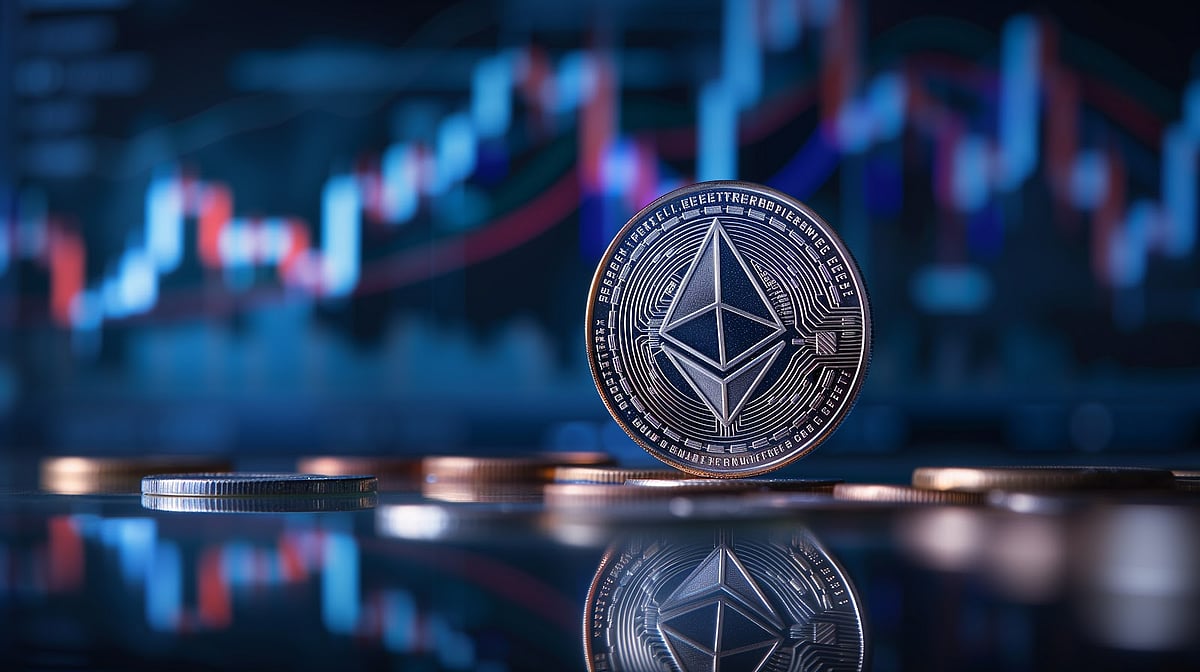
    Ethereum surged past the $2,600 mark on Friday, reaching $2,660—its highest level since January—driven by a combination of sustained ETF inflows and a wave of short liquidations. The move outpaced other major cryptocurrencies, with Ethereum gaining over 8% in 24 hours on Coinbase, while Bitcoin rose only 2.7%, Solana 5.3%, and XRP 4.2%. The broader crypto market ticked up 1.1% to around $2.75 trillion.

    ETHA Inflows Continue Unabated

    BlackRock’s Ethereum ETF, ETHA, recorded $251.4 million in net inflows over 20 consecutive trading days, with no outflows during the period. On September 11 alone, Ethereum ETFs saw $216 million in net inflows, according to Cryptobriefing, as institutional investors rotated capital away from Bitcoin ETFs. This steady demand has been a key pillar supporting Ethereum’s recent price strength.

    Short Liquidations Amplify the Move

    The rally was further fueled by a significant short squeeze. Crypto liquidations totaled roughly $665 million over 24 hours, with about $400 million in short positions being wiped out. Ethereum accounted for around $250 million of that total, compared to Bitcoin’s $170 million. The forced buying from liquidated shorts added momentum to the upward price action.

    Technical Signals Remain Mixed

    Despite the sharp rebound, technical indicators present a nuanced picture. On the hourly chart, Ethereum traded above the MA-50 but below the MA-20, while the daily chart showed the price above the MA-200. The Ichimoku Kijun stood at $2,549, with support near $2,453. MACD indicated strong bullish momentum, but ADX remained neutral, suggesting limited trend strength. RSI was at 50.03 with a Buy reading, while Stoch RSI showed oversold conditions. Before the breakout, ETH was contained in a $2,453–$2,569 range, with a 62% probability of an upward move above $2,549—a level it decisively cleared.

    Macro Context

    The rally followed a hotter-than-expected August core CPI reading, which rose 0.3% monthly and 2.4% annually. This boosted market pricing for a Federal Reserve rate hike, with CME FedWatch showing an 88% probability. Despite this, Ethereum’s price showed resilience, supported by strong ETF demand and the short squeeze. Analysts like Tom Lee had earlier predicted a softer inflation setup to fuel a market rally, but the actual data did not dampen crypto spirits.

    Outlook

    Ethereum’s ability to sustain above $2,600 will depend on continued ETF inflows and macro factors. The $2,453 support level remains key if momentum fades, while near-term resistance may appear as the market digests the recent gains. Institutional demand and Federal Reserve policy decisions remain central to the near-term trajectory.

  • Airtel Prepaid Recharge Plans in September 2026: Data, 5G, OTT & More

    Airtel Prepaid Recharge Plans in September 2026: Data, 5G, OTT & More

    Airtel continues to offer a wide range of prepaid recharge options in September 2026, with prices starting at just ₹19 and going up to ₹3,999. Whether you need a one-day data top-up, a full year of coverage, or a plan packed with OTT subscriptions and Unlimited 5G, there’s likely a plan that fits your usage patterns.

    Airtel September 2026 prepaid plans at a glance

    Airtel’s September portfolio spans daily data packs, voice-focused plans, Unlimited 5G plans, OTT bundles, and long-term yearly plans. Below is a breakdown of the most notable offerings.

    Entry-level and daily plans

    • Plans start at ₹19 and rise to ₹3,999.
    • Validity ranges from one day to a full year.
    • For light users, small data boosters start at ₹22 for 1GB and go up to ₹200 for 30GB.
    • Need data for a day or two? ₹49 provides one day of unlimited data, while ₹99 covers two days. These boosters work with an active plan and do not extend its validity.

    Popular unlimited and OTT plans

    • ₹379 plan: 2GB per day, unlimited voice calls, 100 SMS per day, and Unlimited 5G access for eligible users. Ideal for those who don’t need many OTT subscriptions.
    • ₹449 plan: 4GB data per day, Unlimited 5G, Xstream Play, and Google One. The best pick for heavy data users who want extra perks.
    • 56-day options: ₹649 offers unlimited voice and 2GB/day; ₹838 adds 3GB/day along with OTT access.
    • 84-day plans: Range from ₹469 to ₹1,798, with various combinations of data, voice, and benefits.
    • Annual plans: Available at ₹2,249, ₹3,599, and ₹3,999. Some include Apple Music, Netflix, JioHotstar Mobile, and other services.

    Which Airtel plan should you choose?

    Bigger plans aren’t always a better value. If you use limited data, a 2GB or 4GB daily allowance may be unnecessary. Similarly, paying extra for Netflix, Apple Music, or other OTT services doesn’t make sense if you rarely use them. Consider your data consumption, required validity, and OTT usage before selecting a plan to avoid overpaying for features you don’t need.

  • Pepeto Presale Surpasses $10.96 Million Amid Strong Ethereum Forecasts

    Pepeto Presale Surpasses $10.96 Million Amid Strong Ethereum Forecasts

    Ethereum-based crypto project Pepeto has announced that its presale has raised over $10.96 million, with the current stage filling faster than earlier ones. The milestone arrives as Ethereum trades near $2,467 and major financial institutions release bullish long-term price targets. Pepeto’s platform focuses on reducing transaction costs, improving cross-chain interoperability, and enhancing token security.

    Ethereum Price Targets Rise

    Standard Chartered forecasts Ethereum reaching $4,000 by end of 2026, $15,000 in 2027, $22,000 in 2028, $30,000 in 2029, and $40,000 by 2030. The bank’s head of digital assets research described 2026 as the ‘year of Ethereum,’ according to Finance Magnates. At current prices, the 2030 target represents a more than 16-fold increase. Ethereum traded below $1 in 2015, per CoinMarketCap.

    ETF inflows further strengthen Ethereum’s market backdrop. U.S. spot ETH funds attracted $697 million between August 17 and 21, followed by $824 million the next week—the largest five-day inflow since the funds launched, according to 247 Wall St.

    Pepeto Expands Platform Features

    Pepeto’s platform includes zero-fee trading, allowing users to apply the full trade amount to each transaction. This feature addresses high gas costs that often make smaller trades uneconomical.

    The project also offers a zero-cost bridge connecting Ethereum, BNB Chain, and Solana, capable of transferring assets across these networks in seconds. Additionally, Pepeto integrates an AI screening system that checks tokens before listing, responding to security concerns after crypto users lost $3.4 billion in 2025, as reported by Cointelegraph citing Chainalysis data.

    SolidProof audited all contracts before the presale opened. Pepeto highlights large wallet positions visible on-chain and repeat participation from earlier buyers. Meanwhile, meme coin communities have been actively sharing and promoting the project, drawing comparisons to early growth around Shiba Inu and Dogecoin.

    The official Pepeto website lists the current presale stage, product roadmap, and participation details. Buyers can review these materials alongside Ethereum forecasts, ETF flow data, and the platform’s stated features.

    Conclusion

    Pepeto’s presale exceeded $10.96 million against a backdrop of positive Ethereum forecasts and strong ETF inflows. The project’s zero-fee trading, cross-chain bridge, AI token screening, and audited contracts aim to address common user pain points. Prospective buyers can explore the roadmap and presale terms on the official website.

  • Bitcoin Miner Jiang Zhuoer Sells Entire BTC Holdings at $77,226; Blockstream Refuses Ransom Demand

    Bitcoin Miner Jiang Zhuoer Sells Entire BTC Holdings at $77,226; Blockstream Refuses Ransom Demand

    Chinese mining pool operator Jiang Zhuoer has liquidated his entire Bitcoin position at $77,226 per BTC, marking a full exit from the cryptocurrency. The move comes amid rising expectations of a Federal Reserve rate hike after stronger-than-expected U.S. Producer Price Index data. Separately, Blockstream has rejected a ransom demand linked to the unauthorized transfer of approximately 4,000 BTC from the Liquid Network, with about 3,400 BTC already returned and 598.5 BTC still outstanding.

    Jiang Exits Bitcoin

    Jiang, founder of the BTC.TOP mining pool, confirmed he sold 100% of his Bitcoin holdings at $77,226. A day earlier, he noted that stronger U.S. Producer Price Index data increased the probability of a Federal Reserve rate hike to 70%. He also predicted that the next Consumer Price Index (CPI) reading would negatively impact markets. Jiang said he could open a short position if market conditions align with his strategy, though it remains unclear whether he will follow through if inflation data further hardens expectations for Fed policy.

    The sale contrasts with Jiang’s previously bullish comments. He had stated he was 90% certain the bear market had ended and expected Ethereum to outperform Bitcoin. He also planned to use remaining reserve funds to buy ETH, but the supplied information does not confirm whether that purchase was completed.

    Blockstream Rejects Ransom

    Blockstream announced it rejected a ransom demand linked to the Bitcoin that was moved without authorization from the Liquid Network. The company stated that the actors have returned approximately 3,400 BTC, leaving around 598.5 BTC outstanding. Blockstream emphasized it would not pay for the return of the Bitcoin or shift recovery costs to users.

    Earlier communications had described the actors as white hats, but Blockstream later rejected that label after the group withheld funds while demanding payment. Blockstream said it engaged in good faith to recover user funds but argued that paying a ransom would set an unacceptable precedent for open-source Bitcoin infrastructure.

    If the remaining funds are not returned, Blockstream plans to pursue lawful recovery channels, including law enforcement, exchanges, service providers, and forensic specialists. The company also highlighted Bitcoin’s public transaction history, which investigators can use to trace transferred assets and support recovery efforts.

    Liquid Accountability Questioned

    A citizen journalist challenged Blockstream’s framing of the dispute as a defense of Bitcoin principles, arguing that Liquid should remain separate from Bitcoin’s base network. The commentator described Liquid as a federated sidechain with an institutional structure and criticized Elements for accepting unbacked L-BTC while federation reserves released BTC. The writer characterized the incident as a sidechain solvency problem after a patch-and-deploy failure and called for greater accountability over the technical failure, while acknowledging that the return of 3,400 BTC reduced the potential impact on users. The commentator referred to the actors as former white hats who later became criminals, though this label is not a legal determination. Blockstream thanked developers and security teams that helped identify and patch weaknesses across related systems and assisted affected users during the incident.

    Conclusion

    Jiang Zhuoer exited Bitcoin at $77,226 after warning that U.S. inflation data could harden Fed policy expectations. Meanwhile, Blockstream rejected a ransom tied to the Liquid Network theft after recovering about 3,400 BTC, with roughly 598.5 BTC still outstanding as the company considers lawful recovery channels.