Blog

  • ChatGPT Ad Pricing in India: Minimum Budget, Auction Model, and Real Costs

    ChatGPT Ad Pricing in India: Minimum Budget, Auction Model, and Real Costs

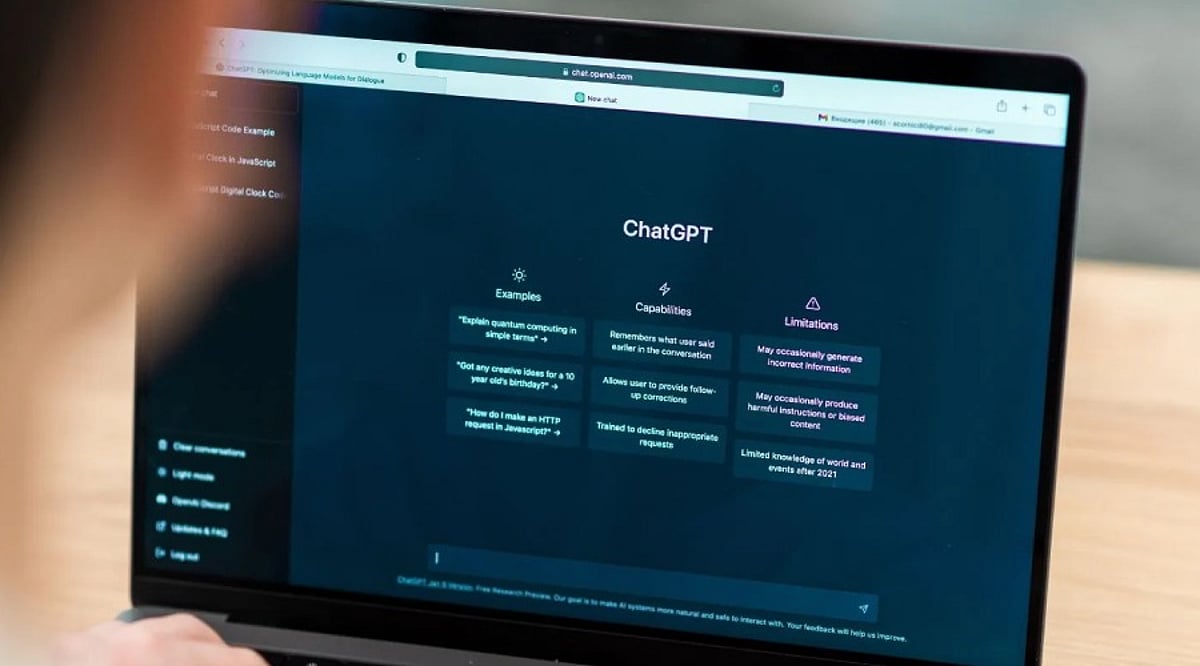
    OpenAI has launched advertising on ChatGPT in India, its second-largest market, with a minimum daily budget of Rs. 725. Sponsored results began appearing to eligible users on August 27, and the self-serve Ads Manager followed on September 4. Any business, from small local brands to large agencies, can now sign up and run campaigns without a managed account or waiting period.

    Ads appear below relevant answers in a conversation, clearly labeled as sponsored and visually separated from ChatGPT’s actual response. OpenAI states that ads do not influence the AI’s output, and advertisers only receive aggregate performance data—never access to chat history or personal conversations. Paid subscription tiers (Plus, Pro, Business, Enterprise, Education) remain ad-free, so sponsored content only reaches users on the Free and Go plans.

    Pricing operates through an auction system rather than fixed rates. OpenAI uses a relevance-weighted, second-price auction where the winning bid depends on both cost and how well the ad fits the ongoing conversation. Advertisers can choose between CPM, CPC, or conversion-focused campaign goals, with reporting including impressions, clicks, spend, and average cost per click.

    Industry watchers caution that Rs. 725 per day is a technical floor, not a realistic budget for meaningful results. Over 30 days, that minimum totals roughly Rs. 21,750—often insufficient to generate significant clicks or conversions. The actual cost depends on competition, ad relevance, industry category, and customer acquisition value. Since ChatGPT ads are new in India, marketers advise treating early campaigns as tests and judging them by conversion quality rather than comparing directly with established platforms like Meta or Google.

  • Bitcoin Faces Renewed ETF Withdrawals as Price Lingers Near $80,000

    Bitcoin Faces Renewed ETF Withdrawals as Price Lingers Near $80,000

    Bitcoin ETF Outflows Return

    Bitcoin faced fresh institutional selling this week as spot ETF outflows returned while BTC traded near USD 80,000. Reports cited about USD 165 million in withdrawals on September 10 and another USD 120 million on Wednesday. At the same time, Iran eased foreign exchange rules for Bitcoin and Tether use in international trade.

    ETF Outflows Test Bitcoin Recovery

    InteractiveCrypto reported that 2,148 BTC, worth about USD 165 million, left spot Bitcoin ETFs on September 10. Research firm Icrypex separately reported about USD 120 million in ETF outflows on Wednesday.

    Those withdrawals followed a stronger period for institutional demand. Bitcoin rose about 20% over the past month, while the iShares Bitcoin Trust attracted roughly USD 3.5 billion in net inflows during that period.

    The rebound came after the August 19 market washout. Michael Bucella of Neoclassic Capital said forced selling eased, then spot buying and ETF demand improved. Can renewed ETF demand push Bitcoin through the USD 83,000 to USD 86,000 supply zone?

    BTC Momentum Weakens

    Bitcoin remains below the four-hour MA-20 at USD 77,838 and the MA-50 at USD 78,929. The Ichimoku Kijun at USD 77,968 also acts as immediate resistance.

    Meanwhile, BTC remains above the daily MA-200 at USD 70,061. RSI stands at 41.43, while CCI shows modest selling pressure. MACD gives a strong sell signal, and ADX remains neutral.

    Stoch RSI and the Awesome Oscillator also remain neutral. Bull/Bear Power favors sellers, while subdued volatility supports a sideways intraday tone. The current range sits between USD 75,202 and USD 79,229.

    The supplied market assessment assigns a 72% probability to further downside and 28% to an upside break. A drop below support could deepen the retracement. A bullish shift requires stronger momentum above resistance.

    Iran Expands Crypto Trade

    Iran’s central bank relaxed foreign exchange rules on September 11. The change allows domestic businesses to use Bitcoin and Tether for international trade.

    The move expands a regulatory use case for digital assets inside Iran. The report described the immediate global market effect as limited, leaving ETF flows and price structure as stronger near-term Bitcoin drivers.

    Bitcoin still trades about 10% lower in 2026 despite its recent monthly rebound. Bucella said Bitcoin remains healthier than many other crypto assets, while altcoin leverage and open interest require more caution.

    He also noted that overall leverage and open interest resemble levels seen before the October 10, 2025 crash. That event erased USD 19 billion in crypto leverage in one day.

    Grayscale research head Zach Pandl said investors increasingly use crypto within broader portfolio allocation strategies. He linked that trend to diversification, rising bond yields, and concerns around dollar debasement.

    Conclusion

    Bitcoin’s rebound faces renewed pressure as ETF withdrawals return and short-term technical signals remain weak. Still, BTC holds above its daily MA-200 after gaining about 20% in a month. ETF demand, the USD 83,000 to USD 86,000 supply zone, and current support levels remain key market factors.

  • Polkadot (DOT) Price Analysis: Volume Surges Past $226M as Elastic Scaling and Staking Overhaul Drive Market Attention

    Polkadot (DOT) Price Analysis: Volume Surges Past $226M as Elastic Scaling and Staking Overhaul Drive Market Attention

    Polkadot’s DOT token drew renewed market attention after 24-hour trading volume climbed above USD 226 million, while price remained under pressure on September 12. DOT traded at USD 1.0454 on OKX, holding near trendline support after an early-September rally faded.

    Data supplied for September 12 showed DOT still down on the week despite stronger trading activity. Coinglass data also showed longs absorbed almost all liquidations across the 12-hour and 24-hour windows.

    Scaling Boosts Capacity

    BSCN reported that Polkadot’s elastic scaling upgrade lets one parachain use several cores at once. That structure allows a parachain to push up to three blocks into one relay-chain slot.

    Previously, a parachain typically placed one block into each slot. Under the new system, chains can buy extra processing capacity through coretime using DOT, either in bulk or on demand.

    The upgrade moves the main performance constraint toward each chain’s block producers rather than the wider Polkadot network. Meanwhile, volume above USD 226 million showed that trading activity increased.

    DOT Tests Key Support

    DOT traded at USD 1.0454 on the daily DOT/USDT chart at 02:21 UTC-3. Price held just above an ascending trendline and a support area near the 20 EMA. The bullish setup depends first on support at USD 0.9733. A move above USD 1.2773 would open levels at USD 1.6584 and USD 2.0028, according to the supplied chart analysis.

    A close below USD 0.9733 would expose USD 0.9550 and the longer EMA near USD 0.9111. The next lower level sits at USD 0.8114, while USD 2.4032 marks the highest chart resistance.

    Staking Rules Shift Risk

    Polkadot is also advancing a staking redesign through Referendum 1890. The proposal requires every validator to lock at least 10,000 DOT as self-stake before the next phase begins.

    OpenGov showed 100% support in the supplied data, and Polkadot targets May 31 for enactment. Validators that fail to post the required bond risk losing active-set status through chilling.

    After passage, nominators become unslashable, and the unbonding period drops from 28 days to roughly 24 to 48 hours. Validators would then carry direct slashing exposure through self-stake. By mid-June, Polkadot plans to add validator rewards in unlocked DOT tied to self-stake. Those rewards will later carry a one-year vesting period, while the commission model will phase out.

    The redesign follows a March runtime upgrade that introduced the slashable 10,000 DOT self-stake floor and a 10% minimum validator commission. That overhaul also cut annual DOT issuance by 53.6%.

    Polkadot also capped total supply at 2.1 billion tokens under the broader economic reset. Analysts identified USD 0.9733 to USD 1.2773 as the key range to watch this week.

    Conclusion

    DOT’s volume surge and elastic scaling upgrade have renewed attention around Polkadot, while price remains near key support. Referendum 1890 also reshapes staking risk and liquidity. Traders now face a clear range, with USD 0.9733 support and USD 1.2773 resistance defining the next technical test.

  • WhatsApp ‘Boss Scam’ Swindles Ahmedabad Rice Mill Out of Rs. 80 Lakh

    WhatsApp ‘Boss Scam’ Swindles Ahmedabad Rice Mill Out of Rs. 80 Lakh

    An Ahmedabad-based rice mill has fallen victim to a sophisticated cyber fraud, commonly known as the ‘boss scam,’ losing Rs. 80 lakh after a scammer impersonated the company’s owner on WhatsApp.

    According to a police complaint filed by business owner Pradip Ramvani, the fraudster gained access to the accountant Jayesh’s phone by tricking him into installing a malicious file on August 31. The attacker then replaced Ramvani’s genuine contact number with a fake one on the accountant’s phone, using the owner’s photograph as the WhatsApp profile picture to make the deception appear legitimate.

    Posing as Ramvani, the scammer sent a WhatsApp message to Jayesh instructing him to transfer Rs. 80 lakh from the company account to a specified bank account for a purported business payment. Believing the request came from his employer, Jayesh carried out the transfer.

    The fraud was only discovered when the scammer demanded an additional Rs. 30 lakh. Suspicious, Jayesh spoke directly with Ramvani, and both realized the payment instruction had originated from an unknown number. They then found the malicious file on Jayesh’s phone.

    Police have launched an investigation, tracing the unknown WhatsApp number and the beneficiary bank account. They are also examining how the phone was compromised. The case highlights the growing threat of ‘boss scams,’ where cybercriminals impersonate senior officials to trick employees into authorizing fraudulent payments.

    Authorities have advised businesses to implement strict verification protocols for financial transactions and to educate employees about such social engineering attacks.

  • Bank FD vs. Post Office Deposits: Which Offers Better Returns in 2026?

    Bank FD vs. Post Office Deposits: Which Offers Better Returns in 2026?

    When deciding where to park your savings, the interest rate is only part of the story. Government-backed schemes sometimes offer higher returns, but they often require locking your money away for longer. A recent comparison by entrepreneur Prafull Billore highlights how small rate differences and access to funds can shape the right choice.

    Post Office vs. SBI: The Rate Gap

    For the quarter ending September 30, 2026, the Post Office one-year Time Deposit offers an annual interest rate of 6.90%. In comparison, the State Bank of India (SBI) offers 6.25% a year to general customers on retail domestic deposits below Rs 3 crore for a tenure of one year to less than two years. That is a difference of 0.65 percentage points.

    For senior citizens, the gap narrows. SBI offers them 6.75% on the same tenure, making the Post Office rate just 0.15 percentage point higher.

    Convenience and Access Matter

    Looking only at returns, the Post Office deposit may seem more attractive. But convenience plays a key role. Many bank customers can open, renew, or close fixed deposits through mobile or internet banking, depending on the bank’s terms. Post Office deposits may suit investors who are comfortable managing their savings in a separate account and do not need frequent access to the funds.

    SCSS: Higher Rate, Longer Lock-in

    The Senior Citizens Savings Scheme (SCSS) currently offers 8.2% a year. That is significantly higher than both SBI and Post Office products. However, SCSS carries a five-year tenure, which makes it very different from a one-year deposit. Senior citizens who may need the money sooner for medical costs, household expenses, or other short-term needs should review the scheme’s withdrawal conditions before investing.

    Billore noted that investors could keep funds for immediate use in liquid options and consider Post Office schemes for money that can remain invested. The comparison shows that a higher rate does not always mean easier access to savings.

    Which Option Should You Choose?

    Bank FDs, Post Office Time Deposits, and SCSS serve different savings needs. A bank FD may offer easier access for people who already manage their money through the same bank. A Post Office deposit may provide a slightly better return for the same general tenure. SCSS offers a much higher rate, but its longer tenure changes the comparison.

    Before deciding, check the premature withdrawal rules, tenure, and access to funds. The best-paying option may not always be the most suitable one. The choice depends on how soon you may need the money, the interest rate available, and the conditions attached to the deposit.

  • India’s Foreign Exchange Reserves Hit Record High of $785.7 Billion After Weekly Surge

    India’s Foreign Exchange Reserves Hit Record High of $785.7 Billion After Weekly Surge

    India’s foreign exchange reserves rose by a record USD 44.9 billion in the week ended September 4, reaching an all-time high of USD 785.7 billion, according to data released by the Reserve Bank of India (RBI) on Friday.

    The sharp increase followed a USD 11.475 billion rise in the previous week, when reserves stood at USD 740.8 billion. The latest weekly addition was the largest ever recorded, driven by stronger foreign-currency inflows under measures introduced by the RBI in June.

    RBI Measures Boost Reserves

    Earlier this year, India’s forex reserves faced pressure as the rupee weakened during the West Asia conflict. The RBI sold dollars in the foreign exchange market to curb sharp currency movements. Total reserves had fallen to USD 666.9 billion in the week ended June 26.

    However, the trend reversed after the central bank introduced concessional foreign exchange swap measures aimed at attracting foreign-currency funds and improving domestic market liquidity. By August 31, the programme had brought in about USD 136.4 billion.

    Foreign Currency Non-Resident Bank (FCNR(B)) deposits accounted for the bulk of these flows. Banks mobilized USD 127.226 billion through the scheme, while overseas foreign-currency borrowings and external commercial borrowings added to the total.

    The RBI launched the FCNR(B) window on June 8 with an initial closing date of September 30, but closed it on August 31 after stating the programme had achieved its objective ahead of schedule.

    Forex Assets Surge

    Foreign currency assets—the largest component of India’s foreign exchange reserves—increased by USD 47.498 billion during the week to USD 648.168 billion, RBI data showed. These assets include currencies such as the euro, pound, and yen, though the RBI reports their value in US dollars, so exchange rate fluctuations can affect the reported value.

    A private bank treasury head commented, “This rise in foreign exchange reserves was expected given the amount of FCNR(B) flow.” The person added, “If we exclude gold, we almost had a USD 48 billion addition to the reserves.”

    Gold reserves moved in the opposite direction, falling by USD 2.594 billion to USD 113.816 billion during the week. Special drawing rights with the International Monetary Fund declined by USD 4 million to USD 18.806 billion, while India’s reserve position with the IMF rose by USD 2 million to USD 4.916 billion.

    India Moves to No. 4

    The latest increase pushed India above Russia to become the world’s fourth-largest holder of foreign exchange reserves, behind China, Japan, and Switzerland, according to Bloomberg data. India’s reserves have increased by about USD 120 billion in the current financial year. Foreign currency assets also recovered sharply from USD 541 billion in the week ended June 26.

    Meanwhile, the rupee remained under pressure despite the reserve boost. It fell for a fourth consecutive session on Friday, September 11, closing at 95.56 against the US dollar, compared with 94.45 in the previous session. Higher crude oil prices and rising US Treasury yields weighed on the currency. Dealers said RBI intervention, including a swap alongside spot intervention, helped the rupee recover some losses.

    Foreign-currency inflows may continue through some RBI facilities. External commercial borrowings and overseas foreign-currency bonds remain eligible under the programme until December 31.

  • India’s 2027 E-Commerce Rules: Compliance Burden Looms for Small Sellers and MSMEs

    India’s 2027 E-Commerce Rules: Compliance Burden Looms for Small Sellers and MSMEs

    India’s amended e-commerce rules, set to take effect on January 1, 2027, are raising compliance concerns among small sellers and micro, small, and medium enterprises (MSMEs) that rely on online marketplaces. The Consumer Protection (E-Commerce) (Amendment) Rules, 2026, introduced by the Department of Consumer Affairs, will replace the 2020 regulations and introduce new requirements on pricing, product rankings, sponsored listings, dark patterns, and consumer grievance support.

    Ranking and Pricing Rules Add to Compliance Work

    Under the updated framework, e-commerce platforms must disclose the factors determining product rankings and clearly label sponsored listings. While the goal of improving transparency is widely welcomed, a senior industry executive noted that smaller sellers may struggle with the complexity. “Requirements around disclosure of ranking parameters, particularly the relative importance of different parameters, could be difficult for small and unorganised sellers to navigate,” the executive said.

    Pricing rules also tighten: discount claims must now reference the lowest price offered in the previous 30 days (the “prior price” requirement). Industry representatives warn that this could force small businesses without dedicated compliance staff to maintain detailed price records to ensure accuracy.

    Dark Pattern Audits and Consumer Helpline Integration

    The amended rules link marketplaces to the government’s 2023 guidelines on dark patterns—practices that mislead or pressure consumers. Businesses must conduct an annual self-audit on dark patterns. Industry executives support stronger accountability but seek clarity on how certification will work for sellers using large platforms. “An annual self-audit is a reasonable way of doing that,” the executive said, while questioning whether some duties might shift from platforms to individual merchants.

    Additionally, platforms must partner with the National Consumer Helpline to streamline complaint handling and improve coordination with government-backed grievance systems.

    Flipkart Welcomes the Move

    Flipkart publicly endorsed the government’s focus on consumer protection and transparency. A company spokesperson stated, “We welcome the Government’s focus on strengthening consumer protection and transparency in e-commerce.” The company said it will study the detailed rules and continue discussions with the government, emphasizing its commitment to supporting small businesses, MSMEs, and farmers.

    As the January 2027 deadline approaches, sellers and platforms must prepare for new disclosure, pricing, audit, and consumer-support requirements. Industry representatives have urged policymakers to ensure the compliance system remains manageable for businesses of all sizes.

  • BMW India Plans Fourth Price Increase in 2026 as Rupee Weakens and Costs Rise

    BMW India Plans Fourth Price Increase in 2026 as Rupee Weakens and Costs Rise

    BMW Group India is preparing to raise vehicle prices for the fourth time in 2026, driven by the weakening rupee and escalating commodity costs. The luxury automaker has already implemented three price hikes this year, with total increases of up to 5% across its BMW and MINI lineups.

    Hardeep Singh Brar, President and CEO of BMW Group India, confirmed that another price revision is under consideration, potentially as early as next month. “The forex has hit us quite a bit. We have increased prices by 4-5% till now and there’s another one around the corner,” Brar said. He noted that foreign exchange conditions have deteriorated by about 18% since January 2025, putting significant pressure on margins.

    Expanding Local Production to Offset Costs

    Brar made the announcement following the launch of the new BMW 7 Series in India. The flagship luxury sedan is now available with both petrol and fully electric powertrains, including the high-performance BMW i7 M70. Bollywood actor Ranveer Singh unveiled the new models and was introduced as the brand voice for BMW India.

    To mitigate cost pressures, BMW is expanding local assembly. The new BMW i7 will be produced at the company’s Chennai plant, making India the only country outside Germany to locally manufacture the electric luxury sedan. However, the higher-performance i7 M70 will continue to be imported as a completely built-up unit.

    Pricing for the New 7 Series

    The new BMW 740 M Sport is priced at Rs 1.95 crore (ex-showroom), while the electric BMW i7 eDrive 50 xDrive M Sport carries the same ex-showroom price. The top-of-the-range BMW i7 M70 xDrive is priced at Rs 2.65 crore (ex-showroom) and will be imported.

    BMW did not specify the size of the next price increase, but Brar confirmed that another revision remains on the table as the company navigates currency volatility and rising input costs. Deliveries of the new 7 Series are expected to begin in October 2026.

  • Fintech Security Trends 2027: AI Fraud, Deepfakes, and Quantum Threats

    Fintech Security Trends 2027: AI Fraud, Deepfakes, and Quantum Threats

    Fintech security is entering a more complex phase as digital finance expands globally. AI-powered fraud, deepfakes, synthetic identities, AI agents, and quantum threats are changing the risk landscape. Zero-trust security and cyber resilience will also become stronger priorities.

    Key Trends Shaping Fintech Security in 2027

    • AI-powered fraud detection and deepfake protection will become critical for fintech security.
    • Zero trust, AI-agent security, and post-quantum planning will reshape security strategies.
    • Cyber resilience will become increasingly important as financial systems grow interconnected.

    Fintech has changed how people access, move, and manage money. Digital payments now operate at remarkable speed across global markets. However, faster financial services also create new security challenges. Attackers are adopting automation, artificial intelligence, and social engineering.

    Fintech companies must therefore rethink traditional cybersecurity approaches. Security will increasingly become part of product design and business resilience. Several trends are likely to shape fintech security in the coming years. These trends will affect banks, payment companies, insurers, digital lenders, and fintech platforms.

    AI-Powered Fraud Detection Will Become More Advanced

    Artificial intelligence is becoming an important tool for detecting financial fraud. Security teams can analyze enormous transaction volumes in real time. Machine learning can identify unusual spending patterns and suspicious account behavior. It can also help reduce false positives during fraud investigations.

    The challenge is that criminals are using AI too. Attackers can automate phishing, credential attacks, and fraud campaigns. This creates an ongoing technology race between attackers and defenders. Financial institutions will increasingly need machine-speed security controls.

    Deepfakes and Synthetic Identity Attacks Will Grow

    Identity-based attacks are becoming more sophisticated across financial services. Criminals can now create convincing voices, images, videos, and documents. These tools can support account takeovers and social engineering scams. They can also make fraudulent identities appear more credible.

    Traditional security checks may struggle against these techniques. Fintech companies will need stronger identity verification systems. Behavioral signals could become increasingly important during authentication. Transaction patterns can also help identify unusual account activity. The goal is to verify identity without creating unnecessary customer friction.

    Zero Trust Will Extend Across Fintech Ecosystems

    Zero trust is becoming more important as financial platforms become interconnected. Modern fintech environments rely on cloud systems, APIs, vendors, and external platforms. That creates multiple pathways into sensitive financial systems. A compromised credential or API can expose multiple applications.

    Zero-trust security assumes you should never automatically trust access. Every user, device, application, and connection requires appropriate verification. In the coming years, this approach will extend beyond internal networks. Third-party platforms and cloud workloads will receive greater scrutiny. Continuous authentication and least-privilege access will become increasingly important.

    AI Agents Will Create New Security Challenges

    AI agents are becoming capable of performing tasks with limited human intervention. Financial companies are exploring them for support, operations, analysis, and automation. However, agents can access sensitive systems and business information. Poorly controlled agents could therefore create significant security risks.

    Prompt injection is one emerging concern. Attackers may manipulate agents into performing unauthorized actions. Security teams will need to treat AI agents like digital employees. They will require defined permissions, monitoring, and clear accountability. Gartner predicted AI security spending to approach USD 4.8 billion globally in 2027.

    Post-Quantum Security Planning Will Accelerate

    Quantum computing presents a longer-term challenge for financial cybersecurity. Existing encryption methods could eventually become vulnerable. Fintech companies cannot wait until quantum computers become commercially dominant. Sensitive financial information may remain valuable for decades.

    This raises concerns about ‘harvest now, decrypt later’ attacks. Criminals can collect encrypted information today for future decryption. Organizations are beginning to assess quantum-resistant encryption, while many remain at early stages of preparation. PwC found that 49% of surveyed organizations had not started quantum-resistant security measures. Fintech companies will increasingly build cryptographic inventories. They will also prepare migration plans for post-quantum standards.

    Cyber Resilience Will Become a Business Priority

    Security is no longer only about preventing attacks. Financial companies must also recover quickly when incidents occur. A major breach can interrupt payments, customer access, trading, or internal operations. It can also damage customer confidence and regulatory relationships.

    AI is increasing this risk by accelerating attacks across shared infrastructure. Financial institutions depend heavily on common cloud providers and technology platforms. This creates concentration risks across the financial ecosystem. A vulnerability in one widely used service could affect multiple institutions.

    Why This Matters

    Financial services are becoming increasingly digital and interconnected. That creates more opportunities for attackers to target financial institutions and their customers. Digital fraud is another growing concern. IMF research found that cyber-enabled fraud has nearly tripled, although reporting gaps remain across jurisdictions. The security challenge therefore extends beyond traditional network protection. Companies must protect identities, transactions, AI systems, APIs, cloud infrastructure, and third-party services.

    In the coming years, resilience will become a board-level priority. Companies will focus on containment, recovery, testing, and third-party risk management. The fintech security field will continue changing rapidly. AI will remain both a powerful defense tool and a serious threat.

    Identity security, zero trust, quantum readiness, and resilience will gain importance. Companies that prepare early can reduce exposure to emerging attacks. For fintech leaders, security will increasingly influence trust and competitiveness. The strongest platforms will build protection into their technology foundations.