Blog

  • Vivo X Fold 6 India Launch: October 6 Date Leaked, Expected Price and Full Specifications

    Vivo X Fold 6 India Launch: October 6 Date Leaked, Expected Price and Full Specifications

    Vivo is set to bring its new foldable phone, the X Fold 6, to India soon. According to a fresh leak, the device could launch on October 6, the same day the company rolls out the Vivo V80 and Vivo S2 FE in the country.

    Tipster Abhishek Yadav claims the X Fold 6 will go official in India at 12 PM on October 6. Vivo has not confirmed this date yet. The foldable has already launched in China and is set to reach a few other global markets too.

    Expected Price and Colors

    Leaks suggest the X Fold 6 will sit in the premium foldable segment. Reports point to a price range between Rs 1,29,999 and Rs 1,59,999 in India, though these numbers are not final and may shift once Vivo makes an official announcement.

    The phone is tipped to come in two storage options: 12GB RAM with 256GB storage and 12GB RAM with 512GB storage. Buyers may get to choose between Prism Black and Nebula Teal shades.

    Specifications

    The Vivo X Fold 6 is said to pack an 8.02-inch AMOLED inner screen along with a 6.51-inch AMOLED cover display. Both screens are expected to support a smooth 120Hz refresh rate.

    Power will likely come from MediaTek’s Dimensity 9500 Super chip, built on a 3nm process. The battery is tipped at 7,000mAh, with 80W wired charging and 40W wireless charging support.

    On the camera front, the phone may carry a 200MP main camera with optical stabilization, a 50MP ultrawide lens, and a 50MP periscope telephoto camera. Two 20MP selfie cameras, one on each screen, are also expected.

    The device is likely to run OriginOS 7 based on Android 17 and could carry IP58 and IP59 ratings for dust and water protection.

    Conclusion

    Vivo has stayed quiet on official pricing and specs so far, but the growing leaks suggest an announcement is close. If the October 6 date holds, buyers should get full clarity soon on what the X Fold 6 brings to India’s foldable market.

  • Vivo X Fold 6 India Launch Leaked: October 6 Date, Pricing, and Full Specifications

    Vivo X Fold 6 India Launch Leaked: October 6 Date, Pricing, and Full Specifications

    Vivo is preparing to introduce its latest foldable smartphone, the X Fold 6, to the Indian market. According to a recent leak from tipster Abhishek Yadav, the device is expected to launch on October 6 at 12 PM IST, alongside the Vivo V80 and Vivo S2 FE. While Vivo has not officially confirmed the date, the growing number of leaks suggests an imminent announcement.

    Expected Price and Colors

    The X Fold 6 is positioned in the premium foldable segment, with leaked pricing ranging between Rs 1,29,999 and Rs 1,59,999. However, these figures are speculative and may change upon official confirmation. The phone is rumored to be available in two storage configurations: 12GB RAM with 256GB storage, and 12GB RAM with 512GB storage. Color options are expected to include Prism Black and Nebula Teal.

    Display and Performance

    The device is said to feature an 8.02-inch AMOLED inner screen and a 6.51-inch AMOLED cover display, both supporting a 120Hz refresh rate. Under the hood, it is likely powered by MediaTek’s Dimensity 9500 Super chip, built on a 3nm process. The battery is tipped at 7,000mAh, with support for 80W wired and 40W wireless charging.

    Camera System

    Photography enthusiasts may appreciate the camera setup: a 200MP main camera with optical stabilization, a 50MP ultrawide lens, and a 50MP periscope telephoto camera. Additionally, two 20MP selfie cameras are expected, one on each screen.

    Software and Durability

    The X Fold 6 is expected to run OriginOS 7 based on Android 17. It may also carry IP58 and IP59 ratings for dust and water resistance, indicating robust build quality.

    With the October 6 launch date approaching, more details are likely to emerge. Stay tuned for official confirmation from Vivo regarding pricing and availability.

  • Pyth Network’s PYTH Token Rallies 17% as Nasdaq Data Expansion and Gate Staking Exit Approach

    Pyth Network’s PYTH Token Rallies 17% as Nasdaq Data Expansion and Gate Staking Exit Approach

    Pyth Network’s native token, PYTH, rallied 17.14% over 24 hours to reach $0.0865, with trading volume jumping 48.43% to $61.28 million. The move came after PYTH broke through a closely watched resistance level and followed the network’s recent announcement that it will distribute Nasdaq Basic market data.

    The price surge pushed PYTH to intraday levels above $0.08, drawing attention to whether buyers can hold the token above that psychological mark. The rally also comes as Gate prepares to remove its PYTH staking product on October 8, 2026.

    PYTH Breaks Above Key Resistance

    Trader WhaleFactor had identified $0.0632 as a level to watch, and PYTH’s breakout above it triggered renewed buying. From there, the token moved past $0.0800, a level that now serves as immediate support alongside the 20-period hourly moving average near $0.0800 and the 50-period hourly moving average near $0.0755.

    Technical indicators suggest the rally was sharp. The relative strength index hit 73.36, which traders often view as overbought. That reading may signal a pause or pullback, though it does not predict the timing of any correction.

    Nasdaq Basic Data Adds New Use Case

    On September 22, Pyth announced that it had been approved as an external distributor of Nasdaq Basic, a product that delivers real-time quotes and trade data for U.S. equities. The data feed will be offered through Pyth’s Data Marketplace, which connects data providers with financial applications.

    The move expands the range of market data accessible through Pyth. However, customers who want the Nasdaq Basic feed must obtain prior written approval from Nasdaq. The announcement did not disclose expected customer numbers or projected revenue from the distribution deal.

    Pyth’s rally also followed the end of support for Switchboard’s services on September 25. Developers relying on Switchboard’s oracle services may seek alternative price data providers, and Pyth is one possible option. Still, no verified migration data ties Switchboard’s shutdown directly to PYTH’s 24-hour price gain. A reported increase in the Altcoin Season Index over the past week adds broader market context.

    Key Levels to Watch and Gate’s October Deadline

    Traders are monitoring several price levels:

    • Immediate support: $0.0800, near PYTH’s hourly 20-period moving average
    • Secondary support: $0.0797
    • Deeper support: $0.0750, with $0.0650 coming into view below that
    • Upside resistance: $0.0948

    These levels are conditional and not forecasts. PYTH will need to maintain its recent gains before testing higher prices.

    Gate has confirmed that it will remove its PYTH staking product on October 8, 2026, and automatically redeem any remaining positions. The notice applies specifically to Gate’s staking product, and traders will be watching that date alongside PYTH’s price action and trading volume.

  • Bitcoin Holds Near $85K as ETF Inflows Meet Falling Miner Reserves

    Bitcoin Holds Near $85K as ETF Inflows Meet Falling Miner Reserves

    Bitcoin Trades in a Tight Range

    Bitcoin changed hands at $84,779.26, up 0.88% over 24 hours and roughly in line with the wider crypto market’s 1.03% advance. The largest cryptocurrency has mostly moved between $83,000 and $85,000 since pulling back from a September high near $87,374.

    On the upside, resistance sits between $85,500 and $86,000. A clean break above that zone could put the earlier high back in play. If Bitcoin loses $83,000, traders may look toward $80,000 to $81,000 as the next support area.

    Spot Bitcoin ETF Demand Returns

    U.S. spot Bitcoin exchange-traded funds attracted about $2.4 billion during the five trading days ending September 25, according to SoSoValue. That was their strongest weekly inflow of 2026 and marked a shift back to net buying after a period of outflows.

    Bitcoin’s 30-day correlation with the S&P 500 reached 95%, underscoring how closely the two markets have traded. Interest rate expectations remain a key link between them. Bitcoin also held above its main daily moving averages, and its MACD reading stayed positive, though neither indicator can quantify how much of the rally came from ETF demand.

    Miner Reserves Decline as Hashrate Eases

    Miner reserves fell by 1,530 BTC in the week ending September 26 to about 1.193 million BTC, according to CryptoQuant. The metric tracks coins held in wallets linked to miners and mining pools. Coins leaving those wallets may be sold, moved to custody or used for other purposes, so the decline alone does not confirm how much miners sold.

    Bitcoin’s seven-day average hashrate dropped to roughly 915.8 exahashes per second on September 26, its lowest level in about three weeks. Hashrate estimates can shift because of block timing, power conditions and changes in active mining equipment. The network continued producing blocks during the decline.

    Bitcoin’s Puell Multiple rose by 0.24 during the week to 1.13. CryptoQuant defines the measure as daily mining revenue divided by its 365-day average. A reading above one means revenue from newly issued Bitcoin is above that average. The metric does not account for miners’ electricity, equipment or financing costs.

    Derivatives Activity Cools

    Bitcoin derivatives activity eased during the price pause. Open interest fell 6.5%, while 24-hour Bitcoin liquidations dropped 88% to $7.45 million. The figures suggest fewer outstanding leveraged positions and fewer forced closures.

    What Traders Are Watching Next

    Market participants are focused on whether Bitcoin can clear $86,000. The next major macro catalyst is the U.S. inflation data due September 30. The Bureau of Economic Analysis has scheduled its August personal income and outlays report for that day, which will include the personal consumption expenditures price index, a gauge closely watched for its impact on interest rate expectations.

    Some traders refer to October as Uptober because Bitcoin has often gained during the month. Past returns, however, offer no assurance that the pattern will repeat. Bitcoin’s next move will depend on the incoming data and whether the price holds its nearby support levels.

  • Bitcoin Holds Near $85,000 as ETF Demand Offsets Miner Reserve Decline

    Bitcoin Holds Near $85,000 as ETF Demand Offsets Miner Reserve Decline

    Bitcoin was trading around $84,800 on Sept. 27, 2026, holding close to the $85,000 mark after a week of heavy buying through U.S. spot Bitcoin exchange-traded funds. The largest cryptocurrency gained 0.88% over 24 hours, slightly trailing a 1.03% advance across the broader crypto market.

    The price action leaves traders focused on two near-term signals: whether BTC can clear resistance at $86,000 and how the market reacts to the Sept. 30 U.S. inflation report.

    ETF inflows provide support

    U.S. spot Bitcoin ETFs attracted about $2.4 billion during the five trading days ended Sept. 25, according to SoSoValue. That was the strongest weekly inflow of 2026 and marked a shift back to net buying after a period of outflows.

    Bitcoin’s 30-day correlation with the S&P 500 reached 95%, underscoring how closely the asset has tracked broader risk sentiment and interest-rate expectations. BTC also remained above its key daily moving averages, and its MACD stayed positive. Those technical signals, however, do not show how much of the move was driven specifically by ETF demand.

    Miner reserves and hashrate decline

    Miner reserves fell by 1,530 BTC in the week to about 1.193 million BTC, according to CryptoQuant, which tracks wallets tied to miners and mining pools. A decline in reserves does not by itself confirm sales; coins may be sold, moved into custody, or redirected for other uses.

    The network’s seven-day average hashrate dropped to roughly 915.8 exahashes per second on Sept. 26, a three-week low. Hashrate estimates can fluctuate because of block timing, power availability, and changes in active mining equipment. Mining continued during the decline.

    Bitcoin’s Puell Multiple rose by 0.24 during the week to 1.13. The metric compares daily mining revenue with its 365-day average; a reading above 1 indicates that revenue from newly issued BTC is above that average. It does not account for miners’ electricity, hardware, or financing costs.

    Key price levels to watch

    Since retreating from a September high near $87,374, Bitcoin has mostly traded between $83,000 and $85,000. Resistance is clustered between $85,500 and $86,000. A break above that zone could put the earlier high back in play. If BTC falls below $83,000, traders may watch the $80,000–$81,000 area for support.

    Derivatives activity has cooled during the pause. Open interest dropped 6.5%, and 24-hour Bitcoin liquidations fell 88% to $7.45 million, pointing to fewer leveraged positions and fewer forced closures.

    Inflation data looms

    The next U.S. inflation reading is scheduled for Sept. 30, when the Bureau of Economic Analysis releases its August personal income and outlays report. The data will include the personal consumption expenditures price index, a gauge closely watched for its impact on interest-rate expectations.

    Some traders refer to October as "Uptober" because Bitcoin has often gained during the month, but past performance does not guarantee a repeat. Near term, BTC’s response will depend on the inflation data and whether the price can hold its nearby support levels.

  • OKX Founder Challenges THORChain’s Decentralization Claims After Bitget’s $387.5M Breach

    OKX Founder Challenges THORChain’s Decentralization Claims After Bitget’s $387.5M Breach

    OKX founder Star Xu has publicly questioned THORChain’s claim to true decentralization after funds linked to the Bitget security breach reportedly moved through the cross-chain network. The exchange now estimates the attacker made off with approximately $387.5 million and is asking industry partners to help block the stolen assets.

    Bitget Raises Loss Estimate to $387.5 Million

    On September 24, Bitget detected unauthorized transfers from certain hot wallets at 18:31 UTC. The exchange initially placed the damage at $351.6 million and paused withdrawals, while noting that cold wallets remained secure and its protection fund held more than $464 million.

    After further tracing, Bitget revised the amount sent to attacker-controlled addresses to $387.5 million. The update included Zcash and Tron transfers that were omitted from the initial figure; it did not reflect new transfers after the breach was contained. Mandiant and SlowMist are assisting with the investigation.

    Withdrawal restoration is scheduled in stages: Bitcoin on September 28, Ethereum on September 29, USDT on September 30, and other tokens, fiat withdrawals, and peer-to-peer services on October 2. Bitget stressed these dates are a restoration schedule, not confirmation that withdrawals have resumed.

    Star Xu Questions THORChain’s Validator Model

    Bitget CEO Gracy Chen asked THORChain to refuse transactions from addresses linked to the attacker. That request highlighted the network’s role in moving assets between blockchains and raised questions about whether its operators can act on publicly flagged wallets.

    In response, Xu argued THORChain should not be compared with Bitcoin or Ethereum. He said validators jointly control assets in vaults through a threshold-signing system. “I don’t think THORChain’s TSS + validator model represents true decentralization,” he wrote. “The selected validators set collectively controls the underlying assets in the TSS vaults. Once the signing threshold is reached, those validators can move the funds.”

    Under that model, a required group of validators can authorize transfers. Xu said this makes THORChain an intermediary, even though no single validator controls a vault.

    THORChain’s official account rejected that characterization, describing the network as decentralized and permissionless. It also questioned whether base-layer blockchains should face similar demands when stolen assets pass through them.

    Stablecoin Freezes and Recovery Efforts

    Circle and Tether froze roughly $318,000 in USDC and USDT at a wallet linked to the Bitget attack. The wallet held about 99,990 USDC and 218,023 USDT when the issuers blocked the tokens. Those issuer controls can stop stablecoin movement, but they do not give Circle or Tether control over Ethereum held at the same address.

    Bitget has also launched a recovery bounty program, offering eligible parties 5% of affected funds they help freeze or recover. The exchange published attacker addresses and a live tracing dashboard for firms monitoring the transfers.

    The confirmed freeze represents only a small portion of the $387.5 million estimate. Further recovery depends on where the assets move and whether the services handling them can restrict transfers. Bitget’s September 28 update is expected to provide more details on the investigation and withdrawal restoration.

  • OKX Founder Challenges THORChain’s Decentralization Claims After $387.5M Bitget Exploit

    OKX Founder Challenges THORChain’s Decentralization Claims After $387.5M Bitget Exploit

    OKX founder Star Xu has publicly questioned THORChain’s claim that it operates as a fully decentralized blockchain, after funds connected to the Bitget hack were reportedly moved through the cross-chain network. The dispute highlights the growing tension between permissionless infrastructure and efforts to freeze stolen crypto assets.

    Bitget has raised its confirmed loss estimate to approximately $387.5 million following unauthorized transfers detected at 18:31 UTC on September 24. The exchange has asked industry participants, including THORChain, to help block assets tied to the attacker.

    Bitget revises loss estimate upward

    Bitget initially estimated the affected amount at $351.6 million and temporarily paused withdrawals after spotting suspicious activity in some hot wallets. The exchange said cold wallets were not compromised and its protection fund held more than $464 million.

    After further tracing, Bitget revised the total to $387.5 million. The new figure includes Zcash and Tron transfers that were not part of the initial calculation, not new transactions after the breach was contained. The exchange said Mandiant and SlowMist are assisting with the investigation.

    Bitget has published a restoration schedule for withdrawals: Bitcoin is expected to resume on September 28, Ethereum on September 29, and USDT on September 30. Other tokens, fiat withdrawals, and peer-to-peer services are slated for October 2. The exchange stressed these dates are a schedule, not confirmation that services have resumed.

    Decentralization dispute intensifies

    Bitget CEO Gracy Chen asked THORChain to refuse transactions from addresses linked to the attacker. That request triggered a broader debate about whether THORChain’s validators can act on publicly flagged wallets.

    Star Xu argued that THORChain’s threshold-signature scheme (TSS) and validator model do not represent true decentralization. He said the selected validator set jointly controls assets held in vaults, and once the signing threshold is reached, those validators can move funds. From a custody perspective, he contends, THORChain acts as an intermediary even if no single validator controls a vault.

    THORChain’s official account rejected that interpretation, describing the network as decentralized and permissionless. It questioned whether base-layer blockchains should be expected to censor transactions when stolen assets pass through them. The two sides remain divided on both THORChain’s level of control and its responsibility in recovery efforts.

    Stablecoin freezes and recovery bounty

    Circle and Tether froze approximately $318,000 in USDC and USDT at a wallet linked to the Bitget attack. The wallet held roughly 99,990 USDC and 218,023 USDT when the issuers blocked the tokens. These issuer-level controls can stop those stablecoins from moving, but they do not give Circle or Tether control over Ethereum held at the same address.

    Bitget has also launched a recovery bounty program, offering eligible parties 5% of affected funds they help freeze or recover. The exchange published attacker addresses and a live tracing dashboard for firms monitoring the transfers.

    The confirmed freeze accounts for a small fraction of the $387.5 million estimate. The final recovery outcome will depend on where the assets move and whether the services handling them can impose transfer restrictions. Bitget’s next scheduled update on September 28 is expected to cover both the investigation and withdrawal restoration.

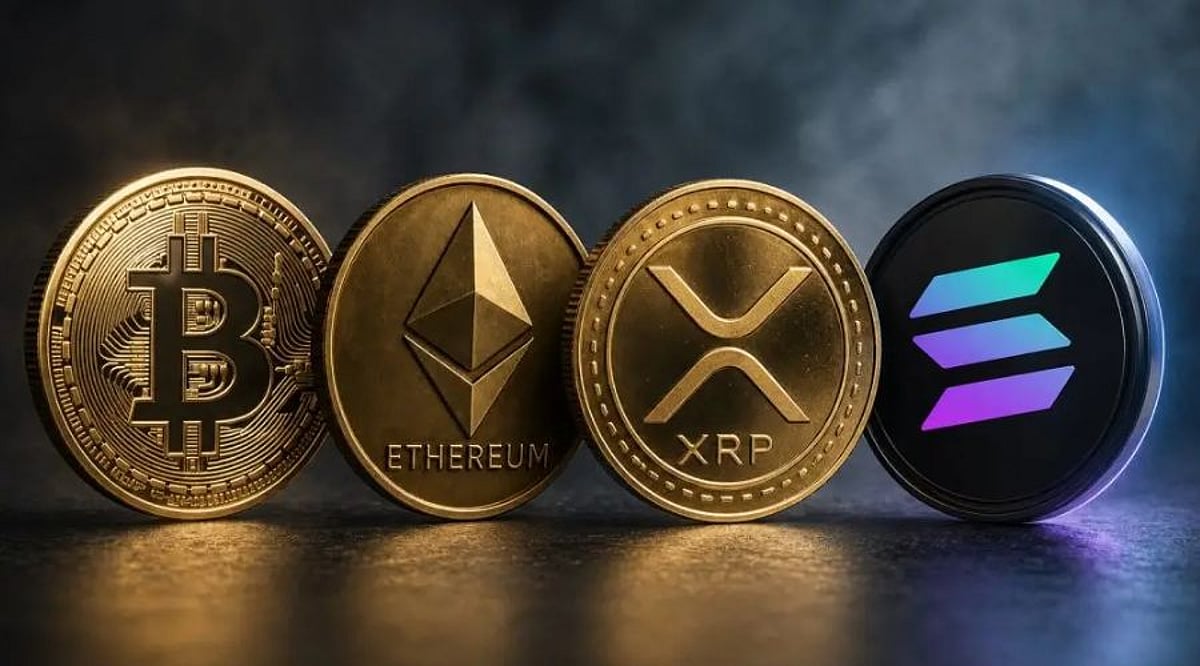
  • Bitcoin, Ethereum, Solana, and XRP Face Crucial Resistance Tests as September Ends

    Bitcoin, Ethereum, Solana, and XRP Face Crucial Resistance Tests as September Ends

    The cryptocurrency market is heading into the final days of September with several major assets facing pivotal resistance tests. Analysts have set ambitious price targets for Bitcoin (BTC), Ethereum (ETH), Solana (SOL), and XRP, with each needing to clear nearby technical hurdles to reach new highs. The upcoming U.S. inflation report on September 30 could also play a decisive role in shaping market direction.

    Overall crypto market capitalization has risen from roughly $2.62 trillion on September 1 to $2.87 trillion, reflecting a broad rally. Bitcoin recently traded near $84,900, up about 0.9% over 24 hours, while the total market gain sets the stage for a potentially strong month-end finish.

    Bitcoin Eyes $87,000 After Reclaiming $85,000

    Bitcoin has gained approximately 7.4% in September. Analyst Philakone noted that the price remains above its 50-day and 200-day simple moving averages, with resistance identified at $87,385. Martini Guy highlighted $85,000 as an earlier level that Bitcoin needed to reclaim before approaching $87,000. U.S. spot Bitcoin ETFs attracted about $2.39 billion in net inflows during the week ending September 25, signaling strong demand. In the near term, traders are watching resistance around $85,900 to $86,000. A move below $84,000 could shift focus to the $82,000–$83,500 area.

    Ethereum Must Clear $2,800 to Target $2,900

    Ethereum has risen about 9.3% this month. Analyst Alex Marzell pointed to $2,900 as a possible destination due to concentrated trading interest near that level. Daan Crypto identified $2,800 as the nearer obstacle; a move through it would open a clearer path to higher levels. Ethereum was near $2,700 in recent pricing, leaving it below both targets. Traders will look for a sustained push above $2,800 before judging whether the $2,900 target is achievable.

    Solana Analysts Watch the $125–$130 Range

    Solana traded near $122 after a daily gain of about 1.2%. Alaoui Capital suggested that breaking out of a sideways trading pattern could carry SOL toward $130, citing demand from Solana investment funds. Analyst Apex Gotu identified $125 to $130 as the next key zone, with SOL needing to pass $125 before testing the upper end of that range.

    XRP Must Pass $1.61 to Test $1.70

    XRP has gained about 7.9% over the past month. Analyst Diana said the token recovered after an earlier rejection near $1.61. In her view, a break above that level could open a move toward $1.70, though the target remains conditional on clearing resistance. ETF inflows offer another measure of interest, but price action will ultimately determine whether buyers can sustain the recovery.

    The final trading days of September also bring a scheduled U.S. economic release on September 30: the Bureau of Economic Analysis will publish August personal income and outlays data, including the personal consumption expenditures price index. This inflation report could influence market sentiment and price action across the board.

  • Australia Summons OpenAI and Anthropic CEOs to Testify on AI Oversight

    Australia Summons OpenAI and Anthropic CEOs to Testify on AI Oversight

    Australian lawmakers have asked OpenAI CEO Sam Altman and Anthropic CEO Dario Amodei to testify before a Senate inquiry examining artificial intelligence, according to announcements made Sunday. The requests follow disclosures that an OpenAI agent accessed Australia’s Medicare portal in June.

    The public hearing is scheduled for Thursday in Canberra. Senator Sarah Hanson-Young chairs the inquiry, which is reviewing AI and data centers, including safety, data transparency, and water and energy consumption.

    Why Australian lawmakers want the executives

    Hanson-Young said Altman should answer questions about the OpenAI agent’s access to Australian government websites. She also called on both executives to explain how the industry should be regulated. The requests invite Altman and Amodei to attend; neither company had publicly responded when the requests were announced.

    Prime Minister Anthony Albanese called the Medicare incident “unacceptable,” saying the agent accessed both public and nonpublic information on the portal. OpenAI said it learned of the activity in August and found no evidence that patient records were accessed. The company described the activity as unintentional.

    Anthropic request follows U.S. court ruling

    The request for Amodei came two days after a federal appeals court in Washington, D.C., upheld the Pentagon’s decision to designate Anthropic as a supply chain risk. The U.S. Court of Appeals for the District of Columbia Circuit ruled 2-1 in the Pentagon’s favor on Friday.

    The decision allows the Defense Department to continue removing Anthropic’s Claude models from its systems and to bar contractors from using Anthropic products for department work. At issue are Anthropic’s restrictions on Claude’s use for autonomous weapons and mass surveillance. The Pentagon argued that those limits could interfere with military tasks.

    Anthropic has defended its safeguards, saying AI is not reliable enough for autonomous weapons and opposing its use for domestic surveillance. Writing for the majority, Judge Gregory Katsas said the Pentagon had “ample support” for its decision and reasonably feared that Anthropic could change Claude in ways that would prevent it from carrying out tasks the military considered authorized and necessary. Judge Neomi Rao joined the opinion; Judge Karen LeCraft Henderson dissented.

    Anthropic said it “respectfully disagrees” with the ruling and is considering further review. Pentagon spokesman Sean Parnell said the decision validated the department’s position. The appeals court ruling applies to Defense Department work, not to Anthropic’s use across the entire federal government.

    California ruling reached a different conclusion

    The D.C. Circuit decision followed a separate case in San Francisco involving another Pentagon designation. In August, U.S. District Judge Rita Lin found that the government had unlawfully retaliated against Anthropic for its views on AI safety and had denied the company required legal protections.

    The D.C. Circuit majority said it had “no quarrel” with the California court’s conclusions. Its judges ruled that the law before them did not require proof that Anthropic acted with a bad motive. Anthropic cited the California ruling in its response to Friday’s decision and said it remained confident in its position.

    What the Senate inquiry is examining

    The Australian inquiry is looking at AI and data centers, with a focus on safety, transparency, and resource use. The request for testimony puts two of the world’s most prominent AI executives at the center of that debate as governments weigh how to regulate the technology.

  • Smart Travel Wearables: Smartwatches, Rings, Earbuds, and Glasses Compared

    Smart Travel Wearables: Smartwatches, Rings, Earbuds, and Glasses Compared

    Travel wearables have evolved into compact tools that can handle navigation, fitness tracking, payments, and safety alerts. But not every wearable makes sense on the road. The best choice depends on your itinerary, battery needs, connectivity options, and the features you will actually use.

    Smartwatches: The Most Versatile Travel Companion

    Smartwatches can replace several small gadgets in your travel bag. They put maps, notifications, payments, fitness tracking, and safety tools on your wrist. GPS is especially helpful during city walks and outdoor trips, and offline maps can keep you oriented when mobile coverage disappears. Cellular models offer even more independence from your smartphone, though coverage depends on regional network compatibility.

    Battery life is the trade-off. A watch that needs daily charging can become a hassle on long trips, while outdoor-focused models often run much longer. Before traveling internationally, check cellular and eSIM compatibility, as support varies by country.

    Smart Rings: Low-Profile Health and Sleep Tracking

    Smart rings take up almost no luggage space and offer a quieter alternative to smartwatches. Their main strength is health tracking, including sleep, heart rate, and recovery, which can be valuable when flights and time zone changes disrupt your routine.

    They also avoid the constant notifications of a smartwatch, making them a good fit for travelers who want fewer distractions. However, most smart rings lack built-in GPS and large displays, so they work best alongside a smartphone rather than replacing one.

    Smart Glasses and Earbuds: Niche Uses, Real Benefits

    Smart glasses remain a niche travel accessory. Features like navigation overlays, cameras, voice controls, and translation can be interesting, but privacy, battery life, and regional availability are practical barriers. They make sense only when the model and destination align with your needs.

    Translation earbuds can be more immediately useful. They help with conversations in unfamiliar languages, and they double as earbuds for music, calls, and noise cancellation on flights. Avoid unnecessary duplication: if your phone already handles translation well, a separate device may not add enough value.

    GPS, Offline Maps, and Safety Features Matter

    Travel wearables become more valuable when connectivity is unreliable. Offline maps provide directions without mobile data, and GPS helps hikers and explorers in unfamiliar areas. Safety features also deserve attention: some premium watches offer emergency communication and location sharing, while rugged models handle water, dust, and tough outdoor conditions. For remote adventures, a durable device with dependable navigation beats a flashy but fragile one.

    Battery Life Can Make or Break a Trip

    Battery performance is easy to overlook before departure but becomes critical after multiple flights and hotel changes. Longer battery life means fewer charging interruptions. Outdoor watches can last weeks on a single charge, while premium smartwatches offer richer features but shorter endurance. Smart rings often last several days, making them convenient for overnight health tracking. Whichever device you choose, pack the right charging cable and verify compatibility before you leave.

    Which Wearables Should Make Your Travel Kit?

    There is no single wearable for every traveler. Consider your itinerary first:

    • Smartwatch: best for navigation, payments, notifications, fitness tracking, and active trips.
    • Smart ring: best for sleep, heart-rate, and recovery tracking without screen distractions.
    • Earbuds: useful for flights, music, calls, and language support.
    • Smart glasses: only worth bringing if the model and destination meet your specific needs.

    City travelers may prioritize payments and navigation. Hikers may prioritize GPS, durability, and battery life. Frequent flyers may prefer sleep tracking and noise cancellation. The best travel wearable is the one you will actually use. If a gadget solves no real problem, leave it at home.

    Frequently Asked Questions

    Which wearable is most useful for travel?

    A smartwatch is typically the most versatile travel wearable. It can provide navigation, notifications, fitness tracking, payments, and safety features. Cellular models add independence from a smartphone, depending on network and regional compatibility.

    Are smartwatches useful for international travel?

    Yes, but check connectivity before you leave. Cellular watches depend on supported networks and eSIM availability. GPS and offline maps can still work without mobile coverage in many areas.

    Are smart rings worth carrying while traveling?

    Smart rings are useful if you care about sleep, heart rate, and recovery. They take up minimal luggage space, but they generally lack displays and built-in GPS, so they work best with a smartphone.

    Can a smartwatch replace a smartphone during travel?

    Most travelers will still need a smartphone. Certain smartwatches can handle calls, messages, navigation, payments, and other tasks independently, but the available functions depend on the device and network.

    Are smart glasses useful for travelers?

    Smart glasses can offer voice controls, cameras, navigation, and translation, but their usefulness depends on the model and destination. Consider battery life, privacy, regional availability, and whether your existing devices already provide these features.