Blog

  • Agentic AI in 2026: Top Tools, Platforms, and Frameworks for Autonomous Workflows

    Agentic AI in 2026: Top Tools, Platforms, and Frameworks for Autonomous Workflows

    Agentic AI: From Answers to Action

    In 2026, artificial intelligence has made a significant leap. Instead of merely generating responses, AI agents can now plan complex tasks, interact with business systems, verify their own output, and operate with limited human intervention. This shift is reshaping how organizations build software, manage operations, and assign responsibility to machines.

    The Three-Layer Stack of Agentic AI

    The agentic AI ecosystem has matured into three distinct layers: frameworks for constructing agents, platforms for controlling and observing them, and enterprise products that bring AI into everyday workflows. Choosing the right combination depends on workflow complexity, data requirements, and the level of control needed over autonomous decisions.

    Where Agents Are Built: Leading Frameworks

    Developers still start with frameworks, and two names dominate: LangChain and LangGraph. Although often mentioned together, they solve different problems. LangChain acts as an integration layer, connecting models to data sources, tools, and APIs while allowing teams to switch providers without rebuilding their applications. LangGraph focuses on stateful workflows, giving agents the ability to remember where they are in a task. This is essential for work that branches, loops, or runs for hours—so a single failed step doesn’t force a restart.

    CrewAI takes a collaborative approach by splitting work across specialized agents, much like a small team. A researcher gathers data, a writer drafts content, and a reviewer checks it before publication. This works well when a task can be broken into clear segments, though more agents also mean more coordination overhead.

    Other frameworks fill niche needs. LlamaIndex is built for data-heavy, retrieval-focused agents. DSPy treats prompt design as a testable, optimizable component. Microsoft’s Semantic Kernel is ideal for teams already embedded in the Microsoft ecosystem. No single framework wins across the board—the right choice depends on the type of failure a team is prepared to debug.

    Where Agents Are Controlled: Platforms and Observability

    Building an agent is relatively easy; running it safely at scale is harder. Without proper oversight, an agent might overspend a budget, access incorrect data, or misuse a tool. Production systems require evaluation, cost tracking, permission limits, and a clear audit trail.

    LangSmith provides tracing and evaluation across multiple frameworks, helping teams monitor agent behavior. TrueFoundry operates at the infrastructure level, managing routing, authentication, rate limits, and monitoring no matter which framework is in use. As organizations scale from a single agent to dozens, the challenge shifts from building to supervising.

    Where Agents Are Deployed: Enterprise Readiness

    Not every company wants to build agents from scratch. Ready-made enterprise products now fill that gap. Glean focuses on enterprise search and internal knowledge agents. Moveworks automates employee support and internal workflows. Sierra builds customer-facing agents for support and sales. Cognigy and Kore.ai compete in conversational automation at scale, while UiPath extends its existing automation platform with AI-powered exception handling for businesses already using its tools.

    An Emerging Fourth Category

    A new group of tools doesn’t fit neatly into the three layers. Google Antigravity offers an agent-first development environment. Perplexity Computer coordinates across multiple models at once. Manus focuses purely on autonomous task execution. These products sit between frameworks and finished applications, suggesting that the boundaries between building, controlling, and deploying agents are beginning to blur.

    The Bottom Line for 2026

    The real question isn’t which tool gives an agent the most freedom. It’s which tool gives an organization enough visibility and control to use that freedom wisely. As agents take on more daily operations, the winners won’t be the most autonomous systems. They’ll be the ones companies can trust, audit, and correct when things go wrong.

    Frequently Asked Questions

    What are agentic AI tools? Agentic AI tools are software frameworks and platforms that enable AI agents to plan tasks, use external tools, make decisions, maintain context, and complete multi-step workflows with limited human intervention.

    Which is the best agentic AI framework in 2026? There is no single best framework. LangGraph suits stateful workflows, LangChain handles broad agent development, CrewAI excels at multi-agent collaboration, and LlamaIndex is ideal for data-heavy applications.

    What is the difference between LangChain and LangGraph? LangChain provides components and integrations for building AI applications and agents, while LangGraph orchestrates complex, stateful workflows with branching, loops, retries, and persistent state.

    Are agentic AI platforms suitable for enterprises? Yes. Enterprise platforms offer workflow automation, observability, permissions, security controls, evaluation, and audit trails, all critical when agents operate across business processes.

    How should businesses choose an agentic AI platform? Evaluate workflow complexity, data needs, integration requirements, desired autonomy level, security controls, observability, cost management, and human-approval requirements before making a decision.


  • Why Instant Payouts Are Becoming the New Standard for Crypto Gaming Platforms

    Why Instant Payouts Are Becoming the New Standard for Crypto Gaming Platforms

    We’ve become very bad at waiting. A movie starts the second we press play. Money lands in a friend’s account before we’ve put our phone back in our pocket. Groceries, taxis and takeout can all be summoned in a few taps.

    So when a platform tells someone they need to wait two to three business days to get their own money back, it feels, and has become, outdated.

    That shift is showing up in payments. 57% of consumers who try instant payouts go on to make them their most-used way of receiving money. Instant payments were also the preferred method for 41% of US disbursement recipients in 2025, up from 33% in 2021.

    Once people get used to money moving quickly, they notice when it doesn’t. Online gaming and betting platforms are starting to run into the same problem, and some already have a solution.

    Depositing Takes Seconds. Withdrawing Doesn’t

    There has always been an awkward part of the online betting experience when a user deposits money instantly. A bet settles the moment a match ends or a casino game produces a result in seconds. Then they hit withdraw.

    Suddenly there are a wave of reviews, processing windows and vague estimates measured in hours or even days. Some of those delays can be considered legitimate. Operators still need fraud controls, identity checks and compliance systems, and crypto transactions themselves can be slowed by network congestion.

    But consumers don’t care about the technical background behind a transaction. They care about what they see: the money left quickly, so why is it coming back slowly?

    Now, payout speed is becoming a more visible battleground among crypto-focused gaming platforms. Roobet says crypto withdrawals are sent once requested, with the final arrival depending on blockchain confirmation. Cloudbet says most crypto withdrawals are processed instantly, although some can take up to 24 hours.

    It is a new area of competition from the one the gambling industry usually competes for. Instead of fighting over welcome bonuses and promotions, platforms have to answer this new question: How quickly can I actually get my money out?

    When the Withdrawal Is In the Millions

    When the number on the screen has seven figures, then platforms are really put to the test if users can trust them to pay up, or drag out payment and pull a shady move.

    Looking at one case in August, a crypto player reportedly deposited 1 million USDC on 1win and put the entire amount on Paris Saint-Germain to beat Aston Villa at odds of 1.74.

    The bet came in, earning the player $1.749 million. Cha-ching!

    The size of the wager caught a lot of attention, but the part that really matters is what comes afterward: the player withdrawing the winnings. The coverage and blockchain records of the $1.74 million win backed up that the payout was real and successfully completed.

    Taking a million-dollar deposit is easy for a platform, because that’s money coming in the bank. When that needs to flow out of an account to the tune of $1.75 million with a customer win, it shows whether the payment infrastructure actually works and the platform can be trusted to pay up.

    1win’s crypto system supports deposits and withdrawals in under 90 seconds across assets including BTC, ETH, USDT, TON, TRX, XRP, LTC and DOGE, depending on the network and processing conditions. The platform also has added support for USDC deposits and withdrawals on Solana, offering another option for transferring stablecoins.

    The minimum deposit is 5 USDC, and SOL deposits start from just 0.0099353 SOL.

    The company has built crypto further into the platform than many competitors because it prioritizes that payout time and traceability. Its broader business spans sportsbook, casino, and Web3, with crypto used to facilitate its entertainment ecosystem.

    Fast Payouts Are About Trust

    Withdrawal is becoming part of how users judge a platform. When a withdrawal sits in “pending” for hours, people ask questions.

    Has something gone wrong? Is the platform going to ask for another document? Does it actually have the liquidity to pay? Is someone manually reviewing the transaction?

    Even if nothing is wrong, waiting creates doubt and uncertainty. Fast and predictable payouts remove a lot of that anxiety for players. Crypto makes the process more transparent because, once a transaction is sent, users can see it moving on-chain rather than watching a status bar inside an app and hoping for the best.

    Consumers have already been trained by the rest of the internet to expect things immediately. Payments are now catching up. Mastercard has similarly pointed to real-time payment networks and instant transfers as forces reshaping expectations around how quickly money should move.

    For gaming platforms, the cashier is part of the product experience itself. Players still care about odds, games, bonuses and VIP perks. But once two platforms offer roughly the same entertainment, the one that returns someone’s money in 90 seconds rather than two days has a big advantage.

  • NYT Strands #920 Answers and Hints for September 9, 2026: Outdoor Shelters Theme

    NYT Strands #920 Answers and Hints for September 9, 2026: Outdoor Shelters Theme

    The New York Times Strands puzzle for Wednesday, September 9, 2026, brings a refreshing outdoor theme to the word-search grid. Today’s challenge, puzzle #920, revolves around structures that provide shelter, shade, and gathering spaces in gardens, parks, and backyards.

    Understanding Today’s Theme

    The official theme for September 9 is “Over and out(side).” This clue points players toward open-air structures rather than indoor items. Think about garden retreats, roofed gathering areas, and coverings created by plants or built structures. The theme becomes easier to grasp once one or two outdoor-related words appear on the board.

    How NYT Strands Works

    NYT Strands is a daily word-search puzzle where players connect letters horizontally, vertically, or diagonally to create words linked to a central theme. Every puzzle includes a spangram—a long word that captures the main idea and stretches across the board from one side to another. Players can also find non-theme words; finding three words with four or more letters unlocks a hint that highlights the letters of a theme answer.

    Hints for September 9, 2026

    Main theme hint: “Over and out(side).”

    If that clue still feels vague, focus on structures found in gardens, parks, and backyards. Look for places that provide shade, overhead protection, or a comfortable outdoor area for people to gather.

    Spangram Hint

    Still searching for the longest entry? Today’s spangram refers to the two outdoor conditions these structures help people enjoy or escape. Think about what shines overhead and the cooler cover found beneath roofs or foliage.

    Spangram Answer for September 9

    The spangram for puzzle #920 is: SUNANDSHADE. This phrase connects all six theme words and highlights the outdoor setting behind today’s puzzle.

    Complete Strands Answers for September 9, 2026

    Spoiler warning: The full theme-word list for puzzle #920 includes:

    • ARBOR
    • BOWER
    • CANOPY
    • GAZEBO
    • PAVILION
    • PERGOLA
    • SUNANDSHADE (Spangram)

    Each answer describes an outdoor structure, shelter, or covering commonly found in gardens, parks, and open spaces.

    Why Today’s Puzzle May Take Some Time

    This puzzle has a medium difficulty level. Words like ARBOR, BOWER, and PERGOLA can be tricky to separate since all three relate closely to garden spaces. BOWER may cause the most trouble, as it refers to a leafy garden retreat and has a less common usage than several other answers. ARBOR and PERGOLA also point toward garden structures, while CANOPY, GAZEBO, and PAVILION broaden the theme with other types of outdoor cover and gathering spaces.

    Finding SUN AND SHADE often provides the biggest breakthrough. Once the spangram is identified, the connection between all six theme words becomes much clearer.

    Final Thoughts

    Today’s “Over and out(side)” puzzle keeps the theme focused on familiar outdoor spaces while requiring players to carefully examine letter paths. For anyone stuck on Strands #920, these hints and the answer list provide a quick route to completing the September 9 challenge.

    Looking for more puzzle help? Check out our guide to NYT Strands Hints and Answers for September 8, 2026.

  • Wall Street Futures Drop as Brent Crude Surges Past $100, Reviving Inflation Fears

    Wall Street Futures Drop as Brent Crude Surges Past $100, Reviving Inflation Fears

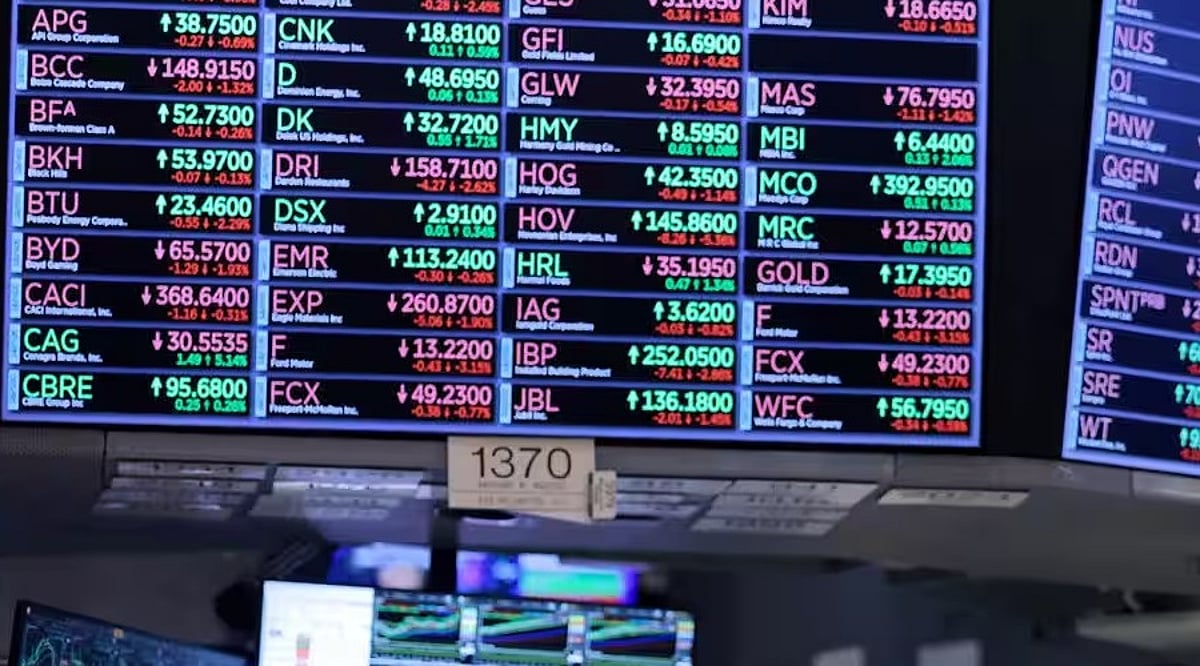
    US stock futures declined on Wednesday as Brent crude oil prices climbed above $100 per barrel for the first time since July, reigniting concerns about inflation ahead of key economic data releases. Investors are closely monitoring rising oil prices, elevated Treasury yields, and the Federal Reserve’s upcoming policy decision.

    Dow Jones Industrial Average futures fell approximately 331 points, or 0.6%, while S&P 500 futures dropped 0.4%. NASDAQ-100 futures also declined 0.5%. The losses followed a weak session on Tuesday, when the Dow dropped 1.2%, its largest one-day decline in nearly three weeks. The S&P 500 fell 0.6%, and the NASDAQ Composite lost 0.3%.

    Brent crude rose more than 2%, briefly surpassing $100 per barrel. The surge was driven by escalating tensions between the United States and Iran, which raised worries about energy supplies from the Middle East. Reports of attacks involving oil tankers and military assets heightened concerns about shipping through the Strait of Hormuz.

    Kara Murphy, chief investment officer at Kestra Investment Management, described the market move as “a little bit of a speed bump.” She noted that with fewer earnings reports to follow, investors are focusing more on macroeconomic risks.

    Treasury yields also rose, with the 10-year US Treasury note briefly exceeding 4.8% on Tuesday. Higher yields can pressure stock valuations by making government bonds more attractive relative to equities.

    Investors are now preparing for two critical inflation reports: the Producer Price Index on Thursday and the Consumer Price Index on Friday. These data points will help shape expectations ahead of the Federal Reserve’s September policy meeting. Market pricing currently implies about a 60% probability of a 25-basis-point rate increase. A stronger-than-expected inflation reading could boost those expectations, while a softer reading might support holding rates steady.

    Fed Chair Kevin Warsh and other policymakers have continued to emphasize inflation in their recent communications, keeping oil prices and inflation data at the center of trader attention.

    Global markets also reflected the cautious mood. European stocks traded lower, with the Stoxx 600 falling 0.7%. Germany’s DAX and France’s CAC 40 declined, while Italy’s FTSE MIB recorded a steeper drop. The UK’s FTSE 100 also moved lower. In Asia, results were mixed: Japan’s Nikkei 225 closed 0.19% lower, South Korea’s Kospi gained 1.4%, Australia’s S&P/ASX 200 fell 0.11%, and China’s CSI 300 rose 0.3%.

    The Cboe Volatility Index (VIX) remained near 15, below its long-term median of 17.6, suggesting that while near-term volatility is low, traders face several risk events in the coming weeks, including inflation data, the Federal Reserve meeting, and further developments in the US-Iran conflict.

  • Cardano Price Prediction: ADA Holds $0.22 as Apeing Presale Launches Stage 1 Banana Drop

    Cardano Price Prediction: ADA Holds $0.22 as Apeing Presale Launches Stage 1 Banana Drop

    The cryptocurrency market is buzzing with fresh developments as Cardano (ADA) shows resilience near $0.22 while a new meme coin presale, Apeing, launches its Stage 1 “Banana Drop.” With DeFi activity on Cardano hitting record levels and TRON (TRX) maintaining a strong network presence, traders have plenty to monitor. Here’s a closer look at the latest price movements and what they could mean for the market.

    Cardano (ADA) Price Analysis: Holding Strong at $0.22

    Cardano is currently trading at approximately $0.2206, with a market cap of $8.1 billion and a 24-hour trading volume of $525.34 million. The token’s 24-hour range spans from $0.2157 to $0.2258, placing $0.22 right in the middle of recent price action. Notably, Cardano’s DeFi total value locked (TVL) has reached around $65.33 million, nearly matching its stablecoin market cap of $64.53 million. This uptick in DeFi activity, coupled with Input Output Global’s (IOG) recent technology stack announcement, adds a fresh layer of momentum to the ADA narrative.

    Despite being 92.88% below its all-time high of $3.10, ADA’s recent weekly performance has kept it in the spotlight. The immediate question for traders is whether ADA can break above the $0.2258 resistance and establish a higher trading range. If bullish momentum persists, the next key level to watch is $0.30, a psychologically important zone that could redefine the medium-term outlook.

    TRON (TRX) Price Analysis: Network Growth Supports $0.33 Level

    TRON’s TRX is hovering around $0.3344, with a substantial market cap of $31.75 billion. The token’s 24-hour range is tightly packed between $0.3338 and $0.3373, making a sustained move above $0.3373 crucial for a push toward the $0.34 mark. Beyond the price chart, TRON’s network fundamentals remain robust: total accounts have surpassed 402 million, and the network continues to be a major player in stablecoin transfers.

    Analysts are keeping an eye on the $0.322 support and $0.351 resistance levels. A breakout above $0.351 could open the door to the $0.375 area, with $0.40 and $0.50 remaining longer-term targets if momentum strengthens.

    Apeing Crypto Presale: Stage 1 “Banana Drop” Goes Live at $0.0001

    In a different corner of the crypto world, Apeing has officially launched its crypto presale with the “Banana Drop” Stage 1. Tokens are priced at just $0.0001, with a limited allocation available at this stage. Built by a team of self-described “true degens,” Apeing blends meme culture with community-driven utility and real engagement. The project’s stated 10,000% ROI figure has already generated buzz among early-stage meme coin enthusiasts.

    The presale offers multiple ways to participate beyond simply purchasing tokens. Staking, referrals, and the Ape Referral League provide additional avenues for engagement as the ecosystem develops. With the next stage expected to carry a higher price, the current window is particularly significant for those tracking new crypto presales.

    How to Buy Apeing Tokens

    1. Visit the official Apeing website and access the presale page.
    2. Connect your compatible crypto wallet to the presale platform.
    3. Enter the amount you wish to spend on $APEING tokens.
    4. Review the details and approve the transaction through your wallet.
    5. Secure your tokens and protect your private keys.

    The process is designed to be straightforward, taking users from the official presale page to their $APEING purchase in just a few steps.

    Final Thoughts

    Cardano and TRON remain established names with evolving narratives, while Apeing introduces a high-risk, high-reward presale opportunity. For ADA, the $0.30 level is a key area to monitor, while TRX’s position near $0.33 keeps $0.40 and $0.50 in view if bullish momentum builds. As always, conduct your own research and invest responsibly.

    Disclaimer: This article is for informational purposes only and does not constitute financial advice. Cryptocurrency investments are risky and may result in loss of capital. Always do your own research before investing.

  • Ethereum’s 2029 Deadline: How the Network Plans to Defeat Quantum Computing Threats

    Ethereum’s 2029 Deadline: How the Network Plans to Defeat Quantum Computing Threats

    Ethereum developers have stopped treating quantum computing as a distant theoretical concern. The network now runs a dedicated post-quantum program with a target for core quantum-resistant infrastructure around 2029.

    No quantum computer today can break Ethereum’s cryptography. But replacing cryptographic systems across wallets, validators, and scaling infrastructure could take years, making early preparation essential before powerful quantum machines arrive.

    Four Major Quantum Risks for Ethereum

    Ethereum relies on several cryptographic systems that could become vulnerable to sufficiently powerful quantum computers:

    • ECDSA – protects ordinary user accounts
    • BLS signatures – secure validator consensus
    • KZG commitments – support data availability
    • Zero-knowledge systems – many rely on elliptic-curve assumptions

    Shor’s algorithm running on a powerful quantum computer could undermine these systems. Google Quantum AI research from March estimated that breaking 256-bit elliptic-curve cryptography might require roughly 1,200 logical qubits — substantially lower than earlier estimates. Current quantum machines remain far from that level.

    Ethereum’s Dedicated Post-Quantum Team

    The Ethereum Foundation formed its post-quantum security team in January 2026. By April, more than ten client teams were participating in weekly interoperability devnets. The Foundation also launched a USD 1 million Poseidon Prize to support research into hash-based cryptographic primitives.

    The proposed migration is gradual rather than one massive network upgrade. Validators could eventually register quantum-resistant keys alongside their current BLS credentials, with later upgrades adding native verification and transitioning consensus toward post-quantum signatures.

    Hash-Based Signatures Could Replace BLS

    Ethereum is developing leanXMSS, a hash-based signature scheme intended to replace quantum-vulnerable BLS validator signatures. The challenge is size: a leanXMSS signature can be roughly 3,000 bytes compared with 96 bytes for BLS. To solve this, Ethereum plans to use leanVM to aggregate larger signatures into compact proofs, potentially compressing data by about 250 times. KZG commitments could eventually be replaced by STARK- or lattice-based alternatives.

    Wallet Flexibility Through Account Abstraction

    User accounts pose another challenge. Ethereum is considering native account abstraction via EIP-8141, which would allow individual wallets to adopt different signature schemes instead of requiring every account to migrate simultaneously. The Ethereum Foundation’s September protocol priorities now rank the post-quantum transition as near-term engineering work, citing a December 2029 commitment for critical deliverables.

    Why 2029 Matters

    Ethereum does not need quantum resistance because ETH is unsafe today. It needs it because cryptographic migrations cannot be completed overnight. The 2029 target is a planning milestone rather than a guarantee. The real test will be whether Ethereum can migrate consensus, wallets, and data commitments without sacrificing performance or fragmenting users. Preparing years early gives the network substantially more room to solve that problem before quantum computing becomes an actual security threat.

    Frequently Asked Questions

    1. Can quantum computers break Ethereum today? No. Current quantum computers are not powerful enough, but sufficiently advanced machines could eventually threaten signatures and other cryptographic systems.
    2. What parts of Ethereum are vulnerable? ECDSA, BLS signatures, KZG commitments, and some elliptic-curve-based zero-knowledge systems.
    3. What is leanXMSS? A hash-based signature scheme being developed to replace BLS validator signatures. Its main challenge is larger signature sizes.
    4. How could Ethereum wallets become quantum-resistant? Through native account abstraction (EIP-8141), allowing wallets to adopt new signature schemes without simultaneous migration.
    5. Why is 2029 important? The Ethereum Foundation identified December 2029 as a key target for critical post-quantum work, providing a planning milestone for ecosystem migration.
  • Pioneering Women in Tech: The Visionaries Who Shaped Computing, Spaceflight, and AI

    Pioneering Women in Tech: The Visionaries Who Shaped Computing, Spaceflight, and AI

    Throughout history, women have made groundbreaking contributions to technology, often overcoming significant barriers. From early programming to modern artificial intelligence, their work has laid the foundation for many of the innovations we rely on today. Here are seven women whose vision and determination changed the course of technology.

    Ada Lovelace: The First Computer Programmer

    Ada Lovelace is widely regarded as the world’s first computer programmer. In the 1840s, she wrote an algorithm for Charles Babbage’s Analytical Engine. Her notes also revealed her understanding that machines could handle more than just numbers. Her ideas arrived long before modern computers existed and helped shape the very concept of programming.

    Grace Hopper: Making Computers Accessible

    Grace Hopper played a major role in making computers easier to use. She helped develop COBOL, one of the earliest programming languages designed for business applications. Hopper also championed the idea of machine-independent programming languages. Her work made computing more practical and opened the field to a wider audience.

    Katherine Johnson: The Mathematician Behind NASA’s Missions

    Katherine Johnson was a mathematician whose calculations helped NASA send astronauts safely into space. She verified flight paths for missions including John Glenn’s historic orbital flight. Her work demonstrated the critical role of mathematics in space travel. Johnson later became an inspiration for women and minorities pursuing careers in STEM.

    Hedy Lamarr: From Hollywood to Wireless Communication

    Hedy Lamarr was not only a famous actress but also a brilliant inventor. During World War II, she and composer George Antheil developed a frequency-hopping communication system. This idea later became a foundation for technologies used in wireless communication. Her inventive work earned widespread recognition decades after it was created.

    Radia Perlman: The Mother of the Internet

    Radia Perlman transformed how computer networks communicate. She created the Spanning Tree Protocol, which enabled large networks to manage connections without creating endless loops. Her work became essential to Ethernet networking and helped make modern networks more reliable. Perlman’s contribution remains a key part of today’s connected world.

    Margaret Hamilton: Software Engineering for the Moon Landing

    Margaret Hamilton led the team that developed the onboard flight software for NASA’s Apollo missions. Her software was critical to the success of Apollo 11’s lunar landing. Hamilton also helped establish the discipline of software engineering and reliable computer systems. Her work showed how vital software could be to major missions.

    Fei-Fei Li: Advancing Artificial Intelligence

    Fei-Fei Li has been instrumental in the growth of modern artificial intelligence. She helped create ImageNet, a large visual database that became essential for training and testing image-recognition systems. Her research advanced computer vision and contributed to the rapid development of today’s AI technology.

  • How AI Detectors Actually Work: Methods, Accuracy, and Why You Shouldn’t Trust Them Completely

    How AI Detectors Actually Work: Methods, Accuracy, and Why You Shouldn’t Trust Them Completely

    AI detectors have become essential tools for educators, editors, and hiring managers who need to distinguish human-written text from machine-generated content. But how reliable are they really? This article explores the techniques behind AI detection, their real-world accuracy, and the critical limitations you need to understand.

    What AI Detectors Actually Measure

    AI detectors do not uncover a hidden signature embedded in text. Instead, they analyze statistical patterns—primarily perplexity and burstiness—and return a probability score, not a definitive verdict. Perplexity measures how predictable a sentence is to a language model; human writing tends to be less predictable. Burstiness captures the natural variation in sentence length. However, newer AI models have become better at mimicking these variations, making burstiness less reliable.

    Four Core Detection Techniques

    • Classifiers (e.g., GPTZero, Originality.ai): Trained on large datasets to recognize subtle patterns in word choice and structure.
    • Watermarking (e.g., Google DeepMind’s SynthID): Embeds a signal during generation, but only works if the AI system cooperates and editing can weaken it.
    • Provenance analysis: Examines document history, edit trails, and drafting behavior (e.g., Google Docs version history).
    • Text-based scanners (e.g., Turnitin’s AI detector): Analyze the submitted content directly without historical context.

    The Accuracy Problem

    No AI detector is 100% accurate. One widely cited study found that detectors flagged essays from non-native English speakers as AI-generated far more often than those from native speakers. Accuracy varies by dataset, AI model, and even the writer’s background. Paraphrasing or restructuring a passage can erase the original statistical fingerprint, causing many detectors to miss reworked AI content entirely.

    Why a Single Score Isn’t Enough

    Most real-world writing today involves some level of AI assistance. A single confidence score cannot fairly capture that blend. Institutions that treat detection scores as absolute proof risk penalizing honest authors while failing to catch cleverly rewritten machine text. The best approach is to use detection scores as a starting point, combined with contextual review, writing samples, and direct conversation.

    The Future of Trust in Writing

    As generation and detection technologies continue to evolve, the real challenge will shift from identifying machine text to redefining what trust means in written communication. Judgment, context, and human review will become more valuable than any single algorithmic score.

  • The Tech Behind Today’s Movie Magic: Key Innovations in Modern Filmmaking

    The Tech Behind Today’s Movie Magic: Key Innovations in Modern Filmmaking

    Modern movies are built with far more than cameras and actors. Artificial intelligence, virtual production, motion capture, computer-generated imagery and advanced sound systems now play major roles in shaping what audiences see on screen. These technologies are changing how filmmakers create worlds that once seemed impossible.

    Digital Cameras and High-Resolution Capture

    Modern digital cinema cameras capture extraordinary levels of detail and dynamic range. High-resolution sensors give filmmakers greater flexibility during production and post-production. Advanced digital workflows have also made professional filmmaking more accessible, allowing smaller productions to achieve polished visuals without traditional film stock.

    CGI and Visual Effects

    Computer-generated imagery has become one of the foundations of modern blockbuster filmmaking. Artists can create creatures, environments, explosions and entire cities digitally. Visual-effects teams are also able to blend computer-generated elements with live-action footage so convincingly that audiences may never know what was real.

    Virtual Production and LED Walls

    LED volume technology allows filmmakers to shoot actors against giant digital environments displayed on surrounding screens. Unlike traditional green screens, the digital background is visible during filming and produces realistic reflections and lighting. This approach has transformed the way filmmakers create science-fiction, fantasy and location-heavy scenes.

    Motion Capture and Performance Technology

    Motion capture records an actor’s movements and translates them into digital characters. Modern systems can capture facial expressions and subtle body movements with impressive precision. The technology has helped filmmakers create believable digital characters while allowing performers to bring emotion and personality to completely fictional creatures.

    AI and Machine Learning

    AI is increasingly used for tasks ranging from visual effects and editing to dubbing and production planning. Machine-learning tools can speed up repetitive processes and help filmmakers analyze enormous amounts of footage. Human creativity still drives the production, but AI is becoming a powerful supporting tool.

    Immersive Sound and Advanced Editing

    Modern filmmaking depends heavily on sophisticated sound design and digital editing. Dolby Atmos and similar technologies can place sounds around viewers, creating a more immersive experience. Non-linear editing systems also allow filmmakers to manipulate footage, color, sound and effects with remarkable precision.

  • Honda Scooters vs. Honda Bikes: Which Is Better for Daily Commuting?

    Honda Scooters vs. Honda Bikes: Which Is Better for Daily Commuting?

    Choosing between Honda scooters and Honda bikes depends on your daily travel habits. Scooters prioritize automatic convenience, storage, and easy city maneuvering. Motorcycles offer more control, broader performance options, and greater flexibility for longer journeys.

    Honda’s current portfolio gives buyers options on both sides. Its scooters include models such as the Activa110, Activa125, Dio110, Dio125, Activa e:, and QC1. Honda bikes range from commuter models like the Shine125 and SP125 to the Unicorn, SP160, Hornet2.0, and larger BigWing motorcycles.

    Where Honda Scooters and Honda Bikes Fit Differently

    Honda scooters generally suit riders who value convenience and short urban journeys, while Honda bikes offer more choice for commuting, performance, and longer-distance riding. Use this as a starting point. Your regular distance, traffic, pillion needs, comfort, and parking conditions should decide the final choice.

    When Do Honda Scooters Make More Sense?

    Honda scooters make more sense when ease of operation, frequent stops, and practical carrying ability matter most. Popular models differ in engine size, storage, and style:

    • Activa 110/125: Classic daily commuter with ample under-seat storage and smooth automatic transmission.
    • Dio 110/125: Sportier styling but same practical scooter layout.
    • Activa e: Electric variant with swappable batteries via Honda’s network.
    • QC1: Electric scooter with home charging and 26-litre storage.

    For everyday use, also consider: ease of U-turns and parking, seat and pillion comfort, storage space, suspension over rough roads, braking confidence, and features you will actually use. More features are not automatically better; the useful ones remove friction from your regular journeys.

    When Can Honda Bikes Be the Better Fit?

    Honda bikes become the stronger option when you want manual control, spend more time on faster roads, or prefer traditional motorcycle ergonomics. The wider range gives you scope to move from basic commuting to sportier or leisure-focused riding.

    Choose a bike if you value: greater control over acceleration, longer-distance comfort, more engine-performance options, traditional motorcycle ergonomics, and more flexibility for highway use.

    How Does Going Electric Change the Decision?

    Electric Honda scooters add two important questions: how far you travel and how you prefer to recharge. The QC1 suits riders who can charge at home, while the Activa e: uses battery swapping. Before choosing an electric scooter, check your average daily distance, home-charging access, battery-swap availability, battery warranty, service support, and pillion/storage needs. Range matters, but charging convenience can matter just as much.

    What Should a Test Ride Tell You?

    A test ride should show which Honda two-wheeler feels easier to live with every day. For scooters, check low-speed balance, seat comfort, pillion space, storage usability, suspension response, braking feel, and ease of parking. For bikes, also assess clutch effort, gearshift quality, handlebar reach, footpeg position, U-turn confidence, and stability at higher speeds. Specifications tell you what a model has; a test ride tells you whether those specs work for you.

    What to Check for Long-Term Ownership

    Long-term ownership should include service access, warranty, and recurring costs. Before booking, review distance to the nearest authorized service center, service intervals, warranty coverage, insurance renewal, tire and brake replacement, fuel or electricity costs, battery warranty for EVs, and charging or swapping convenience. A product feature matters most when you understand what it changes after months or years of use.

    (Note: The original article also mentions Bajaj Finance Two-wheeler Loan options for financing. While this is a practical consideration for buyers, the final choice should remain comfortable both on the road and in your monthly budget.)

    Summary: Which Should You Choose?

    Choose Honda scooters if your priorities are automatic convenience, easy city riding, storage, frequent short journeys, and family-friendly usability. The Activa range offers familiar everyday practicality, the Dio range adds a sportier character, while the QC1 and Activa e: provide two different approaches to electric mobility.

    Choose Honda bikes if you value greater riding control, more performance options, longer-distance usability, and wider choices from commuter to premium. The Shine125 and SP125 focus on commuting, the Unicorn adds a relaxed 160 cc experience, while the Hornet2.0 moves toward sportier riding.

    The right Honda two-wheeler is not the one with the longest specification sheet. It is the one whose engine or battery, comfort, features, and ownership requirements fit the journeys you make most often.