Blog

  • China’s Kimi K3 AI Model Heightens US Anxiety Over Tech Race and Export Controls

    China’s Kimi K3 AI Model Heightens US Anxiety Over Tech Race and Export Controls

    China’s Moonshot AI has released Kimi K3, an open-weight artificial intelligence model that rivals top US systems on several benchmarks. The model’s rapid adoption, low-cost accessibility, and alleged use of advanced computing have reignited US concerns about chip restrictions, model distillation, and China’s accelerating AI capabilities.

    Kimi K3 Narrows the AI Performance Gap

    Kimi K3 is a 2.8-trillion-parameter large language model, making it one of the largest open-weight systems to date. It performs strongly in coding, reasoning, and other tests, approaching or exceeding results from OpenAI and Anthropic models. However, analysts note that benchmarks do not always reflect real-world performance, and full parity with top US models remains debatable. The open-weight release allows developers to download, modify, and run the model on private servers, giving companies more control over data and reducing reliance on paid platforms.

    US Officials Question Chip Access and Training Data

    White House Office of Science and Technology Policy Director Michael Kratsios claimed that Moonshot accessed NVIDIA GB300 systems in Thailand, potentially for model training. He also alleged that Moonshot distilled Anthropic’s Fable during K3’s development. Moonshot has denied both claims. Independent confirmation of the chip access remains lacking, though previous reports indicate Chinese companies have used overseas data centers to circumvent export controls.

    Kimi K3 Tests Washington’s Export Controls

    The launch has intensified debate over whether US export controls can slow China’s AI progress. While Washington restricts advanced chip access, Chinese firms continue releasing competitive models. The proposed Remote Access Security Act would extend controls to cloud-based use of restricted hardware. US officials have also hinted at sanctions for alleged IP theft through distillation. For American AI companies, Kimi K3 adds commercial pressure: a free, competitive model that appeals to developers and startups seeking lower costs and data sovereignty.

  • Infosys Q1 Net Profit Rises 12%, Appoints Ashiss Kumar Dash as Next CEO

    Infosys Q1 Net Profit Rises 12%, Appoints Ashiss Kumar Dash as Next CEO

    Infosys reported a strong start to fiscal year 2027, posting a 12.2% increase in net profit to Rs 7,769 crore for the June quarter. Revenue also grew 14% to Rs 48,211 crore, driven primarily by growth in the life sciences and financial services sectors, as well as steady performance in the US and Europe.

    Alongside the financial results, the company announced the appointment of Ashiss Kumar Dash as CEO designate. He will assume the roles of Managing Director and CEO on April 1, 2027, succeeding Salil Parekh after his second term concludes.

    Infosys also revised its FY27 revenue growth guidance downward, now expecting growth of 1.5% to 3%, as global clients remain cautious with technology spending.

    Ashiss Kumar Dash, a 30-year veteran of Infosys, currently leads several global business units. The board highlighted his extensive experience in technology, business operations, and customer management as key to driving the company’s next phase of growth.

    “Technology is entering a new era, with AI fundamentally reshaping how businesses operate and create value,” Dash said following the announcement. He emphasized Infosys’s strong AI strategy, skilled workforce, and trusted client relationships as foundations for future success.

    Salil Parekh noted that the company’s AI platform, Infosys Topaz, continues to win large client deals. Infosys secured $3.6 billion worth of large contracts during the quarter, indicating steady demand despite cautious spending. The company plans to continue investing in AI skills and digital services to support long-term growth.

  • Andrej Karpathy: Speak Naturally, Not Perfectly — Why Casual Voice Prompts Outperform Polished AI Instructions

    Andrej Karpathy: Speak Naturally, Not Perfectly — Why Casual Voice Prompts Outperform Polished AI Instructions

    Artificial intelligence researcher Andrej Karpathy, the mind behind the term “vibe coding,” is challenging the common obsession with crafting the perfect AI prompt. Instead, he advocates for a more natural approach: simply say what you want, even if your thoughts are messy or incomplete.

    In a post on X on July 21, 2026, Karpathy explained his preference for using voice mode when interacting with large language models (LLMs). Rather than typing carefully refined instructions, he speaks freely, allowing the AI to organize his scattered ideas into a coherent response. He often tells the chatbot upfront that his thoughts may be messy or contain mistakes, so the model focuses on intent rather than literal interpretation.

    “One pattern I find useful for working with LLMs is a nice long ramble session. Sometimes the LLM needs more bits to understand what you’re trying to achieve, but you’re too lazy to type them. In these cases I like to lean back, switch to voice and just ramble.”

    Karpathy argues that many users provide too little context. He believes longer, more natural instructions give the AI a better chance to grasp the real objective than short, polished prompts. His comments come amid growing investment by AI companies in voice-driven assistants designed to facilitate more fluid conversations.

    Karpathy coined the term “vibe coding” in early 2025, referring to a coding method where developers use natural language prompts to generate code via AI instead of writing every line manually. His latest message reinforces that philosophy: forget about perfect prompts, focus on clear communication.

  • Ethereum Fees Plunge 51% as Transactions and Staking Reach All-Time Highs

    Ethereum Fees Plunge 51% as Transactions and Staking Reach All-Time Highs

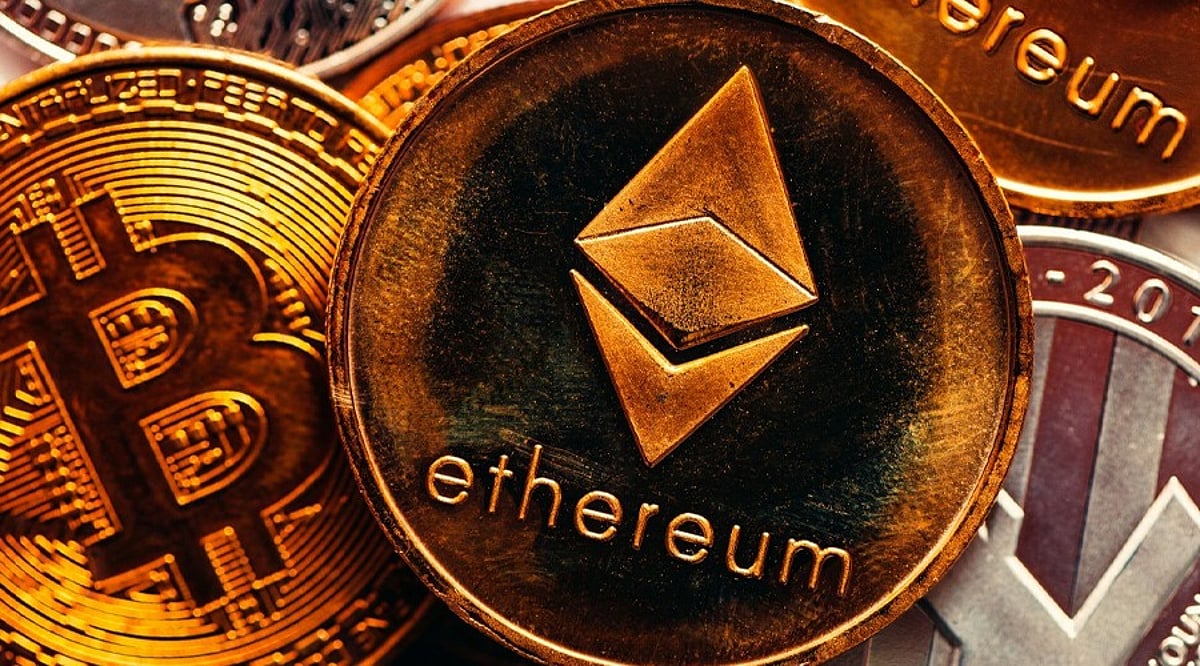
    Ethereum’s quarterly fee revenue dropped 51% year-over-year to approximately $64 million in Q2 2026, even as transaction volumes and staking activity hit new records, according to a report from Bitwise. The decline stems from cheaper and more abundant blockspace rather than weakening demand.

    Revenue measured in ETH actually rose for the first time in over a year. Ethereum generated roughly $131 million in fee revenue during Q2 2025, but that figure fell to nearly $64 million one year later.

    Cheaper Blockspace Drives Higher Ethereum Usage

    Ethereum processed 203.9 million transactions during the quarter, up sharply from 121.1 million a year earlier. Network throughput also improved to 26 transactions per second from 15. The network increased its block gas limit to 60 million, creating more room for transactions and reducing user costs even as activity expanded.

    Bitwise described rising usage and falling fees as the quarter’s dominant trend. Researchers attributed the gap to protocol changes that expanded blockspace across blockchain networks. In ETH terms, quarterly revenue increased from 27,670 ETH in Q1 to 31,166 ETH in Q2, though the weaker token price reduced the dollar total.

    Active staking reached a record 40.2 million ETH, representing about 33% of the total supply. Institutional inflows continued as more tokens entered staking contracts. The question remains whether rising usage and record staking can offset weaker dollar revenue as Ethereum faces broader market pressure.

    The same pattern appeared on other networks. Solana processed 9.8 billion non-voting transactions near its record, while its dollar revenue declined. Avalanche handled 236 million C-Chain transactions, compared with 58 million a year earlier. Lower congestion reduced fees even as network use expanded.

    ETH Price Faces Oil, Rates, and Technology Pressure

    Ethereum traded near $1,927 on July 23 after reaching an intraday high of $1,941, according to crypto.news data. The token recovered more than 27% from its June low near $1,514. However, repeated failures near $1,955 kept ETH below the psychological $2,000 level.

    Oil prices added pressure as Middle East tensions pushed crude higher for a fifth session. West Texas Intermediate moved above $90 per barrel. Attacks by Iran-aligned Houthis on Saudi oil tankers raised supply concerns. Higher energy costs could lift inflation and narrow the Federal Reserve’s policy options.

    CME FedWatch data showed the probability of a September rate hike rising to 79% from 68%. Traders still expected no change at the July meeting. Technology shares also weakened after Alphabet lifted its 2026 capital-spending forecast to between $195 billion and $205 billion.

    Alphabet reported negative free cash flow of $5.9 billion as quarterly spending doubled to $44.9 billion. Its shares fell during premarket trading. Meanwhile, US spot Ethereum ETFs recorded $72.64 million in net inflows on July 22, according to SoSoValue.

    BlackRock’s iShares Ethereum Trust led with $53.47 million. The regulated products continued attracting capital while ETH remained below $2,000. BitMEX also announced plans to stop operations on September 23 following a strategic review by parent company HDR Global Trading.

    The exchange told customers to close positions and withdraw funds before the deadline. BitMEX has served more than two million professional and institutional traders since 2014. Position transfers could shift leverage to rival platforms. Binance, Bybit, OKX, and other exchanges still operate larger Ethereum derivatives markets.

    Ethereum fee revenue fell 51% even as transactions, throughput, and staking reached record levels. Cheaper blockspace reduced user costs, while ETF inflows supported demand. Still, oil prices, rate expectations, and weaker technology shares could continue influencing ETH’s attempt to reclaim $2,000.

  • iQOO Z11 Lite 5G Debuts in India: Full Specs, Price, and Availability

    iQOO Z11 Lite 5G Debuts in India: Full Specs, Price, and Availability

    iQOO has expanded its affordable 5G lineup in India with the launch of the Z11 Lite 5G. The new smartphone focuses on battery life, performance, and 5G connectivity, making it a compelling option for budget-conscious buyers. It is powered by the MediaTek Dimensity 6300 chipset and runs on Android 16 with Funtouch OS, which includes AI-driven features.

    Key Specifications

    • Display: 6.74-inch HD+ LCD with 120Hz refresh rate and High Brightness Mode up to 1,200 nits
    • Processor: MediaTek Dimensity 6300 5G
    • RAM & Storage: Up to 8GB RAM and up to 256GB storage
    • Rear Camera: 50MP Sony IMX852 primary sensor with secondary depth sensor; modes include Night, Portrait, Panorama, Time-Lapse, Pro, and AI enhancements
    • Front Camera: 5MP for selfies and video calls
    • Battery: 6,500mAh with 44W FlashCharge
    • Protection: IP65 dust and water resistance
    • Security: Side-mounted fingerprint sensor
    • Connectivity: Dual SIM 5G, USB Type-C, Dynamic Light notifications

    Camera Highlights

    The iQOO Z11 Lite 5G sports a 50MP Sony IMX852 primary camera, complemented by a secondary sensor for portrait and depth shots. The camera app includes AI image enhancement features that optimize color and quality, along with popular modes like Night and Pro.

    Battery and Charging

    One of the standout features is the massive 6,500mAh battery, which iQOO claims can last a full day on a single charge. The 44W FlashCharge technology, combined with software-based battery optimization, ensures quick top-ups and extended battery health.

    Price and Availability in India

    The iQOO Z11 Lite 5G is available in three configurations:

    • 4GB + 128GB: ₹19,499
    • 6GB + 128GB: ₹21,499
    • 6GB + 256GB: ₹24,499

    The smartphone will be sold through online retail platforms and authorized offline stores. Launch offers include bank discounts, exchange bonuses, and no-cost EMI options.

    Additional Features

    Beyond the core specs, the phone offers IP65 dust and water resistance, a side-mounted fingerprint sensor, a USB Type-C port, and dual SIM 5G support with Dynamic Light notifications.

  • Dogecoin Drops Below $0.070 as Bearish Momentum Intensifies

    Dogecoin Drops Below $0.070 as Bearish Momentum Intensifies

    Dogecoin fell below $0.070 on Friday, shedding 4.75% in 24 hours, as escalating geopolitical tensions, market deleveraging, and weakening sentiment weighed on speculative cryptocurrencies. The decline pushed DOGE to approximately $0.0690, placing the largest memecoin near support levels last seen in late 2024. Broader crypto weakness deepened the move, while traders monitored whether spot ETF inflows could spark a recovery.

    Market Fear Drives Selling Across Meme Coins

    The total cryptocurrency market capitalization dropped 0.96% to $2.22 trillion, as liquidations added pressure to the broader macro-driven sell-off. Bitcoin traded near the mid-$65,000 range, while Ethereum slipped toward $1,880 after giving back earlier weekly gains. XRP and Dogecoin also weakened as investors reduced exposure to higher-risk assets amid the escalating United States-Iran crisis. CoinMarketCap’s Fear and Greed Index fell to 37 on Friday from 40 earlier in the week, signaling a further shift toward fear.

    Dogecoin often reacts sharply to changes in retail interest and market risk appetite, leaving it vulnerable during periods of uncertainty. As speculative demand weakened, DOGE and other meme coins faced heavier selling pressure than several larger digital assets.

    Derivatives Data Shows Volatility and Bearish Demand

    Dogecoin futures open interest slipped to about $1.10 billion, according to CoinGlass, indicating a modest reduction in outstanding leveraged positions. At the same time, futures trading volume surged 76% to nearly $1.38 billion, as retail traders remained active despite falling prices. The combination of lower open interest and higher volume pointed to rising volatility rather than a clear return of bullish conviction.

    DOGE’s perpetual futures funding rate fell to approximately negative 0.0016%, meaning short sellers paid holders of long positions. Negative funding typically emerges when bearish expectations strengthen and demand for short exposure rises across the derivatives market.

    Technical Indicators Keep Sellers in Control

    Dogecoin remained below its 50-day exponential moving average at $0.0788 and its 200-day average at $0.1032. These levels kept the short-term and medium-term trend tilted toward sellers, while the $0.070 to $0.079 area formed the nearest resistance zone. Buyers would need to reclaim that zone before the market could show stronger signs of a possible trend reversal.

    The Relative Strength Index hovered near 31, reflecting persistent selling pressure while placing DOGE close to oversold territory. Meanwhile, the Moving Average Convergence Divergence tested its signal line, leaving room for bearish momentum to build if sellers retained control. The next major support stands at $0.0641, and a daily close below it could trigger another selling wave in the coming sessions.

    Conclusion

    Dogecoin remains under pressure below $0.070 as geopolitical tension, weak market sentiment, negative funding, and bearish technical signals favor sellers. The $0.0641 support level now represents the key downside test, while buyers must reclaim the $0.070–$0.079 zone before a stronger recovery can develop.

  • Bitcoin Holds Near $65,200 as Record ETF Inflows Offset Geopolitical Uncertainty

    Bitcoin Holds Near $65,200 as Record ETF Inflows Offset Geopolitical Uncertainty

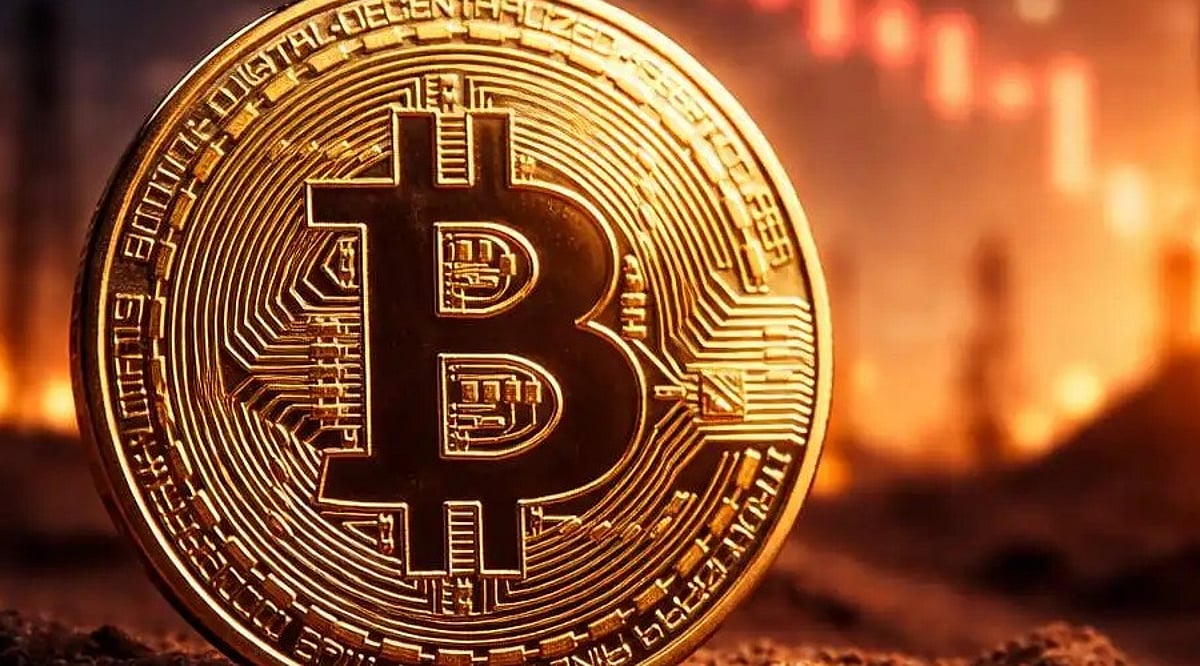
    Bitcoin traded near $65,218 on Friday, supported by seven consecutive sessions of spot ETF inflows totaling nearly $1 billion, even as escalating US-Iran tensions and rising oil prices kept overall market sentiment fragile. The leading cryptocurrency showed resilience ahead of the Federal Reserve meeting on July 28-29, with resistance at $66,000 and key support at $64,350.

    Market Overview

    Bitcoin held near $65,218.75, up 0.51% over the past 24 hours, according to CoinMarketCap data. The price action remains anchored to oil movements, ETF flows, and shifting Fed rate expectations. Altcoins outperformed, with Ethereum gaining 2.27%, Solana 2.39%, and Dogecoin jumping 4.78%.

    Analyst Perspectives

    Middle East Escalation Tests Risk Appetite

    Akshat Siddhant, Lead Quant Analyst at Mudrex, noted Bitcoin slipped to around $64,800 as fresh attacks in the Middle East dampened investor confidence. Crude oil pushed past $90 a barrel, driving US bond yields to 18-month highs. Despite this, spot Bitcoin ETFs extended their inflow streak to seven sessions, drawing nearly $1 billion. Resistance sits at $66,000, with $64,350 acting as the key support zone.

    Fed Meeting Looms as Next Catalyst

    Vikram Subburaj, CEO of Giottus, placed Bitcoin near $65,100, down about 1% as oil above $100 and firmer Treasury yields weighed on sentiment. He called the July 28-29 Fed meeting the most important near-term catalyst. Spot ETFs attracted close to $999 million across seven straight sessions through July 22, though preliminary data hinted at a pause on July 23.

    Support Holds Despite Selling Pressure

    The CoinSwitch Markets Desk noted Bitcoin briefly dipped below $65,000 before recovering. Brent crude climbed past $100, while bond yields hit 18-month highs. Higher energy costs revived inflation worries. The 21-day moving average near $64,000 is key support, with $68,000 marking the next resistance band.

    Regulatory Signals Add a Silver Lining

    Nischal Shetty, Founder of WazirX, flagged Argentina’s proposal allowing mutual funds to invest directly in Bitcoin as a meaningful adoption signal. Bitcoin’s near-term support lies between $64,200 and $64,500, with traders watching whether it can reclaim $66,000.

    Bitcoin’s Structure Stays Comparatively Resilient

    Riya Sehgal, Research Analyst at Delta Exchange, said gold and silver fell despite geopolitical tensions, as rising Treasury yields and a stronger dollar outweighed safe-haven demand. Bitcoin held up better than Ethereum and most altcoins. A move past $66,100 could open the $66,600 to $66,900 zone, while a break under $65,000 risks a drop toward $64,200.

    Top 10 Coins at a Glance

    Biggest Gainers: DOGE (+4.78%), ETH (+2.27%), SOL (+2.39%).

    Relative Laggards: USDT, USDC, TRX (minimal movement).

    Key News Driving Market Sentiment

    US-Iran Tensions Keep Oil and Yields Elevated

    Fresh hostilities pushed oil above $90 a barrel, reviving inflation concerns just as the Fed prepared for its meeting. Traders trimmed exposure to riskier assets.

    CLARITY Act Text Sparks Fresh Senate Debate

    The full text of the CLARITY Act became public on July 22, reigniting disagreement over enforcement roles. Passage odds are roughly 43% in prediction markets.

    Bitcoin ETF Inflow Streak Faces a Test

    Preliminary data hinted at a possible outflow midweek, suggesting institutional appetite may be cooling. Analysts are watching whether the trend resumes.

    XRP Whales Accumulate as ETF Pace Slows

    Large XRP holders increased positions this week. The token holds above $1.10, supported by its EU MiCA license and cumulative ETF inflows near $1.48 billion.

    Coinbase Expands Payments for AI Agents

    Coinbase introduced a feature allowing corporate customers to accept payments directly from AI agents via the x402 protocol, signaling growing overlap between AI and blockchain.

    BNY Mellon Advances Tokenized Treasury Plans

    BNY Mellon confirmed plans to launch tokenized US Treasuries by late 2026, targeting round-the-clock settlement by 2027.

    Investor and Market Outlook

    Bitcoin holds near $65,200 as ETF demand offsets Middle East pressure. A close above $66,000 could open a path toward $69,000. A slip below $64,350 risks exposing support near $64,000. Ethereum trades near $1,874, testing resistance at $1,950. Oil prices, Treasury yields, and the Fed decision remain the key macro variables.

  • Garena Free Fire MAX Redeem Codes for July 24, 2026: Unlock Premium Skins, Bundles & Diamond Vouchers

    Garena Free Fire MAX Redeem Codes for July 24, 2026: Unlock Premium Skins, Bundles & Diamond Vouchers

    Looking for Garena Free Fire MAX codes for July 24, 2026? The developer team has rolled out the latest Free Fire MAX codes for Friday, which you can redeem to obtain cosmetic items. These items are primarily used to customize in-game characters to players’ preferences, making the intense Free Fire MAX battlefield even more fun. The primary objective of this game is to survive till the end. When the other 49 players are determined to eliminate you, these codes may help you survive by providing Diamond Vouchers. So, if frequent deaths are frustrating you, scroll down!

    Codes for July 24, 2026

    If you are looking for Free Fire MAX redeem codes for July 24, 2026, check the list below:

    • P3LX6V9TM2QHFFWCTKX2P5NQ
    • S5PL7M2LRV8KMCPW3D28VZD6
    • ZZZ76NT3PDSHV427K98RUCHZTX4SC2VUNPKF
    • Q8M4K7L2VR9J
    • RD3TZK7WME65
    • ZRW3J4N8VX56
    • TFX9J3Z2RP64
    • WD2ATK3ZEA55
    • FFPLUFBVSLOT
    • RHTG9VOLTDWP
    • N7QK5L3MRP9JJ2QP8M1KVL6V
    • E9QH6K4LNP7V
    • J3ZKQ57Z2P2P

    All of these codes are live at the time of writing. However, players must redeem them within a specific period before they expire.

    How to Redeem the Codes?

    For veteran players, this process is not complicated, but for those who have joined the game recently, here are the steps:

    1. Garena Free Fire has an official code redemption site. Navigate to it to redeem the codes.
    2. Once there, sign in using your preferred method. You can use Facebook, Twitter, or Google, but make sure the game is linked to that account.
    3. A designated text box will be provided for entering the code. The code must be entered correctly to be redeemed. So, don’t type it; simply copy and paste to avoid unnecessary typing mistakes.
    4. Click on the ‘Confirm’ button to submit the code. A confirmation message will appear if the code is valid and successfully redeemed.
    5. After receiving the confirmation message, wait 24 hours, and the rewards will be credited to your in-game mail.

    Key Tips for Players to Redeem Codes

    The process is straightforward; however, every day, thousands of players face issues while trying to redeem these Free Fire MAX codes. So, if you are among them, below are some valuable tips to save your time and effort:

    • Free Fire MAX codes must be redeemed within 24 hours. Most of these codes expire within 18 hours.
    • Codes are usually redeemed by a specific number of players. So, to ensure you don’t miss out on any reward, try to be among the first 1000 players to redeem.
    • Guest accounts aren’t eligible for redeeming codes. Therefore, link your account to social media.
    • Track the official website of the game and follow Streamers on Twitch, YouTube, and other platforms for more codes.

    Final Thoughts

    The redeem-code system in Garena Free Fire MAX shows a broader trend in live-service gaming. Here, engagement is maintained through small, frequent incentives rather than major gameplay changes. The cosmetic items and occasional premium vouchers maintain excitement without disrupting competitive balance. From a player’s perspective, redeem codes serve as a low-risk, high-reward opportunity to enhance customization and progression. From a business standpoint, these codes encourage daily logins, strengthening community interaction.

  • Daily Tech Digest: Japan Chip Rally, SBI’s $200M Fund, AMD’s NVIDIA Challenge, and Trump’s Crypto Windfall

    Daily Tech Digest: Japan Chip Rally, SBI’s $200M Fund, AMD’s NVIDIA Challenge, and Trump’s Crypto Windfall

    Good morning! Here’s your quick roundup of today’s biggest developments across semiconductors, technology investments, hiring, crypto, and AI infrastructure.

    Fast-Track Insights

    • Japan’s chip stocks rise on AI infrastructure optimism.
    • SBI Funds plans a $200 million tech fund.
    • Cost controls slow graduate hiring more than AI.
    • Trump reports over $1.4 billion crypto income.
    • AMD expands its full-stack AI infrastructure challenge.

    Japan’s Chip Stocks Rise as AI Spending Fuels Rally

    Japanese markets closed higher, with technology and semiconductor stocks tracking global gains linked to rising AI infrastructure investment. The Nikkei 225 advanced 0.46%, while the Topix gained 0.51%. Advantest, Lasertec, SoftBank Group, and Murata Manufacturing led the gains. However, potential Bank of Japan rate hikes limited broader market optimism.

    SBI Funds Plans $200 Million Fund for Technology Investments

    According to reports, SBI Funds Management is set to launch an alternative investment fund of about $200 million, which will be technology-centric. This funding will make investments in private technology firms and is dependent on regulatory clearance for its launch. It demonstrates the rising interest in the Indian alternative investment sector.

    Cost Controls, Not AI, Drive Graduate Hiring Slowdown

    Businesses are slowing graduate recruitment primarily due to cost-control pressures rather than artificial intelligence, according to a report shared by Personnel Today. Chief financial officers are prioritizing spending discipline amid economic uncertainty. The trend could delay entry-level opportunities as companies reassess workforce budgets, hiring plans, and broader talent strategies.

    Trump Reports Over $1.4 Billion From Crypto Ventures

    US President Donald Trump reported more than $1.4 billion in income from family-linked crypto ventures in 2025, according to financial disclosures. World Liberty Financial generated nearly $800 million. Trump meme coin sales contributed another $635 million. The new reports highlight crypto’s growing role in his financial portfolio and renewed conflict-of-interest concerns.

    AMD Builds Full-Stack AI Infrastructure Challenge Against NVIDIA

    AMD is developing its Helios rack-scale AI platform using MI450-series and Venice processors as it begins its battle against NVIDIA. In addition, AMD has partnered with Anthropic, under which AMD will supply up to 2 gigawatts of its processors to Anthropic, and has planned an investment of up to $5 billion.

  • Bitcoin Under Pressure: Rising Oil Prices, High Interest Rates, and Regulatory Uncertainty Weigh on Market

    Bitcoin Under Pressure: Rising Oil Prices, High Interest Rates, and Regulatory Uncertainty Weigh on Market

    Bitcoin is facing a challenging period as rising oil prices fuel inflation concerns, elevated interest rates reduce risk appetite, and ongoing regulatory uncertainty keeps investors cautious. Despite these headwinds, institutional support through spot Bitcoin ETFs continues to provide a long-term foundation for the cryptocurrency.

    Key Takeaways

    • Rising oil prices have renewed inflation fears, increasing pressure on Bitcoin.
    • High interest rates are shifting investor capital toward safer assets.
    • Institutional demand via spot Bitcoin ETFs remains a positive factor for long-term confidence.

    Higher Oil Prices Stoke Inflation Worries

    Bitcoin’s recent weakness is largely tied to the surge in oil prices. Brent crude has climbed back to $100 per barrel amid escalating tensions in the Middle East. Higher oil costs ripple through the economy, raising transportation, manufacturing, and service expenses — costs that are ultimately passed on to consumers. This inflationary environment makes central banks hesitant to cut interest rates, which in turn dampens appetite for riskier assets like Bitcoin.

    Interest Rates Dampen Demand for Cryptocurrencies

    Central banks worldwide have kept borrowing costs high to combat inflation, making government bonds and money market funds more attractive due to their reliable, low-risk returns. Consequently, capital that might have flowed into cryptocurrencies has moved into traditional financial products. Investors are closely monitoring central bank meetings, with many expecting rates to remain elevated if inflation stays above target — especially with oil prices continuing to rise.

    Regulatory Uncertainty Lingers

    Governments around the globe are still crafting new rules for cryptocurrencies, covering taxation, stablecoins, exchange operations, anti-money laundering, and investor protection. While many investors welcome clear regulations — which could boost confidence and attract institutional money — the current uncertainty creates caution. Any major policy announcement can quickly move Bitcoin prices as traders react to the latest developments.

    Market Sentiment Remains Cautious

    Bitcoin has held relatively steady near $66,000, but volatility persists. Trading volumes are lower than in previous bull markets, indicating a wait-and-see stance among many investors. They are unlikely to re-enter the market until inflation slows, interest rates fall, or economic conditions improve. Analysts note that Bitcoin is now more sensitive to macroeconomic data — such as inflation, unemployment, and central bank decisions — than in earlier years.

    Institutional Investors Provide a Buffer

    Despite short-term pressures, institutional demand remains a strong pillar. U.S. spot Bitcoin ETFs have recently reported fresh inflows after periods of withdrawals. These regulated products make it easier for pension funds, wealth managers, and large financial institutions to gain exposure to Bitcoin without directly holding the asset. This steady institutional participation helps support Bitcoin even during uncertain times.

    What’s Next for Bitcoin?

    The coming months will be crucial. Investors will watch central bank decisions, inflation reports, oil market developments, and regulatory updates closely. Continued inflows into spot Bitcoin ETFs could provide additional support. The balance between these positive and negative factors will likely determine Bitcoin’s next major price move.

    Why This Matters

    Bitcoin has become a significant part of the global financial system, so changes in oil prices, interest rates, and government policies now affect millions of investors. Understanding these risks helps investors interpret Bitcoin’s performance and prepare for future market shifts.

    Outlook

    Several factors are currently working against Bitcoin: oil prices above $100, high interest rates limiting risk appetite, and regulatory hurdles. However, institutional adoption via spot Bitcoin ETFs has helped cushion losses from previous shocks. The near-term direction depends on inflation trends, interest rate decisions, oil prices, and regulatory signals.

    Frequently Asked Questions

    1. Why do higher oil prices affect Bitcoin? Higher oil prices can increase inflation, making investors less willing to buy riskier assets like Bitcoin.
    2. How do interest rates impact Bitcoin prices? Higher interest rates make safer investments more attractive, reducing demand for cryptocurrencies.
    3. Is Bitcoin still attracting institutional investors? Yes. Spot Bitcoin ETFs continue to draw institutional investment despite short-term volatility.
    4. Why does regulation matter for Bitcoin? New regulations can affect how cryptocurrencies are traded, taxed, and adopted by financial institutions.
    5. What could help Bitcoin recover? Lower inflation, interest rate cuts, stable oil prices, and greater regulatory clarity could improve market confidence and support Bitcoin prices.