Blog

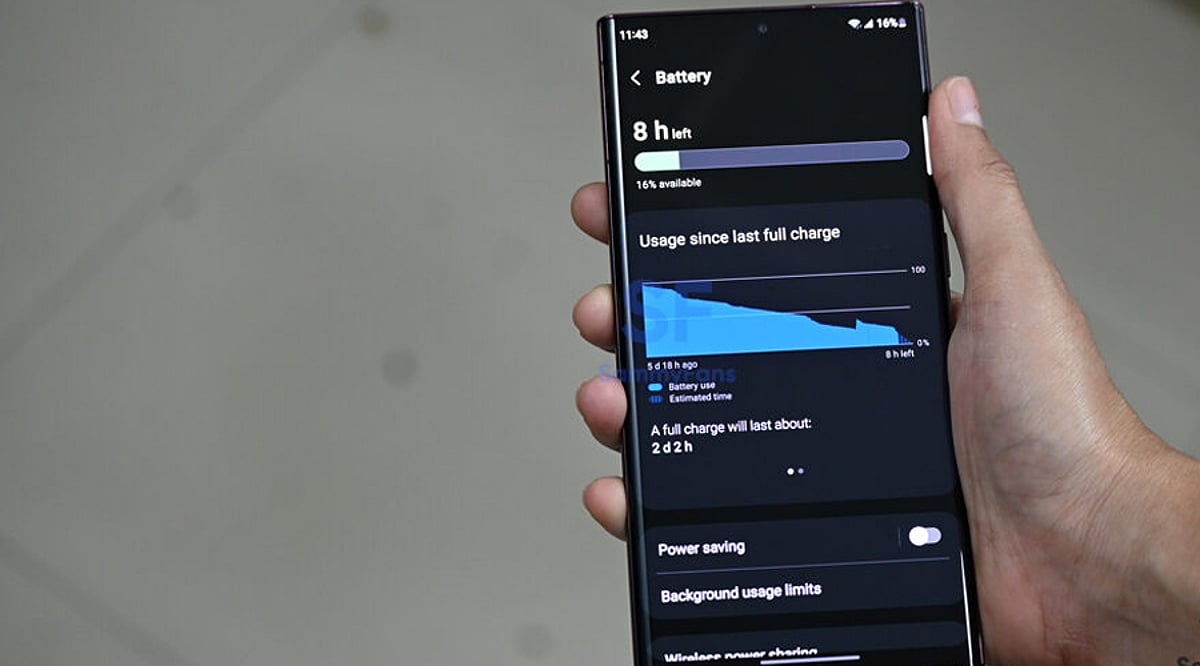
  • Essential Samsung Galaxy Battery Settings to Extend Charging Life

    Essential Samsung Galaxy Battery Settings to Extend Charging Life

    Samsung Galaxy users can optimize battery performance with a few key settings that reduce power consumption and extend battery health. Here are the most effective adjustments you can make right now.

    Adaptive Battery

    Samsung’s Adaptive Battery uses AI to learn your daily usage patterns and limits power consumption for apps you rarely open. By automatically prioritizing frequently used applications while restricting background activity for others, it helps reduce unnecessary battery drain. Keeping this feature enabled is one of the easiest ways to improve battery life throughout the day without affecting normal smartphone performance.

    Enable Light Performance Mode

    Light Performance Mode reduces processor power during everyday tasks such as messaging, browsing, and streaming while maintaining a smooth user experience. The setting lowers energy consumption without noticeably impacting daily performance. It is especially useful for users who want longer battery life and don’t regularly run demanding games or heavy productivity applications on their Galaxy smartphone.

    Turn On Adaptive Power Saving

    Adaptive Power Saving intelligently switches Battery Saver on or off depending on your phone’s usage and remaining battery level. Instead of staying active all the time, it adjusts automatically to maximize efficiency when needed. This smart automation helps extend battery life while minimizing interruptions, making it one of the most practical battery-saving features available in One UI.

    Optimize Display Settings

    The display is one of the biggest battery consumers on any smartphone. Reducing screen brightness, enabling Adaptive Brightness, using Dark Mode, and selecting a lower refresh rate when high refresh isn’t necessary can noticeably improve battery life. Samsung’s AMOLED displays are especially efficient in Dark Mode, making these adjustments effective without compromising the overall viewing experience.

    Manage Background Apps

    Many applications continue running in the background even after being closed, consuming battery and system resources. Samsung’s battery settings allow users to place unused apps into Sleep or Deep Sleep mode, preventing unnecessary background activity. Reviewing these settings regularly helps improve battery performance while ensuring essential apps continue functioning normally when required.

    Use Battery Protection Features

    Samsung’s Battery Protection feature limits charging to around 80–85% (depending on the device and One UI version) to reduce long-term battery wear. Combined with optimized overnight charging, this helps maintain battery health over several years. While it may slightly reduce a single charge’s maximum capacity, it can significantly extend the overall lifespan of the battery.

    Keep Software Updated

    Samsung frequently releases One UI and security updates that include battery optimization improvements, performance enhancements, and bug fixes. Installing the latest software ensures your Galaxy device benefits from the newest power management features and efficiency improvements. Keeping both the operating system and installed apps updated helps deliver better battery life, smoother performance, and improved overall device stability.


  • Infosys Stock Dips After Narrowed Revenue Guidance Despite Strong Q1 Performance

    Infosys Stock Dips After Narrowed Revenue Guidance Despite Strong Q1 Performance

    Infosys shares slipped to Rs. 1,027.9 on July 24, 2026, after the IT major narrowed its FY27 revenue guidance despite posting strong first-quarter earnings. The company also announced salary hikes, plans to hire 20,000 freshers, and reaffirmed its AI-led growth strategy, but investors remained cautious about the trimmed upper end of the annual revenue forecast.

    Revenue Guidance Overshadows Solid Results

    According to TradingView, Infosys shares traded at Rs. 1,027.9, down 1.86%, with an intraday high of Rs. 1,042.6 and a low of Rs. 1,013.9. The stock decline reflects a broader concern in the IT sector: healthy execution alone may not be enough if enterprise technology spending remains cautious. The company’s FY27 revenue growth forecast on a constant currency basis narrowed from 1.5%–3.5% to 1.5%–3.0%. While the change appears small, analysts attribute it to ongoing uncertainty in global tech spending, with companies delaying discretionary investments and focusing on critical digital projects.

    Operational Resilience Despite Cautious Outlook

    Infosys reported strong financial performance for Q1. Revenue reached Rs. 48,211 crore, marking approximately 14% growth, while net income rose to Rs. 7,769 crore, driven by strong client accounts and demand for digital services. The company secured large deal wins worth about $3.6 billion, a significant portion from new business, indicating that enterprises are still committing to long-term digital transformations despite near-term caution. Additionally, Infosys expanded its AI product portfolio, fueled by increasing enterprise adoption of generative AI.

    Hiring and Salary Hikes Signal Long-Term Confidence

    Despite uneven global demand, Infosys continues to invest in its workforce. The company confirmed that annual salary hikes will begin rolling out from October, with senior employees receiving increments in January. It also reaffirmed plans to recruit nearly 20,000 fresh graduates during FY27. Rather than slowing hiring, Infosys is building capabilities in high-growth areas like artificial intelligence, cloud computing, cybersecurity, and digital engineering, signaling management’s expectation that technology spending will improve over the medium term.

    Leadership Transition and AI Strategy

    Infosys appointed Ashiss Kumar Dash as the future CEO, with the transition scheduled for April 2027. This planned leadership change is expected to ensure continuity and maintain client trust during a period of industry upheaval driven by AI. The company’s AI and automation services, including generative AI, intelligent automation, cloud migration, and digital consulting, are expected to drive higher-value deals as enterprises move from proof-of-concept to large-scale deployment. However, the pace of monetization will depend on the recovery of IT budgets.

    Market Outlook

    Infosys Q1 performance reflects the evolving priorities of the global IT services industry. While profitability, strong deal wins, continued hiring, and AI investment demonstrate resilience, the reduced revenue outlook highlights that client spending remains prudent. Investors should monitor whether enterprise technology budgets recover in coming quarters and whether AI-driven initiatives begin to contribute meaningfully to revenue. Until then, Infosys appears operationally sound but operates in an environment where expectations are as critical as execution.

  • How High-Performance Data Workflows Accelerate Mortgage Approvals Without Compromising Security

    How High-Performance Data Workflows Accelerate Mortgage Approvals Without Compromising Security

    As mortgage providers race to deliver faster approvals, the real transformation is happening behind the scenes. High-performance data workflows, automation, and security-first architectures are enabling real-time decision-making without compromising customer trust.

    Today’s digital-first finance space demands speed in customer experience, particularly for complex, time-sensitive processes like mortgage application approval. Yet accelerating approvals goes beyond streamlining user interfaces. The root cause of inefficiencies lies in existing data workflows and database architectures. For high-performance databases specialist Sai Vamsi Kiran Gummadi, transforming mortgage processing starts with rethinking data workflows.

    “As a data problem, speed in decision-making is driven by data systems being either slow, siloed, and unreliable,” notes Gummadi. Traditional mortgage approvals rely on batch processing workflows that validate inputs—credit history, identity, finances—from different sources sequentially. While useful in previous models, such workflows create bottlenecks, causing processes to take hours or even days.

    Gummadi’s work focuses on replacing these methods with automated, high-performance data pipelines that validate inputs in near real time. By improving workflow design and optimizing databases, he has reduced process latencies by 35–50%. Core to this transformation is the optimization of large-scale database environments, including advanced systems like Exadata Cloud at Customer (ExaCC). These platforms handle high-volume, mission-critical workloads, making them ideal for financial applications requiring speed and reliability.

    Through targeted indexing strategies, execution plan optimization, and workload tuning, Gummadi has achieved query performance improvements of up to 60%, reducing batch processing times from 6–8 hours to under two hours. “Performance optimization is not just about speed,” he says. “It’s about ensuring that systems can handle scale without compromising accuracy or stability.”

    Beyond performance, automation plays a critical role. By building end-to-end automated pipelines, Gummadi has reduced manual intervention by approximately 40%, improving both efficiency and data consistency. These workflows integrate multiple data sources—from credit scoring systems to identity verification—into a unified processing framework, streamlining approval pipelines where data is validated, reconciled, and analyzed seamlessly. This integration not only accelerates approvals but also improves data accuracy, reducing errors by nearly 30% and doubling application processing throughput during peak periods.

    However, speed alone is insufficient in financial systems. With sensitive customer data at the center of mortgage processing, security and compliance are equally critical. Gummadi’s data architecture prioritizes security, incorporating encryption at rest and in transit, role-based access controls, and audit capabilities. This approach has resulted in no critical security incidents during audits while ensuring regulatory compliance. “Trust is the foundation of financial systems,” he explains. “You cannot trade security for speed; you have to achieve both.”

    One significant challenge is balancing performance with stringent data protection requirements. Optimizing for speed often introduces risks if security is not embedded at the architectural level. Gummadi addresses this by designing systems where security and performance are integrated, not treated separately. This includes adopting least-privilege access, data masking, and secure data pipelines that protect sensitive information without slowing processing.

    Modernization of legacy systems is another major issue. Financial companies often use legacy systems not designed for real-time processing, requiring upgrades without disrupting current operations. By introducing hybrid and cloud-enabled architectures, Gummadi has enabled organizations to scale data infrastructure while maintaining high availability, achieving system uptime exceeding 99.9%.

    Looking ahead, the future of mortgage processing will be defined by intelligent automation and real-time decisioning. Advances in AI and machine learning will enable more accurate risk assessments, while real-time data pipelines support near-instant approvals. Data security is evolving toward more granular, dynamic models, including zero-trust architectures and field-level encryption. These approaches ensure sensitive data remains protected even as systems become more interconnected. “Organizations are moving toward systems that are not just fast, but also intelligent and secure by design,” Gummadi notes.

    He emphasizes that success requires a combination of technology, governance, and strategic investment. “End-to-end automation, strong data governance, and performance-optimized infrastructure are no longer optional. They are essential for delivering both speed and trust.” As competition among financial entities intensifies around customer experience and efficiency, the speed and security of data processing will be key differentiators.

  • Bitcoin Holds Above $65,400 as Bulls Set Sights on $66,000 Resistance

    Bitcoin Holds Above $65,400 as Bulls Set Sights on $66,000 Resistance

    Bitcoin is trading near the $65,300–$65,400 range after a volatile session, maintaining its position above the critical $65,000 support level. The cryptocurrency’s market cap stands above $1.3 trillion, with daily trading volume exceeding $23 billion, indicating sustained investor interest despite recent price fluctuations.

    Chart Analysis

    The 5-minute BTC/USD Bitstamp chart reveals a sharp decline toward the $64,600–$64,700 area before buyers intervened. Strong demand at that level halted the downturn and propelled prices higher. Following this bounce, Bitcoin formed a series of higher lows, signaling that buyers are gradually gaining control.

    The Bollinger Bands support this bullish view. The price is trading near the upper band, while the middle band is trending upward, reflecting short-term strength. However, the distance between the price and the upper band suggests a potential minor pullback before the next upward move.

    Key Price Levels

    Bitcoin faces initial resistance near $65,500, with the next major hurdle between $65,800 and $66,000. A decisive break above this zone could pave the way toward $66,200–$66,500, where another significant test awaits.

    On the downside, the first support is near $65,200, followed by $64,900. The strongest support remains in the $64,600–$64,700 range, where buyers have previously demonstrated solid demand.

    Market Trend

    The latest price action indicates that Bitcoin has begun a recovery after a weak phase earlier this week. Buyers have consistently stepped in near major support levels, pointing to steady demand amid market uncertainty. However, the market has yet to clear all resistance levels. A strong move above $66,000 is needed to confirm a more robust recovery; until then, prices may continue to oscillate within a wide range.

    Latest Bitcoin News

    Fresh market data has boosted confidence across the crypto sector. Spot Bitcoin ETFs have recorded several consecutive sessions of net inflows, signaling that institutional investors are increasing exposure after weeks of weaker demand. Technical analysts also note that Bitcoin has successfully defended the $65,000 level, with momentum indicators showing reduced selling pressure. Many experts believe a clear move above $67,000 could trigger a much larger rally.

    The broader financial market has also been supportive. Strong risk appetite has benefited cryptocurrencies, with Bitcoin outperforming several traditional equity sectors during July.

    Investor Sentiment

    Long-term holders continue to retain the bulk of their Bitcoin rather than taking profits during short-term price increases. Exchange balances remain stable, minimizing immediate selling pressure. Overall investor confidence is high compared to previous weeks, though traders remain cautious about interest rate forecasts, economic data, and geopolitical developments, which could quickly shift market sentiment.

    Why This Matters

    Bitcoin is often viewed as a trendsetter for the broader cryptocurrency market. A rise above key resistance levels could create a positive ripple effect, supporting gains in other cryptocurrencies, while a decline might trigger a broad selloff. Strong institutional demand, consistent trading volumes, and significant support around $65,000 make the current price action critical for traders and investors.

    Outlook

    Bitcoin is establishing a firmer foothold above $65,000 after buyers defended support. Recent uptrends, high volume, and ETF inflows have bolstered market sentiment in the short term. The immediate resistance zone between $65,800 and $66,000 is the next key test. A successful breakout could push prices toward $66,500 and then $67,000. Conversely, a drop below $65,200 could lead to a retest of $64,900 and potentially $64,600. While buyers remain in control, Bitcoin has yet to achieve a major breakout above critical resistance to confirm a sustained uptrend.

    Frequently Asked Questions

    1. What is Bitcoin trading at now?

    Bitcoin is trading between $65,300 and $65,400, holding firmly above key support after a volatile session.

    2. Why is $65,000 important for Bitcoin?

    It serves as a crucial psychological and technical support zone where buyers consistently step in to absorb selling pressure.

    3. What is the next resistance level for Bitcoin?

    The immediate resistance zone lies between $65,800 and $66,000, with a major technical test near $66,500.

    4. How do Bitcoin ETF inflows affect the price?

    Consistent spot ETF inflows highlight sustained institutional demand, absorb exchange supply, and support positive market sentiment.

    5. What could happen if Bitcoin falls below $65,200?

    A drop below $65,200 could trigger short-term selling, opening the path for a retest of lower support levels at $64,900 and $64,600.

    Disclaimer: This article is for informational purposes only and does not constitute financial advice. Cryptocurrency investments carry risk. Always conduct your own research before investing.

  • FTSE 100 Hits 10,670 as Retail Sales Surge and HSBC Sells Insurance Unit for $2.1B

    FTSE 100 Hits 10,670 as Retail Sales Surge and HSBC Sells Insurance Unit for $2.1B

    The FTSE 100 opened 31 points higher at 10,670 on Friday, buoyed by a strong retail sales report and a major corporate deal, even as Middle East tensions, rising oil prices, and new US tariff risks weighed on broader market sentiment.

    Oil prices continued to climb, with Brent crude futures falling 2.22% to $98.45 per barrel and US West Texas Intermediate (WTI) declining 2.21% to $90.15 per barrel. Sterling strengthened to $1.3315 early Friday from $1.3303 at Thursday’s London close, while against the euro, the pound edged down to €1.1693.

    Gainers & Losers

    On the upside, 3i Group rose 3.33% to 2,763p, RELX advanced 3.31% to 2,532p, and JD Sports Fashion gained 3.12% to 88.46p. Weir Group climbed 2.67% to 2,612p, Pershing Square Holdings added 2.58% to 3,736p, and Sage Group increased 2.56% to 842p.

    On the downside, Airtel Africa declined 5.32% to 327.20p. Shell fell 0.76% to 3,318.50p, while AstraZeneca slipped 0.69% to 12,600p. GSK dropped 0.50% to 1,896p, Endeavour Mining eased 0.45% to 3,548p, and Rio Tinto edged 0.37% lower to 6,831p.

    US Tariffs

    The US announced new tariffs on 60 trading partners over forced labor concerns, replacing an expiring global duty introduced earlier this year. The levies, effective Friday, range from 10% to 12.5%. Canada, the EU, and the UK are expected to face the lower 10% rate, while China and Japan are among those facing the higher 12.5% rate.

    Retail Sales Jump

    Retail sales jumped in June as heavy discounting drove online shopping. The volume of retail sales rose by 1% in June, following 1.2% growth in May, according to the Office for National Statistics (ONS). Online shopping grew to its largest proportion of total retail sales since spring 2021, when the COVID-19 pandemic kept consumers away from high streets.

    Hannah Finselbach, senior statistician at the ONS, said: “Internet retailers did especially well, with businesses telling us that this was because of promotions and the warm weather.”

    HSBC Sells Insurance Business

    HSBC has agreed to sell its life and health insurance business in Singapore to Allianz for $2.1 billion (£1.6 billion). Completion is anticipated in the first half of 2027. The deal is expected to generate HSBC a pre-tax gain of $1.8 billion. The transaction follows an internal review, with HSBC determining that a sale would be the “best outcome for both parties” as the bank focuses on areas where it has a “clear competitive advantage”.

    Global Market View

    In the US, stocks fell overnight: the Nasdaq declined 2.2%, the S&P 500 dropped 1.2% (its worst session of the month), and the Dow shed 1%. In Asia on Friday, Tokyo’s Nikkei 225 fell 2.73% to 64,611.15, while China’s Shanghai Composite dipped 1.61%. Hong Kong’s Hang Seng declined 1.04%, and South Korea’s Kospi fell 5.72%. In India, both the Nifty 50 and the Sensex fell by 0.31% and 0.44%, respectively.

    Disclaimer: Analytics Insight does not provide financial advice or guidance on cryptocurrencies and stocks. This article is for informational purposes only and does not constitute investment advice. Always conduct your own research before making any investments.

  • How Predictive AI Can Reduce Healthcare Costs and Improve Patient Care: Expert Insights from Sachin Bajpai

    How Predictive AI Can Reduce Healthcare Costs and Improve Patient Care: Expert Insights from Sachin Bajpai

    Healthcare systems around the world are increasingly turning to artificial intelligence to improve patient outcomes and reduce costs. During the recent AI Impact Summit in New Delhi, India’s Ministry of Health and Family Welfare unveiled a national strategy to deploy AI in medicine “that works for every patient, in every region, regardless of income, language, or geography.” To understand how these technologies can make healthcare more accessible and affordable, we spoke with Sachin Bajpai, an experienced healthcare AI leader who has worked with major medical organizations through companies including PwC, Deloitte, and CitiusTech.

    Bajpai believes that one of the biggest opportunities for AI lies in early intervention. “AI systems can analyze medical and behavioral patterns early, allowing healthcare providers to identify high-risk patients before their conditions become critical or require expensive emergency and intensive care,” he explains.

    One example of this approach is a predictive AI system Bajpai developed while at PwC, a global professional services firm operating in more than 150 countries. The model focused on elderly patients covered by U.S. government-sponsored insurance programs and identified those at risk of requiring costly skilled nursing facility care—one of the most expensive forms of long-term treatment. During a six-month pilot involving over 300,000 patients, the system identified around 20,000 high-risk cases and reduced medical spending by nearly $10 million. The program later expanded across 21 U.S. states.

    Bajpai’s approach is especially valuable in countries with large populations and overstretched healthcare systems, such as India. “The earlier healthcare providers can identify risk, the more effectively they can intervene,” he says.

    Beyond prediction, AI can fundamentally change how healthcare systems manage resources. “Having spent many years in India, I know hospitals and doctors often work under enormous pressure because of the sheer number of patients they see every day,” Bajpai notes. “AI can reduce some of that operational burden, improve coordination, and give medical professionals more time to focus on patient care.”

    Much of Bajpai’s work has focused on solving large-scale operational challenges. Before joining PwC, he led the development of a cloud-based clinical reporting platform at CitiusTech, a global healthcare technology company. The solution earned certification from the National Committee for Quality Assurance (NCQA), allowing healthcare providers to use it for official quality reporting in the U.S. healthcare system. Within two years, the product expanded to a portfolio of 15 customers.

    At PwC, where he now serves as Managing Director leading healthcare AI and data transformation, Bajpai has helped expand the company’s healthcare AI operations tenfold across the U.S., India, China, Poland, and Mexico. During his tenure, PwC’s healthcare AI solutions received major industry recognition, including Microsoft Partner of the Year awards.

    Still, Bajpai emphasizes that technology alone is not enough. “For AI to work effectively in medicine, both doctors and patients need to trust the systems they use,” he explains. Building that trust requires transparency, regulatory compliance, data security, and a clear understanding of how AI-generated recommendations are produced and validated in clinical settings.

    As AI adoption accelerates, experienced specialists like Bajpai play a crucial role in evaluating medical technology systems and advising healthcare clients and startup founders on technical strategy, scalability, and long-term performance. His cross-regional experience has given him a close view of how differently medical environments operate. “Healthcare systems in India operate across different languages, regions, and levels of infrastructure,” he says. “Developers need to train AI models on diverse and representative data so the systems can work reliably at scale.”

    Despite these challenges, Bajpai believes India is well-positioned to become a major market for practical healthcare AI solutions, thanks to its strong engineering talent and rapidly growing digital infrastructure.

  • UPES and HPE Launch AI-Powered Centre of Excellence to Train Next-Gen Engineers

    UPES and HPE Launch AI-Powered Centre of Excellence to Train Next-Gen Engineers

    Dehradun, July 24, 2026 – UPES has partnered with Hewlett Packard Enterprise (HPE) to inaugurate the HPE Networking AI-Driven Centre of Excellence (CoE), a milestone in the university’s AI-first educational strategy. The CoE is designed to bridge the gap between classroom theory and enterprise-grade practice in AI-driven networking, cloud infrastructure, cybersecurity, and other emerging technologies.

    The centre will offer a comprehensive learning ecosystem, including curriculum integration, faculty development, hands-on lab work, live demonstrations, project-based learning, HPE-led bootcamps, certification pathways, and opportunities for interdisciplinary research. Students will also gain access to HPE Networking training at Associate and Specialist levels, as well as potential internships and hiring pathways through HPE, its partners, and customers.

    According to a recent NASSCOM and Deloitte report, India will need over 1.25 million AI professionals by 2027, with an estimated shortfall of more than 600,000 skilled workers. The new CoE directly addresses this demand by preparing students for careers in AI, enterprise networking, cloud, and cybersecurity.

    For UPES, the CoE exemplifies its AI-first university strategy, which integrates AI across the curriculum, faculty, and industry partnerships rather than confining it to a single course or department. The partnership aims to produce graduates who are not just job-ready but capable of shaping enterprise AI adoption across multiple domains.

    The inauguration was the centerpiece of a day-long engagement between UPES and HPE’s global leadership. The event began with a welcome reception and a leadership roundtable on industry-academia collaboration. After the formal inauguration and showcase, an interactive student session featured a keynote by Shishir Singh, Senior Vice President and General Manager of Network Products & Advanced Technology at HPE, titled “The Bridge: Degree to Career.” The delegation also toured the Bajaj Engineering Skills Training (BEST) Centre before reaffirming the long-term partnership.

    Other senior HPE leaders present included M. Muthukumar, Vice President – Platform Software Engineering and Managing Director, HPE Networking India; Maria Delting, Human Resource Leader – HPE Networking; Shalini Dutta, Head of Global Talent Acquisition; Beth Kremer, Senior Manager – University Recruitment & Programs and TA Operations; Samuel Daniel, India Leader – University Relations & Strategy; and Archana Yadav, Senior Global Program Manager, HPE Academic Alliance.

    Speaking at the event, Shishir Singh said, “The future of enterprise technology will be shaped by professionals who can seamlessly combine AI, networking, cloud and cybersecurity to solve complex real-world challenges. We are delighted to partner with UPES to create an environment where students gain practical exposure to industry technologies, learn from practitioners, and build skills that are relevant to tomorrow’s digital economy. Strong industry-academia partnerships like this are essential to developing the next generation of innovators and technology leaders.”

    Dr. Abhishek Sinha, Pro Vice Chancellor – Student Success, UPES, added, “AI is fundamentally reshaping enterprise technologies, and universities have a responsibility to ensure students are prepared not just for today’s jobs, but for the careers and industries that are rapidly emerging. Through this partnership, our students will gain access to advanced technologies, global perspectives and experiential learning opportunities that will strengthen their ability to innovate, solve complex problems and lead in an AI-driven future. It is another important step in UPES’ vision as India’s AI-first university.”

    The partnership builds on UPES’s existing collaborations with global leaders including OpenAI, Google Cloud, Salesforce, and Harvard Business Impact. With the HPE Networking AI-Driven Centre of Excellence, the initiative aims to foster innovation, interdisciplinary learning, and future-ready talent prepared to lead the next wave of AI-driven enterprise transformation.

  • Indian Markets Extend Losing Streak for Fifth Day as Crude Oil Fears Bite

    Indian Markets Extend Losing Streak for Fifth Day as Crude Oil Fears Bite

    Indian equity benchmarks ended Friday’s session under heavy selling pressure, capping their fifth consecutive day of losses. Investors reacted to surging crude oil prices, escalating geopolitical tensions in the Middle East, weak corporate earnings, and continued foreign fund outflows. The bearish trend was visible across sectors, with banking, auto, and metal stocks leading the decline. The sell-off also pushed the benchmark indices towards their worst weekly performance in nearly four months.

    Overall Market Performance

    At 2:50 PM, the Sensex was down 272.00 points, or 0.36%, at 76,119.39, while the Nifty fell 81.70 points, or 0.34%, to 23,787.90. Market breadth remained negative, with 1,792 shares advancing against 1,944 declines. Broader markets also remained under pressure, with the Nifty Midcap and Smallcap indices declining as risk aversion intensified.

    The weakness was largely driven by Brent crude climbing above $100 per barrel, raising concerns over inflation, India’s import bill, and corporate profitability. Investors also remained cautious following disappointing quarterly earnings from several large-cap companies.

    Top Gainers and Losers

    While some stocks managed to post gains, the majority of sectors faced significant losses. The detailed list of top gainers and losers is available in the original report.

    Market Trends

    Friday’s decline was indicative of a risk-off scenario. The equity markets fell back as uncertainty rose following new events taking place in the Middle East. Increased oil prices were a major source of concern for Indian markets as they can potentially cause inflation, increase the trade deficit, and reduce the bottom line for businesses.

    Foreign institutional investors (FIIs) continued to reduce their positions, while the weakening Indian rupee became an additional factor causing uncertainty. Poor performance by large corporations dampened investor confidence.

    Disclaimer: This article is provided for informational purposes and does not constitute investment advice. You are responsible for conducting your own research (DYOR) before making any investments.

  • XRP Whale Wallets Hit Record High While Retail Investors Cash Out

    XRP Whale Wallets Hit Record High While Retail Investors Cash Out

    XRP has entered a new phase where large investors and small traders have chosen completely different paths. Blockchain data shows that whale wallets have continued to buy more XRP, while many retail investors have sold part of their holdings. This gap between big and small investors has become one of the biggest talking points in the crypto market.

    Large holders often focus on long-term value instead of daily price swings. Retail traders usually react faster to market drops and uncertainty. Current on-chain data reflects exactly that pattern.

    XRP Price Holds Above $1

    XRP trades at approximately $1.11 on the market as of July 24, 2026, with a market cap that exceeds $69 billion. The total volume of the asset in one day remains at around $1.04 billion. In total, there are around 62.47 billion XRP tokens in circulation.

    While XRP seems to be doing relatively stable with a price above $1, positive investor sentiment has not resulted in further price gains. The cryptocurrency has proven to be unpredictable for many traders as it constantly pushes against a resistance zone around $1.14-$1.15.

    Whale Wallets Reach Record Numbers

    The biggest story comes from blockchain data. Wallets that hold at least 10,000 XRP have climbed to a record 332,230 addresses. This number shows that large investors have continued to collect XRP even during weak price action.

    This trend has continued for several months. Instead of waiting for higher prices, whales have added more coins whenever the market slowed down. Such buying behavior often shows confidence in future growth rather than interest in quick profits.

    Many market experts believe whales usually study market cycles before they make large purchases. Their steady buying suggests that these investors still see value in XRP despite recent price struggles.

    Retail Investors Continue to Sell

    Several reasons explain this move. The price has stayed within a narrow range for weeks. Many traders expected a stronger rally but did not get one. As a result, some chose to lock in profits, while others sold since they feared another decline.

    This selling does not always mean investors have lost faith in XRP forever. Many retail traders simply prefer to wait until the market shows stronger momentum before they enter again.

    Blockchain Data Supports the Trend

    The number of whale wallets has reached an all-time high. Net position data also shows that these large holders have continued to increase their balances. At the same time, exchange selling from major wallets has remained lower than previous periods.

    These figures suggest that large investors have not rushed to sell despite market uncertainty. Instead, many have treated recent price weakness as an opportunity to build bigger positions.

    Such behavior often attracts attention since whales usually control enough capital to influence market trends over time.

    Price Faces Strong Resistance

    The price has struggled to move above the $1.14 to $1.15 resistance zone. Every rejection has encouraged short-term traders to leave the market, which has slowed fresh buying.

    This price action has created a balance between buyers and sellers. Bulls have protected the $1 level, while sellers have defended higher prices. Until one side gains control, XRP may continue to trade within this range.

    Many Holders Still Remain in Loss

    Recent data reveals that only 43.4% of XRP’s circulating supply remains in profit. This marks the lowest level in almost two years.

    This means that more than half of XRP holders currently own coins that sit below their purchase price. Such conditions often create emotional pressure since many investors worry about deeper losses.

    However, crypto markets have shown similar situations before. Long periods where most holders remain in loss have sometimes appeared before major recoveries. Although history does not guarantee future results, many experienced investors continue to watch this indicator closely.

    Ripple Continues to Build the XRP Ecosystem

    New grant programs now help startups and blockchain developers build applications on the XRP Ledger. These initiatives support innovation and encourage more businesses to create products that use the network.

    Ripple has also continued work on payment solutions, digital asset services, and enterprise technology. These developments strengthen the long-term use case for XRP beyond short-term price movements.

    Futures Market Shows Rising Interest

    Recent updates indicate that the open interest of XRP futures has reached higher numbers. The implication here is that traders have been active in opening positions in the futures market.

    In reality, greater open interest relates to active trading. It can also lead to significant price movements since openings of long and short positions generate volatility when prices breach the resistance or support.

    Why This Matters

    Whale activity often provides an early signal of market direction as large investors usually make decisions after careful research. At the same time, retail selling reflects broader market sentiment. When both groups move in opposite directions, the trend can reveal valuable insights about confidence, future demand, and the possible direction of XRP’s price.

    Outlook

    The token still trades below the key $1.14 to $1.15 resistance level, but large investors have not slowed their accumulation. Record whale wallet numbers, steady on-chain data, and continued ecosystem growth show that many major holders still believe in XRP’s long-term potential.

    The next major price move will likely depend on overall crypto market sentiment, stronger buying demand, continued Ripple development, and a successful break above important resistance. Until that happens, whale accumulation and retail selling will remain the biggest themes in the XRP market.

    FAQs

    1. Why are XRP whales buying more tokens? Large investors accumulate XRP during price dips, demonstrating strong long-term confidence despite temporary market stagnation.
    2. Why are retail investors selling XRP? Retail traders reduce exposure or take short-term profits after XRP repeatedly failed to break past key resistance zones.
    3. What is XRP’s current price? XRP trades around $1.11, maintaining a market capitalization exceeding $69 billion with steady daily volume.
    4. What does record whale wallet growth mean? Wallets holding over 10,000 tokens reached historic highs, signaling sustained accumulation by high-net-worth investors.
    5. What could influence XRP’s next price move? Key catalysts include broader market sentiment, ecosystem expansion, institutional adoption, and breaking resistance between $1.14-$1.15.
  • How Big Data Is Redefining Intelligence Testing: From Snapshot Scores to Continuous Insights

    How Big Data Is Redefining Intelligence Testing: From Snapshot Scores to Continuous Insights

    The Evolution of Intelligence Testing

    For decades, an IQ score was considered the definitive measure of cognitive ability. A single test, a single number, and that was the end of the story. But just as big data has revolutionized industries like finance, healthcare, and retail, it is now transforming how we assess and understand intelligence.

    Modern digital platforms are moving beyond static, one-time exams. They leverage vast amounts of data to analyze not just whether an answer is correct, but how quickly it was reached, the reasoning patterns employed, and how performance evolves over weeks or months. This shift turns cognitive testing from a snapshot into a dynamic, ongoing process.

    What Big Data Brings to Cognitive Testing

    Big data involves collecting and analyzing massive datasets to uncover patterns that would be invisible to manual inspection. In the context of cognitive testing, this means:

    • Identifying common reasoning strategies among test-takers
    • Dynamically adjusting question difficulty based on real-time performance
    • Measuring consistency and reliability of results across sessions
    • Flagging notable trends or changes in cognitive performance
    • Creating a personalized testing experience that adapts to the individual

    Instead of relying on fixed, paper-based tests, digital platforms continuously improve by learning from user data.

    Beyond the Single Score

    Traditional IQ tests boiled intelligence down to one number. While that number still holds value, it only tells part of the story. By analyzing multiple data points—accuracy, speed, reasoning style, and progress over time—we gain a much richer understanding of a person’s cognitive abilities. This holistic view helps identify strengths and areas for improvement that a single score would miss.

    How Data Analytics Enhances Online Testing

    Adaptive Questioning

    Older tests presented the same questions in the same order to everyone. Modern systems adjust difficulty on the fly, ensuring the test remains challenging but not discouraging, and providing a more accurate measure of ability.

    Continuous Improvement

    Developers analyze anonymized data to identify flawed questions—those that are too easy, too hard, or not measuring the intended skill. This iterative process leads to better, more reliable tests over time.

    Detailed Feedback

    Instead of just a final score, analytics enables platforms to deliver personalized summaries highlighting cognitive strengths and areas that may benefit from practice.

    MyIQ: A Case Study in Data-Driven Testing

    Platforms like MyIQ exemplify this shift. They offer online IQ assessments, explore different cognitive domains, provide brain-training activities, and allow users to track their progress over time. MyIQ encourages users to view intelligence not as a fixed trait but as something that can be monitored and developed through regular check-ins and practice.

    The Power of Repeated Testing

    A single test is just a snapshot. Multiple tests spread over weeks reveal true patterns. Repeated testing can show improvements in reasoning speed, problem-solving efficiency, consistency, and pinpoint where extra practice might be most beneficial. Factors like mood or sleep can affect any single test, but tracking scores over sessions smooths out these fluctuations and paints a clearer picture of underlying ability.

    Community Perspectives

    User experiences add practical context. For instance, Reddit discussions often feature users sharing their results from multiple MyIQ tests over several weeks, comparing how scores change. While anecdotal, these stories highlight a common interest in tracking progress rather than fixating on a single number.

    Limitations and Considerations

    Digital IQ testing is not without drawbacks. Platforms must be transparent about data collection and storage. Moreover, a test score—even a detailed one—cannot capture the full spectrum of human intelligence, including creativity, emotional intelligence, and practical experience. It’s important to use these tools as one part of a broader self-assessment, not as a definitive judgment.

    The Future of Big Data in Cognitive Science

    As analytics and artificial intelligence advance, cognitive testing platforms will become even more sophisticated. Future developments may include AI-driven interpretation of cognitive patterns, more advanced adaptive testing, personalized learning recommendations, predictive skill growth models, and clearer visualizations of long-term progress. These innovations could transform online cognitive testing from a one-time event into a continuous, data-informed journey of personal growth.

    Conclusion

    Intelligence testing is no longer a single event with a final number. Big data is turning it into an ongoing process of discovery and improvement. By watching how thinking evolves over months—not just on test day—we can gain a deeper, more actionable understanding of cognitive potential.