Blog

  • Ranking the World’s Largest Derivatives Exchanges: From NSE to Binance

    Ranking the World’s Largest Derivatives Exchanges: From NSE to Binance

    Derivatives trading is a cornerstone of global financial markets, enabling investors to hedge risk and speculate on price movements. Below, we rank the major exchanges worldwide by their derivatives activity, covering both traditional financial exchanges and leading cryptocurrency platforms.

    NSE India

    NSE India is a major derivatives marketplace, particularly known for its large equity options activity. Its derivatives segment covers index and stock futures and options, giving traders access to a broad range of instruments. High trading activity has made NSE an important exchange in global derivatives markets.

    CME Group

    CME Group operates one of the world’s major derivatives marketplaces, offering futures and options across interest rates, equity indexes, foreign exchange, energy, agricultural commodities, metals, and digital assets. Its diverse product range supports institutional and professional traders seeking exposure to global financial and commodity markets.

    Eurex

    Eurex is a leading European derivatives exchange offering products across equity indexes, interest rates, equities, and other financial markets. Its trading activity includes major European benchmarks and interest-rate contracts. The exchange serves banks, institutional investors, asset managers, and other market participants across international financial markets.

    Binance

    Binance operates one of the largest cryptocurrency derivatives marketplaces, offering futures and other leveraged products across numerous digital assets. Its derivatives platform attracts traders from international markets and records substantial daily activity. Bitcoin, Ethereum, and various altcoins contribute significantly to its overall cryptocurrency derivatives trading volumes.

    OKX

    OKX is a major cryptocurrency exchange with a significant derivatives business covering futures, perpetual contracts, and options. Its platform provides access to numerous digital assets and trading pairs. Strong activity in crypto derivatives has positioned OKX among the leading global platforms by trading volume and market participation.

    Bybit

    Bybit is a major cryptocurrency derivatives platform offering perpetual contracts, futures, and options across a wide selection of digital assets. The exchange serves retail and professional traders globally. Its substantial derivatives activity reflects continued demand for leveraged cryptocurrency products and sophisticated trading instruments in digital asset markets.

    MEXC

    MEXC is a global cryptocurrency exchange with an active derivatives segment covering futures and perpetual contracts across numerous digital assets. The platform supports a wide range of trading pairs and attracts international users. Its derivatives volumes place it among the larger cryptocurrency exchanges competing in the global market.

    Join our WhatsApp Channel to get the latest news, exclusives and videos on WhatsApp.
  • AI Reshapes Chip Industry: Top Semiconductor Companies by Market Cap

    AI Reshapes Chip Industry: Top Semiconductor Companies by Market Cap

    AI’s Impact on Semiconductor Valuations

    Artificial intelligence is fundamentally transforming how investors evaluate semiconductor companies. The industry now spans GPUs, memory, foundries, networking chips, manufacturing equipment, and advanced processors. Recent market-cap data underscores this shift, with several chipmakers reaching historic valuations as demand for AI infrastructure expands across data centers and increasingly complex computing workloads worldwide.

    Nvidia Leads the Pack

    Nvidia dominates the semiconductor rankings with a market capitalization of approximately $5.33 trillion. Its position reflects surging demand for accelerated computing, AI processors, and data center infrastructure. The company’s valuation is substantially larger than other listed semiconductor businesses, highlighting the financial importance of AI computing platforms and supporting technologies.

    TSMC Powers Advanced Manufacturing

    TSMC ranks second with a market cap of about $2.24 trillion. As the leading contract chip manufacturer for major technology companies, TSMC’s strategic importance has grown with the need for advanced processors — especially energy-efficient chips that can handle demanding AI workloads.

    Broadcom’s Networking Edge

    Broadcom appears among the largest with an estimated market capitalization of $1.72 trillion. Its portfolio includes networking and connectivity technologies that support large-scale computing infrastructure. As AI data centers expand, demand is rising not only for processors but also for high-speed networking and specialized components that connect complex systems.

    Memory Plays a Big Role

    Samsung and Micron hold market caps of approximately $1.20 trillion and $1.12 trillion respectively, while SK Hynix follows at around $907 billion. Their positions reflect the growing importance of memory technologies, particularly high-bandwidth memory (HBM), which is essential for demanding AI workloads and large-scale accelerated computing systems.

    Other Key Players

    AMD is shown at approximately $894 billion, ASML reaches $633 billion, CXMT stands at $565 billion, and Intel follows at about $547 billion. This ranking demonstrates that AI-related value extends beyond GPU manufacturers, encompassing processors, manufacturing equipment, and memory — all critical to producing advanced chips.

    AI Lifts the Entire Stack

    The semiconductor market is becoming increasingly interconnected as AI accelerates demand across multiple layers. Processor designers, memory manufacturers, foundries, networking companies, and equipment suppliers all support expanding AI infrastructure. The market-cap figures illustrate how investors are assigning significant value across this ecosystem, reflecting expectations for continued computing demand and technological investment.

  • Solana Throughput Explained: How Block Compute, Transaction Size, and Slot Times Boost Network Speed

    Solana Throughput Explained: How Block Compute, Transaction Size, and Slot Times Boost Network Speed

    Throughput describes how much activity a blockchain can process within a given period. For Solana, it is often expressed as transactions per second (TPS). However, network capacity depends on several factors, including slot time, compute limits, transaction size and validator infrastructure.

    What Does Solana TPS Measure?

    Solana can process thousands of transactions per second, but headline TPS figures require context. Network statistics may include validator-related activity alongside user transactions, meaning displayed TPS should not automatically be interpreted as thousands of individual payments every second.

    Application throughput, observed network TPS and theoretical maximum capacity are different measurements. A decentralized exchange transaction can also consume substantially more computational resources than a simple token transfer, making raw transaction counts an incomplete measure of performance.

    Block Capacity Has Increased

    Solana measures transaction workloads using compute units, or CUs. In July 2026, Mainnet activated SIMD-0286, increasing the maximum block compute limit from 60 million to 100 million CUs, a 66% increase.

    The Solana Foundation reported that 11.2% of blocks produced between the previous 60-million-CU activation and the latest increase consumed at least 56 million CUs. This indicated that periods of heavy demand were already pushing blocks close to the previous ceiling.

    The upgrade gives applications more execution headroom without requiring developers to redesign existing transactions.

    Transactions Are Getting Larger

    Solana has also expanded how much data individual transactions can contain. On September 15, the txv1 feature activated on Mainnet, increasing maximum transaction size from 1,232 bytes to 4,096 bytes, approximately 3.3 times larger. Existing legacy and v0 transaction formats remain supported.

    The larger envelope can accommodate zero-knowledge proofs, large multisignature transactions, advanced cryptographic signatures and more complex trading routes. However, v1 transactions retain a 64-account limit, meaning account-heavy applications still face constraints.

    Faster Slots Reduce Latency

    Throughput is also connected to slot time, the interval during which validators produce blocks. Solana began reducing Mainnet slot times from the historical 400-millisecond target during August 2026. The broader Agave roadmap targets 200-millisecond slots, which could reduce latency and increase the number of blocks produced over a given period.

    Network improvements also depend on infrastructure. More than 70% of Mainnet stake had enabled XDP when the 100-million-CU upgrade was introduced. XDP uses kernel-bypass networking to improve block propagation between validators.

    Developers are already discussing further expansion. A September 18 Solana developer update highlighted a proposal to potentially remove fixed compute limits, allowing validators to pack more computation into blocks according to network capabilities. It remains a discussion rather than an activated upgrade.

    Final Thoughts

    Solana throughput is more than a TPS figure; block compute, transaction size, slot speed and infrastructure determine practical capacity. Recent upgrades show the network expanding these limits while balancing higher performance with reliable execution.

    Also Read: Solana Network Upgrades: How Bigger Transactions Could Improve Scalability

    FAQs

    • What is Solana throughput? Solana throughput measures how much activity the blockchain can process over a given period. TPS is one metric, but block compute capacity, slot times and transaction complexity also determine practical performance.
    • How many transactions per second can Solana process? Solana can process thousands of transactions per second during normal network activity. However, displayed TPS can include validator-related transactions, so it should not be interpreted purely as user payments or application transactions.
    • What is Solana’s 100 million compute unit upgrade? Solana increased its maximum block compute limit from 60 million to 100 million compute units in 2026. The roughly 66% increase provides more computational capacity for applications within each block.
    • Why did Solana increase transaction size to 4,096 bytes? The txv1 upgrade increased maximum transaction size from 1,232 to 4,096 bytes. Larger transactions can support zero-knowledge proofs, advanced signatures, complex trading routes and other data-intensive blockchain operations.
    • How could faster slot times improve Solana? Shorter slot times allow blocks to be produced more frequently, potentially reducing transaction latency and increasing network capacity. Solana’s development roadmap is moving toward 200-millisecond slots, alongside other infrastructure improvements.

    Disclaimer: Analytics Insight does not provide financial advice or guidance on cryptocurrencies and stocks. Also note that the cryptocurrencies mentioned/list on the website could potentially be risky. This article is provided for informational purposes and does not constitute investment advice. You are responsible for conducting your own research (DYOR) before making any investments.

  • How Autonomous Ocean Drones Are Revolutionizing Marine Science and Research

    How Autonomous Ocean Drones Are Revolutionizing Marine Science and Research

    Ocean-monitoring drones are transforming marine research by enabling scientists to study vast, hard-to-reach oceanic environments without constant human presence at sea. These autonomous systems travel across oceans, collect measurements, and transmit information over extended periods, allowing researchers to gather frequent data on temperature, salinity, currents, marine life, and other key conditions.

    Tracking Ocean Conditions: Autonomous drones monitor essential physical properties of seawater, measuring temperature, salinity, pressure, and other environmental parameters as they navigate different areas. Repeated surveys help scientists track changes over time and understand ocean circulation patterns, contributing to research on climate dynamics, marine ecosystems, and subsurface conditions.

    Monitoring Marine Life: Equipped with cameras, acoustic sensors, and specialized instruments, drones collect data on marine animals and their habitats without requiring continuous human supervision. This quieter approach reduces disturbances often caused by traditional research vessels, enabling more accurate studies of animal movements, population trends, and habitat conditions.

    Detecting Pollution: Drone-based sensors and imaging systems can identify changes in water quality, chemical composition, and visible contamination. Autonomous platforms repeatedly survey affected zones, helping researchers understand how pollutants spread and evolve over time. This capability supports environmental monitoring and improves knowledge of pollution sources and impacts.

    Studying Climate Change: Because oceans play a critical role in Earth’s climate, long-term monitoring is essential. Drones access areas that are costly or difficult to reach with conventional methods, collecting months-long data series on ocean temperatures, carbon-related processes, currents, and other climate indicators.

    Reaching Remote Waters: A major advantage of autonomous marine drones is their ability to operate in remote, challenging environments. Deploying research vessels is expensive and resource-intensive, while drones can execute specific missions with minimal oversight, covering larger areas and increasing observation frequency.

    The Future of Marine Science: As sensors, artificial intelligence, navigation systems, and battery technology improve, ocean-monitoring drones will become even more capable. Future platforms will process more data autonomously, and combining drone data with satellite observations and conventional research will give scientists a comprehensive picture of changing marine environments and ocean ecosystems.

  • A Beginner’s Guide to Investing $100 in Cryptocurrency in 2026

    A Beginner’s Guide to Investing $100 in Cryptocurrency in 2026

    Starting with cryptocurrency does not require thousands of dollars. Bitcoin and Ethereum are divisible, so a beginner with $100 can buy fractions of a coin. The challenge is using that amount efficiently while controlling fees and risk. This guide walks you through the essential steps to start your crypto journey with a small budget.

    Step 1: Understand the Risk

    Crypto markets can move sharply within hours, and some tokens can lose most of their value. The $100 should be money you can afford to lose, not essential funds. Scams are another growing risk. The FTC reported more than $7.9 billion in investment-scam losses in 2025, with a median reported loss above $10,000. That makes platform verification important.

    Step 2: Choose a Platform Carefully

    First-time investors mostly trade crypto via an exchange or brokerage that accepts fiat currency. Compare transaction fees, spreads, withdrawal costs, asset options, and security features before depositing. Small portfolio investments are particularly sensitive to charges. A 1% charge on $100 equals $1. Buying, converting, and withdrawing funds can take away a notable portion of your investment.

    Step 3: Keep the Portfolio Simple

    Rather than dividing $100 among many speculative tokens, beginners can first research established assets such as Bitcoin and Ethereum. A token priced at $0.01 is not necessarily cheaper than Bitcoin. Market capitalization, calculated by multiplying price by circulating supply, provides more context than unit price alone. A simple one-or-two-asset approach is easier to understand and monitor over time.

    Step 4: Consider Dollar-Cost Averaging

    The entire $100 does not need to enter the market immediately. Divide it into four $25 purchases made at regular intervals. This approach, called dollar-cost averaging, involves investing a fixed amount regardless of price. It reduces dependence on choosing one entry point, although it cannot guarantee profits or prevent losses.

    Step 5: Protect the Investment

    Security matters even with $100. Use unique passwords, multi-factor authentication, and never disclose private keys or seed phrases. The SEC’s December 2025 custody bulletin says self-custody makes investors responsible for their private keys. Third-party custody creates different risks since an exchange or custodian may be hacked, fail, or enter bankruptcy. Beginners moving funds into a private wallet should understand network selection, wallet addresses, and recovery procedures before transferring assets.

    Why This Matters

    Starting with $100 allows beginners to experience real crypto markets while limiting initial capital exposure. The exercise teaches practical lessons about volatility, transaction fees, custody, and security before committing significantly larger amounts.

    Final Thoughts

    A $100 crypto portfolio should prioritize learning over chasing rapid returns. Keeping fees low, researching assets, and protecting account access are more important than owning many tokens. Small, disciplined steps build experience without requiring substantial starting capital.

    Frequently Asked Questions

    Can I start investing in cryptocurrency with $100?

    Yes. Cryptocurrencies such as Bitcoin and Ethereum are divisible, allowing you to purchase fractions instead of entire coins. A $100 starting amount provides practical exposure without requiring substantial initial capital.

    Which cryptocurrencies should beginners research first?

    Beginners often start by researching established assets such as Bitcoin and Ethereum before considering smaller tokens. Market capitalization, utility, liquidity, development activity, and risk are more informative than a cryptocurrency’s unit price alone.

    Should I invest the entire $100 at once?

    Not necessarily. You can divide $100 into four $25 purchases using dollar-cost averaging, reducing dependence on a single entry price. However, DCA does not guarantee profits or protect against market losses.

    How much do crypto fees matter with a $100 investment?

    Fees can significantly affect smaller portfolios since even a 1% fee equals $1 on a $100 investment. Compare trading fees, spreads, deposit charges, and withdrawal costs before selecting a platform.

    Is it safer to keep crypto on an exchange or in a private wallet?

    Both involve different risks. Exchanges provide convenience but introduce third-party custody risk, while self-custody gives you direct control but makes you responsible for protecting private keys, seed phrases, and wallet recovery information.

  • Top Samsung Smartphones Under ₹15,000 in 2026: Budget Picks with Long-Term Support

    Top Samsung Smartphones Under ₹15,000 in 2026: Budget Picks with Long-Term Support

    Samsung continues to dominate India’s budget smartphone segment, offering feature-packed devices under ₹15,000 as of late 2026. These phones combine smooth performance, attractive designs, and extended software updates—key factors for value-conscious buyers. Note that a global RAM shortage has nudged prices slightly above launch levels. Below are the top Samsung models in this price range, with detailed specs to help you choose.

    Samsung Galaxy M17 5G: The New All-Rounder Champion

    Launched in October 2025, the Galaxy M17 5G is Samsung’s standout pick in this segment. It features a 6.7-inch Full HD+ Super AMOLED display with a 90Hz refresh rate, up to 1,100 nits peak brightness, and Gorilla Glass Victus protection—a rare level of screen durability at this price. Powered by the Exynos 1330 chipset, it comes in 4GB, 6GB, and 8GB RAM variants, all with 128GB storage.

    The camera system includes a 50MP main sensor with OIS, a 5MP ultra-wide lens, and a 2MP macro camera, plus a 13MP front camera. It runs One UI 7 on Android 15, backed by six years of OS and security updates, and supports Gemini Live AI features. A 5,000mAh battery with 25W fast charging and an IP54 rating round out the package. Pricing starts at ₹12,499 (4GB/128GB) and goes up to ₹15,499 (8GB/128GB).

    Samsung Galaxy F16 5G: Reliable Mid-Range Value

    The Galaxy F16 5G remains a strong option, with prices now between ₹12,499 (4GB/128GB) and ₹15,499 (8GB/128GB) after segment-wide adjustments. It keeps the 6.7-inch Full HD+ Super AMOLED 90Hz display and runs on the MediaTek Dimensity 6300 chipset. The 50MP main + 5MP ultra-wide + 2MP macro rear camera and 13MP front camera are unchanged. It ships with One UI 7 on Android 15 with six years of updates, and packs a 5,000mAh battery with 25W charging. A dependable all-rounder for those who want AMOLED quality without stretching to the M17.

    Samsung Galaxy M07: Best Budget Pick Under ₹11,000

    Launched quietly in October 2025, the Galaxy M07 is one of Samsung’s most affordable current models, priced around ₹10,999–₹11,999. It features a 6.7-inch HD+ display with 90Hz refresh rate, MediaTek Helio G99 chipset, 4GB RAM, and 64GB storage (expandable via microSD). The camera setup includes a 50MP main sensor and a 2MP depth sensor, with an 8MP front camera. It runs Android 15 with One UI 7 and six years of updates, plus a 5,000mAh battery with 25W fast charging and IP54 rating. Ideal if battery life and software support matter more than display resolution.

    Samsung Galaxy M16 5G: Still a Solid Value Pick

    The Galaxy M16 5G remains available and has become more affordable, now retailing around ₹10,999–₹13,999. It retains the Dimensity 6300 chipset, 6.7-inch Super AMOLED 90Hz display, 5,000mAh battery with 25W charging, and the 50MP+5MP+2MP rear camera with 13MP front camera. Six years of OS updates on One UI 7 / Android 15 are still promised. A great choice for budget-minded shoppers who want AMOLED quality.

    Samsung Galaxy A06 5G: Budget 5G Entry

    The Galaxy A06 5G is Samsung’s entry point for 5G connectivity under ₹13,000, priced at roughly ₹12,499. It runs on the MediaTek Dimensity 6300 chipset, features a 6.7-inch display, and includes a 50MP + 2MP dual rear camera with an 8MP front camera. The 5,000mAh battery supports fast charging. This is a practical no-frills option for first-time 5G buyers on a tight budget.

    Main Considerations for Purchasers

    Each model excels in specific areas: the M17 5G and F16 5G prioritize display and camera quality, the M07 emphasizes battery life and affordability, while the M16 5G and A06 5G focus on cost efficiency. Camera performance is consistent across the range with 50MP sensors, though low-light capability trails higher tiers. Nearly all models here now support 5G, and Samsung’s six-year OS and security update commitment has become a standard differentiator for its budget lineup.

    Conclusion: Samsung’s Budget Dominance Continues

    Samsung’s offerings under ₹15,000 in late 2026 represent a blend of endurance, performance, and value. The Galaxy M17 5G leads for the best display and camera, while the F16 5G and M16 5G offer similar experiences at lower costs. The M07 and A06 5G round out the list for the most budget-conscious buyers. Long software support across the range keeps these devices competitive, cementing Samsung’s position in India’s budget smartphone market.

  • Top Smart TVs of 2026: Comprehensive Guide to Features, Deals, and Best Picks

    Top Smart TVs of 2026: Comprehensive Guide to Features, Deals, and Best Picks

    Smart TVs continue to evolve with cutting-edge technology, superior image quality, and advanced features. As of 2026, several models lead their categories, offering options for every budget, performance need, and smart-home integration. This guide highlights the best smart TVs of 2026, detailing their standout features and unique characteristics.

    Samsung QN90D – Best Smart TV Overall

    The Samsung QN90D is widely regarded as the best overall smart TV of 2026. It delivers crystal-clear picture quality with an anti-reflective screen, making it ideal for bright rooms. Samsung’s refined QLED technology provides deeper blacks, richer colors, and improved energy efficiency. AI-based picture and sound optimization create an immersive viewing experience.

    TCL C845K – Top Value Smart TV

    For value-conscious shoppers, the TCL C845K offers outstanding performance without breaking the bank. It features stunning picture quality, high brightness, and a user-friendly smart interface. Support for major HDR formats (Dolby Vision, HDR10+) makes it competitive in the mid-range segment. Built-in streaming apps and voice commands add convenience.

    Sony Bravia XR X90L – Best LED 4K TV

    The Sony Bravia XR X90L excels with excellent color accuracy and contrast, powered by Sony’s Cognitive Processor XR. Its superior motion handling makes it perfect for sports and action content. Google TV enhances the experience with personalized recommendations and easy access to streaming services.

    Amazon Fire TV – Best Smart 4K TV

    Amazon’s Fire TV stands out for its advanced smart capabilities and seamless Alexa integration. It offers 4K resolution with HDR for clear, vibrant images. The intuitive interface provides instant access to streaming media and hands-free voice commands. AI-based content discovery simplifies browsing, while its price offers great value.

    Hisense U8N – The Brightest Smart TV

    The Hisense U8N is acclaimed for its exceptional brightness, high contrast, and wide color gamut. With a 144Hz native refresh rate, VRR, and AMD FreeSync Premium Pro, it’s a top choice for gamers. Apple AirPlay, Google Assistant, and Google Cast support enable seamless multi-ecosystem connectivity. Hisense’s Mini-LED technology balances performance and price.

    LG Evo G4 OLED TV – Ultimate OLED TV for Gaming

    LG’s Evo G4 OLED TV delivers rich, precise colors and outstanding gaming performance. Near-instant response times and a 120Hz refresh rate make it ideal for console and PC gaming. LG’s OLED technology ensures deep blacks and high contrast for a cinematic experience. AI-enhanced picture and sound settings adapt to room lighting.

    Panasonic Z95A OLED TV – Brightest OLED TV

    The Panasonic Z95A OLED TV offers superb brightness, accurate wide-color representation, and a spatial audio speaker system. It supports all major HDR formats, including Dolby Vision IQ and HDR10+, delivering optimal picture quality for any content.

    Samsung S95D – Best OLED TV with Anti-Glare Technology

    Samsung’s S95D combines OLED technology with a distinctive matte finish that minimizes glare while preserving color accuracy. Superior contrast and brightness make it impressive even in brightly lit rooms. Sub-millisecond input lag appeals to gamers, and the smooth Tizen OS ensures easy navigation. This model is a strong contender in the high-end TV segment.

    Final Thoughts

    The top smart TVs of 2025 cater to diverse preferences, whether you prioritize gaming, value, or image quality. Brands like Samsung, Sony, LG, and Hisense continue to push boundaries with new features and improved user experiences. When choosing a smart TV, consider display technology, refresh rate, and smart features to find the best fit for your needs. With emerging AI and display technologies, the future of smart TVs promises even more immersive experiences for viewers worldwide.

    Frequently Asked Questions

    1. Which smart TV is best overall in 2026? Samsung QN90D offers strong picture quality, anti-reflective technology, and AI-based optimization.
    2. Which smart TV is best for gaming? LG Evo G4 OLED provides 120Hz refresh rate, fast response, deep blacks, and high contrast.
    3. Which smart TV is best for bright rooms? Samsung QN90D and Hisense U8N perform well due to high brightness and robust screen performance.
    4. Which smart TV offers the best value for money? TCL C845K combines high brightness, strong picture quality, HDR support, and smart features at a competitive price.
    5. What should you consider before buying a smart TV? Display type, picture quality, brightness, refresh rate, HDR support, gaming features, operating system, smart features, and budget.
  • Must-Watch Crime Movies Coming in 2026: Thrillers, Mysteries, and More

    Must-Watch Crime Movies Coming in 2026: Thrillers, Mysteries, and More

    Crime movies have always captivated audiences with their intense investigations, dangerous criminals, hidden motives, and unexpected twists. As we look ahead to 2026, here are five crime movie subgenres that promise to deliver gripping stories and unforgettable characters.

    Crime Thriller

    Crime thrillers combine high-stakes investigations with relentless suspense. Expect complex cases, tense confrontations, and protagonists racing against time to uncover the truth while facing threats from criminals determined to protect their secrets. These films keep you on the edge of your seat from start to finish.

    Detective Mystery

    Detective mysteries follow sharp investigators as they examine evidence, question suspects, and connect hidden clues to solve complicated crimes. Strong storytelling introduces misleading leads, secret motives, and unexpected revelations, keeping viewers engaged as detectives move closer to discovering the truth.

    Gangster Drama

    Gangster dramas explore organized crime, power struggles, loyalty, betrayal, and violence through characters operating inside dangerous criminal networks. These movies often focus on rising crime bosses, rival groups, personal conflicts, and difficult choices that can dramatically change lives and relationships.

    Psychological Crime

    Psychological crime movies delve into troubled characters, manipulation, secrets, and moral dilemmas. Tension builds through unpredictable behavior and hidden motives, making viewers question what characters know, what they want, and who can truly be trusted.

    Heist Crime

    Heist crime movies center on carefully planned robberies involving clever strategies, specialized teams, shifting alliances, and unexpected obstacles. The tension grows when plans begin to fail, forcing characters to make quick decisions while dealing with security systems, betrayals, and dangerous consequences.

    Whether you’re a fan of classic detective work, adrenaline-fueled heists, or deep psychological drama, 2026 promises a rich lineup of crime movies across these subgenres. Stay tuned for more updates on release dates and casting announcements.

  • Taylor Wimpey Stock Price Analysis: 2026 Half-Year Results, Dividend, and Buyback Details

    Taylor Wimpey Stock Price Analysis: 2026 Half-Year Results, Dividend, and Buyback Details

    Taylor Wimpey, one of the UK’s largest residential property developers, remains a key stock to watch for investors tracking the British housing market. The company’s shares, traded on the London Stock Exchange under the ticker TW, are closely tied to mortgage affordability, buyer confidence, selling prices, and construction costs. As of September 24, 2026, the stock traded at 79.12 pence, down 1.22% from the previous close of 80.16 pence.

    Recent Share Price Movement

    The stock opened at 81.40 pence on September 23 and fluctuated between 79.92 and 81.66 pence during the session. Over the past 52 weeks, Taylor Wimpey shares have ranged from 74.10 to 116.75 pence. September trading has been volatile: after starting the month at 83.00 pence and hitting an intraday high of 84.68 pence on September 1, the price fell to 76.28 pence by September 14 before recovering. A 5.87% gain on September 16 brought the stock back to 80.78 pence, and it has since oscillated around the 80-pence mark.

    Half-Year Results: Key Financials

    Taylor Wimpey published its 2026 half-year results in July, reporting revenue of £1.683 billion. Group completions, including joint ventures, reached 4,986 homes. UK completions (excluding joint ventures) totaled 4,723 homes. Adjusted operating profit came in at £129.7 million, with an adjusted operating margin of 7.7%—down from 9.7% in the prior period.

    • Revenue: £1.683 billion
    • Adjusted operating profit: £129.7 million
    • Group completions: 4,986 homes
    • UK completions (ex-JVs): 4,723 homes
    • Order book: 6,882 homes valued at £1.929 billion
    • Average UK selling price: £334,000 (up 6.7%, driven by product mix)

    Guidance and Market Conditions

    The company expects challenging conditions for the remainder of 2026, with underlying pricing still below prior-year levels. UK build-cost inflation is forecast at around 3% to 4%. Taylor Wimpey has guided toward 10,600 to 10,800 UK completions for the full year and expects net cash of roughly £250 million at year-end. Average UK outlets increased 6% year-over-year to 219, but the net private sales rate slowed to 0.55 per outlet per week in late July.

    Dividend Policy and Share Buyback

    Taylor Wimpey revised its distribution policy during the half-year report, now targeting annual shareholder returns equal to 4% of net assets. The company declared an interim dividend of 1.20 pence per share, payable on November 13, 2026, subject to eligibility dates. Additionally, a £42 million share buyback program was announced, with completion expected by the end of the year.

    What to Watch

    Investors should monitor mortgage affordability, build costs, sales rates, and completion guidance. Order-book trends will provide clues about future revenue visibility. Taylor Wimpey’s share price remains highly sensitive to UK housing market cycles and macroeconomic developments.

    This article is for informational purposes only and does not constitute investment advice.

  • 5 DIY Smart Home Projects You Can Build with a Raspberry Pi

    5 DIY Smart Home Projects You Can Build with a Raspberry Pi

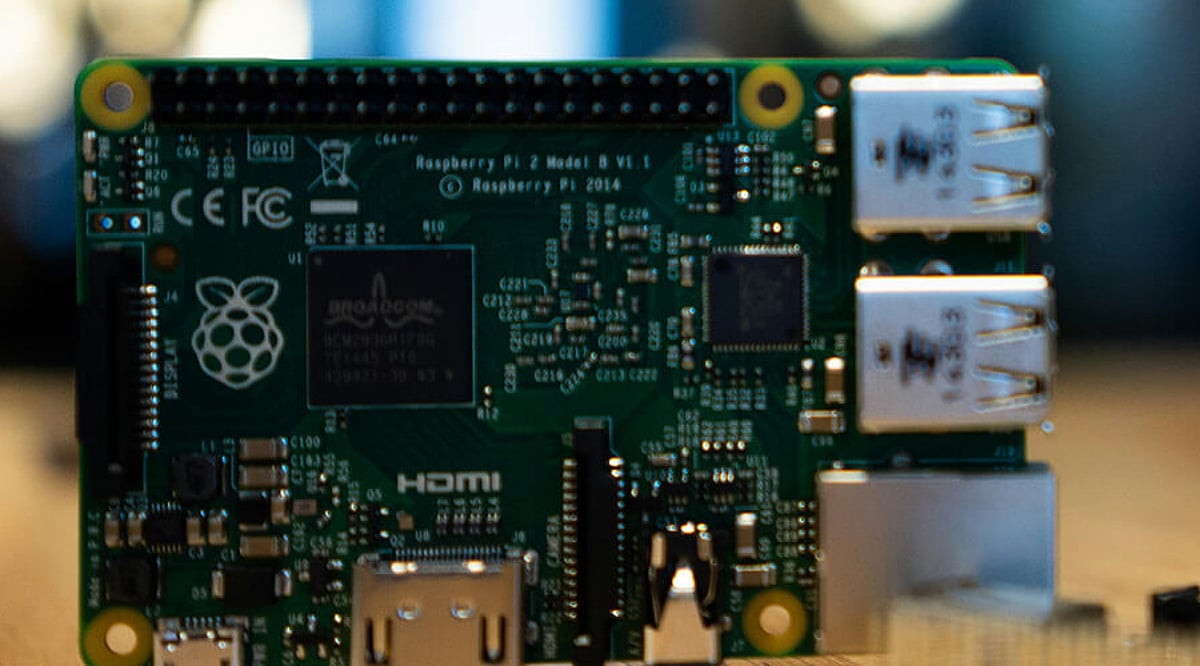
    Raspberry Pi is a compact, affordable computer that can serve as the brain for a wide range of home automation projects. By connecting sensors, switches, cameras, and other devices, you can build systems that monitor conditions and trigger actions automatically. These projects not only make your home smarter but also offer a hands-on way to learn about programming, networking, and the Internet of Things (IoT). Best of all, most can be expanded as you add more devices.

    1. Automated Smart Lighting

    With a Raspberry Pi, you can control lights based on schedules, motion sensors, or voice commands. Motion sensors can turn lights on when someone enters a room, while timers can switch them off automatically. Using appropriate hardware and software, you can create different lighting routines for various rooms. This project provides a practical introduction to automated device control.

    2. Smart Temperature Monitoring

    Connect temperature and humidity sensors to your Raspberry Pi to build a home environment monitoring system. The device can collect readings at regular intervals and display them on a local dashboard. You can also configure alerts when temperatures cross selected thresholds. This project is ideal for monitoring rooms, storage areas, or any space where environmental conditions need regular observation.

    3. DIY Home Security System

    Pair a Raspberry Pi with cameras and motion sensors to create a basic home monitoring system. The setup can capture images or video when movement is detected and store recordings for later review. You can also add notifications to alert you of activity. Remember to implement proper network security and access controls when connecting cameras to the internet.

    4. Smart Doorbell and Alerts

    Build a customized smart doorbell using a button, camera, and speaker connected to a Raspberry Pi. When someone presses the button, the system can capture an image and send an alert to your phone or another device. With the right hardware and software, you can add two-way communication, motion detection, or automated responses to create a more capable setup.

    5. Voice-Controlled Home Devices

    With suitable software and microphones, a Raspberry Pi can become part of a voice-controlled home automation system. You can issue commands to control lights, switches, or other connected devices. This project demonstrates how voice interfaces interact with IoT hardware. Be mindful of privacy settings, especially when using microphones or cloud-based services.

    Bonus: Create a Custom Automation Hub
    Bring multiple projects together by using your Raspberry Pi as a central dashboard or automation platform. Connect sensors, lights, cameras, and switches, then create rules that link different devices. For example, motion detection could trigger lighting automatically. Building a central hub lets you experiment with increasingly complex smart-home routines while retaining full control over your setup.