Blog

  • Dogecoin Price Analysis: Can $0.07 Support Hold or Will Bears Push Lower?

    Dogecoin Price Analysis: Can $0.07 Support Hold or Will Bears Push Lower?

    Dogecoin is currently trading near $0.072 after once again testing the critical $0.07 support level. Buyers defended this zone on Friday, but the subsequent rebound has yet to break through the nearest resistance barrier. The next direction for the meme coin hinges on whether it can hold above $0.07.

    Dogecoin Tests Breakout After Double Bottom

    Dogecoin recently climbed above a descending trendline that had capped gains since May. Trader Tardigrade linked this move to a double-bottom pattern near $0.07. The setup formed after the price touched the same support level twice and bounced back each time. This structure contrasts with the price action seen near the May peak, where two highs appeared before sellers took control. The current chart shows two lows at the same level, which may indicate weakening selling pressure. However, buyers must protect the breakout area to give the pattern stronger credibility.

    Near-term resistance is between $0.075 and $0.079. Dogecoin reached $0.0753 on July 14, but buyers failed to hold that gain. The price then fell for two sessions before bouncing from $0.07. A close above $0.079 could open the door to $0.084, with the larger test zone between $0.09 and $0.10.

    $0.07 Support Controls the Next Price Move

    The $0.07 level sits within a broader demand zone stretching from $0.05 to $0.08. Dogecoin has traded around this area during previous market bottoms, and buyers have returned near the same range during the latest decline. Holding this zone does not confirm a full reversal. DOGE still needs higher weekly lows, stronger buying volume, and a break above $0.10. If that happens, traders may target $0.15 and $0.20, both of which were active trading levels during earlier rallies.

    The downside scenario would strengthen if Dogecoin closes below $0.07 and fails to recover. Sellers could then target $0.067, followed by $0.065. A wider decline could pull the price deeper into the $0.05 to $0.08 band, weakening the early recovery setup and extending the current range.

    Liquidation Data Shows Limited Pressure on Bears

    CoinGlass recorded no Dogecoin short liquidations during a 12-hour period. Short liquidations occur when rising prices force bearish traders to close leveraged positions. The zero reading indicates that the rebound did not generate enough pressure to trigger forced exits during that window. Meanwhile, long traders faced losses: about $27,000 in long liquidations over 12 hours, and across a broader window, $153.82k in long liquidations versus $28.38k in short liquidations.

    The narrow gap between the two sides aligns with Dogecoin’s limited daily price moves. DOGE traded about 0.96% higher near $0.072 at the time of the data. The absence of short liquidations may also suggest that bearish traders reduced risk after the earlier drop. A wider sell-off in chip stocks also affected crypto markets after a brief rally tied to softer inflation data. Dogecoin gave back part of its advance as traders reduced exposure to risk assets.

    For now, $0.07 remains the key support, while $0.075 to $0.079 forms the first recovery barrier. The coming sessions will determine whether buyers can defend the line or if bears will extend the selloff toward $0.065.

  • XRP Rebounds to $1.09: Key Resistance Zone and Upcoming Upgrade Signal Potential Breakout

    XRP Rebounds to $1.09: Key Resistance Zone and Upcoming Upgrade Signal Potential Breakout

    XRP has rebounded to trade near $1.09, recovering about 0.76% in the last 24 hours in line with the broader cryptocurrency market. The modest gain follows continued demand for US spot Bitcoin ETFs and improved risk sentiment across digital assets. Notably, XRP did not receive any coin-specific catalyst during the session, relying instead on market-wide strength.

    The token now faces a critical technical test after losing nearly half its value in 2026. Traders are closely watching the support zone between $1.06 and $1.09, and the resistance range from $1.12 to $1.18. The upcoming XRP Ledger (XRPL) FixCleanup3_2_0 amendment, scheduled for July 29, adds further interest.

    XRP Tracks Bitcoin as Leverage Drops

    XRP’s latest move reflects broader market conditions. Bitcoin gained about 0.93%, and the total crypto market value also rose. US spot Bitcoin ETFs posted another positive session, supporting risk assets. Optimism over US crypto regulatory progress, particularly regarding the CLARITY Act before the August recess, also contributed to sentiment.

    Meanwhile, XRP futures leverage on Binance has fallen to its lowest level since early 2024, according to market data. Lower leverage reduces the risk of forced selling during sharp price swings. However, the reset does not guarantee a rally, and trading volume has dropped, indicating the rebound lacks strong buying activity.

    Descending Wedge Meets Strong Historical Q3 Performance

    XRP is trading within a descending broadening wedge on the daily chart. Buyers have defended the area near $1.05, while the relative strength index (RSI) shows a bullish divergence. This pattern suggests selling pressure has slowed, but XRP must close above the $1.12–$1.18 zone to confirm a breakout.

    Seasonal data adds another bullish signal: XRP has not posted a negative third quarter in the past seven years. The token gained 47.6% in July 2023 and 35% in July 2025, with a median Q3 return of 25.8%. However, past performance does not guarantee future results.

    A move above $1.18 could bring the $1.45–$1.60 range back into focus, representing nearly 50% upside from current levels. That ‘50% surge’ target depends on a confirmed breakout, stronger volume, and continued market support. A break below $1.06 could instead expose the $0.90 area.

    XRPL Upgrade and Tokenized Gold Add Utility

    The XRPL FixCleanup3_2_0 amendment, set for July 29, focuses on ledger cleanup and network efficiency. While it has not yet triggered a clear price reaction, traders may watch for increased activity following the upgrade.

    Additionally, cumulative trading volume for tokenized gold on the XRP Ledger has surpassed $1 million. This asset represents physical gold and enables 24/7 on-chain settlement, demonstrating expanding real-world asset activity on XRPL beyond payments.

    Ripple’s addition to an ESMA register and XRP’s inclusion in a multi-token ETF have also supported the wider narrative. Yet XRP has underperformed Bitcoin during this rebound. Price action now depends on support at $1.06–$1.09, resistance near $1.12, and the strength of market-wide flows.

  • Ethereum Surges Past $1,850 as Regulatory Hopes and ETF Inflows Fuel Rally

    Ethereum Surges Past $1,850 as Regulatory Hopes and ETF Inflows Fuel Rally

    Ethereum (ETH) has climbed above $1,850, reaching $1,873.56 with a 1.61% gain in the last 24 hours, outperforming the broader cryptocurrency market. The upward move is driven by renewed optimism around U.S. crypto regulations, consistent inflows into spot Ethereum exchange-traded funds (ETFs), and a technical breakout from a double-bottom pattern.

    The broader market posted modest gains, but Ethereum stood out among large-cap tokens. Despite being about 62% below its all-time high, the current rally has traders watching key support at $1,812 and resistance near $1,947. The week ahead may bring further catalysts, including potential Senate action on the CLARITY Act.

    CLARITY Act Optimism Supports Ethereum Price

    U.S. Representative Bryan Steil indicated that the Senate could vote on the CLARITY Act during the week of July 20–24. The proposed legislation would classify Ethereum as a digital commodity, providing a clearer legal framework for digital assets. Markets reacted positively to the timeline, though the final schedule and bill text remain unconfirmed.

    The regulatory update lifted sentiment across the crypto space. Ethereum gained more than Bitcoin in the session, reflecting stronger demand. However, the rally remains contingent on political progress. A delay or failed vote could push Ethereum back toward the $1,780 support zone.

    ETF Inflows Confirm Renewed Institutional Demand

    Spot Ethereum ETFs recorded approximately $105 million in net inflows from July 13 to July 17, according to SoSoValue. That marks the strongest weekly result since April, following a period of mixed flows including a $36.3 million daily outflow and a reported $22.3 million sale linked to BlackRock’s Ethereum fund.

    The return of weekly inflows signals that institutional interest remains intact, adding credibility to the price move beyond short-term speculation. However, sustained trading volume is essential for Ethereum to hold above the breakout level.

    Whale activity has also drawn attention. Two newly created wallets sold 72 Bitcoin for about $4.66 million and opened 20x leveraged long positions on 12,000 ETH, valued near $22.4 million. These trades suggest large accounts anticipate further upside, though high leverage raises liquidation risk if the market turns downward.

    Double-Bottom Breakout Puts $1,947 in View

    Ethereum confirmed a breakout from a double-bottom pattern with a neckline near $1,847. The price also moved above the $1,854 level, which coincides with the 0.786 Fibonacci retracement. The daily relative strength index (RSI) stands near 58.71, indicating positive momentum without overbought conditions.

    The next resistance zone is around $1,947. To maintain the bullish setup, Ethereum must hold above $1,854 and keep support at the 50-day exponential moving average near $1,812. A drop below $1,812 would weaken the breakout and increase the likelihood of a decline toward $1,780.

    Market participants are closely monitoring whether ETF inflows stay positive and whether the Senate confirms action on the CLARITY Act. These factors could determine whether Ethereum extends its rebound or returns to its earlier trading range. For now, ETH remains above the key support zone as traders test the strength of the breakout.

  • .NET 8 vs .NET 6: Key Differences, Performance Gains, and Upgrade Considerations

    .NET 8 vs .NET 6: Key Differences, Performance Gains, and Upgrade Considerations

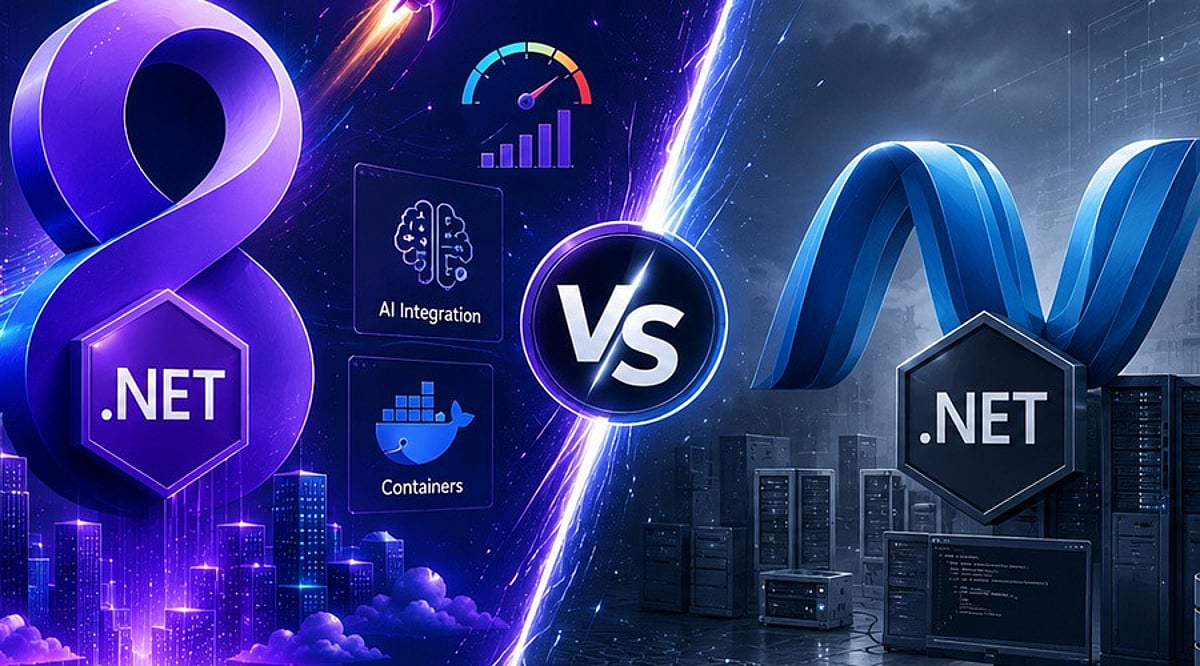
    .NET 8 builds upon the strong foundation of .NET 6 by introducing major improvements in performance, cloud-native development, developer productivity, and security. This comparison guide explores the key differences between the two LTS releases, highlights new features in .NET 8, and outlines important considerations for organizations planning an upgrade.

    Overview

    Both .NET 6 and .NET 8 are Long-Term Support (LTS) releases, but .NET 8 introduces significant improvements in runtime performance, cloud-native development, and developer productivity. From C# 12 and Native AOT to enhanced ASP.NET Core performance and better container support, .NET 8 is designed for modern enterprise application development. This guide compares .NET 6 and .NET 8 across performance, features, and migration considerations to help developers and organizations plan a successful upgrade.

    .NET 6 vs .NET 8: Key Differences at a Glance

    Both versions are production-ready, but .NET 8 delivers meaningful improvements across runtime efficiency, scalability, and modern development workflows.

    Performance Improvements Make .NET 8 a Clear Winner

    The foremost driver of organizational modernization is performance. Microsoft has incorporated thousands of runtime optimizations into .NET 8, including JIT optimizations, Dynamic Profile-Guided Optimizations (Dynamic PGO), Garbage Collection (GC) optimizations, SIMD optimizations, and ARM64 enhancements. These optimizations help minimize startup time, increase throughput, and reduce infrastructure costs for high-traffic applications. .NET 8 offers greater processing capacity for requests in ASP.NET Core, making it more desirable for APIs, microservices, and cloud-native deployments than .NET 6.

    Developer Experience Has Improved Significantly

    Beyond performance, .NET 8 introduces features that make application development easier. C# 12 includes more expressive language features to help developers create clean and manageable code. Native AOT support has reached maturity, enabling faster startup times and smaller footprints. Minimal APIs in ASP.NET Core have been extended to support lightweight services while retaining enterprise-level features.

    What to Consider Before Upgrading

    Although migrating from .NET 6 to .NET 8 is relatively easy, businesses should conduct a compatibility check before upgrading. Steps include:

    • Upgrade the application to the latest target framework and install the .NET SDK.
    • Verify all NuGet packages are compatible with .NET 8, replacing any deprecated packages.
    • Check for breaking changes, verify third-party integrations, and run unit, integration, and performance tests before going live.

    Modern ASP.NET Core applications typically require only minor code modifications when migrating to .NET 8.

    Is Upgrading to .NET 8 Worth It?

    For most enterprises, yes. Applications requiring greater scalability, cloud readiness, security improvements, and maintainability will benefit from upgrading to .NET 8. Enterprises that have adopted containerization, microservices, AI solutions, and fast APIs can maximize the benefits of the latest platform version. However, migration efforts should be undertaken after thorough dependency checks and testing procedures, following Microsoft’s upgrade guidelines. A gradual adoption process reduces risks and allows developers to test the improvements offered by .NET 8.

    In the evolving Microsoft development ecosystem, .NET 8 represents an important milestone over previous versions like .NET 6. Its better performance, new tools, cloud-native characteristics, and productivity gains make it a strong choice for upgrading applications to gain more speed and scalability. Migrating to .NET 8 also simplifies future upgrades to newer .NET versions.

    Why This Matters

    Choosing the right .NET version directly affects application performance, maintainability, security, and long-term support. As organizations modernize their technology stacks and increasingly adopt cloud-native architectures, containerized deployments, and AI-powered applications, newer framework capabilities deliver measurable improvements in scalability and operational efficiency.

    FAQs

    What is the biggest difference between .NET 6 and .NET 8?
    The biggest difference is that .NET 8 introduces substantial improvements in runtime performance, cloud-native development, Native AOT, C# 12 language features, ASP.NET Core enhancements, and developer productivity. Both are LTS releases, but .NET 8 is optimized for modern, high-performance applications.

    Is .NET 8 faster than .NET 6?
    Yes. .NET 8 delivers significant performance improvements through Dynamic PGO, JIT compiler enhancements, garbage collection optimizations, SIMD improvements, and better ARM64 support, reducing startup times and improving throughput.

    Should I upgrade from .NET 6 to .NET 8?
    For most applications, upgrading is recommended. Benefits include better performance, enhanced security, improved developer tools, stronger cloud-native capabilities, and continued LTS support. Compatibility testing and dependency validation should be completed before migrating production workloads.

    Is upgrading from .NET 6 to .NET 8 difficult?
    In most cases, the upgrade process is straightforward. Developers update the target framework, install the latest .NET SDK, upgrade compatible NuGet packages, review breaking changes, and thoroughly test the application. Modern ASP.NET Core applications usually require only minor code modifications.

    What new features does .NET 8 introduce?
    .NET 8 includes C# 12 support, enhanced Native AOT, improved Minimal APIs, better container support, runtime optimizations, enhanced diagnostics, cloud-native improvements, performance enhancements, and expanded tooling that simplifies development and deployment.

  • Android Java to Kotlin Migration: Proven Best Practices for 2026

    Android Java to Kotlin Migration: Proven Best Practices for 2026

    Migrating Android applications from Java to Kotlin has become a strategic priority for organizations looking to modernize their codebases. This guide outlines the best practices for a successful migration, covering project assessment, phased conversion, Kotlin-first development, architectural modernization, and performance testing to help teams build scalable and maintainable Android apps in 2026.

    Kotlin has been regarded as the best language for Android development since Google made it available in 2017. The modern approach to Android development is currently based on Kotlin, Jetpack Compose, coroutines, Kotlin Multiplatform, and the Android Jetpack library. Even though many companies have their applications written in Java, the switch to Kotlin is widely regarded as a reliable strategy that ensures high-quality code, increased productivity, and improved codebase maintainability.

    However, there is no need to rebuild your application if you want to shift from Java to Kotlin, as both languages are fully compatible. The following recommendations will assist with the transition from Android Java to Kotlin.

    Evaluate Your Existing Codebase Before Migration

    To ensure the migration process is efficient, it is necessary to analyze the application’s architecture. It is important to analyze all project modules before migration to consider dependencies, third-party libraries, Gradle configuration, and Java version compatibility. Additionally, it is recommended that you identify all outdated APIs, Android components, and other legacy code that needs to be updated.

    Follow a Gradual Migration Strategy

    Migrating the whole Android app in one shot is not often suggested. The compatibility of Kotlin with Java means that both languages can be used in the same project, enabling feature-by-feature migration. A practical migration strategy may look like this: configure Kotlin support, migrate utility classes, gradually convert business logic, update Activities and Fragments, and finally refactor legacy Java code while continuously testing each migration stage. This phased approach reduces deployment risks while allowing continuous testing throughout the migration process.

    Take Advantage of Modern Kotlin Features

    Merely converting syntax from Java to Kotlin is not sufficient. Many development teams simply do not understand how much easier it would be for them to develop the applications if they coded in Kotlin using the syntax of Java. To simplify the code and make it more readable, programmers need to use Kotlin features such as nullability, data classes, extensions, sealed classes, higher-order functions, smart casting, and many other capabilities. Moreover, the use of coroutines is preferable to old-school async techniques such as AsyncTask, callbacks, and threads. It has to be applied together with Flow.

    Modernize the Architecture Alongside Migration

    Migration offers a wonderful opportunity to upgrade the application architecture rather than simply translating the code. Actually, it can be reasonable to use the MVVM architecture, which is recommended by Android developers and includes Jetpack libraries such as ViewModel, LiveData, or StateFlow, Room, Navigation, and Hilt as a dependency injector. Jetpack Compose will be a great choice to develop the user interface for Android 2026 applications. Even though XML layouts are available, Jetpack Compose enables more declarative development for Android, which fits well with Kotlin. The described approach works well because refactoring the old code during migration will help avoid future issues.

    Prioritize Testing and Performance Validation

    Code conversion should always be tested. Unit, UI, integration, and regression tests should be done after each migration step to confirm that the two versions of the program have the same functionality. Performance profiling is very critical. There should be measurements of the app’s startup time, memory usage, CPU usage, and APK size before and after the migration. Using static analyzers like Android Lint, Detekt, and Ktlint will enable developers to write code in line with Kotlin coding standards without compromising performance or style. Another method that promotes consistency in Kotlin code is code review.

    Build for the Future with Kotlin-First Development

    The Android development landscape continues to evolve toward a Kotlin-oriented approach. The emergence of Jetpack libraries, Compose, artificial intelligence (AI)-powered tools for developers, and optimizations of Android Studio have led to Kotlin being more widely used than Java. Thus, businesses updating their Android software today can easily benefit from future advances in the platform. Moving from Java to Kotlin involves more than just selecting another programming language because you will have the opportunity to enhance the quality of your code, maintain it, and implement new approaches to develop an Android application. This can be done through gradual migration, idiomatic Kotlin coding, refactoring your application, and performance measurement.

    Why This Matters

    Google continues to position Kotlin at the center of modern Android development, with new Jetpack libraries, Jetpack Compose, Kotlin Multiplatform, and Android Studio enhancements being designed primarily for Kotlin. As a result, organizations that continue maintaining Java-only Android applications may find it increasingly difficult to adopt the latest Android features and development tools.

    Frequently Asked Questions

    Why should developers migrate Android projects from Java to Kotlin?

    Kotlin offers several advantages over Java, including concise syntax, built-in null safety, coroutines for asynchronous programming, extension functions, improved readability, and full interoperability with Java. These features help developers build more maintainable, secure, and modern Android applications while aligning with Google’s recommended development practices.

    Can Java and Kotlin coexist in the same Android project?

    Yes. Kotlin is fully interoperable with Java, allowing both languages to coexist within the same Android project. This compatibility enables teams to migrate applications gradually instead of rewriting the entire codebase, reducing project risks and simplifying long-term modernization.

    What is the best strategy for migrating a Java Android application to Kotlin?

    A phased migration strategy is generally the most effective approach. Developers should first configure Kotlin support, migrate utility classes, gradually convert business logic, update Activities and Fragments, and finally refactor legacy Java code while continuously testing each migration stage.

    Should developers use automated Java-to-Kotlin conversion tools?

    Android Studio provides an excellent Java-to-Kotlin converter that accelerates migration. However, automatically converted code often requires manual refactoring to follow Kotlin best practices, improve readability, eliminate unnecessary boilerplate, and fully utilize Kotlin-specific language features.

    Should Android architecture be updated during migration?

    Yes. Migration provides an excellent opportunity to modernize application architecture by adopting MVVM, Jetpack ViewModel, StateFlow or LiveData, Room, Hilt for dependency injection, and Navigation components. This helps improve scalability, testing, and long-term maintainability.

  • 10 Sci-Fi Series on Netflix You Can’t Miss This July 2026

    10 Sci-Fi Series on Netflix You Can’t Miss This July 2026

    Looking for your next Netflix binge? These 10 sci-fi series deliver unforgettable stories packed with artificial intelligence, dystopian worlds, psychological thrillers, anime, and edge-of-your-seat adventures this July 2026.

    Ten Sci-Fi Gems You Shouldn’t Miss

    If you’re planning your next binge, these 10 sci-fi series are worth your time:

    Stranger Things

    Stranger Things remains Netflix’s defining sci-fi series. Set in the fictional town of Hawkins, it follows a group of friends caught between everyday life and the terrifying Upside Down. The show balances suspense, nostalgia and character-driven storytelling, making it as emotional as it is entertaining.

    Black Mirror

    No sci-fi series examines the dark side of technology better than Black Mirror. Every standalone episode explores a different idea, from artificial intelligence and social media to surveillance and virtual reality. It’s unsettling because many of its futuristic concepts no longer feel far away.

    3 Body Problem

    Adapted from Liu Cixin’s bestselling novel, The 3 Body Problem combines scientific discovery with a global mystery. As humanity prepares for first contact with an alien civilization, the series blends physics, politics and suspense into one of Netflix’s most ambitious productions.

    Alice in Borderland

    In a deserted Tokyo, deadly games become a source of life and death. Alice in Borderland is a psychological adventure where the main characters need not only strength but also intelligence and skills.

    Cyberpunk: Edgerunners

    This animated series based on Cyberpunk 2077 takes place in the same universe. It is about a teenage boy who tries to live in a technological city run by corporations. The sharp graphics of the anime, combined with an interesting plot, helped it become one of the top animated Netflix shows.

    Parasyte: The Grey

    Parasytes invade the planet from outer space and begin to take possession of people’s bodies. Parasyte: The Grey is both a sci-fi thriller and a horror about trust, identity, and the struggle between humanity and the need to survive.

    Pluto

    Pluto is based on a manga by Naoki Urasawa. In this anime, the creators turn Astro Boy into a detective story that addresses such important issues as artificial intelligence, war, and human emotions. In addition, it has very high-quality animation, which makes it one of the best Netflix anime.

    Katla

    Katla tells the story that happens in Iceland, in a small village, where people have returned after the volcanic eruption. The main idea is that they were previously considered to be dead.

    Supacell

    The plot of Supacell revolves around five people from South London who acquire unusual powers. This show is not focused only on the action; there is also a theme of family and responsibility.

    Biohackers

    Biohackers is a German thriller based on the theme of genetic engineering and medical science. There is a conspiracy going on in the university, which the student discovers.

    Final Take

    Netflix’s sci-fi lineup this July offers more than futuristic entertainment. These series explore artificial intelligence, survival, human relationships, and the consequences of scientific progress through compelling stories. Whether you prefer psychological thrillers, dystopian worlds, or visually stunning anime, these 10 shows are among the platform’s strongest sci-fi picks.

  • Top Steam Games to Play in 2026: Must-Have Titles for Every Gamer

    Top Steam Games to Play in 2026: Must-Have Titles for Every Gamer

    Steam remains the go-to platform for discovering the best PC games across every genre. These games offer action, teamwork, survival, strategy, and endless replay value. Several titles receive frequent updates that keep gameplay fresh throughout the year.

    PC gaming is never in a better place. New releases are coming out every month, and old games are still gaining new players. Some people like to spend hours exploring huge worlds; others sign on after work for a few quick matches with friends. Steam has grown from a simple game store to the home of PC gaming, with regular sales, community features, and easy game updates making it the platform millions of gamers open almost every day.

    With so many games to choose from, it’s not always easy to know what to play next. Here are the Steam titles you need at the top of your list this year.

    Palworld

    Palworld caught everyone’s attention with its unique mix of creature collection, survival, and crafting. What started as a simple adventure quickly became one of the biggest success stories on Steam. Building a base, exploring new places, and fighting alongside your Pals never gets old. It’s even more fun to play with friends, letting everyone collaborate and discover something new.

    Why we picked it:

    Palworld gives players freedom. You can explore, build, collect creatures, or simply enjoy the open world at your own pace.

    Dota 2

    Dota 2 has been out for years, but every time you play it feels brand new. No two matches are the same. Different heroes, different teammates, and different strategies keep it interesting. Winning takes a team, patience, and smart choices. That’s why so many players still log in for hours every week.

    Why we picked it:

    The game rewards patience, teamwork, and practice. Every victory feels earned, making it one of Steam’s strongest competitive games.

    Counter-Strike 2

    Counter-Strike 2 proves that a simple idea can have decades of life in it. Two teams, one goal, no room for error. Each round is pressure-packed; one good play can change everything. From the first round to the last, the thrill is the same, whether you play with friends or jump into ranked matches.

    Why we picked it:

    Simple gameplay mixed with high skill makes every match fun to play and exciting to watch.

    Marvel Rivals

    Marvel Rivals is packed with faces you know from the Marvel universe. Players can form teams with their favorite heroes and villains and try different combinations every match. The battles are fast, and all the characters are unique. Whether you’re a superhero fan or not, this is a fun game to play with friends.

    Why we picked it:

    Well-known characters, colorful battles, and fun teamwork make Marvel Rivals easy to enjoy for both Marvel fans and multiplayer players.

    Dead by Daylight

    Dead by Daylight is a different kind of multiplayer experience. Four survivors attempt to escape while one player tries to kill them. Every match is tense because you never know what will happen. One mistake and it’s game over. New killers, survivors, and maps are added regularly, so returning players never get bored.

    Why we picked it:

    Every match tells a different story, making Dead by Daylight exciting whether you win or lose.

    Path of Exile 2

    Path of Exile 2 feels made for people who like putting together really strong characters. There are many routes to form your hero, and every decision shifts how the whole game plays. New weapons, greater skills, and tougher adversaries keep that sense of momentum going. It’s rewarding if you enjoy testing different builds and chasing down oddball loot and rare gear.

    Why we picked it:

    The huge number of character choices gives players a reason to start new adventures again and again.

    Warframe

    Warframe has stayed popular for one simple reason: the developers keep improving it. New missions, fresh updates, and more content arrive regularly, giving players reasons to return. Fast movement and smooth combat make every mission enjoyable. The fact that it’s free also makes it one of the easiest games on Steam to recommend to new players.

    Why we picked it:

    Years of updates, fast action, and free access make Warframe one of Steam’s biggest success stories.

    Why Steam Stays on Top

    Steam has thousands of games, but only a small number stay popular year after year. The games on this list have earned that place. Some reward teamwork. Some focus on action. Others let you explore huge worlds at your own speed. That variety is what makes Steam special. You can jump into a quick Counter-Strike 2 match, spend hours messing around in Palworld, craft your dream character in Path of Exile 2, or enjoy a few missions in Warframe. Each game brings something different, and that’s why these titles keep showing up as some of the best Steam games in 2026.

    FAQs

    Which Steam game is best for beginners?

    Palworld is a great choice for beginners because it mixes exploration, building, and creature collecting in a relaxed way. New players can learn the game without feeling rushed.

    Is Counter-Strike 2 still one of the best PC shooters?

    Yes. Counter-Strike 2 remains one of the most played shooters on Steam. Its balanced gameplay and competitive matches continue to attract both new and experienced players.

    Can I enjoy these games without playing competitively?

    Yes. While Dota 2 and Counter-Strike 2 have strong competitive scenes, games like Palworld, Warframe, and Dead by Daylight can also be enjoyed casually with friends.

    Is Warframe really free to play?

    Yes. Warframe is free to download on Steam. Players can enjoy a huge amount of content without buying the game, making it one of the platform’s best free titles.

    Why do so many PC gamers use Steam?

    Steam makes buying, updating, and managing games simple. It also offers regular sales, community features, cloud saves, and thousands of games across every major genre.

  • Claude Tag Slack Integration Can Enable Unauthorized Enterprise Actions, Tego AI Warns

    Claude Tag Slack Integration Can Enable Unauthorized Enterprise Actions, Tego AI Warns

    Tel Aviv, Israel – July 14, 2026 – Cybersecurity startup Tego AI has published new research revealing that Anthropic’s native Slack integration, Claude Tag, can be triggered by non-intentional Slack content, potentially leading to unauthorized actions across enterprise systems.

    According to Tego AI, researchers observed Claude Tag responding to messages containing the literal text “@Claude” without requiring a genuine structural Slack mention. This means content delivered through bots, webhooks, automated feeds, or other external sources could be interpreted as instructions.

    In a demonstration, bot-generated messages instructed Claude Tag to retrieve internal information, publish it into Slack, and then delete the original resource using the organization’s configured connection.

    “Our research raises a fundamental question for every organization deploying enterprise AI agents: who is actually authorized to instruct the agent?” said Tal Melamed, CTO and Co-Founder of Tego AI. “Organizations need controls that validate the origin and purpose of sensitive actions before an agent is allowed to execute them.”

    The research also identified broader concerns, including untrusted automated content becoming an indirect instruction channel, connected applications and MCP servers expanding the potential impact, administrative access to stored channel information outside Slack’s native membership model, and limited visibility through existing history, compliance, and audit interfaces.

    “A safety classifier can be an important defense, but it should not be the final authorization boundary for enterprise actions,” Melamed added. “Sensitive operations require deterministic controls that remain effective even when the model misunderstands a request, trusts the wrong identity, or makes an incorrect decision.”

    Tego AI recommends applying least-privilege permissions to Claude Tag connections, preferring read-only access, avoiding channels that ingest untrusted external content, restricting administrative access, retaining relevant Slack logs, and introducing independent runtime authorization for sensitive actions.

    The company responsibly disclosed the findings to Anthropic. Anthropic classified the submission as informative and disputed that literal “@Claude” text or bot-generated messages initiate Claude Tag sessions under the product’s default configuration. Tego AI’s full report documents the observed behavior, supporting evidence, security implications, and disclosure timeline.

    Read the full technical report, including supporting evidence and the disclosure timeline: https://www.tego.ai/blog/tego-ai-finds-anthropics-claude-tag-slack-integration-can-trigger-unauthorized-enterprise-actions

    About Tego AI

    Tego AI is a cybersecurity company developing runtime security and control technology for enterprise AI agents. Its platform helps organizations monitor agent activity and stop unauthorized or risky actions before agents access sensitive data or connected systems. Tego AI currently operates in stealth. This is the company’s second public security disclosure, and it has identified additional security issues across other major AI agent platforms, with further disclosures planned.

    Contact:
    Tal Melamed, CTO, Tego AI
    tal@tego.ai

    This is a paid press release published via CyberNewswire, a PR newswire syndication platform for cybersecurity companies.

  • The Complete 2026 Data Scientist Resume Guide: Stand Out & Get Hired

    The Complete 2026 Data Scientist Resume Guide: Stand Out & Get Hired

    With AI reshaping hiring practices and Applicant Tracking Systems (ATS) becoming the norm, a data scientist resume in 2026 must do more than list technical skills. Recruiters want proof that you can deliver measurable business value using modern tools. Whether you’re a fresh graduate or a seasoned professional, this guide walks you through every step to craft a resume that gets noticed.

    1. Start With a Powerful Professional Summary

    Your resume’s opening should be a compelling 3–5 line summary. Include your years of experience, core technical expertise, and one or two standout achievements. Avoid clichés like “passionate data scientist”—instead, describe how you built machine learning models that improved forecast accuracy, automated reporting, or monetized data analytics.

    2. Organize Your Skills Clearly

    Recruiters often scan skills first. Group them into categories for easy reading: programming languages, ML libraries, databases, visualization tools, and cloud platforms. In 2026, emphasize skills like:

    • Python, SQL, R
    • TensorFlow, PyTorch, Scikit-learn
    • Apache Spark
    • Tableau, Power BI
    • AWS, Microsoft Azure, Google Cloud Platform
    • Docker, Kubernetes, Git

    Only include skills you can confidently discuss in an interview.

    3. Highlight Achievements, Not Duties

    Instead of listing daily responsibilities, frame each experience entry around four questions:

    • What problem did you solve?
    • Which tools did you use?
    • What solution did you implement?
    • What measurable impact did it create?

    For example: “Developed a customer churn prediction model using Python and XGBoost, improving retention by 18% and reducing marketing costs by 12%.” Numbers boost credibility.

    4. Showcase Real-World Projects

    For freshers and career changers, projects are critical. Focus on practical use cases—not theoretical exercises. Hiring managers value projects that solve business problems, such as:

    • Recommendation engines
    • Fraud detection systems
    • Customer segmentation
    • Predictive analytics
    • NLP, computer vision, generative AI, and time series forecasting

    Always link to GitHub or a portfolio site.

    5. List Education and Relevant Certifications

    Include your degree, institution, and graduation year. In a separate section, add certifications that reflect current skills—avoid outdated ones. Recommended certifications:

    • Google Data Analytics Professional Certificate
    • IBM Data Science Professional Certificate
    • AWS Certified Machine Learning
    • Microsoft Azure AI Engineer Associate
    • Databricks Data Engineer Certification

    6. Optimize for Applicant Tracking Systems (ATS)

    Most employers use ATS software to pre-screen resumes. To pass the filter:

    • Use a simple one-column layout
    • Stick to standard headings: Experience, Skills, Education, Projects
    • Include relevant keywords from the job posting
    • Avoid graphics, icons, text boxes, or tables
    • Save your resume in the format requested by the employer

    7. Demonstrate Business Impact

    Companies want data scientists who drive business outcomes, not just build models. Instead of saying you “developed dashboards,” explain how decision-makers used them to improve operations, reduce fraud, or increase prediction accuracy.

    8. Tailor Your Resume for Each Job

    Never send the same resume everywhere. Analyze each job description, identify required skills and tasks, then adjust your resume to emphasize relevant experiences and achievements. This boosts both ATS compatibility and recruiter interest.

    9. Keep the Design Professional

    A clean, readable layout is essential. Limit to one page if you have less than five years of experience; two pages are acceptable for senior roles. Maintain consistent fonts, bullets, and spacing. Use minimal color for section headings.

    10. Proofread Thoroughly

    Spelling mistakes and inconsistent formatting can cost you an interview. Check grammar, dates, project names, and links. Ensure every achievement includes a number, and eliminate unnecessary jargon.

    Final Words

    A winning data scientist resume in 2026 is a marketing document that proves you can turn data into business value. By emphasizing measurable wins, showcasing hands-on projects, optimizing for ATS, and tailoring each application, you’ll significantly increase your chances of landing interviews. In a competitive market, clarity, relevance, and tangible impact separate average resumes from those that get noticed—and called back.

  • Essential Quant Finance Books for 2027 Candidates: A Structured Reading Plan

    Essential Quant Finance Books for 2027 Candidates: A Structured Reading Plan

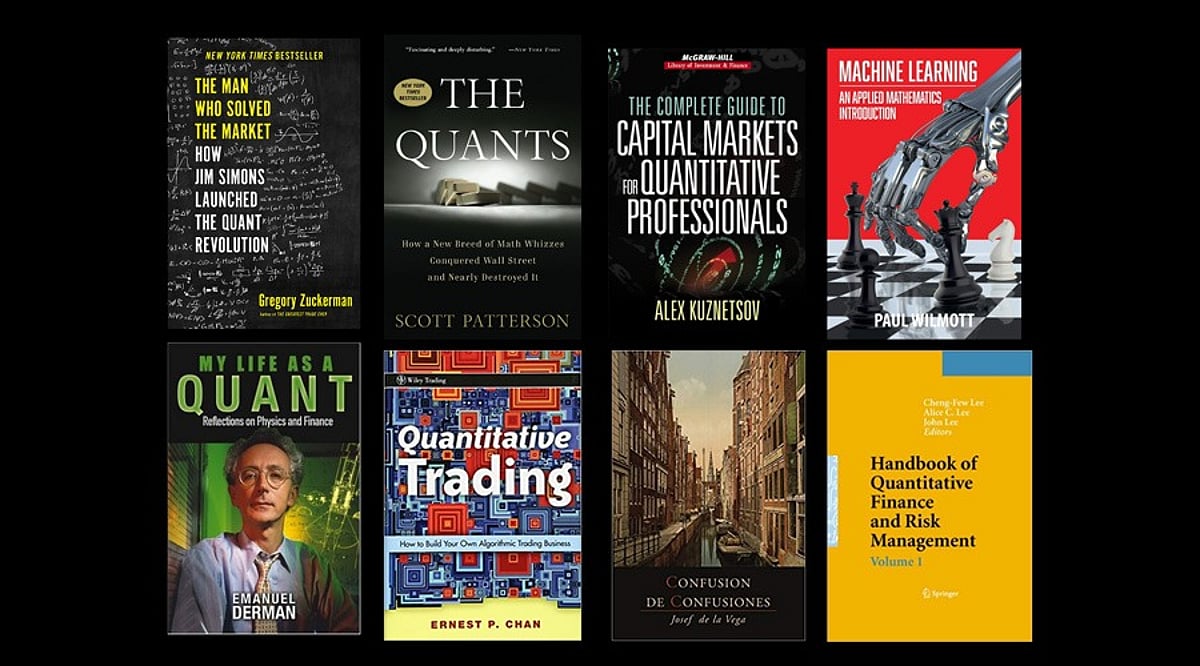
    Quant finance hiring continues to intensify. Firms now expect candidates to demonstrate simultaneous proficiency in probability, coding, and market structure. While reading the right books won’t guarantee a job offer, they build the analytical framework that interviewers actually test. Here is a practical reading list for anyone preparing for quant research, trading, or risk roles in 2027.

    Why Read Quant Books?

    Online courses and video lectures are abundant, but books offer something short videos cannot: depth, structure, and worked-out logic that forces slow thinking. Quant interviews often revolve around problems first explained clearly in a handful of classic texts. Candidates who skip these books usually end up relearning the same ideas the hard way—through failed interviews.

    Foundation Books for Beginners

    Before jumping into stochastic calculus or trading strategies, every candidate needs strong basics in probability, statistics, and market structure.

    • ‘A First Course in Probability’ by Sheldon Ross – Covers combinatorics, random variables, and distributions with clear examples. This is the starting point for almost every quant interview guide.
    • ‘Options, Futures, and Other Derivatives’ by John Hull – The standard reference for derivatives pricing. Nearly every trading desk expects candidates to know this book well.
    • ‘Heard on The Street’ by Timothy Falcon Crack – A collection of real interview questions asked by banks and hedge funds, with detailed solutions.

    Mathematics and Statistics Deep Dive

    Once the basics are clear, candidates should move toward the mathematics that drives actual pricing models and risk systems.

    • ‘Stochastic Calculus for Finance’ (Volumes I and II) by Steven Shreve – A rigorous, step-by-step introduction to the mathematics behind option pricing.
    • ‘Statistical Inference’ by Casella and Berger – Builds a strong statistical toolkit, useful for research-heavy roles.
    • ‘The Concepts and Practice of Mathematical Finance’ by Mark Joshi – Bridges theory and practical pricing, written by someone who has worked on trading floors himself.

    Programming and Data Skills

    Modern quant roles require coding fluency alongside mathematics. Python and C++ dominate this space, and a few books stand above the rest.

    • ‘Python for Data Analysis’ by Wes McKinney – Written by the creator of pandas, this book teaches data manipulation skills used daily in quant research.
    • ‘C++ Design Patterns and Derivatives Pricing’ by Mark Joshi – Shows how object-oriented design connects with real pricing engines.
    • ‘Advances in Financial Machine Learning’ by Marcos López de Prado – A sharp, opinionated guide to building machine learning models for markets, popular with systematic trading firms.

    Interview Preparation Books

    Technical knowledge alone rarely wins an offer. Candidates also need to practice the exact style of questions asked in interviews.

    • ‘Quant Job Interview Questions and Answers’ by Mark Joshi, Nick Denson, and Andrew Downes – A widely used guide covering brainteasers, probability puzzles, and finance-specific questions.
    • ‘Frequently Asked Questions in Quantitative Finance’ by Paul Wilmott – Written in a conversational tone, this book clears up common confusions around derivatives and models.
    • ‘Green Book: Quantitative Finance Interviews’ by Xinfeng Zhou – Focused purely on interview problems, with worked solutions and hints.

    Advanced Reading

    Experienced candidates aiming for senior research or portfolio roles should look at these titles.

    • ‘Active Portfolio Management’ by Grinold and Kahn – A detailed guide to building and managing systematic strategies.
    • ‘Algorithmic Trading’ by Ernest Chan – Practical advice on building, testing, and running trading systems.
    • ‘The Volatility Surface’ by Jim Gatheral – A focused study of volatility modeling, useful for anyone targeting options desks.

    How to Build a Reading Plan

    A common mistake candidates make is trying to read every book on a list at once. A better approach is to build a plan across a few months.

    • Month 1: Focus on probability, statistics, and derivatives basics.
    • Month 2: Transition into stochastic calculus and programming, solving problems in addition to reading.
    • Month 3: Use this entire month for interview-style books, answering questions under time pressure.

    Only try more advanced or niche titles after you have a solid grasp of the basics.

    Final Words

    Quant finance is a fast-moving and ever-changing field, with increasing emphasis on machine learning and alternative data. Still, the core fundamentals covered in these books have held up for more than 20 years. Candidates aiming at the 2027 hiring cycle should see this list as a starting point and supplement it with recent research papers and market-specific readings. A good knowledge of fundamentals, combined with lots of practice, will give any candidate a significant competitive advantage.

    Frequently Asked Questions

    1. Which are the best quant finance books for beginners in 2027?

    Beginners should start with ‘A First Course in Probability’, ‘Options, Futures, and Other Derivatives’, and ‘Python for Data Analysis.’ These books explain core concepts that support advanced quantitative finance learning and interview preparation.

    2. Which books help prepare for quant finance interviews?

    ‘Heard on The Street,’ ‘Green Book: Quantitative Finance Interviews,’ and ‘Quant Job Interview Questions and Answers’ focus on probability, logical reasoning, mathematics, and technical interview questions commonly asked by financial firms.

    3. Why is Python important for quant finance careers?

    Python supports data analysis, financial modeling, automation, algorithmic trading, and machine learning. Learning Python through dedicated finance books helps candidates apply quantitative concepts using practical programming techniques valued across the industry.

    4. Should candidates study advanced quant finance books first?

    Starting with advanced books often creates learning gaps. Building knowledge through probability, statistics, derivatives, and programming first makes complex mathematical finance topics easier to understand and apply effectively.

    5. How long does it take to complete a quant finance reading plan?

    A focused three-month plan covering fundamentals, programming, and interview preparation provides a practical starting point. Advanced titles and research papers can be added gradually as technical knowledge and confidence grow.