Blog

  • 2026 Printer Buying Guide: How to Select the Perfect Model for Your Needs

    2026 Printer Buying Guide: How to Select the Perfect Model for Your Needs

    Overview

    Compare ink tank, laser, and all-in-one printers before making the smartest buying decision today. Learn which printer suits home, office, student, business, and professional photo printing requirements. Understand printing costs, features, connectivity, and performance before investing in your next printer.

    Buying a Printer in 2026: What You Need to Know

    Buying a printer can be tricky. Technical features, compatibility, durability, and other complicated information are essential to consider before buying one. Picking the costliest or cheapest model from the shelf can prove to be a regressive approach. Printers today do a lot more, and a wrong pick can cost you extra money in ink or toner down the line. Ink tank printers cost less to run than the old cartridge models. Laser printers have gotten smaller and quieter over the years. Wi-Fi printing has now become a default feature in most models. The real question isn’t which printer ranks as ‘the best.’ It’s which printer fits what you actually print. Maybe printing photos is a higher priority. Maybe it’s office papers or schoolwork. This guide covers five best printers and looks at how each one performs, what it offers, and who it suits.

    Top Printers Reviewed

    Epson EcoTank Photo ET-8500

    Epson printer is made for people who print a lot of photos. It uses six ink colors instead of the usual four, so photo prints come out smoother with more detail. It uses ink bottles instead of cartridges, which is the EcoTank part. The refills are easier for the average user to affect, and each refill covers a large number of pages, so the cost per photo drops over time. It costs more upfront than a basic printer. The ET-5850 model boasts high paper capacity and has a 4.3-inch color touchscreen. It is a multitasker useful for copying, scanning, printing, and faxing. It supports Wi-Fi, Ethernet, and USB. Print quality stays steady across regular documents and color pages. Families who print photos often say it pays off in the long run. It can scan and copy too, so it works as a full home office setup. This printer fits well into a home where photos are the main use.

    Canon Color imageCLASS MF665Cdw

    Canon’s laser printer is built with small offices in mind. It prints in color and handles scanning, copying, and faxing as well. Laser printers are known for speed, and this one holds up well when printing a stack of pages at once. It connects over Wi-Fi easily, so a few people in one office can share it without any wires. Canon Color imageClass has an exceptional printing speed of 26 pages per minute in both color and black/white options. The print resolution is 1200×1200 dpi and functions well in Print, Scan, Copy, and Fax. This printer sits well against other office models since it keeps the price fair while doing the job right. It works better for text documents than photos, so keep that in mind if photo printing matters to you.

    Brother HL-L2460DW

    Brother printer does one job, and it does that job well: black and white text printing. There’s no color option here, and no extra fuss either. Brother has built a good name over the years for machines that last a long time without trouble, and this model fits that pattern. It connects to Wi-Fi and works with printing apps on a phone, so setup stays easy. Brother HL-L2460DW has a speed of 34 ppm (pages per minute) for A4 and 36 ppm for letter. The printing resolution is about 1200×1200 dpi, with built-in automatic two-sided printing. Students, small offices, and home users pick this printer often since it comes at a low price. It won’t print photos or color pages, so it isn’t for everyone. People who mostly print papers and forms will find it a solid, no-nonsense choice.

    Epson EcoTank ET-2980

    Epson 2980 ranks among the more popular home models, and it’s easy to see why. It covers most day-to-day printing needs without a big price tag. It prints, scans, and copies, and like other EcoTank models, it runs on ink bottles instead of cartridges. This setup keeps running costs low, which matters for a family that prints often. It works with Wi-Fi, so printing from a phone or tablet stays simple. The machine is powered by PrecisionCore Heat-Free technology. It boasts a print resolution up to 4800×1200 dpi and a 1.44-inch color display. This printer stands out among budget ink tank models since it doesn’t force a choice between low cost and decent print quality. It handles everything from homework pages to an occasional photo print.

    HP OfficeJet Pro 9125e

    HP OfficeJet suits people who print a lot, whether at home or in a small office. It prints fast, handles double-sided pages on its own, and scans well. HP built in a smart feature that reorders ink automatically, so users run a lower risk of running out mid-print. HP has stayed a trusted name for reliable printers for years, and this model keeps that reputation going. The model can print, copy, scan, and fax. Its paper capacity includes a 250-page input tray and 60 pages output tray. This printer is also equipped with smart capabilities such as AI-powered adaptation to workflow and advanced scanning capabilities. Households or offices that print daily and value speed over ink savings will find this printer worth a look.

    Which Printer Is Best for Whom?

    • Photo lovers – Epson EcoTank Photo ET-8500. Six-color ink and low cost per print make the higher price worth it.
    • Small office owners who print color documents often – Canon Color imageCLASS MF665Cdw. Fast and handles daily use well.
    • Users who need clean black and white prints on a tight budget – Brother HL-L2460DW. Suits students and small home offices.
    • Families who want one printer for most household needs – Epson EcoTank ET-2980. Keeps ink costs low while covering everyday tasks.
    • Speed-focused users who print often – HP OfficeJet Pro 9125e. Doesn’t let printing slow you down.

    Final Thoughts

    The right printer depends on what a person prints, not on which brand sounds the biggest. Photo lovers should look at an EcoTank photo model. Offices that print a lot of documents will get more value from a laser printer like the Canon or Brother option covered here. Buyers who want one printer for most home needs should consider the Epson ET-2980. Speed-focused users who care less about ink savings should look at HP’s OfficeJet Pro line. No single printer works for everyone. Once a buyer knows what they actually need, picking one gets a lot easier.

    Frequently Asked Questions

    1. Which type of printer is best for home use in 2026? For most homes, an ink tank printer is the best choice because it offers low printing costs, good print quality, and can handle everyday tasks like schoolwork, documents, and occasional photo printing.
    2. Are laser printers better than ink tank printers? It depends on your needs. Laser printers are faster and better for printing large volumes of text documents, while ink tank printers are more affordable to run and perform better for color documents and photos.
    3. Which printer is best for photo printing? The Epson EcoTank Photo ET-8500 is one of the best options for photo printing. Its six-color ink system produces vibrant colors, smoother gradients, and detailed photo prints.
    4. What features should I look for when buying a printer in 2026? Consider print quality, printing speed, running costs, connectivity options like Wi-Fi, automatic duplex printing, paper capacity, and whether you need scanning, copying, or faxing features.
    5. Is a Wi-Fi printer worth buying? Yes. A Wi-Fi printer lets you print wirelessly from laptops, smartphones, and tablets, making it more convenient for homes and offices with multiple users.
  • Indian Brands Making Waves Globally in 2026: Tech, Auto, Fashion & More

    Indian Brands Making Waves Globally in 2026: Tech, Auto, Fashion & More

    Indian brands are expanding rapidly in 2026, building global recognition across technology, automobiles, fashion, food, and consumer industries. Companies like Tata Group continue strengthening their international presence through businesses in automobiles, technology services, steel, and consumer products.

    Reliance Industries is expanding its global footprint through digital services, retail, entertainment, and new energy investments. Indian technology companies are gaining worldwide attention by providing software solutions, cloud services, and artificial intelligence capabilities to global businesses.

    Automobile brands are reaching international customers with electric vehicles, affordable models, and advanced mobility solutions designed for changing markets. Indian fashion and lifestyle brands are entering global markets by combining traditional designs with modern products and international retail strategies.

    Food and beverage companies from India are growing overseas by introducing regional flavors and packaged products to new consumers. Indian startups are attracting global investors and expanding into areas such as fintech, health technology, artificial intelligence, and digital platforms.

    Government initiatives, manufacturing growth, and stronger global demand are helping Indian companies compete in international markets.

  • Essential Health and Wellness Apps for 2026: Fitness, Sleep, and Mindfulness

    Essential Health and Wellness Apps for 2026: Fitness, Sleep, and Mindfulness

    Staying healthy, sleeping better, and reaching your fitness goals is easier than ever with the right digital tools. As 2026 approaches, a new wave of health-focused apps offers everything from calorie tracking to guided meditation and AI-powered symptom checking. Here are the top-rated health apps to consider adding to your routine.

    MyFitnessPal

    One of the most popular fitness apps worldwide, MyFitnessPal helps you track calories, nutrition, and workouts with an extensive food database and seamless integration with other fitness trackers. Its user-friendly interface makes it ideal for anyone looking to manage dietary intake and exercise.

    Headspace

    Headspace is a go-to app for reducing stress and improving focus through guided meditation, mindfulness exercises, and sleep aids. With courses designed for beginners and experienced practitioners alike, it supports mental wellness and daily relaxation.

    Google Fit

    Google Fit consolidates daily activity, heart points, workouts, and health metrics into a single dashboard. It syncs with various wearables and devices, giving you a comprehensive view of your physical activity and progress toward health goals.

    Apple Health

    Apple Health brings together fitness, sleep, heart health, and medical records in one secure platform. It offers detailed insights and trends while keeping your health data private and accessible only to you. Ideal for iPhone users looking for a holistic health hub.

    Fitbit

    Fitbit’s ecosystem provides detailed sleep analysis, activity tracking, and wellness insights. Whether you’re monitoring sleep stages, step counts, or heart rate variability, Fitbit delivers personalized recommendations to help you improve overall well-being.

    Calm

    Calm focuses on improving sleep quality and mental wellness through relaxing music, sleep stories, and meditation sessions. Its library of soothing content makes it a powerful tool for unwinding after a busy day.

    Ada Health

    Ada Health leverages AI to offer symptom assessments and personalized health guidance. Users can describe their symptoms, and the app provides possible causes and recommendations, helping them make informed decisions about seeking medical care.

    Strava

    Strava is the premier app for runners and cyclists who want detailed performance tracking and community challenges. It records routes, pace, and elevation, and enables users to compete with friends or join global challenges for motivation.

  • Leading Smart Glasses Brands Shaping 2026: Meta, XREAL, Apple & More

    Leading Smart Glasses Brands Shaping 2026: Meta, XREAL, Apple & More

    The smart glasses market is rapidly evolving, with 2026 poised to be a breakthrough year for wearable AI and augmented reality. From stylish consumer frames to enterprise-grade headsets, several brands are leading the charge. Here’s a look at the companies defining the future of smart eyewear.

    Meta Ray-Ban

    Meta’s collaboration with Ray-Ban has produced stylish smart glasses integrated with AI features, a camera, speakers, and voice assistance. These glasses blend fashion with functionality, making them a popular choice for everyday use.

    XREAL

    XREAL (formerly known as Nreal) offers popular AR glasses designed for immersive entertainment and productivity. Their lightweight form factor and compatibility with smartphones make them a leader in consumer AR.

    Google

    Google continues to develop AI-powered smart eyewear that integrates with its Gemini AI platform. Leveraging years of research, Google aims to bring contextual assistance and hands-free computing to users.

    Apple

    Apple’s wearable roadmap is expected to redefine premium mixed-reality experiences. While the Apple Vision Pro sets the stage, future iterations may bring more accessible smart glasses, combining high-end design with advanced sensors.

    Vuzix

    Vuzix focuses on enterprise-grade smart glasses for logistics, healthcare, and industrial applications. Their headsets provide rugged, hands-free solutions for workers requiring real-time data overlays.

    Lenovo

    Lenovo offers innovative AR wearables designed for business collaboration and virtual workspaces. Their ThinkReality series targets professionals seeking augmented productivity tools.

    Rokid

    Rokid produces affordable AR smart glasses that are gaining popularity for education and entertainment. Their devices focus on accessibility, making AR experiences available to a wider audience.

    Samsung

    Samsung is building an AI-powered XR ecosystem expected to expand wearable computing. With deep expertise in displays and mobile technology, Samsung’s upcoming smart glasses could integrate seamlessly with Galaxy devices.

    These brands are pushing the boundaries of what wearable AI and AR can achieve, from personal assistants to immersive work tools. Keep an eye on 2026 as these companies release next-generation smart glasses.

  • Best Philips Headphones in 2026: Wireless and Wired Picks for Every Listener

    Best Philips Headphones in 2026: Wireless and Wired Picks for Every Listener

    Looking for premium audio? These Philips headphones deliver excellent value for 2026, whether you prefer the freedom of wireless or the fidelity of wired.

    Philips Fidelio L4

    Premium wireless headphones with outstanding ANC and rich sound quality.

    Philips TAH8506

    Great balance of comfort, battery life, and active noise cancellation.

    Philips SHP9600

    Audiophile-approved wired headphones with an open-back design.

    Philips TAT8506 Earbuds

    Compact wireless earbuds offering immersive sound and effective ANC.

    Philips H9505

    Perfect for frequent travelers needing long battery life and comfort.

    Philips SHP9500

    Affordable wired headphones known for exceptional sound performance.

    Philips TAH5209

    Budget-friendly Bluetooth headphones for everyday listening.

    Philips Fidelio X3

    Premium wired headphones designed for detailed high-resolution audio.

  • The 10 Largest Crypto Holders in 2026: Institutions and Governments That Dominate

    The 10 Largest Crypto Holders in 2026: Institutions and Governments That Dominate

    As the cryptocurrency market matures, a handful of institutions, corporations, and even governments have amassed significant digital asset holdings. Here are the ten biggest crypto holders projected for 2026, based on current trends and public disclosures.

    • MicroStrategy: Still the world’s largest corporate Bitcoin holder, with a treasury aggressively built through continuous purchases.
    • BlackRock iShares Bitcoin Trust: One of the fastest-growing institutional Bitcoin investment funds, attracting massive capital inflows.
    • Grayscale Investments: Continues to manage billions of dollars in crypto assets across multiple trusts.
    • United States Government: Holds a significant amount of Bitcoin obtained through law enforcement seizures, making it one of the largest anonymous holders.
    • Binance: One of the world’s largest crypto exchanges, with substantial reserves held in its corporate treasury and cold wallets.
    • Tether Holdings: Maintains large Bitcoin reserves as part of its stablecoin backing, ensuring liquidity and stability.
    • Marathon Digital: A major Bitcoin mining company that has steadily expanded its treasury through mining rewards and direct purchases.
    • Galaxy Digital: An institutional crypto investment firm with extensive digital asset holdings across Bitcoin, Ethereum, and other cryptocurrencies.

    These entities represent the growing institutionalization of crypto, influencing market dynamics and liquidity. Their holdings are a key indicator of mainstream adoption and regulatory developments.

  • The Evolution of Social Media: From Six Degrees to TikTok

    The Evolution of Social Media: From Six Degrees to TikTok

    Social media has transformed how we connect, communicate, and consume content. This timeline traces the major platforms that shaped the digital landscape over the past two decades.

    • Six Degrees (1997): Widely regarded as the first social networking website, it introduced friend lists, user profiles, and online connections before mainstream adoption.
    • Friendster (2002): Revolutionized online networking by emphasizing real-life friendships, inspiring future social platforms despite technical limitations and declining popularity later.
    • MySpace (2003): Dominated early social media through customizable profiles, music sharing, and artist promotion before Facebook overtook its massive user base.
    • Facebook (2004): Transformed global communication with personal profiles, business pages, communities, messaging, and powerful advertising tools reaching billions worldwide today.
    • YouTube (2005): Changed digital entertainment forever by enabling users to upload, watch, share, and monetize videos across every imaginable content category.
    • Twitter/X (2006): Popularized real-time conversations through short posts, becoming a leading platform for breaking news, public discussions, and live event updates.
    • Instagram (2010): Made visual storytelling mainstream through photos, Stories, Reels, influencer marketing, and advanced shopping experiences for global audiences everywhere.
    • Snapchat (2011): Introduced disappearing messages, augmented reality filters, and short-lived Stories, encouraging spontaneous communication among younger smartphone users globally.
    • TikTok (2016): Redefined short-form entertainment with AI-driven recommendations, viral trends, creative editing tools, and unmatched user engagement across diverse audiences worldwide.

    Read more stories and join our WhatsApp Channel to get the latest news, exclusives, and videos on WhatsApp.

  • Top Electric Cars Coming in 2026: What to Expect

    Top Electric Cars Coming in 2026: What to Expect

    The electric vehicle revolution shows no signs of slowing down. By 2026, automakers from every corner of the globe will unleash a wave of new EVs designed to meet diverse needs—from budget-friendly commuters to luxury SUVs. Here’s a look at the most anticipated electric cars arriving in 2026.

    Tesla Model 2

    Expected to deliver affordable pricing, advanced software, improved battery efficiency, and wider EV accessibility for everyday drivers worldwide. Tesla aims to make electric mobility mainstream with this compact model.

    Hyundai Ioniq 7

    Promises spacious interiors, premium technology, extended driving range, and family-friendly practicality with Hyundai’s latest electric vehicle innovations. A versatile SUV for modern families.

    Kia EV4

    Designed as an affordable electric sedan featuring futuristic styling, impressive range, connected technology, and efficient performance for urban commuters everywhere. Kia continues to push bold design in the EV space.

    Volkswagen ID.2all

    Targets budget-conscious buyers with compact dimensions, practical interiors, modern infotainment, and competitive electric driving range for everyday transportation needs. Volkswagen’s entry-level EV for the masses.

    Mercedes-Benz CLA EV

    Combines luxury, aerodynamic efficiency, premium interiors, intelligent driver assistance, and extended battery range for executive electric mobility experiences. Mercedes brings its signature elegance to an electric compact.

    Volvo EX60

    Expected to introduce enhanced safety systems, sustainable materials, smart connectivity, and refined Scandinavian design in a midsize electric SUV package. Volvo continues its commitment to safety and sustainability.

    BMW Neue Klasse Sedan

    Marks BMW’s next-generation electric platform with improved efficiency, digital cockpit innovations, and significantly enhanced driving dynamics for enthusiasts globally. A new chapter for the Ultimate Driving Machine.

    Audi A6 e-tron

    Offers premium comfort, long-distance capability, ultra-fast charging, and cutting-edge digital features designed for luxury electric vehicle buyers worldwide. Audi’s answer to the executive EV segment.

    Porsche Cayenne EV

    Blends sports car performance, premium craftsmanship, advanced battery technology, and practical SUV versatility without compromising driving excitement or luxury. Porsche electrifies its best-selling model.

  • Why These 10 Major Companies Changed Their Names – And What It Means

    Why These 10 Major Companies Changed Their Names – And What It Means

    Rebranding is a bold strategic move that can signal a shift in vision, target audience, or even an entire industry. Over the years, several high-profile companies have changed their names to reflect new ambitions, shed outdated associations, or simplify their identity. Here are ten notable examples and the stories behind their name changes.

    • Facebook to Meta: Mark Zuckerberg rebranded the social network to emphasize its focus on virtual reality, augmented reality, and the metaverse, moving beyond traditional social media.
    • Google to Alphabet: In 2015, Google created a parent company called Alphabet to allow its core business and experimental ventures (like self-driving cars and life sciences) to operate independently under one umbrella.
    • Twitter to X: After Elon Musk acquired Twitter, he rebranded it as X, aiming to transform the platform into an all-in-one digital services hub for payments, messaging, and more.
    • Square to Block: The payment processing company expanded its scope to include blockchain, financial services, and decentralized technology, adopting the name Block to reflect that broader vision.
    • Dunkin’ Donuts to Dunkin’: The chain dropped “Donuts” from its name to emphasize its growing beverage menu and modern coffee-shop identity, appealing to a wider audience.
    • Weight Watchers to WW: The weight-loss program rebranded to WW, focusing on holistic wellness and healthy lifestyles rather than just weight loss.
    • Philip Morris to Altria: The tobacco giant adopted a new corporate name to distance itself from its cigarette heritage while diversifying into other industries.
    • Andersen Consulting to Accenture: After a legal split from Arthur Andersen, the consulting firm needed a fresh identity. The name Accenture (meaning “accent on the future”) was born and has since become a global leader in technology consulting.
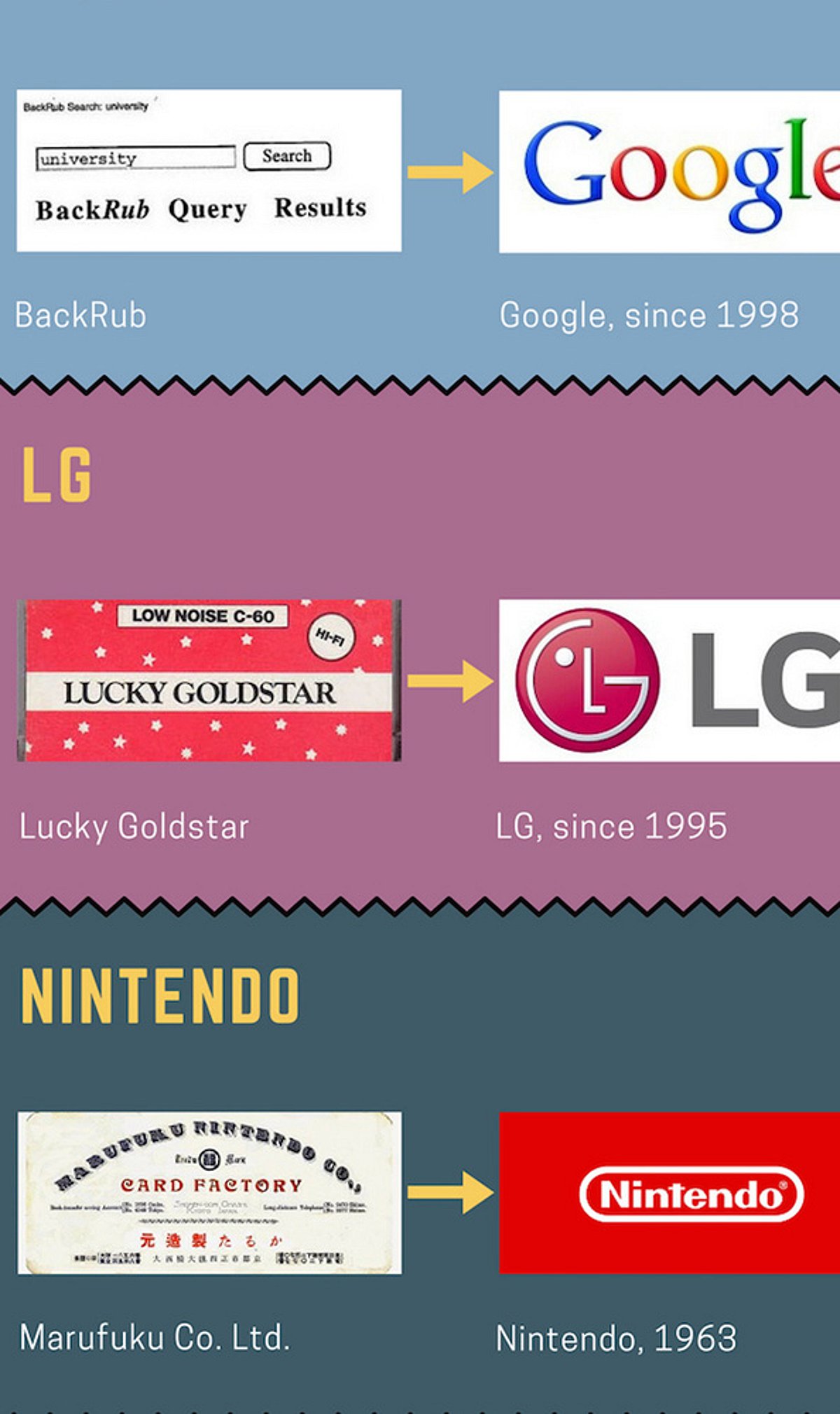
    • BackRub to Google: Before becoming a household name, Google started as BackRub. Founders Larry Page and Sergey Brin renamed it to represent the immense scale of information they aimed to organize.

    Each of these name changes was a carefully calculated decision, often accompanied by a shift in business strategy. Whether to pivot to new technologies, shed negative connotations, or simplify branding, these companies show that a name is more than just a label—it’s a statement of intent.

  • Top Advanced Humanoid Robots Shaping the Future of Automation and AI

    Top Advanced Humanoid Robots Shaping the Future of Automation and AI

    The field of humanoid robotics has seen remarkable advancements, with robots now capable of performing complex tasks in industrial, research, and commercial settings. Below is a look at the world’s most advanced humanoid robots and their unique capabilities.

    Tesla Optimus

    Designed to handle repetitive workplace tasks, Tesla Optimus leverages advanced artificial intelligence, autonomous movement, and human-like dexterity for industrial applications worldwide.

    Figure 02

    Built for manufacturing environments, Figure 02 combines AI reasoning, natural conversations, precise manipulation, and autonomous task execution inside modern industrial facilities.

    Boston Dynamics Atlas

    Boston Dynamics Atlas demonstrates remarkable agility through running, jumping, lifting, balancing, and performing complex physical tasks with advanced robotic intelligence and control.

    Unitree G1

    Unitree G1 offers affordable humanoid robotics featuring agile movement, AI-powered capabilities, and versatile applications across research, education, and commercial development environments.

    Agility Robotics Digit

    Engineered for warehouse logistics, Agility Robotics Digit can lift packages, navigate obstacles, and assist human workers with repetitive operational tasks efficiently.

    Sanctuary AI Phoenix

    Sanctuary AI Phoenix focuses on general-purpose intelligence, enabling robots to perform human-like tasks using advanced AI reasoning and adaptable physical capabilities daily.

    Engineered Arts Ameca

    Engineered Arts Ameca is famous for lifelike facial expressions, realistic interactions, advanced conversational abilities, and demonstrations that showcase human-robot communication and emotional engagement effectively.

    Xiaomi CyberOne

    Xiaomi CyberOne combines AI vision, speech recognition, human motion sensing, and balanced walking to demonstrate China’s progress in humanoid robotics innovation.

    UBTECH Walker S2

    Developed for smart factories, UBTECH Walker S2 integrates autonomous mobility, object handling, collaborative operations, and intelligent manufacturing support with advanced robotic capabilities.