Blog

  • Gaming’s Affordability Crisis: Why Playing Video Games Now Costs More Than Ever

    Gaming’s Affordability Crisis: Why Playing Video Games Now Costs More Than Ever

    Video games keep improving year after year, bringing better graphics, larger worlds, and deeper stories. Yet alongside these advances comes a stark reality: gaming is becoming significantly more expensive. From game prices and consoles to subscriptions and microtransactions, the hobby many once considered accessible is now testing the budgets of players worldwide.

    Rising Costs Across the Board

    Not long ago, buying a new game on release day didn’t feel like a major financial decision. Today, the standard price for a major title has jumped from $60 to $70, with special editions often exceeding $100. The conversation around GTA 6 has amplified concerns—reports suggest the game could launch at around $80 in some markets, a move that could set a new benchmark for the industry. While Rockstar has yet to confirm final pricing, the speculation alone has many players worried.

    Hardware costs are climbing too. PlayStation and Xbox consoles have become more expensive in many regions, and PC gamers face soaring prices for graphics cards and other components. Accessories such as extra controllers, storage upgrades, and headsets add further strain to a gamer’s wallet.

    Subscriptions and In-Game Spending

    Services like PlayStation Plus and Xbox Game Pass have also increased their subscription fees. While they still offer extensive libraries, the value proposition is no longer as straightforward as it once was. Meanwhile, battle passes, paid skins, expansion packs, and other add-ons keep players spending long after the base game is purchased.

    Are Players Pushing Back?

    Some blockbuster titles will always sell well—fans of GTA, FIFA, Call of Duty, or The Elder Scrolls are often willing to pay full price. But for many other games, players are becoming more cautious. More people now wait for sales, choose older titles, or stick with free-to-play games. If prices continue to rise, a broader shift toward second-hand markets or subscription services could hurt both studios and players.

    Gaming became a global phenomenon because it welcomed everyone—students, workers, families. If costs keep climbing, the hobby risks alienating those with limited budgets. The challenge for developers and publishers is to balance profitability with affordability.

    What the Future Holds

    Players won’t necessarily stop gaming, but they will become smarter spenders. Discounts, game libraries, and older titles with enduring value will likely see increased attention. For publishers, the priority should be delivering enough value that players feel their money is well spent. Trust is as important as profit.

    Gaming has always been for everyone. The companies that find the right balance between quality, price, and player value will build loyal communities for years to come.

    Frequently Asked Questions

    Why are games more expensive today?

    Modern games require larger teams, longer development times, and bigger budgets. These rising production costs have been passed on to consumers.

    Will GTA 6 cost more than other games?

    Reports suggest a potential launch price of around $80 in some markets, though Rockstar has not confirmed the final price for every region.

    Why have gaming subscriptions become more expensive?

    Companies have raised prices as they add more games and features while managing higher business costs.

    Will higher prices affect gaming?

    They already are. Many players now wait for sales, prefer older games, or choose free-to-play titles instead of buying every new release.

    How can gamers save money?

    Buying games during sales, using subscriptions strategically, and avoiding unnecessary in-game purchases can help reduce overall costs.

  • Bitcoin Tumbles Below $63K After Brief Surge Past $64,250 Amid US-Iran Tensions

    Bitcoin Tumbles Below $63K After Brief Surge Past $64,250 Amid US-Iran Tensions

    Bitcoin briefly surged above $64,250 on Sunday before retreating to $62,839, a 0.65% decline, as renewed US-Iran tensions triggered a broad risk-off shift across global markets. The cryptocurrency’s volatile session underscores how tightly digital assets are now tied to geopolitical headlines far beyond the crypto ecosystem.

    Bitcoin Price Today: A Quick Snapshot

    The session split into two distinct halves. Early buyers pushed Bitcoin to fresh multi-week highs, only to watch those gains evaporate once news of tanker attacks near the Strait of Hormuz hit the wires. Volume rose noticeably during the retreat, indicating real selling pressure rather than a quiet weekend market.

    • Current price: $62,839 (down 0.65% on the day)
    • Weekly change: -1.94%
    • Intraday high: $64,250+
    • 24-hour crypto liquidations: $254 million (mostly long positions)

    Key Bitcoin Price Levels to Watch

    Technically, Bitcoin remains below its 50-day, 100-day, and 200-day exponential moving averages — a bearish stacking that often caps rallies. Key levels are:

    • Resistance: $64,000–$64,072, with a stronger barrier at the 50-day EMA near $65,577
    • Support: $61,748–$62,360; a break below $61,700 could expose a move toward $58,000

    The Relative Strength Index (RSI) sits in neutral territory (47–52), suggesting the market is neither overbought nor oversold.

    Why US-Iran Tensions Matter to Crypto Markets

    Geopolitical conflicts rarely stay confined to energy markets. Despite Bitcoin’s reputation as “digital gold,” it still behaves like a risk asset during military escalation. Key ripple effects include:

    • Rising oil prices fuel inflation worries, pressuring risk assets broadly.
    • Investors rotate into gold or the dollar, pulling liquidity away from crypto.
    • Leveraged Bitcoin positions get wiped out quickly as volatility spikes.

    Broader Market Reaction

    Bitcoin was not alone in the sell-off. Ethereum slipped to $1,789, while Solana held up better near $76.80. The Altcoin Season Index sat near 59, indicating altcoins have not meaningfully outpaced Bitcoin. The Fear and Greed Index dropped to 28, reflecting heightened fear.

    Analyst Outlook on Bitcoin Price Prediction

    Technical readings are mixed but not outright bearish. The daily MACD histogram has started to stabilize, and institutional buying offers a floor. Strategy (formerly MicroStrategy) added to its Bitcoin reserves, and ETF flows are showing early signs of steadying after a rough June.

    A confirmed daily close above $64,000 could open the door toward $65,500 and $67,000. Conversely, a break below $61,700 would likely trigger selling pressure toward $58,000.

    Factors That Could Shape Bitcoin’s Next Move

    • Further escalation near the Strait of Hormuz could spark a sharper retreat from risk assets.
    • A credible ceasefire announcement could quickly restore risk appetite.
    • Federal Reserve commentary on interest rates will shape broader liquidity conditions.
    • Sustained institutional buying could cushion Bitcoin against deeper downside.

    Final Words

    Bitcoin’s brief run to $64,250 shows that demand for higher prices has not disappeared. The pullback says less about crypto fundamentals and more about how tightly digital assets are now tied to geopolitical events. Two storylines to watch: the technical tug-of-war around $64,000 resistance and the geopolitical standoff thousands of miles away. The resolution of either will likely decide Bitcoin’s next direction.

  • Future-Proof Leadership: Essential Strategies for Executives in 2026

    Future-Proof Leadership: Essential Strategies for Executives in 2026

    The leadership playbook that worked five years ago is being rewritten in real time. Economic volatility, AI-driven organizational change, and accelerating geopolitical shifts are forcing business executives to develop an entirely different set of capabilities. Gartner’s 2026 CIO and technology executive survey found that 94% of leaders expect major changes to their plans within 24 months, yet fewer than half of digital initiatives meet their stated targets. The gap between ambition and execution isn’t a resource problem; it’s a leadership one.

    Build Adaptive Decision-Making into Your Operating Model

    The concept of annual planning cycles is rapidly becoming outdated faster than most corporate leaders appreciate. According to Gartner studies, less than 18 percent of all leaders have adopted the approach of dynamic off-cycle decision-making today, but these few leaders are 24 percent more likely to be high-performers. Future-ready leaders will move away from using the calendar to drive decisions and adopt trigger-driven decision making, where they make decisions based on market triggers as opposed to the next quarterly meeting. It entails forming small cross-functional decision teams, escalation processes, and building a culture that encourages mid-course corrections.

    Lead AI Adoption as a People Challenge, Not a Technology One

    The executives gaining ground fastest on AI recognized early that adoption stalls because of leadership culture, not technology, a point Dataiku’s CEO has noted publicly. Two practical implications follow: AI upskilling needs its own budget line separate from developer training, and role redesign needs to happen proactively in collaboration with HR, mapping which responsibilities will shrink, which will expand, and which new decision-making accountabilities AI will create. Leaders who leave this to figure itself out tend to end up with expensive tools and resistant organizations.

    Prioritize Outcomes Over Initiatives

    One of the clearest traits separating strong leaders in 2026 is the ability to translate technology investment into financial language. Organizations where the CXO consistently connects digital initiatives to revenue, cost reduction, or customer outcomes are 25% more likely to outperform peers, yet fewer than a third do this consistently. This means moving internal reporting away from initiative milestones toward business metrics: not “we deployed the platform,” but “we reduced processing time by 40% and recovered $3M in annual overhead.” Boards and CFOs are demanding this level of accountability, and executives who can’t make the case in business terms risk losing credibility and budget.

    The Five Leadership Capabilities Worth Building Now

    Leaders of successful transformation efforts exhibit one commonality: they have established trust in their organization across all functions without using force. The finance, operations, IT, and HR functions do not wait for someone to give them guidance about how to interpret transformation efforts; rather, they are writing the transformation story. Tactics that can be employed by any organization include cross-functional rotation of future leaders before any big initiative, creating performance measures that go beyond departmental lines, and making sure the transformation steering committee is really steering and not just reporting.

    Develop Geopolitical and Regulatory Fluency

    Geopolitical volatility and data sovereignty regulations are altering how planning is done for executives who have not yet developed expertise in this arena. In an analysis conducted by Gartner, it was revealed that CIOs who effectively mitigate geopolitical sourcing risks were 51% more successful than others, but only 28% are doing so. From a more general perspective, what this implies is that executives must be clear about which markets, suppliers, and data streams pose regulatory risk in light of the European AI Act, Indian DPDP, and future US data sovereignty regulation.

    Why This Matters

    Technology alone no longer determines business success, leadership does. Organizations that cultivate adaptive leaders, align AI with business outcomes, and respond quickly to changing markets are significantly better positioned to outperform competitors, manage disruption, attract talent, and sustain growth in an increasingly uncertain global business environment.

  • DOGE Price Prediction: Will Dogecoin Defend the Critical $0.070 Support Level?

    DOGE Price Prediction: Will Dogecoin Defend the Critical $0.070 Support Level?

    Dogecoin is teetering near the critical $0.070 support level, currently trading around $0.072. This price zone has emerged as a decisive battleground for the meme coin’s near-term direction. A successful defense could trigger a recovery toward $0.075–$0.080, while a breakdown may expose lower supports at $0.064–$0.065 or even $0.058.

    Why the $0.070 Level Matters

    The $0.070 support has historically acted as a strong zone where buyers step in to halt declines. If buyers continue to defend this level, market confidence could return, potentially encouraging additional buying pressure and a move higher.

    Current Market Data

    Dogecoin is trading around $0.072 with a market capitalization of approximately $12.3 billion and daily trading volume near $450 million. Despite the recent 2% decline in the last 24 hours, trading activity remains healthy.

    What Happens If Support Holds?

    A successful defense of $0.070 could lift Dogecoin toward the $0.075–$0.080 range. A move above $0.080 would improve the short-term technical outlook and could open the path toward $0.085–$0.090, boosting overall market sentiment.

    What Happens If Support Breaks?

    If DOGE falls below $0.070, selling pressure could intensify. The next critical support lies between $0.064 and $0.065. Under severe conditions, a drop toward $0.058 is possible, though this remains the less likely scenario at this time.

    Recent Developments

    Dogecoin’s open interest has declined as retail participation slows, reflecting cautious market sentiment. Meanwhile, the House of Doge initiative continues to build payment partnerships aimed at boosting real-world usage, but these have yet to impact the price significantly.

    Outlook for the Coming Days

    The coming trading sessions will be pivotal. Maintaining the $0.070 level could ignite a rally toward $0.075–$0.080, while a clear break below shifts focus to $0.064–$0.065 and potentially $0.058. Traders are closely watching this zone for the next major move.

    FAQs

    1. Why is the $0.070 level important for Dogecoin?

    It represents a major historical support zone where buyers have previously stepped in, stopping downward price trends and acting as a foundation for potential market recovery.

    2. What is Dogecoin’s current price?

    Dogecoin is currently trading around $0.072, slightly above its multi-month support level after a period of short-term selling pressure.

    3. What happens if DOGE stays above $0.070?

    Sustaining this level builds strong immediate demand, giving bulls momentum to target resistance between $0.075 and $0.080.

    4. What happens if DOGE falls below $0.070?

    Breaking below this level increases seller dominance, likely triggering a drop to initial support at $0.064, and potentially $0.058 under heavy panic.

    5. Why has Dogecoin weakened recently?

    The recent decline stems from lower retail demand, declining open interest in futures markets, and a broader cautious shift in crypto market sentiment.

  • Altcoin Season Index Breaks Above 50: Growing Momentum Beyond Bitcoin

    Altcoin Season Index Breaks Above 50: Growing Momentum Beyond Bitcoin

    Key Takeaways

    • The CoinGlass Altcoin Season Index currently stands at 58, while BlockchainCenter reports 59.
    • Bitcoin dominance has eased from around 58% to between 54% and 57%, showing broader market participation.
    • A reading above 75 is still required before the market officially enters altcoin season.

    The cryptocurrency market has entered a new phase where attention has started to move beyond Bitcoin. For many months, Bitcoin remained the strongest force in the market and attracted most of the investment. Now, fresh data shows that more investors have started to explore other digital coins, often called altcoins.

    This change does not mean Bitcoin has lost its position. Instead, it shows that interest has started to spread across a wider range of cryptocurrencies. Market experts believe this shift could become more important if the current trend continues.

    Altcoin Season Index Moves Higher

    One of the most watched tools in the crypto market is the Altcoin Season Index. This index helps measure whether altcoins perform better than Bitcoin over a certain period. A higher score usually means that more altcoins have started to beat Bitcoin in price performance.

    The latest numbers show steady progress. The CoinGlass Altcoin Season Index currently stands at 58. Earlier, it reached 64 on June 4, which marked one of its strongest readings in recent months. Even after a small decline from that level, the current score still shows healthy momentum across the altcoin market.

    Another popular measure comes from CoinMarketCap. Its Altcoin Season Index now stands at 53. Although this reading is lower than the CoinGlass figure, it also points to the same trend. More altcoins have started to perform better than before, even if the market has not reached a full altcoin season.

    BlockchainCenter offers another version of the same indicator. Its latest reading stands at 59. Despite this positive number, the platform still classifies the market as not yet in Altcoin Season since the score has not crossed the important level of 75.

    Bitcoin Still Holds the Top Position

    Bitcoin continues to lead the cryptocurrency market. It remains the largest digital asset by market value and still attracts major investment from institutions and retail buyers. However, fresh market data shows that some money has started to move toward other cryptocurrencies.

    This shift has become visible through Bitcoin dominance, a metric that shows Bitcoin’s share of the total cryptocurrency market. Recent figures show Bitcoin dominance has fallen from around 58% to between 54% and 57%. A lower dominance level often means that investors have started to place more money into altcoins instead of keeping most funds in Bitcoin.

    More Capital Reaches Altcoins

    Another important sign is the growing market value of cryptocurrencies outside Bitcoin, Ethereum, and stablecoins. This section of the market has grown in recent weeks, which suggests that investors have started to explore a wider range of projects.

    Large-cap altcoins have attracted a major share of this fresh interest. Ethereum has remained one of the strongest performers supported by continued confidence in its network. Solana has also received strong support, while XRP has returned to the spotlight after renewed investor interest.

    Many analysts believe exchange-traded fund (ETF) activity has also helped improve confidence in these major altcoins. Better investment access has encouraged more market participation and supported stronger price action across selected digital assets.

    The Market Has Not Reached Full Altcoin Season

    Although several indicators have improved, experts believe it is still too early to declare the arrival of a full altcoin season. The widely accepted rule states that the Altcoin Season Index must rise above 75 before the market officially enters that phase.

    Current readings between 53 and 59 show progress but remain below this important level. This means only part of the market has shown stronger performance while many smaller cryptocurrencies have yet to join the rally.

    Analysts also point out that most gains remain concentrated in well-known projects with strong market positions. A true altcoin season usually includes broad gains across a much larger number of cryptocurrencies.

    Market Conditions Still Matter

    The direction of the crypto market still depends heavily on Bitcoin and broader economic conditions. Inflation reports, central bank decisions, and global liquidity continue to influence investor confidence. Any major change in these factors could either support further growth in altcoins or slow the current trend.

    Bitcoin also remains an important guide for the rest of the market. A strong move in Bitcoin often affects price action across almost every major cryptocurrency. Given this close relationship, market participants continue to watch Bitcoin even as interest in altcoins grows.

    Several Altcoins Draw Fresh Attention

    Recent market reports highlight a few altcoins that have attracted strong interest. DeXe (DEXE) has gained attention after reaching new price highs. Zcash (ZEC) has approached an important resistance level that traders continue to watch closely. Uniswap (UNI) has also shown early signs of recovery, which has increased optimism around its future performance.

    These projects represent only part of the broader movement across the altcoin market. Many investors continue to search for coins with strong technology, active development, and long-term growth potential instead of chasing short-term price spikes.

    Why This Matters

    This shift signals a maturing crypto market where investors are moving beyond Bitcoin to seek diverse opportunities. As capital flows into major altcoins, it diversifies systemic risk and lays the foundation for broader, utility-driven digital asset adoption.

    Outlook Remains Positive but Cautious

    The latest market data points to growing momentum beyond Bitcoin. Altcoin Season Index readings from CoinGlass, CoinMarketCap, and BlockchainCenter all show that more cryptocurrencies have started to perform well. At the same time, Bitcoin dominance has eased, while fresh capital has entered several leading altcoins.

    Despite these positive developments, the market has not yet reached the official definition of a full altcoin season. The key threshold of 75 on the Altcoin Season Index remains out of reach. Until that level appears, the current phase represents a period of steady expansion rather than a broad market-wide rally. Even so, the latest data suggests that altcoins have started to build stronger momentum, which could create more opportunities if the trend continues in the months ahead.

    FAQs

    1. What is the Altcoin Season Index? The Altcoin Season Index is a financial metric that measures whether altcoins are outperforming Bitcoin in price growth over a specified period.
    2. Is the crypto market currently in altcoin season? No, the market is not there yet. Current index readings hover under 60, remaining well below the required 75-point threshold.
    3. Why has Bitcoin dominance declined? Bitcoin’s market share is dropping because investors are shifting fresh capital into altcoins, diversifying their holdings beyond the dominant digital asset.
    4. Which altcoins have attracted recent attention? Major assets like Ethereum, Solana, and XRP, alongside specific tokens like DeXe, Zcash, and Uniswap, have drawn strong investor interest.
    5. What could confirm a full altcoin season? A true altcoin season is confirmed when the index crosses 75, accompanied by widespread price rallies across a broad range of smaller cryptocurrencies.

  • Top Endpoint Protection Platforms: A Comprehensive Comparison for 2025

    Top Endpoint Protection Platforms: A Comprehensive Comparison for 2025

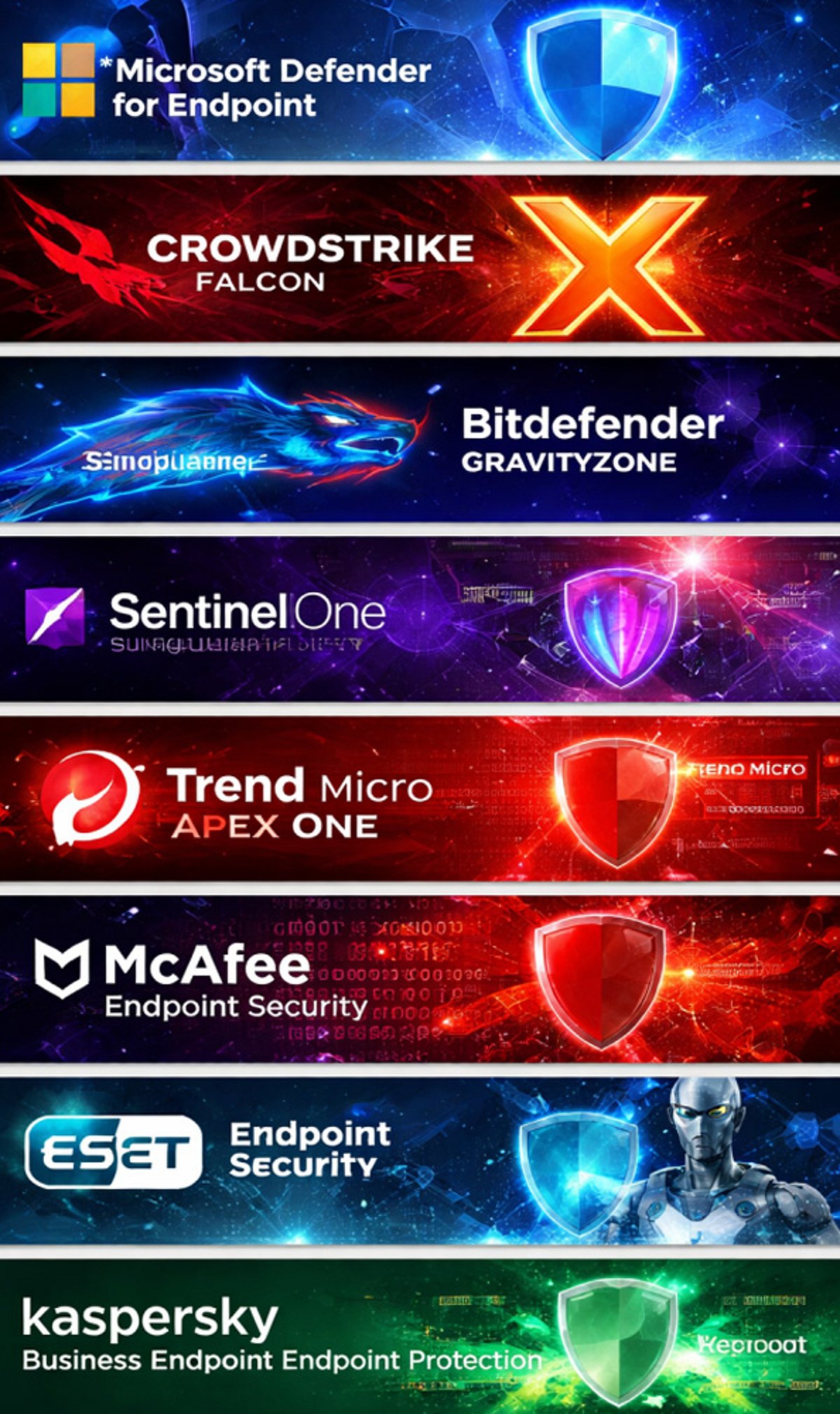
    Endpoint protection platforms (EPP) have become essential for organizations defending against sophisticated cyber threats. Modern solutions combine advanced detection, automated response, and seamless integration to safeguard endpoints across distributed environments. Below is a comparison of leading platforms that offer robust protection, visibility, and operational efficiency.

    Microsoft Defender for Endpoint

    Delivers AI-powered threat detection, endpoint visibility, automated investigation, ransomware protection, and seamless integration across Microsoft enterprise environments worldwide.

    CrowdStrike Falcon

    Uses cloud-native architecture, behavioral analytics, real-time threat intelligence, and lightweight agents to stop sophisticated cyberattacks across distributed enterprise endpoints.

    SentinelOne Singularity

    Combines autonomous AI detection, endpoint protection, threat hunting, rollback capabilities, and automated remediation to minimize cybersecurity incidents and operational workload.

    Sophos Intercept X

    Protects endpoints using deep learning, anti-ransomware technology, exploit prevention, synchronized security, and centralized management for organizations of every size.

    Trend Micro Apex One

    Provides advanced malware defense, vulnerability protection, behavioral monitoring, application control, and comprehensive endpoint visibility to reduce evolving cyber risks effectively.

    Bitdefender GravityZone

    Delivers machine learning-powered prevention, endpoint detection, risk analytics, patch management, and centralized administration for strong enterprise cybersecurity protection globally.

    VMware Carbon Black

    Offers continuous endpoint monitoring, threat hunting, incident response, behavioral analytics, and cloud-based security to defend against advanced persistent threats effectively.

    ESET PROTECT Enterprise

    Combines multilayered malware defense, endpoint detection, encryption, cloud management, and proactive threat intelligence for reliable enterprise endpoint security operations.

    Palo Alto Networks Cortex XDR

    Extends endpoint protection with AI-driven detection, cross-domain analytics, automated response, and unified security operations for complex enterprise infrastructures efficiently.

    Choosing the right endpoint protection platform depends on your organization’s specific needs, existing infrastructure, and threat landscape. Evaluate these solutions based on detection capabilities, ease of management, and integration requirements to strengthen your security posture.

  • Why Passwordless Authentication is a Game-Changer for Security

    Why Passwordless Authentication is a Game-Changer for Security

    Passwordless authentication is rapidly transforming how organizations protect digital identities. By eliminating traditional passwords, this approach addresses a wide range of security vulnerabilities while improving user experience. Below are the key benefits of adopting passwordless authentication.

    Eliminates Password Theft

    Traditional passwords are a prime target for cybercriminals. Passwordless authentication removes the risk of credential theft through phishing, brute-force attacks, password reuse, and database breaches. Without a password to steal, attackers lose a major entry point.

    Strengthens User Authentication

    Instead of relying on easily guessed or stolen passwords, passwordless methods use biometrics (fingerprint, facial recognition), security keys, or trusted devices. These factors provide a much higher level of assurance than conventional password-based systems.

    Reduces Phishing Attacks

    Phishing attacks often trick users into entering their passwords on fake websites. With passwordless authentication, users never enter a password, so attackers cannot steal credentials through deceptive login pages. This dramatically reduces the effectiveness of phishing campaigns.

    Improves User Experience

    Passwordless login simplifies access through fingerprint scans, facial recognition, passkeys, or device-based authentication. Users enjoy faster, frictionless logins without sacrificing security, leading to higher satisfaction and productivity.

    Minimizes Credential Reuse

    Many users reuse passwords across multiple accounts, increasing the risk of credential stuffing attacks. Passwordless authentication eliminates the practice of password reuse, reducing exposure when one service is compromised.

    Supports Multi-Factor Security

    Passwordless solutions can be combined with device verification, biometrics, or hardware tokens to create robust multi-factor authentication. This layered approach provides stronger protection against unauthorized access, even if one factor is compromised.

    Lowers IT Support Costs

    Organizations spend significant time and resources on password resets and account recovery. Passwordless authentication reduces help desk tickets related to forgotten passwords, freeing IT teams to focus on higher-value security initiatives.

    Enhances Regulatory Compliance

    Many regulations require strong authentication controls. Passwordless authentication helps organizations meet compliance standards for data protection and privacy, safeguarding sensitive business and customer information.

    Secures Remote Workforces

    As remote work becomes permanent, secure access to business applications is critical. Passwordless authentication allows employees to use trusted devices to log in from any location, maintaining security without compromising convenience.

    By adopting passwordless authentication, organizations can significantly improve their security posture while delivering a better user experience. The trend is clear: passwords are becoming obsolete, and passwordless authentication is the future of secure access.

  • Top 8 Fastest-Growing AI Careers to Watch in 2025

    Top 8 Fastest-Growing AI Careers to Watch in 2025

    The artificial intelligence industry is evolving at an unprecedented pace, creating a wave of new, high-demand job roles. Professionals looking to future-proof their careers should consider specializing in one of these rapidly growing AI positions. Below, we break down the key roles that are shaping the future of technology.

    AI Engineer

    AI Engineers design, develop, and deploy intelligent applications that leverage machine learning, cloud platforms, and automation. They solve complex business challenges by building scalable AI systems that drive efficiency and innovation.

    Machine Learning Engineer

    Machine Learning Engineers create predictive models and self-learning algorithms that power recommendation engines, fraud detection, automated decision-making, and operational optimization across industries.

    Generative AI Engineer

    Generative AI Engineers build chatbots, virtual assistants, content generators, and enterprise solutions using large language models, prompt engineering, and retrieval-augmented generation techniques.

    Data Scientist

    Data Scientists extract actionable insights from massive datasets using statistics, machine learning, and visualization. Their work supports strategic business decisions and drives innovation.

    AI Research Scientist

    AI Research Scientists conduct advanced research in deep learning, natural language processing, and reinforcement learning to develop next-generation AI models and technologies.

    AI Product Manager

    AI Product Managers bridge business objectives and technical development. They define product strategies, coordinate teams, prioritize features, and ensure successful AI product delivery.

    Prompt Engineer

    Prompt Engineers craft optimized prompts that improve AI-generated responses, increase model accuracy, and streamline enterprise workflows across diverse applications.

    AI Ethics Specialist

    AI Ethics Specialists ensure AI systems remain fair, transparent, secure, and compliant by implementing responsible AI practices, governance frameworks, and regulatory standards.

    Computer Vision Engineer

    Computer Vision Engineers develop AI systems that analyze images and videos, enabling breakthroughs in autonomous vehicles, healthcare diagnostics, robotics, surveillance, and industrial automation.

    As AI continues to reshape industries, these roles offer exciting opportunities for growth and innovation. Staying current with emerging skills and technologies is essential for success in this dynamic field.

  • Top Affordable Smartwatches Under ₹10,000: Expert Picks for 2025

    Top Affordable Smartwatches Under ₹10,000: Expert Picks for 2025

    Finding a feature-packed smartwatch on a budget is easier than ever. Here are the best options under ₹10,000 that offer AMOLED displays, GPS, health tracking, and long battery life without breaking the bank.

    1. Amazfit Bip 6

    Offers an AMOLED display, built-in GPS, accurate health tracking, and up to 14 days of battery life — making it one of the best value-for-money smartwatches available.

    2. NoiseFit Endeavour Pro

    Combines an AMOLED display, GPS, Bluetooth calling, a premium design, and comprehensive fitness tracking for users seeking advanced features on a budget.

    3. CMF Watch 3 Pro

    Delivers reliable health monitoring, a stylish metal design, long battery life, and accurate activity tracking for everyday use.

    4. Titan Celestor

    Features a premium aluminum build, vibrant AMOLED display, comfortable straps, and dependable battery performance backed by Titan’s trusted quality.

    5. Lava Prowatch X

    Includes an AMOLED display, advanced fitness tracking, Bluetooth connectivity, and impressive battery life, making it a strong budget-friendly option.

    6. boAt Valour Watch 1 GPS

    Offers built-in GPS, multiple sports modes, Bluetooth calling, and essential health monitoring features at an affordable price.

    7. Noise ColorFit Pro 6 Max

    Provides an AMOLED display, Bluetooth calling, health monitoring, customizable watch faces, and smooth everyday performance.

    8. Realme Watch S5

    Combines a sleek design, AMOLED screen, smart notifications, comprehensive fitness tracking, and dependable battery backup for daily use.

    9. Xiaomi Mi Watch Revolve Active

    Delivers an AMOLED display, built-in GPS, multiple workout modes, comprehensive health tracking, and excellent battery life within the ₹10,000 budget.

    Whether you prioritize fitness tracking, display quality, or battery life, these smartwatches prove that you don’t need to spend a fortune to get premium features.

  • How AI Is Revolutionizing Lifelong Learning Across Industries in 2026

    How AI Is Revolutionizing Lifelong Learning Across Industries in 2026

    Artificial intelligence is reshaping lifelong learning by making education more personalized, accessible, and skill-focused in 2026. AI-powered learning platforms now adapt lessons based on individual progress, enabling learners to master concepts at their own pace.

    Professionals are leveraging AI assistants to acquire coding, business, marketing, design, and communication skills faster than ever before. Companies are adopting AI-driven training programs to help employees reskill for emerging technologies and evolving job roles. Universities and online education providers are integrating AI tutors that deliver instant feedback and personalized study support.

    Industries such as healthcare, finance, manufacturing, and retail are utilizing AI learning tools to boost workforce productivity and ensure compliance. Generative AI helps learners create summaries, practice interviews, solve problems, and prepare for professional certifications. Experts recommend balancing AI assistance with critical thinking, fact-checking, and practical experience to build lasting skills.

    As AI continues to evolve, lifelong learning is becoming an essential strategy for career growth and staying competitive across every industry.