Blog

  • China Trade Data Shows 27% Export Surge and 36% Import Spike Fueled by AI Infrastructure Boom

    China Trade Data Shows 27% Export Surge and 36% Import Spike Fueled by AI Infrastructure Boom

    China’s Trade Performance Exceeds Expectations

    China’s exports and imports in June significantly surpassed market forecasts, driven by robust global demand for artificial intelligence (AI) hardware and strategic tariff front-loading by exporters. According to data released by the General Administration of Customs, exports rose 27% year-on-year—the strongest pace since October 2021 and well above the consensus forecast of 18.2%. Imports surged 36%, marking the largest single-month jump since 2021 and beating the 24% economists had anticipated.

    AI Hardware and Tariff Front-Loading as Key Drivers

    Two primary forces combined to produce the outsized June numbers. The first, more structural driver, is booming global demand for semiconductors, electronic components, and AI-related technology products, which are heavily concentrated in China’s manufacturing base. Wang Jun, China’s vice minister of customs, stated at a press briefing that imports and exports in the AI field are “robust,” directly linking the trade acceleration to the global buildout of data center infrastructure.

    The second driver was tactical: Chinese exporters front-loaded shipments to the United States ahead of anticipated new tariffs, compressing several months of expected shipping activity into a narrower window. Aggressive pricing by manufacturers helped sustain order volumes even as factory-gate prices continued to fall.

    “Rising global demand for AI infrastructure, advanced electronics, and capital equipment remains a key support for Chinese manufacturing exports,” said Hao Zhou, chief economist at Guotai Junan International Holdings. “With external demand holding up better than expected, policymakers face less urgency to launch aggressive stimulus,” he added.

    Import Growth Hits a Five-Year High

    The 36% import surge in June built on May’s already-strong 27.4% gain. Analysts attributed part of the acceleration to higher energy costs tied to the ongoing Middle East conflict, which pushed up commodity prices. However, high-tech product categories remained the core engine of volume growth.

    China’s trade surplus widened to $125.6 billion in June, up from $105.4 billion the previous month—a record figure that is drawing scrutiny from trading partners. For the first half of 2026, exports climbed 17.6% year-on-year while imports rose 26.6%.

    Diverging Trade Routes and Growing Scrutiny

    The export gains are spreading unevenly across regions. Shipments to Southeast Asia jumped nearly 35% in June, while exports to the European Union and Latin America grew more than 18% and 28% respectively. China has been actively diversifying its export routes partly in response to rising tariff barriers, with businesses moving factories into Europe and ramping up shipments through Southeast Asian intermediaries.

    “The global AI supercycle will continue to support the overall regional and Chinese trade performance,” said Samuel Tse, senior economist at DBS Bank Hong Kong Ltd. “Easing trade tension with the US also helps with the export momentum,” he added.

    Outlook for China’s Export-Driven Economy

    The widening surpluses are prompting pushback from US and European policymakers alarmed by growing trade deficits. A proposed US Senate bill threatening secondary tariffs of up to 500% on countries buying Russian oil—a category that includes China—could become a significant headwind. BNP Paribas analyst Wei Li cautioned that while robust shipments in autos and AI-related items should persist, export growth is becoming increasingly fragile and dependent on regulatory conditions that can shift quickly.

    China’s stronger-than-expected trade figures highlight the resilience of its export sector despite global uncertainty. As AI infrastructure, advanced manufacturing, and technology demand continue to expand, the country’s trade momentum could remain a key driver of global supply chains and broader economic growth in the coming months.

  • BGMI 4.5 Update Unleashes Naruto Crossover: New Map Areas, Ninja Abilities, and Exclusive Rewards

    BGMI 4.5 Update Unleashes Naruto Crossover: New Map Areas, Ninja Abilities, and Exclusive Rewards

    BGMI is about to get a major update. Krafton has confirmed that the game’s 4.5 update will include a special crossover with Naruto. The event will add new places to visit, special ninja powers, themed rewards, and many other surprises.

    Crossovers are nothing new in battle royale games. Still, this one has caught the attention of many players. Naruto has a huge fan base, and many gamers have wanted to see this partnership for a long time. With the update now official, players have a lot to look forward to.

    BGMI x Naruto Event Brings New Locations, Powers, and Rewards

    Anime crossovers in live-service games aren’t something new. Since Fortnite has introduced seasonal crossovers with anime, movies, games, and other entertainment pieces, players now consider them a part of the game. Still, a few crossovers generate excitement, and the Naruto crossover with BGMI is among them. According to reports, the event will run from July 16, 2026, to September 14, 2026. During this time, players will be able to enjoy several features based on the popular anime. The update will add famous places like Hokage Rock and Ichiraku Ramen Shop. Players will also come across other areas inspired by the Hidden Leaf Village as they explore the map.

    Additionally, the event will bring special ninja powers. These new skills help players move around the map much faster than before. Krafton is also adding themed outfits, weapon skins, emotes, missions, and other rewards that players can unlock by taking part in the event. The company has said more details will be shared after the update goes live.

    The New Ninja Powers Could Change Every Match

    This update is not only about a new look, but it’s more about the added ninja powers. These power additions can change the way players handle BGMI battlefields. Moving faster means players can reach safe zones earlier or leave dangerous fights more easily. Some teams may use these skills to surprise enemies from a different side. Others may save them for the final circles, where every move matters. The new Naruto locations are also likely to become busy landing spots. Many players will want to visit them first, which could lead to more early fights than usual. If the new powers are balanced well, they could make matches feel fresh without changing the core game too much.

    Why Anime Events Keep Coming to Battle Royale Games

    Anime and gaming have many fans in common. This is one reason so many game makers now work with popular anime series instead of movie studios or sports brands. Anime characters already have well-known powers, outfits, and stories. These fit naturally into action games. Players enjoy using something that feels different while still playing the same game they already love. The Naruto event shows that this trend is only getting bigger. If players respond well, BGMI could bring more anime crossovers in future updates.

  • Nothing Phone (4b) Goes on Sale in India: Price, Launch Discounts, and Key Specs

    Nothing Phone (4b) Goes on Sale in India: Price, Launch Discounts, and Key Specs

    Nothing’s newest and most affordable smartphone of 2026, the Phone 4b, officially went on sale in India on July 14, marking the debut of the company’s new B series. Available on Flipkart and across retail partners including Croma, Reliance Digital, and Vijay Sales, the Phone 4b is positioned as Nothing’s most accessible entry into its ecosystem yet, starting at Rs. 34,999 for the 8GB/128GB base variant and Rs. 38,999 for the 8GB/256GB model.

    Launch Offers That Bring the Price Down Further

    With an instant bank discount of 7.5%, the base variant gets reduced to Rs. 29,999, while the 256GB model reduces to Rs. 33,699. In addition, Nothing offers extra money through an exchange offer to customers who have an old phone to trade, which means even more discounts on top of the bank discount.

    Key Specifications at a Glance

    Qualcomm’s Snapdragon 6 Gen 4 chipset powers this phone alongside the 4,400mm² vapour chamber cooler, which deals with heat generation when in use. It comes with a 6.77-inch Super AMOLED screen from Samsung with a 120Hz refresh rate, as well as an optical fingerprint reader on the screen.

    At the rear end, there is a 50MP main camera with both dual-axis Optical Image Stabilization (OIS) and Electronic Image Stabilization (EIS), an 8MP ultrawide camera with 119.5° field of view, and it can record 4K videos at 30fps using Nothing’s TrueLens Engine 4. On the front end is a 16MP selfie camera.

    One of the most impressive features of this phone is its 6,000mAh battery, which is also the biggest that any Nothing phone has had so far and can be charged to 50% in only 27 minutes using a 33W fast charging capability.

    Software, Glyph Bar, and What’s New

    The smartphone ships with Nothing OS 4.1 based on Android 16, bringing AI-powered tools including Essential Voice, Essential Space, and Essential Search, alongside native ChatGPT integration across the UI and widgets, and Circle to Search with Google Gemini. Nothing has committed to three Android OS upgrades and six years of security patches.

    The redesigned Glyph Bar, replacing the earlier Glyph Interface with a compact grid of 45 mini-LEDs claimed to be 40% brighter, sits at the back, letting users set custom light patterns for calls, track delivery status, and visualise volume and timers. Dual stereo speakers with what Nothing describes as a 20% better stereo effect compared to the Phone 4a round out the audio package, making the Phone 4b a more complete mid-range option in a segment that’s becoming increasingly competitive.

  • US Government Transfers $250M in Seized Bitcoin to Coinbase Prime, Sparking Sale Concerns

    US Government Transfers $250M in Seized Bitcoin to Coinbase Prime, Sparking Sale Concerns

    The United States government has moved approximately 3,941 Bitcoin—valued at roughly $250 million—to Coinbase Prime, according to blockchain data tracked by Arkham Intelligence. The transfer, which occurred on July 13, involved assets seized from major federal cases and has reignited speculation about potential government sales of digital assets.

    Bitcoin was trading below $64,000 at the time of the move, and the transaction immediately drew market attention because government-controlled wallets can influence liquidity. While the transfer followed an established custody process, it raised a key question: Is this routine asset management or a precursor to future Bitcoin sales?

    Seized Bitcoin Moves into Coinbase Prime Custody

    Arkham Intelligence recorded three separate Bitcoin transfers totaling 3,941 BTC. The largest movement involved roughly 2,875 BTC linked to wallets labeled “Ryan Farace Seized Funds.” Federal authorities originally seized those assets during a 2021 investigation into money laundering, for which Ryan Farace was convicted. The transferred amount closely matched the original confiscated balance, along with an additional 58.742155166 BTC connected to the same case.

    Another transfer moved 926 BTC from wallets labeled “BTC-e Seized Funds.” These assets were confiscated after the shutdown of the BTC-e exchange in 2017, which prosecutors linked to more than $9 billion in illicit transactions involving ransomware, hacking, and other criminal activity. Alexander Vinnik later pleaded guilty to conspiracy to commit money laundering in 2024.

    A separate transfer of about 140 BTC completed the day’s movements. Collectively, the transactions reflected the continued management of judicially seized digital assets by the U.S. Department of Justice rather than a new seizure operation.

    Existing Government Process Guided the Transfer

    The Bitcoin transfers followed an existing custody arrangement between federal agencies and Coinbase Prime. In July 2024, the U.S. Marshals Service selected Coinbase Prime to provide custody and trading services for major cryptocurrencies under government control. As a result, transferring Bitcoin into Coinbase Prime represented a standard operational step within that agreement. The movement itself did not confirm that authorities had already sold any of the transferred assets.

    Earlier administrative actions also supported that timeline. In January 2024, the U.S. government published a formal notice announcing its intention to dispose of 2,933.64 BTC from the Farace case after completing the required legal procedures, including a period for third-party ownership claims.

    Government Expands Centralized Crypto Asset Management

    Besides the Bitcoin transfers, authorities also moved other seized digital assets into Coinbase Prime, including 30,007 Ether associated with wallets labeled “Brian Krewson Confiscated Funds.” Court documents stated that Brian Krewson did not face direct criminal prosecution. Instead, the Department of Justice pursued a civil forfeiture case involving the Ether, which investigators said Christopher Castelluzzo and Luke Atwell purchased with proceeds from illicit activities for about $9,000. According to the filings, Krewson managed the wallets while his associates remained incarcerated.

    The broader consolidation places multiple government-held digital assets under a single institutional platform. Federal agencies now manage a portfolio estimated at more than 328,225 BTC, valued at over $20 billion. The transfer gives authorities the flexibility to conduct over-the-counter sales through Coinbase Prime instead of relying on public auctions, which could reduce direct pressure on public exchange order books while allowing the government to manage future disposals under its existing administrative framework.

    What’s Next?

    The United States transferred 3,941 Bitcoin worth about $250 million to Coinbase Prime through an established judicial asset management process. The funds originated from major seizure cases, while the move expanded centralized custody and gave authorities greater flexibility for any future over-the-counter asset disposals.

  • Trump Shifts $1.4 Billion in Crypto Profits to Stocks and Bonds, Filings Reveal

    Trump Shifts $1.4 Billion in Crypto Profits to Stocks and Bonds, Filings Reveal

    Donald Trump’s latest financial filings with the US Office of Government Ethics reveal that he earned more than $1.4 billion from his family’s crypto businesses in 2025. Instead of keeping those profits entirely in digital assets, he invested a large portion into traditional stocks and bonds, according to a review by Reuters.

    The filings show that Trump’s traditional investment portfolio grew at least four times over the past two years. By the end of 2025, his stock and bond holdings were estimated to be worth between $703 million and $2.6 billion, up from $225 million to $608 million a year earlier. While exact figures are not provided, financial experts say the documents clearly indicate a preference for moving crypto earnings into more stable, conventional investments.

    Most of the crypto income came from World Liberty Financial and the Trump meme coin, which became major revenue sources during the year. Despite the shift, Trump continues to hold significant crypto assets: the filings show he owns 15.75 billion World Liberty Financial governance tokens valued at over $50 million, and companies linked to him hold at least $160 million in Bitcoin and Ether, along with up to $6 million in other digital tokens.

    Timothy Massad, director of Harvard University’s Digital Assets Policy Project and former chairman of the Commodity Futures Trading Commission, commented: “The filings show an interesting investment strategy.” He believes Trump earned large profits from crypto projects and then placed much of that money into stocks and bonds for greater financial stability.

    The White House stated that Trump’s assets remain in accounts managed by independent financial institutions. The Trump Organization said the filings reflect a strong financial position with valuable assets and healthy liquidity, but did not explain why much of the crypto income later appeared in traditional investments. World Liberty Financial emphasized its commitment to digital assets, saying the company “continues building for the future and believes digital assets will play a major role in financial services over the coming years.”

    The disclosures come amid reports that retail investors in four Trump-backed crypto projects had lost about $2.3 billion by April, increasing criticism from some lawmakers who question the ethics of public officials profiting from crypto while supporting friendly policies for the industry. Eric Trump continued promoting Bitcoin throughout the year, calling it one of the world’s strongest financial assets, even as his father’s filings showed growing investments in stocks and bonds.

    Overall, the filings paint a clear picture: crypto earnings generated billions in 2025, but stocks and bonds remain the preferred destination for protecting and growing wealth over the long term.

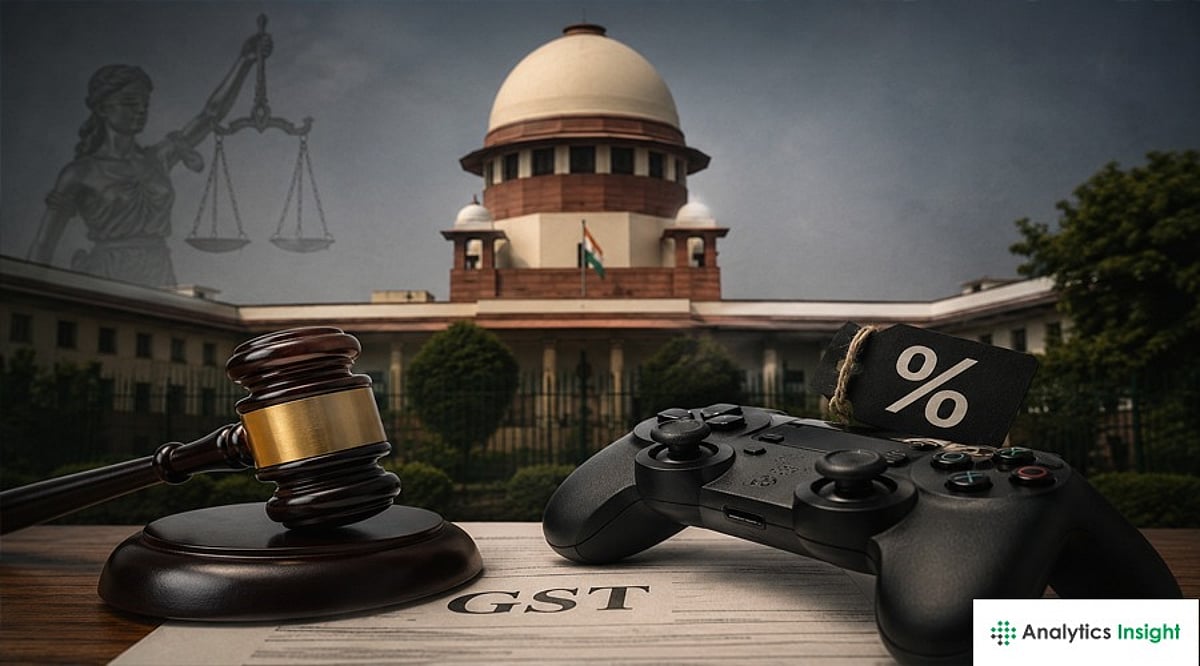
  • India’s Online Gaming Firms Make Last-Ditch Supreme Court Challenge Against 28% GST on Player Entry Fees

    India’s Online Gaming Firms Make Last-Ditch Supreme Court Challenge Against 28% GST on Player Entry Fees

    India’s online real-money gaming industry is back in the Supreme Court, with major companies filing review petitions to challenge the government’s decision to levy a 28% Goods and Services Tax (GST) on the full entry fee paid by players. This legal battle could determine the future of the country’s gaming sector.

    According to reports, Play Games24x7 and Junglee Games have already filed review petitions, and several other online gaming companies are expected to follow suit. The tax demands in question exceed Rs. 1.5 lakh crore, making this one of the most significant tax disputes in the industry’s history.

    Why Gaming Companies Are Fighting the Tax

    Gaming companies argue that the GST rules were not clear when the tax was initially applied, making it unfair to impose retrospective tax demands. They contend that GST should be charged only on the platform fee they earn from each contest, not on the total amount players pay to join games. The government, however, maintains that the full entry fee constitutes a taxable supply.

    Potential Impact on the Industry

    The Supreme Court’s decision will have far-reaching consequences. If the companies win, they could avoid paying massive tax dues, preserving the current business model. If the government prevails, many gaming platforms may have to restructure their operations or face financial strain.

    How India Compares to Other Countries

    India’s tax regime for online gaming is considered one of the harshest globally. In the UK, gaming companies pay tax only on the money they retain after payouts, not on total player deposits. Singapore takes a similar approach for licensed operators. In the US, taxation varies by state but is generally based on gaming income rather than entry fees. The Philippines taxes licensed operators on profits, while Brazil is building its online betting market with a comparable framework. India’s 28% GST on the entire contest entry amount stands out as particularly stringent.

    The outcome of this case is being closely watched by investors, operators, and policymakers alike, as it will set a precedent for how online real-money gaming is taxed in one of the world’s largest markets.

  • PS5 Slim Price Hike in India: Both Digital and Disc Editions Could Cost Rs. 5,000 More

    PS5 Slim Price Hike in India: Both Digital and Disc Editions Could Cost Rs. 5,000 More

    If you are planning to buy a PS5 Slim in India, you may want to act quickly. According to a recent report, Sony is expected to increase the price of both the Digital and Disc editions of the PS5 Slim in the country. While Sony has not officially confirmed the change, retailers have reportedly been informed about the revised pricing.

    The rumored hike would see the PS5 Slim Digital Edition jump from Rs. 44,990 to Rs. 49,990, and the Disc Edition rise from Rs. 54,990 to Rs. 59,990. That means buyers would need to spend an extra Rs. 5,000 regardless of which version they choose.

    Sony has raised PlayStation prices in several other markets before, so this move would not come as a complete surprise. The company has not disclosed the reason for the potential increase in India, but several factors could be at play.

    One likely cause is currency exchange rate fluctuations, which can make imported consoles more expensive. Import duties and rising shipping costs also add to the overall expense. Inflation is another factor—manufacturing and logistics costs for electronics have climbed steadily in recent years, often prompting companies to adjust prices.

    Additionally, Sony’s broader business strategy may be influencing the decision. The PS5 continues to sell well even years after its launch, and strong demand gives the company room to raise prices without significantly hurting sales. With no new PlayStation model expected in the near future, Sony may be aiming to maintain steady profits while demand remains robust.

    For Indian gamers, this rumored price increase could make an already costly console even more expensive. Stay tuned for official confirmation from Sony.

  • CLARITY Act Faces Critical Senate Vote as August Recess Deadline Approaches

    CLARITY Act Faces Critical Senate Vote as August Recess Deadline Approaches

    The CLARITY Act is racing against a tight Senate calendar as lawmakers resume session on July 13 with only 25 days before the August 7 summer recess. The bill requires 60 votes to overcome procedural hurdles and a potential filibuster, but securing that support remains daunting. Currently, only Democratic Senators Ruben Gallego and Angela Alsobrooks have publicly committed to the legislation.

    Ethics concerns tied to President Donald Trump’s reported $1.4 billion in crypto-related income during 2025 have further complicated negotiations. Galaxy Digital, a leading crypto investment firm, has lowered its estimate of the bill’s passage odds from 75% in May to 50-50 as of late June.

    The Digital Asset Market Clarity Act (H.R. 3633) already missed an earlier target for presidential signing on July 4. With about 20 Senate working days remaining, leaders must act swiftly to bring it to the floor. The timeline also coincides with the July 18, 2026 rulemaking deadline for the GENIUS Act, which became law in July 2025.

    Bipartisan support remains the primary obstacle. Republicans control 53 seats but need roughly seven Democratic votes to reach the 60-vote cloture threshold. So far, only Gallego and Alsobrooks have emerged as reliable Democratic supporters, leaving leadership seeking at least five additional Democrats. The bill did pass the Senate Banking Committee on May 14 with a 15-9 vote, signaling some bipartisan backing at the committee level.

    Ethics debates have intensified as Democrats raise concerns about public officials owning crypto. Former White House ethics lawyer Richard Painter argued that Trump “stands alone” compared to other executive branch officials, adding another layer to ongoing negotiations.

    Market observers have adjusted expectations. Alex Thorn, Galaxy Digital’s Head of Firmwide Research, noted the firm reduced its odds from 75% in May to 60% on June 9, then to 50% on June 26. Thorn wrote, “The absence of news is itself the news,” while adding that “50-50 is pretty good odds” for legislation of this scale. A revised version of the bill could be introduced as early as next week, just before the August recess.

    What’s Next?

    Supporters are racing to pass the CLARITY Act before the Senate breaks on August 7. They need 60 votes to beat a filibuster, but progress is stalled on disagreements over ethics rules for public officials owning crypto. With time running out, analysts now give the bill only a 40% to 50% chance of passing.

  • Oil Hits One-Month High as US-Iran Conflict Disrupts Strait of Hormuz Shipping

    Oil Hits One-Month High as US-Iran Conflict Disrupts Strait of Hormuz Shipping

    Oil prices surged to their highest level in four weeks on Tuesday as renewed hostilities between the United States and Iran disrupted tanker traffic through the strategic Strait of Hormuz, raising fresh concerns over global energy supplies.

    Brent crude futures climbed 3.29% to $86.04 a barrel, while U.S. West Texas Intermediate crude gained 2.83% to $80.35, both reaching levels not seen since mid-June. The move extended a sharp rebound that began after hopes for a lasting peace agreement faded over the weekend.

    The latest rise followed a 9.6% jump in Brent during the previous session, its largest one-day gain since May 2020. Traders reacted after Washington restored its naval blockade of Iranian shipping and proposed a 20% fee for vessels using the waterway. The U.S. also carried out a third consecutive night of strikes against Iran, which responded with attacks on military sites and commercial vessels. Two United Arab Emirates tankers were hit in Omani waters, according to the UAE Ministry of Defence, resulting in the death of one Indian sailor and injuries to eight crew members.

    Shipping activity through the Strait of Hormuz dropped to a two-month low as vessel operators assessed the growing security risk. The route carries about one-fifth of global oil and liquefied natural gas supplies. MarineTraffic recorded 57 transits from Friday through Sunday, down more than 50% from the previous week, compared to roughly 130 vessels per day before the conflict escalated in late February. Iran declared the strait closed “until further notice,” while Washington said military escorts kept oil moving.

    Market analysts said the next price move would hinge on whether tanker traffic and export volumes fall further. Priyanka Sachdeva of Phillip Nova noted that a prolonged drop in vessel movement could push oil prices higher, but prices could ease if crude shipments continue through the strait. ANZ analyst Soni Kumari placed oil in an $85-to-$90 range if disruptions persist, while TD Securities strategist Bart Melek warned that Brent could approach $100 if signs of a physical shortage emerge.

    Meanwhile, Iran’s oil minister said the country’s crude exports were operating normally despite the end of a U.S. sanctions waiver. Yemen’s Houthi movement also fired missiles at Saudi Arabia after accusing the kingdom of bombing an airport under its control. In a separate development, China’s June crude imports fell 41.3% to their lowest level in almost a decade, and refinery activity reached a 10-year low amid weak domestic demand and export limits.

  • Titan Q1 FY27 Results Preview: Why the August 7 Earnings Call Matters for Investors

    Titan Q1 FY27 Results Preview: Why the August 7 Earnings Call Matters for Investors

    Titan Company is gearing up to announce its first-quarter results for FY2026-27, and investors are closely watching for the board meeting date and earnings call schedule. The company has closed its trading window for designated persons and their close relatives, effective from June 23, 2026, until 48 hours after the board approves the Q1 results, in compliance with SEBI insider trading norms.

    While Titan has not yet fixed the exact board meeting date, it is expected to follow a similar timeline to last year, when Q1 FY26 results were released on August 7, 2025, after a business update in early July. Investors are particularly focused on management’s outlook on jewelry demand, margins, and overall business growth amid rising gold prices.

    Titan performed strongly in the fourth quarter of FY26. Consolidated total income reached Rs. 20,300 crore, a 46% year-over-year increase, while profit after tax rose 35% to Rs. 1,179 crore. For the full fiscal year, revenue grew 33% to Rs. 76,078 crore, and annual profit after tax hit Rs. 5,073 crore. The board has also recommended a final dividend of Rs. 15 per equity share for FY26, with a record date of July 9, 2026, and payment expected on or after July 28, 2026, subject to approval at the 42nd Annual General Meeting on July 27, 2026.

    There have been leadership changes as well. Three non-executive directors nominated by co-promoter TIDCO stepped down in June 2026, and a new chairman has since taken over. Market watchers are keeping an eye on jewelry demand trends, especially with gold prices remaining high. Once Titan confirms the board meeting date, more details on the earnings call timing and management commentary on demand, margins, and the outlook for the rest of FY27 will follow.