Blog

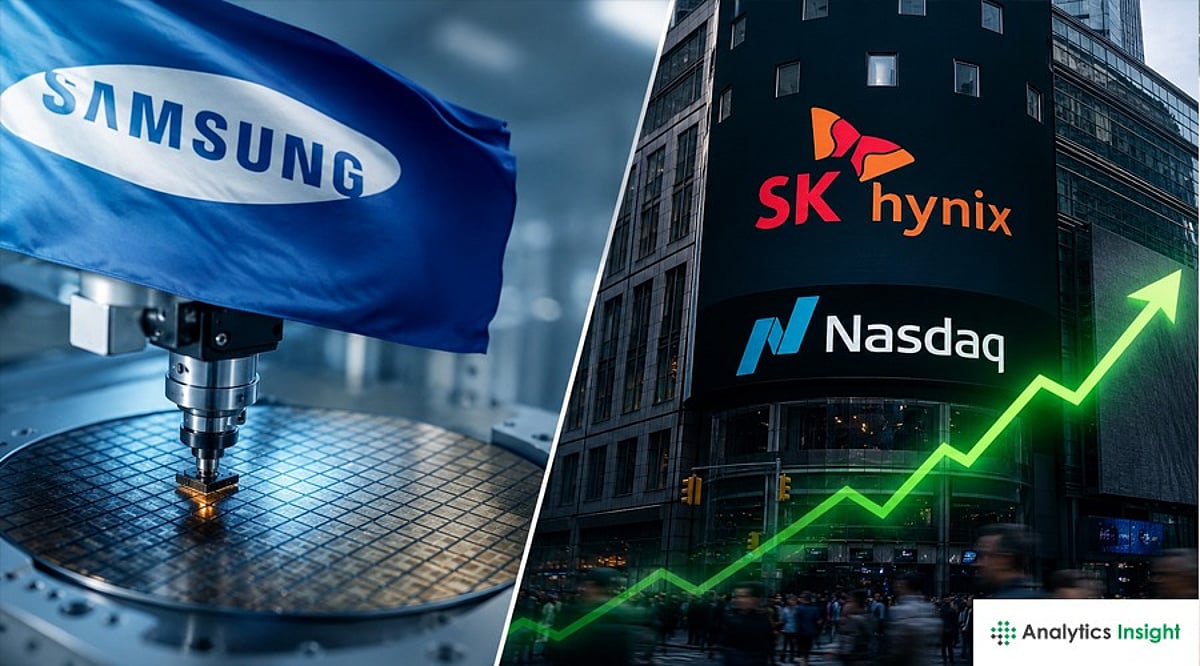
  • Samsung Accelerates Yongin AI Chip Fab Opening to 2029 as SK Hynix Shares Drop After NASDAQ Debut

    Samsung Accelerates Yongin AI Chip Fab Opening to 2029 as SK Hynix Shares Drop After NASDAQ Debut

    Samsung Electronics has announced plans to begin operations at its first Yongin semiconductor factory in 2029, advancing the original target by one to two years. The accelerated timeline reflects surging demand for memory chips used in artificial intelligence data centers and aligns with South Korea’s broader strategy to expand domestic chip production.

    Samsung’s Revised Timeline for Yongin Fab

    Previously, Samsung expected the first fabrication plant at the Yongin cluster to start operations in 2030 or 2031. A company spokesperson confirmed that the facility is now scheduled to open by 2029, placing the project on a tighter schedule. The Yongin site is part of a larger semiconductor cluster south of Seoul, where Samsung plans to build six chip factories. The first plant will serve as the foundation for subsequent construction phases.

    To meet the revised date, Samsung must prepare the land and begin major construction work early. The company aims to add production capacity as technology companies increase spending on AI infrastructure and advanced memory products.

    South Korea’s Push for Chip Production Expansion

    South Korean authorities are supporting faster construction by shortening approval periods and providing earlier access to essential infrastructure like electricity and water. The national strategy targets doubling the country’s memory-chip production capacity within five years, including expedited development of Samsung and SK Hynix factories in Yongin and a new semiconductor cluster in Gwangju.

    Samsung has also outlined plans to invest 400 trillion won in semiconductor factories in Gwangju and 56 trillion won in high-bandwidth memory facilities in Cheonan and Onyang. Its domestic semiconductor program covers existing operations in Pyeongtaek and the new Yongin cluster.

    SK Hynix is similarly expanding its production network. The company plans to complete the fourth factory at its Yongin cluster by 2033, moving the target forward from 2045.

    SK Hynix Shares Retreat After NASDAQ Debut

    SK Hynix’s American depositary receipts (ADRs) debuted on NASDAQ on July 10, opening 14% above the $149 offering price at $170 and closing the session 12.8% higher. The company raised $26.5 billion from the US offering, with demand exceeding available shares by more than seven times. SK Hynix plans to use the funds for factories and equipment related to rising AI chip demand.

    However, on Monday, SK Hynix shares dropped more than 15% in Seoul as investors took profits after the NASDAQ surge. The decline marked the stock’s largest single-day drop in nearly two decades and weighed on the broader Kospi index. CEO Kwak Noh-jung noted that memory demand could outpace production capacity beyond 2030 and warned that 2027 might become the industry’s worst year for memory supply as AI customers require more advanced chips.

  • Bitcoin Slides Below $63,000 as US-Iran Tensions Spark Crypto Sell-Off

    Bitcoin Slides Below $63,000 as US-Iran Tensions Spark Crypto Sell-Off

    Bitcoin tumbled 2.42% over 24 hours to $62,461.35 as renewed US-Iran military strikes prompted a broad risk-off move across financial markets. The decline was accompanied by a drop in stablecoin supply, which has fallen by about $10 billion since May, signaling weaker crypto liquidity.

    The broader crypto market lost 1.12%, trimming total capitalization to roughly $2.15 trillion. The Fear and Greed Index plunged to 28, while Bitcoin dominance held near 60%. Traders now face heightened geopolitical risk, lower liquidity, and the upcoming US Consumer Price Index (CPI) report due July 14.

    Geopolitical Tensions Pressure Bitcoin Price

    Renewed US airstrikes on Iran intensified fears over Middle East supply routes, particularly the Strait of Hormuz. Brent crude surged more than 3%, adding fresh inflation concerns. Bitcoin moved lower alongside other risk assets as traders reduced exposure before the CPI data.

    The drop pushed Bitcoin below the key support level of $62,565, raising the risk of a move toward $60,000 — a major psychological price zone. A recovery above $64,300 would ease short-term pressure, but geopolitical developments may keep price swings elevated.

    Liquidations Accelerate the Crypto Sell-Off

    Leveraged positions amplified the decline. Bitcoin liquidations reached $70.23 million over 24 hours, up 248% from the previous period. Long positions accounted for 85% of forced selling, indicating that traders bet on higher prices.

    Across the crypto market, total liquidations hit $254.4 million, affecting 68,505 traders. Long liquidations totaled $194.9 million, while short liquidations reached $59.5 million. Ethereum traded near $1,789, while BNB and XRP also posted losses. Solana held near $76.80, bucking the broader trend. The Altcoin Season indicator stood at 59 out of 100, suggesting altcoins have not yet overtaken Bitcoin.

    The average crypto RSI hovered near 45, pointing to weak momentum without an oversold reading. These figures indicate a cautious market rather than a full capitulation event.

    Stablecoin Outflows Raise Liquidity Concerns

    Stablecoin market value has dropped by roughly $10 billion from its May peak despite high transaction volume. June alone recorded a $7.7 billion decline — the largest monthly contraction since the Terra-Luna collapse in May 2022. USDT lost about $6 billion, while USDC declined by approximately $7 billion over the period.

    Stablecoins provide trading liquidity and often indicate whether capital remains in crypto. The latest decline suggests a portion of the market moved back into fiat rather than waiting in digital dollars. Analysts have called the move a ‘temporary correction,’ but two consecutive months of falling supply point to weaker available capital.

    Bitcoin fell 3.6% in May and 20.45% in June as stablecoin liquidity contracted. Stablecoin dominance now sits near 6.5%, while Bitcoin dominance holds close to 60%. A further drop in stablecoin use could delay any ‘market bottom’ and keep pressure on higher-risk tokens.

    What Traders Are Watching Next

    The July 14 CPI report now stands as the next major trigger. Softer inflation could support rate-cut expectations and improve risk appetite. A stronger reading may lift yields and add pressure on Bitcoin. Traders will also watch whether Bitcoin can regain $63,000 or drop toward $60,000.

    Also Read: DeFi Outperforms Bitcoin: DeFi Tokens Drop Just 4% as BTC Plummets 22%

  • New Witcher Tabletop Game The Witcher: Legacy Arrives Summer 2027

    New Witcher Tabletop Game The Witcher: Legacy Arrives Summer 2027

    Fans of The Witcher franchise have a new adventure to look forward to. CD Projekt Red and board game developer Go On Board have officially announced The Witcher: Legacy, a tabletop game set to launch in summer 2027. This original story-based game offers a fresh narrative experience while fans await the next major video game installment, The Witcher 4.

    The Witcher: Legacy takes place before the era of Geralt of Rivia and explores the downfall of the School of the Wolf at Kaer Morhen. Players will embark on a campaign where their choices shape the story, hunt down monsters that destroyed the school, and encounter new characters and dangers. Unlike previous Witcher board games, this title emphasizes a connected, narrative-driven campaign rather than standalone sessions, with decisions that carry weight across multiple playthroughs.

    First announced in 2025, the game is currently in development and represents the next official Witcher story outside the video game series. CD Projekt Red has confirmed that The Witcher 4, featuring Ciri as the protagonist, is also in development and is expected to release in or after 2027. Until then, The Witcher: Legacy will be one of the biggest new releases for the franchise, providing fans with a rich, interactive way to explore the world of monster hunters.

    The announcement highlights a growing trend of video game franchises expanding into tabletop gaming with deep storytelling, offering fans new ways to engage with beloved universes.

  • Indian Rupee Weakens Past 96 Against US Dollar for First Time Since May Amid Rising Oil Prices and Dollar Strength

    Indian Rupee Weakens Past 96 Against US Dollar for First Time Since May Amid Rising Oil Prices and Dollar Strength

    The Indian rupee slipped below the 96-mark against the US dollar on Monday, reaching its weakest level since May, as a sharp rally in global crude oil prices and rising US bond yields reignited pressure on the domestic currency. The latest decline comes after the rupee had briefly recovered in recent weeks, supported by Reserve Bank of India (RBI) measures aimed at attracting dollar inflows.

    The renewed weakness follows escalating geopolitical tensions in the Middle East, which have pushed Brent crude prices to their highest level in over a month. As India imports nearly 85% of its crude oil requirements, higher energy prices typically widen the country’s import bill, increase demand for dollars, and weigh on the rupee.

    Oil Prices and US Yields Drive Currency Weakness

    Currency dealers mentioned that the rupee came under pressure from a mix of rising oil prices and a firmer US dollar. Brent crude has climbed by more than 20% compared with its recent lows. At the same time, US Treasury yields have moved higher after hawkish signals from Federal Reserve officials, making dollar-denominated assets more attractive to investors.

    The stronger greenback has also helped push down several currencies across Asia, including the rupee. As India is heavily reliant on crude oil imports, the ripple effect is felt throughout the exchange market.

    RBI Intervention Expected to Curb Volatility

    It is expected that the RBI will monitor rupee movements and, if it sees the situation becoming volatile, intervene to stabilize the currency. Earlier, it had sold dollars in the forex market to avoid a sharp devaluation. Analysts feel that intervention might curtail losses, but it will not change the trend if oil prices remain high.

    What Does This Mean for Consumers?

    As the rupee falls, its impact will be felt in the prices of imports such as crude oil and electronics. Over time, this will result in higher fuel prices and transport expenses.

    For now, traders will closely watch developments in the Middle East, movements in global crude prices, and the Federal Reserve’s policy outlook, all of which are expected to determine the rupee’s near-term direction. Unless oil prices ease or foreign capital inflows improve, the Indian currency is likely to remain under pressure in the coming sessions.

  • 10 Leading Camera Brands Driving Sustainability in 2026

    10 Leading Camera Brands Driving Sustainability in 2026

    The camera industry has evolved significantly over the past few years. While exceptional image quality remains a priority, environmental responsibility now plays a crucial role in how leading brands operate. Companies are actively reducing carbon emissions, conserving energy, using recycled materials, and minimizing waste during production. Many also design durable products that last for years, helping to cut down on electronic waste.

    Several camera manufacturers stand out for their robust environmental commitments. These brands invest in cleaner factories, responsible supply chains, and effective recycling programs. Their efforts demonstrate that cutting-edge technology and environmental stewardship can advance together.

    Canon Takes the Top Position

    Canon ranks as the most sustainable camera brand, thanks to its comprehensive environmental strategy. The company evaluates every stage of a product’s life cycle—from raw materials and manufacturing to customer use and end-of-life recycling. This holistic approach minimizes overall environmental impact.

    Canon also focuses on reducing Scope 3 emissions, which encompass suppliers, transportation, product use, and disposal. Simultaneously, the company is increasing its use of renewable electricity across manufacturing facilities. These long-term initiatives position Canon at the forefront of sustainability in the camera industry.

    Nikon Shows Strong Environmental Leadership

    Nikon holds the second position due to its consistent achievements in environmental management and responsible business practices. The company is expanding its use of renewable electricity and enhancing production efficiency across all facilities. It also supports recycling processes that reduce waste generation.

    Nikon achieved a significant milestone by being included in the S&P Global Sustainability Yearbook, recognized for its effective performance in sustainability, social responsibility, and governance compared to other electronics manufacturers worldwide.

    Fujifilm Builds a Cleaner Future

    Fujifilm continues to strengthen its environmental commitments with ambitious climate goals. The company plans to achieve net-zero greenhouse gas emissions across its operations and value chain by 2040. This target places Fujifilm among leaders in climate action.

    The company also uses biomass plastics, improves energy efficiency, and reduces water usage during production. These efforts support cleaner manufacturing while helping to protect natural resources for the future.

    Sony Expands the Use of Recycled Materials

    Sony remains a strong name in sustainable electronics. The company uses its proprietary SORPLAS recycled plastic in many products. This material reduces the need for virgin plastic without compromising product quality.

    Sony follows its “Road to Zero” environmental strategy, aiming for a net-zero environmental footprint by 2050. The company continues to increase renewable electricity use and reduce unnecessary packaging across its product lines.

    Panasonic Lumix Focuses on Carbon Reduction

    Panasonic Lumix ranks high among eco-friendly camera manufacturers due to its ongoing sustainability advancements. The company is increasing its use of recycled resin and investing in cleaner production technologies. Panasonic aims to achieve net-zero carbon emissions from its operations by 2030.

    Ricoh Receives Global Recognition

    Ricoh stands out for its strong circular economy strategy. The company focuses on responsible manufacturing, resource conservation, and product recycling. These efforts reduce waste and extend the value of materials.

    TIME and Statista named Ricoh among the World’s Most Sustainable Companies, reflecting years of environmental leadership and responsible corporate management.

    Leica Proves That Long Product Life Matters

    Leica follows a different but highly effective sustainability strategy. Rather than frequent product replacement, the company builds cameras that remain reliable for many years. High-quality construction and excellent repair services allow customers to use the same equipment for decades.

    This philosophy helps reduce electronic waste, as fewer products end up in landfills. A longer product life also lowers demand for new raw materials and manufacturing resources.

    OM System Continues Responsible Manufacturing

    OM System, formerly known as Olympus Imaging, keeps environmental responsibility at the center of its manufacturing process. The company designs compact cameras that require fewer raw materials than larger products.

    Its production facilities operate under ISO 14001 environmental management standards, supporting responsible manufacturing practices and better resource management throughout production.

    DJI Improves Sustainable Production

    DJI continues to strengthen its environmental programs across manufacturing and packaging. The company expands battery recycling efforts and reduces plastic use in product packaging. DJI also improves energy efficiency inside its production facilities. These actions help reduce waste while supporting more responsible manufacturing across its global operations.

    GoPro Reduces Plastic Waste

    GoPro completes the top ten list with steady environmental improvements. The company reduces single-use plastics and increases the use of recycled fiber in product packaging. The brand also designs durable action cameras that support long-term use. Products that remain reliable for many years help reduce electronic waste and limit the need for frequent replacement.

    Sustainability Shapes the Future of Cameras

    Camera companies are keeping pace with growing environmental trends. Today, brands focus on renewable energy, recycled materials, responsible production, and long-lasting designs. Recycling and emission policies have become primary issues for corporate responsibility.

    Canon leads the industry with its comprehensive life-cycle measures and effective emissions reduction program. Other brands—Nikon, Fujifilm, Sony, Panasonic Lumix, Ricoh, Leica, OM System, DJI, and GoPro—are also making meaningful contributions to climate action. In the long term, these companies prove that innovation and environmental responsibility can work together to create a sustainable global market for camera products.

    Frequently Asked Questions

    1. Which camera brand is the most sustainable in 2026?

    Canon ranks first for its strong focus on emissions reduction, renewable energy, recycling, and sustainable product lifecycle management.

    2. Why is sustainability important in the camera industry?

    Sustainability helps reduce carbon emissions, electronic waste, energy use, and the overall environmental impact of camera production.

    3. Which camera brand has a net-zero goal by 2040?

    Fujifilm aims to achieve net-zero greenhouse gas emissions across its operations and value chain by 2040.

    4. Which camera brand is known for long-lasting products?

    Leica stands out for durable cameras and excellent repair support, which helps extend product life for many years.

    5. What makes a camera brand sustainable?

    Key factors include renewable energy use, recycled materials, responsible manufacturing, lower carbon emissions, repair services, and product recycling programs.

  • Top Stock and Crypto Portfolio Tracker Apps for 2026: Expert Picks and Trends

    Top Stock and Crypto Portfolio Tracker Apps for 2026: Expert Picks and Trends

    Managing a diverse investment portfolio that includes stocks, ETFs, mutual funds, and cryptocurrencies can be a challenge. Portfolio tracker apps have evolved far beyond simple price updates, now offering detailed reports, market news, performance charts, dividend records, tax information, and even AI-powered insights. Here are the best options for 2026.

    Delta Investment Tracker: Best Overall Choice

    Delta remains a top-tier portfolio tracker, supporting stocks, ETFs, cryptocurrencies, and more. It integrates seamlessly with hundreds of brokers and crypto exchanges, simplifying portfolio management. Features include detailed performance reports, dividend tracking, price alerts, and multi-currency support. While some advanced features require the Pro version, the free version offers substantial utility. Delta is ideal for investors holding both stocks and crypto.

    Kubera: Complete Wealth Tracking

    Kubera is popular among high-net-worth individuals for its comprehensive tracking across stocks, crypto, real estate, private investments, bank accounts, and NFTs. It provides a single-dashboard view of net worth and supports estate planning and family wealth management. Its premium subscription is best suited for serious investors rather than beginners.

    Yahoo Finance: Strong Free Option

    Yahoo Finance remains a reliable free choice for stock-focused investors. It combines portfolio tracking with market news, earnings calendars, analyst ratings, and watchlists. Crypto features are more limited but adequate for general market awareness.

    CoinStats: Leading Crypto Tracker

    CoinStats excels in cryptocurrency tracking, supporting over 300 exchanges and wallets. It includes features for DeFi and NFT monitoring, price alerts, detailed portfolio reports, tax management, and wallet linking. Its expanding blockchain compatibility makes it a top pick for crypto investors.

    Sharesight and Stock Events: Specialized Tools

    Sharesight focuses on long-term stock investors, tracking total returns, dividends, capital gains, tax reports, and benchmark comparisons. Stock Events is tailored for dividend investors, providing clear calendars, income forecasts, and payment schedules.

    Empower and Morningstar: Additional Value

    Empower (formerly Personal Capital) is ideal for retirement planning with strong stock tracking and financial planning tools, though crypto support is limited. Morningstar Portfolio Manager offers detailed company analysis and research for traditional stock investors.

    Key Trends in 2026

    AI is transforming portfolio analysis, with platforms using machine learning to study asset allocation, measure risk, and offer personalized insights. Unified asset tracking allows investors to see stocks, crypto, cash, and alternative assets on a single dashboard. Tax automation has become common, with apps generating capital gains reports and tax-loss harvesting summaries. Crypto trackers continue to expand support for new wallets, blockchain networks, and DeFi platforms.

    Choosing the Right Tracker

    The best app depends on your goals: Delta for balanced stock/crypto tracking, Kubera for comprehensive wealth management, CoinStats for crypto, Sharesight for detailed stock performance, Yahoo Finance for a free solution, and Stock Events for dividend focus. As portfolios become more diverse, a good tracker saves time, enhances financial organization, and provides a clearer view of investment performance.

    FAQs

    Which app is best for both stocks and crypto?

    Delta is widely regarded as the best all-round portfolio tracker for its strong support of both asset classes.

    Which app is best for crypto investors?

    CoinStats is a top choice for its extensive exchange and wallet support, including DeFi and NFTs.

    Is there a good free portfolio tracker?

    Yahoo Finance offers a reliable free option with portfolio tracking, market news, and watchlists.

    Which app is best for dividend investors?

    Stock Events is popular for its dividend calendars and income forecasts.

    What is the biggest trend in portfolio trackers in 2026?

    AI-driven analysis, unified asset tracking, and automated tax reporting are the major developments.

  • GIFT Nifty Signals Weak Start as Middle East Tensions Push Crude Higher: Sensex, Nifty Outlook

    GIFT Nifty Signals Weak Start as Middle East Tensions Push Crude Higher: Sensex, Nifty Outlook

    The Indian stock market is expected to open lower on Monday as escalating US-Iran tensions and uncertainty over the Strait of Hormuz drive crude oil prices higher, renewing inflation concerns. GIFT Nifty is trading at 24,025, a discount of 198 points from its previous Nifty futures close, indicating a gap-down start.

    Market Recap: Friday’s Gains

    On Friday, the Sensex gained 827.57 points (1.08%) to close at 77,569.39, while the Nifty 50 advanced 244.10 points (1.02%) to finish at 24,206.90. Broader markets outperformed, with the Nifty Midcap 100 rising 1.4% and the Nifty Smallcap 100 advancing 1.5%. Foreign institutional investors (FIIs) bought shares worth Rs 2,603.72 crore, and domestic institutional investors (DIIs) added Rs 2,019.68 crore.

    Sensex Outlook

    Technically, the Sensex closed above 77,500, extending its recovery and maintaining a constructive structure. The market found support near 76,100 and bounced sharply. Short-term texture remains volatile and non-directional.

    Amol Athawale, VP of Technical Research at Kotak Securities, said: “An uptrend may continue. On the higher side, the market could move up to 78,000–78,300. Upside may continue, potentially lifting the market to 78,700. On the flip side, if the market falls below 77,000, it could retest 76,100. Below 76,100, the chances of hitting 75,600–75,500 would increase.”

    Nifty 50 Outlook

    Nifty 50 remains in a broader consolidation phase while maintaining an upward bias. The index formed a high-wave candle on the weekly chart, reflecting volatility but indicating buyers defend lower levels.

    Bajaj Broking Research noted: “Broader market to extend outperformance with Nifty midcap 100 already at an all-time high. We expect Nifty small cap index also to rally to a fresh all-time high. The Index has immediate support at 23,800 levels, being almost identical lows of the last 4 weeks.”

    Near-term range is 23,800–24,350. A sustained move above 24,350 could push the index toward 24,600 and then 24,800. If geopolitical tensions intensify and the index falls below 23,800, selling pressure could drag it to 23,600–23,400.

    Bank Nifty Outlook

    Bank Nifty rose 793.45 points (1.39%) to close at 58,045.90 on Friday. It formed a Dragonfly Doji on the weekly chart, indicating strong buying interest at lower levels. The index is expected to consolidate in the 56,500–58,700 range near term.

    Bajaj Broking added: “A weakness below Wednesday’s low of 56,550 will open downside toward 55,500–55,000. On the higher side, only a move above 58,700 will signal resumption of the up-move toward 59,200 and 60,000 in the coming weeks.”

    Disclaimer: Analytics Insight does not provide financial advice or guidance. This article is for informational purposes only. Readers should conduct their own research before investing.

  • MCX Gold Drops 1% to Rs 1,42,050 as Middle East Tensions Boost Brent Crude 4%

    MCX Gold Drops 1% to Rs 1,42,050 as Middle East Tensions Boost Brent Crude 4%

    Gold prices on the Multi Commodity Exchange (MCX) fell 1% on July 13, with August futures settling at Rs 1,42,050 per 10 grams. The decline came as escalating tensions between the US and Iran drove crude oil prices higher and strengthened the US dollar, creating headwinds for the precious metal.

    September silver futures also declined, dropping 1.9% to Rs 2,18,439. Meanwhile, Brent crude futures surged 4.05% to $79.09 per barrel, and US West Texas Intermediate (WTI) advanced 4.13% to $74.36 per barrel.

    According to the CME FedWatch Tool, traders now price in a 72% chance of a Federal Reserve rate hike in September, up from 63% last week.

    Domestic Gold Prices

    In the Indian bullion market, 24K gold fell by Rs 142 to Rs 1,42,910 per 10 grams, while 22K gold declined by Rs 130 to Rs 1,31,000. City-wise, Mumbai and Kolkata quoted gold at Rs 1,42,910, Delhi at Rs 1,43,050, and Chennai at Rs 1,44,000.

    US Gold Prices

    US gold prices also declined over 1% on Monday amid concerns over the potential closure of the Strait of Hormuz, which pushed oil prices higher and revived expectations of elevated interest rates. Spot gold dropped 1.5% to $4,059.11 per ounce, and US gold futures for August delivery were down 1.1% at $4,067.10.

    Spot silver declined 2.9% to $58.14 per ounce, platinum shed 1.8% to $1,598.48, and palladium fell 2.3% to $1,247.27.

    Key Levels to Watch

    “Any breakout of violence in the Gulf is accompanied by pressure on gold,” said Nicholas Frappell, global head of institutional markets at ABC Refinery. “The question is, if the Strait of Hormuz remains effectively or partially closed, does that lead to a deflationary effect, further down the road, that might actually be supportive for gold if you have demand destruction leading to lower economic activity,” Frappell added.

    Internationally, gold has support at $4,074 and $4,040, while resistance is at $4,144 and $4,180 per troy ounce. Silver has support at $59.10 and $57.70, with resistance at $61.20 and $62.40 per troy ounce.

    On MCX, gold has support at Rs 1,42,400 and Rs 1,41,100, and resistance at Rs 1,44,400 and Rs 1,45,550. Silver has support at Rs 2,20,000 and Rs 2,16,600, and resistance at Rs 2,26,000 and Rs 2,28,800.

  • 7 Best AI Browser Extensions to Reclaim Hours Every Week

    7 Best AI Browser Extensions to Reclaim Hours Every Week

    AI browser extensions are transforming how people work online. From drafting emails to summarizing articles and automating research, these tools eliminate repetitive tasks. Whether you’re a student, professional, marketer, or developer, the right extension can significantly improve productivity and save several hours every week with minimal effort.

    ChatGPT Extension – Your AI Productivity Partner

    The ChatGPT browser extension offers instant AI assistance while you browse. It helps generate content, answer questions, summarize webpages, write emails, and assist with coding. Instead of switching between tabs, users can complete tasks directly in their browser, making daily workflows faster, smoother, and more efficient.

    Perplexity AI – Smarter Research in Seconds

    Perplexity AI combines conversational AI with web search to deliver accurate, source-backed answers. It quickly summarizes articles, explains complex topics, and provides reliable references for further reading. Researchers, students, and professionals can spend less time searching and more time understanding important information with confidence.

    Grammarly – Write with Confidence

    Grammarly enhances writing by correcting grammar, improving clarity, refining tone, and suggesting better word choices. Its AI-powered assistant helps users draft emails, reports, and presentations with confidence. Whether writing professionally or academically, Grammarly ensures polished communication while reducing editing time and improving overall writing quality.

    Merlin AI – AI Across Every Website

    Merlin AI integrates seamlessly with websites like Google Search, Gmail, LinkedIn, YouTube, and X. It summarizes content, drafts replies, creates social media posts, and answers questions without opening another application. Its versatility makes it a valuable productivity companion for professionals working across multiple online platforms daily.

    Sider & LanguageTool – Read, Translate, and Edit Better

    Sider offers AI-powered PDF analysis, webpage summarization, translation, and coding support through a convenient browser sidebar. LanguageTool complements it by checking grammar, spelling, punctuation, and style in multiple languages. Together, they improve reading, editing, translation, and communication for users working with diverse content.

    Choose the Right AI Extension for Your Workflow

    Every AI browser extension serves a different purpose. ChatGPT excels at general assistance, Perplexity simplifies research, Grammarly perfects writing, Merlin boosts productivity across websites, while Sider and LanguageTool enhance reading and editing. Selecting the right combination can automate repetitive work and save valuable hours every week.

  • Proven Strategies to Build Smarter, Faster, and More Reliable AI Agents

    Proven Strategies to Build Smarter, Faster, and More Reliable AI Agents

    AI agents are getting better fast, but most of them still fail in small ways that matter a lot. They miss details, forget context, pick the wrong tool, or sound confident when they are wrong. The good news is that agent performance can be improved with clear design choices, better prompts, stronger memory handling, and careful testing. Recent 2026 guidance on agent evaluation shows that teams now look at task completion, latency, hallucination rate, and cost together instead of relying on one score alone.

    What is an AI Agent? How Autonomous AI Agents Work

    An AI agent is a system that can take a goal, break it into steps, and act on its own with some level of control. Unlike a simple chatbot that only replies to a question, an agent may plan, use tools, read files, search the web, or call APIs before answering. It can also revise its next step based on what it learns along the way. This is what makes it more than a text generator. It is a task-doer.

    At the core, most agents follow a loop. First, they receive a goal from a user. Next, they think about what to do, choose a tool if needed, observe the result, and then decide the next step. This cycle can repeat many times until the job is done. In stronger systems, the agent also keeps short-term memory, tracks state, and checks whether the result matches the goal. That makes the agent feel more autonomous.

    Autonomous agents work well when the task is clear and the steps can be broken down. For example, an agent can gather market data, compare sources, draft a summary, and flag risks. But if the task is vague or the rules are weak, the agent can drift off course. This is why good agent design is not just about model size. It is also about structure, control, and guardrails.

    The best agents are built with a clear purpose. They do not try to do everything at once. They are given the right tools, a simple flow, and limits on what they can change. When that happens, the agent becomes more useful, more stable, and much easier to trust in real work.

    How to Improve AI Agent Accuracy and Response Quality

    Accuracy improves when the agent has better input, better tools, and better checks. A weak response is often not the model’s fault alone. The prompt may be unclear, the context may be too large, or the agent may not have the right data source. If the input is messy, the output will usually be messy too. So the first step is to make the task clear and narrow.

    One strong method is to give the agent a specific role, a goal, and a format. This reduces confusion and helps it focus on what matters. It also helps to provide examples of good answers. When the agent sees the shape of the output, it is more likely to match it. For fact-heavy tasks, you should also connect the agent to trusted sources instead of asking it to guess.

    Another way to improve quality is to add a review step. The agent can draft an answer, then check it for missing points, bad logic, or weak evidence. This second pass often catches errors that a single run misses. For multi-step work, it helps to make the agent verify each step before moving on. This is slower, but the quality is better.

    Response quality also improves when the agent is not overloaded. Too many instructions can make it lose focus. Too much context can hide the useful parts. Keep the task tight, use clean prompts, and remove anything that does not help the job. A simpler setup often gives better results than a complex one.

    Best Prompt Engineering Techniques for AI Agents

    Prompting for agents is different from prompting for a single reply. The prompt must guide action, not just language. A strong agent prompt should state the goal, available tools, limits, and expected output. If the agent is expected to plan, act, and report, each part should be stated clearly. This reduces random behavior.

    One useful method is to split instructions into stages. Start with the goal, then add rules, then add the output format. This makes the prompt easier to follow. It also helps to ask for one step at a time when the task is complex. If the agent tries to do everything in one go, it may miss important details. Stepwise prompting keeps the process steady.

    Examples are also powerful. A short sample of the kind of answer you want often does more than a long paragraph of rules. The agent can more easily match style, length, and structure. This is especially useful when you want a certain tone, such as plain language, business style, or technical writing. Good examples save time and reduce guesswork.

    Another smart technique is to use constraints. Tell the agent what to avoid, such as unsupported claims, extra filler, or overly long replies. Constraints help the model stay inside the lane. You can also use checklists in which the agent must confirm that each key point has been covered. This improves consistency and makes the result easier to trust.

    How to Reduce AI Agent Hallucinations and Improve Reliability

    Hallucinations occur when an agent states something that sounds true but is not. This is one of the biggest problems in AI systems. The agent may invent facts, misread a source, or fill in missing parts with a guess. The more open-ended the task, the higher the risk. That is why reliability has to be designed in, not hoped for.

    The best fix is to reduce free guessing. If the agent needs facts, give it access to verified data and tell it to use those sources first. If it cannot find proof, it should say so instead of making up an answer. This simple rule cuts down on many errors. It is also useful to ask the agent to quote or reference the source of a claim when possible.

    Another strong method is to separate generation from verification. First, the agent creates a draft. Then a second step checks whether each claim is supported. This can be done by the same model or by a different review model. The key is to force a pause before the final answer. This makes it harder for false statements to slip through.

    Reliability also improves when prompts are precise. A vague prompt invites a vague answer. A narrow prompt tells the agent exactly what kind of response is safe. For high-stakes use, it helps to add refusal behavior. If the agent is unsure, it should ask for more context or say the answer is incomplete. This is better than sounding certain while being wrong.

    How to Optimize AI Agent Memory and Context Management

    Memory helps an agent stay on track throughout a conversation or task. Without memory, the agent may forget the user’s goal, repeat work, or contradict itself. However, memory is tricky. If you store too much, the context gets noisy. If you store too little, the agent loses the thread. Good memory design is about balance.

    A useful pattern is to split memory into short-term and long-term parts. Short-term memory holds the current task, recent steps, and active facts. Long-term memory stores stable details like user preferences, project goals, or past decisions. This keeps the working context lighter and more useful. It also lowers the chance of the agent pulling in old, irrelevant details.

    Context management is just as important as memory itself. The agent should not see every past message if only a few lines matter. Instead, summarize the key points and pass forward only what is needed. This keeps prompts shorter and cheaper to run. It also helps the model focus on the right thing. A clean context usually gives a cleaner answer.

    Another good practice is to refresh memory at the right time. If the task changes, old context may no longer help. The agent should drop stale details and keep only what still matters. This is especially useful in long workflows, where the goal can shift. Strong memory is not about remembering everything. It is about remembering the right things at the right time.

    Best AI Agent Frameworks for Building High-Performance Agents

    A framework gives structure to agent building. It helps with tool calls, state, memory, planning, and multi-step logic. The best framework depends on the kind of agent you want to build. Some are better for simple tool use. Others are better for complex workflows, chains, or multi-agent setups. The right choice can save weeks of trial and error.

    Teams usually prefer frameworks that are easy to test and easy to observe. If you cannot see what the agent is doing, it is hard to improve it. A good framework should show the flow of steps, the tool used, and the output at each stage. This makes debugging much easier. It also helps teams compare versions and spot where performance drops.

    Speed matters too. A high-performance agent should not waste time on extra steps. Some frameworks are lighter and better for direct work. Others support deeper planning and better control. The best one is not always the biggest one. It is the one that fits your task, your tools, and your budget. A simple system that works well is often better than a heavy one that is hard to maintain.

    When choosing a framework, consider memory support, retry logic, tool handling, and monitoring. These are the parts that affect day-to-day quality. A framework should help the agent stay stable under pressure. It should also make it easier to update prompts, swap models, and add checks. This kind of flexibility matters when the agent grows.

    How Retrieval-Augmented Generation (RAG) Improves AI Agent Performance

    RAG helps an agent answer using current or trusted information instead of relying only on what the model remembers. In simple terms, the agent first looks up useful content, then uses it to build the answer. This is helpful because model memory can be stale or incomplete. RAG makes the system more grounded in real data.

    For agents, RAG is especially useful in tasks that need facts, company data, policies, manuals, or product details. Instead of guessing, the agent can search a document set or knowledge base. This makes answers more accurate and more useful. It also lowers hallucinations because the model has something concrete to work with. The answer becomes tied to sources, not just pattern matching.

    RAG also helps with updates. If a document changes, the agent can use the new version without retraining the whole model. This saves time and cost. It is also easier to control what the agent sees. You can limit it to approved sources and reduce the chance of bad data. This gives teams more confidence in the output.

    This said, RAG works best when the retrieval step is good. If the wrong text is fetched, the answer may still be weak. So the search method, chunk size, and ranking rules matter a lot. Good retrieval is not just a support step. It is a big part of the final result.

    How to Evaluate AI Agent Performance Using Benchmarks and Metrics

    You cannot improve what you do not measure. Agent evaluation should cover more than one score. Recent 2026 benchmark guidance shows that teams now track task success, speed, cost, and hallucination rate collectively rather than relying on a single metric. This gives a better view of real performance. A model that is accurate but slow may still be a poor fit for production.

    Benchmarks help compare agents in a repeatable way. They test how well an agent handles tasks such as tool use, browsing, coding, and long-horizon work. Different workloads require different tests, so a single benchmark is rarely enough. A broad evaluation mix is better for real systems. It shows where the agent is strong and where it breaks.

    Useful metrics include task completion rate, response time, error rate, and cost per task. You can also track whether the agent needed help, how often it failed, and how often it gave unsupported claims. These numbers tell you more than a simple pass or fail. They show the trade-offs between quality, speed, and cost. This is critical for production planning.

    The best evaluation also includes real user tasks. Benchmarks are useful, but your own workflow matters most. Test the agent with your data, tools, and business rules. That way, the score reflects real work, not just a lab setting. A good evaluation plan combines public benchmarks with private tests.

    How Multi-Agent Systems Improve AI Agent Performance

    A multi-agent system uses more than one agent to solve a task. One agent may plan, another may research, and a third may check the work. This split can improve quality because each agent has a narrower scope of work. Narrow jobs are usually easier to do well. They also make errors easier to spot.

    Multi-agent setups are useful when the task has several parts. For example, one agent can gather facts, another can write the draft, and another can review for mistakes. This creates a kind of teamwork inside the system. It also reduces the load on a single model, which can reduce confusion. When well designed, the result is more stable and complete.

    The main benefit is specialization. A reviewer agent can focus on safety, a planner on logic, and a writer on style. This can improve both speed and quality. It also makes debugging easier because you can see which step caused the issue. Instead of one black box, you get a set of smaller boxes with clearer roles.

    Still, multi-agent systems can become slow or noisy if overbuilt. Too many agents can lead to endless debate or repetitive work. So the design should stay simple. Only add agents when they solve a real problem. A small, well-tuned team of agents is often better than a large one that talks too much.

    Best Tools for Monitoring, Testing, and Optimizing AI Agents

    Monitoring tools help you see what the agent is doing in real time. They can show tool calls, prompt changes, response times, and failure points. This is important because many agent bugs are hidden inside long chains of steps. If you cannot trace the path, you cannot fix it well. Good visibility is the first step to better performance.

    Testing tools are just as useful. They let you run the same task many times and compare results. This helps you catch weak prompts, bad tool usage, and unstable behavior. It also makes version control easier. When you change the prompt or model, you can see whether the update helped or hurt. This saves a lot of guesswork.

    Optimization tools can help with prompt tuning, cost control, and latency reduction. Some tools focus on logs and traces, while others help with test sets and scoring. The best choice depends on where your agent most often fails. If the issue is speed, focus on latency. If the issue is trust, focus on accuracy and support checks. If the issue is cost, look at token use and tool calls.

    A good practice is to monitor both technical and user-facing results. The agent may look fine in logs but still frustrate users. So track answer quality, user satisfaction, and task success together. This gives a fuller view of performance. A solid tool stack should help you find problems early and fix them fast.

    Common AI Agent Performance Problems and How to Fix Them

    One common problem is poor planning. The agent may jump into action too fast or miss an important step. The fix is to add a clearer plan stage and require the agent to outline the task before acting. Another problem is a bad tool choice. The agent may call the wrong source or use a tool in the wrong order. Better tool rules and examples can help here.

    Another issue is context overload. When the prompt becomes too long, the agent may lose focus. The fix is to shorten the input, summarize old details, and keep only what matters. Many failures come from noise, not from the model itself. Cleaner context usually means cleaner output. This is one of the easiest improvements to make.

    Hallucination is another major issue. The agent may make up facts or exaggerate certainty. To fix this, connect it to trusted sources, add a verification step, and tell it to say “I do not know” when needed. This makes the system safer and more honest. It may feel slower, but it is far more useful in real use.

    Latency and cost are also common pain points. Some agents take too long because they do too many steps. Others burn tokens with long prompts or repeated calls. To fix this, reduce unnecessary loops, tighten instructions, and choose the simplest model that still meets the task. Performance is not only about accuracy; it is about balance.