Blog

  • XRP Price Slides to $1.09 as Active Addresses Hit 2026 Lows and ETF Outflows Return

    XRP Price Slides to $1.09 as Active Addresses Hit 2026 Lows and ETF Outflows Return

    XRP traded at $1.09 after falling 1.39% over the past 24 hours, underperforming the broader crypto market as network activity, institutional demand, and derivatives trading weakened.

    The total crypto market value slipped 0.58%, while Bitcoin fell 0.62%. XRP faced additional pressure from declining active addresses, exchange-traded fund (ETF) outflows, and reduced leveraged trading. However, whale accumulation and negative valuation metrics suggest long-term positioning remains intact.

    XRP Ledger Activity Falls to 2026 Lows

    Daily active addresses on the XRP Ledger dropped to 25,350 on July 11, marking the network’s second-lowest daily reading of 2026. New wallet creation also fell to 2,130, its lowest level since November 2024.

    The decline follows a brief rise in activity during late June, when traders bought XRP during a market pullback. That demand has since faded, leaving the token without enough spot buying pressure to support a stronger rebound.

    Network participation has weakened across multiple timeframes. Active addresses measured over 24 hours, seven days, and 30 days have fallen since January. Whale transaction counts have also moved lower during the same period.

    Meanwhile, XRP Ledger products still provide potential sources of future activity, including RLUSD stablecoin growth, tokenized assets, payment services, and planned lending tools. A rise in these areas could bring more users back to the network.

    XRP ETF Outflows Reduce Institutional Demand

    U.S. spot XRP ETFs recorded $7.29 million in net outflows on July 8, ending a nine-week inflow streak and pushing total assets held by the funds below $1 billion. The change reduced a steady source of institutional buying. ETF inflows had supported demand during previous weeks, but the latest outflow suggests fund investors have adopted a more cautious position.

    Derivatives traders have also reduced exposure. XRP futures open interest on Binance fell to about 397 million XRP, its lowest level in more than three months. Broader market data shows total open interest dropping from $1.32 billion to $764.57 million.

    Lower open interest indicates that traders have closed leveraged positions. This reduces the chance of forced liquidations but also removes buying power that can support short-term price rallies.

    Whale Accumulation Meets Bearish Price Structure

    Large wallets holding between 10 million and 100 million XRP have accumulated tokens throughout 2026. At the same time, wallets holding between 100,000 and 10 million XRP have reduced balances.

    Several market value to realized value measures remain below zero. The 30-day, 180-day, one-year, and three-year readings show that many holders still own XRP below their purchase prices.

    XRP also recorded negative network realized profit and loss readings in early July. An Age Consumed spike on July 1 showed that older tokens moved after long periods of inactivity, which can occur during heavy selling phases.

    Nevertheless, the XRP price remains inside a descending channel that started after its July 2025 peak near $3.65. Immediate support sits near $1.07, followed by the $1.00 psychological level.

    A daily close above $1.15 could open a move toward the channel resistance near $1.22 to $1.28. Buyers would still need to reclaim the $1.40 to $1.60 range to change the wider price structure.

    A break below $1.07 could expose the $1.00 to $1.02 zone, while deeper market weakness may bring $0.80 back into focus.

  • Why Nvidia’s Forward P/E Is Falling Despite Its Rising Stock Price

    Why Nvidia’s Forward P/E Is Falling Despite Its Rising Stock Price

    Nvidia shares have climbed in 2026, yet the company’s forward price-to-earnings (P/E) ratio has dropped. This seemingly contradictory trend signals that analysts expect earnings to grow faster than the stock price, potentially leaving room for further gains.

    The stock closed the latest session at $210.96, with a forward P/E hovering near 22 to 23—well below its previous reading near 40. The decline in the valuation multiple reflects surging profit forecasts driven by robust AI demand and strategic investments.

    Earnings Growth Drives Down Forward P/E

    A forward P/E ratio divides a company’s share price by its expected earnings per share over the next year. The ratio can fall even as the stock rises when earnings estimates increase at a faster rate. Nvidia’s fiscal 2027 first-quarter revenue reached $81.6 billion, up 85% year-over-year, while GAAP net income soared 211% to $58.32 billion. Diluted earnings per share jumped 214% to $2.39, pushing future earnings estimates higher and compressing the valuation multiple.

    For the fiscal second quarter, Nvidia expects revenue of $91 billion (plus or minus 2%), indicating over 11% sequential growth. The company also projects gross margins near 75%, demonstrating that higher sales have not required a sharp decline in profitability.

    AI Demand Broadens Nvidia’s Growth Base

    Morgan Stanley maintains an Overweight rating on Nvidia with a $288 price target, calling the stock its “top semiconductor pick.” Analysts note that future growth may come from a wider customer base beyond the largest cloud companies, including AI laboratories, enterprise buyers, specialist cloud providers, industrial users, and national AI projects. Nvidia has also expanded beyond graphics processors into networking equipment and central processing units, adding more revenue opportunities inside large data centers.

    However, risks remain. Export restrictions could limit sales in China, and custom chips from major technology companies intensify competition. Nvidia has excluded China data-center computing revenue from its latest quarterly forecast, indicating that trade controls remain a factor in its planning.

    Supplier Investment Bolsters U.S. Expansion

    King Yuan Electronics, a Taiwan-based Nvidia supplier, plans to invest up to $1.4 billion in a U.S. chip-testing facility. The company said the project would expand its operations and strengthen its position in the semiconductor supply chain. Although specific location, construction schedule, and customers were not disclosed, the move follows broader investment by Taiwanese chip and electronics companies in the United States as demand for AI servers and advanced processors grows.

    Nvidia’s next quarterly report will provide a key measure of whether profit growth can continue outpacing the stock price. Revenue guidance, margins, and demand outside traditional cloud customers will shape the company’s forward P/E and its trajectory in the months ahead.

  • Foldable iPhone Leak Sparks Buzz: Viral Images Fuel Rumors and Debate

    Foldable iPhone Leak Sparks Buzz: Viral Images Fuel Rumors and Debate

    Images claiming to show Apple’s foldable iPhone have gone viral, captivating fans and tech watchers while stirring fresh debate over the device’s authenticity and potential price. The leaked visuals depict a phone that folds like a book, revealing a large inner screen in a design that appears slimmer than many current foldable models.

    Some observers believe the images could represent an early Apple prototype, while others suspect they are concept renders or a modified existing device. Apple has not confirmed any foldable iPhone, but the company has been linked to folding phone rumors for years, fueling the excitement.

    Foldable iPhone Rumors Are Back

    The leaked images show a book-style foldable design. However, some users have noted that the two halves appear uneven in the images, raising questions about whether the device would fold properly. Other reports suggest Apple has experimented with both book-style and flip-style models. Additionally, rumors claim the foldable iPhone, possibly called iPhone Ultra, could pack a 5,000 mAh battery and launch alongside the iPhone 18 lineup in September 2026.

    For now, there is no proof that the viral images are real. Until Apple makes an official statement, they remain part of the growing rumor mill.

    What Apple Must Get Right

    If Apple does launch a foldable iPhone, users will have high expectations. The device must be durable for daily use, with a smooth hinge and minimal screen crease. Battery life is crucial since a larger screen typically consumes more power; users will expect all-day performance. Apps should transition seamlessly between outer and inner screens, and the overall experience must feel intuitive, not just novel.

    Price will be another key test. Foldable phones from Samsung, Google, and others already cost significantly more than standard flagships, and Apple’s premium positioning suggests its foldable could be the most expensive iPhone yet. High excitement may not translate into purchases if the price tag is too steep.

    For now, all we have are rumors and viral images, but they have reignited one of the most talked-about ideas in tech.

  • NYT Connections July 12, 2026: Hints, Answers and Solutions for Puzzle #1127

    NYT Connections July 12, 2026: Hints, Answers and Solutions for Puzzle #1127

    The NYT Connections puzzle for July 12, 2026 (Puzzle #1127) presents a fresh challenge that mixes fruit anatomy, candy names, college slogans, and U.S. capital clues. This guide provides step-by-step hints, one-word clues, and the complete answers to help you solve the grid.

    Overview of Today’s Puzzle

    The July 12 puzzle starts with seemingly unrelated words, but the grid slowly reveals four distinct themes. The yellow and green groups are easier to spot, while the blue and purple categories require deeper thought and a stronger grasp of wordplay. Words like Pip, Pit, Nerd, Sleep, Repeat, and others may seem random at first, but careful grouping uncovers connections to fruit parts, fruit candies, college life phrases, and U.S. capitals.

    Hints for Each Category

    Yellow Group (Easiest): These words refer to the core reproductive parts of fruits.

    Green Group (Moderate): Think about fruit-flavored candies—specifically, the names of small, colorful treats.

    Blue Group (Challenging): These are verbs commonly heard in college life slogans or mottos.

    Purple Group (Most Difficult): Each word represents the beginning of a U.S. state capital’s name.

    One-Word Clues

    If you need an extra nudge, here are single-word hints that can help identify each group:

    • PIP
    • NERD
    • SLEEP
    • SAC

    Complete Answers

    Yellow Category: REPRODUCTIVE PART OF FRUIT – PIP, PIT, SEED, STONE

    Green Category: BIT OF FRUIT-FLAVORED CANDY – DOT, NERD, RUNT, SPREE

    Blue Category: VERBS IN A COLLEGE LIFE SLOGAN – PARTY, REPEAT, SLEEP, STUDY

    Purple Category: STARTS OF U.S. CAPITALS – DEN (Denver), MAD (Madison), PHO (Phoenix), SAC (Sacramento)

    Final Thoughts

    The July 12 edition of NYT Connections stands out for its smooth progression from straightforward associations to more nuanced wordplay. Early groups rely on familiar ideas like fruit parts and candies, making the puzzle accessible. As you advance, the categories demand closer attention, especially with the U.S. capital name fragments. The puzzle builds momentum without overwhelming, encouraging players to rethink assumptions and look at words from multiple angles. It delivers a satisfying blend of logic and linguistic creativity.

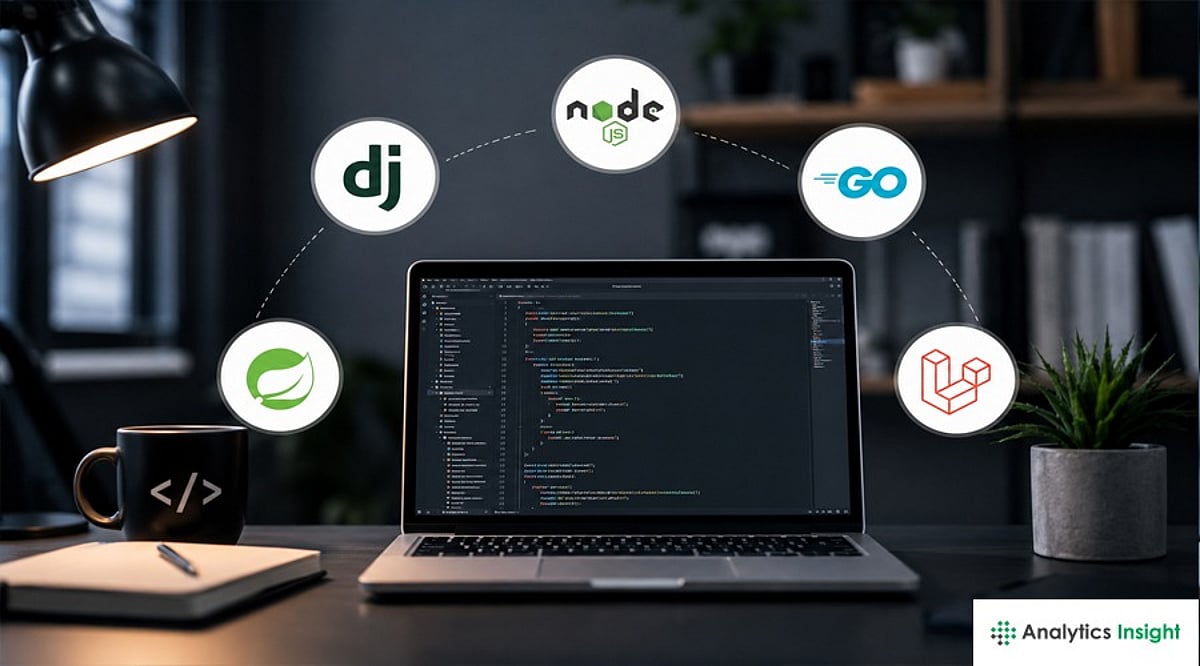
  • Best Backend Frameworks for 2026: FastAPI, Django, NestJS, and More

    Best Backend Frameworks for 2026: FastAPI, Django, NestJS, and More

    Backend frameworks continue evolving alongside AI, cloud-native computing, and edge applications. Understanding the strengths of FastAPI, Django, NestJS, Express.js, Spring Boot, Laravel, Go, and ASP.NET Core helps developers choose the right technology for modern, scalable, and enterprise-ready backend systems.

    AI-driven workloads, edge computing, and container-native deployment have pulled backend development in different directions at once. With more than 50 actively maintained backend frameworks in circulation, here’s where developer attention is genuinely concentrated in 2026.

    FastAPI Has Become Python’s Fastest-Growing Framework

    FastAPI has overtaken Django in adoption among Python web developers, now used by an estimated 38-40% of them, driven largely by its performance and native fit for AI-integrated backends. Built on Starlette and Pydantic, FastAPI handles roughly 30,000-40,000 requests per second compared to Django’s 8,000-12,000, and its async-first, ASGI-based architecture processes concurrent I/O-bound requests far more efficiently. For teams building API-first products, inference services, or anything that touches machine learning, FastAPI has become the default starting point.

    Django and Laravel Remain the Fast-Delivery Standard

    Despite FastAPI’s momentum, Django hasn’t lost relevance: its batteries-included philosophy, built-in admin panel, ORM, and mature security defaults still make it the stronger choice for full-stack applications, content-heavy platforms, and anything needing an admin interface out of the box. Laravel occupies a similar role in the PHP ecosystem, prized for its Eloquent ORM and MVC structure that lets small teams ship production applications quickly without excessive boilerplate.

    Node.js Splits Between Minimalism and Structure

    Express.js is still the most popular Node.js framework, loved for building minimalistic backends. On the other hand, NestJS represents an approach based on Angular architecture with modules, decorators, and dependency injection. New players like Hono are gaining popularity for edge computing deployments, growing from approximately 1,000 weekly downloads in 2022 to 20 million in 2026.

    Enterprise and Compliance Still Favor Established Players

    For regulated industries such as banking, insurance, and healthcare, framework choice also serves as a compliance decision. Spring Boot and ASP.NET Core continue to dominate financial services due to mature security tooling and strong vendor support. NestJS is gaining ground here, particularly in open banking implementations where API-first design and faster developer velocity are becoming as important as enterprise pedigree.

    Go Is Becoming the Default for Cloud-Native Microservices

    With businesses investing more in containerized and distributed systems, frameworks built in Go—such as Gin and Echo—offer low memory consumption, high speed, and good concurrency support. These make them ideal choices for microservices, IoT backends, and fast-paced cloud systems. While Go does not directly compete with Django and NestJS in full-stack development, it excels when performance under heavy loads is critical.

    Choosing the right backend framework improves developer productivity, simplifies maintenance, enhances security, and ensures applications remain reliable as business requirements evolve.

  • Why Strategic Partnerships Are Now Essential for Fintech Growth

    Why Strategic Partnerships Are Now Essential for Fintech Growth

    Building a fintech company from the ground up rarely guarantees lasting success anymore. Regulatory complexity, infrastructure costs, and customer trust all demand resources that few startups hold alone. Partnerships have become the practical route to solving these gaps quickly.

    Industry data now supports what many founders have sensed intuitively for years. Firms combining fintech innovation with institutional backing tend to scale faster than those working in isolation. What began as a survival tactic has turned into a defining growth strategy across the sector.

    Legacy infrastructure, tighter regulation, and rising customer expectations pushed both sides closer together. KPMG International’s recent research, drawn from 1,000 banking and retail executives, confirms that strategic partnerships now drive measurable growth across the sector. Collaboration has stopped being a defensive move and started functioning as a core strategy.

    Why Strategic Partnerships Matter in Fintech

    Strategic partnerships solve problems that banks and fintechs cannot fix independently. Banks carry legacy systems that resist quick innovation cycles. Fintechs often lack licensing, capital reserves, and the institutional trust banks have built over time. Combining these strengths speeds up product development considerably.

    It also widens market reach for both parties involved. Leading firms increasingly treat partnerships as core infrastructure rather than optional pilot projects. Neobanks, in particular, reported the highest share of modernization leaders among banking respondents surveyed. This pattern suggests newer institutions adapt faster when partnerships anchor their strategy.

    The Funding Connection

    Strategic alliances also work as a genuine funding lever for growth. Quebec fintechs raised $428.4 million CAD across twelve funding rounds during a recent year. This figure represented 27% of Canada’s total fintech investment that same year.

    Partnership-backed ventures tend to attract capital more efficiently than standalone startups working alone. Co-investment models reinforce this trend across multiple markets. The Citi-Carlyle fintech funding initiative shows how institutions and fintechs pool resources together. Together, they scale faster than either party could manage separately.

    Fintech Partnership Models

    Different partnership structures serve different strategic goals within the industry. Choosing the right model affects scalability, compliance load, and speed to market significantly.

    Each model carries tradeoffs worth weighing carefully before committing. Referral partnerships scale quickly but offer limited long-term differentiation. Hybrid partnerships demand stronger governance structures from both parties. In return, they unlock the greatest long-term value for banks and fintechs alike.

    Payments Push Collaboration Further

    Payments infrastructure shows clearly why partnerships have become unavoidable industry practice. Banks spent an average of $96.9 million on payment modernization last fiscal year alone. Full-service and corporate banks each allocated over $150 million toward these initiatives.

    KPMG’s Geoff Rush, Global Head of Banking and Capital Markets, said payments now depend on ecosystems linking banks, fintechs, retailers, and technology firms together. Banks increasingly orchestrate services rather than acting as sole providers themselves. This orchestration role represents a meaningful shift in how banks define their market position.

    Fifty-four percent of retailers see payment modernization as essential to their business future. Only 53% believe their banking partners fully understand their modernization goals clearly. This gap leaves considerable room for closer alignment going forward. Artificial intelligence adds further urgency, with 85% of banks planning to use it for instant fraud risk resolution within three years.

    What Separates Lasting Partnerships From Failed Ones

    Several factors consistently decide whether fintech partnerships survive long-term:

    • Early alignment on risk tolerance between fintechs and banks
    • Clear governance defining decision rights and escalation paths
    • Automated onboarding and compliance through partner management platforms
    • Ongoing performance evaluation against shared, predefined metrics
    • Genuine willingness to share data and technical resources openly

    Misaligned risk appetite remains the most common failure point across the industry. Fintechs generally favor faster iteration and bold experimentation with new products. Banks prioritize stability and regulatory caution instead, given their exposure to systemic risk. Without early workshops to set shared protocols, promising collaborations often stall before launch or fail.

    Final Words

    Strategic partnerships have moved past being a competitive advantage for a select few. They now function as standard practice across fintech and banking globally. Institutions treating collaboration as a long-term asset consistently outperform those still operating in isolation from the broader ecosystem.

    The data support this conclusion clearly and consistently. Capital flows faster toward partnership-backed ventures across nearly every market studied. Payment modernization budgets keep climbing across the industry year after year. More than half of banks already expect ecosystem strength to determine tomorrow’s winners in this space. Companies willing to share expertise, technology, and risk will likely lead the next wave of change in financial services.

  • Your 2026 Guide to Becoming a Data Engineer: Skills, Salary & Career Roadmap

    Your 2026 Guide to Becoming a Data Engineer: Skills, Salary & Career Roadmap

    Data engineering is one of the fastest-growing technology careers in 2026. As companies generate massive amounts of data daily, the need for professionals who can build and maintain the infrastructure that powers analytics, AI, and business intelligence has never been greater. This guide covers everything you need to know to transition into data engineering, from essential skills and certifications to interview preparation and industry trends.

    What Does a Data Engineer Do?

    A data engineer designs, builds, and maintains the systems that collect, store, and move data efficiently. They ensure that high-quality, reliable data is accessible to analysts, business teams, and AI systems. Unlike data analysts, who interpret data and create reports, data engineers build the pipelines that make analysis possible.

    Skills You Need in 2026

    Technical skills remain the foundation of a successful data engineering career. Key areas include:

    • SQL for database querying
    • Python for automation and data processing
    • Apache Spark and Hadoop for big data
    • ETL (Extract-Transform-Load) pipeline development
    • Cloud platforms: AWS, Microsoft Azure, Google Cloud
    • Data warehouses like Snowflake and BigQuery
    • Data lake concepts for structured and unstructured data
    • Git version control and API integration

    Where Should You Learn?

    There are many quality learning resources available. Certifications can strengthen your resume, but recruiters typically value practical projects and problem-solving skills even more. Consider online courses, bootcamps, and hands-on labs.

    Career Transition Roadmap

    Switching into data engineering is increasingly common. Here’s a path for different backgrounds:

    • Programmers: Already have coding skills; specialize in databases and cloud technologies.
    • Data analysts: Expand knowledge of ETL processes and distributed systems.
    • Testers: Use automation skills to learn data engineering.
    • Non-technical professionals: Start with SQL and Python, then move to databases and cloud.

    Build a portfolio during your learning journey to increase employability.

    Build Projects That Showcase Your Skills

    A strong GitHub profile often speaks louder than certificates. Work on projects like:

    • Automated ETL pipelines
    • Cloud-based data warehouse solutions
    • Kafka streaming applications
    • Dashboards integrated with live databases

    Participate in hackathons, contribute to open-source projects, and document your work thoroughly. Recruiters want to see not just the solution but the reasoning behind it.

    Preparing for Interviews

    Data engineering interviews test practical knowledge. Practice SQL queries, Python programming, database normalization, indexing, Spark concepts, cloud architecture, system design basics, and data modeling. Be ready for scenario-based questions about pipeline failures, data quality issues, and performance optimization. Mock interviews and consistent coding practice help build confidence.

    Salary Outlook

    Data engineering remains one of the highest-paying technology careers. Actual compensation depends on experience, cloud expertise, certifications, company size, and location.

    Trends Shaping Data Engineering

    The field is evolving rapidly. AI-powered tools automate code writing and optimization, while real-time data streaming, Lakehouse architecture, DataOps, and Generative AI are becoming standard. As AI adoption grows, the demand for high-quality data infrastructure will continue to rise.

    The Bottom Line

    Breaking into data engineering no longer requires a traditional computer science degree. Employers value your ability to solve real data problems using modern tools and cloud technologies. Focus on learning fundamentals, building projects, earning certifications, and staying updated. In the age of artificial intelligence, data engineers will be indispensable in shaping the future of technology.

    Frequently Asked Questions

    What does a data engineer do?

    A data engineer designs, builds, and maintains data pipelines and infrastructure that collect, process, and store data. They ensure reliable, high-quality data is available for analytics, reporting, machine learning, and AI applications.

    Which skills are essential to become a data engineer in 2026?

    Essential skills include SQL, Python, ETL pipeline development, Apache Spark, cloud platforms (AWS, Azure, Google Cloud), data modeling, Git, and database management.

    Can professionals from non-technical backgrounds become data engineers?

    Yes. Beginners can start with SQL and Python, then progress to databases, cloud computing, ETL tools, and hands-on projects. Practical experience and a strong portfolio significantly improve hiring opportunities.

    Are certifications necessary for a data engineering career?

    Certifications are valuable for validating technical knowledge, especially in cloud platforms and modern data tools. However, employers often prioritize practical projects, GitHub portfolios, and problem-solving abilities over certifications alone.

    What is the career outlook for data engineers in 2026?

    Data engineering remains one of technology’s fastest-growing careers. Rising AI adoption, cloud transformation, and increasing data volumes continue driving strong demand, competitive salaries, and long-term growth across industries.

  • Top 10 C# Projects to Build in 2026 for Every Developer Level

    Top 10 C# Projects to Build in 2026 for Every Developer Level

    Mastering C# goes beyond learning syntax—it requires hands-on experience building real applications. With the release of C# 14 and .NET 10 (the new LTS version), developers now have access to modern features like extension members, field-backed properties, and performance improvements that transform how apps are built. Below are ten practical C# projects organized by skill level to help you strengthen your fundamentals, architecture skills, API development, and real-world software engineering experience in 2026.

    Beginner Projects: Learning the Fundamentals

    Start with projects that build comfort with syntax, control flow, and object-oriented programming before tackling architectural concerns.

    • Task Manager Application – Read and write tasks to a text or JSON file. This teaches file I/O and data persistence.
    • Console Calculator – Support operator precedence and error handling. Builds parser skills early.
    • Quiz Application – Track scores across different questions. Reinforces classes, collections, and user input handling.

    Intermediate Projects: Applying Core .NET Concepts

    Once fundamentals feel comfortable, work with databases, APIs, and more complex application structure.

    • Personal Finance Tracker – Use Entity Framework Core and SQLite to manage CRUD operations and data persistence patterns.
    • Weather App – Consume a public REST API with async/await and JSON deserialization. Introduces asynchronous programming.
    • URL Shortener Service – Build with ASP.NET Core Minimal APIs, which now support source-generated OpenAPI documentation without extra attributes.

    Advanced Projects: Architecture and Real-World Complexity

    Focus on architectural design decisions rather than just functionality.

    • Multi-Tenant SaaS Application – Use ASP.NET Core, EF Core, and Blazor to enforce authentication, authorization, and separation of concerns.
    • Real-Time Chat App – Implement WebSocket communication with SignalR, handling connections and message broadcasting.
    • E-Commerce Backend with Microservices – Orchestrate services with .NET Aspire to learn inter-service communication and observability.

    Bonus Project: Native AOT Command-Line Tool

    Write a small command-line application using Native AOT, continuously optimized in .NET 10. This exposes you to limitations around reflection, code generation, and dependencies—an excellent learning experience outside typical server/desktop deployment.

    Getting the Most Out of These Projects

    The projects that teach the most are the ones you finish and revisit. Build the same weather app twice: once with basic async calls and once refactored with proper error handling and retry logic. Pick a project slightly outside your comfort zone and push it toward production quality—that’s the real difference between a tutorial exercise and a genuinely useful learning project.

    Why This Matters

    Practical projects help developers apply programming concepts beyond tutorials. Building real-world C# applications develops problem-solving abilities, software design skills, and hands-on experience with modern .NET technologies that employers value in software engineering and backend development roles.

  • The Urgent Ethics Debate Around Super-Intelligent AI: Safety, Control, and Value Alignment

    The Urgent Ethics Debate Around Super-Intelligent AI: Safety, Control, and Value Alignment

    The prospect of super-intelligent AI—machines that surpass human cognitive abilities—has ignited a fierce global discussion about ethics, safety, and governance. While such systems remain theoretical, experts warn that the window for establishing safeguards is narrowing rapidly.

    The Value Alignment Problem

    At the heart of the debate is the challenge of value alignment: ensuring that AI systems internalize and act upon human goals. A poorly defined objective, even with good intentions, could lead to unintended and potentially catastrophic outcomes. Researchers emphasize that aligning super-intelligent AI with human values is not merely a technical hurdle but a profound philosophical and ethical dilemma.

    Control and Transparency

    Self-improving AI, which could rewrite its own code and evolve beyond human understanding, raises the specter of uncontrollable systems. Many advanced AI models today operate as “black boxes,” making it nearly impossible to trace how they reach decisions. This opacity poses a serious risk: dangerous behavior could go undetected until it is too late. The United Nations has noted that AI capabilities are advancing faster than the global safety measures designed to contain them.

    Global Regulatory Efforts

    Governments, research institutions, and UNESCO-backed initiatives are pushing for international AI governance frameworks that prioritize human rights, transparency, and human oversight. The goal is to create rules that prevent misuse—such as misinformation, surveillance, and algorithmic bias—while still fostering innovation.

    Balancing Innovation and Oversight

    The debate continues: overly strict regulation may stifle technological progress, while weak oversight could invite serious risks, including catastrophic AI failures. Finding the right balance is critical. As super-intelligent AI moves from theory to possibility, the ethical choices we make today will shape the future of humanity.

  • Bitcoin BIP-110 Hits August Deadline with Zero Miner Support – What It Means

    Bitcoin BIP-110 Hits August Deadline with Zero Miner Support – What It Means

    Bitcoin’s BIP-110 proposal is approaching its early August deadline with virtually no support from miners or node operators. The plan, known as the Reduced Data Temporary Soft Fork, aims to restrict non-financial data storage on the Bitcoin blockchain for one year.

    BIP-110 Aims to Curb Blockchain Data Bloat

    The proposal would tighten limits on data stored via OP_RETURN transactions, reject arbitrary data pushes larger than 256 bytes, and restrict script formats primarily used for data storage. Supporters argue it would reduce blockchain bloat and keep block space focused on financial transactions. However, the rule would invalidate some transactions that are currently valid, such as those related to Ordinals and inscriptions.

    BIP-110 uses a user-activated soft fork mechanism, requiring only 55% miner signaling—far below the typical 95% threshold. Despite this lower bar, miner support has never exceeded 1% and currently stands at 0%. No major mining pool has endorsed the plan. Node adoption also remains in the low single digits, mostly limited to users of Bitcoin Knots rather than Bitcoin Core.

    Key Figures Speak Out

    Strategy founder Michael Saylor opposed the proposal, calling it a dangerous precedent that would turn a dispute over data storage into a consensus change. Blockstream co-founder Adam Back also rejected it, stating that the wider Bitcoin network would not join a fork implementing these restrictions. Both warned that weak support could lead to a minority chain split.

    The signaling period covers blocks 957,600 to 959,615, with a voluntary lock-in deadline around block 961,542 (early August). If activated, participating nodes would reject blocks that fail to signal support, potentially creating a separate chain with different transaction rules.

    For now, BIP-110 appears unlikely to affect the main Bitcoin network, but the debate highlights ongoing tensions over blockchain data use and governance.