Blog

  • MCX Gold Slips 0.63% to Rs. 1,45,990 as Brent Crude Rises; All Eyes on Fed Minutes

    MCX Gold Slips 0.63% to Rs. 1,45,990 as Brent Crude Rises; All Eyes on Fed Minutes

    Gold futures on the Multi Commodity Exchange (MCX) traded lower on Tuesday, July 7, as investors awaited the release of the US Federal Reserve’s June policy meeting minutes for further clues on the central bank’s monetary policy trajectory. The August gold contract declined by 0.63% to settle at Rs. 1,45,990 per 10 grams.

    In the precious metals complex, September silver futures also witnessed a decline, falling 1.23% to Rs. 2,33,201 per kilogram. Meanwhile, in the energy market, Brent crude futures edged up 0.60% to $72.42 a barrel, while US West Texas Intermediate (WTI) crude advanced 0.51% to $68.90 a barrel.

    According to the CME FedWatch Tool, market participants now see a 56% probability of a rate hike at the Fed’s September meeting, down from the previous week’s reading of 60%.

    Domestic Gold Prices

    In the local physical market, 24-karat gold fell by Rs. 136 to Rs. 1,45,260 per 10 grams, while 22-karat gold declined by Rs. 125 to Rs. 1,33,150. Regional variations were observed: Mumbai and Kolkata quoted 24K gold at Rs. 1,45,260, Delhi at Rs. 1,45,410, and Chennai at Rs. 1,47,920.

    US Gold Prices

    US gold prices eased on Tuesday, trading below a two-week high, as investors adopted a cautious stance ahead of the Fed minutes. Spot gold fell 0.6% to $4,138.32 per ounce, and US gold futures for August delivery dipped 0.4% to $4,149.90.

    Among other precious metals, spot silver slipped 1% to $61.48 per ounce, platinum eased 0.1% to $1,629.46, while palladium posted a modest gain of 0.4% to $1,272.85.

    Key Levels to Watch

    “Gold price action looks like a continuation of last week’s basing, forming a support level. The market is clearly waiting for direction from the Fed minutes to get a better sense of the Fed’s thinking on short-term interest rate policy,” said Nicholas Frappell, global head of institutional markets at ABC Refinery.

    Internationally, gold has support at $4,135 and $4,100 per troy ounce, with resistance at $4,194 and $4,220. Silver support stands at $61.20 and $59.80, while resistance is seen at $63.40 and $64.20. On MCX, gold support is at Rs. 1,46,100 and Rs. 1,45,500, resistance at Rs. 1,47,400 and Rs. 1,48,200. For silver MCX, support is at Rs. 2,33,300 and Rs. 2,30,000, with resistance at Rs. 2,38,800 and Rs. 2,41,000.

    Investors remain focused on the Fed minutes release scheduled later this week, which could provide clearer signals on the timing and pace of potential rate adjustments.

  • How AI and Self-Healing Systems Are Revolutionizing Retail Technology

    How AI and Self-Healing Systems Are Revolutionizing Retail Technology

    In an era where retail transactions exceed $1 billion in volume, senior software engineer and architect Arundhati Kumar shares insights from over 15 years of building high-performance distributed systems. Her journey, from modernizing Fannie Mae’s mortgage platforms to leading global retail technology, reveals how AI, cloud, and self-healing infrastructure are redefining the shopping experience.

    From Finance to Retail: A Leap in Scale

    Kumar’s transition from banking to retail meant moving from secure, precise transactions to a flood of real-time data from thousands of physical stores. Today, she leads cross-functional teams designing omnichannel point-of-sale applications for one of the world’s largest retailers. The key challenge: ensuring software runs fast and reliably across legacy registers and modern mobile apps, even with unpredictable network connections.

    Checkout Doctor: Bridging the Visibility Gap

    Inspired by register glitches that stalled checkout lines, Kumar created Checkout Doctor—an automated diagnostic assistant that analyzes local device logs in real time. When a scale or peripheral fails, it instantly alerts associates via mobile devices, shifting support from reactive to proactive. This self-healing approach keeps lines moving and reduces downtime.

    AI in Site Reliability Engineering

    Large language models (LLMs) are transforming incident management by providing plain-English summaries from error logs, cutting down time to diagnose outages. Kumar emphasizes that AI delivers the most measurable value in noise reduction and early triage—correlating telemetry spikes to pinpoint root causes before thresholds are breached.

    Cloud Migration Lessons

    Leading a migration from legacy SQL to Azure Cosmos DB, Kumar learned that you can’t copy-paste old database mindsets. Rethinking data organization around partition keys like store numbers and lanes, and accepting eventual consistency, reduced costs and improved availability during peak shopping seasons.

    Event-Driven Architecture and Loss Prevention

    Event-driven architecture replaces batch processing with instant event streams via websocket servers. This enables real-time visibility and automated decisions—such as pausing a checkout when a barcode mismatch is detected, and prompting associates to intervene. Such techniques help combat the multi-billion-dollar challenge of retail shrink.

    The Future: Autonomous Infrastructure

    Kumar is most excited about predictive workflow integrity, where machine learning models on edge devices autonomously fix anomalies—like routing around a slowing database—before humans even see an alert. Her advice to leaders: build systems that survive locally without cloud dependency, and treat AI as a co-pilot, not a replacement for human intuition.

  • Daily Tech Roundup: India’s Semicon 2.0 Launch, CurifyLabs Funding, and Bitcoin Strategy Shift

    Daily Tech Roundup: India’s Semicon 2.0 Launch, CurifyLabs Funding, and Bitcoin Strategy Shift

    Greetings from the Digital World! Welcome to today’s quick tech roundup. From AI and startups to crypto, careers and digital innovation, here’s what made headlines today.

    What’s New Today

    India has launched Semicon 2.0 to boost its semiconductor industry, while Finnish health tech startup CurifyLabs secured funding to expand its personalized medicines platform. In cryptocurrency news, Grayscale claims that Bitcoin sales by Strategy could make its financial model more credible. Meanwhile, the IT skills shortage continues to challenge new graduates, and experts warn about JADEPUFFER AI agents capable of executing cyber attacks autonomously.

    Quick Insights

    • India’s Semicon 2.0 targets chip manufacturing, design, research, raw materials, equipment, and talent development.
    • CurifyLabs raised $14 million to expand its personalized medicine technology.
    • Grayscale believes Strategy’s Bitcoin sales could strengthen investor confidence.
    • Employers say many tech graduates still lack industry-ready skills despite high demand.
    • Researchers warn that JADEPUFFER AI can autonomously breach systems and deploy ransomware.

    A Quick Rundown

    India Launches Semicon 2.0 to Expand Chip Ecosystem Support

    India has launched Semicon 2.0, broadening its chip ambitions beyond manufacturing to include design, research, raw materials, equipment, and workforce development. The initiative aims to attract international investment and reduce reliance on foreign chips.

    CurifyLabs Raises $14 Million Series A

    CurifyLabs, a Finland-based healthcare technology firm specializing in personalized medicines, closed a $14 million Series A round. The funding will support international expansion, supply chain development, and research, enabling hospitals and pharmacies to produce customized medications.

    Grayscale Backs Strategy’s Bitcoin Sales

    Grayscale has expressed support for Strategy’s recent Bitcoin sales, stating that generating liquidity through cash could make the company’s funding process more sustainable and enhance investor confidence in its financial model.

    The IT Job Market Faces a Growing Skills Gap

    Fresh graduates are finding it harder to land tech jobs. Despite high demand, employers report that many candidates lack practical, industry-ready skills. The disconnect between academic learning and workplace expectations leaves many graduates underemployed while companies continue searching for qualified talent.

    JADEPUFFER AI Can Hack Systems Without Human Help

    Scientists have demonstrated that the experimental AI bot JADEPUFFER can execute cyber attacks with minimal human intervention. The research highlights the emerging threat of autonomous AI systems capable of identifying vulnerabilities, moving across networks, and deploying ransomware.

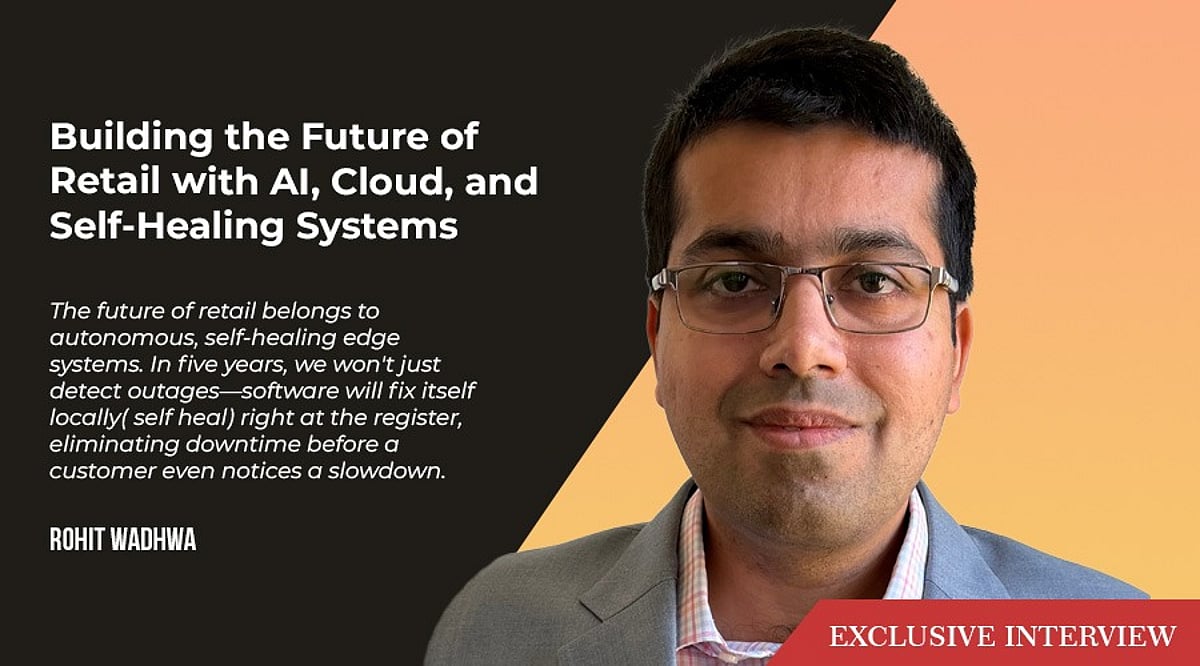
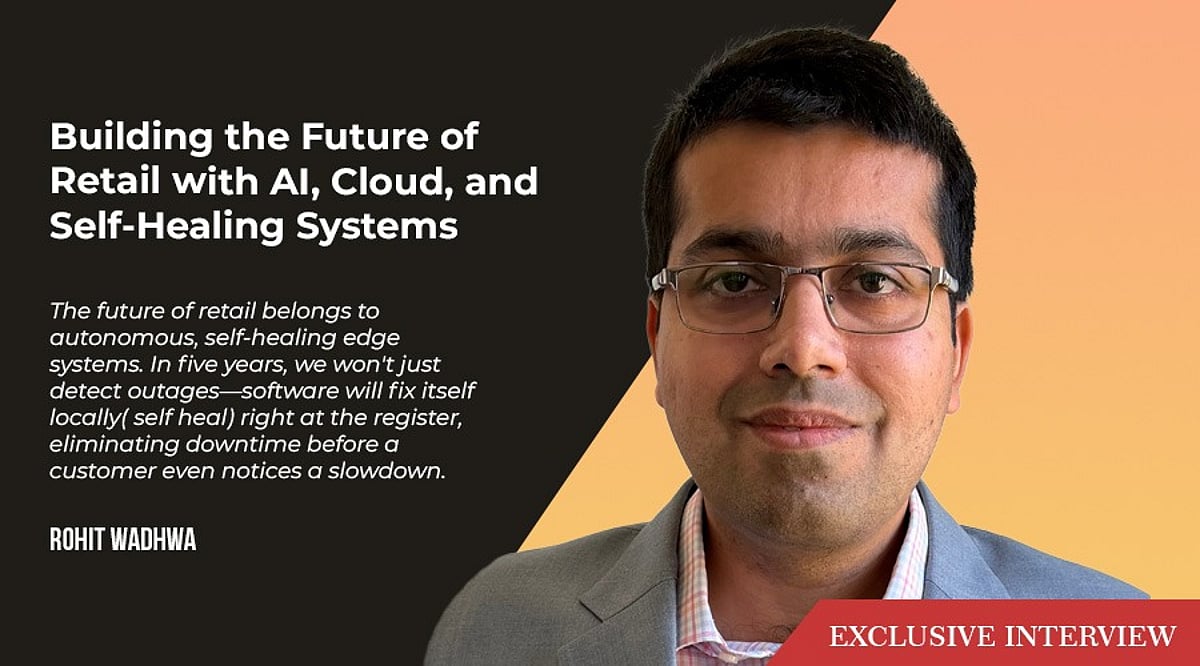
  • Revolutionizing Retail: How AI, Cloud, and Self-Healing Systems Are Reshaping the Industry

    Revolutionizing Retail: How AI, Cloud, and Self-Healing Systems Are Reshaping the Industry

    In an era where retail technology is evolving at breakneck speed, senior software engineer and architect Arundhati Kumar offers a deep dive into the innovations driving the future of omnichannel commerce. With over 15 years of experience building high-performance distributed systems across healthcare, banking, and now global retail, Kumar shares insights on how AI, cloud computing, and self-healing infrastructure are transforming the way retailers operate at scale.

    The Challenges of Engineering at Massive Scale

    When you’re supporting thousands of physical stores with diverse hardware—from legacy cash registers to modern mobile checkout apps—the biggest challenge is ensuring speed and reliability across unpredictable network conditions. Kumar explains that her team had to build custom adapter layers to standardize conflicting data payloads, and engineer systems that can instantly drop into offline mode, saving transactions locally and syncing back to the cloud once connectivity is restored—without losing a single cent of revenue.

    Checkout Doctor: A Self-Healing Solution

    Inspired by store associates struggling with checkout glitches, Kumar designed Checkout Doctor, an automated real-time diagnostic assistant. Instead of waiting for centralized IT support, the system analyzes local device logs, isolates issues like a scale malfunction or peripheral disconnect, and triggers alerts directly on the associate’s mobile device. This shifts the support model from reactive to proactive, keeping lines moving and reducing customer frustration.

    How AI Is Changing Site Reliability Engineering

    Large language models (LLMs) are revolutionizing incident detection by reducing the time engineers spend digging through disparate dashboards and logs. Kumar notes that feeding real-time error logs and alerts into an LLM provides on-call engineers with a plain-English summary of the problem, along with context from past incidents. This acts as an intelligent co-pilot, dramatically cutting the time to understand and resolve critical outages.

    The Measurable Value of AI in Operations

    Rather than fully automated fixes, Kumar believes the greatest value of AI today lies in extreme noise reduction and early triage. In massive enterprise setups, a single microservice failure can trigger cascading alerts. AI correlates telemetry spikes, filters out background noise, and points engineers directly to the root cause. Additionally, machine learning models can flag anomalies—like a spike in database latency—long before a threshold is breached, enabling preemptive patching.

    Lessons from Migrating to Cloud-Native Architecture

    Leading a migration from legacy relational systems to Azure Cosmos DB, Kumar learned that you can’t simply replicate old database patterns. Her team had to completely rethink data organization, grouping by store numbers and register lanes as partition keys, and accepting some data duplication. This trade-off slashed expensive cross-partition queries, kept cloud costs low, and ensured maximum availability during peak shopping seasons.

    Event-Driven Architecture for Real-Time Decisions

    Event-driven architecture replaces batch processing by treating every register action—a barcode scan, a voided item, a payment—as an instant event broadcast via websocket servers. This gives business leaders a live view of store performance and enables automated decisions, such as sending an alert to a nearby associate when an unusual pattern is detected during a live checkout session. It catches faults and errors before the customer leaves the lane.

    Combating Retail Shrink with Intelligent Automation

    Retail shrink is a multi-billion-dollar problem, but Kumar’s approach prevents losses at the checkout lane by linking real-time register logs with overhead camera feeds. If a missed scan or barcode mismatch is detected, the system pauses the session mid-transaction with a friendly nudge to rescan. If the issue persists, a silent notification goes to an associate’s mobile device, protecting the bottom line while keeping the experience seamless.

    Emerging Trends: Autonomous Infrastructure

    Looking ahead, Kumar is most excited about autonomous, self-healing infrastructure and edge-computed intelligence. Instead of using AI reactively to summarize logs after an outage, future systems will run predictive models directly on local edge hardware—like thousands of retail registers. These models will monitor health and transaction patterns, fixing anomalies autonomously (e.g., routing around a slowing database) long before a human engineer is alerted. This marks the end of the traditional on-call nightmare, turning software into something that actively looks after itself.

    Advice for Enterprise AI Implementation

    Kumar offers two key pieces of advice for leaders: First, build systems that survive locally without relying on the cloud. Local hardware must be smart enough to run in offline mode, catch errors, and make decisions on the spot. Second, treat AI as an intelligent co-pilot, not a replacement. Use a tiered intervention model: let the system handle noise reduction and simple self-healing, but when complex failures occur, use AI to arm engineers with a plain-English context summary rather than letting the machine guess blindly. Build guardrails that empower teams, not black boxes.

    As retail continues to evolve, the integration of AI, cloud, and self-healing systems is not just a trend—it’s a necessity. Kumar’s insights provide a roadmap for building resilient, customer-friendly technology that can handle the demands of modern commerce.

  • Garena Free Fire MAX Redeem Codes for July 7, 2026 – Unlock Exclusive Bundles and Diamond Vouchers

    Garena Free Fire MAX Redeem Codes for July 7, 2026 – Unlock Exclusive Bundles and Diamond Vouchers

    Garena Free Fire MAX has released its daily redeem codes for July 7, 2026, offering players a chance to grab premium in-game items without spending real money. These codes, which include bundles, emotes, and Diamond vouchers, are time-limited and region-specific, so acting fast is essential.

    Free Fire MAX Redeem Codes – July 7, 2026

    Below is the complete list of active redeem codes for today. Use them immediately before they expire.

    • FA3S7D5F1G9H
    • FK3J9H5G1F7D4N8M2XL9R1G3
    • H8YC4TN6VKQ9
    • FF6YH3BFD7VT
    • UPQ7X5NMJ64V
    • FU1I5O3P7A9S
    • F7F9A3B2K6G8
    • FFSGT7KNFQ2X
    • FPSTQ7MXNPY5
    • S9QK2L6VP3MR
    • FFR4G3HM5YJN
    • 6KWMFJVMQQYG
    • FFCBRAXQTS9S
    • FM6N1B8V3C4X
    • FZ5X1C7V9B2N
    • FT4E9Y5U1I3O
    • B1RK7C5ZL8YT
    • 4ST1ZTBZBRP9
    • BR43FMAPYEZZ
    • FP9O1I5U3Y2T
    • FE2R8T6Y4U1I
    • FQ9W2E1R7T5Y

    Note: These codes are region-specific and valid only for a limited time. Redeem them as soon as possible to avoid missing out.

    How to Redeem Codes in Garena Free Fire MAX

    1. Visit the official Free Fire MAX redemption website.
    2. Sign in using your linked Facebook, Twitter, or Google account.
    3. Enter the code exactly as shown in the designated text box.
    4. Click Confirm and submit. A success message will appear if the code is valid.
    5. Wait up to 24 hours – the rewards will be credited to your in-game mail.

    Rewards typically include: legendary weapon skins, premium character outfits, Diamond vouchers, emotes, pet skins, and exclusive loot crates.

    Why Do Free Fire MAX Redeem Codes Expire So Quickly?

    Garena releases codes in small daily batches to maintain player excitement and prevent misuse. Each set expires within 24 hours, encouraging active participation. Regional restrictions also apply – codes valid in India may not work in other regions like Indonesia or Brazil. Always check the source before redeeming.

    Stay updated via Free Fire MAX’s official social media channels (Instagram, Facebook, YouTube) for new code announcements and event updates.

  • Bitcoin Steady at $62K as Strategy’s $216M Sale Tests Market; Solana Leads Top Ten Gains

    Bitcoin Steady at $62K as Strategy’s $216M Sale Tests Market; Solana Leads Top Ten Gains

    Bitcoin weathered nearly $500 million in liquidations as long-term holder selling eased and US Treasury yields weakened, while improving ETF inflows and balanced futures positioning offered early signs of stabilizing market sentiment.

    Bitcoin Price Today: $62,048

    Bitcoin is trading near $62,048, down modestly over the past 24 hours after a choppy overnight session. The token remains capped below its 50-day and 200-day moving averages, keeping the medium-term trend cautious. Market cap sits around $1.24 trillion, with 24-hour volume near $21.3 billion. Support holds at $60,500, while resistance stands at $64,300, the level bulls need to reclaim.

    Speaking on the market, Akshat Siddhant, Lead Quant Analyst at Mudrex, said, “Bitcoin is trading above the $64,000 level, showing resilience despite Strategy’s sale of 3,588 BTC.” He added that the announcement briefly pushed Bitcoin toward $61,000 before buyers stepped back in. The volatility triggered nearly $500 million in liquidations within 24 hours.

    He further noted that falling US Treasury yields and a weaker dollar are improving the appeal of risk assets like Bitcoin. On-chain data also points to easing selling pressure, with long-term holder transfers to exchanges falling from 8,040 BTC to 4,130 BTC per day this week.

    According to the CoinSwitch Markets Desk, BTC rebounded to $64,000 from a low near $61,300, with the market shrugging off Strategy’s sale fairly quickly. The desk pointed to a 9% funding rate as a sign of balanced positioning rather than overheated leverage. It also flagged $265 million in ETF inflows in over two days as a shift after weeks of outflows, with support firming near $60,000.

    Riya Sehgal, Research Analyst at Delta Exchange, said, “Crypto markets are in a range recovery after Bitcoin’s drop toward the low-$61,000 area.” She noted the move followed Strategy’s disclosure of its sale, showing treasury flows can still shake spot sentiment. A four-hour close above $64,000 to $64,300 would strengthen the setup, she said, while a break below $62,000 could bring $61,000 back into focus.

    Meanwhile, Nischal Shetty, founder of WazirX, said Bitcoin is trading near $64,300, up 1.3%, with buying interest returning after recent volatility. He pointed to Bitcoin’s realized profit-to-loss ratio falling to a 43-month low, a level historically tied to market stabilization. Ethereum, he added, is supported by almost $153 billion in stablecoin supply sitting on its network.

    Crypto Prices Today: Top 10 Coins at a Glance

    Biggest Gainers: Solana, Ethereum — Solana leads the top ten today with a 1.40% gain, supported by rising network activity ahead of its planned Alpenglow upgrade. Ethereum follows with a 1.15% advance, holding above its short-term breakout zone near $1,780.

    Biggest Losers: Dogecoin, Hyperliquid — Dogecoin trails the group at -2.77%, remaining one of the more fragile tokens in any risk-off stretch. Hyperliquid also underperforms at -1.88%, cooling off after weeks of steady outperformance in derivatives trading.

    Crypto News Today Driving Market Sentiments

    Strategy’s Record Bitcoin Sale Raises Questions

    Strategy sold 3,588 BTC worth $216 million roughly, its largest single disposal since the company began its buy-and-hold strategy. The move is notable for a firm long associated with aggressive accumulation. Markets are now watching whether buyer demand can absorb the added supply without breaking support at $60,500.

    CLARITY Act Still Stuck in Senate

    The CLARITY Act has missed its symbolic July deadline after failing to secure the votes needed for cloture. The bill is meant to give institutions clearer rules for buying and holding crypto. Prediction markets have trimmed passage odds for the rest of the year.

    Spot ETF Flows Turn Mixed

    US spot Bitcoin ETFs logged $265 million in inflows over two sessions this week, snapping a stretch of outflows. Spot Ethereum ETFs also posted a second straight day of positive flows. Analysts caution the recovery remains fragile after June’s record redemptions.

    Satoshi Wallet Freeze Debate Resurfaces

    The proposal to freeze Satoshi Nakamoto’s dormant BTC holdings ahead of future quantum computing risks continues to divide the community. Critics argue the idea conflicts with Bitcoin’s core neutrality principle. Supporters say it protects the network from a future security threat.

    Investor and Market Outlook

    Bitcoin enters the week in a fragile but improving position. Strategy’s record sale tested buyer conviction directly, and price held its ground near $62,000 rather than breaking down. That resilience is a modestly encouraging signal, though the broader trend stays capped below key moving averages.

    The macro calendar remains active, with the CLARITY Act’s Senate path still unresolved and ETF flows only beginning to stabilize. Investors should track daily flow data, Bitcoin’s ability to hold above $60,500, and any fresh signal from Washington on crypto legislation. Avoiding excess leverage remains the practical priority until $64,300 is reclaimed with real volume.

    FAQs

    What is the Bitcoin price today? Bitcoin is trading near $62,048 today, down slightly over the past 24 hours. Support holds at $60,500, while resistance sits at $64,300.

    Why did Bitcoin dip this week? Strategy sold 3,588 BTC worth about $216 million, briefly pressuring price toward $61,000. Around $500 million in liquidations hit leveraged positions.

    What is the biggest crypto news today? Strategy’s record Bitcoin sale, the CLARITY Act missing its Senate deadline, and returning spot ETF inflows are the top stories.

    Which coins are gaining the most today? Solana leads with a 1.40% gain, followed by Ethereum at 1.15%. Dogecoin and Hyperliquid are the biggest laggards.

    What should crypto investors watch this week? Track daily ETF flow data, Bitcoin’s ability to hold above $60,500, and any Senate movement on the CLARITY Act.

    Disclaimer: Analytics Insight does not provide financial advice or guidance on cryptocurrencies and stocks. This article is for informational purposes only.

  • How Data-Driven Marketing Agencies Boost Campaign Performance with Analytics

    How Data-Driven Marketing Agencies Boost Campaign Performance with Analytics

    Marketing agencies improve campaign performance by treating each launch as a measurable system, rather than a creative gamble. Data reveals which messages earn attention, which channels attract qualified prospects, and which offers support revenue. Strong teams read those signals early, before waste compounds. Careful analysis also sharpens planning, because prior results expose timing, audience behavior, and sales friction that would stay hidden if decisions rested on instinct alone.

    Better Inputs

    Most agencies begin with baseline metrics, channel history, audience signals, and sales records, then compare them with current goals before new work starts. That early review reduces weak assumptions and keeps planning grounded in evidence. For companies seeking outside guidance, a Portland digital marketing agency can add structured audits, reporting discipline, and cross-channel interpretation, so each metric sits inside a fuller performance picture.

    Clear Goals

    Data becomes useful only after success is defined with precision. One business may care about booked consultations, while another needs a lower acquisition cost or a higher order value. Agencies that set those targets before production begins can judge progress with less confusion. Clear benchmarks also prevent teams from celebrating surface activity, such as clicks or impressions, when those signals fail to support actual commercial results.

    Audience Clues

    Analytics helps agencies distinguish curiosity from buying intent. First-time visitors often need explanation, while returning users may look for proof, pricing, or reassurance. Search traffic can signal active demand. Social traffic may respond better to emotional framing or visual contrast. Those patterns matter because a single message rarely serves every group well. Better segmentation usually leads to cleaner spend and stronger conversion quality.

    Channel Mix

    Channel performance makes more sense when agencies study contribution, rather than isolated clicks. Search, email, paid media, referrals, and direct visits often support the same sale at different points in time. A prospect may discover a brand through one source, then return later through another path before converting. That fuller view protects valuable channels whose influence disappears inside narrow last-click reporting and oversimplified attribution models.

    Creative Tests

    Testing gives agencies a disciplined way to improve headlines, visuals, page layouts, and calls to action. Small experiments reduce guesswork without forcing a full campaign reset. One variant may boost click-through rate, while another may increase the number of completed forms or improve lead quality. Results often challenge internal preferences. Evidence keeps those discussions grounded because responses from actual visitors matter more than opinions formed in conference rooms.

    Spending Control

    Budget decisions improve once cost is tied to outcomes that matter beyond traffic volume. Cheap visits can disappoint if those users never buy, call, or return. Higher media expenses may still make sense when customers stay longer or spend more per order. Good reporting connects spend with margin, retention, and close rate. That link helps agencies confidently move funds away from weak placements.

    Site Behavior

    Campaign data does not end at the click. Agencies also study scroll depth, form abandonment, page exits, and session flow to find where intent fades. Those signals often reveal friction that ad reports miss. A landing page may attract qualified visitors yet lose them due to slow load times, unclear copy, or poor visual hierarchy. Fixing those barriers can outperform buying more traffic.

    Reporting Rhythm

    Useful reporting follows a steady cadence, rather than a frantic series of isolated checks. Daily reviews can catch broken links, tracking errors, or sudden overspend. Weekly analysis often surfaces audience fatigue, falling engagement, or creative wear. Monthly summaries connect campaign movement with sales outcomes and profit. That rhythm helps agencies respond early, before small issues become expensive habits that distort future planning.

    Trust in Numbers

    Numbers improve judgment, but they do not replace it. Agencies still need context, commercial awareness, and honest communication with clients. Metrics can mislead when teams chase vanity indicators or ignore weak tracking quality. Marketing experts ask better questions before acting on a chart. They test assumptions, examine anomalies, and explain what a result means, rather than presenting raw figures as self-explanatory truth.

    Long View

    The strongest agencies use data to build cumulative learning across months, rather than chasing brief spikes in activity. Each campaign adds sharper insight into audience timing, offer strength, message fit, and channel role. Over time, that record improves forecasting and reduces avoidable waste. Reliable tracking and measuring create a practical memory for the team, making future decisions faster, steadier, and easier to defend.

    Conclusion

    Data helps marketing agencies replace guesswork with observable patterns, disciplined choices, and stronger accountability. When teams set precise goals, study audience behavior, test creative variables, and connect spend with revenue quality, campaign improvement becomes far more consistent. Better measurement also strengthens trust, because clients can see why changes happen. In daily practice, that clarity supports smarter planning, tighter execution, and results that hold up under scrutiny.

  • Indian Stock Market Surges: Sensex Gains 240 Points, Nifty50 Crosses 24,495 as IT Stocks Lead Rally

    Indian Stock Market Surges: Sensex Gains 240 Points, Nifty50 Crosses 24,495 as IT Stocks Lead Rally

    The Indian stock market traded higher on Tuesday, July 7, 2026, driven by strong buying in IT, banking, and financial shares. Despite mixed global cues, domestic investor sentiment remained positive, with large-cap stocks providing solid support throughout the session.

    At the time of writing, the Nifty50 stood at 24,495.60, up 65.25 points or 0.27 percent, while the Sensex reached 78,525.09, gaining 240.02 points or 0.31 percent. Both benchmark indices stayed in positive territory as investors continued to buy shares from key sectors.

    IT Sector Leads the Rally

    The IT sector emerged as the biggest contributor to today’s market rise. The Nifty IT index surged more than 1 percent, making it the best-performing sector of the session. Strong buying in leading technology companies boosted investor confidence and pushed the benchmark indices higher.

    In addition to IT, healthcare and automobile stocks also performed well. The Nifty Healthcare index recorded healthy gains as investors showed interest in pharmaceutical and healthcare companies. The Nifty Auto index remained strong due to sustained buying in several automobile stocks. These gains added further strength to the overall market.

    Banking and Financial Stocks Remain Strong

    Banking and financial shares played a major role in today’s market rise. Buying in large private and public sector banks supported both the Nifty50 and the Sensex. Financial companies also saw steady demand, helping the market maintain its positive trajectory throughout the trading session.

    These sectors carry significant weight in the benchmark indices, so gains in banking and financial stocks directly influenced market movement. Their strong performance helped offset weakness in some other sectors.

    Broader Market Under Pressure

    While benchmark indices stayed in the green, the broader market told a different story. Mid-cap and small-cap stocks faced selling pressure during the session. The Nifty MidCap traded 0.55 percent lower, and the Nifty SmallCap declined 0.44 percent. This divergence indicates that investors favored large-cap stocks over smaller companies, likely due to uncertain global conditions.

    The gap between benchmark indices and the broader market reflects selective buying, with investors focusing on established companies rather than spreading investments across all segments.

    Metal Stocks Suffer Heavy Losses

    Among all sectors, metal shares recorded the biggest decline. The Nifty Metal index tumbled the most during the session. Weak sentiment in metal companies put pressure on the sector and limited overall market gains.

    Despite these losses, strong performance from IT, banking, healthcare, and automobile shares kept the benchmark indices in positive territory, effectively balancing the metal sector’s weakness.

    Mixed Global Cues, Resilient Domestic Market

    Global markets continued to send mixed signals, with some international indices showing strength while others remained under pressure. This created a cautious mood among investors worldwide.

    Nevertheless, the Indian market demonstrated resilience. Strong domestic buying, especially in large-cap shares, helped the market maintain its upward move. Investors focused on company fundamentals and sector-specific opportunities rather than reacting sharply to overseas developments.

    IPO Market Remains Active

    The primary market also attracted attention. IC Electricals’ initial public offer entered its final day of subscription on Monday, with a total issue size of Rs. 47.91 crore. Market participants closely watched the IPO as the subscription period reached its concluding stage. Interest in new public issues remained steady as investors sought fresh opportunities alongside regular stock market activity.

    Market Outlook

    Positive signals emerged from the Indian stock market, supported by gains in IT, banking, and financial shares. The Nifty50 and Sensex remained in positive territory despite mixed global cues, reflecting strong domestic investor sentiment. Gains in IT, healthcare, and automobile stocks offset losses in metal stocks.

    Despite broader market woes, large-cap stocks maintained the benchmark indices. Investors will continue to monitor sector developments and overall market sentiment throughout the trading session.

  • From a Small Town in Brazil to AI Entrepreneurship in New York: Leonardo Felipe Nerone’s Journey

    From a Small Town in Brazil to AI Entrepreneurship in New York: Leonardo Felipe Nerone’s Journey

    Leonardo Felipe Nerone, co-founder and CTO of Drachma, built his career through self-study, science olympiads, early engineering roles, Penn, fintech, crypto, and a practical view of what AI should do inside real companies.

    The first computer that caught his attention did not have internet. It sat on the first floor of his family’s two-story house in Guarapuava, a city in the countryside of Paraná, Brazil. There was another computer upstairs with internet access, but when he was young, he did not like going to the second floor alone. So he stayed downstairs and explored what he had.

    He clicked around Windows XP. He looked behind the machine. He opened the case. He wanted to know what would happen if he touched something, changed something, tried something.

    “That was probably one of my first experiences with technology,” Nerone says. “It was not formal. I was just curious. I wanted to understand what was inside the machine and what I could make it do.”

    That curiosity would carry him much farther than he could have seen from Guarapuava. Today, Nerone is the co-founder and CTO of Drachma, a New York-based AI startup that builds custom AI agents and systems for companies. Drachma helps businesses connect AI to their real data, APIs, internal tools, permissions, and workflows, with the goal of turning AI from something companies test into something they can actually use.

    The path there began far from Brazil’s major technology centers.

    “I did not grow up around people talking about Silicon Valley or startups or studying abroad,” Nerone says. “A lot of what I learned came from the internet, from online communities, and from trying things myself.”

    Science olympiads changed the shape of his world. In high school, they introduced him to programming and showed him a larger field of possibility. Programming gave him a way to build without waiting for permission, a practical outlet for the kind of curiosity that had started with the old computer downstairs.

    As a teenager, Nerone met other young programmers online. Together, they built Teacch.Me, an educational app for children with autism. The project won the 2015 FIAP-Google App Marathon, a national competition with more than 300 submitted apps and around 9,600 participants.

    “That project was important to me because it made technology feel real,” he says. “It was not just solving a puzzle or learning syntax. We were building something that could help people.”

    The win was also an early sign that Nerone’s self-taught path could lead somewhere larger. After high school, he moved to São Paulo at 17 to work as a software engineer at Pagar.me. It was his first time living away from home, and it placed him inside a much bigger technology ecosystem.

    The transition was not simple. He was working, living with friends, studying at night, and applying to universities in the United States. It was not a common path from where he came from, and there was no clear script for how to make it work.

    “Moving to São Paulo changed how I saw technology,” Nerone says. “It was no longer just something I studied or built on my own. It became the way I entered a larger world.”

    That larger world eventually included the University of Pennsylvania, where Nerone studied Computer Science after receiving a scholarship of about 90 percent. Fundação Estudar later helped cover most of what remained. At Penn, he entered an environment very different from the one he had known in Brazil.

    He had to adapt to a new country, a new academic culture, and a new language environment. Before moving to the United States, he had not spent much time speaking with native English speakers. He also often felt that his background was different from that of other international students.

    Over time, that difference became useful.

    “I learned how to operate across very different worlds,” he says. “Coming from a place that was not obvious for technology made me more comfortable figuring things out without perfect conditions.”

    During his time at Penn, Nerone interned at Facebook through FBU, later known as Meta University. Then the pandemic changed his plans. Instead of continuing with online classes as usual, he took a gap year and worked at Hashdex and then Init, gaining experience across fintech, crypto, and startup engineering.

    His interest in crypto and privacy led him into open-source work as well. In 2022, he submitted a proposal to the Monero community to work full-time on Monero development, including wallet, RPC, proofs, and related open-source tasks. A company called Cryp saw the proposal and hired him for the summer to work on Monero and Bitcoin atomic swaps.

    That varied technical background now shapes how Nerone thinks about AI. He has worked across payments, fintech infrastructure, crypto systems, open-source communities, data systems, and enterprise software. He sees technology not as a single trend, but as a set of systems that have to work under real constraints.

    That view became central to Drachma.

    Drachma did not begin with its current AI focus. Nerone says the company first started with a payments idea that did not work the way the founders expected. They had to listen to the market, pivot, and rebuild around a clearer problem: companies wanted AI, but many did not know how to connect it to their actual operations.

    “That was an important lesson,” he says. “You can have a smart idea, but the market tells you where the real demand is. We had to be honest about what was working and what was not.”

    Now Drachma builds custom AI systems for companies that need more than a generic chatbot. Many businesses have valuable information spread across databases, documents, spreadsheets, dashboards, and internal tools. Employees still waste time searching for information, repeating manual tasks, or moving data between systems. Drachma builds AI assistants and agents that connect to those environments and understand the company’s context.

    “The goal is not to build a flashy demo,” Nerone says. “The goal is to build AI that works inside the reality of a business.”

    From Guarapuava to São Paulo, from Penn to Facebook/FBU, from fintech and crypto to Drachma, Nerone has built his path by crossing between worlds and learning how systems behave in practice.

    He believes AI should reduce wasted time and human potential, not create another unused tool. In many cases, he says, the greatest value is not replacing people, but helping teams become faster, more accurate, and more capable.

    “Technology only matters when it helps people do something better,” Nerone says. “That was true when I was learning to program, and it is true now with AI.”

    Drachma has raised approximately US$1 million in pre-seed funding, originally for a different idea, and has spent about a year working on its current AI direction. Nerone wants to build the company into a lean, technically excellent, sustainable business known for making AI useful inside companies.

    His journey began with a child testing the limits of an old computer with no internet. It now continues through AI systems designed for real companies, real workflows, and real work.

    “I still think the instinct is the same,” Nerone says. “You look at a system, you try to understand it, and then you try to build something useful with it.”


  • The 7 Productivity Apps That Actually Earned a Spot in My Daily Workflow

    The 7 Productivity Apps That Actually Earned a Spot in My Daily Workflow

    Productivity apps promise better organization, smarter planning, and improved focus. To separate marketing claims from real value, I tested the most popular apps over several months. I evaluated them based on ease of use, reliability, collaboration features, customization, and how well they fit into my daily workflow across work and personal tasks.

    Notion – My All-in-One Workspace

    Notion became the backbone of my productivity system. It combines notes, databases, task tracking, project management, and document creation in one place. Although it requires time to master, its flexibility makes it ideal for managing content calendars, meeting notes, research, and long-term projects without switching between multiple applications.

    Todoist and Google Calendar

    Todoist stood out for its clean interface and efficient task management. Quick task entry, recurring reminders, and priority labels kept my workload organized. Google Calendar complemented it perfectly by managing schedules, meetings, and deadlines. Together, they created a simple yet effective system for planning every day with minimal effort.

    Obsidian for Knowledge Management

    Obsidian proved invaluable for storing research and connecting ideas. Its linking feature creates a network of related notes, making information easier to retrieve. Since it works offline, I always had access to my knowledge base. It became my preferred tool for writing, brainstorming, and building long-term reference material.

    Slack and Forest

    Slack remained my preferred communication platform for team collaboration. Organized channels, direct messaging, and integrations reduced email overload and improved coordination. Forest complemented it by helping me stay focused. The app rewards uninterrupted work sessions by growing virtual trees, making it surprisingly effective at reducing phone distractions.

    OneNote and Lessons Learned

    Microsoft OneNote earned a place for freeform note-taking, handwritten ideas, and brainstorming sessions. During testing, I realized that feature-rich apps are not always the most productive. The best tools simplify workflows instead of adding complexity. Choosing fewer, purpose-driven apps resulted in a more efficient and sustainable productivity system.

    Final Verdict

    After trying nearly every popular productivity app, I kept only those that consistently improved my workflow. Notion, Todoist, Google Calendar, Obsidian, Slack, Forest, and OneNote each solved a specific problem effectively. Together, they formed a balanced productivity stack that helped me stay organized, focused, and productive every day.