Blog

  • Why Global Brands Keep Spending Billions on Advertising: The Real Risk Is Silence

    Why Global Brands Keep Spending Billions on Advertising: The Real Risk Is Silence

    The world’s largest advertisers are spending more than ever, even though their brands are already household names. Amazon, Procter & Gamble, and Progressive Insurance dominate their categories, yet their marketing budgets continue to rise. New research from Stanford reveals why staying visible matters more than staying dominant.

    Record Spending Levels

    According to Ad Age, the top 50 global advertisers increased combined spending to $291 billion in 2025, a 6.6% jump from the previous year. These figures reflect a strategic choice: leading companies are investing heavily in consumer attention, brand strength, and market share. Amazon alone spends roughly $21 billion annually on advertising, while L’Oréal allocates $15.2 billion, LVMH $10.6 billion, P&G $9 billion, and Progressive Insurance a record $4.5 billion.

    Critically, advertising expense is a separate line item from total revenue. Confusing the two overstates what brands actually spend on marketing. The spending is deliberate, recurring, and essential for maintaining mindshare.

    The Science of Consumer Memory

    A field experiment by Stanford Graduate School of Business professor Navdeep Sahni shows that a single auto insurance ad raised the likelihood of a website visit from 0.2% to 0.8% — a 300% jump. More importantly, while competitor traffic held steady on the day the ad ran, the next day competitors lost 11% of their visits. That loss closely matched the advertiser’s gain.

    Sahni describes this as a combative environment where one brand’s pause becomes another brand’s opening. Consumer memory fades within days, not months. Recognition without recent advertising offers weak protection against a rival’s timely campaign.

    Why Budgets Keep Rising

    Several forces drive continuous ad spending:

    • Competitive interference: Silence creates room for rivals to gain ground.
    • High stakes in insurance: Auto insurers each spend over $1.5 billion annually to stay top of mind.
    • Retail media networks: These connect ad spend directly to purchase behavior.
    • Consumer goods habits: Repetition sustains daily buying decisions.
    • New launches: Even household names need introduction for new markets or products.

    Sahni also found that competitor television advertising in the weeks before an experiment made the tested ad more effective, not less. Rival spending raises the stakes for everyone in the category.

    Advertising as a Defensive Investment

    The data makes one point clear: advertising has moved beyond a seasonal push and become a standing operating cost for global brands. Companies that already dominate commit billions not from habit, but from measurable evidence that consumer memory rewards recent presence over past reputation.

    Business leaders reviewing marketing budgets should treat advertising as a defensive investment rather than a discretionary growth expense. Brands that pause risk losing recall faster than they can rebuild it. In a market where attention resets within days, staying visible costs far less than fading from memory.

  • House of the Dragon Season 3 Episode 3: Politics Over Dragonfire in a Gripping Political Drama

    House of the Dragon Season 3 Episode 3: Politics Over Dragonfire in a Gripping Political Drama

    Season 3 of House of the Dragon begins in the aftermath of the Battle of the Gullet, one of the bloodiest clashes in the Dance of the Dragons. While Team Black suffers heavy losses, including Jacaerys Velaryon, Rhaenyra Targaryen eventually captures King’s Landing and claims the Iron Throne. However, victory brings new challenges. The capital is bankrupt, food is running low, and unrest is spreading among the smallfolk. As Rhaenyra struggles to rule, divisions emerge within her own camp, while the Greens regroup, ensuring the Targaryen civil war is far from over.

    Spoiler Warning: This review contains major spoilers from House of the Dragon Season 3 Episode 3.

    Rhaenyra’s Burden, Endless Consequences, and Politics

    The biggest surprise in Episode 3 isn’t a dragon attack or a bloody battle. It’s how confidently the show slows down. After two episodes driven by war, Episode 3 shifts its attention to politics, trust, and the burden of leadership. It may not be the season’s most action-packed chapter, but it is one of its strongest.

    Rhaenyra finally sits on the Iron Throne, but victory offers little comfort. King’s Landing is in disorder. The treasury is empty, food is scarce, and unrest is growing among the smallfolk. Every meeting of the Small Council reminds her that winning a kingdom and governing it are two different things.

    Power Tests Two Former Friends

    Emma D’Arcy delivers an outstanding performance in what is arguably the most impressive episode of the season. Rhaenyra is not an exemplary monarch or a tyrannical conqueror. She is instead a queen trying to keep her realm from falling apart while doubting her own decisions and actions. Another great performance comes from Olivia Cooke as Alicent Hightower. The conversations between the two characters are full of years of anger, regrets, and understanding. Neither trusts the other but both understand their impossible situation.

    Daemon’s Ruthlessness Meets Political Deception

    Daemon’s unpredictability remains intact thanks to Matt Smith. While Rhaenyra looks for diplomatic solutions, Daemon is convinced that fear is the only way. His demand to execute the person identified as Daeron Targaryen shows how deep the gap between husband and wife becomes. Smith never portrays Daemon as the villain; every step he takes is because he believes in it, pushing him even further from Rhaenyra.

    The major revelation comes in the finale. Lord Ormund Hightower pulls off a brilliant military deception when forced into a surrender. Instead of handing over the real Prince Daeron, he gives Rhaenyra’s forces a decoy. What seems like a great victory becomes a significant political setback for Team Black.

    What Truly Wins a Civil War?

    Episode 3 chooses to focus on small-scale action scenes, an effective decision. The conflict emerges from dialogue, alliances, and tough decisions. Political decisions become battles in council chambers, and the script knows a war cannot be won by dragons alone. It depends on resources, people’s support, and maintaining good relations with allies.

    Production work remains excellent. King’s Landing depicts the price of war—an almost deserted city with frightened citizens struggling to recover. Visual effects do not distract from the actors’ work, and Ramin Djawadi’s music subtly heightens the growing tension.

    Final Verdict

    Rating: 4.5/5

    Episode 3 doesn’t rely on constant spectacle to keep viewers engaged. Instead, it trusts its characters, its dialogue, and the political complexity that made this world compelling. By the end of the hour, Rhaenyra has learned that claiming the Iron Throne was only the beginning. Keeping it may prove far more difficult. This is a well-written, performance-driven episode that trades dragon battles for sharp political drama and meaningful character development, confidently setting up the conflict ahead.

  • Top Executive Leadership Programs: A Strategic Guide for Senior Leaders

    Top Executive Leadership Programs: A Strategic Guide for Senior Leaders

    With rapid technological change, global uncertainty, and increasing stakeholder complexity, senior executives are turning to structured leadership development programs to sharpen decision-making, gain a global perspective, and prepare for enterprise-level accountability. This guide compares the leading executive leadership programs from Harvard, Wharton, Stanford, MIT Sloan, INSEAD, and IMD, helping CXOs choose the right path for their career growth and organizational impact.

    Why Executives Are Investing in Structured Leadership Development

    Functional expertise gets managers in the room, but executive-level decisions require handling ambiguity, balancing competing stakeholder needs, and making choices under uncertainty. Executive leadership programs bridge this gap through case-based learning, peer interaction, and access to world-class faculty. Many participants also benefit from networking with a global cohort facing similar challenges.

    Harvard Business School: Academic Prestige and Enterprise Transformation

    Harvard’s Advanced Management Program (AMP) is a top choice for senior executives leading organizational transformations. Combining residency with online modules and extensive pre-work, the program uses Harvard’s signature case-study method. It is ideal for CEOs, CFOs, division presidents, and other C-suite leaders.

    Wharton and Stanford: Strategy, Analytics, and Innovation

    Wharton’s leadership offerings, including the Global C-Suite Program and Advanced Management Program, emphasize data-driven decision-making—perfect for executives focused on investment and cross-market strategies. Stanford’s Executive Program, by contrast, centers on innovation, authentic leadership, and frameworks inspired by the Silicon Valley tech ecosystem.

    INSEAD, MIT Sloan, and IMD: Global and Technology-Focused Options

    For leaders managing multinational teams or cross-border strategies, INSEAD’s Advanced Management Programme and Global Executive MBA offer exceptionally diverse cohorts with participants from over 90 countries. MIT Sloan’s Executive Program in General Management targets tech-oriented leaders, with a curriculum that includes AI implementation. IMD’s Orchestrating Winning Performance provides hands-on learning for executives tackling real organizational problems.

    Choosing the Right Fit

    There is no universal “best” program—the right choice depends on the leader’s specific challenges. Those needing board-level credibility often favor Harvard or Wharton. Executives dealing with international complexity benefit from INSEAD’s global classrooms. Technology-driven leaders will prefer MIT Sloan’s focus on AI and digital transformation. The key question is not which program has the highest ranking, but which one strategically addresses the leader’s biggest gaps.

    Why This Matters

    As organizations face rapid tech shifts, AI adoption, and global business uncertainty, continuous leadership development is essential. Executive education equips senior leaders with the strategic thinking, innovation, and decision-making skills needed to drive transformation and sustainable growth.

    Frequently Asked Questions

    What is an executive leadership program?

    An advanced learning program for senior managers and executives that strengthens strategic thinking, innovation, and decision-making through case studies, peer learning, and practical frameworks.

    Who should enroll?

    CEOs, CXOs, senior managers, entrepreneurs, directors, and business owners preparing for enterprise-level responsibilities. Those leading large teams, managing change, or transitioning into executive roles benefit most.

    How long do these programs last?

    Short courses may last several days; advanced management programs run weeks to months; Executive MBAs for senior professionals extend 14–20 months.

    Are they worth the investment?

    Yes. Participants gain advanced knowledge, valuable networks, faculty insights, and practical frameworks that improve strategic decisions. Many organizations view executive education as a critical investment in future leadership.

    How do Harvard, Wharton, and Stanford differ?

    Harvard emphasizes enterprise leadership and case-based management. Wharton focuses on analytics, finance, and strategy. Stanford highlights innovation, entrepreneurship, authentic leadership, and technology-driven transformation reflecting its Silicon Valley roots.

  • Dogecoin 2026 Price Forecast: Can DOGE Surpass Key Resistance Levels?

    Dogecoin 2026 Price Forecast: Can DOGE Surpass Key Resistance Levels?

    Key Takeaways

    • DOGE faces major resistance between $0.088 and $0.10.
    • DogeOS development could improve Dogecoin’s long-term utility.
    • Analysts expect $0.12–$0.22 if market conditions remain favorable.

    Dogecoin (DOGE) continues to attract attention in 2026 as one of the best-known cryptocurrencies. What started as a meme coin has become a major digital asset with a large community and regular market activity. Many investors now watch Dogecoin because of its strong brand, active trading, and growing ecosystem.

    The biggest question this year is whether DOGE can move above an important resistance level and begin a stronger upward trend. Market experts believe this price zone could decide the next major move for the coin.

    Current Dogecoin Price Trend

    In 2026, Dogecoin has remained within a stable price range for most of the time. As per the latest available market data, the price of Dogecoin has been within the range of $0.07 and $0.10. This suggests buyers and sellers remain cautious as they wait for a clearer market direction.

    The range of $0.088 and $0.10 has become quite difficult for DOGE to overcome successfully. This is because every time the price goes to this level, it encounters enormous selling pressure. If it succeeds in crossing this level, then there will be chances of more buyers coming in and gaining market confidence.

    There is an increase in the trading volume during the recent uptrends. It suggests that the buyers are buying DOGE every time it approaches important support levels. The technical indicators suggest that the market has become more balanced during the recent weeks, thereby opening up chances for a breakout anytime soon.

    Why Resistance Matters

    Resistance is a price level where many traders decide to sell their holdings. For Dogecoin, the first important resistance sits near $0.088, close to its 50-day moving average. This level has stopped several recovery attempts during 2026.

    The next major barrier is $0.10, a price that many traders closely watch. If DOGE closes above this level and stays there, the market could become much more positive.

    Some analysts believe that a strong breakout could open the path toward $0.12 to $0.15. On the other hand, if buyers fail once again, the price could return to the support area near $0.07.

    Recent News Supports Long-Term Growth

    Dogecoin is back in the spotlight due to some recent developments on the Dogecoin blockchain. One of the major upgrades being made is an additional layer of smart contracts called DogeOS, which will create many new possibilities for utilizing Dogecoin in real-world applications.

    DogeOS also received additional funding for applications in Decentralized Finance (DeFi), Web3 gaming, and AI. These developments could help Dogecoin evolve beyond a payment-focused cryptocurrency into a broader blockchain ecosystem.

    Additionally, after Bitcoin has shown signs of a resurgence, the entire Cryptocurrency Market also tends to recover along with Bitcoin. With Bitcoin moving to new highs, the entire market and therefore Doge would be positively affected.

    While there are now hundreds of new meme coins in circulation, Dogecoin still represents about half of the total value of all meme coins. Dogecoin continues to be considered one of the brightest stars in the universe of memecoins.

    Institutional Investors Remain Careful

    Recent reports show that some Dogecoin investment products recorded small capital outflows. This means a few institutional investors reduced their exposure despite positive network developments.

    At the same time, blockchain data shows that several large holders purchased millions of DOGE during price declines. This type of buying often reflects confidence in future price growth. Similar activity has supported previous market recoveries, although no pattern guarantees the same result every time.

    Technical Signals Show Better Momentum

    The Relative Strength Index (RSI) remains close to neutral, which means the coin is neither heavily overbought nor oversold. The MACD indicator also points toward improving momentum.

    Higher trading volume during price increases also supports the bullish case. Strong volume often confirms that buyers believe the price can continue to rise. However, many analysts still wait for several daily closes above resistance before they confirm a true breakout.

    Risks Still Exist

    Dogecoin has an inflationary supply because billions of new coins enter circulation every year. This constant supply creates extra selling pressure and requires steady demand to support higher prices.

    The coin also depends heavily on overall crypto market sentiment. A decline in Bitcoin or negative economic news could quickly affect DOGE.

    Competition from newer blockchain projects also remains strong. Many modern networks offer advanced features, which means Dogecoin must continue to improve its ecosystem to stay competitive.

    Why This Matters

    Dogecoin dominates half the meme coin market. Its ability to break resistance and add real-world utility via DogeOS dictates whether retail capital rallies across the broader crypto landscape or pulls back entirely.

    Dogecoin Forecast for 2026

    Current market forecasts suggest Dogecoin could trade between $0.12 and $0.22 during 2026 if market conditions remain favorable. However, cryptocurrency prices can change very quickly, so forecasts may also change.

    For this bullish outlook to become reality, Dogecoin must first break above the $0.088 to $0.10 resistance zone. Continued ecosystem development, stronger investor confidence, and better overall crypto market conditions would also support higher prices.

    At present, Dogecoin stands at an important point. Technical indicators have improved, new development projects continue to move forward, and buyer interest has returned. A successful move above resistance could mark the beginning of a stronger rally. Until that happens, the market will likely remain cautious and closely follow both Bitcoin’s direction and progress within the Dogecoin ecosystem.

    FAQs

    1. What is the main resistance level for Dogecoin in 2026?

    The primary resistance zone sits between $0.088 and $0.10. Breaking above this heavily watched psychological barrier is crucial for sparking a sustainable upward market trend.

    2. Why is DogeOS important for Dogecoin?

    DogeOS introduces smart contracts to the blockchain. This expands Dogecoin beyond a basic payment method into utility-focused sectors like DeFi, Web3 gaming, and artificial intelligence.

    3. Can Dogecoin reach $0.15 in 2026?

    Yes, if buyers clear the $0.10 resistance with strong trading volume, analysts expect the price could quickly rally toward a target range of $0.12 to $0.15.

    4. What are the biggest risks for Dogecoin?

    An inflationary supply creates constant selling pressure. Additionally, DOGE remains highly vulnerable to broader crypto market downturns and intense competition from newer utility blockchains.

    5. What could trigger a Dogecoin rally?

    A decisive daily close above $0.10, sustained ecosystem development, returning institutional interest, and an overall market resurgence led by Bitcoin could trigger a strong rally.


  • Getting Started with Apple Intelligence on iPhone and Mac: A Step-by-Step Guide

    Getting Started with Apple Intelligence on iPhone and Mac: A Step-by-Step Guide

    Apple Intelligence brings powerful AI capabilities directly to your iPhone and Mac. This guide shows you how to enable it and make the most of its smartest features every day.

    Check Device Compatibility

    Apple Intelligence works on supported iPhone, iPad, and Mac models powered by Apple Silicon or the latest A-series chips. Make sure your device is compatible before proceeding.

    Update to the Latest Software

    Install the most recent version of iOS, iPadOS, or macOS to access all Apple Intelligence features. Updates often include new AI tools and improvements.

    Turn On Apple Intelligence

    Open Settings, go to Apple Intelligence, and enable AI-powered features after completing the setup process. Once activated, the system will start learning your preferences.

    Use Smarter Writing Tools

    Rewrite emails, summarize notes, proofread documents, and generate text directly inside supported apps. These tools help you communicate more effectively and save time.

    Experience the New Siri

    The upgraded Siri offers more natural conversations, deeper app control, and contextual assistance across your devices. Ask complex questions or perform multi-step tasks effortlessly.

    Create Images With Image Playground

    Generate fun illustrations, custom visuals, and creative artwork using Apple’s built-in AI tools. Perfect for adding a personal touch to messages, documents, and projects.

    Organize Notifications

    Apple Intelligence automatically prioritizes important alerts, summarizes messages, and reduces notification clutter. Stay focused on what matters most.

    Boost Productivity

    Summarize webpages, organize notes, create reminders, and speed up daily tasks with AI assistance. Let Apple Intelligence handle routine work so you can focus on what’s important.

  • Continuous Glucose Monitors: A Complete Guide to Real-Time Glucose Tracking and Smart Alerts

    Continuous Glucose Monitors: A Complete Guide to Real-Time Glucose Tracking and Smart Alerts

    Continuous Glucose Monitors (CGMs) are wearable devices that continuously track glucose levels through a tiny sensor inserted under the skin. This technology significantly reduces the need for frequent finger-prick testing, making glucose monitoring more convenient and less invasive for users.

    CGMs provide real-time glucose readings every few minutes, allowing users to identify trends and make timely treatment decisions with confidence. Custom alerts notify users about dangerously high or low glucose levels, helping prevent emergencies through faster interventions and increased awareness.

    The sensor technology works by measuring glucose in interstitial fluid and wirelessly transmitting the readings to connected devices such as smartphones, smartwatches, and dedicated receivers. Most modern CGMs sync with smartphone apps, making glucose tracking seamless through real-time notifications and detailed reports.

    Detailed charts and data insights reveal glucose patterns over time, enabling users and healthcare professionals to adjust medication, meals, exercise, and daily routines for better health outcomes. Leading CGM brands offer devices with varying sensor life, accuracy, connectivity, and compatibility to meet different healthcare requirements and lifestyles.

    While primarily designed for diabetes patients, CGMs also benefit athletes, researchers, and individuals monitoring metabolic health and wellness goals. The future of CGMs looks promising, with advancements in artificial intelligence, non-invasive sensing, and enhanced predictive analytics expected to significantly improve accuracy, personalization, and preventive healthcare.

  • Bitcoin Bounces Back Above $63,000 as Whale Buying Offsets Heavy ETF Outflows

    Bitcoin Bounces Back Above $63,000 as Whale Buying Offsets Heavy ETF Outflows

    The crypto market traded on a stronger footing today as Bitcoin climbed near $63,148, rising 0.70% on the day and 6.09% over the week. The rebound follows a harsh first half of 2026, during which Bitcoin slumped from above $93,000. Despite the recovery, the Bitcoin price is still down 27.84% year-to-date after closing June near $60,000.

    Bitcoin Regains Ground After June Sell-Off

    Bitcoin moved back above $63,000 after reversing late-June losses during thin July 4 trading. The move marked its highest level in more than a month, while XRP gained 5% in 24 hours to lead major tokens. Still, the broader picture reveals deep market damage. Bitcoin dropped to a fresh 21-month low in the final week of June before buyers returned in early July.

    Crypto prices today reflect two competing forces. ETF outflows continue to weigh on sentiment, yet large Bitcoin holders have stepped in with aggressive dip buying.

    ETF Outflows Clash with Whale Accumulation

    U.S. spot Bitcoin ETFs recorded their largest monthly outflow since inception in June, with roughly $4.51 billion leaving the products. BlackRock’s IBIT led the withdrawals, according to the figures provided in the report.

    The scale of these outflows prompted Citigroup to cut its one-year Bitcoin target from $112,000 to $82,000. That revision followed weaker demand from ETF-linked capital flows.

    At the same time, Bitcoin whales bought $16.7 billion worth of Bitcoin over two weeks. That buying came as ETFs bled about $4 billion, creating a clear split between institutional product flows and large-holder accumulation.

    Softer macro signals also supported the BTC rebound. Bitcoin climbed back above $61,000 after Federal Reserve Chair Kevin Warsh suggested inflation risks had eased, reducing fears of harsher policy.

    Bitcoin’s Role Moves Beyond Market Cycles

    Bitcoin’s next decade is expected to be shaped less by protocol changes and more by global financial adoption. This view positions Bitcoin as a monetary network rather than a technology stock, payment company, or software platform.

    Bitcoin’s core role centers on stable operation, scarce supply, and final settlement. Its value proposition rests on serving as neutral digital capital that supports credit and commercial activity.

    The base layer supports large-scale asset liquidation, corporate reserves, collateral settlement, and final ownership transfers. Meanwhile, payments, lending, credit products, banking services, and wealth tools can develop around Bitcoin-linked systems.

    The four-year halving cycle still matters, as each halving cuts new supply and protects Bitcoin’s 21 million supply rule. However, halving alone can no longer explain Bitcoin’s overall trend.

    Capital flows now hold greater influence over price movements. ETF flows, corporate treasury allocations, sovereign reserves, derivatives funds, insurance funds, collateral demand, credit structures, and global savings flows all shape demand.

    The next stage of Bitcoin adoption may come through balance sheets across industries. Bitcoin’s broader use will depend on deeper capital markets, wider applications, and rising institutional participation.

    What’s Next?

    Bitcoin regained strength above $63,000 as whale accumulation helped offset heavy crypto ETF outflows. Still, year-to-date losses show that pressure remains. The market’s next direction may depend on capital flows, institutional demand, and Bitcoin’s growing role in global financial systems.

  • Report: Microsoft Could Hand Halo Franchise to Activision

    Report: Microsoft Could Hand Halo Franchise to Activision

    Microsoft is reportedly considering a major shift for the iconic Halo franchise, potentially placing it under the leadership of Activision. While nothing is official, the rumor has sparked widespread discussion among Xbox fans and industry observers.

    Halo has long been a flagship series for Xbox, with Halo Studios (formerly 343 Industries) at its core. However, recent changes within Microsoft’s gaming division have led to speculation that the company may be ready to hand over creative control to Activision, known for its success with large-scale franchises like Call of Duty.

    The timing of the rumor coincides with the upcoming launch of Halo Campaign Evolved. A prominent industry analyst revealed on the Xbox Two Podcast that Microsoft is exploring the idea of giving Activision the reins to accelerate Halo’s “franchise potential.” The source emphasized that the plan is still under discussion and not yet finalized.

    One likely motivation is Activision’s proven ability to manage major game series, releasing titles on a regular schedule and providing long-term post-launch support. Halo Infinite, while praised for its gameplay, suffered from delays, content gaps, and slow updates after release. Microsoft may believe that Activision’s expertise could help Halo regain its competitive edge.

    What Could Happen to Halo Studios?

    If the rumor proves true, Halo Studios could see its role diminish. Instead of leading development, it might become a support studio focused on narrative and supplemental content. Alternatively, the franchise could be split between multiple studios, with one team handling new ideas and another managing main releases. This model is common in the industry, allowing for more frequent updates and sustained development.

    Could Halo Follow the Call of Duty Model?

    Adopting Activision’s approach could mean Halo becomes a franchise built by several studios. One team might develop the campaign, another the multiplayer, and a third handle live updates and seasonal content. This strategy has worked well for Call of Duty, but Halo has a distinct identity that fans cherish. Any shift would need to preserve that essence.

    Until Microsoft makes an official statement, this remains a rumor. But the possibility of Activision taking the lead signals a potential new era for one of gaming’s most beloved series.

  • S&P 500 and Nasdaq Rise on Chip Stock Rebound, Dow Slips After Record High

    S&P 500 and Nasdaq Rise on Chip Stock Rebound, Dow Slips After Record High

    U.S. stocks closed mixed on Monday as investors returned from the Independence Day holiday with renewed interest in technology and semiconductor shares. The S&P 500 and Nasdaq Composite advanced, while the Dow Jones Industrial Average slipped after briefly crossing the 53,000 threshold for the first time.

    The market’s focus remained on semiconductor stocks, Federal Reserve meeting minutes, and the start of second-quarter earnings season. Key names watched by traders included Broadcom, Apple, Microsoft, SpaceX, and SK Hynix.

    Chip Stocks Lead Nasdaq and S&P 500 Higher

    The Nasdaq Composite gained approximately 1.1%, while the S&P 500 rose 0.5% in morning trading. The Dow Jones Industrial Average fell 0.3% after briefly touching a fresh intraday record above 53,000. This divergence highlighted a split market, with technology stocks leading gains while some blue-chip names lost ground.

    Chip stocks rebounded after two weak sessions last week. The Philadelphia SE Semiconductor Index surged more than 4%, and the information technology sector led gains on the S&P 500. The recovery helped lift investor sentiment following recent pressure on AI-linked shares.

    Broadcom rose 5.7% after extending its chip supply partnership with Apple through 2031. The deal covers custom chip development and supply, giving investors another reason to return to semiconductor names. Micron Technology, Marvell Technology, Teradyne, Western Digital, and Oracle also gained as AI and data center demand remained in focus.

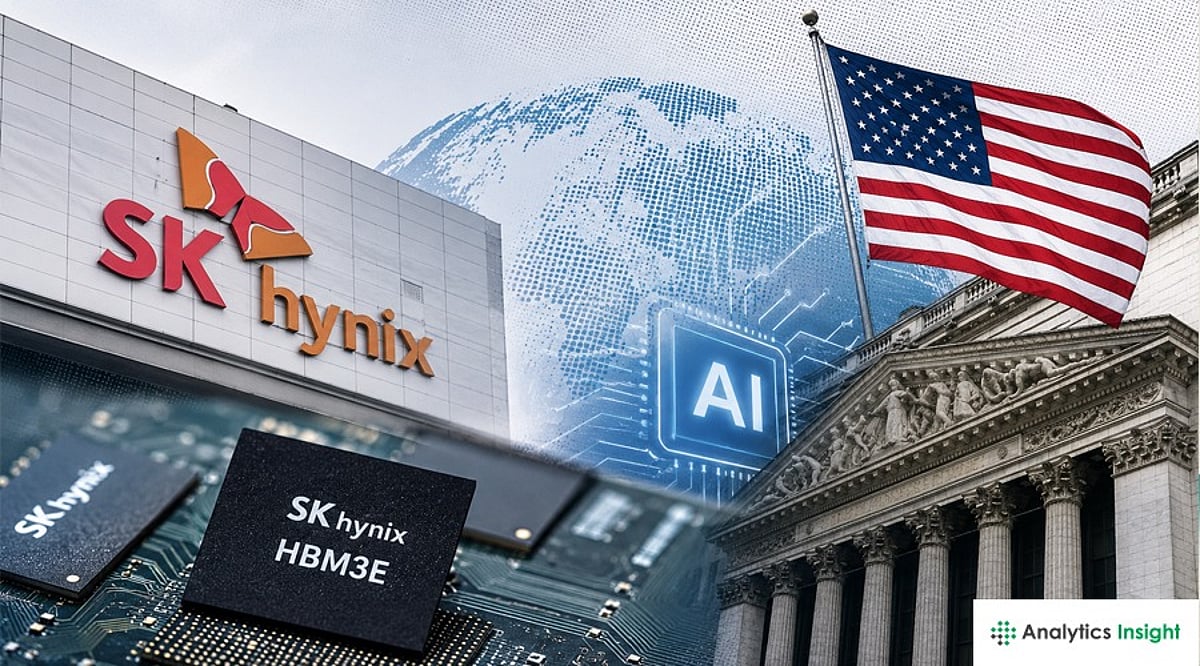
    Meanwhile, SK Hynix prepared to launch a U.S. listing aimed at raising approximately $28 billion. The offering added more attention to the global AI chip trade. The South Korean memory chipmaker has already drawn strong market interest this year, although its shares have also experienced sharp swings.

    Investors Watch Fed Minutes and Economic Data

    Investors also looked ahead to minutes from the Federal Reserve’s latest policy meeting. The minutes are due Wednesday and will be closely watched after the first meeting led by new Fed Chair Kevin Warsh. Traders have reduced bets on a July rate hike after last week’s cooler jobs report.

    According to CME FedWatch data, traders now see a 24% chance of a 25-basis-point rate hike at the July 29 meeting, down from about 30% a week earlier. The shift came as investors judged whether softer labor data could give the Fed more room to wait.

    The Institute for Supply Management reported that its services index slipped to 54.0 in June, close to market forecasts. The reading indicated that U.S. services activity continued to grow, though at a slightly slower pace. Prices eased but remained high, while employment moved back into growth territory.

    Trade Nation’s senior market analyst, David Morrison, expressed doubt about how much clarity the Fed minutes may offer. “Warsh wants the Fed to concentrate on the data and stick to that and not give any projections,” he said. “So it could be that the minutes don’t really give very much away.”

    Earnings Season and Stock Movers Stay in Focus

    Second-quarter earnings will become a key test for Wall Street later this week. Delta Air Lines and PepsiCo are among the companies expected to report results. Investors are watching whether corporate updates can support the market after strong gains in the major indexes last week.

    Morrison also pointed to uncertainty around the largest technology stocks. “This earnings season is important, given the fact that the Magnificent 7 have had a pretty tough time with things of late,” he said. He added that “just a little bit of good news” could help them resume their rally.

    Microsoft shares fell 1.8% after the company announced it would cut about 4,800 jobs, equal to roughly 2.1% of its workforce. The stock’s decline weighed on sentiment around large-cap technology, even as broader tech shares rose.

    SpaceX gained as investors prepared for its entry into the Nasdaq 100 on Tuesday. The move is expected to drive buying from funds that track the index. Elsewhere, O’Reilly Automotive dropped after reports indicated the company made a cash offer for Genuine Parts’ auto unit.

    Global markets were more muted. European stocks slipped slightly, while Asian markets ended mixed. Japan’s Topix rose, South Korea’s Kospi fell, and Hong Kong’s Hang Seng gained. Oil prices drifted after OPEC+ members agreed to raise output again in August, while U.S. Treasury yields edged lower.

    With the second-quarter earnings season beginning and the Federal Reserve minutes due later this week, investors are expected to look for fresh signals on corporate profitability and the future path of U.S. interest rates, which could shape the market’s next move.

  • SK Hynix Reduces US IPO Ambition to $28 Billion as Memory Volatility Rises

    SK Hynix Reduces US IPO Ambition to $28 Billion as Memory Volatility Rises

    South Korean chipmaker SK Hynix is scaling back its US listing ambitions, trimming its target to roughly $28 billion amid growing concerns about the memory chip cycle. The company plans to offer American Depositary Receipts on the NASDAQ, aiming to raise funds for factory expansion and equipment purchases while the AI-driven demand for high-bandwidth memory continues to evolve.

    According to regulatory filings, SK Hynix will issue 17.79 million new shares via depositary receipts, with ten ADRs representing one common share. The final pricing is expected on Thursday, with trading set to begin Friday. The revised target of about 43.141 trillion won ($28.21 billion) is lower than the earlier estimate of 45.453 trillion won, reflecting recent declines in the company’s Seoul-listed shares, which fell about 4% on Monday to 2,327,000 won. Broader pressure on memory chip stocks and a dip in the KOSPI index have contributed to the cautious outlook.

    If completed, the deal would rank among the largest share sales in history, trailing only SpaceX’s record US listing last month and surpassing major offerings like Saudi Aramco and Alibaba. The proceeds will be used to expand chip facilities in South Korea and acquire advanced equipment, including ASML’s extreme ultraviolet scanners, essential for cutting-edge semiconductor production.

    SK Hynix is a key supplier of high-bandwidth memory to AI infrastructure giants such as NVIDIA and Google. The company’s stock has surged this year, buoyed by AI demand, but investors remain wary of the memory cycle’s mid-stage timing. “We expect better access, but timing of the memory cycle is equally important,” said Sundeep Gantori, chief investment officer of equities at Standard Chartered. Steve Sosnick of Interactive Brokers noted that the US listing would primarily benefit individual and smaller institutional investors seeking momentum in AI-linked stocks.

    The NASDAQ listing is expected to improve access for US investors and potentially narrow the valuation gap with rival Micron Technology. It could also pave the way for inclusion in the Philadelphia Semiconductor Index, tracked by global passive funds. Dave Mazza, CEO of Roundhill Investments, described the move as “more than a liquidity event,” emphasizing that SK Hynix has been a crucial company that most US institutions could not easily own.

    South Korea’s broader semiconductor push, including a $576 billion chip and AI investment program led by President Lee Jae Myung, underscores the strategic importance of such expansions. Lee has urged officials to expedite permits and infrastructure to support the country’s advanced industry ambitions.