Blog

  • Top Retro Gaming Handhelds Available in India for 2024

    Top Retro Gaming Handhelds Available in India for 2024

    Retro gaming handhelds have become increasingly popular in India, offering a portable way to relive classic games from consoles like the Game Boy, PlayStation, and arcade systems. Whether you’re a seasoned collector or a newcomer, the market is filled with options ranging from budget-friendly devices to premium Android-powered consoles. Here’s a curated list of the best retro gaming handhelds currently available in India.

    Anbernic RG35XX Plus

    A compact retro handheld featuring a vibrant display, strong emulation performance, Linux-based software, and excellent battery life for classic gaming. It’s a great all-rounder for fans of Nintendo, Sega, and other retro systems.

    Miyoo Mini Plus

    A fan-favorite handheld offering crisp visuals, a pocket-friendly design, custom firmware support, and smooth gameplay across multiple classic gaming platforms. Its small size makes it ideal for on-the-go gaming.

    Retroid Pocket 5

    Premium Android-powered gaming handheld delivering powerful performance, touchscreen controls, wide emulator compatibility, and support for demanding retro gaming systems like Dreamcast, PSP, and PlayStation 1.

    AYN Odin 2

    High-performance handheld powered by flagship hardware, enabling smooth emulation of retro consoles alongside select modern Android gaming experiences. It’s a top choice for those who want both retro and contemporary gaming in one device.

    TrimUI Smart Pro

    An affordable retro gaming device featuring a large display, comfortable controls, solid battery life, and reliable performance for classic game libraries. Great value for casual retro gamers.

    Anbernic RG406H

    A modern retro handheld combining ergonomic design, Hall-effect joysticks, excellent display quality, and powerful hardware for advanced console emulation. Perfect for serious emulation enthusiasts.

    Powkiddy RGB30

    Unique handheld with a square display, ideal for classic arcade, Game Boy, and pixel-art games with impressive battery performance. Its distinctive screen is perfect for vertical shooters and old-school RPGs.

    Retroid Pocket Mini

    Compact Android handheld balancing portability, premium controls, excellent display quality, and reliable emulation across multiple retro gaming platforms. A solid choice for those who prioritize portability without sacrificing performance.

    Anbernic RG40XX H

    Budget-friendly handheld featuring dual analog sticks, a Linux operating system, broad emulator support, and dependable performance for everyday retro gaming. Ideal for beginners or those on a tight budget.

    These handhelds offer a nostalgic trip down memory lane while leveraging modern technology for better performance and display quality. Whether you’re in India or anywhere else, each device has its own strengths, so choose based on your preferred systems and budget.

  • Claude Code in Your Browser: A Step-by-Step Guide to AI-Powered Coding

    Claude Code in Your Browser: A Step-by-Step Guide to AI-Powered Coding

    Claude Code is transforming AI-powered software development by allowing developers to run coding workflows directly in their browser. This guide explains how to get started and maximize its potential.

    Getting Started with Browser-Based Claude Code

    To use Claude Code in your browser, connect it to a supported repository. Once linked, it analyzes your project structure and assists with a variety of coding tasks—no heavy local setup required. This makes starting a project easy from any device with a modern browser.

    What You Can Do with Claude Code

    • Generate code across multiple programming languages.
    • Explain complex functions to understand legacy or unfamiliar code.
    • Fix bugs and receive suggestions for improvements.
    • Edit files and write comprehensive documentation.
    • Review pull requests and automate repetitive tasks like formatting or testing.
    • Integrate with Git workflows to speed up debugging, code reviews, and feature development.

    Best Practices and Security

    While Claude Code is a powerful assistant, always review its output for security, correctness, and compatibility before deploying to production. Security measures should include limiting repository access, protecting API credentials, and manually verifying sensitive code changes. Many teams use the tool alongside Git to accelerate development without sacrificing quality.

    The Future of AI-Assisted Development

    As we move through 2026, browser-based coding tools like Claude Code are becoming essential in modern software engineering. They lower the barrier to entry and enable rapid iteration, making AI assistance an integral part of everyday development workflows.

  • How a Smartwatch Monitors Your Health: A Complete Guide to Wearable Sensors and Features

    How a Smartwatch Monitors Your Health: A Complete Guide to Wearable Sensors and Features

    Modern smartwatches have evolved into sophisticated health companions, packing an array of sensors that track vital signs, sleep patterns, and even detect emergencies. Here’s a detailed look at how these devices monitor your health in real time.

    Heart Rate Monitoring

    Optical sensors on the back of the watch continuously measure your pulse. This data helps track resting heart rate, exercise intensity, and alerts you to any unusual changes throughout the day.

    Blood Oxygen Tracking (SpO2)

    Using light-based sensors, smartwatches estimate blood oxygen saturation levels. This feature is useful for assessing wellness during sleep, workouts, travel, or high-altitude activities.

    Sleep Analysis

    By combining motion and heart rate data, watches monitor sleep duration, stages (light, deep, REM), interruptions, and overall quality. These insights help you build healthier bedtime routines and improve recovery.

    ECG Monitoring

    Select smartwatch models can record a single-lead electrocardiogram right from your wrist. The device detects irregular heart rhythms like atrial fibrillation and encourages timely medical consultation when abnormal patterns appear.

    Stress Detection

    Variability in heart rate, along with sensor data, is used to estimate stress levels. When stress is detected, the watch prompts breathing exercises and relaxation techniques to support mental wellness.

    Activity Tracking

    Motion sensors (accelerometers and gyroscopes) count steps, calculate calories burned, track active minutes, and evaluate workout performance. This motivates users to stay physically active every day.

    Temperature Monitoring

    Advanced skin temperature sensors can detect subtle overnight changes. This supports wellness tracking, recovery insights, and even menstrual cycle predictions in some models.

    Fall Detection

    Built-in accelerometers recognize severe falls. If the wearer remains unresponsive, the watch can automatically alert emergency contacts or services, providing peace of mind for active users or older adults.

    AI Health Insights

    Artificial intelligence combines multiple sensor readings into personalized health reports. By analyzing trends and patterns, these insights help you make informed lifestyle decisions and monitor long-term changes.

  • Top 5 Budget ANC Headphones Under ₹3,000 in 2026

    Top 5 Budget ANC Headphones Under ₹3,000 in 2026

    Affordable Active Noise Cancellation (ANC) headphones have become more capable than ever, offering premium features at budget-friendly prices. Whether you are commuting, studying, or working from home, finding the right pair under ₹3,000 can greatly enhance your audio experience without breaking the bank.

    Key Features to Look For

    When shopping for ANC headphones in this price range, prioritize these essential features:

    • Hybrid ANC Technology: Effectively reduces everyday sounds like traffic, fans, and office background noise.
    • Battery Life: Many budget ANC headphones now offer up to 40–70 hours of playback on a single charge.
    • Bluetooth 5.3 or Newer: Provides faster pairing, lower latency, and more stable wireless performance for everyday use.
    • Comfort: Lightweight designs with soft memory foam ear cushions and adjustable headbands ensure long listening sessions remain comfortable.
    • ENC-Enabled Microphones: Deliver clearer voice quality during calls and online meetings.
    • Low-Latency Mode: Essential for gaming and video streaming to reduce audio delay.
    • Additional Features: Water resistance, fast charging, companion apps, and customizable EQ settings add extra value.

    Our Top Picks Under ₹3,000

    After comparing sound quality, comfort, ANC performance, warranty, and after-sales support, here are the best ANC headphones available in 2026:

    Model Battery Life ANC Type Key Highlight
    Boat Nirvanaa 525 60 hours Hybrid Best overall value
    realme Buds Wireless 3 40 hours Hybrid Excellent call quality
    OnePlus Bullets Wireless Z2 30 hours Hybrid Low-latency gaming mode
    Noise ColorFit Pulse 2 45 hours Hybrid Water-resistant design
    JBL Tune 510BT 40 hours Standard Reliable brand and sound

    Final Buying Tips

    Don’t rely solely on specifications. Test the headphones for comfort and ANC effectiveness if possible. Compare warranty periods and after-sales support before making a decision. For the latest updates, join our WhatsApp Channel to get the latest news, exclusives, and videos on WhatsApp.

  • Why Posting on Social Media Alone Isn’t Enough: Debunking the Biggest Digital Marketing Myth

    Why Posting on Social Media Alone Isn’t Enough: Debunking the Biggest Digital Marketing Myth

    Many businesses fall into the trap of believing that simply posting on social media will drive growth. While platforms like Instagram, Facebook, LinkedIn, and TikTok are essential for visibility, they are just one piece of a much larger puzzle. True digital success requires a holistic strategy that integrates SEO, paid advertising, email marketing, a well-optimized website, data analysis, and customer retention efforts.

    The Illusion of Social Media Reach

    With over 5.7 billion social media users worldwide and an average daily usage of 2 hours and 20 minutes, the numbers are staggering. However, the competition is equally fierce. Millions of brands post content every day, making it increasingly difficult for organic posts to gain traction. Algorithms now prioritize paid ads, entertainment, and creator-driven content, leaving organic business posts with limited visibility.

    You Don’t Own Your Audience

    A critical flaw in relying solely on social media is that you never truly own your audience. Followers belong to the platform, not your business. Algorithm changes can slash your reach overnight—a risk that has become all too common. Building on rented land is a fragile strategy.

    Engagement Doesn’t Equal Revenue

    High likes and comments can be misleading. A 2026 Kantar report highlights consumer fatigue with influencer-heavy and overly promotional content. Only about 6% of creator-based content drives both strong engagement and measurable business results. Attention does not automatically translate into customers.

    The Power of Search and Email

    Search engines bring users with high purchase intent. Unlike fleeting social posts, strong SEO rankings deliver traffic for months or years. Email marketing, often overlooked, boasts one of the highest ROIs in digital marketing. Subscribers are yours to communicate with directly—no algorithm interference.

    Paid Ads, AI, and Websites

    Modern marketing relies on AI-powered ad targeting, data-driven decisions, and personalized customer experiences. Social media creates awareness, but conversion happens on your website. Fast load times, clear messaging, and smooth user journeys turn visitors into paying customers.

    The Verdict

    Posting on social media is important, but it is not a complete marketing strategy. To achieve sustainable growth, businesses must combine multiple channels: SEO, paid ads, email, website optimization, analytics, and AI-enhanced personalization. Believing otherwise is one of the costliest mistakes in digital marketing today.

  • EU AI Act’s August 2 Deadline: New Transparency and Labeling Requirements for AI Systems

    EU AI Act’s August 2 Deadline: New Transparency and Labeling Requirements for AI Systems

    The European Union is advancing toward full enforcement of its artificial intelligence regulations under the EU AI Act. Beginning August 2, 2026, new transparency and compliance obligations will apply across all member states. These rules mandate disclosure when AI interacts with users, clear labeling of synthetic content, and oversight of general-purpose AI systems.

    Legal uncertainty persists as proposed delays under the Digital Omnibus package remain unratified. Violations could result in penalties of up to 7% of global annual turnover in serious cases.

    Key Transparency Rules Taking Effect in August 2026

    From August 2, 2026, providers of AI systems that directly interact with people must make that interaction obvious, unless it is already apparent. Systems generating synthetic audio, images, video, or text must mark outputs in a machine-readable format where technically feasible.

    Deployers also have responsibilities: users of emotion recognition or biometric categorization systems must inform individuals exposed to those tools. Those deploying deepfake systems must disclose when image, audio, or video content has been artificially created or altered.

    The European Commission confirms that Article 50 transparency obligations apply from the August 2 deadline. A voluntary code of practice for marking and labeling AI-generated content has been published, but legal duties under the AI Act remain in effect.

    Penalties and High-Risk Rule Uncertainty

    The penalty structure underscores the deadline’s significance. Breaches of prohibited AI practices can incur fines up to €35 million or 7% of global annual turnover. Other violations, including Article 50 transparency duties, may reach €15 million or 3% of global annual turnover. Submitting false, incomplete, or misleading information to authorities can result in fines up to €7.5 million or 1% of global annual turnover. Member states must establish enforcement rules with consideration for small businesses and startups.

    Confusion surrounds the high-risk timeline. The Council of the EU and Parliament reached a political agreement on May 7 to delay standalone high-risk AI rules to December 2, 2027, while systems embedded in products would shift to August 2, 2028. Companies treat this change as tentative until the legal process completes, making the original August 2 date critical for planning—especially for firms using AI in biometrics, hiring, education, infrastructure, or public services.

    Italy Moves Early as AI Adoption Rises

    Italy has outpaced many EU peers in preparation. Its Law 132/2025 established a national AI framework aligned with the EU AI Act, assigning oversight to the Agency for Digital Italy and the National Cybersecurity Agency. On June 10, 2026, the Italian government gave preliminary approval to two implementing decrees under that law. The draft measures prohibit fully automated hiring, dismissal, and disciplinary decisions affecting workers’ rights, pending parliamentary review.

    ISTAT data shows AI adoption among Italian firms with at least 10 employees rose to 16.4% in 2025 from 8.2% in 2024 and 5.0% in 2023. However, skills remain a barrier: 58.6% of non-AI-using firms cited lack of skills, while 47.3% pointed to unclear regulation. This gap pressures businesses to map AI tools, classify risks, assign responsibility, and document human oversight before the August deadline.

  • Polymarket’s Fake Trading Videos Spark Federal Investigation Amid Record World Cup Volumes

    Polymarket’s Fake Trading Videos Spark Federal Investigation Amid Record World Cup Volumes

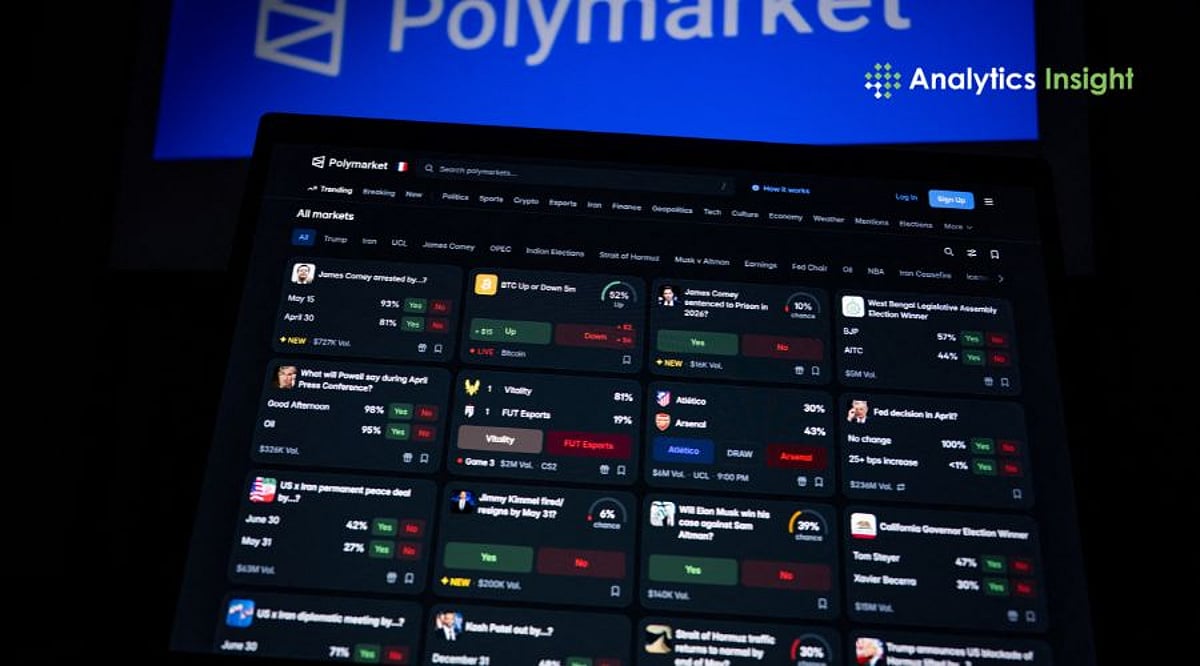
    Prediction market platform Polymarket is under increased regulatory scrutiny following reports that it used deceptive influencer campaigns to promote its services. Simultaneously, the company recorded surging trading activity during the 2026 FIFA World Cup, placing it at the intersection of regulatory debate and growing market interest.

    Report Reveals Fabricated Trades and Misleading Content

    A Wall Street Journal investigation alleged that Polymarket paid college-age content creators to produce over 1,100 promotional videos between December 2025 and May 2026. According to the report, the videos showcased fabricated prediction market trades worth approximately $1.9 million, using replica versions of the Polymarket website rather than the live platform. The creators reportedly displayed fake profits of nearly $900,000 while concealing their financial relationship with the company. The staged content gave viewers the impression that large profits were routine, while hiding potential losses that could have exceeded $166,000. Creators were instructed to use imitation websites closely resembling the official Polymarket interface and were told not to disclose payments, making the sponsored content appear as ordinary social media posts.

    Following the investigation, Polymarket launched an internal review of its promotional activities but has not publicly released its findings.

    Lawmakers Call for CFTC Investigation

    Regulatory pressure escalated after U.S. Senators John Curtis and Adam Schiff sent a letter on June 26 requesting the Commodity Futures Trading Commission (CFTC) to investigate Polymarket’s advertising practices. The request focused on whether the campaigns complied with advertising rules. Polymarket has a history with the CFTC: in 2022, it reached a settlement involving a $1.4 million civil penalty and agreed to stop offering services to U.S. users.

    Beyond regulatory agencies, a consumer advocacy group filed a lawsuit in late June against Polymarket and several executives, alleging deceptive advertising targeting college students. Federal authorities are also reportedly examining the company’s marketing activities.

    World Cup Drives Record Trading Volume

    Amid the regulatory attention, prediction markets experienced a surge in trading activity during the 2026 FIFA World Cup. Data from DefiLlama showed that Kalshi generated nearly $9.4 billion in June trading volume, up from about $5.3 billion in May. Polymarket International’s monthly volume rose to roughly $4.3 billion from approximately $3.5 billion. Separate market data indicated even stronger figures, with Kalshi exceeding $30 billion in notional trading volume in June and Polymarket International reaching more than $10.8 billion. Polymarket’s U.S. platform recorded over $3.5 billion in monthly volume.

    Knockout-stage matches attracted heavy participation. Canada’s Round of 16 match against Morocco generated over $48 million in trading volume on Kalshi and more than $26.8 million on Polymarket. U.S. markets also drew millions of dollars in trading activity.

    The rapid growth has coincided with broader regulatory discussions. Nearly a dozen U.S. states have taken action involving platforms such as Kalshi and Polymarket, while European regulators have reminded firms that some event contracts may already fall under existing financial rules. CFTC Chair Michael Selig criticized state enforcement efforts, stating, “To any state that seeks to nullify federal law and seize authority over these markets, we will see you in court.”

    Polymarket’s dual narrative—of regulatory risk and market momentum—underscores the volatile intersection of cryptocurrency, prediction markets, and consumer protection in the digital age.

  • Bitcoin Surges Past $62,000 as ETF Inflows Return and US Crypto Bill Gains Traction

    Bitcoin Surges Past $62,000 as ETF Inflows Return and US Crypto Bill Gains Traction

    Bitcoin rebounded above $62,000 in early July after a challenging June marked by record outflows from US spot Bitcoin ETFs. Renewed weekly net inflows of $526.64 million, growing attention to proposed US crypto legislation, and continued institutional interest have shifted focus to Bitcoin’s next market direction.

    Bitcoin Recovers After a Difficult June for ETFs

    Bitcoin ended June near a two-year low, falling to roughly $58,000. Market data revealed that US spot Bitcoin ETFs experienced approximately $8.9 billion in net outflows since early May, including about $4.51 billion in June alone — the weakest month for the ETF category since its launch.

    Santiment reported that retail investors increased small Bitcoin holdings during the second half of June, while larger holders reduced exposure. The analytics firm noted that large investors remained cautious, waiting for stronger signs that the market had reached a bottom.

    The report also highlighted a shift in capital toward AI and semiconductor stocks during June. According to Santiment, those sectors attracted investment that previously flowed into cryptocurrencies, reducing institutional demand for Bitcoin. HashKey researcher Tim Sun commented, “capital was reallocating across risk assets rather than that investors were losing their appetite for risk altogether.” He added that Bitcoin could attract that capital again if the AI sector slows.

    Fresh ETF Inflows and US Legislation Support Market Sentiment

    Market conditions improved during the first week of July as US spot Bitcoin ETFs posted $526.64 million in weekly net inflows despite ongoing uncertainty. This followed one of the largest monthly withdrawal periods on record for the ETF market.

    The positive inflow indicated that some institutional investors continued allocating capital to regulated Bitcoin products even after June’s decline. Analysts emphasize that ETF flow data remains a key metric because spot ETFs purchase actual Bitcoin rather than futures contracts.

    Bitcoin traded above $62,000 as investors tracked developments surrounding the proposed CLARITY Act in the United States. Prediction market data showed rising expectations that the legislation could advance before Congress begins its August recess. The bill has support from over 200 crypto companies, including Coinbase, Ripple, and Kraken. Supporters believe clearer regulations could encourage broader participation in digital asset markets, although lawmakers have not yet approved the legislation.

    Strategy, Blockchain Security, and Market Focus Remain in View

    Strategy (formerly MicroStrategy) also remained in the spotlight after Executive Chairman Michael Saylor introduced a Digital Credit Capital Framework designed to strengthen liquidity and support the company’s preferred stock obligations. Saylor also addressed concerns about Strategy’s Bitcoin position, stating that “the company had bought about 175,000 BTC this year” and adding that “he had not sold any of his personal stash.” Strategy currently holds more than 818,000 BTC, making it the world’s largest corporate Bitcoin holder.

    Meanwhile, blockchain security returned to focus after researchers disclosed that they identified and fixed a critical vulnerability on the Aptos blockchain before attackers could exploit it. Security firm Hexens said the issue could have affected infrastructure supporting as much as $70 billion in digital assets, although no funds were lost.

    Elsewhere, blockchain analytics firm Nansen estimated that holders of the TRUMP memecoin have accumulated about $3.8 billion in combined losses after the token declined sharply from its peak. As July progresses, traders continue to monitor ETF flows, regulatory developments, institutional activity, and broader market conditions for signs of Bitcoin’s next direction.

  • Bitcoin, Ethereum, and Solana Drive Crypto Market Rally in Early July

    Bitcoin, Ethereum, and Solana Drive Crypto Market Rally in Early July

    The cryptocurrency market kicked off July with a notable surge as Bitcoin, Ethereum, and Solana posted solid gains. Bitcoin rose nearly 9% over four days, Ethereum held key support levels, and Solana outperformed other major assets. Increased on-chain activity and strong support zones fueled the recovery, while traders keep a close watch on critical price levels for the next market move.

    Bitcoin and Ethereum Continue to Lead Market Recovery

    The latest rally remains concentrated among top-tier cryptocurrencies. According to CoinMarketCap, the combined market value of the eight largest crypto assets reached roughly $1.71 trillion, representing about 78.8% of the total crypto market cap of approximately $2.17 trillion. Bitcoin dominates with a 57.8% share, while Ethereum accounts for 9.8%. Together, they make up over two-thirds of the market, meaning their price movements heavily influence overall direction.

    Bitcoin gained nearly 9% in early July, and Ethereum maintained support above key levels after recovering from June lows. CoinDesk noted that “the recent recovery in the crypto market has still been primarily driven by a small number of top-tier assets,” adding that increased concentration means Bitcoin and Ethereum continue to shape broader performance.

    Network activity also improved. Data shows that 24-hour active addresses on several blockchains increased from mid-June, indicating stronger user participation during the recovery.

    June Support Levels Remain Key Market Reference Points

    Price action in June established several support zones. Bitcoin found buying interest near $60,000, Dogecoin around $0.078, BNB near $557, and XRP close to $1.05 before later testing lower levels. Ethereum held demand near $1,559, Solana stayed above $60, TRX near $0.31, and HYPE around $52.99. These levels remain important as traders assess market strength.

    By the end of June, Bitcoin, Dogecoin, BNB, and XRP briefly dipped below their earlier support before recovering. CoinDesk reported that “selling pressure had not yet fully subsided” during that period. However, Solana, TRX, and HYPE stayed above their June lows throughout the pullback, distinguishing them from larger cryptocurrencies that temporarily broke support.

    Solana Outperforms as Broader Rebound Expands

    The recovery broadened in early July as more major cryptocurrencies moved higher alongside Bitcoin. If momentum continues, CoinDesk suggests Bitcoin could revisit the mid-June level near $67,050, while Dogecoin, BNB, and XRP could retest around $0.091, $630, and $1.30, respectively.

    Solana recorded one of the strongest performances, moving above its mid-June high and trading beyond $75. Continued buying could push Solana toward $98 if market conditions remain supportive. Other assets under watch include TRX near resistance at $0.37, HYPE in the $76–$80 range, and Ethereum positioned for a possible retest of $2,395.

    Alongside price gains, blockchain activity improved. Rising active addresses across several networks suggest increased user engagement during the recovery period.

    Disclaimer: This article is for informational purposes only and does not constitute investment advice. Cryptocurrencies are risky assets; always do your own research before investing.

  • Dogecoin Struggles Below Key Averages as Weekly Death Cross Looms

    Dogecoin Struggles Below Key Averages as Weekly Death Cross Looms

    Dogecoin traded lower on July 5 as bearish technical signals weighed on market sentiment, even as network activity showed signs of growth. DOGE was down 1.37% over 24 hours at $0.0758, trailing a slightly positive Bitcoin market. Traders now focus on whether the meme coin can hold nearby support or face another move lower.

    Dogecoin Price Weakens Below Key Moving Averages

    Dogecoin traded below major moving averages as short-term momentum stayed weak. The token remained under its 30-day simple moving average at $0.0809 and its 200-day simple moving average at $0.1032. Its 14-day RSI stood at 41.65, showing that sellers still controlled near-term direction.

    The key level for traders is the daily pivot near $0.0778. A move back above that mark may ease immediate selling pressure. However, failure to reclaim it keeps attention on the 7-day SMA near $0.0742. A break below that area could put the $0.072 to $0.074 zone back in focus.

    Weekly Death Cross Raises Market Caution

    Dogecoin’s weekly chart is drawing attention as its 50-week moving average moves closer to the 200-week moving average. If the 50-week average crosses below the 200-week average, the chart would confirm a weekly death cross. This setup has not appeared on DOGE’s weekly chart since February 2023.

    Market watchers often view a death cross as a sign of weaker momentum. Still, the past reaction was mixed. After the February 2023 death cross DOGE did not record a sharp collapse. Instead, the price moved sideways for months. That history has made traders cautious about treating the signal as a direct price call.

    Analysts have also pointed to earlier weekly crossovers. Dogecoin saw a golden cross in February 2021 before its major rally to an all-time high near $0.74. Another golden cross appeared in late 2024 before DOGE reached $0.48 in December that year. Even so, those past moves do not confirm how the current setup will play out.

    Active Addresses Rise, but Price Response Stays Unclear

    Meanwhile, Dogecoin’s on-chain data showed stronger network activity. Analyst Ali Martinez said Dogecoin active addresses rose to nearly 50,000, adding, ‘something is brewing.’ Glassnode data shared in the post showed active addresses rising from about 36,000 on June 24 to nearly 48,000 on July 1.

    The figure later eased but held near 44,000, showing that network use remained above late-June levels. Active addresses measure unique wallets taking part in transactions or transfers. A rise in this metric can show broader network use, but it does not always lead to price gains.

    The data from Martinez drew attention, yet the market response remained cautious. “Something is brewing” points to rising activity, but it does not confirm accumulation or a trend reversal. Traders still need price confirmation especially while DOGE trades below key moving averages.

    Derivatives data also added pressure. A $723,000 long liquidation on Binance showed that leveraged buyers faced stress as DOGE moved lower. At the same time, Dogecoin ETFs logged a third straight week of net outflows, suggesting softer demand for meme coin exposure.

    For now, Dogecoin’s near-term path depends on the $0.0778 pivot and the $0.0742 support area. Holding support may keep the price inside its current range. A close below support, along with a confirmed weekly death cross, could extend bearish pressure in the DOGE market.