Blog

  • ABB Innovation Center Unites Over 1,000 Global Innovators to Accelerate Industrial AI

    ABB Innovation Center Unites Over 1,000 Global Innovators to Accelerate Industrial AI

    ABB’s Innovation Center (AIC) in Bengaluru recently concluded the sixth edition of its ABB Accelerator program, a five-day event that brought together more than 1,000 innovators from 37 countries. The program aimed to harness frontier technologies and domain expertise to create real-world industrial AI solutions.

    The event featured over 25 distinguished thought leaders from industry and academia, 80 startups, and participation from more than 350 universities. This collaborative effort showcased how diverse expertise can accelerate product development and build a future-ready talent pipeline for industrial transformation.

    “ABB Accelerator is a global innovation program where ideas are transformed into impactful solutions for our customers. By combining cutting-edge R&D, domain and application engineering strength, digital and AI capabilities, we are helping customers unlock greater value while building capabilities that shape the future,” said GNV Subba Rao, Whole-time Director, ABB Innovation Center.

    Rajesh Ramachandran, Global Chief Digital Officer for Automation at ABB, added: “At ABB, we see the Accelerator as a powerful platform where innovation meets industrial impact. By bringing together ABB experts, partners, startups, academia and thought leaders, we are accelerating the development of scalable solutions that harness industrial AI to shape more autonomous, efficient, and sustainable operations.”

    Over the past two years, the ABB Accelerator program has engaged more than 2,000 participants and generated nearly 700 approved use cases across AI, automation, cloud, and digital technologies. The program has also earned global recognition, receiving three prestigious international awards in 5, including Gold and Bronze Stevie® Awards and the International Innovation Award.

    The ABB Innovation Center (AIC) is one of ABB’s largest global technology and engineering hubs, employing nearly 4,000 technologists in R&D, engineering, digital technologies, and global operations. It focuses on developing next-generation industrial technologies and supporting customers toward increasingly autonomous operations.

    About ABB: ABB is a global technology leader in electrification and automation, enabling a more sustainable and resource-efficient future. With over 140 years of history and around 110,000 employees worldwide, ABB’s shares are listed on the SIX Swiss Exchange and Nasdaq Stockholm. More at www.abb.com.

  • Why Institutional Investors Now Demand Public-Company Controls for L1 Blockchain Infrastructure

    Why Institutional Investors Now Demand Public-Company Controls for L1 Blockchain Infrastructure

    The digital asset landscape is undergoing a structural shift. The era of decentralized networks characterized by speculative retail capital, regulatory ambiguity, and infrastructure built entirely outside traditional finance is fading. Today, a new phase of institutional migration has emerged.

    As sovereign entities, public pension funds, and major asset managers evaluate crypto investments, the criteria for a viable underlying ledger have changed. The market no longer asks about high throughput or low latency; it now demands operational transparency, strict regulatory compliance, and a verifiable economic architecture.

    For infrastructure networks aiming for long-term viability, this shift rests on three pillars: audit frameworks, fair distribution mechanics, and alignment with regulatory guidelines.

    1. The Audit Paradigm: Bridging Physical Assets and On-Chain Settlement

    For institutional capital, the primary barrier to blockchain adoption is rarely the technology itself. What scares off institutional capital is the systemic lack of internal controls. In traditional finance, every asset class relies on a rigorous, independent audit trail. Without those in place, Wall Street investors won’t even look at a crypto project.

    Crypto-native networks have substituted traditional financial audits with cryptographic proof-of-reserves or localized smart contract audits. While necessary, these methods do not satisfy the Sarbanes-Oxley (SOX) compliance standards required by publicly traded entities. So don’t let a project convince you it will pull in real institutional capital without first and foremost meeting these compliance requirements.

    The industry is witnessing the materialization of hybrids: networks built on public-company controls that marry institutional-grade physical security with cryptographic settlement. Take infrastructure operators like Ault Blockchain, for instance, bridging this through the application of public-company frameworks. It made a point of retaining top-tier firms like CBIZ to physically audit data center hardware and underlying commodity custody alongside on-chain ledgers.

    When every mining unit, power contract, and vault-bound asset is accounted for under standard public accounting frameworks, the operational risk premium for institutional participants drops significantly. That’s the vote of confidence institutional capital needs—nothing less.

    2. Tokenomics and the End of the Capital-Allocated Network

    The early history of Layer 1 rollouts was ruled by Initial Coin Offerings (ICOs), foundation-led private allocations, and massive insider pre-mines. This was effective for rapid capital formation, but these mechanisms have brought regulatory liabilities and systemic sell-pressure from early-stage venture capital.

    Aggressive token allocations to insiders frequently trigger strict classification reviews by global regulators. To achieve the status of a true utility or commodity ledger, a network’s distribution must mirror the organic work-proving mechanics of the early Bitcoin network, but adapted for modern enterprise scale.

    The forward-looking template for a resilient network layout relies on earned distribution rather than speculative sales:

    • Zero Public Token Sales: Eliminating regulatory pre-funding liabilities entirely.
    • Verifiable On-Chain Work: Distributing native network tokens exclusively to operators executing computational or cryptographic tasks.
    • Extended Emission Horizons: Utilizing ten-year or multi-decade declining emission curves to ensure predictable supply dynamics.

    Transitioning away from localized airdrops and VC-dominated allocations toward massive, distributed node networks—like the 750,000+ licensed mining node model being utilized by Ault—L1 networks can establish decentralized network security without incurring the structural risks of centralized capital distribution.

    3. Navigating the Legible Regulatory Map

    The narrative that digital assets operate in a permanent regulatory vacuum is officially obsolete. Following consecutive structural updates, including the SEC’s foundational statements, the SEC-CFTC joint guidance framework, and the legislative progress of Project Crypto, the United States has established its first highly legible regulatory map for tokenized assets.

    The regulatory compliance framework bifurcates into two distinct pillars: Market Structure Compliance (governed by SEC-CFTC Joint Guidance and Project Crypto Standards) and Asset Class Compliance (requiring clear commodity vs. security clearances alongside audited asset issuance models).

    This updated framework creates a clear division in the market:

    • Legacy Networks: Blockchains tied to opaque distribution structures, unvetted custody solutions, or ongoing structural litigation.
    • Compliant Infrastructure: Audited issuers backed by public-company governance, structured to execute strictly within defined compliance parameters from day one.

    The necessity for this rigorous approach is frequently born out of friction. Ault Blockchain’s own origin narrative stems from its founder-driven pivot after navigating banking-system failures while operating as an NYSE-listed entity. This is evidence of the broader reality: the operators best equipped to build permissionless infrastructure are often those who have already stress-tested the limitations and compliance demands of the traditional public equity markets.

    Disclaimer: This article is provided for informational purposes and does not constitute investment advice. You are responsible for conducting your own research (DYOR) before making any investments.

  • Videonetics Deploys AI-Powered Surveillance Network Across Andhra Pradesh for Real-Time Governance

    In a landmark step toward building a future-ready, technology-led governance ecosystem, Videonetics has successfully deployed its AI-powered Unified Video Management Platform across all 28 districts of Andhra Pradesh. This large-scale implementation establishes a connected, real-time intelligence network that enhances public safety, optimizes traffic enforcement, and enables data-driven decision-making across the state.

    Platform Overview

    At the core of this transformation is Videonetics’ unified platform, which brings together video management, AI-driven analytics, traffic management, e-ticketing, and face recognition within a single architecture. Approximately 15,000 IP cameras have been installed across critical locations, enabling continuous monitoring and seamless data flow into command centers.

    Traffic Management

    An advanced traffic management system is operational across more than 680 crucial intersections. This system automates detection of violations such as over-speeding and signal breaches, while also enabling identification of blacklisted vehicles, significantly reducing manual intervention and improving enforcement consistency.

    Face Recognition System

    The face recognition system deployed at nearly 1,000 locations assists authorized law enforcement agencies to identify persons of interest through integration with approved national databases, in compliance with regulatory frameworks.

    Real-World Outcomes

    Within weeks of becoming fully operational, CCTV360 (RTGS) began delivering tangible results beyond enforcement statistics:

    • A stolen two-wheeler reported in Bapatla was recovered within 3 hours. The vehicle was tracked across districts via ANPR and recovered by police in Tenali.
    • Two 11-year-olds reported missing from Yelamanchili were reunited with their families in under 4 hours after being identified using the Face Recognition System at Visakhapatnam Railway Station.
    • A Non-Bailable Warrant offender was flagged by the Face Recognition System at Tirumala Bus Stand, Tirupati, and taken into custody within 81 minutes.
    • A statewide facial recognition alert for a woman missing for over a month from Anantapur helped trace her location at Puttaparthi the very same day.

    State officials reported a broader pattern of reduced crime rates, faster investigations, and measurably safer roads through consistent, automated traffic enforcement.

    Leadership Perspectives

    “Andhra Pradesh represents one of the most progressive examples of how technology can be leveraged to transform governance at scale. At Videonetics, we are deeply committed to supporting the state’s vision of building safer, smarter, and more responsive cities.” — Naresh B. Wadhwa, Vice-Chairman & MD, Videonetics

    “The true value of technology in policing is measured not just by the number of cameras deployed, but by the outcomes delivered to citizens. This platform has helped us recover missing children, apprehend repeat offenders, trace stolen vehicles, and strengthen inter-district intelligence sharing at an unprecedented scale.” — Ch. Srikanth, IPS, Inspector General of Operations, Andhra Pradesh Police

    “Earlier, by the time CCTV footage was manually reviewed, valuable response time was already lost. Today, the system automatically alerts us about suspicious vehicles, wanted offenders, or missing persons within minutes. It has made investigations faster, patrol teams more effective, and field coordination far more efficient.” — Mrs. Malika Garg, IPS, Superintendent of Police (Operations), Andhra Pradesh Police

    Implementation Details

    Implemented in partnership with MATRIX Security & Surveillance Pvt. Ltd., the deployment integrates a vast network of cameras, analytics engines, and enforcement systems into a centralized Command and Control Centre in Amaravati, creating a unified operational backbone for statewide monitoring and response. Built on a modular and scalable architecture, the platform is designed to evolve with the state’s future requirements.

    About Videonetics

    Videonetics’ Unified Video Management Platform, powered by an indigenously developed True AI and deep learning engine, offers a comprehensive, modular, yet integrated solution. It includes applications such as Video Management System (VMS), Video Analytics (VA), Traffic Management System (TMS), and Face Recognition System (FRS). The company has been consistently ranked as the #1 Video Management Software provider in India and among the top 10 in Asia (OMDIA Informa TechTarget 2025).

  • MiniMax AI: Why This Multimodal Platform Is Drawing Attention in the Agentic AI Era

    MiniMax AI: Why This Multimodal Platform Is Drawing Attention in the Agentic AI Era

    Artificial intelligence is moving beyond simple chatbots. The new wave of AI systems is being shaped by models that can support coding, long-context reasoning, multimodal understanding, workflow planning, and more advanced agent-style tasks. In this fast-changing environment, MiniMax AI has started gaining attention among users who want to explore how modern AI models can support real productivity, research, software development, and creative experimentation.

    The term “Minimax” can mean different things depending on context. In classic computer science, minimax refers to a decision-making algorithm used in game theory and artificial intelligence. In today’s AI market, however, many users searching for Minimax are looking for MiniMax AI, the model and product ecosystem associated with language models, coding tools, video generation, speech, music, and AI-native applications.

    What Makes MiniMax AI Relevant?

    MiniMax has positioned its ecosystem around multimodal foundation models and AI-native products. Its official materials describe model capabilities across text, audio, image, video, music, coding, agentic workflows, and long-context processing. This makes the platform relevant to a wide range of users, from developers testing code-generation workflows to creators experimenting with AI-assisted media.

    The rise of MiniMax AI also reflects a larger trend in the AI industry: users are no longer satisfied with models that only answer basic questions. They want AI systems that can understand complex instructions, help with multi-step tasks, analyze longer inputs, support software engineering work, and prepare outputs that are useful in real business or creative settings.

    For those who want to explore the ecosystem in a simple way, an independent resource such as MiniMax AI chat can help users test prompts, understand model use cases, and learn how MiniMax-style AI tools may fit into coding, research, summarization, and workflow planning scenarios.

    Agentic AI and Long-Context Workflows

    One of the most important shifts in artificial intelligence is the movement from passive chat to agentic workflows. In a traditional chatbot experience, the user asks a question and receives an answer. In an agentic workflow, the AI system is expected to break down a goal, plan steps, reason across dependencies, and support more complex execution.

    This matters for developers, analysts, students, researchers, and business teams. A model that can handle larger context windows and structured prompts can become more useful for tasks such as reviewing documentation, summarizing long reports, planning software architecture, drafting technical content, or comparing options before a decision.

    MiniMax AI is often discussed in this context because recent M-series models are associated with coding, tool use, long-context tasks, and agent-style productivity. As AI tools become more specialized, users are likely to compare models not only by general intelligence, but by how well they perform in specific workflows.

    Coding and Developer Productivity

    Coding remains one of the strongest use cases for modern AI models. Developers use AI assistants to explain code, debug errors, refactor functions, write tests, review architecture, and generate documentation. The value is not only in producing code faster, but in reducing friction during problem-solving.

    MiniMax AI’s focus on coding and agentic engineering workflows makes it especially relevant for developers who want to test alternatives to mainstream AI coding assistants. However, as with any AI model, outputs should be reviewed carefully. AI-generated code may contain mistakes, security issues, outdated assumptions, or incomplete logic. The best use case is not blind automation, but assisted development with human review.

    Multimodal AI and Creative Expansion

    Another major reason MiniMax AI is drawing interest is the growing importance of multimodal AI. Users increasingly expect AI systems to work across different content formats, including text, images, audio, video, and speech. This shift is changing how creators, marketers, educators, and product teams think about content production.

    AI video generation, speech synthesis, music tools, and multimodal assistants are becoming part of a broader creative technology stack. Businesses can use these tools to prototype campaigns, test content ideas, generate educational material, or speed up media workflows. As multimodal models improve, the distinction between writing tools, design tools, and development tools will continue to narrow.

    Why Independent Exploration Matters

    The AI landscape changes quickly. Model names, access methods, pricing, API limits, benchmarks, and product features can shift over time. That is why independent exploration is useful. Users often need a place to understand what a model family is designed for before committing to official API integration or paid production use.

    Independent guides and chat sandboxes can help beginners and technical users test prompt strategies, compare model behavior, and learn which tasks may be suitable for a specific AI system. At the same time, users should always verify production details through official documentation before using any AI tool for commercial, sensitive, or high-stakes work.

    The Future of MiniMax AI

    MiniMax AI is part of a competitive global AI market where model providers are racing to build more capable, multimodal, and agent-ready systems. Its relevance will depend on how well its models perform in real-world tasks such as coding, reasoning, content generation, speech, video, and enterprise integration.

    For users, the key is practical evaluation. Instead of asking whether one AI model is universally better than another, the better question is: which model works best for this specific task, workflow, budget, and risk level?

    As AI adoption expands, platforms like MiniMax AI will continue to attract attention from developers, creators, researchers, and businesses looking for flexible tools that go beyond basic text generation. The next stage of AI will be shaped not only by bigger models, but by models that can help people plan, build, create, and make better decisions with less friction.

  • Why Creator Commerce’s Future Depends on Infrastructure, Not Follower Counts

    Why Creator Commerce’s Future Depends on Infrastructure, Not Follower Counts

    For years, the creator economy has been measured by a simple scoreboard: followers, views, and engagement. Creators built audiences on platforms like YouTube, TikTok, and Instagram, then converted attention into income through ads, sponsorships, affiliate links, and product drops. But as creator commerce enters its next decade, follower count is no longer enough.

    As the industry evolves, creators may not realize that platform-based success can be short-lived. What we see online is largely dictated by the platforms themselves and their algorithms. A small change to your main platform’s algorithm or a priority shift can immediately impact followers, views, and engagement — ultimately affecting traffic and creator income. While creators own their content, they don’t fully own their audience.

    The obvious solution is to remove the unpredictable algorithms by shifting from essentially renting platform traffic to owning the brand entirely. This shift resembles what happened with e-commerce, where early online sellers relied heavily on marketplaces to find buyers. Over time, many realized that long-term value came from building their own storefronts, collecting customer data, and developing direct relationships with buyers. Now it’s time for creators to follow a similar path.

    The Hidden Roadblock: Creators Become the Integration Glue

    Seasoned content creators may think audience growth is their biggest challenge — but it’s not. Many already have engaged communities and strong audience trust. The real problem is knowing how to turn that trust into a sustainable business. Smart creators know you can’t do everything yourself at scale, so they rely on systems. But when different systems manage different parts of the business — analytics, content planning, storefront, customer databases, product sourcing, link-in-bio — creators end up as the glue linking everything together. It’s exhausting. The complexity creates a barrier for many mid-tier creators, who have audience potential but lack the time or resources to build a complete commerce operation from scratch. That digital infrastructure is crucial.

    AI Infrastructure: Compressing Fragmented Operations into a Single Engine

    We’ve all seen AI-generated content, but AI can do much more. Rather than replacing creative aspects, what if you could harness AI to reduce operational disconnects? That’s exactly what fypro.ai attempts to do. As an AI creator growth engine, fypro.ai closes the loop from audience growth to monetization in a single workflow, laying the foundations for an owned digital business.

    How Does Fypro.ai Work?

    It starts with the creator’s social handle. Creators drop their handle to receive a free AI growth plan — account connection takes about 30 seconds. The system analyzes audience demographics, content style, engagement patterns, and viral performance signals to inform the plan. AI Studio, fypro.ai’s content engine, has been trained on more than 4 million viral TikToks and refined by creator strategists to optimize results. Fypro.ai then produces a plan matching the creator’s niche and voice. A branded site goes live in minutes — with a homepage, product shop, content blog, and link-in-bio under the creator’s own domain. Colors, messaging, tone, and positioning are informed by existing content rather than generic templates. Fypro.ai is currently in public beta with more than 2,000 active creators, and content planned on the platform generated more than 10 million views last quarter.

    The Monetization Conundrum

    Even the most successful content creators need help turning content into revenue. With fypro.ai, creators get help answering the common question: “What should I sell?” For example, Marty, a pet comedy micro-creator with over 3,000 followers and an 11% engagement rate, had strong audience loyalty but no commercial system. Using fypro.ai’s tailored commercial content library, structured content calendar, and smart scheduled publishing, Marty turned engagement into more than $2,000 in first revenue within weeks. The engine matches products to your niche, shows margins clearly (typical margins range from 30% to 70% compared to roughly 10% in many affiliate arrangements), and lets you choose what fits your brand.

    The Ultimate Asset: Digital Property Rights and Owned Customer Data

    While followers can disappear and algorithms can change, the one thing that lasts is the creator’s relationship with their followers and customers. Every time you capture an email address, build a customer profile, or record purchase history, you’re creating a business asset independent of any platform. When a creator owns their customer database, they can communicate directly, review purchase histories, identify repeat buyers, and evaluate organic site traffic. Control is key. Fypro.ai emphasizes this ownership layer by helping creators build branded experiences on their own domains while maintaining direct control of customer information — with one-click data export. SEO-ready content surfaces generate discoverable traffic outside social feeds.

    The Next Chapter of Individual Entrepreneurship

    Gone are the days of defining the creator economy strictly through follower numbers and engagement stats. Increasingly, success is measured by ownership: owned audiences, owned customer relationships, owned domains, and owned brands. Success increases as creators learn to view social platforms as discovery tools, not final brand destinations. Once you have an audience, using an AI growth engine like fypro.ai helps you own your content and systems. The result is a lasting business, assisted by AI — letting content creators do what they set out to do: create content they’re passionate about, while the tech handles the infrastructure heavy lifting.

  • Infosys Stock Nears 52-Week Low: Key Drivers and Investor Outlook

    Infosys Stock Nears 52-Week Low: Key Drivers and Investor Outlook

    Infosys Limited, one of India’s premier IT services companies, has seen its share price slide toward its 52-week low of ₹996, currently trading around ₹999–₹1,005 on the National Stock Exchange. The stock has corrected sharply from a high of ₹1,728, reflecting broader concerns in the global technology sector. Despite the price weakness, the company maintains strong fundamentals, including $20.16 billion in annual revenue and $14.9 billion in new contract wins during FY2026.

    Why Did Infosys Share Price Fall?

    The primary driver of the recent decline is a slowdown in global IT spending. In June 2026, Accenture lowered its revenue growth outlook, triggering a sector-wide sell-off. Infosys shares dropped 6–7% in a single week as investors worried about reduced demand from key markets like the US and Europe. The company derives a significant portion of revenue from international clients, making it sensitive to global economic trends.

    Valuation and Financial Strength

    At current levels, Infosys trades at a P/E ratio of approximately 13.7–14, well below historical averages. Its P/B ratio stands around 4.3, and the dividend yield has risen to about 4.7%. The company holds robust cash reserves, healthy margins, and a solid balance sheet. While market sentiment remains cautious, many analysts view the valuation as attractive for long-term investors.

    Business Performance and Guidance

    In FY2026, Infosys reported 3.1% constant currency revenue growth and secured large multi-year contracts worth $14.9 billion. Demand for AI, cloud, cybersecurity, and digital transformation services remains resilient. For FY2027, management guided revenue growth of 1.5%–3.5% — a conservative range reflecting the uncertain macro environment.

    Dividend Impact

    Infosys traded ex-dividend on June 10, 2026, after announcing a final dividend of ₹25 per share for FY2026. The stock fell about 2.45% following the adjustment, which is typical. The company maintains a strong record of consistent dividend payments, appealing to income-focused investors.

    Upcoming Catalyst: Q1 FY2027 Earnings

    The next major event is the Q1 FY2027 earnings release on July 23, 2026. Investors will scrutinize management commentary on AI projects, new deal wins, global demand trends, and revenue guidance. A strong report could fuel a recovery, while weak guidance may extend the sell-off.

    Technical Levels to Watch

    Support is at the 52-week low of ₹996. A break below this level could trigger further downside. Immediate resistance lies at ₹1,100, followed by stronger resistance near ₹1,250. Elevated trading volumes suggest active institutional participation.

    Overall Outlook

    Infosys remains fundamentally strong, but short-term headwinds from global IT spending weakness persist. The recent fall appears more a valuation correction than a structural problem. The upcoming quarterly results will likely determine whether the stock recovers or faces continued pressure.

    FAQs

    1. Why did Infosys share price fall in 2026?
    The drop stemmed from weak global tech demand following Accenture’s lowered outlook, stoking fears of reduced client spending.

    2. What is Infosys current share price?
    As of July 1, 2026, shares traded between ₹999 and ₹1,005 on the NSE.

    3. Is Infosys financially strong despite the stock weakness?
    Yes, the company reported $20.16 billion in revenue, $14.9 billion in new contracts, and maintains strong cash reserves.

    4. What is the next important event for Infosys stock?
    Q1 FY2027 results are due on July 23, 2026, with management commentary key for future direction.

    5. Can Infosys share price recover soon?
    Recovery depends on global IT spending trends, Q1 results, and any upward revision to conservative guidance.

  • Zomato Founder Deepinder Goyal Bets on Brain Health with New Wearable Startup Temple

    Zomato Founder Deepinder Goyal Bets on Brain Health with New Wearable Startup Temple

    Deepinder Goyal, the visionary behind India’s food-tech giant Zomato, is making a bold pivot from food delivery to brain health. His latest venture, Temple, is developing a wearable device that tracks brain blood flow in real time. The startup recently raised $54 million in its first funding round, achieving a valuation of around $190 million—a striking vote of confidence in an unproven technology.

    From Canteen Menus to Forehead Patches

    Goyal’s entrepreneurial journey began in 2008 when he and a colleague noticed office workers queuing to see lunch menus. That observation led to Foodiebay, which later became Zomato—a public company and India’s first consumer tech unicorn. In early 2026, just weeks after stepping down as Zomato’s CEO, Goyal appeared on a podcast wearing a small forehead device called Temple. It wasn’t a gimmick; it was the prototype of his new startup.

    How Temple Works

    Temple’s product is a small, patch-like wearable that sticks to the temple or forehead. It claims to continuously monitor cerebral blood flow, similar to how fitness trackers measure heart rate or Oura rings track sleep. The ultimate goal: to help slow down aging by improving brain blood flow. Goyal has shared this theory online, but the science remains unverified and has not been peer-reviewed. Medical experts are skeptical, but investors are willing to bet on Goyal’s track record.

    Investor Confidence and Risks

    The $54 million round was led by Goyal’s long-time backers—Peak XV Partners (formerly Sequoia India), Info Edge, Steadview Capital, and Nikhil and Nithin Kamath of Zerodha. These investors saw Goyal turn a simple menu directory into a multi-billion-dollar business. Now they’re backing his foray into biotech and longevity, a field far riskier than food delivery. Goyal himself describes the move as “higher-risk exploration and experimentation.”

    A New Chapter for Indian Tech

    Temple is still in development. The company is running third-party studies to validate its metrics and recruiting early adopters to refine the technology. A consumer launch is expected within months. If successful, Temple could revolutionize how athletes monitor performance and how everyday people track brain health. If it fails, it will still be a landmark story—the moment one of India’s most celebrated founders bet his reputation not on food, but on the flow of blood through the human brain.

    Temple operates independently from Goyal’s other ventures, including Continue (a health-tech project), LAT Aerospace, and Zomato’s parent company Eternal. As Indian tech evolves, Temple signals that the next big innovation may not come from delivery apps but from a small device that sticks to your forehead and tries to read your brain.

  • Ethereum’s 2026 Growth Slowdown: Price, Network Activity and Competition Shake Confidence

    Ethereum’s 2026 Growth Slowdown: Price, Network Activity and Competition Shake Confidence

    Key Takeaways

    • Ethereum price sits nearly 68% below previous cycle highs, reflecting weakened market confidence.
    • Active wallet addresses have dropped 46% since February 2026, signaling lower network participation.
    • Competition from Solana, Avalanche, and Base intensifies pressure on Ethereum’s dominance.

    Ethereum has long been a cornerstone of the digital asset market. As the second-largest cryptocurrency by market cap, it pioneered decentralized finance (DeFi), NFTs, blockchain gaming, and smart contracts. For years, rapid adoption and innovation fueled the narrative of unstoppable growth. However, recent trends indicate that momentum is slowing.

    In 2026, Ethereum faces a tougher environment. Weak price performance, declining network activity, rising competition, and shifting investor sentiment have raised doubts about whether it can maintain its previous growth trajectory.

    Ethereum Price Remains Under Pressure

    One of the clearest signs of slowing momentum is Ethereum’s market performance. Currently trading near $1,570, ETH has fallen roughly 68% from its cycle highs. This weak performance has disappointed many investors, especially as Bitcoin has fared much better in the same period.

    Ethereum’s total market capitalization now stands around $190 billion, with daily trading volume between $9 billion and $10 billion. Although price swings persist, a sustained upward move has yet to materialize. The lack of a strong recovery has created uncertainty, with many investors waiting for clearer signals before committing capital.

    Network Activity Has Fallen Sharply

    On-chain activity is a critical health metric for any crypto network, and Ethereum’s metrics are flashing red. Since February 2026, the number of active wallet addresses has plummeted nearly 46% — from a peak of about 795,000 to just 420,000.

    This decline is significant because active wallets represent real user engagement. Fewer transactions and lower participation suggest waning demand for the network. Ethereum’s success has always depended on heavy usage; the current slowdown raises concerns about organic growth.

    Competition Has Intensified

    Ethereum once dominated the blockchain sector with little competition, but that has changed. Networks like Solana, Avalanche, and Base now aggressively court developers and users with faster transactions and lower fees. These advantages attract projects seeking better user experience and cost efficiency.

    While Ethereum still leads in Total Value Locked (TVL) — a measure of capital deployed in DeFi — its lead is no longer as secure as it once was.

    Questions Around Ethereum’s Value Model

    The successful transition to Proof-of-Stake (The Merge) reduced energy consumption by over 99%, a major achievement. However, questions remain about Ethereum’s economic model. Unlike Bitcoin, which is increasingly viewed as digital gold, Ethereum’s value proposition is more complex.

    The network supports applications, but investors debate whether higher usage directly translates into ETH price appreciation. Additionally, the rise of Layer 2 solutions moves many transactions off the main blockchain. While this improves efficiency, it also creates uncertainty about how much value flows back to the native ETH token.

    Institutional Investors Show Mixed Signals

    Despite market weakness, some large institutions still show confidence. Crypto treasury company Sharplink recently purchased 10,000 ETH ($16 million), and Bitmine Immersion Technologies bought over 71,000 ETH — one of the largest purchases in 2026.

    Development Work Continues at a Strong Pace

    Ethereum still leads in developer activity. The Ethereum Foundation is working on the Glamsterdam network upgrade, which aims to restructure data processing and block building to improve base-layer performance. Developers also introduced Reth v0.1.0-alpha, a modular node system designed to boost overall efficiency.

    Investor Confidence Has Weakened

    Sentiment around Ethereum has clearly deteriorated. The ETH/BTC ratio has fallen to multi-year lows, meaning Ethereum continues to underperform Bitcoin. Analysts increasingly view Bitcoin as the stronger institutional asset, especially after spot ETF products drove demand.

    Global economic uncertainty and tighter liquidity have also reduced risk appetite across crypto. Altcoins like Ethereum typically suffer more during such periods.

    Why This Matters

    Ethereum’s slowdown represents a major structural shift in Web3. With active mainnet addresses dropping 46% and the ETH/BTC ratio hitting multi-year lows, the second-largest cryptocurrency must defend its market share against faster, cheaper competitors like Solana and Base.

    The Growth Story Has Slowed, But Not Ended

    Ethereum is not losing relevance, but its rapid growth phase has clearly decelerated. The network still leads in innovation, developer activity remains strong, and some institutional investors continue to accumulate.

    Nevertheless, Ethereum faces a difficult period. Dropping user activity, fierce competition, and shaken investor confidence pose serious challenges. The old narrative of unstoppable growth no longer holds the same weight.

    Frequently Asked Questions

    1. What are the main drivers behind Ethereum’s momentum loss in 2026?

    The slowdown stems from a 46% drop in active wallet addresses since February 2026, prolonged price stagnation, and aggressive competition from low-cost blockchains like Solana and Avalanche.

    2. Where does Ethereum’s price and market valuation stand right now?

    Ethereum trades near $1,570, roughly 68% below its historic highs. Market capitalization is about $190 billion, with daily trading volumes between $9–10 billion.

    3. Are institutional investors still buying ETH despite declining user activity?

    Yes. Sharplink acquired 10,000 ETH ($16 million), and Bitmine Immersion Technologies bought over 71,000 ETH — one of 2026’s largest trades.

    4. Why are Layer 2 solutions causing debate over Ethereum’s economic value?

    Layer 2 networks improve speed and cost by moving activity off the main chain, but they complicate the investment narrative by making it unclear whether Layer 2 growth boosts ETH’s price.

    5. How are developers responding to Ethereum’s growth challenges?

    Development remains highly active. The Ethereum Foundation is progressing with the Glamsterdam upgrade and launching Reth v0.1.0-alpha, a modular node system to improve network efficiency.

  • Krutrim’s Strategic Pivot: India’s First AI Unicorn Shifts Focus to Enterprise Cloud

    Krutrim’s Strategic Pivot: India’s First AI Unicorn Shifts Focus to Enterprise Cloud

    India’s AI ambitions found an early symbol in Krutrim. The name means “artificial” in Sanskrit, and the company carried the weight of a national aspiration. Founded in April 2023 by Bhavish Aggarwal, the man behind Ola Cabs and Ola Electric, Krutrim set out to build what no Indian company had attempted before: a full-stack AI platform trained on Indian languages, powered by Indian engineers, and running on Indian servers.

    The early months delivered results that matched the rhetoric. In January 2024, Krutrim raised $50 million in its first round, led by Matrix Partners India, and crossed a $1 billion valuation overnight. It became India’s fastest-ever unicorn and its first AI startup to achieve that milestone.

    The Grand Vision: Full-Stack AI Sovereignty

    The ambition stretched well beyond language models. Aggarwal envisioned semiconductors, a consumer AI assistant, cloud infrastructure, and custom chips — all under one roof. In February 2025, he committed Rs 2,000 crore of personal capital and pledged an additional Rs 10,000 crore to the venture. The plan was bold, structured, and strikingly self-reliant. Krutrim-1, a 7-billion-parameter large language model, launched as India’s first serious LLM. Krutrim-2, a 12-billion parameter model, followed with stronger performance in Indian language processing and code generation. BharatBench, an evaluation framework for Indic languages, added academic weight to the platform. The company looked like it was building a generational institution.

    Products and Platforms

    Krutrim’s initial roadmap covered multiple layers of the AI stack. The company planned to offer:

    • Large language models trained across Indian languages and English
    • Kruti, a voice-first agentic AI assistant capable of cab booking, bill payments, and image generation
    • Krutrim Cloud, a GPU-based infrastructure platform for training and inference workloads
    • Bodhi 1, a custom AI silicon chip targeting compute and edge applications
    • A mapping and language hub service for real-time navigation and Indic translation

    The idea was vertical integration — own everything from silicon to the user interface. This approach reduces dependency on foreign technology but also multiplies execution risk.

    The Sovereign AI Argument

    Aggarwal’s case rested on a clear premise. India’s 1.4 billion people and 22 official languages deserve AI systems built by Indians, for Indians. Global models trained primarily on English data fail to capture the nuance, context, and culture embedded in regional languages. Krutrim aimed to close that gap. The argument resonated deeply with investors, policymakers, and the broader tech ecosystem. India’s AI story needed a homegrown protagonist, and Krutrim filled that role convincingly.

    When Execution Met Reality

    The cracks appeared gradually. Senior exits began accumulating across divisions. Chandra Khatri, the founding head of AI based in Silicon Valley, left the company. Sunit S, who led product design, exited. Raj Kiran, head of AI research, departed. The semiconductor team lost several senior figures, including engineers from the Bodhi chip project.

    By early 2026, three rounds of layoffs had eliminated more than 200 roles across linguistics, AI research, and chip design. Headcount dropped from over 550 employees in August 2025 to roughly 150 to 160 by March 2026.

    Kruti, the consumer AI assistant, was quietly pulled from app stores in April 2026 without a public announcement. The Bodhi 1 chip, expected to launch in 2026, was scrapped entirely. Chips procured for model training were reportedly repurposed to run simulations for Ola Electric scooters.

    The company went silent on social media from December onward and did not participate in India’s AI Impact Summit, where global players including Google, Anthropic, and OpenAI were actively present. Competitor Sarvam AI, in contrast, released new open-source models and forged partnerships with notable organizations including space company Pixxel.

    The Pivot to AI Cloud

    In late 2025, Krutrim undertook a formal business realignment. The company redirected capital and talent away from model development and chip design toward AI cloud infrastructure. By May 2026, it announced itself as a full-stack domestic AI cloud provider serving enterprise customers — a fundamentally different identity from the one it launched with.

    The financial results for FY26 offered some encouragement. Revenue reached approximately Rs 300 crore, nearly three times the prior year’s figure. The company reported its first annual net profit, with a profit after tax margin crossing 10%.

    Krutrim now serves more than 25 enterprise customers across telecom, financial services, healthcare, logistics, and consumer internet sectors. GPU compute capacity is largely committed to external enterprise workloads, and the Ola Group itself moved all its cloud spending to Krutrim, ending its use of Microsoft Azure in May 2025.

    A company spokesperson stated, “The company has reached an important milestone of being profitable, self-funded, and gaining market traction. Our AI cloud is built for Indian enterprises, by Indian engineers.”

    Questions remain, however. Earlier reports indicated that up to 90% of Krutrim’s FY25 revenue came from Ola Group entities. The company has not disclosed its external revenue breakdown. Analysts have flagged the need for greater transparency before the profitability claim can be fully evaluated.

    What the Krutrim Story Tells Us

    Krutrim’s trajectory reflects a broader pattern in deep-tech ambition. Building frontier AI models requires sustained capital, specialized talent, and time — three resources that proved harder to secure than the initial momentum suggested. The failure to attract external institutional investors after the Series A left the company almost entirely dependent on its founder’s personal commitment. That constraint narrowed the runway for foundational research and product experimentation.

    The pivot to cloud infrastructure is commercially rational. Demand for sovereign, India-built AI cloud services is growing. Enterprises want compute options that keep data within national borders and reduce dependence on American or Chinese platforms. Krutrim’s infrastructure-first positioning aligns with that demand. The model carries lower research risk and faster revenue cycles than frontier model development.

    Final Words

    Krutrim’s story is not a failure — it is a recalibration. The company moved from an overextended ambition to a defined, profitable business in under three years. The shift carries trade-offs. India still lacks a domestically built frontier model that competes on global benchmarks. The sovereign AI aspiration remains partially unfulfilled. Krutrim’s departure from that frontier leaves a gap that Sarvam and others must now fill.

    Still, the enterprise cloud path offers something equally important: a sustainable business with real customers, growing revenue, and operational independence. Krutrim’s FY26 performance suggests the model can work. The company now holds a credible position in India’s AI infrastructure layer, even if the original vision of full-stack AI sovereignty required revision. In an industry where overcommitment destroys companies and discipline builds them, the ability to reset and survive holds its own kind of value.

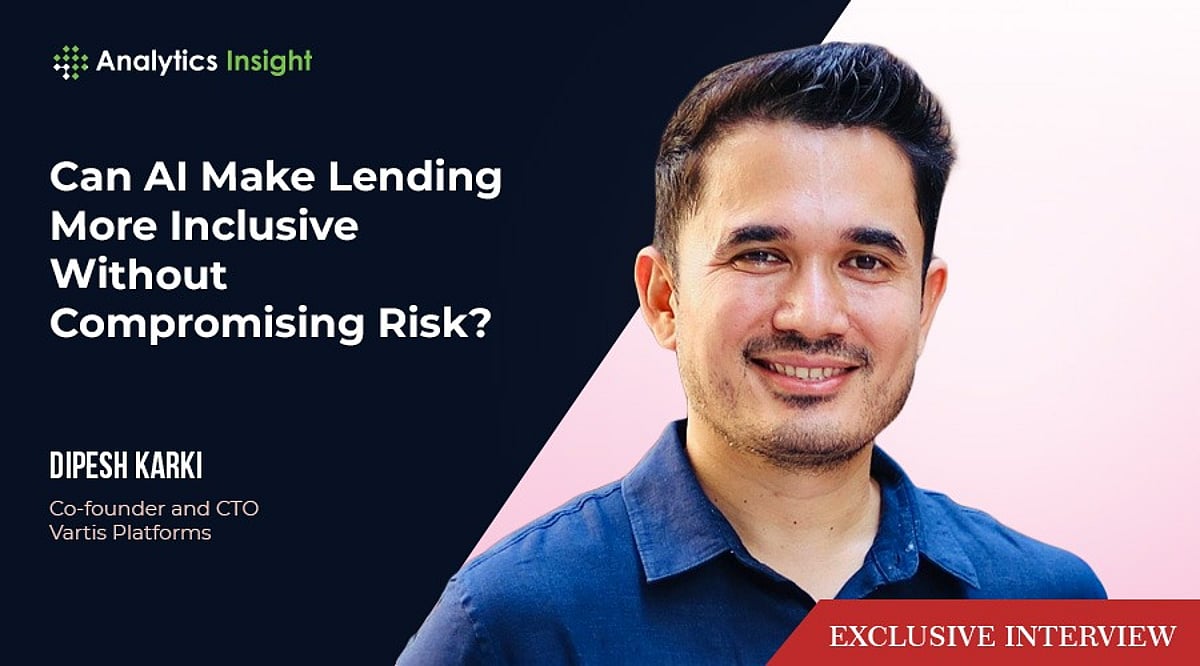
  • How AI-Native Lending Is Reshaping Credit Delivery: An Interview with Vartis Platforms’ Dipesh Karki

    How AI-Native Lending Is Reshaping Credit Delivery: An Interview with Vartis Platforms’ Dipesh Karki

    Artificial intelligence, machine learning, predictive analytics, and automation are transforming India’s digital lending ecosystem. Lenders are shifting from traditional assessments to data-driven decision-making, enhancing underwriting, fraud detection, collections, and portfolio monitoring. This technological evolution supports broader financial inclusion by allowing lenders to assess underserved and new-to-credit borrowers through alternative data and a comprehensive view of financial behavior.

    Dipesh Karki, Co-founder and CTO of Vartis Platforms, emphasizes that the future of lending lies in AI-native ecosystems that embed intelligence throughout the credit delivery process. In an exclusive interview with Analytics Insight, he discusses the impact of these technologies on underwriting, risk management, compliance, and how Vartis Platforms is using data science to foster a more efficient and inclusive lending environment. Here are the excerpts from the interview:

    How are AI, Machine Learning, and Automation Transforming Underwriting and Risk Management in Digital Lending?

    The biggest shift we are seeing in digital lending is the move from static, rules-based underwriting to intelligent, data-driven decision-making. Traditionally, lending decisions relied heavily on bureau scores and predefined eligibility criteria. While those remain important, they often provide only a partial view of a borrower’s financial profile.

    AI and machine learning allow lenders to analyse a much broader set of signals and identify patterns that are difficult to detect through conventional methods. These models can continuously learn from repayment behaviour, portfolio performance, and changing market conditions, helping improve risk assessment over time.

    From a risk management perspective, AI is enabling more proactive monitoring. Rather than assessing risk only at the point of loan origination, lenders can continuously evaluate portfolio health, identify early warning signals, and take corrective action before risks escalate.

    Automation complements this by streamlining operational processes such as application screening, verification, fraud checks, and policy enforcement. This not only improves efficiency but also ensures greater consistency in decision-making. Ultimately, the combination of AI, machine learning, and automation is helping the industry build lending systems that are faster, more scalable, and better equipped to manage risk.

    Why is Alternative Data Becoming Increasingly Important in Expanding Credit Access Beyond Traditional Bureau-Led Assessment Models?

    India has made significant strides in expanding access to formal credit, but a large segment of the population remains either new-to-credit or underrepresented in traditional credit bureau systems. If lenders rely solely on bureau data, they risk excluding many creditworthy individuals who simply lack an extensive borrowing history.

    Alternative data helps address this challenge by providing additional insights into a borrower’s financial behaviour and repayment capacity. With the growth of digital financial services, lenders today can evaluate indicators such as cash-flow patterns, income consistency, transaction behaviour, and other consent-based financial data points to build a more comprehensive risk profile.

    The emergence of digital public infrastructure and frameworks that enable secure data sharing is further accelerating this shift. Instead of assessing borrowers based only on their past credit history, lenders can increasingly evaluate their current financial health and behavioural patterns.

    This approach creates a win-win outcome. Borrowers gain access to formal credit opportunities, while lenders can make more informed risk decisions and expand responsibly into previously underserved segments. In many ways, alternative data is becoming a key enabler of financial inclusion at scale.

    What Role does Predictive Analytics Play in Improving Borrower Assessment, Repayment Forecasting, and Collections Efficiency?

    Predictive analytics has become a critical component of modern lending because it allows organisations to move from reactive decision-making to proactive risk management.

    In underwriting, predictive models help estimate the likelihood of repayment by analysing relationships between historical borrower behaviour and future outcomes. This enables lenders to make more accurate credit decisions and improve portfolio quality.

    Beyond loan origination, predictive analytics plays an important role in portfolio monitoring and repayment forecasting. By identifying behavioural patterns and early indicators of financial stress, lenders can anticipate potential delinquencies and take preventive measures before accounts deteriorate.

    Collections is another area where predictive analytics is creating significant value. Rather than applying a uniform collections strategy across all borrowers, lenders can prioritise accounts based on risk levels, predict repayment propensity, and optimise engagement strategies accordingly. This improves operational efficiency while also creating a better borrower experience.

    As lending portfolios become larger and more complex, predictive analytics will continue to be a foundational capability for improving decision-making across the entire credit lifecycle.

    How is Automation Helping Reduce Turnaround Times While Ensuring Consistency, Governance, and Regulatory Compliance?

    Historically, lending operations involved multiple manual touchpoints, which increased processing times and introduced variability in outcomes.

    Today, automated workflows can manage activities such as onboarding, KYC verification, document validation, eligibility checks, underwriting workflows, and loan servicing with far greater speed and accuracy. This significantly reduces turnaround times and improves the customer experience.

    Equally important is the role automation plays in governance and compliance. Automated systems ensure that policies are applied consistently across all applications and that decisions are made within predefined risk and regulatory frameworks. This reduces the possibility of operational errors and strengthens control mechanisms.

    From a regulatory standpoint, automation also improves transparency by creating clear audit trails and documentation for every stage of the lending process. As lending volumes continue to grow, automation will remain critical for balancing operational efficiency with accountability and compliance.

    How Could AI-Native Lending Models Reshape the Future of Credit Delivery in India?

    We are moving towards a future where AI is not simply supporting lending processes but is becoming embedded across the entire lending lifecycle. That is what defines an AI-native lending model.

    In such a model, intelligence is integrated into customer acquisition, underwriting, risk assessment, fraud detection, servicing, collections, and portfolio management. Decisions become more dynamic because models can continuously learn from new data and adapt to changing borrower behaviour and build foresights.

    For India, the opportunity is particularly significant. The combination of digital public infrastructure, increasing digital adoption, and access to richer financial datasets creates a strong foundation for AI-driven innovation in credit delivery. AI-native lending can help reduce friction in the borrowing journey, improve risk assessment accuracy, and enable a better personalization tailored to their need. At the same time, the industry must ensure that AI adoption is responsible and transparent. Explainability, fairness, data privacy, and regulatory compliance will be critical considerations as these models become more prevalent. The goal should not simply be faster lending, but smarter and more inclusive lending that benefits both borrowers and financial institutions.

    How is Vartis Platforms Leveraging Technology and Data Science to Create a More Efficient, Inclusive, and Sustainable Lending Ecosystem?

    At Vartis Platforms, technology and data science are at the core of how we build financial products and scale lending operations. With LenDenClub, InstaMoney, and Vartis One operating within a unified ecosystem, we could leverage shared technology infrastructure, AI-driven credit intelligence, and advanced analytics across multiple parts of the lending value chain.

    Our focus is on creating systems that enable faster decision-making, stronger risk management, and improved customer experiences. We use data science and machine learning to enhance credit assessment, monitor portfolio performance, strengthen fraud detection capabilities, and drive operational efficiencies.

    Through Vartis One, we are also investing in scalable technology architecture that supports both current business needs and future growth opportunities. This allows us to build modular, adaptable platforms capable of supporting evolving lending models and increasing transaction volumes.

    A key objective for us is to make lending more accessible without compromising risk discipline. By combining technology, data-driven insights, and automation, we aim to expand responsible credit access, improve operational efficiency, and create a more sustainable lending ecosystem. We believe the future of lending will be defined by organisations that can successfully balance innovation, risk management, and financial inclusion, and that is the direction we are building towards at Vartis Platforms.