Blog

  • Top 10 Enterprise Cybersecurity Management Platforms for 2026

    Top 10 Enterprise Cybersecurity Management Platforms for 2026

    Enterprise security demands more than standalone tools in today’s evolving threat landscape. Modern cybersecurity platforms combine threat detection, identity protection, and cloud security in one place. This article reviews 10 leading solutions based on their capabilities, enterprise use cases, and security features.

    Overview

    Enterprise cybersecurity buying has shifted from point tools to unified platforms, driven by a wave of major 2025-2026 acquisitions. Ten leading solutions are grouped by function: XDR, SIEM, identity, and cloud, each with confirmed ownership and a ‘Best For’ label. A practical checklist and decision framework help CISOs and IT leaders match platforms to their risk profile and existing stack.

    Enterprise cybersecurity depends as much on fast decisions as on strong defenses. Organizations face nearly 2,000 cyberattacks every week, according to Check Point Software’s latest threat report. At the same time, the market itself is shifting fast. Major vendors continue to acquire smaller companies and integrate them into broader security platforms. Google now owns Wiz, Palo Alto Networks has added CyberArk, while Cisco keeps pulling Splunk deeper into its stack. This article covers 10 cybersecurity management solutions helping enterprises strengthen security operations in 2026.

    Selection Methodology

    Each platform earned its place through real enterprise adoption, breadth of capability, analyst recognition, integration depth, AI-assisted detection, and confirmed ownership as of mid-2026. This list reflects current market realities rather than vendor marketing.

    XDR and Endpoint Protection

    CrowdStrike Falcon

    CrowdStrike Falcon remains one of the leading XDR platforms for enterprise security. A single lightweight agent covers endpoint, identity, and cloud workloads at once, and its threat graph correlates billions of signals each day to accelerate threat detection and response.

    • Best For: Fast-moving SOCs that need automated containment.

    Microsoft Defender XDR

    Microsoft Defender XDR builds protection directly into identity, email, endpoints, and cloud apps. That matters most for organizations already using Microsoft 365 or Azure. Its tie to Entra ID puts identity and endpoint alerts in one console.

    • Best For: Enterprises standardized on the Microsoft ecosystem.

    SentinelOne Singularity

    SentinelOne Singularity places a strong emphasis on autonomous threat response. Its AI agents can roll back ransomware encryption before a human analyst signs in, which matters most for lean teams without round-the-clock staffing.

    • Best For: Organizations needing a strong automated response with limited headcount.

    SIEM and SOC Platforms

    Palo Alto Cortex XSIAM

    Palo Alto Cortex XSIAM has become a preferred migration destination for enterprises moving away from IBM QRadar. IBM sold QRadar’s SaaS assets to Palo Alto Networks in 2024. XSIAM bundles SIEM, SOAR, and threat intelligence into one AI-driven workspace with thousands of prebuilt detectors.

    • Best For: Enterprises consolidating legacy SIEM investments.

    Splunk Enterprise Security

    Splunk Enterprise Security reflects a similar trend in platform consolidation. Cisco bought Splunk in 2024 and has since built it into its own data fabric. It still earned a Leader ranking in the 2026 IDC MarketScape for SIEM. It handles enormous log volumes well.

    • Best For: Large enterprises with complex, high-volume log environments.

    Identity and Zero Trust

    Okta

    Okta is one of the strongest vendor-neutral identity platforms. Adaptive multi-factor authentication and lifecycle management close the identity gaps attackers exploit most.

    • Best For: Enterprises wanting identity security decoupled from their cloud vendor.

    Microsoft Entra ID

    Microsoft Entra ID takes the opposite approach, and for the right buyer, that is the point. It builds conditional access and identity governance directly into the Microsoft stack, giving existing SSO customers continuous, risk-based access decisions.

    • Best For: Microsoft-centric enterprises seeking tighter platform integration.

    CyberArk

    CyberArk changed hands in February 2026, when Palo Alto Networks completed its acquisition. It remains one of the strongest options for privileged access management at scale, now extended to machine identities and AI agents.

    • Best For: Enterprises managing large volumes of privileged and machine identities.

    Cloud and SaaS Security

    Wiz

    Wiz now operates under Google Cloud, following an acquisition that closed in March 2026. Its core strength has not changed: full visibility into multi-cloud risk without an agent on every workload.

    • Best For: Organizations needing fast, agentless visibility across multiple clouds.

    Prisma Cloud

    Prisma Cloud completes Palo Alto Networks’ platform strategy with CNAPP coverage spanning code, infrastructure, and runtime protection, sharing threat intelligence with Cortex XSIAM.

    • Best For: Enterprises building a single-vendor architecture around Palo Alto Networks.

    What Actually Matters

    While a popular brand can help sell a platform, there are a few features that make the difference. AI-powered detection should reduce alert fatigue rather than increase operational complexity. Equally important is strong integration with the existing endpoint, identity, and cloud tools. Weak integrations can create security gaps rather than enhance security.

    Independent validation, such as MITRE ATT&CK evaluations, is more trustworthy than vendor-published benchmarks. Compliance certifications like SOC 2 Type II, ISO 27001, and FedRAMP also indicate that a platform is operating under robust standards. Flexibility in deployment is important, too. Cloud-only platforms might not be suitable for organizations that have strict data residency requirements.

    How to Choose

    First, audit your existing security stack and determine where incidents were missed in the last year. Check the shortlist against the actual risk profile. Compliance should be more important for regulated industries. CNAPP and XDR capabilities should be a greater priority for cloud-native businesses.

    Then, see how well each platform aligns with the SOC’s workflow. Run a small pilot before deciding. Measure alert quality, mean time to detect, and false positive rates. A platform that works well in a demo may not work well in a real production environment.

    Why This Matters

    A cybersecurity platform is not a short-term purchase. The right choice strengthens resilience, cuts down operational complexity, and keeps the organization ready for whatever threats come next. The wrong one just adds another tool nobody fully trusts.

    Final Thoughts

    The enterprise cybersecurity market will keep consolidating through the rest of 2026. Today’s standalone product may become part of a larger security platform within a year. This shift makes architecture decisions matter more than vendor loyalty. Pick platforms that integrate cleanly with what you already run. Test claims against independent evaluations rather than sales decks. Revisit the stack every year, since ownership keeps changing.

  • How Razorpay Revolutionized Digital Payments for Indian Businesses

    How Razorpay Revolutionized Digital Payments for Indian Businesses

    In today’s digital world, money moves faster than ever before. From online shopping and ordering your favorite food to booking tickets or paying bills, almost everything is done online. Behind this smooth flow of payments are crucial players who make these transactions happen seamlessly, including Razorpay.

    From a startup idea to one of India’s leading fintech companies, Razorpay is making online payments easier for businesses across India. The Bengaluru-based startup has become an integral part of the country’s booming fintech industry. Helping businesses accept payments, manage money, and handle finances simply and securely, what started as a small startup idea is now a trusted name for thousands of businesses across India.

    The Beginning of Razorpay

    Founded in 2014 by Shashank Kumar and Harshil Mathur, Razorpay emerged at a time when taking online payments in India was still a mess. Businesses had to go through pages of paperwork, a technical setup, and wait for approvals. Many small businesses and startups couldn’t take it anymore. The founders saw an opportunity and decided they wanted to build something simple. Something that makes digital payments easy, fast, and accessible for everyone.

    Early on, Razorpay focused only on the payment gateway, which allowed businesses to accept payments through debit/credit cards, net banking, UPI, and digital wallets. The setup was super simple, and even non-technical people could get going quickly. This ease of use helped Razorpay stand out and catch the eye of startups and small businesses alike. As more people in India started using digital payments, the need for better financial tools grew. Razorpay continued to thrive while improving its offerings and keeping up with the changing market.

    Growing Beyond Payments

    Over time, Razorpay became much more than just payments. It quietly transformed into an entire financial solutions platform for businesses. Today, the company offers services like payroll management, subscription billing, payment links, vendor payouts, and even business banking solutions. Rather than juggling multiple tools, businesses can manage everything under one roof. This all-in-one system saves businesses time and manual effort. So instead of hopping between multiple platforms, you can collect customer payments, pay employees, manage subscriptions, and track transactions, all from one dashboard.

    Innovation, Security, and Trust

    One of the biggest reasons behind Razorpay’s success is its focus on innovation. The company regularly builds new features and tools to make financial management easier for businesses. Be it automating payments, managing subscriptions, or simplifying salary transfers – Razorpay focuses on reducing complexity. Another important factor is security, as Razorpay handles financial transactions and sensitive data – safety is always top of mind. They constantly work to improve their security systems and follow industry regulations, which helps businesses trust them with their daily operations. Razorpay is also known for its strong customer support and user-friendly design. Many businesses choose Razorpay because it is easy to use, even for people without technical knowledge. Apart from tech, they have built an awesome work culture at Razorpay. They encourage teamwork, learning, and creativity. They allow their employees to think freely, take risks, and improve their products. This culture of innovation has helped them grow quickly and stay competitive in the fast-changing fintech industry.

    Impact and Future of Razorpay

    Razorpay’s impact isn’t limited to just handling payments. It has enabled thousands of entrepreneurs and small businesses to thrive by making digital finance accessible. Now, many small businesses that previously struggled with online payments can operate smoothly. By streamlining finances, the company is helping businesses move online and reach more people. Looking ahead, we expect Razorpay to continue playing an essential role in shaping the future of digital finance as new technologies such as AI, embedded finance, and advanced payment systems transform how businesses manage their money. Razorpay is already working on these innovations to enhance its platform. As more and more digital transactions take place in India, there will be an increasing need for easy and secure financial tools. With its tech prowess and customer-centric approach, Razorpay will play a crucial role in this space.

    Final Thoughts

    The story of Razorpay shows how a simple idea can make a big impact. What started as a solution to simplify online payments has grown into one of India’s leading fintech companies. Through continuous innovation, robust security, and a focus on customer needs, Razorpay has built a trusted platform for businesses of all sizes. As India moves further into a digital-first economy, Razorpay’s role will become even more important, helping businesses manage money in a simple, fast, and reliable way, making it a key part of the country’s financial future.

  • How EaseMyTrip’s AI Assistant Is Evolving into a Travel Companion: CEO Rikant Pittie Shares Insights

    How EaseMyTrip’s AI Assistant Is Evolving into a Travel Companion: CEO Rikant Pittie Shares Insights

    Artificial intelligence is reshaping how travelers discover destinations, book trips, and seek customer support. As conversational AI becomes more intuitive, consumers are moving away from keyword-based searches and traditional support channels, expecting faster, more contextual, and personalized assistance throughout their travel journey.

    EaseMyTrip has witnessed this shift firsthand through its AI-powered assistant, EVA, which has handled over 2.5 million interactions across WhatsApp and the company’s web chatbot. The growing adoption highlights increasing consumer trust in AI for everything from travel discovery and bookings to itinerary changes and post-booking support.

    Rikant Pittie, CEO and Co-Founder of EaseMyTrip, believes the next phase of AI will move beyond answering questions to becoming an intelligent travel companion that understands user preferences, intent, and context, while working alongside human support teams.

    What EVA’s 2.5 Million AI-Led Interactions Reveal

    According to Pittie, the biggest insight from EVA’s interactions is that Indian consumers have moved beyond experimenting with AI and are increasingly relying on it to accomplish real travel-related tasks. Whether discovering flight and hotel options, clarifying booking details, understanding cancellation policies, accessing offers, or resolving service-related queries, customers are turning to AI for speed, convenience, and accuracy.

    Users are demonstrating outcome-driven trust: they care less about whether they interact with a human or an AI system and more about receiving the right answer quickly and reliably. Travelers are increasingly asking complete questions rather than typing fragmented keywords, signaling that they view AI as a travel companion that simplifies planning and decision-making.

    Why Conversational AI Outpaces Traditional Search

    Conversational AI accelerates the customer journey by helping users find information faster and complete tasks more efficiently. Human interaction remains critical for situations requiring empathy, nuanced decision-making, or complex problem-solving. Pittie emphasizes that the real value lies in reducing friction and enhancing existing customer journeys, positioning AI as an extension of human support rather than a replacement.

    Building Domain-Specific AI Assistants: Challenges and Lessons

    Pittie notes that deploying a large language model does not automatically create a successful customer-facing AI assistant. Building a domain-specific solution requires deep understanding of customer journeys, business rules, operational processes, and countless edge cases. For EVA, the real challenge is ensuring the assistant understands travel-specific contexts and responds accurately to a wide range of needs—from discovery and bookings to cancellations and post-booking support.

    Success depends on high-quality data, continuous model refinement, robust guardrails, and strong integration with existing systems. Customer expectations evolve rapidly, so AI systems must continuously improve to remain relevant.

    Improving Engagement, Efficiency, and Resolution Speed

    The most successful organizations approach AI as an augmentation layer. At EaseMyTrip, EVA is embedded into existing customer journeys to make travel discovery and support faster, simpler, and more intuitive. By helping customers find relevant information, access travel options, understand offers, and resolve common queries quickly, AI reduces friction while allowing service teams to focus on complex cases.

    Deep integration with real travel use cases and customer touchpoints enables a more contextual and meaningful experience. Early indicators point toward stronger engagement, faster query resolution, and growing acceptance of AI-led travel assistance.

    The Next Evolution: Proactive, Voice-Enabled, and Multilingual AI

    Pittie envisions the next evolution not as a better chatbot but as a more intelligent travel assistant that understands context, preferences, and intent across the entire customer journey. Travelers expect seamless, connected experiences where they do not have to repeat information at every step—whether planning, booking, or seeking support.

    Through EVA and ChatGPT integration, EaseMyTrip enables customers to receive faster, more contextual assistance for routine requests, while support teams continue handling complex situations that require human judgment, empathy, and personalized intervention. Multilingual interactions, voice-enabled assistance, smarter recommendations, and contextual support will help create more intuitive travel experiences by complementing—not replacing—human expertise.

  • Best AI Coding Subscription Plans of 2026: Value Picks for Students, Freelancers, and Professionals

    Best AI Coding Subscription Plans of 2026: Value Picks for Students, Freelancers, and Professionals

    Advanced AI systems have become reliable coding partners that assist with debugging, optimization, and even suggesting architectural frameworks. The challenge for modern developers isn’t whether to adopt AI, but how to choose the most effective paid coding assistant. This guide evaluates top AI coding subscription plans by comparing pricing, features, usage limits, and developer-focused benefits to help you make a smart choice.

    Types of AI Coding Subscription Plans

    Understanding the categories of plans available is essential before selecting one. Here are key considerations:

    • Budget vs Usage: Entry-level plans suit light coding needs, while flat-rate bundles work best for daily heavy usage.
    • Tool Compatibility: Ensure the plan integrates with your IDE, such as VS Code, JetBrains, or Cursor.
    • Model Access: Some subscriptions lock you into one vendor; others like DevPass offer multi-model flexibility.
    • Predictable Billing: Flat-rate plans help avoid surprise token overages.

    Quick Comparison of Leading Plans

    While exact pricing can vary, here’s a snapshot of top contenders:

    Plan Best For Key Strength
    GLM Lite Students and light users Budget-friendly at ~$3/month
    MiniMax Starter Freelancers needing speed and cost balance Mid-range at ~$10/month
    DevPass Lite Professionals requiring multi-model access Premium value at ~$29/month
    Claude Code Pro Developers in Anthropic ecosystem Advanced code reasoning
    GitHub Copilot Developers in GitHub ecosystem Seamless IDE integration

    Recommendations for Indian Developers

    • Best Budget: GLM Lite at $3/month for students and light users.
    • Best Mid-Range: MiniMax Starter at $10/month for freelancers balancing speed and cost.
    • Best Premium Value: DevPass Lite at $29/month for professionals needing multiple models and predictable billing.

    Risks and Trade-Offs

    Consider these factors before committing:

    • Hidden Limits: The definition of a “prompt” varies by platform; a single query can trigger multiple model calls.
    • Vendor Lock-In: Copilot and Claude are not multi-system compatible.
    • Token Inflation: Newer tokenizers like Claude Sonnet 5 can raise effective usage costs by 35%.
    • Budget Overruns: Usage-based billing may cause surprises with runaway agent loops.

    Empowering Developers with Smart Choices

    AI coding subscriptions are essential for staying competitive. A good plan boosts productivity, creativity, and efficiency. Whether you need budget-friendly options for students, optimized speed-cost plans for freelancers, or multi-model flexibility for professionals, the right subscription can transform your workflow. Map your budget, coding style, and tool ecosystem to the available options and choose for predictable value.

    FAQs

    1. Which AI coding subscription offers the best value in 2026?
    Best value depends on needs. GLM Lite for budget, MiniMax Starter for freelancers, DevPass for multi-model access, and Copilot/Claude for ecosystem-specific users.

    2. Is GitHub Copilot better than Claude Code Pro?
    Copilot excels at IDE and GitHub integration; Claude Code Pro is better for advanced code reasoning and complex debugging.

    3. What should developers consider before choosing?
    Pricing, usage limits, supported models, IDE compatibility, billing structure, and vendor lock-in.

    4. Are budget plans suitable for professional development?
    Budget plans work well for students and light tasks; premium plans suit professionals with larger projects and higher demands.

    5. Can AI assistants replace software developers?
    No. AI speeds up coding, debugging, and testing, but humans remain essential for architecture, business logic, and project management.

  • How Arya.ag Combines Satellite AI and Agri-Fintech to Reduce Post-Harvest Losses and Boost Farmer Credit

    How Arya.ag Combines Satellite AI and Agri-Fintech to Reduce Post-Harvest Losses and Boost Farmer Credit

    In an interview with Analytics Insight, Anand Chandra, Co-Founder & Executive Director of Arya.ag, discusses how the company leverages satellite imagery, AI, IoT, and agri-fintech to transform India’s grain supply chain, reduce post-harvest losses, and unlock credit for farmers.

    How does Arya.ag use AI, IoT, and satellite data across the grain value chain, and what makes your tech deployment accurate across diverse geographies and crops in rural India?

    Arya.ag integrates technology to create the most practical value in the agricultural supply chain. Satellite imagery is a key layer in our stack. It enables predictive analytics on crop health, weather-related risks, and biotic stress. These insights directly inform our procurement planning and advisory services. For example, we can flag early warning signs of crop failure or pest outbreaks, allowing farmers and buyers to make timely decisions.

    AI is used for quality grading of grains and for risk scoring that determines a farmer’s credit eligibility. IoT systems are embedded into our hermetic storage infrastructure to support real-time surveillance and inventory management, particularly in warehouses close to the farm.

    What ensures accuracy is how these technologies are layered and localised. We operate across 11,000 near-farm storage points in 425 districts, covering 21 states. The models we use are trained using regional parameters and adapted to local cropping cycles and behaviour. This is not a one-size-fits-all deployment. The stack evolves with geography, making it both context-aware and scalable.

    By turning grain into digital assets, how is Arya.ag reshaping farmer access to credit, and what does this mean for financial inclusion at scale?

    Once produce enters our storage network, it is graded, weighed, and converted into an electronic balance. This balance is a digital representation of value that can be offered as collateral for credit or sold through our platform. This method unlocks access to formal finance without relying on land records, income statements, or traditional credit scores. More than 40 percent of our borrowers are accessing formal finance for the first time. Crucially, this creates an alternative to informal financial systems. Farmers no longer need to depend on local traders or commission agents for liquidity. With digital visibility and secure collateral, they can take loans based on stored produce and choose when to sell. The credit process is designed for speed and transparency. Disbursement happens in minutes, repayments are tied to commodity sales, and all transactions are visible to stakeholders. It is a system that brings financial inclusion to fragmented, underbanked regions, while also de-risking credit by focusing on the commodity rather than the farmer alone.

    What is one AI or IoT application that surprised you with its impact, and how are these insights actually enabling farmers or partners on the ground?

    Biotic stress detection through satellite imagery has been one of the most impactful use cases. We piloted this capability in select districts through our FPO partners, aiming to improve crop visibility. During one cycle, the system flagged early-stage pest risks in maize before they were visible on the ground. This advisory was delivered through our app and verified by our field teams. The FPO acted on the alert, which helped farmers intervene early and significantly reduce crop losses.

    What made this solution stand out was not just the outcome but the cost at which it was delivered. Satellite-based insights have typically been expensive or limited to large enterprises. We have made this capability available at a price rural institutions can afford. That combination of affordability, speed, and accuracy makes it practical for wide-scale deployment.

    It also reinforced an important lesson. Technology only creates value when insights are timely, actionable, and delivered through a trusted interface that connects digital systems to people on the ground.

    With poor connectivity and low digital trust in rural India, what is the most realistic way to scale agritech, and where are policymakers or innovators missing the mark?

    The most realistic path to scale is to decouple digital outcomes from digital literacy. Farmers do not need to become full-time app users. What they need is a consistent experience where technology works seamlessly in the background, delivering visible benefits.

    This is where human-led, tech-enabled models work well. A warehouse operator helping a farmer access finance or an FPO lead executing a trade creates more confidence than a digital-only system. Trust builds when the farmer sees the grain being weighed, tagged, and recorded as an asset they can track and use.

    Affordability is another critical factor. As we saw with satellite-based pest alerts, the cost at which a solution is available determines whether it can move beyond pilot projects. Technologies that are affordable, modular, and localised are the ones that will scale.

    Most importantly, the agritech sector must shift from a solution-first mindset to a problem-solving approach. The focus should be on solving specific, real-world problems, such as post-harvest loss, delayed payments, or access to working capital. When technology addresses pain points rather than pushing pre-built products, adoption becomes organic and sustainable.

    How can India build a rural workforce that is fluent in both agriculture and technology, and how can we encourage global adoption?

    India can build an agri-tech fluent workforce not just through training programs but by creating roles where agriculture and technology are integrated. We have seen this with warehouse managers, sourcing leads, FPO tech operators, and credit enablers who earn by enabling farmers through digital tools.

    This alignment of incentives drives faster learning and adoption. Rural India is not unfamiliar with technology. When there is visible utility and income opportunity, adoption is fast. For instance, the rapid rise of UPI payments among vegetable vendors and rickshaw drivers happened because it solved a real-world problem in a simple, cost-free way. Agri-tech will follow a similar path. The more a tool improves efficiency, reduces loss, or increases income, the more quickly it will be embraced even in low-literacy or low-connectivity environments.

    On the global front, India has an opportunity to set a benchmark. Countries in Africa, Southeast Asia, and Latin America face similar post-harvest and financial access challenges. If India can demonstrate that decentralised infrastructure, tech-led visibility, and commodity-backed finance can succeed in harsh conditions, it provides a practical model for others to adopt.

  • BrowserStack: Revolutionizing Digital Quality Assurance with Cloud and AI

    BrowserStack: Revolutionizing Digital Quality Assurance with Cloud and AI

    BrowserStack has transformed software testing through its cloud-based platform, enabling organizations to test applications across real devices, accelerate releases, enhance quality assurance, and embrace AI-driven automation.

    As businesses strive to provide flawless digital experiences across different devices, web browsers, and operating systems, software quality assurance has become critical. This has led to the rise of BrowserStack as one of the most prominent software testing tools in the cloud.

    The company was co-founded by Indian entrepreneurs Ritesh Arora and Nakul Aggarwal, who founded the firm based on a challenge that had been plaguing the development community: How do you test websites across different browsers and devices? The solution that would make testing more efficient and eliminate the need for costly testing environments led to the creation of what is now a software quality assurance tool for enterprises, startups, and technology firms.

    From Startup Vision to Global Testing Leader

    The main value offered by BrowserStack stems from its provision of access to thousands of actual mobile devices and desktop browsers via cloud technology. Instead of having to acquire and maintain expensive labs for testing, development, and QA engineers gain the opportunity to immediately begin testing on actual environments worldwide.

    The service provides a means of running both manual and automated tests across multiple platforms such as browsers, operating systems, and devices. This has turned out to be particularly useful with more and more channels being used for accessing applications. The absence of bottlenecks related to infrastructure enables companies to develop and deliver their products to market faster and more efficiently.

    Comprehensive Product Portfolio

    BrowserStack has come a long way since its initial offering, evolving into a provider of various software quality solutions. The company now provides cross-browser testing, mobile app testing, automated testing, visual testing, accessibility testing, and test management.

    For instance, tools such as Live and Automate enable companies to test their web applications, whereas products like App Live and App Automate allow users to meet the challenges of mobile app quality assurance. In addition, BrowserStack’s visual testing enables customers to find any unexpected changes to the user interface. It also helps organizations create more inclusive experiences through its accessibility testing tools. In short, BrowserStack provides a wide range of products to enable modern software quality engineering.

    The Next Phase of Testing: Leveraging AI

    As artificial intelligence continues to revolutionize software development, it becomes apparent that BrowserStack is making efforts to incorporate AI functionalities into its application. The company has developed some intelligent testing methods, whose purpose is to limit human effort, maximize efficiency in testing, and discover defects.

    With the help of artificial intelligence, the company is working to make sure that developer innovations are not slowed by manual QA processes. Indeed, efficiency has become a major trend within the software testing industry. The adoption of AI technology reflects BrowserStack’s readiness to adapt to developments in the constantly changing business environment.

    The Roadmap Ahead: Innovation and Strategic Growth

    The journey of BrowserStack has seen constant innovation and expansion. The company has diversified its technology base via acquisitions and enhancements that have sought to make software developers more efficient and productive.

    By acquiring Requestly, a developer tools platform that allows testing and debugging of APIs, BrowserStack made clear its intentions to grow into an ecosystem for software development. On the other hand, BrowserStack has maintained its focus on expanding its workforce while growing sustainably, thereby making it one of the best SaaS startup companies in India.

    A Global Impact on Software Quality

    BrowserStack caters to tens of thousands of clients spread across over 135 nations. Among their clients are startups, digital natives, and even some of the world’s largest corporations. In view of how important digital transformation has become, there is a greater need than ever before for software testing tools, creating a significant growth opportunity for BrowserStack.

    In today’s environment, where user-centric technology companies prioritize experience and reliability, BrowserStack’s importance cannot be overlooked in terms of tech’s value chain. Using its cloud infrastructure and increasing use of artificial intelligence, it has been able to make itself an essential component in enterprise-level software development.

    As software becomes integral to competitive success, BrowserStack’s vision remains clear – to help organizations create and launch superior digital experiences.

  • India vs Silicon Valley and China: How Its Startup Ecosystem Stacks Up

    India vs Silicon Valley and China: How Its Startup Ecosystem Stacks Up

    Three decades ago, the global startup conversation belonged almost entirely to Silicon Valley. Then China built its own parallel universe of billion-dollar companies, moving so fast that Western observers could barely track the names. Today, a third force is demanding attention. India has quietly assembled one of the most significant startup ecosystems in the world, and the comparison is no longer a stretch—it is a conversation worth having in full.

    The Scale Argument

    India currently ranks third globally in total number of unicorns, behind the United States and China. As of 2026, India has produced over 115 unicorn companies, with a combined valuation running into hundreds of billions of dollars. The sectors span fintech, edtech, healthtech, logistics, SaaS, and consumer internet, reflecting an ecosystem with genuine breadth rather than concentration in one or two categories.

    Silicon Valley remains the undisputed leader in raw numbers and total capital deployed. The US venture capital market continues to dwarf every other geography, and the Bay Area alone houses more unicorns than most countries combined. China, despite regulatory headwinds in recent years, maintains a deep pool of mature tech giants including Alibaba, Tencent, ByteDance, and Meituan—companies that have scaled globally and built product categories entirely from scratch. India has not yet produced a company of that global reach, but its trajectory is pointing upward, driven by structural rather than temporary conditions.

    The Capital Picture

    Funding is where the comparison gets interesting. Silicon Valley still attracts the largest share of global venture capital, supported by a decades-old investor network, deep institutional familiarity with tech risk, and proximity to the world’s largest technology companies. The exit ecosystem in the US—including acquisitions and IPOs—is far more mature, making it easier for early investors to deploy capital with confidence. China built its startup boom on a combination of domestic capital, state support, and an enormous consumer market. Platforms like WeChat Pay and Alipay created financial infrastructure that startups could build on without reinventing the wheel. However, the government’s relationship with the tech sector has grown complicated, with major regulatory crackdowns reshaping operations, though the underlying market scale remains.

    India faces a more volatile funding environment. After a peak in 2021 and 2022, funding dropped significantly through 2023 and 2024 before stabilising. The correction forced a reckoning with unit economics and profitability—a healthy development. Indian startups that survived the funding winter did so by building leaner, more sustainable businesses. Several high-profile IPOs, including Zomato, Nykaa, and Paytm, have tested public market appetite for new-age tech companies, with mixed but instructive results.

    The Talent Engine

    Talent is one area where India holds a genuine structural advantage. The country produces millions of engineering graduates each year, and the quality at the top tier is internationally competitive. Indian-origin founders and executives hold leadership positions at some of the world’s most valuable technology companies, including Google, Microsoft, Adobe, and IBM. Silicon Valley has long benefited from Indian talent through immigration, but India itself is now keeping more of its best engineers and founders at home. Return migration is rising—experienced professionals who built careers in the US are coming back to build companies in India, bringing capital networks, product experience, and global market exposure.

    China’s talent pool is massive and technically strong, but increasingly insular. Export controls, geopolitical tensions, and restrictions on cross-border data flows have made it harder for Chinese tech companies to attract and retain international talent. India, by contrast, operates in English, follows common law, and maintains open capital account policies for foreign investors, all of which lower friction for international engagement.

    The Market Dynamics

    India’s domestic market is its most compelling long-term asset. With 1.4 billion people, a rapidly expanding middle class, and growing smartphone penetration in tier-two and tier-three cities, the addressable market for consumer technology is enormous and still largely untapped. Silicon Valley startups typically build for a global audience from day one, using the US as a launch market and expanding outward. Indian startups have historically built for India first, creating depth and defensibility but sometimes limiting global ambition. That is changing: Indian SaaS companies like Freshworks, Zoho, and Browserstack have built significant international revenue bases, proving the model works beyond domestic borders.

    China built its internet economy behind the Great Firewall, which had a paradoxical effect. It protected domestic companies from foreign competition and allowed them to scale without facing Google or Amazon. But it also cut them off from global markets in meaningful ways. Indian startups face full international competition at home, which forces sharper product thinking and validates their capabilities when they expand abroad.

    The Infrastructure Gap

    One honest limitation India must acknowledge is infrastructure. Silicon Valley benefits from world-class physical and digital infrastructure built over decades. China made infrastructure a national priority and executed at a speed and scale few countries can match—from high-speed rail to 5G networks to digital payment systems. India’s infrastructure story is improving but uneven. The Unified Payments Interface has become a genuine success, processing billions of transactions monthly and inspiring similar systems in other countries. Digital public infrastructure, including Aadhaar and the Open Network for Digital Commerce, is creating platforms on which startups can build. However, logistics, power supply, and connectivity outside major urban centres remain real constraints for companies trying to reach the full breadth of the Indian market.

    Where India Is Heading

    The most accurate assessment of India’s startup ecosystem is this: it is real, it is growing, and it is building on foundations that are durable. The comparison with Silicon Valley is premature in terms of capital depth and global company creation. The comparison with China is more nuanced—India holds advantages in global integration and English-language capability while China retains advantages in domestic market maturity and state-backed infrastructure.

    What India has built is a third model, one driven by a large domestic market, a strong talent base, a democratic regulatory environment, and an increasingly experienced investor class. The country does not need to replicate Silicon Valley or China to matter. Building its own version, at its own pace, on its own terms, is already changing the global startup conversation.

  • How Women Entrepreneurs Are Transforming India’s Startup Ecosystem

    How Women Entrepreneurs Are Transforming India’s Startup Ecosystem

    Women entrepreneurs are reshaping India’s startup landscape with innovation, resilience, and businesses that define new industry standards across sectors. A decade ago, women-led startups in India were often viewed as exceptions; today, they are among the most influential voices in the ecosystem.

    From fintech and healthcare to e-commerce and deep technology, female founders are building ventures that solve everyday problems, create jobs, and attract significant investor confidence. Their success goes beyond company growth—it challenges long-held assumptions and paves the way for the next generation of founders.

    Five Founders Who Built Brands from the Ground Up

    Before the funding rounds and rapid expansion, every well-known brand begins with long hours, tough decisions, and uncertainty. In India, many successful women entrepreneurs started with little more than an idea and determination. They identified real market gaps, built solutions around genuine customer needs, and turned their efforts into influential brands. Here are five standout examples:

    Nykaa: Falguni Nayar’s Second Act Creates a Beauty Powerhouse

    Falguni Nayar founded Nykaa in 2012 after nearly two decades in investment banking, at an age when many professionals consider slowing down. Her vision: make authentic beauty products easily accessible to Indian consumers. What began as an online marketplace grew into one of India’s most recognized beauty and lifestyle brands. Today, Nykaa operates hundreds of stores nationwide and reported nearly Rs. 8,000 crore in revenue in FY25.

    SUGAR Cosmetics: Products Made for Indian Women

    Vineeta Singh chose entrepreneurship over a corporate career after IIM Ahmedabad, co-founding SUGAR Cosmetics in 2015. She noticed a lack of beauty products tailored to Indian skin tones and climate. Through strong branding and a digital-first strategy, SUGAR quickly gained traction and is now among India’s top beauty brands, with thousands of retail outlets and a rapidly growing customer base.

    Econscious: Turning Plastic Waste into Opportunity

    Nidhi Choudhary saw plastic waste not just as an environmental threat but as a resource. She founded Econscious to recycle plastic and develop sustainable production methods. Collaborating with companies and communities, the firm is helping India embrace circular economy principles. As sustainability gains importance, Econscious is rising in the green business space.

    Astrome: Connecting the Unconnected with Deep Tech

    Neha Satak, founder and CEO of Astrome, set out to deliver high-speed internet to underserved areas. Leveraging her expertise in wireless communication, the Bengaluru-based company uses satellite and millimeter-wave technology to enable advanced 5G networks in remote regions.

    GreyLabs AI: Bringing AI to Finance

    Roshni Mahatani created GreyLabs AI to develop AI-driven solutions that help banks and businesses improve decision-making, reduce risks, and enhance customer relationships. As demand for smart financial tools grows, GreyLabs AI is becoming a notable player in fintech.

    The Bigger Picture

    India’s startup boom is not just about unicorns and venture capital; women founders are building ventures that touch millions of lives. Women lead roughly 20% of India’s startups, and over 8,000 startups have at least one woman founder. Their impact spans beauty, healthcare, fintech, sustainability, deep tech, and artificial intelligence.

    Although women-led startups still receive a smaller share of funding, many have built recognizable brands, sustained strong momentum, and generated significant revenue. This shift signals an entrepreneurial environment where creativity, perseverance, and problem-solving matter more than outdated notions about who should start a company.

    FAQs

    Why are women entrepreneurs becoming more influential in India’s startup ecosystem?
    Women entrepreneurs are building innovative businesses across diverse sectors, solving real-world problems, creating jobs, attracting investors, and contributing significantly to India’s growing startup ecosystem.

    What makes Nykaa one of India’s most successful women-led startups?
    Founded by Falguni Nayar in 2012, Nykaa transformed beauty retail by offering authentic products online and offline, becoming a leading beauty and lifestyle brand.

    How is SUGAR Cosmetics different from other beauty brands?
    SUGAR Cosmetics focuses on products designed for Indian skin tones and weather conditions, building a loyal customer base and strong nationwide presence.

    What role do women-led startups play in emerging sectors?
    Women founders drive growth in fintech, AI, sustainability, healthcare, and deep technology, introducing innovative solutions for evolving market needs.

    What challenges do women entrepreneurs in India still face?
    Despite increasing success, women-led startups often receive a smaller share of funding than male-led ventures, though many continue achieving strong growth and business success.

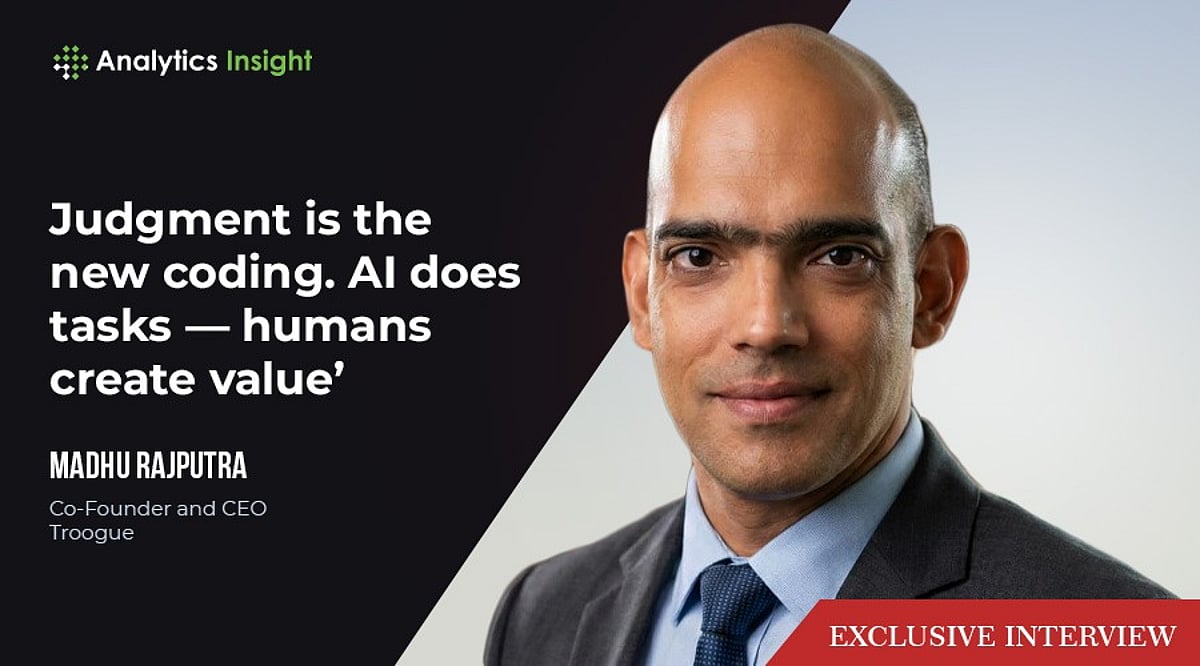
  • How AI Is Reshaping Enterprise Talent: Troogue CEO on Capability-Based Hiring and the Human-AI Future

    How AI Is Reshaping Enterprise Talent: Troogue CEO on Capability-Based Hiring and the Human-AI Future

    Artificial intelligence is redefining the future of enterprise hiring, workforce development, and project delivery by automating coding, testing, documentation, and talent evaluation. As AI takes over repetitive tasks, organizations are placing greater emphasis on human capabilities such as judgment, creativity, communication, and empathy to drive better business outcomes.

    Madhu Rajputra, Co-Founder and CEO of Troogue, believes the next phase of enterprise transformation will be led by professionals who can effectively combine AI capabilities with critical human skills. Rather than replacing talent, AI is reshaping how value is created by enabling people to focus on strategic thinking, problem-solving, and decision-making.

    In an exclusive interview with Analytics Insight, Rajputra discusses how Troogue is preparing enterprises and professionals for the Human-AI hybrid era through capability-based talent verification, AI-powered workforce solutions, modular AI agents, and responsible human intelligence data.

    How Troogue Is Preparing Professionals for the Human-AI Talent Shift

    AI is clearly changing how software gets built. Coding, testing, documentation and even parts of design are becoming faster because of AI. But Rajputra does not believe this reduces the importance of human capability. It changes where humans create value. AI is compressing the value of pure execution skills and increasing the premium on judgment skills.

    “AI will not replace capable people. But capable people who can use AI well will replace those who cannot.” — Madhu Rajputra

    At Troogue, professionals are prepared for this shift by evaluating and developing them beyond traditional CV-based skills. The assessments cover not just coding ability, but problem-solving, communication, role fit, learning agility, and the ability to work in real enterprise environments.

    Verifying and Curating Talent Through Real-World Assessments

    Troogue’s verification process starts with the enterprise requirement, not with a database search. Once the requirement is clear, a role-aware evaluation path is created. This can include technical assessments, coding challenges, scenario-based problem solving, communication evaluation, video Q&A, work-simulation tasks, and AI-assisted interview analysis.

    Profiles are curated based on verified capability, not just stated experience. Each Trooger is assessed across technical depth, problem-solving ability, communication, reliability, and fit for the role. All of these signals feed into a capability graph — an evidence-backed view of each professional’s verified skills, domain depth, assessment history, and deployment feedback.

    Delivering AI Agents Cost-Effectively

    One of the challenges with enterprise AI adoption is that many tools are priced as large organization-wide licenses. Troogue’s approach is different. AI agents are built around specific workflows and specific users, making intelligence available at the point of work. The AI layer is embedded into the engagement itself, rather than sold as a heavy standalone enterprise software rollout.

    This is structurally more cost-effective because the AI capability is linked to actual usage, roles, and outcomes.

    Leveraging Human-Generated Data for Better AI Models

    As foundation models become more commoditized, the scarce resource will be high-quality, domain-specific, expert-generated data. Every Trooger who goes through capability assessments, interview processes, work simulations, and deployment feedback loops creates signals about human capability. These signals help understand how people solve problems, communicate, respond to ambiguity, collaborate, and perform in real enterprise contexts.

    Over time, with consented, structured, and anonymized data, this can become a valuable evaluation and training layer for enterprise AI models.

    Preserving Human Qualities Alongside AI

    Troogue does not try to protect human-centric qualities from AI. Instead, the company works to make them visible, measurable, and rewarded. The capability framework looks at professional-fit dimensions such as communication under pressure, adaptability in ambiguous contexts, ownership mindset, stakeholder relationship signals, and feedback from deployment.

    Human-centric qualities matter even more when AI is involved. Someone still has to explain trade-offs to a client, mentor a junior team member, understand why a user is resisting a new system, and take accountability when an AI-generated answer is not good enough.

    “The AI handles throughput. The human handles consequence. Troogue’s job is to make sure enterprises can reliably find humans who understand that distinction.” — Madhu Rajputra

  • India’s Startup Boom: How Small Towns Are Becoming Job Powerhouses

    India’s Startup Boom: How Small Towns Are Becoming Job Powerhouses

    Not long ago, a skilled professional in Coimbatore or Kochi faced a tough choice: move to a metro city or stay and compromise on career growth. That dynamic has shifted dramatically. Startups across India are now hiring aggressively in smaller towns and emerging business hubs, offering rewarding careers without the need to relocate. This trend is reshaping the country’s employment landscape.

    A Decade of Transformation

    India’s startup story has evolved from a metro-centric narrative to a nationwide phenomenon. According to the Department for Promotion of Industry and Internal Trade (DPIIT), recognized startups surpassed 2.23 lakh by March 2026, generating over 23.36 lakh direct jobs—a 36.1% increase from the previous financial year. This growth didn’t happen overnight. When the Startup India initiative launched in 2016, there were only about 500 recognized startups. Ten years later, the program has facilitated nearly Rs 15 lakh crore in private funding, and more than 1.07 lakh startups now include at least one woman director or partner.

    Shift to Tier 2 and Tier 3 Cities

    The most striking change is where these startups are headquartered. Industry and government estimates indicate that Tier 2 and Tier 3 cities now account for 48 to 50 percent of all DPIIT-recognized startups. Lower operating costs—office space can be up to 50% cheaper and talent costs 25–30% lower than in metros—combined with improved internet access and the rise of remote work have made these cities attractive for founders and employees alike.

    Hiring Beyond Software Developers

    While software engineers remain in demand, startups are hiring a diverse range of professionals. Agritech companies require field officers, agronomists, and customer support staff near farming regions. Fintech firms build local KYC verification, sales, and compliance teams. SaaS companies establish remote engineering, product, and support teams in smaller cities. Designers, marketers, analysts, and operations executives also find ample opportunities. This hiring spree creates a ripple effect, pulling in local vendors, logistics providers, training centers, and consultants who also expand their workforce.

    Emerging Startup Hubs

    Several cities exemplify this shift. Chandigarh’s tricity region had over 633 DPIIT-recognized startups by end of 2025, with companies like AgNext Technologies and DataKund hiring in AI and analytics. Kochi has gained prominence in AI and global capability centers, bolstered by Kerala’s rising startup funding. Coimbatore’s startup count grew from 271 in 2020 to 1,350 by 2024, with agritech, manufacturing tech, SaaS, and fintech companies hiring locally. These cities are retaining talent that would have previously migrated to metros.

    Government Support Fueling Growth

    Government schemes have addressed some common hurdles. The Credit Guarantee Scheme for Startups has backed loans worth over Rs 755 crore, providing capital for hiring and expansion. On the Government e-Marketplace, more than 30,000 startups have registered, with cumulative orders exceeding Rs 54,000 crore through FY 2025–26. This access to customers and capital is crucial for founders outside major investment hubs.

    Challenges Remain

    Despite the momentum, some gaps persist. Graduates in smaller cities often lack exposure to specialized roles like product management or growth marketing. Power and internet reliability remain inconsistent in certain regions. Venture capital funding is still concentrated in a handful of metros. Women-led startups, while growing, still represent a smaller share. Addressing these issues will determine whether the job surge becomes a lasting trend.

    The Road Ahead

    India’s startup story has moved beyond the metros. More founders are building outside big cities, more graduates are finding quality jobs close to home, and more businesses are proving that growth doesn’t require Bengaluru or Delhi. If this trend continues, the biggest employment gains over the next decade could come from India’s smaller towns. What began as a startup movement is now a jobs revolution—and for many in smaller cities, it means career opportunities without leaving their communities behind.