Blog

  • Fire-Boltt Launches ‘Boltt’ Smartphone Brand in India via Flipkart Partnership

    Fire-Boltt Launches ‘Boltt’ Smartphone Brand in India via Flipkart Partnership

    Fire-Boltt, a leading wearables brand with a user ecosystem of over 4 crore consumers, has officially entered India’s smartphone market with the launch of a new Made-in-India brand called ‘boltt’. The smartphones will be available through Flipkart and other retail channels, marking the company’s strategic expansion from wearables to broader consumer technology.

    The boltt smartphone portfolio will include both 4G and 5G devices across the Evo and Ace series, designed to offer reliability, innovation, and affordability for Indian consumers. Manufactured in India, the brand aims to combine local production with deep market understanding, leveraging Flipkart’s extensive distribution network to reach users across metros and non-metros.

    Arnav Kishore, Founder and CEO of boltt, said: “Over the years, millions of consumers have welcomed Fire-Boltt into their daily lives, helping us build one of India’s largest connected consumer ecosystems. boltt is the next chapter in that journey. Smartphones sit at the heart of how people connect, create, learn, and aspire today, and we believe there is a significant opportunity for a homegrown brand that truly understands Indian consumers.”

    Mukund Kedia, Senior Director at Flipkart, added: “Flipkart is deeply committed to make premium smartphone experiences accessible to every consumer across metros and non-metros. With Flipkart’s large distribution scale and reach, coupled with boltt’s portfolio of 4G and 5G devices designed for everyday realities, consumers across the country can now enjoy smartphones that combine durability, performance, and innovation.”

    With strong presence in Tier 2 and Tier 3 markets and a robust logistics network, Flipkart will play a key role in boltt’s nationwide rollout. Further details about the smartphone lineup are expected in the coming weeks.

  • Remittix Activates Airdrop Registration as Holders Await Launch Price Announcement

    Remittix Activates Airdrop Registration as Holders Await Launch Price Announcement

    Remittix has reignited interest in the RTX community by launching its airdrop registration page, giving presale holders a clear task to complete while they wait for further updates on the token’s launch price.

    The move comes at a pivotal moment for Remittix. Holders have been closely monitoring the project for the next major announcement, and the opening of the airdrop page provides a practical step for the community to take before the project advances to its next phase.

    Airdrop Page Opens for RTX Presale Holders

    The Remittix airdrop page is now live on the official Remittix website. It is designed for users who purchased RTX during the presale and need to register their wallet details ahead of token distribution.

    The process is straightforward: holders visit the official site, connect their wallet, submit their wallet address, and complete the registration page. Users can also opt to add notification details to receive updates related to distribution and launch activity.

    Once registration is complete, the page confirms that the holder has successfully registered. This airdrop is tied to the distribution of RTX tokens purchased during the presale and should not be considered a separate free-token promotion. Instead, it is part of the process to prepare holders for their allocated token distribution.

    Launch Price News Remains the Big Question

    While the airdrop page is the latest update, the launch price reveal remains one of the most anticipated developments for Remittix. The community is waiting to see where RTX will be positioned at launch and what that could mean for the next stage of market attention. The upcoming reveal is expected to shape expectations as Remittix transitions from presale to a broader public rollout.

    The registration page adds to the sense of momentum, giving holders a reason to return to the official website, verify their details, and stay tuned for future announcements.

    Platform Progress Keeps the Story Moving

    Remittix continues to draw interest through its live crypto-to-fiat platform, which allows users to send cryptocurrency while recipients receive fiat directly into bank accounts. Multiple community members have reported receiving fiat payments via the Remittix system, strengthening the project’s utility as token distribution approaches.

    With the airdrop page live, wallet registration open, and launch price news still forthcoming, Remittix holders now have a clear reason to stay alert. Those who purchased RTX during the presale should complete registration through the official Remittix site and watch closely for the next launch update.

    Discover the future of PayFi with Remittix by visiting their project here: Website | Airdrop Registration.

    Disclaimer: This article is for informational purposes only and does not constitute investment advice. Cryptocurrency investments carry risk; always conduct your own research (DYOR) before making any investment decisions.

  • Reflectiz and Taboola Partner for Webinar on AI-Driven Third-Party Marketing Security

    Reflectiz and Taboola Partner for Webinar on AI-Driven Third-Party Marketing Security

    Reflectiz, the web exposure management platform, today announced a live webinar with Taboola titled “Securing Third-Party Marketing in the AI Era,” scheduled for July 8 at 9 AM EDT / 3 PM CEST.

    Every marketing vendor a company approves can silently introduce third- and fourth-party scripts that no security team ever reviewed. In the AI era, that invisible layer is expanding faster than point-in-time audits can track. The gap between what an organization approves and what actually executes on its site is where data leakage, regulatory exposure, and compliance failures happen.

    The session pairs two perspectives that rarely sit at the same table. Idan Cohen, CEO and Co-Founder of Reflectiz, brings 20 years in cybersecurity, from offensive code and penetration testing to building Reflectiz into an AI web security platform. Omri Ariav, Director of Product Management at Taboola, leads the data layer behind an advertising platform reaching over 600 million daily active users. His scope spans user data and identity, tracking, attribution, measurement, and privacy, working where large-scale data, measurement, and user trust meet. He is an active part of Taboola’s AI transformation and an open-source builder who writes regularly about AI in real product workflows.

    “Security teams approve a vendor list. They don’t approve what actually loads in the browser,” said Idan Cohen, CEO and Co-Founder of Reflectiz. “One marketing tag can pull in a chain of third and fourth parties nobody vetted, and AI is making that chain grow faster than anyone can audit by hand. This session is about closing that gap, so marketing and security finally work from the same picture of what’s running on the site.”

    Attendees will learn:

    • What transparent, security-forward ad tech looks like in 2026, and how to tell which vendors meet that bar
    • How a single approved marketing tag spawns a chain of third- and fourth-party scripts no one reviewed
    • Why AI-driven ad tech expands the client-side attack surface faster than audits can catch
    • A practical three-step framework to inventory, monitor, and govern the web supply chain so marketing and security work from one source of truth

    Registration is open at: https://www.reflectiz.com/learning-hub/reflectiz-taboola-marketing-security-webinar/

    About Reflectiz
    Reflectiz gives organizations an outside-in view of every script, tag, and third party running on their websites. The platform continuously maps the client-side attack surface, flags risk in full context, and helps security and compliance teams close the gap between what they approved and what is actually running. The platform is designed to help organizations validate their security posture rather than rely on assumptions.

    Contact
    PR & Social Media Manager
    Oran Frenkel
    Reflectiz
    oran.f@reflectiz.com

    This is a paid press release published via CyberNewswire, a PR newswire syndication platform for cybersecurity companies.

  • Claude AI Use Cases: How Businesses, Students, and Professionals Streamline Document Workflows

    Claude AI Use Cases: How Businesses, Students, and Professionals Streamline Document Workflows

    Claude AI has become a go-to tool for handling long documents, structured writing, and everyday knowledge work. Its ability to maintain context across extensive conversations makes it especially valuable for businesses, students, and professionals who regularly deal with large volumes of text. Here’s a breakdown of how Claude fits into different workflows and where it delivers the most impact.

    What Makes Claude AI Unique

    Unlike many AI assistants optimized for short prompts, Claude is designed to process up to 200,000 tokens of text per conversation (roughly a few hundred pages) on standard plans, with even higher limits on Enterprise tiers. This capability is not necessary for quick queries, but it becomes indispensable when tasks involve comparing two versions of a policy, analyzing an entire research file, or synthesizing information from multiple sources without splitting them into small chunks.

    When Claude generates substantial outputs such as reports, tables, or draft documents, it opens them in a separate editable panel rather than burying them in a chat thread. On paid plans, this panel can connect to tools like calendars or messaging apps, moving Claude from simple question-answering to active participation in existing workflows.

    For Businesses: Automating Document-Heavy Processes

    Businesses gain the most from Claude when it is applied to repeatable, document-heavy workflows across entire teams. A support team can feed in thousands of past tickets and receive a categorized list of recurring issues with draft responses. An operations manager can hand over two versions of a policy and ask for a summary of changes instead of comparing them line by line. A procurement lead can pull key dates and risk clauses from a long supplier agreement in minutes rather than hours. The common thread is consistency at scale: the same careful analysis applied to many documents, not a one-time favor.

    For Students: Research and Study Without the Slog

    Students benefit from the same long-context strength in a different way. A full semester of lecture notes can be transformed into a chapter-by-chapter revision guide. A dense academic paper can be explained in plain language while preserving the original argument. For essay writing, Claude works best as a structural reviewer, flagging weak transitions or claims that need more evidence, rather than rewriting the work outright. This approach keeps the student’s own thinking central. Similarly, literature reviews become easier when multiple sources need to be compared at once rather than read in isolation.

    For Professionals: Faster Decisions, Not Bigger Teams

    Individual professionals use Claude to boost personal output. A consultant can convert a long market report into a short executive briefing. A developer can ask Claude to explain unfamiliar code or draft documentation. An analyst can turn an earnings call transcript into a brief list of decisions and open questions. These are tasks that help one person move faster on their own, rather than workflows that depend on an entire department.

    Where Claude Fits and Where It Doesn’t

    The clearest rule: reach for Claude when a task involves a long document, a structured write-up, or repetitive work across similar inputs. It is a weaker choice for tasks that are primarily visual or design-driven, or that need direct access to live systems beyond what a connected tool already offers. In those cases, a purpose-built design or automation tool will usually perform better.

    Why This Matters

    Information is growing rapidly, and the ability to understand it is becoming more valuable than simply having access to it. Claude AI helps reduce manual work, improve productivity, and support more confident, data-driven decisions across business, academic, and professional contexts. It is not a substitute for human judgment, but it handles the heavy lifting so people can focus on what matters most.

    Frequently Asked Questions

    What are the most common Claude AI use cases?

    Claude AI is commonly used for document summarization, structured writing, research assistance, coding support, policy analysis, customer support workflows, and knowledge management. Its ability to process large amounts of text makes it particularly suitable for document-heavy tasks.

    How do businesses use Claude AI?

    Businesses use Claude to summarize contracts and policies, analyze support tickets, draft emails and reports, compare documents, create internal knowledge resources, and streamline repetitive documentation workflows. It helps teams improve consistency and reduce manual review time.

    Is Claude AI good for students?

    Yes. Claude helps students summarize research papers, simplify complex topics, organize lecture notes, create study plans, improve essay structure, and compare multiple academic sources. It works best as a learning and research assistant rather than a replacement for independent study.

    How can professionals benefit from Claude AI?

    Professionals use Claude to prepare executive summaries, analyze reports, draft business documents, explain code, generate technical documentation, and organize meeting notes. It is especially valuable for reducing time spent on repetitive knowledge work.

    When should you choose Claude AI over other AI tools?

    Claude is a strong choice when work involves long documents, structured analysis, detailed writing, or synthesizing information from multiple sources. For image creation, graphic design, or highly visual tasks, specialized AI tools may be more suitable.

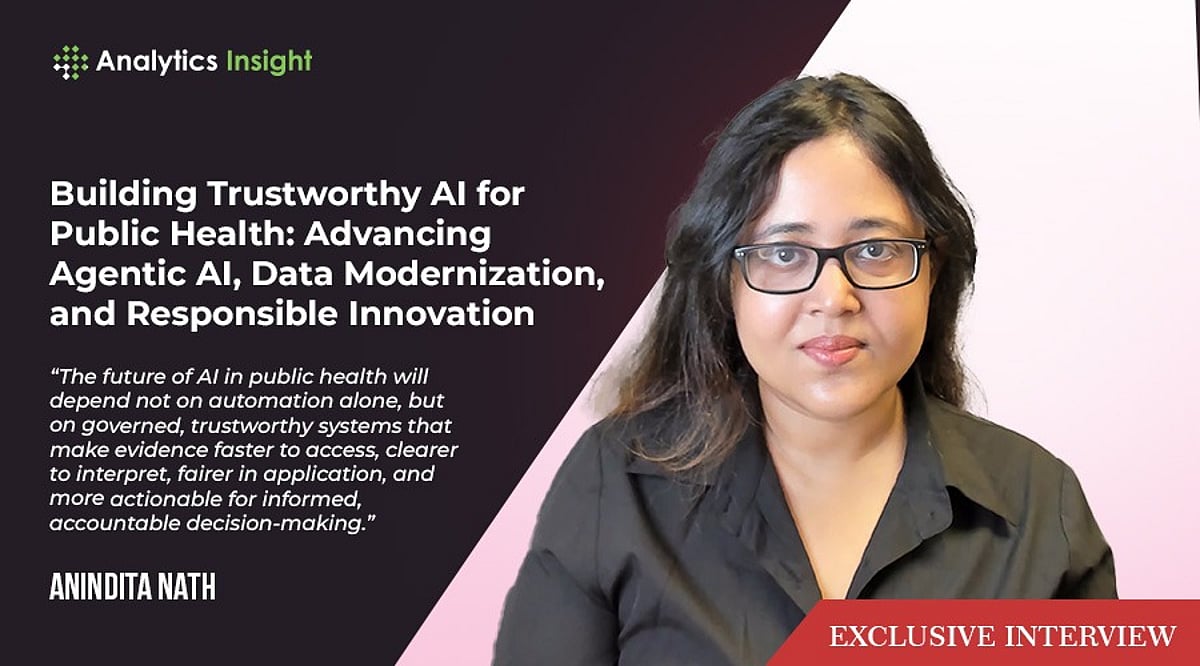
  • How Agentic AI and Data Modernization Are Building Trustworthy Public Health Systems

    How Agentic AI and Data Modernization Are Building Trustworthy Public Health Systems

    Artificial intelligence is transforming how organizations analyze data, generate insights, and support decision-making, but in high-stakes environments such as public health, success depends on far more than model performance alone. As governments and healthcare organizations increasingly adopt large language models, agentic AI, and advanced analytics, the focus is shifting toward building systems that are transparent, governed, measurable, and capable of delivering reliable results at scale.

    In this interview, Anindita Nath discusses how advances in generative AI, biomedical informatics, and data modernization are reshaping public health and scientific research. With more than a decade of experience developing AI and machine learning solutions across industry and research, they have led initiatives spanning large language models, natural language processing, metadata engineering, and AI-ready data infrastructure. Their work includes co-leading one of the first agentic AI deep-research evaluation initiatives in the federal public health space, helping establish early frameworks for the responsible evaluation and adoption of autonomous AI systems.

    Drawing on experience building AI systems for disease surveillance, biomedical research, and large-scale public health data platforms, Nath shares insights into the challenges of governing AI in mission-critical environments, modernizing legacy data systems, and ensuring that intelligent technologies augment human expertise rather than replace it. They also explore the future of trustworthy AI, explaining why robust evaluation, transparency, and interdisciplinary collaboration will be essential as AI becomes increasingly embedded in healthcare and public health operations.

    Q: Please tell us about your professional journey and what inspired you to pursue a career in data science and artificial intelligence?

    A: My career began in software engineering and enterprise IT digitization, then expanded into computer science research in natural language processing, speech and audio signal processing, statistical machine learning, deep neural networks, and biomedical informatics. I was particularly drawn to AI’s potential to reduce cognitive load in operational environments. My early work in conversational AI and assistive health technologies shaped my view that intelligent systems should go beyond text generation to support information retrieval, knowledge synthesis, and decision support. This perspective continues to guide my work in public health, where AI and modern data engineering can strengthen surveillance, accelerate scientific discovery, and improve evidence-based decision-making.

    Q: Your work spans AI, public health, biomedical informatics, and data modernization. How would you describe your current role and areas of focus?

    A: My current role centers on designing governed, production-oriented AI systems for public health intelligence. My work spans generative AI, large language models, agentic AI enabled system evaluation, disease surveillance, metadata engineering, and AI-ready data infrastructure. I convert fragmented public health and biomedical datasets into structured, provenance-aware assets that support analytics and decision-making. A core priority is ensuring that these systems are measurable, reproducible, privacy-preserving, and operationally useful for analysts, researchers, and public health leaders.

    Q: Over the past decade, what have been some of the most defining moments or achievements in your career?

    A: Several achievements have shaped my professional trajectory. I co-led the first agentic AI deep-research evaluation initiative in federal public health, integrating advanced AI capabilities with governance, safety assessment, and operational validation to inform the agency’s agentic AI adoption strategy. I also led GENEVIC, an Azure OpenAI-enabled biological copilot for genomic data exploration, improving access to complex genomic information while preserving scientific rigor. Additional accomplishments include developing AI-enabled metadata and surveillance tools that reduced manual review burden by almost 50%, publishing first-author research in Bioinformatics, AMIA, ACM, and Speech Prosody venues, mentoring learners across computing and AI, receiving the Generation Google Scholarship in 2020, and being featured among Influential Women in 2026 and several such recognitions that reflect sustained technical performance, leadership, and impact.

    Q: For readers who may be new to your work, what excites you most about the intersection of AI and public health today?

    A: I am most interested in AI’s capacity to move public health from retrospective, static reporting toward interactive, evidence-driven intelligence. Public health decision-making, for example, in disease surveillance monitoring requires integrating heterogeneous signals from surveillance systems, clinical encounters, laboratory testing, immunization records, demographic datasets, scientific literature, and policy guidance. AI can accelerate signal integration and knowledge synthesis when supported by high-quality data, transparent methods, robust validation, and expert oversight. Its value is not to replace public health judgment, but to augment experts’ ability to detect patterns earlier, evaluate uncertainty, and act on stronger evidence.

    Q: You co-led the first agentic AI evaluation initiative in the federal public health space. What motivated this effort, and what were some of the key learnings from the project?

    A: The motivation was clear: before autonomous or semi-autonomous AI systems can support high-stakes public health work, they must be carefully evaluated. We needed to understand how agentic AI performs across complex questions involving epidemiology, informatics, policy guidance, and legal review. A key learning was that accuracy alone is not enough. Evaluation must include relevance, completeness, source reliability, safety, reproducibility, compliance screening, human subject-matter expert review, documentation of model behavior, source verification, and explicit identification of limitations. Governance must be designed from the beginning, not attached later.

    Q: As organizations increasingly deploy autonomous AI systems, how should leaders approach the challenge of evaluating and governing these technologies in high-stakes environments?

    A: Leaders should treat evaluation as an operational requirement, not a one-time technical test. Autonomous AI systems need clear task boundaries, trusted data sources, audit trails, privacy safeguards, human review, and continuous monitoring. A public health AI system should know whether it is retrieving evidence, summarizing a report, analyzing data, drafting communications, supporting policy planning, or identifying limitations. In high-stakes environments, leaders must ask not only whether a model can answer, but whether the organization can trust, verify, reproduce, and govern that answer.

    Q: You have worked extensively on AI-driven data modernization. What are the biggest challenges public health organizations face when transforming legacy data systems into AI-ready infrastructure?

    A: The biggest challenge is fragmentation. Public health knowledge is often trapped in isolated spreadsheets, inconsistent field definitions, separate dashboards, different reporting timelines, and legacy systems that were not designed for AI. Before AI can be useful, organizations need strong foundations: standardized data models, metadata, provenance, quality checks, access controls, documentation, interoperability, and reliable pipelines. Data modernization is also a workflow and trust challenge. AI-ready infrastructure requires clear accountability so that every output can be traced back to the evidence that produced it.

    Q: Your work has involved leveraging Azure OpenAI, Databricks, and Palantir Foundry for large-scale metadata analysis and knowledge discovery. Can you share a real-world example where these technologies delivered measurable impact?

    A: One example is my work on LLM-enabled metadata exploration and visualization. Through systems such as MetaMation and related enterprise metadata tools, users could ask natural-language questions over complex health surveillance and program-inventory metadata, retrieve relevant information, and generate visual summaries. This reduced manual analyst effort by more than 50% and made siloed metadata more accessible to program managers. GENEVIC was another example: a grounded biological copilot that used curated data, APIs, secure cloud deployment, prompt optimization, and validation so genomic exploration could become more intuitive without sacrificing scientific integrity.

    Q: Looking ahead, how do you see large language models and agentic AI reshaping healthcare, public health surveillance, and government operations over the next five years?

    A: Over the next five years, large language models and agentic AI will likely mature into governed orchestration layers across clinical care, public health surveillance, and government operations. In healthcare delivery, domain-specific agents could support ambient clinical documentation, EHR-integrated decision support, diagnostic triage, longitudinal patient summarization, prior authorization workflows, medication reconciliation, care-gap detection, remote monitoring, and precision-medicine recommendations. More transformative strategies may include multimodal models that integrate clinical notes, imaging, laboratory results, genomics, wearables, and social-risk indicators to enable earlier risk stratification and more personalized intervention planning. In public health, similar systems can strengthen evidence retrieval, epidemiologic signal detection, literature synthesis, metadata discovery, automated reporting, and cross-jurisdictional situational awareness. The most effective implementations will be embedded within secure informatics infrastructure rather than standalone chat interfaces. Their reliability will depend on grounding, provenance tracking, uncertainty estimation, continuous model monitoring, access control, interoperability, and human-in-the-loop review. These capabilities can expand expert capacity, reduce administrative burden, and improve operational responsiveness; however, accountability for interpretation, clinical action, ethics, equity, and final decisions must remain with human experts.

    Q: Beyond your technical contributions, you are actively involved in mentorship and STEM advocacy. What advice would you give to aspiring AI professionals looking to build impactful and purpose-driven careers?

    A: My advice is to develop technical depth alongside a clear sense of purpose. Aspiring AI professionals should build strong foundations in programming, machine/deep learning, AI evaluation strategies, and technical communication while remaining attentive to the communities and decisions their systems are intended to support. My own path has been shaped by perseverance, first-generation challenges, and a commitment to making computing both rigorous and accessible. Through initiatives such as Microsoft TEALS, Girls Who Code, CodePath, AnitaB.org, IEEE, Data for Impact, Women in STEM Network, and CAHSI-related workshops, I aim to help emerging technologists build confidence, strengthen their skills, and see themselves as contributors to the systems that will shape the future.

    Q: If you would like to add or highlight any other interesting insights that we might have missed in our questionnaire, please feel free to do so.

    A: The next phase of AI leadership will require interdisciplinary fluency. Effective AI professionals must pair algorithmic expertise with domain knowledge, ethics, governance, communication, accessibility, and implementation skills. In public health, impact depends on turning technical capability into trusted, practical systems.


  • Top Smart Home Security Gadgets for Enhanced Safety in 2026

    Top Smart Home Security Gadgets for Enhanced Safety in 2026

    Smart security gadgets are transforming how homeowners protect their properties. Connected devices provide real-time monitoring, instant alerts, and remote access through smartphones. From preventing break-ins to detecting smoke or unusual activity, these technologies offer enhanced safety, convenience, and peace of mind for families, whether they are at home or away.

    Smart Video Doorbells

    Smart video doorbells help homeowners monitor visitors and deliveries from anywhere. Equipped with HD cameras, motion detection, two-way audio, and night vision, these devices notify users instantly when someone approaches the entrance. They reduce package theft, improve visitor screening, and strengthen overall home security with remote access capabilities.

    AI-Powered Security Cameras

    Indoor and outdoor smart security cameras provide continuous surveillance with AI-driven motion detection, facial recognition, and color night vision. They record suspicious activity, send real-time alerts, and allow live viewing through mobile apps. Weather-resistant models with built-in sirens and spotlights further deter potential intruders from approaching homes.

    Smart Locks and Alarm Systems

    Smart locks eliminate traditional keys by enabling keyless entry through smartphones, PINs, or biometrics. Paired with smart alarm systems featuring door sensors, motion detectors, and mobile alerts, they create a comprehensive security network. Homeowners can remotely control access while receiving instant notifications about unusual activity or unauthorized entry.

    Motion Sensors and Smart Lighting

    Motion sensors detect movement around entryways, garages, and driveways, triggering cameras, lights, or alarms automatically. Smart floodlights combine bright LED illumination with surveillance cameras and sirens to discourage intruders. Advanced sensors can distinguish between pets and humans, reducing false alarms while maintaining reliable security coverage throughout the property.

    Fire, Gas, and Entry Protection

    Smart smoke detectors, carbon monoxide alarms, and door or window sensors expand home protection beyond burglary prevention. These devices instantly notify homeowners about fire, hazardous gases, or unexpected entry attempts. Some systems even activate emergency lighting or unlock doors automatically, improving safety during critical situations and emergencies.

    Choosing the Right Security Setup

    Selecting the right smart security gadgets depends on compatibility, AI features, video quality, storage options, installation ease, and privacy safeguards. An integrated ecosystem delivers seamless monitoring and automation. Investing in connected security devices enhances home protection, deters threats, and provides lasting peace of mind for modern homeowners.

  • Why Founders Should Embrace Rejection: Turning No into Startup Success

    Why Founders Should Embrace Rejection: Turning No into Startup Success

    Rejection is often the first step toward startup success. By treating investor and customer feedback as valuable insights, founders can refine ideas, strengthen product-market fit, pivot strategically, and build resilient businesses capable of long-term growth.

    Key Takeaways

    • Rejection reveals hidden customer needs and strengthens product-market fit through continuous learning and validation.
    • Investor feedback exposes execution gaps, helping founders refine business strategies before scaling sustainably.
    • Successful startups transform setbacks into opportunities by adapting quickly, learning continuously, and building resilient businesses.

    For every startup that becomes a billion-dollar success, thousands disappear before finding their first paying customer. While funding shortages, competition, and execution challenges often take the blame, one factor quietly shapes the journey of almost every successful founder: rejection.

    Whether it comes from investors declining a pitch, customers ignoring a product, or mentors questioning an idea, rejection is rarely the end of the road. More often than not, it becomes the starting point for building a stronger business. In today’s startup ecosystem, where speed often overshadows validation, the ability to learn from rejection may be a founder’s most valuable competitive advantage.

    Rejection Tests the Problem Before the Product

    Entrepreneurs sometimes become obsessed with finding a solution before fully understanding the problem they need to address. Even an impressive application or innovative technology might be captivating; however, unless the entrepreneur comes up with something that truly hurts, it won’t work for its target audience.

    Being rejected early on pushes entrepreneurs to reconsider their assumptions. If customers refuse to pay, use the product, or promote it, there is no question that the entrepreneur is not doing enough marketing; rather, the solution is irrelevant. Analyzing objections can provide valuable market insights at little cost.

    Investors Often Reject Execution, Not Vision

    One myth about first-time entrepreneurs is that their ideas are rejected for a lack of originality. However, venture capital firms consider far more than innovation when making decisions: execution capability, addressable market size, competitive positioning, customer traction, and profitability.

    A rejection from an investor is not necessarily an indication that the idea has no future. It may mean the business has failed to provide sufficient evidence to support its growth story. Entrepreneurs who seek feedback after being rejected at pitches tend to be better prepared for fundraising, focusing on customer acquisition, unit economics, and scalability.

    Customer Feedback Is the Ultimate Validation

    While investors’ opinions are important, customers remain the final judges of any startup’s prospects. Good remarks may encourage, but they never reveal what’s wrong with the product. It is only through criticism that usability problems, pricing issues, missing features, and missed expectations come to light.

    The most successful entrepreneurs create a feedback loop rather than wait for quarterly reviews and declining sales. Each complaint, cancellation, and failed sign-up provides an opportunity to improve the product. Often, customer rejection highlights areas internal teams would not have discovered.

    Pivoting Is a Sign of Learning

    Too often, pivoting is mistaken for a sign of failure. Instead, many of the most profitable companies pivoted when they realized their assumptions about user behavior were wrong. A declined feature, low engagement rate, or unexpected user habits may indicate more interesting opportunities in another area.

    Entrepreneurs willing to pivot have a better future than those who remain loyal to their initial idea. In modern business, flexibility plays an important role, especially in rapidly evolving areas such as artificial intelligence, fintech, climate tech, or health tech.

    Evidence Before Scaling

    Scaling has never been more tempting for entrepreneurs. With easy access to cloud infrastructure, AI technologies, and global digital platforms, founders can create products faster than ever before. Still, scaling too fast before establishing product-market fit can lead to rapid failure.

    Best practice among experienced entrepreneurs is to validate customer needs before investing resources in hiring, marketing, and geographic expansion. Solid evidence of customer adoption makes for a much stronger base of operations. The startups that survive are usually focused on building evidence before scaling.

    Turning Rejection into Strategy

    Successful entrepreneurs rarely see rejection as a personal failure. Rather, they view it as structured feedback to refine their product, pricing, positioning, and overall business model. Rejection is more valuable when it comes in clusters than from a single source. This is why entrepreneurs learn from rejections by numerous people, whether venture capitalists or potential customers. Ultimately, the process of entrepreneurship becomes iterative with this attitude toward rejection.

    Bottom Line

    In an ecosystem where breakthrough ideas attract headlines, resilience often determines long-term success. Every rejection offers founders an opportunity to question assumptions, strengthen execution, and better understand their customers. The startups that endure are not necessarily those with flawless first ideas—they are the ones who listen carefully, adapt quickly, and treat every ‘no’ as another step toward building a business the market truly wants.

  • How to Sign In to Apple Music on Android: Step-by-Step Guide

    How to Sign In to Apple Music on Android: Step-by-Step Guide

    Apple Music is not limited to Apple devices. Android users can also enjoy the full Apple Music experience by following a few simple steps. Here’s a comprehensive guide to logging in and making the most of Apple Music on your Android device.

    Download the Official Apple Music App

    Start by installing the official Apple Music app from the Google Play Store. Make sure you download the authentic application published by Apple to ensure security, regular updates, and complete feature compatibility before proceeding with account setup.

    Sign In Using Your Apple ID

    Open the app and tap the Sign In option. Enter your Apple ID email address and password associated with your Apple Music subscription. If you have two-factor authentication enabled, verify your identity using the code sent to your trusted Apple device or registered phone number.

    Create an Apple ID If Needed

    Don’t have an Apple account? Tap Create Apple ID directly from the app and complete the registration process. After verifying your email and adding payment details if required, subscribe to Apple Music and begin streaming millions of songs on Android instantly.

    Sync Your Entire Music Library

    Once logged in, your playlists, liked songs, albums, listening history, and personalized recommendations automatically sync across supported devices. Whether you previously used an iPhone, iPad, Mac, or another Android phone, your complete Apple Music experience follows your Apple ID seamlessly.

    Download Songs for Offline Listening

    Enable offline downloads by tapping the download icon beside playlists, albums, or individual tracks. Downloaded music remains accessible without an internet connection, making Apple Music ideal for flights, travel, commuting, or locations with limited network coverage.

    Troubleshoot Login Problems

    If sign-in fails, verify your Apple ID credentials, internet connection, subscription status, and app version. Reset your Apple ID password if necessary, update the application through Google Play Store, and restart your device before attempting to log in again for best results.

    Enjoy Cross-Platform Features

    Apple Music on Android supports lossless audio, Dolby Atmos where available, lyrics, curated playlists, personalized recommendations, and offline playback. You receive nearly the same premium experience as iPhone users, making switching between Android and Apple devices smooth and convenient.

  • Wall Street Poised for Best Quarter in Years as Tech Stocks Rebound Amid Geopolitical Calm

    Wall Street Poised for Best Quarter in Years as Tech Stocks Rebound Amid Geopolitical Calm

    Wall Street is on track to close the second quarter with its strongest performance in years, even as ongoing US-Iran tensions continue to create geopolitical uncertainty. Investors have maintained buying momentum, buoyed by optimism over the upcoming earnings season and easing concerns about Middle East hostilities. Major indexes posted solid gains, with technology shares staging a recovery after a challenging June.

    Major US Indexes Target Strongest Quarterly Gains

    The S&P 500 and NASDAQ Composite are heading toward their best quarterly gains in six years, while the Dow Jones Industrial Average is on pace for its strongest quarter since 2022. In Tuesday trading, the S&P 500 rose 0.34%, the NASDAQ gained 0.76%, and the Dow traded nearly flat. These gains reflect continued investor confidence despite earlier volatility driven by semiconductor weakness.

    The Dow is also on track for its best first-half performance since 2021. The S&P 500 has posted more than an 8% gain during the first six months of 2026, while the NASDAQ has advanced over 11%. The Russell 2000 has outperformed larger indexes, climbing more than 21% in the same period.

    Technology Stocks Recover as Earnings Season Approaches

    Technology stocks helped lift markets after suffering sharp losses earlier in June. Investors are now shifting focus to the upcoming corporate earnings season, expecting strong results to support current valuations. Chipmakers led Tuesday’s rally: NVIDIA gained more than 1%, Advanced Micro Devices advanced about 3%, and Intel climbed roughly 4%.

    Semiconductor exchange-traded funds also delivered record quarterly gains. The VanEck Semiconductor ETF surged around 70% during the second quarter, while the iShares Semiconductor ETF gained approximately 94%. Micron was among the sector’s strongest performers, rising about 240% during the quarter.

    Despite Tuesday’s rebound, June remained challenging for several technology stocks. The S&P 500 and NASDAQ are still on track to end two consecutive months of gains as investors reassess AI-related valuations.

    Geopolitical Developments and Interest Rates Remain in Focus

    Investors continue monitoring US-Iran developments. Recent signs of reduced hostilities have improved market sentiment after both countries agreed to halt attacks and allow commercial shipping through the Strait of Hormuz. Oil prices remained relatively stable, with Brent crude trading near $73 per barrel and West Texas Intermediate around $70. Stable energy prices have helped ease concerns about additional inflation pressure.

    Markets are also focused on monetary policy expectations. Traders now anticipate at least one Federal Reserve rate hike before the end of 2026, following stronger economic data that shifted expectations away from earlier forecasts for rate cuts. Investors are awaiting comments from Federal Reserve Chair Kevin Warsh after fresh job openings and consumer confidence reports.

    Individual Stocks Post Mixed Performance

    Several individual companies recorded notable moves during Tuesday’s session. Concentrix shares fell more than 20% after lowering its full-year revenue and adjusted profit forecasts, pushing the stock to a record low. In contrast, AeroVironment surged about 22% after reporting a strong increase in quarterly revenue. Morgan Stanley slipped around 1% after Oppenheimer downgraded major Wall Street investment banks and encouraged investors to consider alternative asset managers.

    European markets also ended higher on the final trading day of June, with technology stocks leading regional gains. Major indexes in Germany, France, Italy, and the United Kingdom all closed in positive territory. Although analysts continue monitoring geopolitical developments and interest rate expectations, strong corporate earnings and resilient investor demand have kept Wall Street positioned for one of its strongest quarters in recent years.

  • 2026 Laptop Reviews: The Best Models for Performance, Battery Life, and AI Capabilities

    2026 Laptop Reviews: The Best Models for Performance, Battery Life, and AI Capabilities

    The laptop industry is undergoing major changes as a global memory shortage known as ‘RAMageddon’ continues. This issue has increased component costs and driven up overall laptop prices by $50 to $680 in some cases. Despite these pressures, brands keep releasing improved models with better processing power, more efficient batteries, and advanced AI features. After evaluating twenty laptops this year, several models stand out for their value and performance across different budgets.

    Market Overview

    Current conditions include constrained RAM supply, rising manufacturing costs, and soaring demand for AI-capable devices. These factors have reduced the availability of high-end yet affordable laptops. However, technological advances in power efficiency, compactness, and built-in AI processing have made many new models more future-ready than ever.

    Top Laptops of 2026 So Far

    Apple MacBook Neo – Entry-Level Premium Choice

    Apple’s MacBook Neo introduces a more affordable premium laptop at around $599. It features an elegant aluminum design, Liquid Retina display, quality speakers, and a comfortable keyboard. Powered by the A18 Pro processor, it handles routine tasks like web browsing and video playback seamlessly. Battery life reaches 15 hours, though it’s not suited for professional workloads.

    Apple MacBook Air (M5) – Balanced Mid-Range Performer

    The MacBook Air with the M5 chip remains one of the most balanced laptops available. It offers enhanced wireless functionality and improved memory options compared to previous models, all in a fanless design. The high-resolution display, webcam, and speakers outperform many competitors. Performance is strong for both work and entertainment, battery life is solid, and the new internal components make it more future-proof. The main downside is higher pricing due to market conditions.

    Asus Zenbook A16 – High-Performance Lightweight Device

    The Asus Zenbook A16 is one of the best Windows laptops of 2026. It runs on the Snapdragon X2 Elite Extreme processor, delivering excellent single-core and multi-core performance. The 2.8K OLED display with a 120Hz refresh rate makes it ideal for work and entertainment. A standout feature is 48GB of RAM, which greatly improves multitasking. Despite its 16-inch screen, the laptop weighs under 3 pounds. It’s priced higher than mid-range models but offers outstanding value for the performance.

    MSI Prestige 14 Flip AI+ – Convertible Productivity Machine

    The MSI Prestige 14 Flip AI+ is a versatile convertible. It uses an Intel Core Ultra Series 3 CPU with AI-enhanced performance, an OLED display, and a stylus. Designed for creatives, it packs 32GB of RAM for multitasking and fast storage. Battery life exceeds 25 hours with moderate use—far above average. However, this model is no longer widely available, and future versions may cost more.

    Notable Mentions

    Two other laptops deserve recognition. The HP OmniBook 3 16 set an all-time battery record by playing video for over 40 hours, making it one of the most power-efficient notebooks ever tested. The MSI Stealth 16 AI+ achieved over 11 hours of battery life, outstanding for a gaming laptop.

    Key Considerations for Buyers

    Choosing a laptop depends on individual needs. Users requiring high performance should prioritize high RAM and processor speeds, while most users may value battery longevity. Future compatibility is also critical, as AI applications become more integrated into everyday computing.

    Final Thoughts

    Rising costs and rapid technological advances are reshaping the competitive laptop market. Despite the RAM shortage pushing prices up, many devices still deliver excellent value. The MacBook Neo offers an entry point to premium laptops; the MacBook Air (M5) is the most balanced all-rounder; the Asus Zenbook A16 is a top performer; and the MSI Prestige 14 Flip AI+ excels in convertibility and productivity. Your choice will depend on your personal needs, but these are among the best models on the market today.

    Frequently Asked Questions

    1. Why are laptop prices higher in 2026?

    Laptop prices have increased due to elevated memory component costs, higher manufacturing expenses, and growing demand for AI-capable hardware. These factors have made many premium and mid-range laptops more expensive.

    2. Which laptop offers the best overall value?

    The Apple MacBook Air (M5) is widely regarded as a top all-around laptop, combining strong performance, excellent battery life, a premium display, improved memory options, and reliable everyday productivity in a lightweight design.

    3. Are AI-powered laptops worth buying?

    Yes. AI-powered laptops include dedicated processors that boost productivity, video conferencing, content creation, and power efficiency. They are also better prepared for upcoming AI-based features in Windows and macOS.

    4. Which laptop is best for multitasking and professional workloads?

    The Asus Zenbook A16 stands out with its Snapdragon X2 Elite processor, up to 48GB of RAM, a 2.8K OLED display, and a lightweight design, making it an excellent choice for demanding multitasking and professional workflows.

    5. What should buyers prioritize when choosing a laptop?

    Buyers should compare processor performance, RAM capacity, battery life, display quality, AI capabilities, portability, software compatibility, and long-term value rather than focusing solely on price, to ensure the laptop meets future computing needs.