Blog

  • Microsoft Stock on Track for Worst Monthly Drop Since 2000 as AI Spending Surge Eclipses Strong Earnings

    Microsoft Stock on Track for Worst Monthly Drop Since 2000 as AI Spending Surge Eclipses Strong Earnings

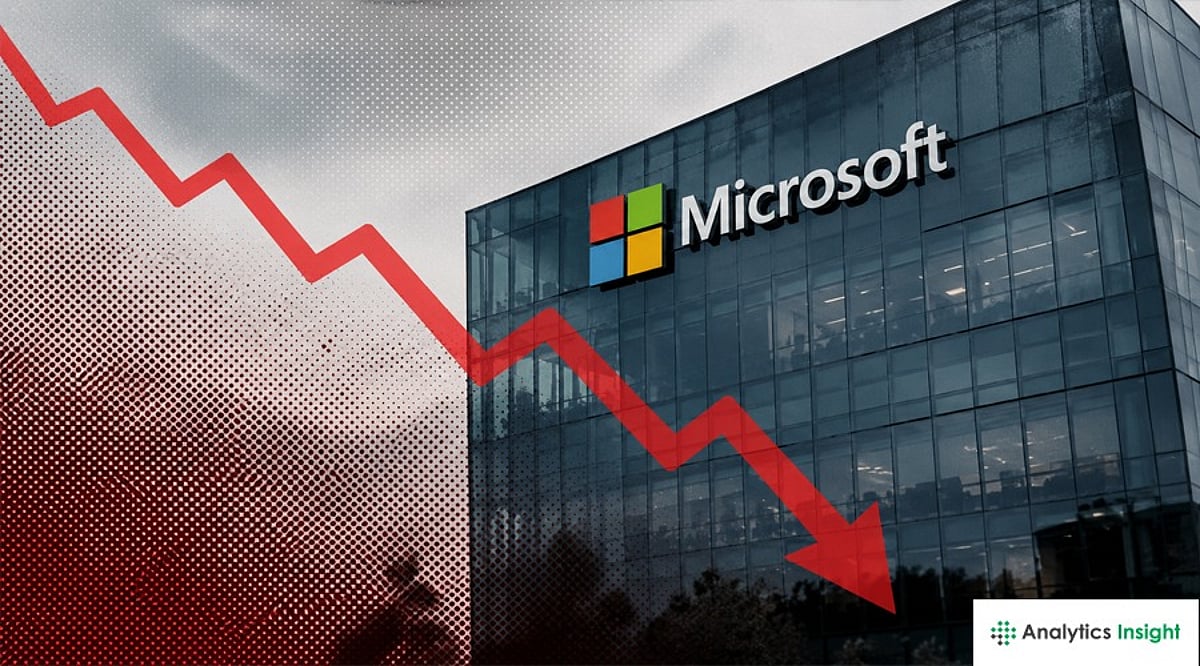
    Microsoft Corp. is heading toward its weakest monthly stock performance in more than two decades, even as the company continues to report steady revenue growth and earnings that exceed Wall Street expectations. Investors have shifted their attention from quarterly results to the rising cost of expanding artificial intelligence infrastructure.

    AI Investment Costs Overshadow Earnings Beat

    Microsoft has delivered year-over-year revenue growth of 16% to 18% for eight consecutive quarters and consistently beaten analyst earnings estimates. Yet these strong results have done little to support the share price. The market is now laser-focused on spending rather than revenue.

    Capital expenditure has become the primary metric investors watch. Microsoft spent approximately $38 billion on capital projects in the latest quarter, much of it directed toward expanding AI data centers. Bank of America estimates the company’s capital spending could approach $190 billion in 2026. This surge is not unique to Microsoft—Amazon, Alphabet, Meta Platforms, and Oracle are also pouring billions into AI infrastructure, with combined spending by the five largest hyperscale cloud providers projected to exceed $700 billion in 2026.

    As more companies build data centers, demand for advanced chips and memory continues to rise, driving up equipment costs and extending investment cycles. Investors are now questioning how quickly these projects can generate meaningful financial returns.

    Cash Flow and Shareholder Returns Under Pressure

    Microsoft’s capital spending increased 63% from a year earlier, while free cash flow declined 10%. With more operating cash funneled into infrastructure, less remains available for share repurchases and dividend growth. Bank of America notes that hyperscaler capital spending has risen from roughly 70% of operating cash flow in 2025 to nearly 100% in 2026, raising concerns that large technology companies may have fewer resources for direct shareholder returns while AI investment remains elevated.

    Stifel lowered its Microsoft price target to $400, forecasting that Azure’s expansion will reduce gross margins by 100 to 150 basis points each quarter through fiscal 2027. Analysts estimate Microsoft’s fiscal 2027 gross margin could fall to about 63%, and earnings per share may trail actual results if spending continues at the current pace.

    Meanwhile, semiconductor companies have benefited from the AI investment cycle. Since January, the semiconductor sector has outperformed many large technology stocks as demand for AI hardware continues to increase.

    Technical Levels Under Scrutiny

    Technical analysts are also watching Microsoft’s stock price action closely. John Roque, a technical strategist at 22V Research, noted that the stock has struggled to stay above its 200-day moving average after repeated failures near resistance levels. He warned that a break below long-term support around $350 could trigger further weakness. “A break below $350 would, on his math, open the path to $250 — measured down from the stock’s failure near $450 in early June,” Roque said. That projection represents roughly 30% below recent trading levels, though it remains a technical scenario rather than a forecast.

    Outlook: AI Returns Remain the Key Question

    Current market conditions draw comparisons to earlier technology investment cycles, including the period following the dot-com boom. Many investors continue to monitor whether Microsoft’s expanding AI business, cloud platform, and related services will eventually generate returns that justify the record level of infrastructure spending. Until then, AI investment costs remain one of the biggest drivers of sentiment surrounding the company’s stock.


  • Amazon Prime Day 2026: 72 Hours of Massive Deals on Electronics, Fashion, and Home Appliances

    Amazon Prime Day 2026: 72 Hours of Massive Deals on Electronics, Fashion, and Home Appliances

    Amazon Prime Day 2026 is set to run from July 4 to July 6, offering Prime members a full 72 hours of discounts across smartphones, electronics, fashion, home appliances, and everyday essentials. This year also marks ten years of Prime in India, and Amazon is celebrating with a dedicated set of 10th Anniversary Deals covering over 15,000 products and 300 brands.

    New members can join Prime at Rs. 999 per year—a flat Rs. 500 off the standard annual plan. Existing members get instant bank discounts of up to 10% on SBI and Axis Bank cards, while Amazon Pay ICICI Bank credit card holders earn unlimited 5% cashback.

    Smartphones and New Launches

    Smartphones are a major focus this year. The Samsung Galaxy S25 Ultra is available at Rs. 84,999—a Rs. 15,000 discount with 9-month No Cost EMI—and the OnePlus 13 starts at Rs. 49,999. New launches include the Samsung Galaxy M47 and the OnePlus N6, both designed for Indian consumers. Buyers can also avail exchange offers worth up to Rs. 66,000 and up to 12 months of No Cost EMI across the smartphone category.

    Electronics, TVs, and Laptops

    Discounts go up to 80% on accessories, wearables, and headphones, and up to 75% on cameras. Laptops and tablets are available at up to 40% off, with deals on Dell and other leading brands. Smart TVs from Samsung, Sony, and LG carry discounts up to 65%, while projectors go up to 70% off.

    Fashion, Beauty, and Home

    Fashion deals include a minimum 65% off on tops, T-shirts, and jeans, and at least 50% off on sports shoes and sneakers. Beauty and skincare essentials from L’Oreal, Lakmé, and Korean brands see discounts of 30% to 60%. Home appliances are available at up to 65% off, covering washing machines, refrigerators, air conditioners, and dishwashers from brands like LG, Samsung, and Bosch. Air conditioners start at Rs. 20,490 and microwaves from leading brands start at Rs. 4,990.

    AI-Powered Shopping and Fast Delivery

    Amazon’s AI tools, including Rufus and Lens AI, are integrated into the shopping experience to help users compare products, read reviews, and search visually. Amazon Now will also deliver groceries and essentials within minutes to eligible pin codes during the sale.

  • Meta Rolls Out WhatsApp Plus Subscription in India: Exclusive Themes and Premium Features for Rs. 79/Month

    Meta Rolls Out WhatsApp Plus Subscription in India: Exclusive Themes and Premium Features for Rs. 79/Month

    Meta has officially introduced WhatsApp Plus, a new optional subscription service in India, priced at just Rs. 79 per month. This move marks the company’s first premium tier for WhatsApp, offering users enhanced customization without altering the core free experience.

    Subscribers to WhatsApp Plus gain access to 18 exclusive color themes, 14 customized app icons, unique notification ringtones, premium sticker packs, and the ability to pin up to 20 chats. Additionally, the package includes advanced chat organization tools and early access to select features as Meta continues to roll out updates.

    Users who do not subscribe will still enjoy all standard WhatsApp features, including messaging, voice and video calls, and end-to-end encryption — completely unchanged.

    To activate WhatsApp Plus, users can navigate to Settings > Subscriptions within the app and complete the payment. The feature is being phased out gradually, so not all users may see the option immediately.

    Industry experts view this launch as Meta’s strategic first step toward building a premium ecosystem around WhatsApp while maintaining its free core offering. The subscription is currently available only in India, with potential expansion in the future.

  • XRP Defends $1 Support as Holder Losses Reach 2022 Bear Market Levels – Price Analysis

    XRP Defends $1 Support as Holder Losses Reach 2022 Bear Market Levels – Price Analysis

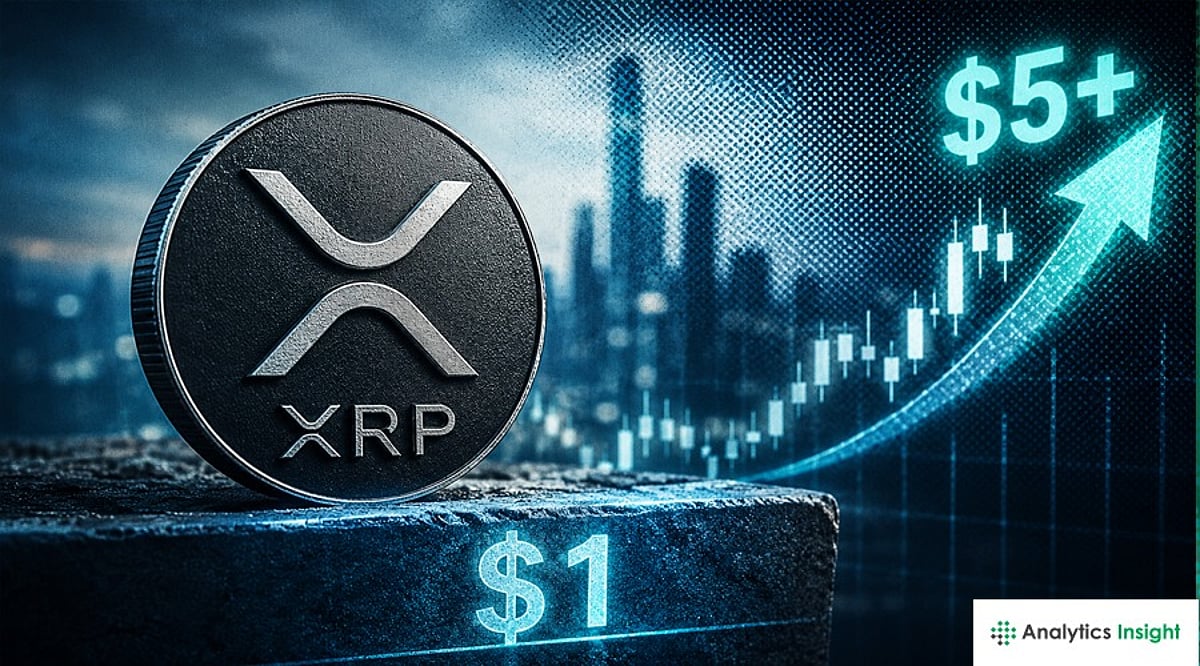
    XRP is holding the critical $0.93–$1.00 support zone after another steep weekly decline, while on-chain data shows holder losses matching levels last seen during the 2022 crypto bear market. Despite the bearish sentiment, analysts see a potential recovery toward $5–$8 if buyers reclaim major resistance levels.

    XRP’s $0.93 Support Becomes the Main Price Test

    Buyers reacted near $1.0079 this week, preventing an immediate break below the psychological $1 level. That response preserved the existing recovery setup, although the market has not confirmed a reversal. The wider support zone runs from $0.93 to $1.00, aligning with earlier breakout levels, a long-term rising trend line, and a Fibonacci extension followed by technical traders.

    Can XRP hold this zone long enough to rebuild momentum? A decisive close below $0.93 could weaken the bottoming structure and expose the next support area near $0.80. On the upside, XRP first faces resistance near $1.15. Bulls would then need to reclaim $1.40 before testing the stronger barrier between $1.70 and $1.90.

    Realized Losses Return to 2022 Bear-Market Levels

    Glassnode data shows XRP’s 90-day Realized Profit/Loss Ratio near 0.33. The reading matches 2022 bear-market levels and indicates that holders are selling more coins at a loss. The ratio compares the value of coins sold at a profit with those sold at a loss. Readings above one favor realized gains, while readings below one indicate greater losses. XRP’s ratio first fell below one in April 2026, when the token traded between $1.30 and $1.40. It later reached 0.38 in early June before declining again.

    Still, the indicator does not confirm a market bottom. During the 2022 downturn, the ratio fell below 0.20 before XRP continued lower toward $0.31.

    Analysts Map a Possible Fifth-Wave Recovery

    Analyst Dark Defender says XRP may be nearing the end of a wave-four correction around $0.93. That level closely matches the support zone that buyers currently defend. His weekly chart also places the Relative Strength Index near 29, which reflects oversold conditions. Under his Elliott Wave count, a fifth-wave advance could target $5.86 and then $8.78. The analyst also maps a longer-term target near $18.23—though that scenario requires a multi-year expansion and remains highly speculative.

    Mikybull Crypto also tracks a possible capitulation phase near XRP’s rising trend line from the 2020 market bottom. His chart places XRP near a major Fibonacci retracement and below the Ichimoku Cloud. His longer-term projection points to the $5–$8 range if XRP holds the trend line. Before then, the token must defend support, reclaim $1.40, and clear resistance between $1.80 and $1.90. A break above those levels could return attention to the previous cycle high near $3.60. A support failure could instead send XRP toward $0.80 before another recovery attempt.

    What’s Next?

    XRP remains at a decisive point as buyers defend the $0.93–$1.00 support zone while holder losses reach 2022 bear-market levels. A recovery above $1.40 could strengthen the bullish outlook, but losing $0.93 may expose $0.80. Traders should closely monitor these levels before expecting a sustained rebound.

  • SBI Holdings’ ¥46.7B Bitbank Acquisition Targets Japan’s Stablecoin Market and Crypto Growth

    SBI Holdings’ ¥46.7B Bitbank Acquisition Targets Japan’s Stablecoin Market and Crypto Growth

    SBI Holdings has agreed to acquire Japanese crypto exchange Bitbank for ¥46.7 billion (approximately $289 million) through investment vehicle SBICAH GK. The financial group expects to complete the transaction by October 2026, pending clearance from the Japan Fair Trade Commission.

    SBI signed binding agreements on June 24 and 25. The acquisition provides access to 960,000 customer accounts and ¥570 billion in digital assets under custody.

    Bitbank Adds a Regulated Yen Stablecoin Gateway

    SBI has been developing a digital asset platform covering trading, custody, tokenization, and payments. Bitbank adds a regulated retail exchange and a direct entry point into Japan’s crypto market. The ¥46.7 billion price equals about eight times Bitbank’s revenue, despite the exchange reporting a net loss in its latest fiscal year, drawing scrutiny.

    People familiar with SBI’s strategy say the price reflects more than Bitbank’s revenue or customer base; the exchange provides a licensed distribution channel for yen-denominated stablecoins. SBI Shinsei Trust Bank issues JPYSC, a stablecoin linked to the Japanese yen. Wider circulation requires a registered exchange with established compliance systems, strong security, and direct customer access.

    Acquiring Bitbank allows SBI to expand JPYSC faster than building and licensing a new exchange. Bitbank holds Kanto Local Finance Bureau registration No. 00004 and operates within Japan’s self-regulatory framework through the Japan Virtual and Crypto Assets Exchange Association.

    Two-Stage Deal Separates the Share Purchases

    SBI will complete the acquisition in two phases. In August, the group will buy shares from individual investors, including Bitbank founder and CEO Noriyuki Hirosue. By the end of October, Bitbank plans to repurchase and retire shares owned by MIXI and Ceres, which together control about half of the exchange.

    The second stage uses a company buyback rather than a direct purchase by SBI, so the acquisition involves two completion events with separate conditions. SBI expects the transaction to have only a minor effect on its consolidated fiscal 2027 results, indicating a focus on strategic platform development rather than immediate earnings growth.

    The group stated that the acquisition would create new business opportunities in stablecoins, digital assets, and on-chain finance, with Bitbank’s infrastructure providing an operating base for that expansion.

    Japan’s Compliance Shift Drives Consolidation

    The acquisition comes as Japan prepares to place crypto assets under the Financial Instruments and Exchange Act. The lower house passed the relevant legislation on June 11. The proposed framework raises capital, custody, and disclosure standards for crypto exchanges while lowering the crypto gains tax to 20%.

    The legislation also creates a possible route for spot Bitcoin, Ether, and XRP exchange-traded funds. Rising compliance costs could pressure smaller operators. Architect Partners estimates that about 90% of Japan’s 27 licensed crypto exchanges remain unprofitable, with as many as half expected to merge or leave the market.

    If the deal closes, SBI projects that the combined group will control about ¥1.1 trillion in crypto assets across 2.9 million accounts, surpassing bitFlyer and Coincheck by asset value. The enlarged operation would include Japan Digital Asset Trust, Bitbank’s retail platform, and its altcoin trading business. SBI plans to retain Bitbank as a separate exchange brand.

    What’s Next?

    SBI Holdings’ ¥46.7 billion Bitbank acquisition strengthens its regulated crypto infrastructure, expands customer access, and supports wider yen stablecoin distribution. As Japan raises compliance standards, the deal positions SBI for further growth across trading, custody, payments, and on-chain finance.

  • Zerodha Files for SEBI Merchant Banking License as Revenue Hits ₹8,847 Crore

    Zerodha Files for SEBI Merchant Banking License as Revenue Hits ₹8,847 Crore

    Zerodha, India’s largest stockbroker by active clients, is taking a significant step beyond its core business. The Bengaluru-based fintech company has applied for a Category I merchant banking license from the Securities and Exchange Board of India (SEBI), seeking to offer services such as initial public offering management, corporate advisory, and fund-raising. The application was submitted in April and awaits regulatory approval, a company spokesperson confirmed, adding that more details will be shared once the license is granted.

    Strategic Expansion into Investment Banking

    The move positions Zerodha to tap into India’s booming IPO pipeline, as dozens of startups and new-age companies prepare to go public over the coming years. A merchant banking license would allow Zerodha to help these firms navigate public offerings, raising capital through the stock market. This expansion comes as the company already offers a wide array of financial services—mutual funds, lending, asset management, startup investments via Rainmatter, international investing, and fixed deposits through its Coin platform.

    By adding investment banking to its portfolio, Zerodha aims to diversify revenue streams and reduce its reliance on brokerage income. In FY25, the company reported revenue of ₹8,847 crore and net profit of ₹4,237 crore, underscoring its financial strength as it ventures into new territory.

    Competition and Market Impact

    Zerodha’s entry into merchant banking could intensify competition in a sector traditionally dominated by established players such as JM Financial, Kotak Mahindra Capital, Axis Capital, and ICICI Securities. Industry experts believe that a digital-first approach from Zerodha may appeal especially to technology companies and startups, potentially improving service quality and offering more choices for businesses raising capital.

    The application aligns with a broader trend of fintech companies moving into conventional financial services. As India’s public markets continue to attract new issuers, more firms are seeking merchant banking licenses, which could foster a more dynamic capital market ecosystem.

    What This Means for Zerodha’s Future

    If SEBI approves the license, Zerodha will join a growing list of full-service financial companies. The company recently launched fixed deposit investments on its Coin platform, allowing customers to invest across partner banks from a single interface. Expanding into investment banking would further solidify its presence in the capital markets and create new income sources, supporting long-term growth.

    Zerodha’s latest move highlights how fintech innovators are reshaping traditional finance. With strong fundamentals and a loyal user base, the company is well-positioned to compete for IPO and fund-raising mandates in the years ahead—pending the regulator’s green light.

  • Inflation Adjusted: GTA 6 Is the Most Affordable Mainline GTA in 25 Years

    Inflation Adjusted: GTA 6 Is the Most Affordable Mainline GTA in 25 Years

    The price of Grand Theft Auto VI has reignited debate among gamers. Rockstar Games set the Standard Edition at $79.99, a figure that feels steep to many. However, when adjusted for inflation, the new entry may actually be the most affordable mainline GTA title in a quarter-century.

    A comparison using U.S. National Average Wage Index data reveals that the average annual income for American workers in 2024 was $67,027—roughly $5,600 per month. At $79.99, GTA 6 represents just 0.119% of that annual income, whereas earlier entries in the series reached nearly 0.15%.

    For context, GTA 3 launched in 2001 at $49.99, which equates to approximately $90 in today’s dollars. Similarly, GTA: Vice City and GTA: San Andreas would cost around that same amount if released in 2026. GTA 4 debuted at $59.99, which would now be worth well over $90 after inflation. This means GTA 6 offers better purchasing power compared to several of its predecessors.

    While the math makes a strong case, many players remain focused on the sticker price. Rising costs of living mean that every dollar counts, and the $80 price tag still feels like a significant expense for many households.

    In other news, a Polish gaming podcast, Rock and Borys, has suggested that Rockstar may not ship GTA 6 with a 60 FPS mode at launch. Instead, the feature might arrive via a post-launch update, with the game initially running at 30 FPS. Nothing has been confirmed, but fans are divided: some are willing to wait for a smoother experience, while others expect a title of this scale to include 60 FPS support from day one.

    Ultimately, inflation-adjusted pricing shows GTA 6 is more affordable than older GTA games, but that doesn’t change the immediate financial reality for players. The conversation around value and cost will likely continue as the release approaches.

  • OpenAI Dominates in Users, but Anthropic Surpasses in Enterprise Revenue Growth, IDC Data Shows

    OpenAI Dominates in Users, but Anthropic Surpasses in Enterprise Revenue Growth, IDC Data Shows

    OpenAI’s ChatGPT remains the world’s most widely used artificial intelligence chatbot by user numbers. However, new estimates from IDC suggest Anthropic may generate more annual revenue despite serving a much smaller audience. The findings highlight contrasting business models within the fast-growing AI industry.

    ChatGPT Maintains Largest Global User Base

    IDC Research Vice President Arnal Dayaratna estimated that ChatGPT has more than 900 million weekly active users worldwide, placing OpenAI well ahead of other consumer AI chatbot providers. IDC also estimated that Google Gemini serves between 200 million and 250 million weekly active users, while Anthropic’s Claude has between 40 million and 60 million weekly active users. These figures show that OpenAI remains the largest consumer-facing AI platform by a wide margin.

    Dayaratna noted that OpenAI has built multiple revenue streams across consumer subscriptions, workplace seats, APIs, and platform services. IDC estimates OpenAI generates between $30 billion and $40 billion in annualized revenue, with consumer subscriptions accounting for about $10 billion to $13 billion, and API and platform services contributing as much as $20 billion. Reports published earlier this month also stated that OpenAI generated $5.7 billion in revenue during the first quarter of 2026 while spending about $3.7 billion, with a net loss reaching approximately $39 billion in 2025.

    Anthropic Builds Revenue Through Enterprise Customers

    Although Anthropic serves far fewer users, IDC estimates its annualized revenue stands between $40 billion and $50 billion. Consumer subscriptions contribute less than $2 billion, according to the research firm. Most of Anthropic’s revenue comes from enterprise subscriptions, Claude Code seats, API usage, and other developer-focused workloads. This business mix differs significantly from OpenAI’s larger consumer-focused platform.

    Dayaratna commented, “Usage scale tells a different story from revenue mix,” adding that Claude’s business is more focused on enterprise and developer customers than consumer adoption. Anthropic also referenced its May 2026 company blog, which announced its annualized revenue run rate exceeded $47 billion, supporting IDC’s broader revenue estimates.

    Research Firms Report Different Strengths for Both Companies

    Counterpoint Research reported similar findings in its April 2026 analysis, estimating Anthropic captured 31.4% of global large language model revenue during the first quarter of 2026, with OpenAI following at an estimated 29% market share. Counterpoint also estimated Anthropic generated average monthly revenue of $33.30 per user, compared to OpenAI’s $2.20 per user. During the same period, Counterpoint estimated OpenAI had approximately 900 million monthly active users versus about 65 million for Anthropic.

    Both OpenAI and Anthropic have reportedly started confidential preparations for possible future public offerings. In May, Anthropic completed a $65 billion Series H funding round that valued the company at $965 billion. The latest estimates present two different measures of success in the AI industry: OpenAI continues to lead by user reach, while IDC estimates suggest Anthropic currently earns more revenue through enterprise customers and developer services. As Dayaratna summarized, “Usage scale tells a different story from revenue mix,” reflecting the divergent strategies followed by both companies.

  • Crypto at a Crossroads: MiCA Deadline and US Jobs Report Fuel Market Uncertainty

    Crypto at a Crossroads: MiCA Deadline and US Jobs Report Fuel Market Uncertainty

    As July begins, the cryptocurrency market faces a confluence of events that could reshape trading dynamics across Europe and the United States. The European Union’s MiCA transitional period expires on July 1, forcing crypto-asset service providers to obtain full authorization or cease serving EU customers. At the same time, Robinhood prepares to unveil new products, while the U.S. Bureau of Labor Statistics releases the June employment report. These developments, combined with potential geopolitical shocks and thinner holiday liquidity, may drive significant volatility for Bitcoin and other digital assets.

    MiCA Deadline Redraws Europe’s Crypto Landscape

    The expiration of the MiCA transitional period ends temporary national arrangements for crypto companies operating under earlier local rules. From July 1, all crypto-asset service providers must hold full authorization under the European Union’s unified licensing framework or stop offering services to EU customers. Authorized firms can now operate across participating European markets with a single license, while unauthorized ones must restrict new accounts, transfer users, reduce product access, or begin orderly shutdowns.

    Binance, failing to secure a MiCA license, has created an opening for competing exchanges to target its customer base. Users may face account migrations, changes in stablecoin access, fewer trading pairs, or new legal entities holding their assets. The European Securities and Markets Authority urges customers to verify whether their providers appear on the MiCA register. Large-scale user movements between platforms could also dampen euro-denominated trading volumes and token liquidity.

    Robinhood Plans New Crypto Product Reveal

    Robinhood will host an event featuring CEO Vlad Tenev and crypto general manager Johann Kerbrat to announce new products, though details remain scarce. The event occurs as financial platforms compete for customers during Europe’s regulatory transition. Market participants will watch for information about product access, supported markets, and how these services fit into Robinhood’s broader crypto business. Any immediate effect will depend on the specifics of the announcement and the timing of availability.

    U.S. Jobs Report Could Shift Rate Expectations

    The Bureau of Labor Statistics will release the June employment report on Thursday at 8:30 a.m. Eastern Time, ahead of the Independence Day holiday on July 3. A Reuters poll expects 110,000 additional nonfarm jobs—a slowdown from May. Traders will scrutinize unemployment, wage growth, and revisions alongside the headline figure. A stronger report could lift Treasury yields and the dollar by reducing expectations for easier Federal Reserve policy, potentially pressuring Bitcoin and other rate-sensitive assets. A weaker report could support risk assets if it lowers rate expectations without raising deeper economic concerns.

    Before Thursday, job openings, private payrolls, unemployment claims, and the ISM manufacturing index will offer additional signals. European inflation data, the ECB forum, and geopolitical risks may also influence currencies, yields, and crypto demand.

    As the week unfolds, the MiCA deadline, Robinhood’s product event, and the U.S. jobs report will likely shape market sentiment. Regulatory changes may affect European exchange access, while economic data could influence Bitcoin volatility and interest-rate expectations. Traders are advised to follow official announcements and market signals before making major decisions.

  • Bitcoin, Ethereum, XRP Find Footing as Traders Eye Key Support Levels and Macro Data

    Bitcoin, Ethereum, XRP Find Footing as Traders Eye Key Support Levels and Macro Data

    Bitcoin, Ethereum, and XRP started the new week with signs of stability after posting steep losses during the previous trading sessions. The three largest cryptocurrencies by market capitalization remain under technical pressure, but recent price action shows that selling has slowed near important support levels.

    Bitcoin recovered near $60,000, Ethereum continued to trade above $1,500, and XRP defended the $1.00 mark. At the same time, traders continued monitoring macroeconomic developments, exchange flows, and technical indicators for signs of the market’s next move.

    Bitcoin Holds Above $60,000 While Recovery Faces Resistance

    Bitcoin traded back above $60,000 after falling nearly 6% over the previous week. The rebound came as the market attempted to stabilize following broad selling across digital assets. Despite the recovery, Bitcoin remained below its 50-day, 100-day, and 200-day exponential moving averages, showing that the broader trend has not changed.

    The Relative Strength Index (RSI) stayed close to 33, placing Bitcoin just above oversold conditions. The MACD also remained slightly negative, although selling momentum appeared to weaken. Traders continued watching resistance around $64,000, followed by the major moving averages near $66,971, $70,591, and $76,516. Until those levels are reclaimed, the latest recovery remains limited.

    Ethereum and XRP Defend Key Price Levels

    Ethereum traded near $1,585 and continued holding above the $1,500 support area. The asset also remained below its major moving averages, leaving the broader technical structure under pressure. However, the RSI remained near oversold territory, while the MACD turned slightly positive, showing that downside momentum had eased.

    If Ethereum continues higher, resistance stands near the 50-day EMA around $1,833, followed by the $2,000 area and the 100-day EMA near $2,010. On the downside, traders continued watching $1,500 closely because a break below this level could expose support near $1,385.

    XRP traded around $1.05 while defending the psychological $1.00 support level. The token also stayed below its major moving averages and beneath a descending price channel. Its RSI remained near 33, while the MACD continued to show weak momentum. Resistance remained near $1.19, followed by $1.21 and $1.30.

    Exchange Flows and Macro Events Remain in Focus

    Market participants also monitored activity on Binance after the exchange recorded more than $400 million in weekly net outflows during the week beginning June 22. The reported outflows represented a small share of the exchange’s total tracked assets, although Binance recorded the largest weekly net outflows among major exchanges.

    The movement came ahead of the European Union’s Markets in Crypto-Assets (MiCA) transition deadline and followed Binance’s withdrawal of its MiCA license application in Greece. Broader market conditions also remained tied to global developments. Reports that the United States and Iran agreed to halt strikes and resume talks lifted equity futures, but cryptocurrencies showed only a limited response.

    Bitcoin traded near $59,700, while Ether posted modest gains and XRP remained under pressure. Market participants also continued monitoring upcoming US economic data, including the Personal Consumption Expenditures (PCE) report, for additional direction.

    For now, Bitcoin, Ethereum, and XRP have stabilized near important support levels. Traders continue watching whether buyers can maintain those areas while the market reacts to technical signals and broader economic developments.