Blog

  • FTSE 100 Opens Lower at 10,495 as Oil Prices Climb and BoE Warns on Inflation

    FTSE 100 Opens Lower at 10,495 as Oil Prices Climb and BoE Warns on Inflation

    The FTSE 100 opened 13 points lower at 10,495 amid easing US-Iran tensions, while the Bank of England’s chief economist warned against complacency on inflation. Labour leadership frontrunner Andy Burnham is also set to unveil a major devolution plan. Meanwhile, Brent crude futures rose 0.67% to $72.47 a barrel. US West Texas Intermediate (WTI) advanced 1.80% to $70.05 a barrel.

    Gainers & Losers

    On the upside, Lion Finance Group rose 3.22% to £11,220, while Entain advanced 2.70% to £593.40. BT Group gained 1.59% to £198.10, and Scottish Mortgage Investment Trust moved higher by 1.56% to £1,433. Pershing Square Holdings added 1.22% to £3,812, while Computacenter climbed 0.89% to £4,292.

    On the downside, Endeavour Mining declined 2.36% to £3,761, while British American Tobacco slipped 1.37% to £4,686. Next edged lower by 0.27% to £14,575, and AstraZeneca fell 0.28% to £14,278. Unilever moved lower by 0.87% to £4,560.50, while 3i Group eased 1.58% to £2,492.

    CPI Above BoE’s Target

    Bank of England’s chief economist Huw Pill told the Press Association that policymakers “should not be complacent” about inflation, after the Consumer Prices Index remained above the Bank’s 2% target in May, at 2.8%. “I think it should be seen as problematic, because our mandate is very clear; inflation at 2% at all times. I do fear a little bit that, because we saw inflation go to 11%, policy discussion becomes, oh, inflation at 3% is not so bad.” Pill was one of two policymakers to vote for a rate hike when the Bank’s monetary policy committee split 7-2 to hold rates earlier this month.

    AstraZeneca Secures EU Approval for Breast Cancer Drug

    AstraZeneca has secured EU approval for its breast cancer drug Datroway after studies found it was able to improve survival rates for patients. The drug targets the especially aggressive form of cancer known as metastatic triple-negative, and was able to improve the average survival of the disease by five months. Today, only 15% of patients with metastatic triple-negative breast cancer survive beyond five years, making the disease one of the hardest to treat. AstraZeneca had already secured approval for the drug in the US in May.

    Bridgepoint Group Shares Rose

    Bridgepoint Group shares jumped 7.9% in early trade, hovering at £251, but shares remain down 10.2% since January. The group is acquiring real estate investment platform Kayne Anderson for $1.4 billion (£1 billion), comprising $759 million in cash and roughly $189 million in newly issued Bridgepoint shares. The deal is anticipated to “strengthen Bridgepoint’s position” in global private markets and increase the group’s assets under management (AUM) to $117 billion. This includes $40 billion in private equity, $30 billion in infrastructure and $22 billion in real estate.

    Global Market View

    In the US, the tech-heavy Nasdaq closed 0.24% down. The S&P 500 was nearly flat at 7,354.02, while the Dow declined 0.09%. In Asia, South Korea’s Kospi fell 0.2% to 8,394.65. Japan’s Nikkei 225 rose 0.15% to 69,468.11 points. Taiwan’s TAIEX dipped 0.96%. India’s Nifty 50 and Sensex both fell 0.41% and 0.5%, respectively.

    Disclaimer: Analytics Insight does not provide financial advice or guidance on cryptocurrencies and stocks. Also note that the cryptocurrencies mentioned/listed on the website could potentially be risky, i.e. designed to induce you to invest financial resources that may be lost forever and not be recoverable once investments are made. This article is provided for informational purposes and does not constitute investment advice. You are responsible for conducting your own research (DYOR) before making any investments.


  • Bitcoin Drops to $60,000: Heavy Selling Pressure Grips Crypto Market

    Bitcoin Drops to $60,000: Heavy Selling Pressure Grips Crypto Market

    Bitcoin has entered a difficult phase after a strong rally in 2025. At the end of last year, Bitcoin touched a record high of $126,000, which created huge excitement across the crypto market. However, the current situation has sharply changed.

    As of 29 June 2026, Bitcoin trades near $59,500 to $60,500. This shows a major fall compared to previous highs. Since the start of 2026, Bitcoin has already lost more than 30% of its value. The market now faces fear and uncertainty as investors closely watch the next possible move.

    The sharp fall has created an important question in the market. Many traders now wonder whether Bitcoin has reached its lowest point for now or whether prices may fall even further in the coming weeks.

    Recent Performance Shows Weak Market Sentiment

    The first half of 2026 has been difficult for Bitcoin. During June, sellers gained strong control and pushed prices lower. Bitcoin recently fell under the important $60,000 price level, even touching nearly $59,501 during recent trading sessions.

    This price level has become important because investors usually see round numbers like $60,000 as major support zones. Once price falls below such levels, market confidence often becomes weak.

    Only one month ago, Bitcoin traded close to $81,500. The move from $81,500 to below $60,000 means Bitcoin has lost more than 22% in just one month. Compared with mid-2025, Bitcoin now trades almost 40% lower, which clearly shows how much market sentiment has changed.

    Technical Charts Show Important Warning Signs

    Technical analysis currently shows mixed signals. Bitcoin is now near an important support area between $58,000 and $60,000. This zone will likely decide the next short-term direction.

    The Relative Strength Index (RSI) is in neutral territory. This usually means neither buyers nor sellers fully control the market. At the same time, the MACD indicator recently showed bearish divergence, which often signals weaker price strength.

    The 200-day moving average, however, still points upward. This suggests that although short-term pressure is strong, the long-term market structure has not fully broken yet.

    If Bitcoin fails to move back above $60,000 soon, analysts expect another fall toward $55,000. Some experts even believe price may test $46,000 if selling pressure increases further.

    Institutional Investors Pull Money Out

    One major reason behind Bitcoin’s weakness comes from large investors pulling money out of the market. Reports show around $4.5 billion left spot Bitcoin ETFs in recent months.

    Spot Bitcoin ETFs had earlier helped bring major institutional money into crypto markets. But recent outflows show that large investors have become cautious.

    Higher global interest rates have also hurt Bitcoin demand. Many investors now prefer safer assets such as gold and traditional investments instead of risky digital assets.

    Another concern comes from Bitcoin mining companies. Current mining costs have increased sharply, and several miners now spend more money producing Bitcoin than current market prices allow. This creates extra selling pressure because miners often sell holdings to cover losses.

    Regulation Problems Continue to Create Uncertainty

    Government regulation is another major issue for the crypto market. In the United States, delays around the proposed US Clarity Act have created fresh uncertainty.

    This law aims to create clear rules for cryptocurrency markets. Without proper regulations, many institutions are hesitant about increasing crypto investments.

    Large financial firms such as Morgan Stanley and Charles Schwab have expanded crypto services during 2026. Even with this progress, unclear regulations continue to slow overall market confidence.

    Future Outlook

    Despite short-term weakness, many analysts still believe Bitcoin has strong long-term potential. Forecasts from Binance suggest Bitcoin could recover toward $68,000 to $105,000 during the second half of 2026 if market conditions improve.

    Research from Bitcoin Suisse presents an even stronger forecast. According to this report, Bitcoin may reach nearly $180,000 during the next major bull cycle, with increasing institutional adoption and stronger market liquidity.

    At the same time, bearish analysts are cautious. They believe weak economic conditions and poor investor confidence may delay any major recovery until late 2026.

    Final Thoughts

    Bitcoin currently stands at one of its most important price zones this year. After a steep fall from $126,000 to nearly $60,000, market confidence has weakened sharply.

    A move above $65,000 could help restore bullish momentum and bring fresh buying interest. On the other hand, failure to defend current levels may push Bitcoin toward $55,000 or even lower.

    Even though short-term pressure is strong, Bitcoin still holds its position as one of the most closely watched financial assets in the world. The second half of 2026 will likely decide whether the market begins recovery or faces another major correction.

    FAQs

    1. Why has Bitcoin price fallen in 2026?
    Large investor outflows, weak market sentiment, and global economic pressure have pushed prices lower.

    2. What is Bitcoin’s current price level?
    As of 29 June 2026, Bitcoin trades near $59,500 to $60,500.

    3. Why is $60,000 an important level for Bitcoin?
    This price zone acts as major support, and a breakdown could trigger further decline.

    4. Can Bitcoin recover this year?
    Some analysts expect recovery toward $68,000 to $105,000 if market conditions improve.

    5. What is the long-term Bitcoin forecast?
    Certain market reports suggest Bitcoin may reach $180,000 during the next major bull cycle.

    Disclaimer: This article is provided for informational purposes and does not constitute investment advice. You are responsible for conducting your own research before making any investments.

  • Master Quordle: Hints, Answers, and Winning Strategies for June 29 Puzzle

    Master Quordle: Hints, Answers, and Winning Strategies for June 29 Puzzle

    Today’s Quordle puzzle offers a mix of everyday vocabulary and slightly tricky five-letter words. Before revealing the answers, test your skills with the hints below to unlock all four words within nine attempts.

    Overview of Today’s Puzzle

    This edition of Quordle features four familiar words blending simple definitions with deceptive letter combinations. One answer contains a pair of repeated letters, making it a bit more challenging to identify. Try solving using the clues first before scrolling to the answers.

    Quordle Clues for June 29

    Need a nudge before revealing the solution? Use these hints for each word position:

    • Word 1 (Top Left): Drink something loudly using a straw.
    • Word 2 (Top Right): Decode a code or crack a case.
    • Word 3 (Bottom Left): A shaft sticking out from a wheel on which the wheel is mounted and used to turn the wheel.
    • Word 4 (Bottom Right): Someone who is not sincere or a fraud, particularly counterfeit currency.

    Still stumped? Here are additional clues:

    • One of today’s answers contains a pair of repeated letters.
    • All four words begin with the letters S, C, C, and P.

    Quordle Answers for June 29

    Ready for the solutions? Here are today’s Quordle answers:

    1. SLURP – a common word players recognize at once.
    2. CRACK – a flexible word with multiple definitions that may require extra thought.
    3. CRANK – the trickiest word due to its mechanical meaning.
    4. PHONY – easily mistaken for similar words like ‘phony’ or ‘fake’.

    Strategy Tips for Future Puzzles

    If you cracked all four answers within the nine guesses, congratulations—you’ve mastered today’s challenge! For future puzzles, focus on identifying repeated letters early and consider the multiple meanings of each word. This puzzle offered a fun mix of straightforward and sneaky words, keeping the difficulty balanced.

    Happy puzzling, and see you tomorrow for the next Quordle!

  • BRICS Chamber of Industry Appoints Sharmishtha Ghosh as Executive Director for Global Partnerships

    BRICS Chamber of Industry Appoints Sharmishtha Ghosh as Executive Director for Global Partnerships

    The BRICS Chamber of Commerce and Industry (BRICS CCI) has appointed Sharmishtha Ghosh as Executive Director for International Partnerships and Outreach, a newly created role aimed at strengthening trade and investment ties across the expanding bloc. BRICS now includes 11 member nations, and India holds the group’s chairship for 2026.

    In her new position, Ghosh will lead the Chamber’s efforts in cross-border trade corridors, bilateral investment initiatives, and high-level institutional dialogue, with a focus on helping enterprises in emerging economies access new markets. Ghosh brings over two decades of experience in strategic advisory, public policy, and international market expansion. She is the founder and managing director of In Tandem Global Consulting, a strategy advisory firm based in India and the UAE. There, she advised companies on market entry, foreign investment, and cross-border partnerships, and contributed to economic roundtables and digital trade corridors across India, Europe, and the MENA region. Earlier in her career, she held leadership roles in international business development and corporate advisory, working with government bodies, multinational companies, and industry associations on trade promotion and market expansion.

    “My focus will be on building practical trade corridors, encouraging cross-border investment, and setting up institutional channels that help businesses across member economies enter one another’s markets,” Ghosh said. She added that the work comes as trade and investment shift toward South-South cooperation.

    Sameep Shastri, Chairman of BRICS CCI, said the appointment comes as the Chamber prepares for a broader role across the grouping. “The Chamber is preparing for its place in a BRICS of 11 member nations. Sharmishtha brings the experience and the networks to strengthen our international partnerships, and she will help carry our mandate forward,” he said.

    About BRICS CCI: The BRICS Chamber of Commerce and Industry is a registered body that promotes commerce, industrial trade, and entrepreneurship across BRICS nations and other friendly economies. It serves as an institutional platform for MSMEs, large corporations, and young entrepreneurs to connect, collaborate, and expand their global market reach.

  • MEXC Launches TradFi Gala: $1,000,000 USDT Prize Pool for Futures Traders

    MEXC Launches TradFi Gala: $1,000,000 USDT Prize Pool for Futures Traders

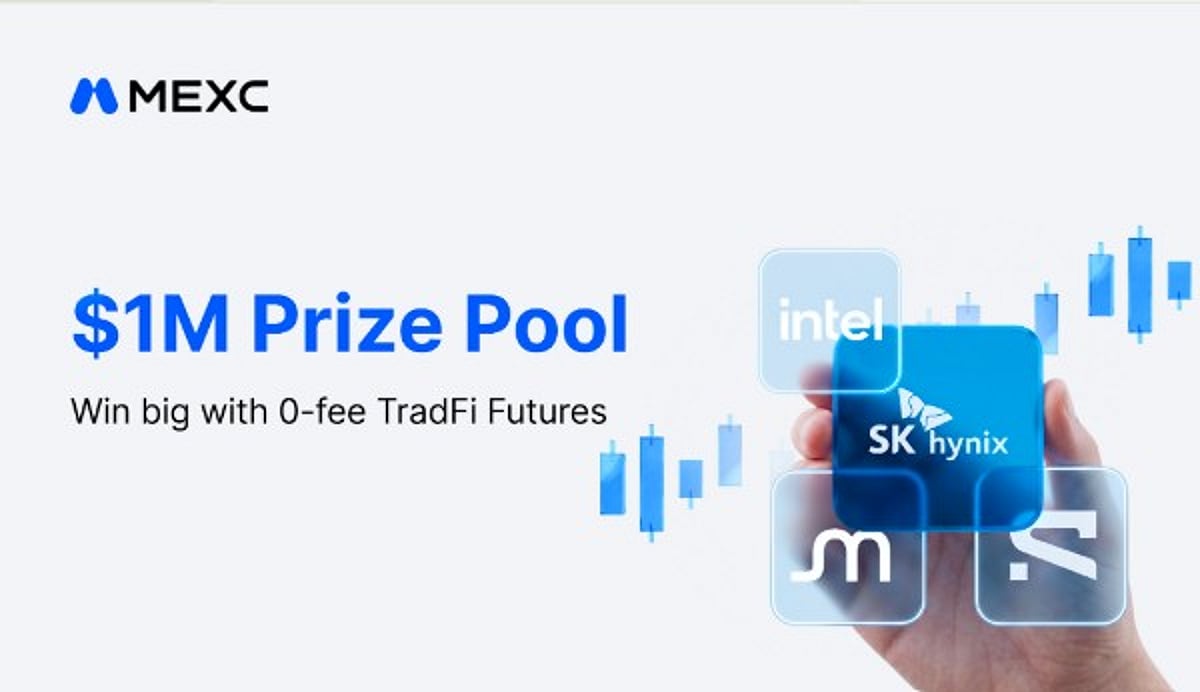
    Victoria, Seychelles, June 29, 2026 – MEXC, a leading 0-fee digital asset trading platform, has announced the launch of the TradFi Gala, a month-long Futures trading campaign running from June 26 to July 26, 2026 (UTC). With rising demand for AI infrastructure and high-bandwidth memory (HBM), trading activity in AI-related stocks has surged. MEXC’s May data showed Stock Futures volume up 105% month-over-month and MU (Micron) Futures volume skyrocketing 1,002%. The campaign combines zero-fee trading, exclusive new user rewards, and competitive events, offering a total reward pool of 1,000,000 USDT.

    TradFi Gala: Four Reward Opportunities for Traders

    The TradFi Gala features four events targeting both new and existing users:

    • 0-Fee Trading Fest: Zero trading fees on selected Futures pairs including MUUSDT, SKHYNIXUSDT, INTCUSDT, SNDKUSDT, and more.
    • Welcome Power Reward: New users who deposit at least $100 and hold it for 24 hours receive a $200 position airdrop and one chance to pull the Treasure Lever.
    • Treasure Lever Frenzy: Users earn pulls by completing trading tasks, competing for a share of 300,000 USDT, including a $20,000 SKHYNIX position airdrop grand prize.
    • TradFi Trading Rush: Three-tiered challenges distribute 650,000 USDT in Futures bonuses, with separate pools for new users and all participants based on trading volume.

    As AI and semiconductor stocks attract growing investor interest, MEXC continues to expand its TradFi product suite. Users can trade U.S. stocks like Intel, Micron, and SanDisk directly within a single account, benefiting from competitive fees, deep liquidity, and fast execution. The TradFi Gala reinforces MEXC’s commitment to “0 Fees” and “Infinite Opportunities.”

    For more details and to participate, visit the MEXC TradFi Gala page.

    About MEXC

    MEXC is the world’s fastest-growing cryptocurrency exchange, trusted by over 40 million users across 170+ markets. It offers industry-leading 0-fee trading and access to over 3,000 digital assets, along with tokenized stocks, ETFs, commodities, and precious metals.

    Risk Disclaimer: This content does not constitute investment advice. Cryptocurrency markets are highly volatile; investors should assess risks carefully before trading.

  • India Stock Market Wobbles: Sensex Sinks 372 Points, Nifty Drops Below 24,000 as Profit Booking Deepens

    India Stock Market Wobbles: Sensex Sinks 372 Points, Nifty Drops Below 24,000 as Profit Booking Deepens

    Indian equity markets ended Monday’s session sharply lower, reversing early gains as broad-based profit booking and IT stock weakness dragged benchmarks. The Sensex plunged 372 points to close at 76,728.37, while the Nifty slipped below the crucial 24,000 mark, settling at 23,978. Persistent Systems led the losers, tumbling nearly 8% after announcing its $1.14 billion acquisition of Germany’s Nagarro.

    Market Overview

    Markets opened on a positive note after a long weekend, but selling pressure accelerated through the morning. The Sensex turned negative within the first hour, losing over 200 points, and continued to slide as the session progressed. The Nifty tested the 24,050 level early on but failed to hold support, closing below 24,000 for the first time in several sessions.

    Key Movers

    • Persistent Systems crashed nearly 8% after announcing its proposed $1.14 billion acquisition of Nagarro. Analysts noted long-term strategic benefits but flagged near-term integration costs.
    • HDFC Bank recovered above Rs. 800 after months of selling pressure, providing some support.
    • Ajanta Pharma hit a fresh all-time high above Rs. 3,400, extending its bullish momentum.
    • Anubhav Plast surged over 623%, leading the gainers list amid extreme volatility.

    Broader Market

    The Nifty Smallcap index fell for a second consecutive session, reflecting continued selling in mid- and small-cap stocks. Volatility was elevated, with stocks like Uhm Vacation, IITL Projects, and Euphoria Infotech witnessing sharp swings.

    Key Triggers This Week

    Investors are closely monitoring:

    • First-quarter earnings season
    • Progress of the monsoon
    • Crude oil prices and US-Iran tensions
    • Foreign institutional investor (FII) flows
    • Reserve Bank of India measures
    • Global economic data

    Analyst Views

    Shrikant Chouhan of Kotak Securities highlighted key support at 24,000 for Nifty and 76,800 for Sensex. A break below could trigger further weakness, while sustained trade above may push indices toward 24,200 and 77,500. LKP Securities’ Rupak De recommended a buy-on-dips strategy, with short-term trend remaining positive above 23,800.

    Other Market Developments

    • GIFT Nifty traded marginally higher at 24,098.50, indicating a flat-to-positive start for Tuesday.
    • The Indian rupee opened nearly flat at 94.35 per US dollar.
    • Gold prices declined, while crude oil edged higher amid geopolitical uncertainty.
    • Delhi Cabinet approved a new Electric Vehicle Policy, effective July 1.
    • Adani Energy Solutions board will meet on July 1 to consider fundraising.
    • Power Grid revoked a ban on KEC International, allowing fresh bids.

    The session ended with broad-based weakness, and market participants now await fresh domestic and global cues for direction.

  • Top 10 Microservices Interview Questions Every Java Developer Should Know

    Top 10 Microservices Interview Questions Every Java Developer Should Know

    Microservices have transformed how modern applications are built, offering scalability, resilience, and faster deployment cycles. Java developers, in particular, rely on frameworks like Spring Boot and Spring Cloud to implement microservices architectures. To help you prepare for your next technical interview, here are the ten most frequently asked microservices questions along with concise explanations.

    1. What Are Microservices?

    Microservices break down an application into small, independently deployable services. Each service handles a specific business capability and communicates with others via lightweight protocols. This architecture contrasts with monolithic applications by enabling modular deployment, fault isolation, and independent scalability. Teams can deliver updates more frequently without risking the entire system.

    2. Why Use Spring Boot for Microservices?

    Spring Boot simplifies microservices development by offering auto-configuration, embedded servers (Tomcat, Jetty), and dependency management through starter modules. It provides production-ready features like health checks, metrics, and externalized configuration. Developers can quickly build standalone services without cumbersome XML setup, making Spring Boot a top choice for Java microservices.

    3. What Is Spring Cloud?

    Spring Cloud extends Spring Boot to address common microservices challenges. It provides tools for service discovery (Eureka), centralized configuration (Config Server), distributed tracing (Sleuth), and circuit breakers (Hystrix). With Spring Cloud, developers can build cloud-native applications that integrate seamlessly with platforms like Kubernetes and Netflix OSS.

    4. How Does Service Discovery Work?

    In a microservices environment, service instances come and go, making static IP addresses impractical. A discovery server (e.g., Eureka or Consul) maintains a registry of available services. Each instance registers itself on startup and sends heartbeats. Clients query the registry to find service locations, enabling dynamic communication, load balancing, and resilience without manual configuration.

    5. What Is an API Gateway?

    An API Gateway acts as a single entry point for all client requests. It handles cross-cutting concerns like authentication, rate limiting, request routing, and protocol translation. By centralizing these tasks, the gateway simplifies client communication with multiple backend services and enforces security policies consistently across the microservices landscape.

    6. What Is the Circuit Breaker Pattern?

    The circuit breaker pattern prevents cascading failures when a service becomes unresponsive. It monitors calls and, after a configurable threshold of failures, opens the circuit to stop further requests. Fallback responses are returned to maintain partial functionality. Once the service recovers, the circuit closes again. This pattern improves overall system resilience and stability.

    7. How Do Microservices Communicate?

    Microservices communicate either synchronously via REST APIs or asynchronously through messaging queues (e.g., RabbitMQ, Apache Kafka). Synchronous calls are straightforward but introduce tight coupling and latency. Asynchronous messaging enables event-driven architectures where services react to events, improving decoupling and scalability. Many systems combine both patterns based on use-case requirements.

    8. What Is Distributed Tracing?

    Distributed tracing helps monitor requests as they travel across multiple services. Tools like Zipkin or Jaeger assign a unique trace ID to each transaction, allowing developers to identify bottlenecks, debug latency issues, and optimize performance. Observability is critical in complex microservices environments, and tracing provides deep insight into request flows.

    9. How Do You Secure Microservices?

    Security in microservices involves authentication, authorization, and secure communication. Common approaches include OAuth2 and JWT for token-based access control, HTTPS for encrypted data in transit, and API gateways to enforce policies. Service-to-service communication should also use mutual TLS (mTLS) to verify identities. Following identity management best practices ensures that each service only accesses permitted resources.

    Mastering these topics will give you a strong foundation in microservices architecture and help you succeed in Java developer interviews. Whether you’re building new systems or maintaining existing ones, understanding these concepts is essential for modern software engineering.

  • Crude Oil Prices Climb as US-Iran Tensions Resurface, Brent Holds Above $70

    Crude Oil Prices Climb as US-Iran Tensions Resurface, Brent Holds Above $70

    Crude oil prices rose on Monday as renewed US-Iranian conflict revived concerns over supply disruptions. Brent crude futures rose 0.67% to $72.47 a barrel, while US West Texas Intermediate (WTI) advanced 1.80% to $70.05 a barrel. The rebound followed Brent’s drop below $70 on Friday, its first move below that level since February 27, before the latest escalation involving Iran.

    The gains were modest, but traders remain focused on the risk of disruption around the Strait of Hormuz, one of the world’s key oil and liquefied natural gas shipping routes. Natural gas futures climbed 0.82% to 3.306 per MMBtu, gasoline rose 0.90% to 2.9836, and heating oil added 1.30% to 3.2499, reflecting continued concerns over energy supplies as tensions persist around the Gulf.

    US-Iran Tensions Keep Oil Market on Edge

    The jump in crude prices followed renewed military action between the US and Iran. Washington is said to have suspended talks over the conflict after an attack on commercial shipping off the coast of Iran by its military forces in the Strait of Hormuz, a move in response to Tehran’s attacks on the shipping vessels. The two sides are likely to meet in Doha on Tuesday for further discussions, according to an Axios report cited by Bloomberg. However, the weekend escalation has already slowed some oil and natural gas shipments through the region.

    The large crude carrier Kiku, which was transporting some 2 million barrels of oil, was struck and was last seen near Fujairah, a major port in the United Arab Emirates on the Gulf of Oman. US Central Command indicated that while coastal shipping traffic was continuing, some tankers reportedly abandoned attempts to exit.

    India Impact Remains Contained for Now

    Crude price remains a key macroeconomic indicator for India, since it imports around 85% of its oil requirement. A prolonged increase in crude can put pressure on the rupee, increase the import bill, and raise inflation risks. “Crude oil prices are currently trading in the $69–70 per barrel range, remaining well below the highs witnessed during the recent Middle East conflict. Although the latest flare-up in regional tensions triggered a brief bout of volatility in energy markets, crude prices have remained largely contained, providing continued relief to India’s macroeconomic outlook,” said Ponmudi R, CEO of Enrich Money.

  • Oppo Reno 16 India Launch: Expected Price, AI Cameras, and Key Features Revealed

    Oppo Reno 16 India Launch: Expected Price, AI Cameras, and Key Features Revealed

    Oppo is set to launch its Reno 16 series in India this week, bringing AI-powered smartphones to the premium mid-range segment. The launch event is scheduled for July 2 and is expected to introduce the Reno 16 and Reno 16 Pro, along with a new accessory called Oppo Bubble.

    Oppo has teased several features over the past few weeks, while pricing and full specifications are yet to be confirmed.

    AI Cameras Take Center Stage

    The price point of the Reno 16 model in India could be as much as Rs. 59,999, while the Reno 16 Pro is expected to be priced higher as the premium model in the lineup. The exact price points have not been confirmed yet by the company.

    Cameras will be among the biggest strengths of the new Reno 16 phones. According to speculation, Oppo is expected to equip the phones with a 50MP primary camera along with a 3.5x telephoto lens for better zoom capabilities. Additionally, the Reno 16 series smartphones could come with an upgraded front camera.

    This year, Oppo relies heavily on artificial intelligence. AI-based imaging technologies like AI Remix Collage could improve images and simplify content creation for users.

    What Else to Expect?

    Oppo also aims to deliver a premium look with thin bezels and a high-refresh-rate AMOLED screen. The company has announced its upcoming 3D Pop Planet design and new color choices aimed at young people. The Oppo Reno 16 series will come loaded with the latest ColorOS built on top of Android. It is also expected to include new AI-powered productivity and personalization features.

    Apart from its latest smartphones, Oppo might also bring the Oppo Bubble at its launch event scheduled for July 2. The exact role of this device is still under wraps. With AI photography features, premium design, high-speed performance, and improved battery life, the Oppo Reno 16 series might help establish Oppo in India’s competitive premium smartphone segment.

  • iPhone 18 Pro Leaks: 2nm Chip, 48MP Camera, Satellite Connectivity, and New Red Color

    iPhone 18 Pro Leaks: 2nm Chip, 48MP Camera, Satellite Connectivity, and New Red Color

    Recent leaks suggest Apple’s upcoming iPhone 18 Pro will introduce significant upgrades in design, camera technology, display, and AI performance. While nothing is officially confirmed, the rumors indicate Apple’s next flagship could deliver one of its biggest hardware improvements in years.

    Expected Specifications of iPhone 18 Pro Series

    According to leaks, the iPhone 18 Pro will feature a 6.3-inch OLED display with a 120Hz refresh rate and peak brightness of 3,000 nits. The smartphone is expected to run on Apple’s next-generation A20 Pro chipset, built on a 2nm process. This allows more transistors to be integrated into the chip, with early estimates suggesting performance gains of up to 15% and efficiency improvements of around 30% over the A19.

    The iPhone 18 Pro series is expected to integrate 12GB of RAM, with storage options ranging from 256GB to 1TB. The iPhone 18 Pro Max is expected to have a 6.9-inch OLED display with the same 120Hz refresh rate and up to 3,000-nit peak brightness. The battery size is rumored to be slightly smaller than that of the Pro Max model.

    Camera Upgrades and Hardware Improvements

    The iPhone 18 Pro is expected to integrate a 48MP rear camera with improved zoom capabilities. The upcoming model will also feature a 12MP front camera. Both the iPhone 18 Pro and iPhone 18 Pro Max will feature a variable-aperture lens on the 48-megapixel primary Fusion camera, allowing the iPhone camera to adjust the amount of light reaching the sensor. Users will have more control over the depth of field and exposure with this advanced setup.

    According to the latest leaks, the iPhone 18 Pro will support NR-NTN (New Radio Non-Terrestrial Networks), enabling the iPhone to connect to low Earth orbit satellites for internet access in places without regular cellular service.

    Brand New Color for iPhone 18?

    According to Bloomberg’s Mark Gurman, Apple is testing a new deep red color for its upcoming iPhone 18 Pro models. The move comes after the success of the orange variant, which appears to have encouraged Apple to experiment with more expressive colors.

    Release Date

    According to Gurman, Apple is likely to stick to its usual September launch window for its next-generation iPhones. Based on the company’s launch history, Gurman said the event could take place on either September 9 or September 10. In a post on X, Gurman wrote: “Based on history, the most likely date for Apple’s iPhone 18 Pro and iPhone Ultra announcement is either Tuesday Sept 8 or Wednesday Sept 9. But Labor Day is on Sept 7, so Apple may prefer a travel gap day and prefer Sept 9 for that reason.”

    Apple has already raised prices for several products in India, including Mac desktops, MacBooks, Apple TV devices, and HomePod speakers, as rising global memory and storage chip costs begin to affect retail pricing.

    What Apple’s Next Flagship Could Mean for Smartphone Innovation

    Although the foldable handset is expected to steal the headlines, the Pro models will introduce meaningful hardware improvements of their own, including Apple’s first 2nm chipset designed to enhance both speed and energy efficiency. Should the reports be correct, the iPhone 18 Pro may very well create new standards of AI-driven processing power, camera, and display technologies. In addition, the release of the iPhone 18 Pro could spur its rivals to innovate more rapidly as well.