Blog

  • Narayan Iyer Named Managing Director and Chair of Randstad India Management Council

    Narayan Iyer Named Managing Director and Chair of Randstad India Management Council

    Bengaluru, 29 June 2026 – Randstad India, the country’s and world’s leading talent company, today announced the appointment of Narayan Iyer as its new Managing Director for India and Chair of the Randstad India Management Council. He will lead all four Randstad specializations – Operational, Professional, Digital and Enterprise – in India and have indirect responsibility for Randstad’s three India-based shared service centers.

    Narayan brings more than three decades of diversified expertise and leadership in the IT services and consulting industry, having most recently served as the President of Bajaj Technology Services, the Technology Business Unit of Bajaj Finserv Direct Limited. Narayan will be responsible for driving Randstad India’s next phase of growth, sharpening its digital-first capabilities, and strengthening the company’s position as the partner for talent across India.

    Myriam Beatove Moreale, Executive Board Member, Randstad said: “We are pleased to welcome Narayan Iyer as the Managing Director of Randstad India. He has a strong track record of driving growth for large-scale enterprises and leading strong teams across global markets. His IT and digital experience will be vital as we accelerate the implementation of our Partner for Talent strategy. We also extend our deepest gratitude to Vishy (Viswanath PS) for his exceptional service over the past 12 years. His leadership and passion for our business have created the strong foundation we stand on today.”

    Narayan Iyer, Managing Director, Randstad India and Chair of the India Management Council, added: “The Indian talent ecosystem is undergoing an exciting transformation, driven by rapid technological advancements and evolving workforce expectations. I am thrilled to join Randstad at this pivotal juncture. By leveraging our deep industry specializations and accelerating our digital capabilities, we will continue to deliver scalable, high-impact talent solutions and anchor India’s position as a premier global talent destination.”

    For over 30 years, Randstad has been a leading force in the Indian talent ecosystem. Randstad India is committed to providing equitable opportunities to people from all backgrounds and helping them remain relevant in the rapidly changing world of work. The organization has a deep understanding of the labour market to help clients create high-quality, diverse, and agile workforces they need to succeed. In the process, the organization helps talent secure meaningful roles, develop relevant skills, and find purpose and belonging in their workplace.

    About Randstad

    Randstad is the world’s leading talent company with the vision to be the world’s most equitable and specialized talent company. We are a partner of choice for talent and clients. We have a deep understanding of the labor market and through our four specializations – Operational, Professional, Digital and Enterprise – help our clients create the high-quality, diverse and agile workforces they need to succeed. We are committed to providing equitable opportunities to people from all backgrounds and help them remain relevant in the rapidly changing world of work. Through the value we create, we are committed to making the world of work better for all. Headquartered in the Netherlands, Randstad operates in 39 markets and has approximately 38,000 employees. In 2025, we supported nearly 150,000 clients and over 1.7 million talent, generating a revenue of €23.1 billion. Randstad N.V. is listed on the Euronext Amsterdam. For more information, see www.randstad.com.

    Media Contact:
    Manjulakshmi: manjulakshmi.p@randstad.in
    Arnab Ray: arnab.ray@randstad.in
    Tanima Das: tanima.das@adfactorspr.com
    Dwaipayan Gupta: dwaipayan.gupta@adfactorspr.com

  • Bitcoin Hovers Near $59.5K, Ethereum Trades at $1,580 as US-Iran Tensions and Record ETF Outflows Rock Markets

    Bitcoin Hovers Near $59.5K, Ethereum Trades at $1,580 as US-Iran Tensions and Record ETF Outflows Rock Markets

    Bitcoin is navigating its weakest June in four years, trading near $59,427, as a combination of renewed US-Iran geopolitical tensions, a historic $4 billion monthly ETF outflow record, and hawkish Federal Reserve expectations compress price action into a critical $58,000–$61,000 range. Ethereum is holding around $1,580, with both major cryptocurrencies facing headwinds from institutional capital rotation and macroeconomic uncertainty.

    Bitcoin Price Today: $59,427

    Bitcoin is down 0.90% over 24 hours and roughly 6.80% on the week. The token has spent most of June below the $62,000 resistance cluster, failing repeatedly to reclaim key moving averages overhead. A weekly close below $60,000 keeps the near-term bias firmly to the downside. The $58,000 level is now the most actively defended support on the chart. A confirmed break below it opens a path toward $55,000, with some analysts flagging $52,000 as the next structural floor. On the upside, reclaiming $61,200–$62,500 with volume is the prerequisite for any meaningful recovery toward $64,000–$66,000.

    “Bitcoin continues to trade in a tight $58,000–$61,000 range as investors weigh renewed geopolitical tensions in the Middle East against weakening institutional demand. BTC is on track to end June down nearly 19%, marking its weakest monthly performance since mid-2022. Spot Bitcoin ETFs have also recorded more than $4 billion in net outflows this month, the largest monthly withdrawal since their launch.” — Akshat Siddhant, Lead Quant Analyst at Mudrex

    “Bitcoin is down nearly 7% on the week, with altcoins taking an even bigger hit. Both Bitcoin and Ether are on track to finish the second quarter in the red, marking back-to-back losing quarters to start the year. For Bitcoin, this is only the third time it has started the year with two straight losing quarters.” — Piyush Walke, Derivatives Research Analyst at Delta Exchange

    Ethereum Price Today: Around $1,580

    Ethereum is trading near $1,580, under pressure but still holding above the key $1,500 support level. A break below $1,500 could trigger a deeper decline toward $1,440, according to analysts.

    Market Drivers

    US-Iran Ceasefire Tensions Reignite

    Weekend military exchanges between the US and Iran tested the fragile ceasefire that had been holding since April. While both sides have paused strikes for now, the Strait of Hormuz remains a pressure point for global oil flows. Elevated crude prices compound inflation concerns, adding to the hawkish Fed narrative and suppressing risk appetite across crypto markets.

    Record ETF Outflows

    Spot Bitcoin ETFs are on track for their worst monthly outflow since launch in January 2024, with cumulative June redemptions exceeding $4 billion. Weekly redemptions last week hit $1.79 billion, pushing cumulative net inflows from over $66 billion down to approximately $51 billion. BlackRock’s IBIT has absorbed the largest share of redemptions. Capital continues to rotate toward AI-linked equities, drawing risk appetite away from crypto.

    Strategy’s Valuation Falls Below Bitcoin Holdings

    Strategy Inc., the largest single corporate Bitcoin holder with over 847,000 BTC, has seen its market valuation fall below the worth of its own coin holdings. The company’s preferred stock (STRC) has slipped to record lows, triggering concerns it may need to sell Bitcoin to meet dividend obligations. Ripple CEO Brad Garlinghouse criticized the funding model as financial engineering.

    CZ Attributes Decline to AI Competition

    Binance founder Changpeng Zhao noted that crypto’s roughly 50% decline over the past year is due to the gravitational pull of AI infrastructure spending, geopolitical tensions, and the typical four-year halving cycle. US hyperscalers are projected to spend over $700 billion on AI infrastructure this year, competing directly for speculative capital.

    Top 10 Crypto Movers

    • Gainer: TRON (+0.75%) — Relative resilience supported by consistent stablecoin transfer volumes.
    • Losers: Dogecoin (-2.41%), BNB (-1.29%), Solana (-0.42%) — High-beta assets continue to bleed amid macro-driven selloff.

    Fear and Greed Index

    The Fear and Greed Index sits near 18, deep in “Extreme Fear,” reflecting broad caution heading into the final trading days of June.

    Investor Outlook

    Bitcoin enters the final two trading days of June in a structurally weak position. The $58,000–$59,000 support band is the market’s last meaningful floor before a deeper move toward $52,000. July has historically delivered average Bitcoin returns of 7.6% to 10.3%, offering a seasonal tailwind if sentiment improves, but requires a macro catalyst to activate.

    Investors should monitor daily ETF flow data from SoSoValue, geopolitical headlines out of the Middle East, and the Dollar Index. Avoiding leverage and maintaining tight risk management remains the practical priority until $60,000 is reclaimed with conviction.

    FAQs

    What is the Bitcoin price today? Bitcoin is trading near $59,427, down 0.90% over 24 hours. Support sits at $58,000–$58,300, with $52,000 as the next structural floor. Resistance is at $61,200–$62,500, then $64,000.

    Why is Bitcoin falling in June 2026? Spot Bitcoin ETFs have recorded over $4 billion in outflows this month, the largest monthly redemption since launch. Hawkish Fed expectations, US-Iran geopolitical uncertainty, and capital rotation into AI equities have compressed sentiment.

    Which coins are losing the most today? Dogecoin leads declines at -2.41%, followed by BNB at -1.29% and Solana at -0.42%. TRON is the top-ten gainer at +0.75%.

    What should crypto investors watch this week? Track daily spot Bitcoin ETF flow data, geopolitical developments in the US-Iran standoff, and Bitcoin’s ability to hold $58,000. The $59,000–$60,000 zone is the session’s most critical price band.

  • Free Fire MAX Redeem Codes for June 29: Unlock Exclusive Bundles, Skins & Diamond Vouchers Fast

    Free Fire MAX Redeem Codes for June 29: Unlock Exclusive Bundles, Skins & Diamond Vouchers Fast

    Garena Free Fire MAX redeem codes for June 29 are now live, giving players a chance to unlock free bundles, weapon skins, diamond vouchers, and exclusive cosmetic rewards before the limited-time codes expire.

    Overview

    Active Free Fire MAX codes are valid for 24 hours. So, codes should be redeemed as soon as possible to get rewards. Each code can be redeemed only once per account. So, players can get the same reward twice by redeeming the same code. Dive into the game today and redeem codes like Q8M4K7L2VR9J, TX4SC2VUNPKF, and others for exciting rewards.

    Want freebies in Free Fire MAX to give your in-game character a new look? Today’s codes are live with a range of items to grab. Generally, codes never provide a boost to the in-game characters. They instead bring a variety of cosmetic items to customize characters and weapons, giving them a unique look. Regularly, Garena rolls out a new bunch of alphanumeric codes for gamers to redeem and obtain rewards like diamonds, bundles, and other in-game freebies. These rewards are available to everyone, but only those who act quickly will receive them.

    Garena Free Fire MAX Redeem Codes for June 29, 2026

    If you are looking for Free Fire redeem codes on June 29, below are the codes you shouldn’t miss:

    • N7QK5L3MRP9J
    • J2QP8M1KVL6V
    • E9QH6K4LNP7V
    • P3LX6V9TM2QH
    • FFWCTKX2P5NQ
    • Q8M4K7L2VR9J
    • TX4SC2VUNPKF
    • RHTG9VOLTDWP
    • S5PL7M2LRV8K
    • WD2ATK3ZEA55
    • FFPLUFBVSLOT
    • MCPW3D28VZD6
    • ZZZ76NT3PDSH
    • V427K98RUCHZ
    • RD3TZK7WME65
    • ZRW3J4N8VX56
    • TFX9J3Z2RP64
    • J3ZKQ57Z2P2P

    How to Redeem the Codes in Garena Free Fire Max

    Free Fire MAX codes expire after a specific period. Therefore, players who are willing to redeem all the Free Fire MAX codes today should do so promptly. Follow the quick steps to redeem codes quickly:

    1. Visit the official Rewards Redemption website of the game.
    2. Log in using your Gmail, Facebook, Twitter (currently X), or VK ID.
    3. Follow the instructions and copy-paste the code in the designated box.
    4. Click the ‘Confirm’ button, then press ‘OK’.
    5. Once redeemed, wait for the next 24 hours to get the associated rewards credited to the player’s in-game mailbox. For rewards like Diamonds or other in-game currencies, the account balance gets updated instantly.

    Important Notes to Remember to Redeem Codes

    Codes are for everyone, but certain restrictions often prevent players from redeeming them. So, below are the notes that one should remember:

    • Free Fire codes are often time-sensitive and can be redeemed by a limited number of people. So, try to be one of the first 1000 players to redeem them.
    • Each code can be redeemed once per account. Guest accounts are not eligible to redeem codes.
    • Codes should be entered as they are given. Entering them incorrectly will not provide gamers with any reward.
    • Codes are even region-specific. Therefore, codes intended for Indian gamers can’t be redeemed by players on other servers.

    How to Get Diamonds in Free Fire MAX

    Diamonds are one of the most expensive in-game items, but there’s no way to avoid them altogether. Therefore, below are the ways to grab Diamonds faster:

    • These premium currencies come as rewards for completing missions. Check out the rewards before starting a mission to ensure diamonds upon completion.
    • Redeeming codes also gives gamers Diamonds. However, the amount is not satisfactory.
    • Participate in in-game events and tournaments to earn a bunch of Diamonds. Here, the performance and rank of players decide whether they will get Diamonds or not.
    • Finally, the most expensive yet easiest way is to purchase these in-game currencies from the in-game store with real money.

    Finally, start grinding the game regularly. In Free Fire MAX, completing missions typically provides a substantial reward, often a decent amount of Diamonds. To accumulate Diamonds, players should focus on participating in daily challenges and completing them to claim their rewards.

    Final Thoughts

    Redeem codes are exciting for many reasons. On one hand, it provides players with ample opportunity to customize their in-game characters for free. On the other hand, these codes offer Diamond vouchers, which serve as the premium in-game currency for purchasing powerful weapons and gear. The Free Fire codes are only valuable while they are active; once they expire, they offer nothing. So, players should act fast!

  • Pharma and Healthcare Stocks Propel Nifty50 Past 24,000 as Sensex Holds Steady at 77,083

    Pharma and Healthcare Stocks Propel Nifty50 Past 24,000 as Sensex Holds Steady at 77,083

    Indian stock markets traded mixed on Monday, June 29, with pharmaceutical and healthcare stocks providing a solid foundation for benchmark indices. While the Nifty50 climbed above the 24,000 mark, the Sensex remained nearly flat, reflecting cautious optimism among investors. The broader market, however, faced selling pressure, particularly in mid- and small-cap segments.

    Market Overview

    At the time of writing, the Nifty50 rose 0.1 percent, gaining 24.6 points to reach 24,073.60. In contrast, the Sensex slipped marginally by 0.02 percent, or 16.72 points, settling at 77,083.75. The mixed movement highlights selective buying, with sector-specific trends shaping the day’s trading direction.

    Pharma and Healthcare Lead the Rally

    The strongest support came from the pharmaceutical and healthcare sectors, which saw steady buying interest. This defensive rotation helped keep the benchmark indices in positive territory despite weakness in other areas. The Nifty Pharma and Nifty Healthcare indices emerged as the top sectoral performers, reflecting sustained investor confidence in healthcare-related businesses.

    Nifty50 Top Gainers

    Several stocks in the Nifty50 index recorded strong gains:

    • Dr. Reddy’s Laboratories led the gainers, benefiting from the overall strength in pharma shares.
    • Shriram Finance also posted notable gains as financial stocks attracted selective buying.
    • Eternal joined the top gainers, adding further momentum to the benchmark index.

    Broader Markets Under Pressure

    While large-cap indices held firm, the broader market showed weakness.

    • The Nifty MidCap index slipped 0.23 percent.
    • The Nifty SmallCap index fell 0.66 percent, indicating sharper declines among smaller companies.

    IT Sector Faces Selling Pressure

    Sectoral performance was mixed. The Nifty IT index recorded the steepest fall, as technology shares faced selling pressure that limited overall market gains.

    IPO Market Stays Active

    The primary market remained vibrant with several new offerings:

    • Aastha Spintex IPO opened for subscription, aiming to raise ₹170 crore.
    • Adon Agro Commodities IPO and Twinkle Papers IPO are both book-built issues worth ₹44.03 crore and ₹27.52 crore, respectively.
    • Crazy Snacks IPO entered its second day of subscription, targeting ₹31.47 crore.
    • CSM Technologies IPO and Sri Priyanka Geo Commex IPO are in their final subscription days, with fundraising goals of ₹145.78 crore and ₹94.51 crore, respectively.

    Conclusion

    Overall, the stock market remained mixed. Pharma and healthcare shares provided strength, while weakness in broader markets and IT stocks kept sentiment cautious. Investors are closely watching for further sectoral rotations and upcoming IPOs.

  • Top Full-Service Movers in Utah Valley: Transparent Pricing and Reliable Service

    Top Full-Service Movers in Utah Valley: Transparent Pricing and Reliable Service

    Hiring movers is one of those decisions where the wrong choice costs you more than just money. A slow crew, hidden fees, or broken furniture can turn an already stressful day into a frustrating experience.

    These four companies handle all aspects of the moving process. They bring the moving truck, the crew, packing materials, and all the labor required. Each company serves Utah Valley and the surrounding areas, operating as true full-service movers rather than just labor-only crews. Many also offer storage and packing services to make your move easier.

    Utah Valley Movers

    Utah Valley Movers is the easiest recommendation on this list because they publish their prices, while many companies do not. Their rates are clear: two movers with a moving truck cost $175 per hour, three movers cost $225 per hour, four movers cost $260 per hour, and five movers cost $300 per hour. If you only need labor without a truck, two movers start at $125 per hour and three movers at $165 per hour. Every move includes free blankets and wraps, loading and unloading, packing into boxes, and basic insurance. These services are included in the rate, not added on later.

    This transparency matters more than most people expect. Many companies advertise low hourly rates but then charge separately for blanket rental, packing supplies, fuel, and other fees. By the time the bill arrives, the cheaper company may not be cheaper at all. When you consider total cost and what is actually covered, Utah Valley Movers often comes out ahead.

    Utah Valley Movers serves all of Utah and handles long-distance moving services, including interstate moves. For specialty items like pianos and safes, they assess each job individually and will refer customers to the right specialist if the move falls outside their expertise. This honesty and willingness to provide additional services set them apart.

    Best of Utah Moving

    Best of Utah Moving is a well-established company in the Salt Lake area and consistently ranks near the top of local moving lists. They are upfront about how they price jobs. The rate they quote is the rate you pay. There are no last-minute add-ons or surprise charges when the moving truck pulls away. Their crews undergo vetting and training focused on furniture protection, safe lifting techniques, and careful handling of fragile items.

    Beyond standard residential moves, they handle piano and pool table moves, interstate relocations, and climate-controlled storage. This range of relocation services makes them a practical option for long-distance moves, including cross-country relocations and moves across state lines. They also offer specialty moving services, and high-value items may require custom crating for safer transport.

    Before booking, confirm coverage details such as Released Value Protection and Full Value Protection. These options provide important liability coverage during the moving process. Additional services such as packing, storage, car shipping, and cleaning services can affect the movers’ cost but add convenience to the overall relocation. For Salt Lake area moves, where you want a company with a proven track record and a stress-free moving plan from reputable moving professionals, Best of Utah Moving is worth contacting.

    All Smiles Moving

    All Smiles Moving is based in Orem and covers Utah County as well as the greater Salt Lake Valley. The company was founded in 2020 by Mitchell Carrasco and Kendall Harris, two industry veterans who started their own business with the goal of treating customers honestly and employees better than the industry standard.

    Their services include residential and commercial moves, local movers, packing, furniture disassembly and reassembly, and loading and unloading of rental trucks and storage containers. Unlike moving container companies, All Smiles provides labor rather than drop-off containers, which can help customers save money when they already have their own equipment.

    In addition to standard moves, they offer storage services, coordination and specialty handling for items like pianos, gun safes, antiques, and other high-value pieces that may require custom crating. This makes them a practical full-service mover for customers seeking a complete moving plan. Estimates are free, pricing is hourly with no hidden fees, and they accept debit and credit cards with no deposit required. Add-on work may increase costs, but their transparent pricing makes those charges easier to track. For moves in Utah County, All Smiles is a strong option.

    Wasatch Long Distance Movers

    Wasatch Moving Company serves Salt Lake City and the broader Wasatch Front, covering areas from West Jordan to Park City. They are fully licensed and insured and operate with a clear set of values: honest pricing, friendly service, and reliable hard work. They handle both residential and commercial moving services and emphasize upfront communication throughout the moving process. This makes them a great fit for local moves in particular.

    Companies that also offer loading for storage containers can help customers save money compared with traditional full-service arrangements. Packing and storage services also fit well into a practical moving plan, especially if you prepare using a first-night box checklist. Wasatch accepts cards with no deposit required. Many reputable movers operate this way, while large cash deposits are often a red flag for scams. A company that offers a firm quote without inspecting your belongings is another warning sign. Some movers still charge deposits ranging from about $250 to 35 percent of the estimate, depending on the move type.

    For first-time movers, clear communication and upfront pricing take a lot of uncertainty out of moving day. Wasatch Moving is a solid choice for Salt Lake City and Wasatch Front moves where dependability and clear communication matter as much as price.

    Understanding Full-Service Moving Companies and Industry Standards

    Full-service moving companies handle every stage of your relocation, including packing services, loading, transportation, unloading, and unpacking. Many also offer additional add-on services such as auto transport, cleaning services, and specialty item handling like pianos or antiques.

    For interstate and cross-country moves, it is important to choose movers registered with the Federal Motor Carrier Safety Administration (FMCSA). The FMCSA requires all interstate movers to provide a written estimate based on a visual survey of your possessions unless you waive this in writing. They also mandate that moving companies have an active USDOT number and provide information on valuation options, including Released Value Protection and Full Value Protection. Full Value Protection requires movers to repair or replace damaged items at their current market value, while Released Value Protection reimburses about 60 cents per pound per item.

    Avoiding Moving Scams and Ensuring a Smooth Move

    The moving industry has its share of scams. To avoid them, never hire movers who refuse to provide a written estimate or demand large cash deposits before the move. Verify licenses, physical addresses, and read reviews from satisfied customers. Legitimate movers will be registered with the FMCSA and have a U.S. DOT number that you can verify online.

    Be cautious if a mover claims to provide a firm quote without inspecting your belongings or if they want you to sign incomplete forms. Checking company websites and confirming carrier safety administration FMCSA compliance helps ensure you choose reputable movers.

    Finding the Right Full-Service Moving Company for You

    When choosing among full-service movers in Utah Valley or beyond, consider whether you need local movers for short distances or interstate movers for long-distance and cross-country moves. Determine what add-on services you require, such as packing services, storage, or auto transport. Evaluate the company’s reputation, licensing, and customer satisfaction. Pricing transparency and estimate accuracy are also critical.

    Final Thoughts

    Choosing the best full-service moving companies involves understanding the range of services offered, verifying regulatory compliance, and checking customer satisfaction. The companies listed here provide reliable, transparent, and comprehensive moving solutions for Utah Valley residents and beyond. Whether your move is local or international, these movers offer all the heavy lifting and professional care needed for a smooth transition. Selecting a mover with strong credentials, clear pricing, and positive reviews will help ensure your relocation is stress-free and successful.


  • Avoid These 10 Claude AI Mistakes to Save Tokens and Improve Response Quality

    Avoid These 10 Claude AI Mistakes to Save Tokens and Improve Response Quality

    Claude AI is one of the most powerful tools for writing, coding, research, and business tasks in 2026. However, many users fall into common traps that waste tokens, inflate costs, and degrade output quality. This article outlines the top mistakes—and how to fix them—so you can get sharper answers while spending fewer tokens.

    1. Using Vague Prompts

    Unclear instructions force Claude to guess your intent, often generating long, unfocused responses. Instead of asking ‘Write about artificial intelligence,’ provide specifics: ‘Write a 700-word guide on how AI helps customer support teams in software companies.’ Well-defined prompts reduce token waste and improve relevance.

    2. Giving Unnecessary Context

    Uploading entire documents when only a small section matters forces Claude to process irrelevant text. Always isolate the part you need. For example, instead of pasting a 20,000-word report to summarize one paragraph, extract only that paragraph.

    3. Asking Multiple Things at Once

    Combining writing, coding, research, and analysis into a single prompt splits the model’s attention and lowers quality on each item. Break big requests into one focused task per conversation.

    4. Repeating Instructions in Every Message

    Constantly restating style rules (e.g., ‘Use professional tone, short sentences, markdown’) in each prompt wastes tokens. Claude remembers context within a conversation—give style instructions once and trust the model.

    5. Starting Large Tasks Without Planning

    Jumping straight into a 500-line code request often leads to flawed architectures and expensive rewrites. Begin with a plan: outline structure, review logic, then execute. Anthropic’s documentation strongly recommends this approach.

    6. Overusing the Regenerate Button

    Hitting Regenerate forces a full rewrite from scratch, multiplying token costs. Instead, ask for targeted edits: ‘Improve the introduction’ or ‘Shorten paragraph three.’

    7. Giving Complex Reasoning Tasks

    Tasks like deep financial forecasting or multi-step debugging force long reasoning chains that decrease accuracy. Break complex reasoning into smaller, sequential steps to maintain quality and save tokens.

    8. Ignoring Token Limits and Usage Patterns

    Many users unexpectedly exhaust their quotas because they don’t monitor token consumption. Check Anthropic’s updated limits (expanded in May 2026) and track your usage to avoid sudden stoppages.

    Why Token Efficiency Matters

    In 2026, AI success hinges on efficiency. Bloated prompts and endless regenerations drain budgets and degrade output. Mastering clean prompting keeps costs low and answers high-quality.

    Frequently Asked Questions

    1. Why does Claude AI consume too many tokens sometimes? Vague prompts, dumping massive files for small tasks, and repeating instructions in every message force Claude to process unnecessary data, burning through context limits.

    2. Does more token usage always improve response quality? No. Bloated prompts dilute your intent, leading to rambling outputs. Clear, concise prompts yield sharper answers.

    3. Why should large tasks be divided into smaller steps? Breaking down workflows lets Claude focus on one micro-step at a time, boosting accuracy and minimizing reasoning bugs.

    4. Is using regenerate multiple times a bad practice? Yes. Each Regenerate forces a full rewrite, multiplying costs. Targeted edits are far more efficient.

    5. Why is token efficiency important in 2026? AI management has shifted to strict budget control. Maximizing token efficiency ensures premium results without hitting usage caps or inflating costs.

  • Today’s Top Tech Stories: OpenAI and Broadcom Debut Jalapeño AI Chip, Progcap Targets $45M Funding, and More

    Today’s Top Tech Stories: OpenAI and Broadcom Debut Jalapeño AI Chip, Progcap Targets $45M Funding, and More

    Good morning, tech enthusiasts! Here’s a quick roundup of the biggest headlines making waves today, from OpenAI’s new AI chip to major funding rounds and regulatory updates.

    OpenAI and Broadcom Launch Jalapeño AI Chip to Supercharge ChatGPT

    OpenAI and Broadcom have introduced the Jalapeño AI chip, designed to make large language models like ChatGPT faster, cheaper, and more power-efficient. The chip aims to reduce costs and improve AI performance, with deployment planned for late 2026. It will support ChatGPT and other OpenAI tools.

    Indian Fintech Progcap Plans $45 Million Fundraise for MSME Lending

    Indian fintech company Progcap is preparing to raise $45 million to expand its small-business lending operations. The funding will help improve its technology, reach more shop owners and traders, support women-led businesses, and strengthen financial inclusion across underserved areas in India.

    AWS CEO Says AI Won’t Stop Hiring New Graduates

    AWS CEO Matt Garman stated that AI will change how people work but will not replace the need for new employees. Amazon plans to hire 11,000 interns and fresh graduates in 2026, emphasizing that young workers bring fresh ideas and can quickly learn the AI skills needed for future jobs.

    Why 10 IT Jobs Are Hard to Fill in 2026

    Many companies are struggling to fill critical IT roles in 2026 due to a shortage of qualified candidates with skills in AI, cybersecurity, cloud, and data. To address this, businesses are increasingly investing in training existing employees rather than relying solely on external hires.

    EU Proposes Major Fines for Crypto Companies Violating MiCA Rules

    The European Banking Authority (EBA) has unveiled plans to impose significant fines on major crypto firms that breach the EU’s MiCA crypto regulations. The goal is to ensure uniform enforcement across member states, improve market fairness, and encourage compliance with the new laws.

    For more details, visit the original article on Analytics Insight.

  • Key AI Trends Reshaping the Banking Sector by 2026

    Key AI Trends Reshaping the Banking Sector by 2026

    Artificial Intelligence has moved from experiment to reality in the banking industry. AI is already a part of the onboarding, lending, compliance, customer service and fraud detection workflows, and it’s being deeply integrated into bank operating models.

    The Gartner CIO and Technology Executive Survey 2026 revealed that more than 2,300 banking CIOs and technology executives surveyed indicated that their organizations had already implemented generative AI, with 55% stating they had done so by the end of 2025 and 26% expecting to do so within 12 months. This shows that AI adoption in banking is entering a faster and more operational phase.

    1. AI Application Development Platforms

    Banks are increasingly moving away from isolated AI tools and investing in common AI application development platforms. Gartner projects that over 40% of banks globally will be investing in these platforms in 2026. The platforms can enable banks to develop reusable AI modules, manage models, leverage approved data, and safely expand AI throughout the bank. Wells Fargo’s Enterprise Open Source Data Science Platform and BNY’s Eliza platform are examples of this shift.

    2. Multi-Agent Systems

    The latest trend in banking AI is the use of multi-agent systems. Gartner reports that 17% of banking CIOs already have an AI agent in place and 41% are aiming to deploy them within 12 months. Such systems enable several AI agents to collaborate with each other on intricate tasks like loan pre-approvals, investment analysis, identifying anomalies, and resolving disputes. By the end of 2027, multi-agent systems will independently drive 30% of all day-to-day banking decisions, according to Gartner.

    3. Domain-Specific Language Models

    The large language models used by banks are transitioning from general to domain-specific. By 2028, over 60% of generative AI models being used by banks will be industry-specific, compared to 30% in 2025. These models help lower the risk of hallucination and enhance accuracy in areas like compliance, fraud monitoring, customer service and risk assessment.

    4. Physical AI in Branches

    Physical AI is slowly starting to appear in branches, ATMs and customer service lobbies. Humanoid robots and AI-powered ATMs and facial recognition tools are already on trial in banks like China Construction Bank, HSBC, and CaixaBank. Gartner estimates that by the end of 2027, around 10% of banks will have physical AI in their branches or operations, compared with around 3% currently.

    5. AI Security Platforms

    With the increasing adoption of AI, the security threats are increasing as well. AI security platforms may become a core part of the investment needed to prevent 75% of data breaches by 2028 due to the use of AI and agentic AI by banks.

    6. Agentic AI in Banking Operations

    Agentic AI is stepping into the real banking business in 2026. Accenture calls this the change to “unconstrained banking,” one where smaller teams manage AI workers to provide greater operational scale. To ensure multiple agents use the same data, policies and to remain fully auditable is the key challenge.

    7. AI-Powered Onboarding

    KYC and KYB onboarding remain expensive and slow for banks. AI agents can streamline these processes and minimize friction, such as document checks, data extraction, verification, and account activation. Banks that adopted coordinated AI workflows witnessed a transformation in lending and onboarding decision cycles, accelerating them from weeks to days, and in some instances, hours.

    8. Relationship Manager Productivity

    Relationship managers usually spend less than 30% of their time in front of the client. AI can help with that by providing pre-reading on the client brief, risk assessment of the portfolio and cross-selling opportunities before meetings. This will allow the relationship manager to focus more time on counseling the clients and less time on moving between systems.

    9. AI Credit Decisioning and Compliance

    AI credit decisioning is improving loan and exception management, along with loan pre-approvals. The companies behind the AI origination tools claim to have seen a 10-15% conversion rate improvement and a 25-35% cost saving for banks.

    10. AI Fraud Detection and the ‘10x Bank’

    Fraud detection is now blending in with ID verification and compliance. AI is used to identify deepfakes, synthetic identities and account takeover fraud throughout the customer lifecycle.

    Why this Matters

    AI is becoming core banking infrastructure rather than an experimental tool. Banks that adopt secure, domain-specific AI can improve efficiency, reduce costs, strengthen fraud detection, accelerate lending and onboarding, and deliver faster, more personalized customer experiences while remaining compliant with regulations.

    What’s Next?

    In banking, AI adoption is shifting from pilot runs to actual core operations, and it brings many changes in onboarding, lending, fraud detection, regulatory compliance, and customer service. By 2026, banks that put money into secure AI platforms, use models built for specific domains, and tie operations together through unified data systems are more likely to be set up well for higher efficiency, lower expenses and quicker customer experiences.

    FAQs

    1. What are the top AI trends in banking in 2026? The top AI trends include AI application development platforms, multi-agent systems, domain-specific language models, AI security platforms and AI-powered onboarding.
    2. How many banks have adopted generative AI? According to the Gartner CIO and Technology Executive Survey 2026, 55% of surveyed banking CIOs and technology executives had already deployed generative AI by the end of 2025.
    3. Why are multi-agent systems important for banks? Multi-agent systems allow several AI agents to work together on complex banking tasks such as loan pre-approvals, dispute resolution and anomaly detection.
    4. How can AI improve customer onboarding in banks? AI can speed up KYC and KYB onboarding by automating document checks, data extraction, verification and account activation.
    5. What are the risks of AI adoption in banking? The biggest risks include data breaches, compliance failures, hallucinations, prompt injection and misuse of autonomous AI agents. That is why banks are investing in AI security platforms, domain-specific models and unified data systems to keep AI use controlled and auditable.
  • Top 4 Air Purifiers for Smoke in 2026: Expert-Tested for Wildfire, Cigarette, and Wood Smoke

    Top 4 Air Purifiers for Smoke in 2026: Expert-Tested for Wildfire, Cigarette, and Wood Smoke

    Indoor air quality can be compromised by several types of smoke, each presenting unique challenges for removal. Cigarette smoke releases fine particles and volatile organic compounds (VOCs) that linger in the air and settle on surfaces, while secondhand smoke exposes non-smokers to the same harmful particulates. Wildfire smoke introduces ultrafine particles and gases that can degrade air quality even far from the source. The four units in this guide were chosen because each handles smoke differently: three use medical-grade HEPA paired with heavy activated carbon, and one uses electrostatic plate filtration that captures particles smaller than HEPA can. The right pick depends on what you’re actually breathing and how often you’re breathing it.

    What Removes Smoke From Indoor Air

    If you’ve tried a basic HEPA air purifier on smoke and felt it didn’t fully work, there are two reasons: visible particles (ash, soot) and gases (VOCs, odors). HEPA handles the first but does almost nothing for the second. That’s why a serious smoke purifier pairs particle capture with substantial gas-phase filtration. All the air purifiers in this guide were evaluated for smoke removal using performance tests focused on particle capture, gas and odor removal, and air movement matched to room size.

    Particle Capture

    Smoke particles fall mostly in the 0.1 to 1 micron range. True HEPA filters capture 99.97% of particles down to 0.3 microns, reducing smoke particle concentrations by as much as 85 percent, according to the EPA. A few specialized technologies, like Airdog’s TPA, push that floor much lower (down to 0.0146 microns).

    Gas and Odor Capture

    Chemical compounds in smoke (benzene, formaldehyde, acrolein, nicotine) pass through HEPA filters because they’re gases. Capturing them requires substantial gas-phase filtration. Most purifiers use activated carbon; the more carbon and the larger the pellets, the better. The other approach is electrostatic capture, which charges and traps particles down into the ultrafine range.

    Air Movement

    A 200 CFM unit in a 1,500-square-foot space just stirs the air. Air purifiers should ideally provide at least 4.8 air changes per hour, which requires a sufficient Clean Air Delivery Rate (CADR). Match the unit’s coverage rating to your room and add 25% for high ceilings or open floor plans.

    How We Picked

    Our selection came from structured testing combining performance benchmarks, particle removal tests with specialized equipment, and real-world smoke scenarios. We weighted four factors in order: (1) filtration design built specifically for smoke (heavy activated carbon, medical-grade HEPA, or alternative particle capture rated for ultrafine particles); (2) room coverage matched to typical smoke exposure scenarios; (3) third-party validation (Wirecutter, Consumer Reports, HouseFresh, peer-reviewed studies, FEMA/Red Cross deployment); and (4) real owner feedback over multi-year use. We also factored in annual operating costs. Excluded: units with thin carbon layers, uncertified ozone-producing ionizers, and filters that fail within a season.

    The 4 Best Air Purifiers for Smoke

    1. Airdog X5 – Best for Ongoing Wildfire and Particle-Heavy Smoke

    The Airdog X5 uses TPA (Two-Pole Action) technology instead of a disposable HEPA filter. Particles are electrically charged and pulled onto washable collector plates that catch particles down to 0.0146 microns—roughly 20 times smaller than standard HEPA. Wildfire smoke includes ultrafine particles in the 0.01 to 0.1 micron range that slip past most consumer HEPA units. The plates rinse clean in under 20 minutes, saving you from replacing $200 filters twice a year. The unit covers 404 to 1,600 square feet at 210 CFM CADR, runs at 22–57 decibels, and uses about 0.5 kWh per day in auto mode. Trade-off: its carbon-phase filtration is lighter than dedicated smoke-eaters. Best for recurring wildfire smoke, urban particulate, or seasonal smoke exposure.

    2. AirMedic Pro 5 HDS – Best Heavy-Duty Smoke Eater

    Purpose-built for constant smoke environments (indoor smoking, cigar rooms, cannabis operations, bars). The carbon canister weighs 22–24 pounds with a 3.5-inch deep carbon bed—among the largest in a residential unit. It includes a tar-trapping pre-filter that intercepts sticky residue from cigarette and cigar smoke, keeping main filters functional for years. The Super HEPA stage captures 99.99% of particles down to 0.1 microns. Coverage up to 1,500 square feet at 400 CFM (optional 735 CFM upgrade). All-metal housing and 24-pound carbon load make it stationary. Filters typically last two to five years. Best for heavy indoor smoking where odor removal is critical.

    3. IQAir GC MultiGas – Best for VOCs and Chemical Odors

    Chosen by Cigar Aficionado magazine for cigar rooms, this unit excels when smoke comes bundled with chemical exposure (heavy cooking, industrial pollution, multiple chemical sensitivity). Four large gas-phase cartridges hold 12 pounds of granular activated carbon mixed with potassium-impregnated alumina, using chemisorption to break down formaldehyde, acrolein, and benzene. The HyperHEPA particle stage captures down to 0.003 microns. Coverage is 1,125 square feet. Filter life: 6–18 months on gas cartridges and up to 12 months on HyperHEPA. Best for households needing VOC and chemical neutralization alongside smoke removal.

    4. Austin Air HealthMate Plus – Best Long-Term Value

    Deployed by FEMA and the American Red Cross after wildfires and chemical incidents, including the 2016 Aliso Canyon gas leak. The main filter holds 15 pounds of activated carbon, potassium iodide-impregnated carbon, and granulated mineral-based filtration surrounded by 60 square feet of medical-grade HEPA. The potassium iodide blend neutralizes formaldehyde and other wildfire smoke compounds. HEPA captures 99.97% at 0.3 microns and 99% at 0.1 microns. 360-degree intake. No app or auto mode—just one dial with four speeds and solid steel housing. Filter rated to last five years under normal residential use. Energy Star certified. Priced around $895 with a 5-year mechanical warranty and 30-day money-back guarantee. Best for those wanting a simple, durable, long-lasting purifier.

    Air Purifier Performance and Maintenance

    Timely filter replacement is critical. Clogged or saturated filters lose their ability to remove smoke particles and contaminants. CADR is essential for smoke; higher CADR means faster removal. Features like auto mode and air quality sensors help maintain clean air with minimal user intervention. Smart features provide real-time feedback and filter replacement reminders.

    Which Air Purifier Should You Buy?

    • Wildfire season or recurring particulate exposure: Airdog X5 – washable plates save money and capture ultrafine particles.
    • Heavy indoor smoking and odor removal: AirMedic Pro 5 HDS – 24 pounds of carbon plus tar-trapping pre-filter.
    • Chemical exposure on top of smoke (VOCs, formaldehyde): IQAir GC MultiGas – chemisorption neutralizes compounds others only adsorb.
    • No-frills, long-lasting, tank-like option: Austin Air HealthMate Plus – five-year filter life, simple operation, proven in disaster response.
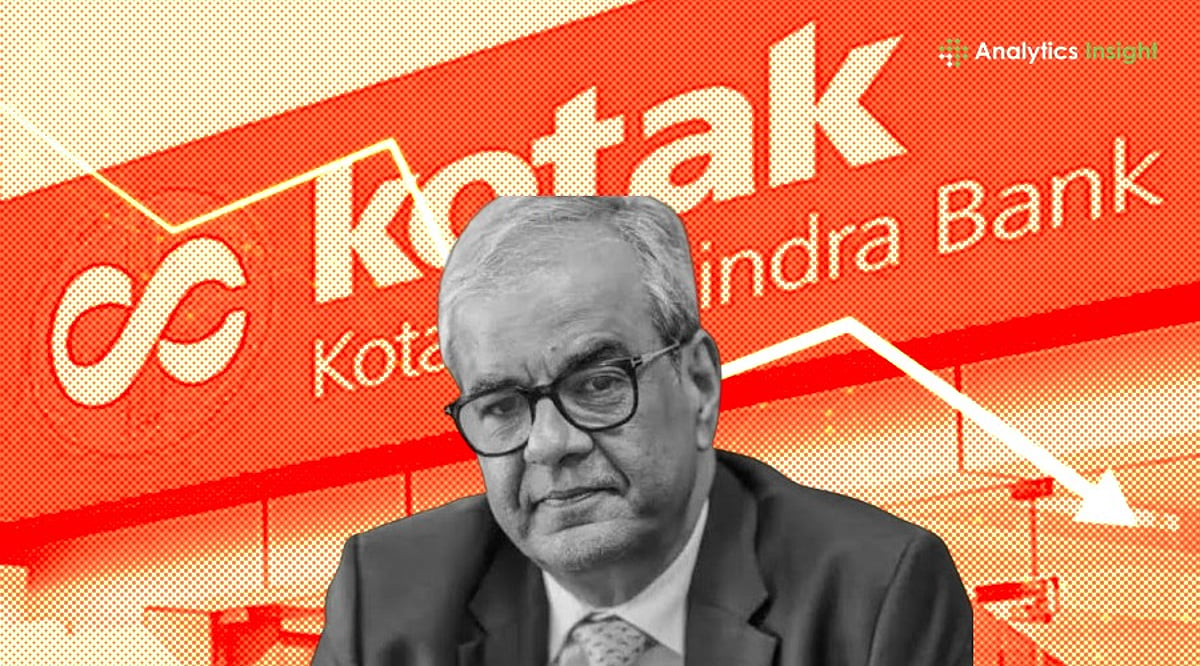
  • Kotak Mahindra Bank Shares Decline as CEO Ashok Vaswani Plans Departure by Late 2026

    Kotak Mahindra Bank Shares Decline as CEO Ashok Vaswani Plans Departure by Late 2026

    Kotak Mahindra Bank shares experienced a dip on Monday, trading near Rs. 398.95 on the NSE after CEO Ashok Vaswani confirmed he will step down at the end of his tenure on December 31, 2026. The stock touched an intraday high of Rs. 410.95 and a low of Rs. 398.95, reflecting investor caution over the leadership transition.

    Leadership Transition Sparks Selling Pressure

    The announcement that Ashok Vaswani will not seek another term as Managing Director and CEO raised concerns among investors about the future leadership of one of India’s largest private lenders. The bank’s management clarified that Vaswani will remain in his role until the end of his tenure and will collaborate closely with the board to ensure a smooth succession. Succession planning is already underway, subject to regulatory approval.

    Investors Eye Succession Clarity

    While the bank has reiterated its unchanged long-term strategy, the unexpected news has affected market sentiment. A leadership change often brings uncertainty, especially as Vaswani had been driving the company’s transformation. Investors are now focused on the board’s selection process for a new CEO, which will be critical in restoring confidence in the coming months.

    Analysts See Temporary Impact

    Despite the sharp decline, several brokerages maintain a positive outlook on Kotak Mahindra Bank, viewing the downturn as temporary. Nomura and Jefferies, among others, remain bullish on the stock, citing strong capitalization and solid fundamentals. Analysts believe that once the board identifies a suitable successor, attention will shift to profitability and growth. Such management changes are common in the banking industry.

    Growth Strategy Remains Intact

    Vaswani’s departure comes as the bank accelerates its growth strategy following the removal of regulatory restrictions on its digital business. Over the past year, the company has enhanced its technology framework, compliance systems, and focused on expanding retail lending. The bank continues to explore opportunities in consumer banking, wealth management, commercial lending, and digital financial services. With one of the strongest balance sheets in the private banking sector, Kotak Mahindra Bank is open to organic and inorganic growth avenues, including loan portfolio acquisitions. These strategic initiatives are institutionally supported and likely to continue irrespective of the leadership change.

    Smooth Succession as Key Catalyst

    From an investor perspective, a successful succession process will be the primary catalyst for rebuilding confidence and removing current uncertainties surrounding the share price. Analysts expect share price movements to remain tied to succession-related news. However, most market professionals view the bank’s capital adequacy, technological advancements, growing credit book, and high profitability as strong indicators for long-term investment. While the leadership announcement has introduced volatility, the underlying business remains robust.