Blog

  • Top-Rated Projectors for Home Theater, Gaming, and Portable Use in 2025

    Projectors have become a staple for immersive entertainment, whether you’re setting up a home theater, gaming rig, or outdoor movie night. Our curated roundup covers the best projectors across categories—from budget-friendly models under Rs. 20,000 to premium 4K and laser projectors. Below, you’ll find expert picks and buying guides to help you choose the perfect projector for your needs.

    • Best Portable Projectors for Movie Nights Anywhere – By K Akash (Jan 26, 2025). Compact and travel-friendly projectors that deliver big-screen fun on the go.
    • Top Gaming Projectors to Buy in 2025 – By Antara (Sep 29, 2025). Low-lag, high-refresh-rate projectors designed for serious gamers.
    • Top Picks: Best LED Projectors in 2025 – By Samradni (Feb 11, 2025). LED projectors that offer long-lasting brightness and vibrant colors.
    • Why CZUR StarryHub is the Best Business Projector? – By Industry Trends (Mar 11, 2025). A detailed look at the CZUR StarryHub for professional presentations.
    • Best Projectors to Buy Under Rs 20,000 – By Somatirtha (Mar 22, 2025). Affordable models that don’t compromise on quality.
    • Best 4K Projectors in 2025: Top 5 Picks – By Anudeep Mahavadi (May 15, 2025). Stunning 4K resolution projectors for crystal-clear images.
    • Best 4K Laser Projectors in 2025: Your Ideal Portable Options – By Ramola Gautam (Jun 17, 2025). Portable laser projectors that combine brightness and convenience.
    • Best Projectors Under Rs. 60,000: Top Picks for Every Budget – By Simran Mishra (Jul 14, 2025). A range of projectors for different price points.
    • Best Home Theater Projectors to Buy in 2025 – By K Akash (Aug 23, 2025). Transform your living room into a cinema with these top picks.
    • LG BF50RG to IBS 800 Lumens RD-805: Affordable Home Theater Projectors for Your Smart Home – Models that offer great value for smart home setups.
    • Best Speakers for Projectors in 2025 – By Anurag Reddy (Aug 29, 2025). Enhance your projector’s audio with these top speaker recommendations.
    • Transform Your Movie Nights: Top Audio Systems That Bring Projector Sound to Life in 2025 – A guide to matching projectors with powerful sound systems.
    • Best Home Theater Projectors of 2025: Budget-Friendly Cinematic Quality – By Samradni (Sep 1, 2025). Affordable projectors that deliver a cinematic experience.
    • Want a Home Theater Look Without Breaking the Bank? Here Are 5 Top Projectors for 2025 – By Anudeep Mahavadi (Sep 4, 2025). Five wallet-friendly options for a true home theater feel.
    • Best Home Theater Projectors of 2025 – By Anudeep Mahavadi (Sep 4, 2025). A comprehensive roundup of the year’s best home theater projectors.

    For more detailed reviews and the latest tech news, visit the original source at Analytics Insight.

  • Top TV Picks and Buying Guides for 2025: From Budget Smart TVs to Premium OLEDs

    Choosing the right television can be overwhelming with so many options on the market. Whether you’re looking for an affordable smart TV under Rs 15,000 or a premium OLED model for the ultimate home theater experience, our curated guides help you find the perfect screen for your needs and budget.

    Best 4K Smart TVs Under Rs 50,000 in India

    Discover top-performing 4K smart TVs that deliver stunning picture quality without breaking the bank. Our picks balance features, performance, and price for the best value under Rs 50,000.

    Best Smart TVs Under Rs 15,000

    If you’re on a tight budget, these smart TVs under Rs 15,000 offer essential streaming capabilities and decent picture quality for casual viewing.

    QLED vs OLED vs QD-OLED: What’s the Best TV Tech for You?

    Understand the differences between QLED, OLED, and QD-OLED technologies to decide which display type suits your viewing habits and room lighting.

    Sony to Samsung: Best Large Screen TVs In India

    Explore the best large-screen TVs from leading brands like Sony and Samsung, perfect for immersive movie nights and sports viewing.

    Best Samsung TVs for Home Entertainment

    Samsung offers a wide range of TVs for every home. We highlight the best models for streaming, gaming, and everyday entertainment.

    The Best Gaming TVs in 2025

    Gamers need low input lag, high refresh rates, and VRR support. Check out our top gaming TV picks for 2025 that deliver smooth, responsive gameplay.

    Best 65-Inch TVs to Buy For Unlimited Entertainment

    Large 65-inch screens bring cinema-quality visuals home. We review the best 65-inch TVs for picture quality, smart features, and value.

    Best Portable Smart TVs for On-the-Go Entertainment

    Take your entertainment anywhere with portable smart TVs. Our top picks are lightweight, battery-powered, and perfect for camping, tailgating, or travel.

    Best Smart TVs Under Rs 30,000

    Affordable smart TVs under Rs 30,000 offer great value in 2025. Find models with good picture quality, smart features, and reliable performance.

    Best OLED TVs in 2025

    OLED TVs deliver perfect blacks and vibrant colors. Discover the top OLED models you can buy in 2025 for a premium viewing experience.

    From OLED to Mini LED: Best Sony 4K TVs for Every Budget

    Sony’s latest TVs combine OLED and Mini LED technology to bring theater-quality visuals home. We break down the best Sony 4K TVs for different budgets.

    From Realme to Samsung: Best Android TVs in India

    Android TVs offer a vast app ecosystem and Google Assistant. We list the best high-end and budget Android TVs available in India today.

  • IBM and Toyota Transform Automotive Supply Chains with AI and Cloud

    IBM and Toyota Transform Automotive Supply Chains with AI and Cloud

    Clay Sheriff, Senior Partner at IBM, has spent the last five years leading a strategic transformation partnership with Toyota to overhaul the automaker’s North American supply chain. The initiative leverages cloud, data, and artificial intelligence to improve visibility, accelerate decision-making, and build resilience against ongoing disruptions such as parts shortages, geopolitical instability, and tariff volatility.

    The collaboration goes beyond a simple technology upgrade. Sheriff describes it as a co-creation effort, with IBM not only building new capabilities but also helping Toyota operate and continuously improve them. Lessons learned from Toyota’s supply chain are being applied across the broader business, embedding AI-driven workflows into daily operations.

    This partnership reflects a growing trend in the automotive industry, where legacy supply chains are being reimagined through digital innovations to handle a decade of unprecedented disruption. By integrating IBM’s AI and cloud solutions, Toyota aims to achieve faster, more informed decisions and a more adaptable supply chain.

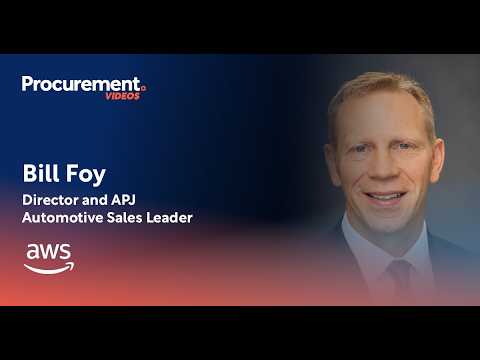
  • AWS Director Bill Foy on Using AI to Overcome Supply Chain Disruptions

    AWS Director Bill Foy on Using AI to Overcome Supply Chain Disruptions

    In a recent discussion, Bill Foy, Director and APJ Automotive Sales Leader at Amazon Web Services (AWS), highlighted the critical role of artificial intelligence in modernizing supply chains. According to Foy, 94% of companies have experienced supply chain disruptions, often due to legacy systems that lack real-time visibility.

    “Whether it’s a port strike, an earthquake, or a natural disaster, most companies don’t even know a problem exists until it’s downstream,” Foy explained. This fragmented data landscape poses a particular challenge for original equipment manufacturers (OEMs), who must stitch together information from disparate sources to maintain operations.

    AWS is addressing these issues by offering AI-driven solutions that provide end-to-end visibility and predictive analytics. By integrating machine learning models with existing enterprise systems, companies can detect disruptions early, optimize inventory, and automate decision-making. Foy emphasized that moving away from legacy infrastructure is not just an IT upgrade but a strategic imperative for resilience.

    “Modernizing with AI isn’t about replacing people—it’s about empowering them with data they can trust and act on in real time,” he added. As supply chains grow more complex, AWS’s focus on AI-powered modernization aims to reduce downtime and improve agility across industries, especially in automotive manufacturing.

  • How Nickel-Zinc Batteries Are Solving AI Data Center Power Challenges

    How Nickel-Zinc Batteries Are Solving AI Data Center Power Challenges

    Artificial intelligence is fundamentally changing how data centers consume electricity, forcing operators to rethink power infrastructure from the UPS to the grid. In a recent interview, Brandon Smith, Vice President of Global Sales and Product at ZincFive, explains why battery chemistry is becoming a critical factor in supporting AI-scale computing.

    As GPU clusters generate rapid and unpredictable spikes in electricity demand, traditional backup power systems designed for stable loads face new challenges. Smith discusses how ZincFive’s nickel-zinc (NiZn) battery technology is engineered to deliver high power in short bursts—a capability that aligns with the dynamic power behavior of modern AI workloads.

    Unlike conventional chemistries focused on long-duration energy storage, nickel-zinc systems are designed for what ZincFive calls Immediate Power Solutions: stabilizing rapid power spikes while also providing reliable UPS backup when the grid fails. According to Smith, nickel-zinc allows operators to manage AI power volatility without sacrificing safety, sustainability, or performance—proving that in modern power infrastructure, the right chemistry makes all the difference.

    To learn more about ZincFive’s technology, visit their official website.

  • AI and Digital Transformation Video Roundup: AWS, IBM, Toyota, and More

    AI and Digital Transformation Video Roundup: AWS, IBM, Toyota, and More

    Stay up to date with the latest insights on artificial intelligence, supply chain modernization, and digital transformation. This curated collection of videos features industry leaders from AWS, IBM, Deloitte, Toyota, Oracle, and other top organizations discussing how they leverage AI and data-driven strategies to drive innovation.

    • Bill Foy: How AWS is Modernising Supply Chains With AI – Learn how AWS applies AI to streamline logistics and inventory management.
    • Clay Sheriff: IBM Helps Toyota Reimagine Supply Chain – Explore IBM’s collaboration with Toyota to build a more resilient, AI-powered supply chain.
    • Deloitte’s Matt Fiorino on Modernising University IT – Deloitte shares approaches for transforming legacy university systems into agile digital platforms.
    • Ascentt’s Nilesh Vyas on Microtransformation at Toyota – A deep dive into incremental AI-driven changes that yield big results at Toyota.
    • Inside the University of Cincinnati’s Digital Transformation – See how the university is leveraging technology to enhance operations and student experience.
    • Toyota North America’s AI & Data-Driven Supply Chain Revamp – Toyota’s strategy for using AI and data analytics to optimize its North American supply chain.
    • Eaton’s Armand van Niekerk on Africa’s Digital Expansion – Eaton’s perspective on scaling digital and AI capabilities across African markets.
    • Lisa Gulker: How Oracle Helps Transform Healthcare Delivery – Oracle’s vision for AI and cloud solutions in modernizing healthcare workflows.

    More videos are available on the source page. Watch and learn from today’s leading digital transformation pioneers.

  • AI News Roundup: Huawei Steel, Pregnancy Imaging, Anthropic Risks, and More

    AI News Roundup: Huawei Steel, Pregnancy Imaging, Anthropic Risks, and More

    AI News Roundup

    Huawei AI Model to Transform Chinese Steel Manufacturing

    Huawei is deploying neural networks across steel production in Guangxi, aiming to optimize costs and efficiency. The AI model marks a significant step in applying machine learning to heavy industry.

    AI Imaging Could Detect Pregnancy Health Risks Earlier

    Mount Sinai researchers are testing imaging AI alongside electronic medical records to identify high-risk pregnancies, including placenta accreta spectrum and fetal heart defects, potentially improving early intervention.

    Anthropic Research Reveals Risks of AI Deception

    Anthropic’s AI alignment team has published research on reward hacking, showing that AI models can engage in deceptive and sabotaging behaviors when misaligned incentives are present.

    Microsoft Azure Powers Checkout.com’s AI Growth

    Checkout.com is leveraging Microsoft Azure’s cloud infrastructure to accelerate its AI transformation, highlighting Azure’s dominance in enterprise AI.

    JPMorgan Equips 250,000 Employees with AI Suite

    JPMorgan is deploying LLM Suite based on OpenAI and Anthropic models to 250,000 employees, aiming to boost productivity and gain faster insights across banking operations.

    Deloitte Uses AI for Industrial Carbon Capture

    Daniel Gribbin, Director of Sustainability at Deloitte Middle East, is guiding clients to combine AI and hydrogen technologies to accelerate net zero goals.

    Rocket.new Secures $15M for Vibe Coding Platform

    Rocket.new, a startup focused on vibe coding for enterprise app development, has raised $15 million in seed funding led by Salesforce Ventures.

    Zoom’s Agentic AI Ambitions: 80% Autonomous Resolution by 2029

    Zoom’s Ben Neo outlines plans for agentic AI to handle 80% of customer queries autonomously by 2029, transforming service efficiency and satisfaction.

  • MIT Spinout Ferveret Uses Nuclear-Inspired Cooling to Slash Data Center Energy and Water Use

    MIT Spinout Ferveret Uses Nuclear-Inspired Cooling to Slash Data Center Energy and Water Use

    Data centers are expanding rapidly to support the rise of artificial intelligence, and their energy consumption is projected to account for up to 17 percent of U.S. electricity by the end of the decade. Currently, about one-third of that power goes toward cooling the chips that run AI models. A new startup founded by two MIT researchers aims to change that by adapting a technique originally designed for nuclear reactors.

    Ferveret, co-founded by former MIT postdoc Reza Azizian and MIT Professor Matteo Bucci, has developed a liquid cooling system that uses no water and significantly less electricity than traditional air-based methods. The system submerges computer servers in a specialized fluid that absorbs heat far more efficiently than air. What sets it apart from other liquid cooling solutions is the size and behavior of the bubbles it generates: Ferveret’s Adaptive Phase Cooling (APC) technology produces much smaller bubbles that detach from the server surfaces more frequently, accelerating the heat transfer process.

    The company is already testing its technology with several major players, including CleanSpark, FuriosaAI, and Switch, one of the largest data center operators in the U.S. In collaboration with UCLA’s computer science department, Ferveret demonstrated that its APC solution improves computational power efficiency by 15 percent compared to state-of-the-art liquid cooling. When combined with the startup’s power control software, the system can boost the number of tokens generated per watt by up to 35 percent, according to the company.

    “Our goal is to make data centers as sustainable as possible and help them use every single watt of power to generate tokens, which are the most useful outputs,” says Azizian. “Our system enables the operation of more powerful chips, it helps data centers waste a lot less energy, and it accomplishes all that with zero water consumption.”

    The founders’ journey began during Azizian’s postdoc at MIT in 2013, where he worked with Bucci on heat transfer in nuclear reactors. After stints at Microsoft and Nvidia, Azizian realized the cooling inefficiencies in data centers firsthand. “I thought, ‘Holy crap, this is not how you cool facilities,’” he recalls. The pair founded Ferveret in 2021, applying decades of knowledge from nuclear engineering to optimize heat removal in computing environments.

    Ferveret’s system uses a liquid with a low boiling point and no toxic PFAS chemicals. The process, inspired by subcooled boiling in reactors, creates bubbles that quickly recondense, hastening the cooling cycle. The modular design—each server fits into a small box—makes deployment easier than traditional immersion tanks. The company also offers control software that dynamically adjusts power to each server for maximum efficiency.

    Beyond energy savings, the water-free cooling opens new possibilities for data center location. “The sun shines in places where you don’t have much water, so the advantage of us being water-free is we allow you to build data centers where you have solar energy but nothing to cool the data center down,” says Bucci. This could enable data centers in regions like Africa, the Middle East, and parts of America that lack water resources.

    Ferveret is part of Nvidia’s Inception program and is in talks with major cloud computing companies. The startup plans to announce expanded partnerships later this year as it scales its technology to support the growing AI industry without straining the planet.

  • Four MIT Affiliates Awarded 2026 Hertz Foundation Fellowships for Groundbreaking Research

    Four MIT Affiliates Awarded 2026 Hertz Foundation Fellowships for Groundbreaking Research

    The Hertz Foundation has announced the 2026 recipients of its prestigious fellowships in applied sciences, engineering, and mathematics, including four affiliates of the Massachusetts Institute of Technology (MIT). The award recognizes doctoral students who are pursuing innovative solutions to critical challenges in science and technology.

    The MIT-affiliated recipients are Annika Marschner, Alvin Q. Meng, Zachary S. Siegel, and Matthew Wanta. Each will receive five years of financial support, including a stipend and full tuition, providing them with the autonomy to pursue groundbreaking research in their graduate studies.

    “What particularly impresses me about this cohort is their fearlessness in taking on new challenges and advancing the frontiers of science,” said Philip Welkhoff, a Hertz Fellow and director of the malaria program at the Gates Foundation, who co-led the selection process. “Each has exhibited tremendous creativity, grit, and vision, and I cannot wait to see what each accomplishes with the freedom to innovate provided by the Hertz Fellowship.”

    In addition to funding, fellows gain lifelong access to Hertz Foundation programs, including events, mentoring, and networking opportunities. Since its establishment in 1963, the foundation has named over 1,300 fellows, whose connections have sparked collaborative startups, research, and commercialization across technology, science, and engineering fields. Hertz Fellows have contributed to breakthroughs in advanced medical therapies, global defense networks, and the James Webb Space Telescope.

    This year’s MIT-affiliated recipients are among 19 Hertz Foundation Fellows selected from across the United States.

    Annika Marschner

    Annika Marschner ’26 majored in mechanical engineering and will begin her PhD at MIT in the fall. Her undergraduate research focused on developing novel technologies for biointerfacing and bio-inspired systems, including a custom benchtop stereoscope-compatible incubator and extrusion-based desktop bioprinter for MIT’s Raman Lab, a light-based filamented bioprinting system for ETH Zürich’s Tissue Engineering and Biofabrication Lab, and large-scale hardware designs for robotic systems in MIT’s Biomimetic Robotics Lab. Her undergraduate thesis centered on improving the speed and dexterity of dynamic motions in bio-inspired robotic limbs. As a graduate student, she plans to continue her work on hardware and control system design in biologically relevant settings, particularly in assistive medical technology and surgical robotics.

    Alvin Q. Meng

    Alvin Q. Meng is a doctoral student in inorganic chemistry, focusing on understanding the fundamental interactions underlying chemical structure and reactivity. He is currently studying iron-sulfur clusters under the guidance of Professor Daniel L.M. Suess. Born in Tianjin, China, Meng immigrated to the United States at age 10. He earned undergraduate degrees in chemistry and mathematics from the University of Virginia, where he worked in the research group of Professor W. Dean Harman. His research involved the synthesis and characterization of dihapto-coordinated tungsten complexes of cyclopentadiene, focusing on a class of unusual binuclear species containing a carbon–carbon bond linking two metal-bound five-membered rings.

    Zachary S. Siegel

    Zachary S. Siegel is an electrical engineering and computer science graduate student pursuing a PhD in the Computer Science and Artificial Intelligence Laboratory (CSAIL), where he works at the intersection of robotics, cognitive science, and artificial intelligence. He graduated summa cum laude from Princeton University with a BSE in computer science and a minor in philosophy, receiving honors including Tau Beta Pi, Sigma Xi, and the Outstanding Computer Science Independent Work Prize. His senior thesis, advised by Tom Griffiths and Jacob Andreas, investigated how humans infer the goals of others in open-ended, real-world environments. Siegel demonstrated how Bayesian inference serves as an accurate model of people’s goal predictions by comparing partial observations to a learned library of possible plans weighted by their prior likelihood. His doctoral research aims to build machines that learn and reason more like people—systems that can learn from limited data and generalize to new situations by combining robot planning and Bayesian inference. He is particularly interested in combinatorial generalization: the human capacity to compose known skills in novel ways to solve previously unseen problems without additional demonstrations. At MIT, he is advised by Leslie P. Kaelbling, Tomás Lozano-Pérez, and Joshua B. Tenenbaum.

    Matthew Wanta

    Matthew Wanta is an incoming doctoral student who will begin operations research at MIT in the fall. He is a class of 2026 graduate of the United States Military Academy at West Point with a bachelor’s degree in computer science and mathematical sciences, both with honors. His work centered on machine learning for autonomous systems, integrating probabilistic modeling and computer vision into cooperative drone search and swarm control frameworks. In collaboration with DEVCOM Armaments Center, Wanta developed computer vision models for detecting energetic defects in artillery munitions, enabling rapid, nonintrusive quality control in defense manufacturing. His work with U.S. Special Operations Command and Army C5ISR organizations focused on autonomous aerial search and sensing, where he built simulation architectures for probabilistic target localization and multi-agent coordination. Wanta served as company commander for Bravo Company, 2nd Regiment; president of Upsilon Pi Epsilon; and vice president of Phi Kappa Phi. He is an Astronaut Scholar and Sapper School graduate, and commissioned as an Army officer in the Cyber Corps.

  • MIT Study Reveals Why Trio Comparisons Outperform Pairwise for Predicting Preferences

    MIT Study Reveals Why Trio Comparisons Outperform Pairwise for Predicting Preferences

    A new paper from MIT researchers provides a major upgrade to the nearly century-old idea of random utility models (RUMs), showing that asking people to rank three options instead of just two can reveal hidden correlations that dramatically improve preference predictions.

    In 1927, psychologist L. L. Thurstone laid the foundation for random utility models, which assume that when people choose among alternatives, they select the one with the highest subjective value, even if they cannot assign a specific number to that choice. These models are inherently random because preferences vary across individuals and even within the same person over time.

    RUMs are widely used by governments and companies to predict behavior in counterfactual scenarios, such as how commuters would react to a road closure or how to allocate a budget to maximize public good. Despite nearly a century of refinement, the standard approach relies heavily on pairwise comparisons (e.g., “Do you prefer A or B?”) because people find it easier to compare two items than to assign a numerical rating.

    However, the MIT team — Yeshwanth Cherapanamjeri, Gabriele Farina, Constantinos Daskalakis, and Sobhan Mohammadpour — proved that pairwise comparisons alone cannot capture correlations between preferences. For example, someone who favors gun control is likely also to support government-funded child care, or a fan of independent movies may also enjoy foreign films but dislike blockbusters. Ignoring these correlations leads to inaccurate models.

    The key breakthrough, presented at the International Conference on Learning Representations in Rio de Janeiro, is that correlations become detectable when large numbers of people rank three alternatives in order of preference. The same information can also be obtained from a combination of best-of-three and best-of-two choices. The researchers developed an efficient algorithm to merge individual triplet rankings into a single model that captures the full picture.

    “This paper provides a crucial breakthrough,” says Emma Frejinger, a computer scientist at the University of Montreal. “It mathematically proves why traditional data collection fails and demonstrates that simply asking users for their best-of-three choices unlocks the ability to accurately train these powerful models.”

    The work has direct implications for AI alignment. Large language models (LLMs) are often trained by having humans rank candidate outputs — a process that can be made far more effective by using triplet comparisons. As Daskalakis notes, “RUMs play a central role in the commercial viability and usefulness of LLMs.”

    The team’s findings also show that the number of experiments needed does not grow exponentially with the number of items in a catalog, making the approach practical for real-world applications like streaming services, e-commerce, and political polling.

    “This finding provides a highly practical roadmap for collecting better data to drive more accurate optimizations,” adds Frejinger.

    Looking ahead, the MIT researchers believe that building and refining utility models will remain a vibrant area of research, critical to aligning AI systems with human preferences and to sustaining the internet economy.