Blog

  • CTO’s Roadmap for AI Agent Infrastructure: From Copilots to Autonomous Systems

    CTO’s Roadmap for AI Agent Infrastructure: From Copilots to Autonomous Systems

    Overview

    AI agents require infrastructure beyond traditional model APIs and chatbot frameworks. Identity, sandboxing, observability, data access, and tool controls become essential as autonomy grows. CTOs can scale agent deployments more safely by combining automation with strong governance.

    The Shift from Copilots to Autonomous Agents

    AI agents are moving from workplace assistants into operational systems. This shift changes what enterprises need from their technology infrastructure. A copilot usually waits for a user instruction. An autonomous agent can plan tasks, call tools, and act independently. This difference has major infrastructure implications. CTOs now need more than model access and application APIs. They need secure runtimes, reliable data, strong identity, observability, and control. The architecture must also support changing models and agent behavior.

    Start with a Clear Agent Architecture

    The first step is separating the agent into distinct layers. The model handles reasoning and generates the next action. An orchestration layer manages prompts, workflows, tools, and handoffs. Data services provide business context, retrieval, memory, and application information. The runtime executes agent tasks and manages their state. A governance layer controls permissions, policies, security, and human approvals. This structure makes systems easier to manage and upgrade. Microsoft Foundry now brings models, agents, tools, security, and governance together.

    Build a Runtime for Real Agent Work

    Agents need an environment for more than text generation. They may inspect files, run code, use APIs, and modify business data. This makes runtime isolation especially important. A poorly contained agent can turn a simple error into an operational incident. OpenAI’s Agents SDK now includes sandbox execution for controlled agent workflows. Its updated architecture supports long-running tasks across files and tools. CTOs should define resource limits before deploying autonomous systems. These limits can cover network access, execution time, spending, and tool permissions. High-risk actions should also require explicit approval to keep automation from becoming uncontrolled.

    Treat Identity and Access as Core Infrastructure

    An agent should never receive broad access by default. Its permissions should match the task it is performing. Use separate identities for agents, tools, and workloads. Apply role-based access controls and short-lived credentials where possible. Tool access deserves the same discipline. An agent should not call payment, database, or administrative systems without strict controls. Microsoft’s current agent platform supports Entra identity and role-based access control. It also supports network isolation and policy controls for enterprise deployments. This model creates clearer boundaries between an agent and corporate systems.

    Make Observability Part of the Agent Stack

    Traditional application monitoring is not enough for autonomous systems. Teams need to understand what the agent did and why. This requires tracing model calls, tool usage, latency, failures, and costs. It also requires evaluating task quality and safety over time. Microsoft Foundry supports agent tracing, evaluations, and production monitoring. Its telemetry can include tool calls, inputs, outputs, latency, and token usage. OpenAI’s Agents SDK also includes tracing and observability capabilities. CTOs should treat these signals like application performance data. Agent quality can drift after model, prompt, or tool changes.

    Design for Data, Memory, and Tool Integration

    Agents become useful when they can access relevant enterprise context, which may come from documents, databases, APIs, or business applications. Retrieval systems need strong permissions and reliable source data. Memory also needs clear rules around storage, retention, and user access. Tool integration should use stable interfaces and explicit contracts. Model Context Protocol is gaining attention for connecting agents with external tools. Infrastructure teams should avoid building every integration from scratch. Shared tool registries can simplify authentication, versioning, and governance. Microsoft’s Agent Service supports shared toolboxes and managed MCP endpoints.

    Put Governance Around Autonomous Actions

    Greater autonomy creates greater responsibility for enterprise leaders. Agents can make mistakes faster when they operate without constant human input. Guardrails should therefore cover inputs, tool calls, outputs, and sensitive actions. OpenAI recommends layered guardrails with authentication and authorization controls. Keep human intervention available for high-risk operations. Examples include large refunds, financial transfers, account changes, or destructive actions. CTOs should also define clear ownership for every deployed agent. Someone must be accountable for its performance, security, and business impact.

    Moving from Copilots to Autonomous Systems

    The infrastructure shift is gradual, not a single technology upgrade. Organizations can start with copilots and expand autonomy as controls mature. Early systems may only suggest actions. Later versions can execute approved workflows with limited supervision. Fully autonomous systems require stronger safeguards and deeper operational visibility. They also demand better testing before reaching production. For CTOs, the goal is not maximum autonomy. The goal is useful autonomy that remains observable, secure, and controllable. This principle can shape the architecture long before agents become business-critical.


  • Upcoming Budget Earbuds: Key Brands and Features to Watch

    Upcoming Budget Earbuds: Key Brands and Features to Watch

    The budget wireless earbuds segment continues to heat up, with several major brands preparing new launches featuring improved sound, battery life, and smart features. Here is a look at what to expect from top players like boAt, Noise, Realme, OnePlus, Boult Audio, JBL, and Oppo.

    boAt

    boAt remains a dominant force in affordable audio, consistently targeting feature-hungry buyers. Upcoming models are expected to emphasize longer battery life, deeper bass, better microphone performance, and low-latency modes. With its deep market penetration in India, new boAt earbuds will likely appeal to everyday users seeking quality wireless audio on a budget.

    Noise

    Noise has carved out a strong niche among younger consumers with value-packed earbuds. Future releases may bring refined sound, extended playback, clearer calling, and more intuitive controls. The brand’s commitment to affordability will keep its upcoming offerings relevant for shoppers prioritizing practical features at low prices.

    Realme

    Realme continues to innovate in the budget segment, blending modern designs with active noise cancellation, long battery life, and dedicated gaming modes. Its tight integration with the Realme smartphone ecosystem could further boost its appeal among users who prefer a single-brand device experience.

    OnePlus

    OnePlus has expanded its audio lineup with products balancing design, sound, and price. Future budget earbuds are likely to enhance noise cancellation, call clarity, fast charging, and seamless integration with OnePlus phones. These features make them attractive for users upgrading from basic wireless earphones.

    Boult Audio

    Boult Audio remains active in India’s value-focused audio space, offering earbuds at multiple price points. New launches will continue to emphasize strong bass, stylish designs, long battery life, and gaming-friendly features. As competition intensifies, buyers can expect even more options in the affordable segment.

    JBL

    JBL brings its renowned audio expertise to budget wireless earbuds. Upcoming models will focus on balanced sound, comfortable ergonomics, reliable connectivity, and solid battery life. For consumers who trust a familiar audio brand, JBL’s new entries add another strong contender to the crowded market.

    Oppo

    Oppo’s audio products often complement its smartphones, and its upcoming budget earbuds are no different. Expect improvements in call quality, battery life, noise control, and effortless device pairing. As the segment grows, Oppo can leverage useful features at accessible prices to attract more buyers.

    Stay tuned for official announcements and reviews as these brands unveil their latest budget-friendly earbuds later this year.

  • MCX Gold Edges Up 0.21% to ₹1,53,309 as Oil Prices Drop Over 1% – September 18 Update

    MCX Gold Edges Up 0.21% to ₹1,53,309 as Oil Prices Drop Over 1% – September 18 Update

    Gold traded higher on the Multi Commodity Exchange (MCX) on September 18, 2026, supported by a significant decline in crude oil prices. October gold futures rose 0.21% to ₹1,53,309 per 10 grams, while September silver futures advanced 0.55% to ₹2,39,522 per kilogram.

    The fall in oil prices was notable: Brent crude futures dropped 1.06% to $103.7 per barrel, and US West Texas Intermediate (WTI) fell 1.08% to $100.8 per barrel. Lower oil prices generally ease inflation pressures and reduce the opportunity cost of holding non-interest-bearing assets like gold, which supported the precious metal.

    Domestic Gold Prices

    In the domestic market, 24K gold rose by ₹154 to ₹1,54,420 per 10 grams, while 22K gold gained ₹145 to ₹1,41,50. Prices varied across cities: Mumbai and Kolkata recorded ₹1,54,420, Delhi at ₹1,54,570, and Chennai at ₹1,53,590.

    US Gold Prices

    Internationally, spot gold inched up 0.57% to $4,336.64 per ounce on Friday, aided by a subdued US dollar and falling oil prices. US gold futures gained 0.14% to $4,405.75 per ounce. Other precious metals also advanced: spot silver rose 1.38% to $66.11, platinum gained 1.46% to $1,798.36, and palladium climbed 2.38% to $1,313.50.

    Key Levels & Analyst Insight

    According to Ahmad Assiri, research strategist at Pepperstone, the link between gold and oil could weaken if oil corrects sharply, easing inflation and rate-hike expectations, or if extreme geopolitical tensions force global recession measures. Goldman Sachs maintained its end-2027 gold price forecast at $5,400 despite recent Fed rate increases, stating that tighter policy may slow bullion’s rally but not derail it.

    On MCX, gold has support at ₹1,51,650 and ₹1,50,500, with resistance at ₹1,53,800 and ₹1,55,000. For silver, support lies at ₹2,36,000 and ₹2,33,300, while resistance is at ₹2,40,400 and ₹2,43,000.

  • Lust Stories 3: Netflix Premiere Date, Full Cast, and What to Expect from the Anthology

    Lust Stories 3: Netflix Premiere Date, Full Cast, and What to Expect from the Anthology

    Lust Stories 3, the latest installment in the acclaimed anthology series, is set to premiere globally on Netflix on September 18, 2026. Continuing its tradition of exploring love, desire, and human relationships, this season brings together four distinct narratives directed by some of India’s most celebrated filmmakers.

    Directors and Their Stories

    The anthology features four segments, each helmed by a visionary director:

    • Vikramaditya Motwane – known for his nuanced storytelling, Motwane brings a fresh perspective on modern relationships.
    • Kiran Rao – her segment delves into emotional complexities and personal choices.
    • Shakun Batra – Batra’s story explores intimacy and the evolving dynamics of love.
    • Vishal Bhardwaj – Bhardwaj’s segment, starring Aditi Rao Hydari and Siddharth, examines desire, imagination, and identity.

    Cast and Performances

    The ensemble cast includes returning and new faces, each bringing depth to their roles:

    • Radhika Apte – returns to the franchise with a story about complicated emotions and personal choices.
    • Konkona Sen Sharma – features in a relationship-focused narrative, showcasing her acclaimed acting prowess.
    • Aditi Rao Hydari – stars alongside Siddharth in Vishal Bhardwaj’s segment, exploring themes of desire and expression.
    • Radhika Madan – contributes to the anthology’s diverse portrayal of contemporary relationships.
    • Vijay Varma – returns to the Lust Stories universe, adding depth to the exploration of intimacy and emotional complexity.

    What to Expect

    Lust Stories 3 maintains the franchise’s signature anthology format, offering a blend of tones and perspectives. Each story stands alone, yet together they create a rich tapestry of modern attitudes toward love, desire, and human connection. With its stellar cast and renowned directors, this season promises to be a thought-provoking and entertaining watch.

  • RedMagic Astra 2 Review: Does Liquid Cooling Make Gaming Tablets Worthwhile?

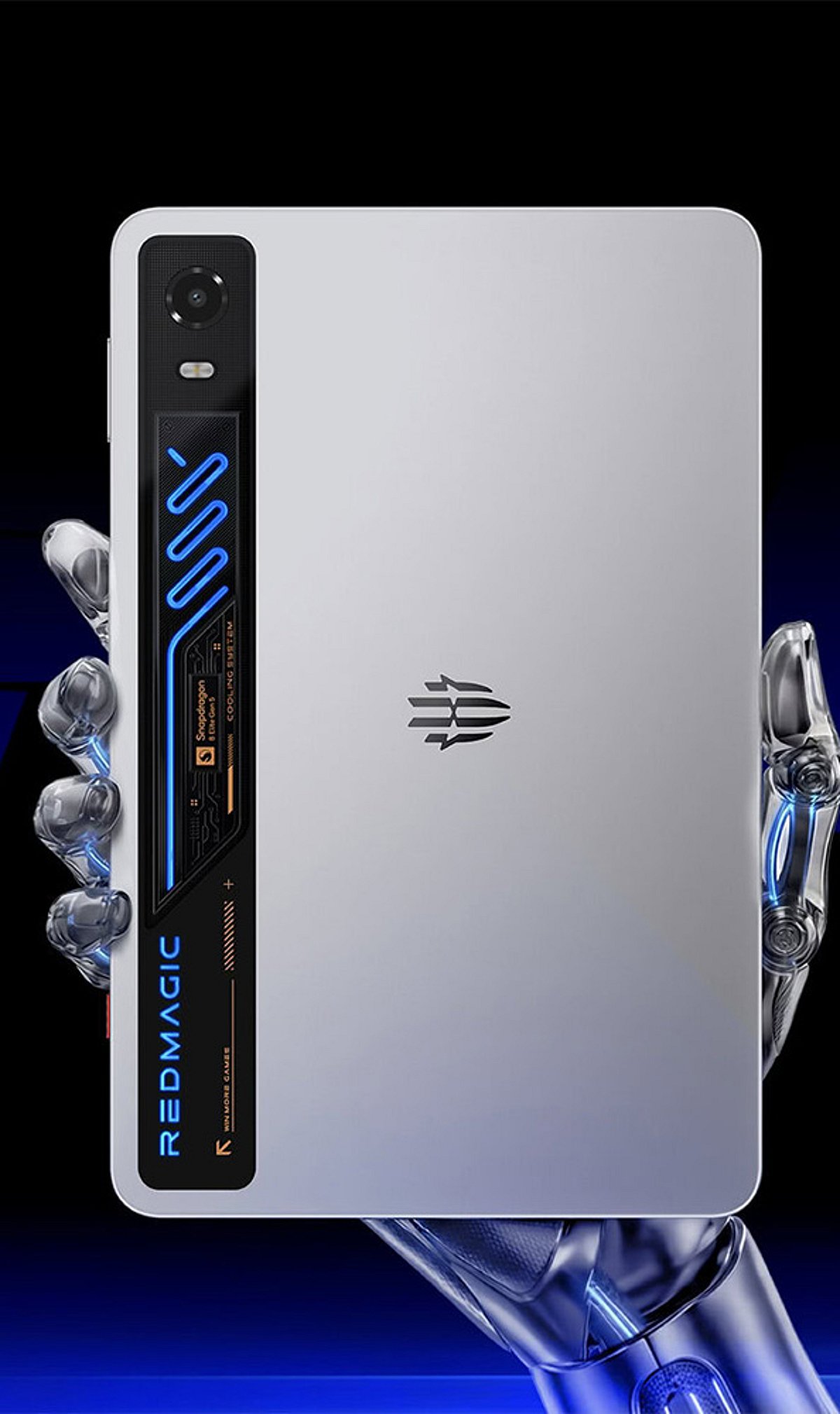
    RedMagic Astra 2 Review: Does Liquid Cooling Make Gaming Tablets Worthwhile?

    The RedMagic Astra 2 enters the portable gaming scene with a bold proposition: liquid cooling in a tablet form factor. While traditional gaming tablets often struggle with heat management during extended sessions, the Astra 2 promises sustained performance through an innovative cooling system. But does the technology justify its premium price tag, and how does it compare to established alternatives like the Steam Deck?

    Liquid Cooling Benefits

    The Astra 2’s liquid cooling system actively manages heat during intense gaming workloads. By dissipating heat more effectively than passive cooling, the tablet reduces the risk of thermal throttling and unexpected shutdowns, allowing for longer gaming sessions without performance dips. This is a significant advantage for users who play demanding titles for hours at a time.

    Gaming Performance and Hardware

    Powered by a high-end processor, the Astra 2 handles graphically intensive mobile games and multitasking with ease. The combination of strong hardware and effective cooling ensures smooth frame rates even during prolonged use. The tablet runs a customized version of Android, which gives access to a vast library of mobile games but limits compatibility with some desktop titles available on Windows or SteamOS.

    Display and Experience

    The 9.06-inch OLED display delivers deep colors and high contrast, with a high refresh rate that enhances both gaming and media consumption. The screen’s responsiveness makes it ideal for fast-paced genres like shooters and racing games.

    Price and Value

    Starting at around $699, the Astra 2 competes directly with mid-range gaming laptops and handheld consoles. While the liquid cooling and OLED screen are unique selling points, the price raises questions about overall value, especially considering the Android platform’s limitations compared to PC-based alternatives.

    Alternatives and Competition

    The Steam Deck and other handheld gaming PCs offer broader game libraries and often better performance for the same price. The Astra 2’s niche appeal lies in its tablet form factor and superior display, but buyers should weigh these against the more versatile gaming ecosystems available.

    Maintenance and Longevity

    RedMagic provides a one-year warranty, but the liquid cooling system and specialized components could lead to expensive repairs down the line. Potential buyers should consider the total cost of ownership beyond the initial purchase.

    In conclusion, the RedMagic Astra 2 is a compelling option for mobile gamers who prioritize display quality and sustained performance in a tablet form. However, its high price and platform limitations mean it may not be the best choice for everyone. Those who value game library diversity and long-term value might find better options in dedicated handheld gaming PCs.

  • Quordle September 18 Hints and Answers: Unlock Today’s Four-Word Puzzle

    Quordle September 18 Hints and Answers: Unlock Today’s Four-Word Puzzle

    Overview

    Today’s Quordle challenge presents four five-letter words to solve across separate grids, each with a limited number of guesses. If you’re stuck, the hints below will help you narrow down the possibilities without giving everything away. For those ready for the solutions, the full answers are provided as well.

    Hints for September 18, 2026

    Use these clues to work out the four hidden words before checking the answers:

    • Word 1 (Top Left): A snot rocket.
    • Word 2 (Top Right): A happy feeling.
    • Word 3 (Bottom Left): A tech company.
    • Word 4 (Bottom Right): A squiggly character.

    Answers for September 18

    Spoiler alert: The four solutions to today’s Quordle are:

    • MUCUS
    • MIRTH
    • APPLE
    • TILDE

    Difficulty Analysis

    Today’s Quordle features everyday words with familiar meanings. The first answer refers to a thick fluid produced by mucous membranes; the second means gladness or amusement; the third describes a popular fruit; and the fourth is a diacritical mark or keyboard symbol. The starting letters M, M, A, and T offer a helpful guide as you solve. Two of today’s words contain repeated letters, providing an extra clue. If you solved all four without peeking, well done!

  • Apple’s Smart Glasses: A Potential Smartwatch Replacement with Augmented Reality and Health Tracking

    Apple’s Smart Glasses: A Potential Smartwatch Replacement with Augmented Reality and Health Tracking

    Apple may be taking wearables to the next level. According to recent reports, the company is developing smart glasses that could feature health-tracking capabilities and augmented reality (AR) functions. This move could signal a new direction for Apple’s wearable lineup, potentially challenging or even replacing the smartwatch as we know it.

    The rumored smart glasses are expected to integrate seamlessly with Apple’s ecosystem, offering users a hands-free way to access information, navigate, and monitor their health. While details remain scarce, the combination of AR and health tracking could make these glasses a versatile everyday accessory.

    If these reports hold true, Apple’s smart glasses might become the next big wearable after the smartwatch, reshaping how we interact with technology. However, it’s still early, and Apple has not confirmed any such product. Stay tuned for updates.

  • Pokémon Lights Up the Las Vegas Sphere for Its 30th Anniversary Spectacle

    Pokémon Lights Up the Las Vegas Sphere for Its 30th Anniversary Spectacle

    Pokémon’s 30th anniversary celebrations have taken over one of Las Vegas’ most iconic landmarks. The Sphere’s massive Exosphere was transformed into a dazzling Pokémon experience, turning the Strip into a giant party for fans worldwide.

    30 Years of Pokémon

    Pokémon officially began its journey in Japan in 1996 with Pokémon Red and Pokémon Green. Three decades later, the franchise has grown into a global phenomenon spanning games, cards, animation, merchandise, and live experiences.

    The Sphere Becomes a Poké Ball

    The Las Vegas Sphere opened the celebration with an enormous red-and-white Poké Ball covering its exterior. The instantly recognizable design turned the futuristic landmark into something straight out of the Pokémon universe.

    Mew Takes Center Stage

    After the giant Poké Ball sequence, the display shifted into dreamy scenes featuring Mew. The legendary Pokémon became the star of an immersive visual journey inspired by Pokémon Sleep, creating a surreal spectacle across the Sphere’s enormous surface.

    Pokémon Sleep Gets the Spotlight

    The Sphere activation was specifically built around Pokémon Sleep. The mobile game tracks players’ sleeping patterns and connects their rest with Pokémon discoveries, making the unusual Las Vegas takeover both a celebration and a promotional experience.

    More Pokémon Join the Show

    The colorful visuals didn’t stop with Mew. Pokémon such as Snorlax and Charmander also appeared during the animated presentation, giving fans several familiar characters to spot across the massive display.

    A Year Packed With Celebrations

    The Sphere takeover is only one part of Pokémon’s 30th-anniversary campaign. Celebrations throughout 2026 have included events, theme-park experiences, concerts, and special Pokémon Trading Card Game releases, giving fans multiple ways to join the milestone.

    PokéPark Kanto Adds More Magic

    Earlier in the anniversary year, Pokémon opened PokéPark Kanto inside Yomiuriland in Tokyo. The attraction offers fans an immersive way to experience Pokémon in a physical setting, adding another major destination to the franchise’s anniversary celebrations.

    The Sphere Makes It Bigger

    The Las Vegas Sphere gives Pokémon something few other venues can match: a gigantic digital canvas visible across the city. Its curved Exosphere allowed familiar Pokémon imagery to become a city-scale visual spectacle rather than a conventional promotional screen.

  • Wordle #1917 Hints and Answer: September 18, 2026 – Unlock the SNOWY Puzzle

    Wordle #1917 Hints and Answer: September 18, 2026 – Unlock the SNOWY Puzzle

    Introduction

    The New York Times Wordle puzzle for Friday, September 18, 2026, is #1917, and it features a winter-themed five-letter word. If you’re stuck, we’ve got spoiler-free hints, the full answer, and solving tips to keep your streak alive.

    Spoiler-Free Hints for Wordle #1917

    • The word has five letters.
    • It contains only one vowel.
    • Starts with the letter ‘S’.
    • Ends with the letter ‘Y’.
    • No letters repeat.
    • It describes something covered in frozen precipitation.

    Wordle Strategies for Today

    A strong opening word with common vowels and consonants helps. Pay attention to green and yellow tiles, and eliminate impossible letters early. Today’s single-vowel structure makes it tricky.

    Answer Revealed

    The answer to Wordle #1917 is SNOWY. It means covered with snow or resembling snow. The word comes from Old English ‘snāwig’, combining ‘snāw’ (snow) with the suffix ‘-y’. Common wrong guesses included SANDY, STONY, and SNARE.

    Why Today Was Tough

    The lack of repeated letters and a single vowel removed shortcuts many solvers rely on. Success depended on recognizing the winter theme and locking in the ‘S’ and ‘Y’ bookends.

    How Wordle Works

    Each day, Wordle hides a five-letter word. You have six attempts. Green tiles mean correct letter in correct position; yellow means correct letter in wrong spot; gray means letter not in the word. A balanced first guess speeds up the process.

    More NYT Games

    After Wordle, try Connections, Strands, or the Mini Crossword. Each offers a unique daily challenge.

  • Nanophotonics Could Bring Optical Computing Into the Mainstream

    Nanophotonics Could Bring Optical Computing Into the Mainstream

    Optical computing has long been hailed as a potential game-changer for data processing. Now, recent progress in nanophotonics is bringing that vision closer to real-world deployment, with implications for everything from data centers to artificial intelligence.

    What Is Nanophotonics?

    Nanophotonics is the science of controlling light at extraordinarily small scales. By manipulating photons with nanoscale structures, researchers can create compact components that may one day integrate optical processing directly into standard computing systems.

    Why Optical Computing Matters

    Traditional computing relies on electrons to move and process data. Optical computing, by contrast, uses photons. Light can carry massive amounts of information simultaneously, offering dramatically higher bandwidth and faster data movement while reducing the electrical energy required for computation.

    Lower Energy Consumption

    One of the biggest challenges facing modern computing is the energy spent simply moving data. Nanophotonic components could cut that overhead significantly, helping address the efficiency demands of increasingly power-hungry artificial intelligence systems and large-scale computing workloads.

    Accelerating AI Workloads

    Photonic processors could speed up selected AI tasks, especially matrix operations. By performing computations through optical interference and parallel processing, these systems have the potential to outperform conventional electronic processors in training and inference workloads.

    Integrated Photonics Gains Momentum

    Advances in semiconductor fabrication are enabling researchers to pack lasers, waveguides, modulators, and detectors into increasingly compact photonic architectures. This integration is essential for building commercially viable optical processors rather than just laboratory experiments.

    Faster Data Centers

    Optical interconnects could complement or even replace electrical connections inside data centers. That would improve communication speeds, reduce transmission bottlenecks, and lower overall power requirements, making data centers faster and more sustainable.

    Toward Practical Manufacturing

    Progress in fabrication, materials science, packaging, and nanoscale integration is helping transition experimental nanophotonic technologies toward scalable commercial computing applications. These manufacturing breakthroughs will determine how quickly optical computing becomes mainstream.

    Remaining Challenges

    Despite the progress, several hurdles remain. Researchers still struggle with manufacturing complexity, optical losses, memory integration, programmability, thermal management, and the challenge of connecting photonic components with existing electronic systems. Overcoming these obstacles is the next frontier for optical computing.

    As nanophotonics continues to mature, the dream of practical optical computing is becoming increasingly tangible, promising faster, more efficient processing for generations of future systems.