Blog

  • Lincoln Laboratory’s Latest Breakthroughs: From Lunar Laser Links to Quantum Computing

    Lincoln Laboratory’s Latest Breakthroughs: From Lunar Laser Links to Quantum Computing

    MIT Lincoln Laboratory continues to push the boundaries of technology with a range of recent innovations spanning satellite communications, quantum computing, space exploration, and underwater robotics. Here is a roundup of the most notable developments.

    Protected Tactical Satellite Communications in Low-Earth Orbit

    A prototype antenna array could provide protected tactical satellite communications in low-Earth orbit. The array is small, lightweight, low-power, and low-cost, making it suitable for defense and commercial applications.

    Flexible Cryogenic Cables for Quantum Systems

    A new wiring system for dilution refrigerators addresses a key challenge in quantum system development. The flexible cryogenic cables could advance the realization of practical quantum computers by improving scalability and reliability.

    Laser Communications on the Artemis II Moon Mission

    For the first time, a crewed mission at lunar distance used laser communications to stream high-definition videos and images from the moon to Earth. This achievement lays the groundwork for a high-speed internet network in deep space.

    MIT to Establish Regional Quantum Hub

    With a $25 million investment from the Commonwealth of Massachusetts, MIT will build a new shared-use facility serving as a statewide quantum toolbox. The hub will accelerate quantum research and development across the region.

    Human-Machine Teaming Underwater

    Researchers are developing hardware and algorithms to improve collaboration between divers and autonomous underwater vehicles. The work aims to enhance maritime missions through better human-robot coordination.

    Other Notable Stories

    • Tomás Palacios named director of the Institute for Soldier Nanotechnologies, focusing on advanced materials for national security.
    • A hackathon tackled real-world challenges in Ukraine, uniting students and researchers to prototype solutions under wartime conditions.
    • Citizen science gets a boost from computer vision for fish monitoring, using deep learning to track marine life.
    • Joseph Paradiso’s sensing innovations bridge arts, medicine, and ecology, demonstrating decades of cross-disciplinary impact.
    • Coding for underwater robotics: interns developed algorithms to help divers and robots navigate.
    • Researchers uncovered physics behind bubble-removing membranes, improving bioreactors and chemical production.
    • Mini microwave sounders, developed at Lincoln Laboratory, are now expanding storm-forecasting capabilities from tiny satellites.
    • An efficient cooling method could enable chip-based trapped-ion quantum computers.
    • A new tool using transcranial focused ultrasound offers a noninvasive way to study consciousness.

    These achievements highlight Lincoln Laboratory’s role as a powerhouse of innovation, delivering practical solutions from the depths of the ocean to the lunar surface and beyond.

  • MIT Media Lab: Cutting-Edge Research at the Intersection of Technology, Innovation, and Society

    MIT Media Lab: Cutting-Edge Research at the Intersection of Technology, Innovation, and Society

    The MIT Media Lab stands as one of the world’s premier research institutions, where technology, media, science, and art converge to drive innovation. With a diverse portfolio spanning from augmented reality in healthcare to the ethics of AI, the Lab continuously pushes boundaries to solve real-world challenges.

    Augmented Reality System Could Make Medical Ultrasounds Easier to Interpret

    MIT researchers have designed an ultrasound system that creates a real-time 3D representation of the object being imaged, offering clearer visualization for medical professionals. This breakthrough could transform diagnostic procedures and improve patient outcomes.

    The Consequences of Relying on AI for Accurate News

    A Media Lab study reveals that, much like how GPS has weakened our navigation skills, AI can make us worse at detecting fake news. The research underscores the critical need for human oversight in information consumption.

    The Crucial Human Component in Computing and AI

    The MIT Ethics of Computing Research Symposium brought together experts and researchers working at the heart of ethical and social impact in technology. Discussions emphasized the importance of embedding human values into technological development.

    Startup Helps Retailers Track Their Products in Real-Time

    Using technology invented at MIT, Cartesian’s system for locating objects could also find uses in manufacturing, logistics, and robotics. This innovation enables real-time inventory management and operational efficiency.

    PATH to Boost AI Training and Career Opportunities for Industry-Aligned Jobs

    MIT RAISE and Georgia State University announce an initiative to connect universities, community colleges, industry, and government to expand industry-aligned AI training and career pathways, addressing the growing demand for skilled AI professionals.

    Tod Machover Receives George Peabody Medal for Contributions to Music and Technology

    The George Peabody Medal is the highest honor bestowed by the Peabody Institute of the Johns Hopkins University, recognizing Machover’s pioneering work at the intersection of music and technology.

    Alejandro Aravena Urges School of Architecture and Planning Graduates to Lead with Kindness, Honor the Truth

    “All of us need to feel we are valuable,” says the SA+P Commencement speaker, a Chilean architect and Pritzker Prize winner. His address inspired graduates to prioritize humanity in their professional endeavors.

    Eleven from MIT Accept 2026 Fulbright Awards

    This year, over half of MIT’s Fulbright applicants won awards. The current students and alumni will embark on research projects and teaching abroad in 2026-27, fostering global collaboration.

    Bridging Real Human Movement with Digital Technology

    MIT.nano Immersion Lab collaborates with Emerson College students to advance the art of virtual production, combining human motion capture with digital environments for creative applications.

    Mapping the Ocean with Autonomous Sensors

    Founded by Ravi Pappu SM ’95, PhD ’01, Apeiron Labs is deploying low-cost ocean sensors to improve storm forecasts, detect endangered species, and more, demonstrating how technology can aid environmental monitoring.

    Celebrating Dorm-to-Market Social Entrepreneurship at MIT

    At the 25th IDEAS Social Innovation Incubator Showcase and Awards, 21 student-led ventures joined 1,200 alumni-led ventures tackling the world’s most pressing problems through social entrepreneurship, highlighting MIT’s commitment to impact-driven innovation.

    A New Type of Electrically Driven Artificial Muscle Fiber

    Electrofluidic fibers mimic how natural muscle fibers bundle, and could enable compact, silent robotic and prosthetic systems, opening new possibilities in assistive technology.

    Turning Muscles into Motors Gives Static Organs New Life

    A new biohybrid system developed at MIT is the first living implant that uses rewired nerves to revive paralyzed organs, offering hope for patients with organ failure.

    Lasers, Robots, Action: MIT Workshop Explores Raman Spectroscopy

    Participants learn how laser “fingerprinting” can help identify materials in fields ranging from law enforcement to art restoration, showcasing the versatility of spectroscopic techniques.

    Generative AI Improves a Wireless Vision System That Sees Through Obstructions

    With this new technique, a robot could more accurately detect hidden objects or understand an indoor scene using reflected Wi-Fi signals, advancing capabilities in autonomous navigation and security.

  • Picower Institute for Learning and Memory: Pioneering Neuroscience Research at MIT

    Picower Institute for Learning and Memory: Pioneering Neuroscience Research at MIT

    The Picower Institute for Learning and Memory is a leading neuroscience research center at the Massachusetts Institute of Technology dedicated to understanding the mechanisms of learning and memory, and to developing new treatments for brain disorders. The institute brings together researchers from diverse fields to explore how the brain processes, stores, and retrieves information, with a focus on translating basic discoveries into clinical applications.

    Recent Breakthroughs from the Picower Institute

    These studies highlight the institute’s commitment to advancing our understanding of the brain and developing new therapies for neurological and psychiatric conditions.

  • J-PAL: How MIT’s Poverty Action Lab Drives Evidence-Based Policy to Fight Global Poverty

    J-PAL: How MIT’s Poverty Action Lab Drives Evidence-Based Policy to Fight Global Poverty

    The Abdul Latif Jameel Poverty Action Lab (J-PAL) at MIT is a global research center working to reduce poverty by ensuring that policy is informed by scientific evidence. Founded by Nobel laureates, J-PAL uses randomized evaluations to test the effectiveness of social programs and scale up solutions that work.

    Recent Highlights

    • Innovative projects explore ways to deal with extreme heat — Low-cost personal cooling and emissions-free air conditioning among ideas studied with MIT’s Climate Project seed funding (June 2026).
    • New J-PAL research and policy initiative to test and scale AI innovations to fight poverty — Project AI Evidence connects governments, tech companies, and nonprofits with world-class economists to evaluate AI solutions (February 2026).
    • “MIT Open Learning has opened doors I never imagined possible” — Munip Utama applies knowledge from the MITx MicroMasters Program in Data, Economics, and Design of Policy to support students in Indonesia (January 2026).
    • A new lens on humanity — The inaugural MIT Human Insight Collaborative (MITHIC) Annual Event showcased projects supported in the first year of the presidential initiative (January 2026).
    • Introducing the MIT-GE Vernova Climate and Energy Alliance — Five-year collaboration to accelerate the energy transition (November 2025).
    • Climate Action Learning Lab — Helps state and local leaders implement effective climate mitigation strategies using data and evaluation (September 2025).
    • J-PAL North America launches Initiative for Effective US Crime Policy (IECP) — Generating rigorous evidence for fair public safety solutions (August 2025).
    • Better public service with data — MIT master’s student and Brazilian diplomat Davi Augusto Oliveira Pinto applies data-driven policymaking (August 2025).
    • Study in India shows several tactics together boost vaccination against deadly diseases — One combination led to a 44% increase in child immunizations (May 2025).
    • New Alliance for Data, Evaluation and Policy Training (ADEPT) — Advances data-driven decision-making in public policy (March 2025).
    • From refugee to MIT graduate student — Mlen-Too Wesley applies lessons from an MITx MicroMasters to help Liberia thrive (December 2024).
    • J-PAL North America announces new evaluation incubator collaborators — LEVER collaborators develop evaluations of poverty-alleviation programs (November 2024).
    • Groundbreaking poverty alleviation project expands — Collaboration with Arnold Ventures to reduce poverty and increase economic mobility in the US (July 2024).
    • How a quantum scientist, a nurse, and an economist are joining the fight against global poverty — The MITx MicroMasters program educates learners worldwide (June 2024).

    Through rigorous research and training, J-PAL continues to shape policies that improve millions of lives around the world.

  • Best Online Organizational Leadership Degrees in 2026: Top 10 Programs for Career Advancement

    Best Online Organizational Leadership Degrees in 2026: Top 10 Programs for Career Advancement

    As organizations continue to embrace remote work, digital transformation, and global teams, the demand for effective leaders has never been higher. Online organizational leadership degrees have become a preferred choice for professionals looking to develop management, communication, and strategic decision-making skills without putting their careers on hold. Many universities now offer flexible, accredited programs that combine academic rigor with practical leadership training.

    Top 10 Online Organizational Leadership Degrees to Advance Your Career

    Here are 10 of the best online organizational leadership degrees to consider.

    University of La Verne

    The University of La Verne offers many courses in organizational management, along with electives in human resources, business, and leadership. It provides educational opportunities for graduates seeking management and leadership roles.

    Valdosta State University

    Valdosta State University stands out for its affordable and flexible learning process. The Online Organizational Leadership program helps specialists develop necessary competencies without leaving their current positions.

    University of Arizona

    The University of Arizona applies various leadership theories through assignments such as business simulations and cases. The Bachelor of Applied Science program provides all the competencies needed to become successful leaders of change.

    Bay Path University

    Bay Path University emphasizes an individual approach to studying in smaller class groups and personal interaction with faculty. The online leadership education course focuses on communication skills, team management, strategic planning, and organizational development, aiming at individuals seeking careers as supervisors and executives.

    Fort Hays State University

    Fort Hays State University is known for its affordable online leadership degree. The curriculum combines management knowledge, organizational behavior, ethical leadership, and conflict management.

    Johns Hopkins University

    Johns Hopkins University offers a renowned online Master of Science in Organizational Leadership program covering strategic leadership, workforce management, organizational culture, negotiation, and decision-making.

    Arizona State University

    Arizona State University’s Master of Science in Organizational Leadership focuses on innovation, evidence-based leadership, and organizational effectiveness. Students learn to start change programs, tackle organizational issues, and work in multidisciplinary teams.

    Pepperdine University

    Pepperdine University’s Master of Arts in Organizational Leadership equips learners with academic knowledge of leadership, ethical decision-making, and organizational behavior. It trains individuals to manage organizational issues and interact effectively with others.

    Gonzaga University

    Gonzaga University’s online learning program provides comprehensive knowledge in leadership and organizational change, including strategic planning, conflict management, executive communication, and change leadership.

    Southern New Hampshire University

    Southern New Hampshire University offers a flexible online Master of Science in Organizational Leadership for working professionals. The program builds real skills in leading others, organizational communication, handling change, and improving performance.

    What to Look for Before Choosing a Program

    Not every leadership program will be equally helpful. Prospective students should consider program accreditation, curriculum relevance, faculty experience, tuition costs, internship opportunities, and career assistance services. Leadership degree programs that incorporate practical assignments, simulated scenarios, and networking opportunities are usually more useful for managerial roles. Additionally, students should evaluate which degree best aligns with their previous studies and long-term career goals. Those aiming for executive or senior management roles often pursue graduate degrees.

    Career Opportunities Upon Graduation

    Graduates of organizational leadership programs can pursue various positions across sectors including healthcare, IT, financial services, education, manufacturing, government, and non-profits. Career options include operations manager, human resources manager, project manager, business consultant, training and development manager, and organizational development specialist. With the increasing importance of leadership development, professionals with formal education in leadership are valuable assets.

    Why This Matters

    To thrive in today’s environment, leaders need qualities that help them cope with technological advancements, changing circumstances, and diverse teams. Pursuing an online degree in organizational leadership helps professionals acquire these qualities conveniently.

    Frequently Asked Questions

    What is an online organizational leadership degree?

    An online organizational leadership degree teaches leadership, communication, management, strategic planning, and organizational behavior. It prepares students to lead teams, manage change, and solve workplace challenges across various industries.

    Who should pursue an organizational leadership degree?

    This degree is ideal for aspiring managers, supervisors, business professionals, entrepreneurs, and working employees seeking leadership roles or career advancement while maintaining the flexibility of online education.

    What careers can I pursue after earning this degree?

    Graduates can work as operations managers, human resources managers, project managers, business consultants, training managers, organizational development specialists, or executive leaders in public and private organizations.

    Are online organizational leadership degrees respected by employers?

    Yes. Accredited online organizational leadership degrees are widely recognized by employers, especially when offered by reputable universities with industry-relevant curricula and strong academic standards.

    What should I consider before choosing an online leadership program?

    Look for accreditation, tuition costs, curriculum quality, faculty expertise, career support, flexibility, internship opportunities, alumni outcomes, and whether the program aligns with your long-term career goals.


  • June 2026 Issue: India’s Top Tech CEOs and the Rise of Semiconductor, Fintech & Space Startups

    June 2026 – Analytics Insight

    Analytics Insight’s June 2026 issue delivers a comprehensive look at India’s digital transformation, featuring in-depth interviews, industry analyses, and exclusive stories. The spotlight is on the country’s top ten tech CEOs—from Sundar Pichai to Bhavish Aggarwal—who are redefining the global tech landscape. Alongside these leadership profiles, the issue dives into groundbreaking developments in semiconductors, space startups, fintech, and AI readiness.

    Top Articles in This Issue

    • Capability Over Scale: Ajay Modi of Piper Serica explains why India’s most vital startups are hidden inside supply chains, from rocket igniters to edge AI chips.
    • From Rocket Igniters to Edge AI Chips: An exclusive look at Piper Serica’s bet on India’s industrial future.
    • Aravind Srinivas and the Rise of Perplexity: How an IIT alumnus built a leading AI search engine.
    • Leading Without the Noise: The Salil Parekh Way: A leadership lesson in quiet impact.
    • Semiconductor Dreams: Can India build a chip industry from scratch?
    • Roshni Nadar Malhotra’s Journey: From media to HCLTech leadership.
    • How Small-town India Became the World’s Most Exciting Fintech Market: A deep dive into the fintech revolution.
    • Building Intelligence for a Billion Voices: Vivek Raghavan’s next national infrastructure bet.
    • Bhavish Aggarwal’s Journey: From Ola Cabs to Ola Electric and Krutrim AI.
    • India’s Private Space Startups: Who will be the country’s SpaceX?

    This issue is a must-read for anyone tracking India’s ascent in technology, innovation, and entrepreneurship.

  • Leading TON Blockchain Tokens by Market Cap in 2026

    Leading TON Blockchain Tokens by Market Cap in 2026

    The Open Network (TON) ecosystem continues to expand, with a diverse range of tokens powering decentralized applications, gaming, finance, and community engagement. Here are the top TON blockchain tokens by market capitalization in 2026:

    • Toncoin – The native cryptocurrency of TON, enabling transactions, staking, governance, and decentralized applications across the network.
    • USDT on TON – Tether’s stablecoin on TON provides fast, low-cost transactions, improving payments, trading, remittances, and DeFi accessibility worldwide.
    • Notcoin – A community-driven gaming token that gained popularity through Telegram integration, boosting user engagement and TON ecosystem adoption.
    • Dogs – A meme-inspired TON token leveraging Telegram’s massive user base, combining entertainment, rewards, and decentralized participation.
    • Catizen – A gaming-focused token supporting blockchain-based virtual pet experiences, rewarding players and driving decentralized gaming adoption.
    • Hamster Kombat – A play-to-earn gaming token on Telegram, attracting millions with engaging gameplay and blockchain-powered digital economies.
    • STON.fi – A decentralized exchange token facilitating liquidity, governance, and seamless token swaps across the TON network.
    • DeDust – An automated market maker protocol token enabling decentralized liquidity pools and efficient token exchanges for TON DeFi.
    • EVAA Protocol – A lending protocol token supporting decentralized borrowing and lending, helping users earn yields and improve financial utility within the TON ecosystem.
  • Top Open-Source Cryptography Projects to Watch for Developers in 2026

    Top Open-Source Cryptography Projects to Watch for Developers in 2026

    Cryptography remains a cornerstone of modern software security. For developers looking to integrate encryption, authentication, or secure communication into their applications, open-source tools offer robust, peer-reviewed solutions. Below are the best open-source cryptography projects that developers should consider in 2026.

    1. OpenSSL

    OpenSSL is a widely adopted cryptography toolkit providing SSL/TLS, encryption libraries, certificate management, and secure communication capabilities across multiple platforms. It’s a go-to choice for securing network connections.

    2. Libsodium

    Libsodium is a modern cryptographic library that simplifies secure encryption, authentication, hashing, and key management. Its design minimizes implementation errors, making it ideal for developers who want robust security without complexity.

    3. Bouncy Castle

    Bouncy Castle is a comprehensive cryptography library supporting Java and C#. It offers encryption algorithms, digital signatures, certificates, and secure communication implementations, suitable for enterprise applications.

    4. GnuPG

    GnuPG (GNU Privacy Guard) is an open-source encryption tool implementing the OpenPGP standard. It enables secure email encryption, digital signatures, authentication, and confidential file protection.

    5. WireGuard

    WireGuard is a lightweight VPN protocol that uses advanced cryptography to deliver secure networking with faster performance, simplified configuration, and enhanced privacy. It’s an excellent choice for modern VPN solutions.

    6. age

    age is a modern file encryption utility designed for simplicity. It offers secure encryption with straightforward key management and minimal configuration, making it easy for developers to protect files.

    7. Themis

    Themis is a cross-platform cryptographic library providing secure messaging, data encryption, token protection, and authentication features. It’s designed for enterprise software applications requiring strong security.

    8. Tink

    Tink is Google’s open-source cryptography library that simplifies secure encryption implementation with safe defaults. It helps reduce vulnerabilities and improve application security significantly.

    9. Botan

    Botan is a portable cryptography library supporting numerous encryption algorithms, authentication methods, TLS implementation, and secure communication for cross-platform software development.

    These projects represent the forefront of open-source cryptography, offering developers reliable tools to build secure applications in 2026 and beyond.

  • ChatGPT’s Advanced Audio: The Future of Natural AI Conversations

    ChatGPT’s Advanced Audio: The Future of Natural AI Conversations

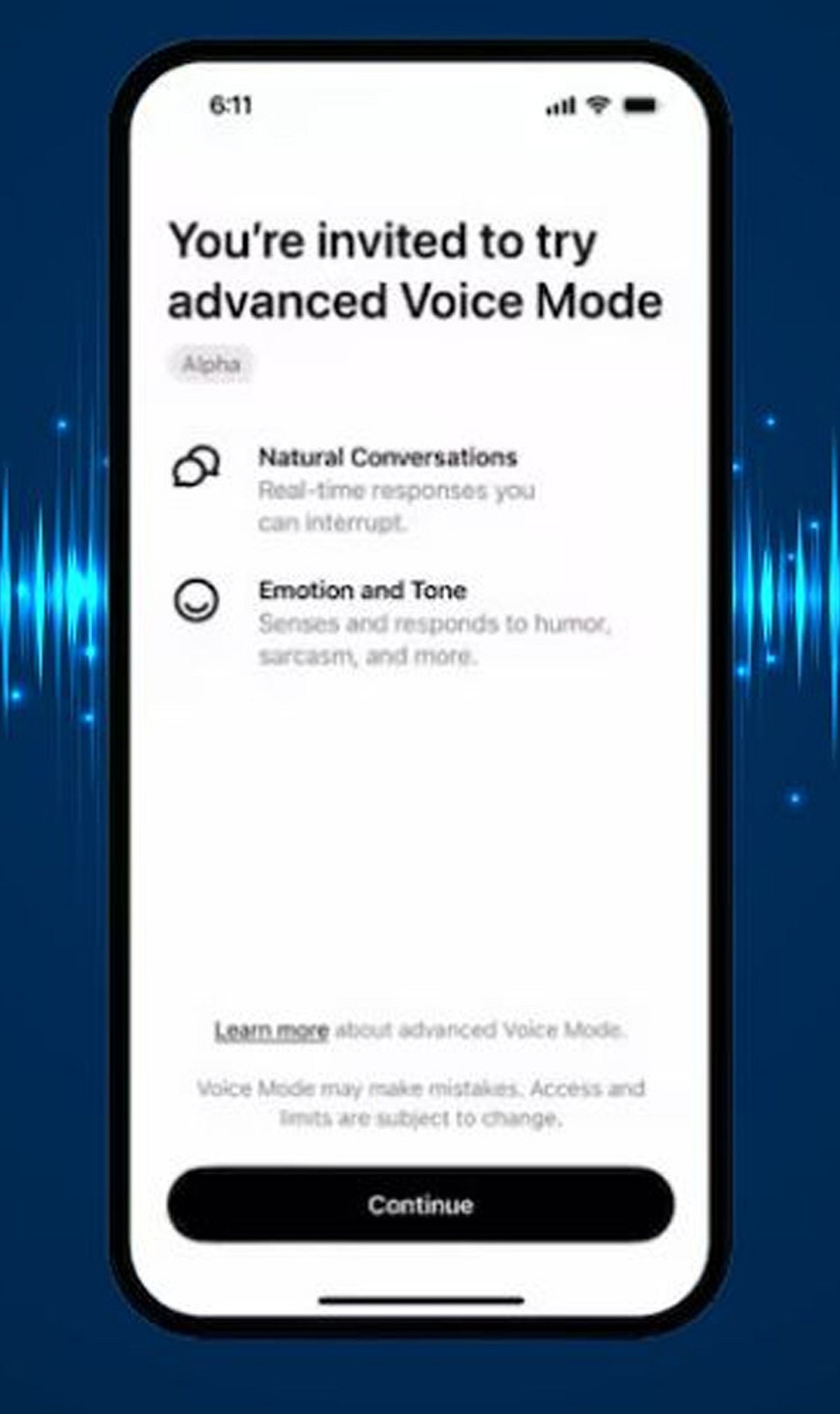
    AI conversations are becoming more natural thanks to ChatGPT’s advanced audio technology, which enables faster, smoother, and more human-like interactions. Modern voice AI can now understand natural speech patterns, allowing users to interrupt, ask follow-up questions, and maintain fluid conversations without awkward pauses.

    Improved speech synthesis adds realistic tone, emphasis, and pacing, making AI responses sound more expressive and engaging. Real-time translation capabilities could help users communicate across multiple languages during live conversations, making AI more useful for travel, business, and education.

    Developers are also using advanced audio models for live transcription, meeting summaries, accessibility tools, and customer support applications. Future AI assistants are expected to become increasingly audio-first, enabling hands-free interactions at home, in cars, and on wearable devices.

    More natural voice interactions could improve accessibility for users who prefer speaking over typing in everyday tasks. However, challenges remain, including maintaining accuracy, reducing hallucinations, protecting user privacy, and ensuring reliable performance in noisy environments.

    As audio AI continues to evolve, voice-based conversations are expected to become an increasingly important way people interact with intelligent assistants.

  • How Huawei’s AI-Powered Monitoring Platform Is Rescuing the Critically Endangered White-Headed Langur

    How Huawei’s AI-Powered Monitoring Platform Is Rescuing the Critically Endangered White-Headed Langur

    In the limestone karst mountains of Guangxi, southern China, technology is playing a pivotal role in bringing a critically endangered primate back from the brink. The white-headed langur, a species found only in Chongzuo and rarer than the giant panda, is experiencing a population recovery thanks to an intelligent monitoring platform powered by artificial intelligence by Huawei.

    The platform, developed in partnership with the Guangxi Chongzuo White-headed Langur National Nature Reserve and the China-ASEAN Artificial Intelligence Application Cooperation Center, uses video-based animal monitoring devices deployed along cliffs. These devices collect real-time data on the langurs’ distribution, surroundings, and activity patterns. AI-driven automated labeling and data analytics then process this information to create a comprehensive dashboard for visualized management.

    To date, the system has recorded over 37,200 instances of langur activity, providing researchers with unprecedented insights into the species’ behavior and habitat use. This AI system excels at processing complex geographical data in the challenging karst landscape, which would be extremely difficult to monitor with conventional methods alone.

    Technology operates within a broader conservation framework that includes legal protection and ecological restoration. The Chongzuo White-Headed Langur Habitat Protection Regulations provide the legal foundation, while efforts have restored 77.6 hectares of habitat, built two drinking water sources and 18 water drinking points, and constructed two ecological corridors. As a result, the white-headed langur population has grown to more than 1,400 individuals across 130 groups.

    Huawei Guangxi Deputy General Manager Tian Yongsheng notes that the company is committed to conserving nature with technology. The project demonstrates AI’s immense value in processing complex geographical data and massive volumes of species data. Huawei’s digital inclusion projects for environmental protection have been implemented in 65 protected areas worldwide, improving biodiversity conservation efficiency and showcasing the scalability of AI-powered conservation solutions across diverse ecosystems.