Blog

  • OPPO K14 Lite Review: 7 Key Factors to Evaluate Before Buying This Budget 4G Smartphone

    OPPO K14 Lite Review: 7 Key Factors to Evaluate Before Buying This Budget 4G Smartphone

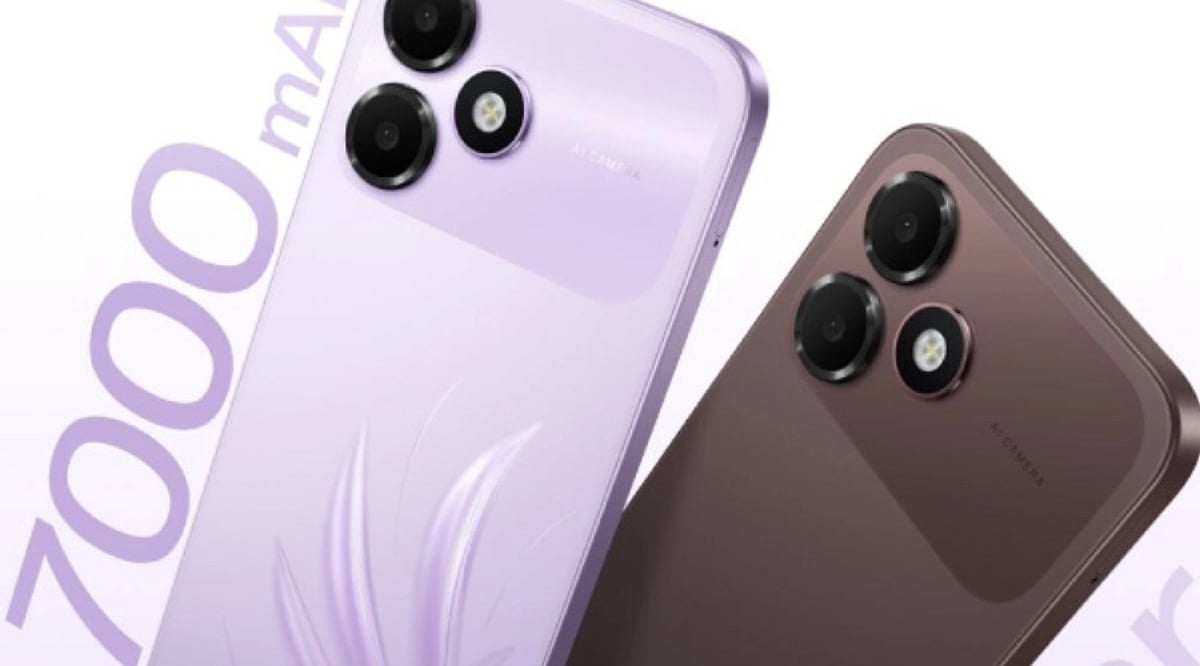
    The OPPO K14 Lite has one feature that stands out immediately: a huge 7,000mAh battery. OPPO has also confirmed a 6.75-inch display with a 120Hz refresh rate, ColorOS 16, an IP64 rating and a 13MP rear camera. The India launch takes place on September 16 at 12 PM IST, with Flipkart as the sales platform.

    There is also an important detail that changes the picture. Despite some reports and headlines that call the phone a 5G model, current specifications list the OPPO K14 Lite as a 4G-only phone. The listed chipset, Unisoc T7250, also supports 4G rather than 5G. That point deserves attention before any purchase decision.

    1. Check the 4G Network First

    Network support is the first major point to consider. The OPPO K14 Lite does not support 5G, according to the latest specification data. The phone supports 4G LTE, dual SIM use and Voice over LTE. This makes the device quite different from the OPPO K14 5G and K14x 5G.

    The difference matters for anyone who expects faster mobile data or plans to keep the phone for several years. A 4G connection can handle calls, social media, video and regular app use with ease, but the K14 Lite should not carry a 5G label in product coverage.

    2. Check the Large 7,000mAh Battery

    Battery capacity forms the strongest feature of the K14 Lite. The phone carries a 7,000mAh cell, while OPPO claims battery durability for up to six years. The company also lists up to 26.84 hours of video playback and up to 675.13 hours of standby time on a single charge.

    Such capacity can suit users who spend long hours away from a charger. The large cell also gives the K14 Lite a clear focus within the budget phone market. Battery size alone, however, should not decide the purchase. Charging speed also matters with such a large cell.

    3. Check the 6.75-Inch 120Hz Screen

    The K14 Lite uses a 6.75-inch LCD panel with a 120Hz refresh rate. Current specification data lists a 720 x 1570-pixel HD+ resolution, along with a peak brightness of 1,125 nits. The large size can help with video, reading and everyday app use, while the 120Hz rate can make menus and page movement feel smoother.

    The HD+ resolution is also worth noting. A 6.75-inch panel with this resolution will not offer the same sharp detail as a Full HD+ screen. The 120Hz rate adds smoothness, but resolution still matters for text, photos and fine details.

    4. Check the Unisoc T7250 Chip

    The Unisoc T7250 sits at the heart of the K14 Lite. Current listings show an octa-core setup with two Cortex-A75 cores at 1.8GHz and six Cortex-A55 cores at 1.6GHz, along with Mali-G57 graphics. The phone also carries 4GB of RAM, with virtual RAM support that can take the advertised memory figure up to 8GB.

    This hardware points toward basic daily tasks rather than heavy games. Calls, web use, video, messaging and common apps should fit the phone’s intended class. Buyers who want strong game performance should pay close attention to the chipset before purchase.

    5. Check the Camera Hardware

    The rear camera setup centres on a 13MP main sensor. Current listings also show a 5MP front camera, Full HD video at 30 frames per second from the rear camera and HD video at 30 frames per second from the front camera.

    The camera hardware looks simple rather than ambitious. That setup can handle casual photos, video calls and basic social media shots, but it does not match the camera hardware found on higher-priced phones. Camera quality will depend on image processing as well as the sensor count, so real-world tests should matter more than megapixel figures alone.

    6. Check ColorOS 16 and Durability

    OPPO gives the K14 Lite ColorOS 16, based on Android 16. The phone also carries an IP64 rating for dust and water resistance. OPPO has highlighted durability as part of the phone’s design, while reports also link the model with a claim for 36 months of smooth OS performance.

    The IP64 rating offers useful protection for normal dust exposure and water splashes. It does not make the phone suitable for underwater use, so the rating still needs careful interpretation.

    7. Check the Price Before Paying

    Price will decide how the K14 Lite fits into the market. As of the latest available pre-launch data, OPPO had not confirmed the official India price. Some reports place the phone below Rs. 20,000, while other estimates sit higher. Those figures remain estimates, not confirmed launch prices.

    Final Thoughts

    The OPPO K14 Lite has a mix of useful features and clear compromises. Its 7,000mAh battery and 120Hz display stand out, while 4G support and the basic chipset need close attention. These details can shape the phone’s daily experience, long-term value and suitability for different types of users.

    The K14 Lite therefore has a clear profile: a 7,000mAh battery, large 120Hz screen, ColorOS 16 and IP64 protection, paired with a basic processor and 4G connectivity. The final price will determine how those trade-offs fit the market.

    FAQs

    Is the OPPO K14 Lite a 5G phone?
    Current specifications list the OPPO K14 Lite as a 4G LTE phone, not a 5G model.

    How large is the OPPO K14 Lite battery?
    The phone has a 7,000mAh battery, with OPPO claiming up to 26.84 hours of video playback.

    What processor does the OPPO K14 Lite use?
    The phone uses the Unisoc T7250 chipset with two Cortex-A75 cores and six Cortex-A55 cores.

    What display does the OPPO K14 Lite have?
    The phone has a 6.75-inch LCD with a 120Hz refresh rate and 720 x 1570-pixel HD+ resolution.

    Which software does the OPPO K14 Lite use?
    The OPPO K14 Lite runs ColorOS 16 based on Android 16.
  • How to Verify a Website’s Safety Before Sharing Personal Data

    How to Verify a Website’s Safety Before Sharing Personal Data

    A website can look legitimate but still pose a serious threat. A clean design, familiar logo, or a padlock icon does not guarantee that a site belongs to a trustworthy company. Fake pages often mimic trusted brands to steal passwords, credit card numbers, phone numbers, or other private information. Performing a few simple checks can reveal warning signs before you submit sensitive details.

    Check the Website Address First

    The web address is the first thing to examine. A legitimate company should have the correct main domain, with no misspellings, extra words, or unusual characters. A minor alteration can indicate a fraudulent page. For example, paypa1.com is not paypal.com, and paypal.com.example.com does not belong to PayPal. The real domain appears near the end of the URL, just before the first slash.

    HTTPS also matters, but it alone does not confirm trust. While a secure connection encrypts data between your browser and the site, fake websites can also obtain HTTPS certificates. Google Chrome still advises caution on secure pages and recommends checking the site name in the address bar.

    Take Browser Warnings Seriously

    A browser warning is a strong signal to stop. Chrome uses Google Safe Browsing to detect phishing, malware, harmful downloads, deceptive sites, and social engineering attacks. When Safe Browsing flags a site as dangerous, Chrome may display a full-page warning. Google advises against visiting such pages.

    A warning that says “Dangerous site” deserves immediate attention. Such a page may attempt to steal passwords or personal information, or install harmful software on your device. Chrome also warns about sites that resemble trusted websites but use a slightly altered address.

    Safe Browsing’s Enhanced mode offers extra protection by warning about risky sites that Google has not yet identified through standard lists. This feature can also check suspicious downloads and browser extensions.

    Check Where the Link Came From

    Even a safe-looking page can originate from an unsafe link. Unexpected emails, text messages, social media messages, pop-ups, or QR codes require extra caution. A better approach is to navigate directly to the official website by typing the known address into your browser or using a trusted bookmark.

    QR codes now deserve special attention. The Federal Trade Commission reported a September 2026 alert about scam QR codes placed over legitimate codes at parking meters. These codes can direct visitors to fake websites that ask for money or personal information.

    The same risk applies to emails and text messages. A message may claim that an account needs urgent action, a payment failed, or a package needs confirmation. Such pressure can push you toward a fake login page. Google advises against clicking links from suspicious messages and recommends visiting the expected website directly.

    Look at What the Site Requests

    A trusted website should have a clear reason for each piece of personal data it asks for. A sudden request for a password, credit card number, government ID, or other sensitive details should raise a red flag. A page that demands far more information than necessary is also suspicious.

    Strong account protection adds another layer of safety. Passkeys offer an alternative to passwords and can resist common phishing attacks. Two-step verification can also reduce risk after password theft, especially when using stronger methods such as security keys or account prompts.

    A safe website check does not rely on a single sign. HTTPS, the correct domain, browser alerts, the source of a link, and the type of data requested all matter. The goal is not to prove that a site looks professional—it is to confirm that the address belongs to the expected service before your private information leaves your device.

  • Valve Steam Frame: A New Standalone VR Headset That Bridges PC and Wireless Gaming

    Valve Steam Frame: A New Standalone VR Headset That Bridges PC and Wireless Gaming

    Valve’s Steam Frame headset aims to simplify virtual reality by combining standalone VR, wireless PC VR, and full Steam library access in one device. Priced at USD 1,059 for the 256GB model and USD 1,299 for the 1TB version, the headset targets PC gamers and VR enthusiasts who want a premium experience without being tied to a cable.

    Key Features and Specs

    The Steam Frame is powered by a Qualcomm Snapdragon 8 Gen 3 chip with 16GB of RAM. It offers a 2160×2160 LCD panel per eye, pancake lenses, a 110-degree field of view, and refresh rates from 72Hz to 144Hz. Storage options include 256GB and 1TB, with microSD expansion. The headset weighs about 440 grams and delivers one to four hours of battery life depending on usage.

    Valve includes Wi-Fi 7 support and a Wi-Fi 6E dongle for PC connectivity, enabling wireless PC VR without cables. Eye tracking with foveated streaming reduces data load by focusing detail on the player’s gaze.

    Standalone and PC VR in One

    Unlike most standalone VR headsets that rely on a mobile chip and a dedicated store, Steam Frame puts Steam at the center. Compatible games run directly on the headset, while demanding PC titles stream wirelessly from a computer. This flexibility lets players switch between local and PC VR without a separate headset or cable.

    Software Library and Developer Support

    Valve has verified over 100 games for standalone play on Steam Frame, but the broader Steam PC catalogue remains far larger. Developer support will be critical for the platform’s success. Valve leverages its existing Steam ecosystem—huge game library, large user base, and established payment systems—to reduce the need for a new store.

    Pricing and Availability

    The Steam Frame starts at USD 1,059 (256GB) and USD 1,299 (1TB). Optional accessories include a USD 29 45W power supply and a USD 59 ergonomic kit. Valve uses a randomized reservation queue for initial purchase invitations, with registration open until September 17 at 10 AM Pacific. Selected buyers receive 72 hours to complete a purchase.

    A New Model for VR Gaming

    Steam Frame represents Valve’s attempt to blur the line between standalone and PC VR. A game can run locally when hardware allows, stream from a PC for more demanding titles, or even display flat-screen Steam games through the headset. Future hardware options, like the Arcturus Vision Camera for color passthrough and spatial video, could expand mixed reality capabilities.

    The headset’s success ultimately depends on developer adoption. If more games earn Steam Frame Standalone Verified status, the device could transform into a versatile Steam machine that handles local VR, PC VR, and standard Steam games. For now, Steam Frame marks a significant shift in VR hardware by connecting a major game platform to two forms of play.

  • Indian Markets Open Lower: Nifty 50 Drops 22 Points, Sensex Down 154 After Fed Rate Hike

    Indian Markets Open Lower: Nifty 50 Drops 22 Points, Sensex Down 154 After Fed Rate Hike

    The Indian stock market opened on a negative note on September 17, 2026, following the U.S. Federal Reserve’s announcement of its first interest rate hike in three years, along with plans for further increases later this year. The Nifty 50 index started the session at 23,195.25, down 22.35 points (approximately 0.1%), while the Bank Nifty fell 165.85 points from its previous close. The Sensex declined 153.83 points to 74,182.62.

    Broader Market Performance

    Broader markets also faced pressure, with the Nifty Midcap 100 index ending flat and the Nifty Smallcap 100 index closing marginally lower. The Indian rupee opened weaker at 96.01 per U.S. dollar, compared to the previous close of 95.95.

    Institutional Activity

    On September 16, foreign institutional investors (FIIs) sold equities worth Rs. 2,000 crore, while domestic institutional investors (DIIs) supported the markets by purchasing equities worth Rs. 3,900 crore during the day.

    Sensex Technical Outlook

    Technically, the Sensex recorded an intraday pullback from lower levels after a slow start. However, the short-term trend remains weak. According to Shrikant Chouhan, Head of Equity Research at Kotak Securities, “For day traders, 74,300 will act as an immediate resistance zone. Below these levels, weak sentiment is likely to continue. On the downside, the market could retest the 74,000–73,500 levels. On the upside, above 74,300, the pullback can extend towards 74,600–75,000.”

    Nifty 50 Technical Outlook

    On Wednesday, the Nifty 50 formed a small green candle with wicks on both sides, signaling indecision among traders. The daily RSI remains in the oversold zone but has recovered from yesterday’s low, indicating some improvement in momentum. Immediate support for the index is near 23,110–23,120, representing the lows of the previous two trading sessions. A decisive close above 23,460 would provide the first indication of improving short-term sentiment. A break below 23,110 would signal renewed weakness and could extend the decline toward 23,070, followed by 22,850.

    Bank Nifty Technical Outlook

    The Bank Nifty is consolidating near the 50% Fibonacci retracement level of the previous upward move from 52,783 to 58,706. Nevertheless, the general undertone remains weak as the index continues to trade below both short- and long-term moving averages. Sudeep Shah, Head of Technical and Derivatives Research at SBI Securities, noted, “Going forward, the 55,700–55,600 zone is likely to serve as an important support area for the index. A sustained breach below 55,600 could intensify selling pressure and open the door for further downside towards 55,000, followed by 54,500 in the near term. On the upside, the 56,700–56,800 zone is expected to act as a significant resistance band, and the index would need to surpass this hurdle to improve the short-term technical outlook.”

    Disclaimer: This article is for informational purposes only and does not constitute investment advice. Cryptocurrencies and stocks can be highly volatile and risky. Always conduct your own research before making any investment decisions.

  • DeepSeek’s V4.1 Flash: 9 Key Facts About Its 552B-Parameter AI Model

    DeepSeek’s V4.1 Flash: 9 Key Facts About Its 552B-Parameter AI Model

    DeepSeek has introduced its latest artificial intelligence system, V4.1 Flash, a 552-billion-parameter model designed to deliver powerful general-purpose capabilities while keeping computational demands in check. Below are the nine essential details about this new release.

    1. Mixture-of-Experts Architecture: V4.1 Flash uses a Mixture-of-Experts (MoE) design that balances high-level capability with efficient computing, making it suitable for complex workloads without excessive resource use.
    2. 552 Billion Total Parameters: With 552 billion parameters, this model ranks among the largest AI systems built for advanced general-purpose applications, giving it substantial capacity for learning and reasoning.
    3. 8 Billion Active Parameters on Input: During input processing, only about 8 billion parameters are activated, significantly reducing computational requirements while still handling complex tasks effectively.
    4. 16 Billion Active Parameters During Generation: When producing responses, the model activates roughly 16 billion parameters, providing extra capacity for generating higher-quality outputs and completing nuanced instructions.
    5. One-Million-Token Context Window: V4.1 Flash supports a context window of up to one million tokens, enabling it to process extremely long documents and maintain coherence across lengthy interactions.
    6. Native Vision Capabilities: The model includes built-in multimodal support, allowing it to understand visual information alongside text for a broader range of AI applications.
    7. New Causal Encoder-Decoder Architecture: DeepSeek introduces a fresh architecture that separates input understanding from generation, improving efficiency during demanding inference tasks.
    8. Reduced KV Cache Requirements: The design significantly lowers KV-cache memory consumption, which improves deployment efficiency across large-scale AI infrastructure.
    9. Optimized for Faster Inference: V4.1 Flash is built around efficient inference, targeting lower computational overhead while maintaining strong performance in coding, reasoning, and agentic workloads.

    DeepSeek’s V4.1 Flash demonstrates a clear focus on balancing scale with practicality, making it a notable entry in the evolving landscape of high-parameter AI models.

  • NYT Wordle #1914 Hints and Answer for September 15, 2026 – Expert Guide

    NYT Wordle #1914 Hints and Answer for September 15, 2026 – Expert Guide

    Struggling with today’s Wordle? This guide provides strategic hints, expert solving tips, and the final answer for the September 15, 2026 puzzle (Wordle #1914). Whether you’re aiming to protect your winning streak or just need a gentle nudge, we’ve got you covered—without spoiling the solution until you’re ready.

    Wordle Hints for September 15, 2026 (Puzzle #1914)

    Here are the clues to help you crack today’s five-letter word:

    • Vowel Count: 2 vowels
    • Consonant Count: 3 consonants
    • Repeated Letters: No repeated letters
    • Letter Rarity: All letters are common
    • First Letter: D
    • Bonus Hint: The word ends with the letter T

    If these clues haven’t set you on the right track, read on for the final answer.

    Wordle Answer for September 15, 2026

    The answer for today’s Wordle #1914 is DEALT.

    This noun relates to a change or a short story theme—a fitting word for the day’s puzzle. Check the image below (not shown) for a sample solving strategy.

    Best Tips to Improve Your Wordle Game

    New to Wordle or looking to sharpen your technique? Follow these expert tips:

    1. Start strong: Begin with words that contain common vowels and consonants to gather maximum information early.
    2. Avoid repeating letters: Don’t reuse letters in your first few guesses unless you’re confident about their placement.
    3. Use color feedback wisely: Green letters are correct and in the right spot; yellow letters belong in the word but need repositioning.
    4. Eliminate possibilities: Each guess should help you rule out options rather than rushing to the answer.
    5. Expand your vocabulary: Familiarity with less common words can make solving much faster.

    Is Wordle Getting Harder?

    It may feel that way, but Wordle’s difficulty hasn’t changed since its launch. If you want a bigger challenge, enable Hard Mode in the settings. For more context, check out our guide on Today’s NYT Wordle Hints, Answer for September 12, 2026 (Wordle #1911).

    Final Thoughts

    Wordle’s charm lies in its daily uncertainty—a new grid, a fresh word, and six chances to guess. Even experts find each puzzle equally engaging. The game quietly sharpens vocabulary and pattern recognition, offering a rewarding mental exercise every day. A different word, an empty grid, and six opportunities—that’s the excitement Wordle brings.

    Join our WhatsApp Channel for the latest news, exclusives, and videos on gaming and puzzles.

  • 7 Key Technologies Shaping the Next Generation of AI Data Centers

    7 Key Technologies Shaping the Next Generation of AI Data Centers

    AI data centers are undergoing a major transformation to keep pace with the demands of next-generation artificial intelligence workloads. From advanced chips to smarter cooling and networking, here are seven technologies driving the evolution.

    1. AI Accelerators and Chiplet-Based Processors

    New AI accelerators and chiplet-based processors pack more computing power into each rack, enabling data centers to handle large-scale AI training and inference tasks more efficiently.

    2. Liquid Cooling for High-Density Racks

    As powerful chips generate more heat, liquid cooling is becoming essential. This technology improves thermal efficiency and reduces energy consumption in high-density AI racks.

    3. CXL Memory Technology

    CXL (Compute Express Link) memory lets processors and accelerators share memory resources efficiently, helping AI systems manage growing data and memory demands.

    4. High-Speed Optical Networks (800G and 1.6T)

    High-speed 800G and 1.6T optical networks move massive amounts of data between servers, switches, and accelerator clusters with lower power consumption.

    5. Silicon Photonics

    Silicon photonics uses light to transmit data across data center networks. Co-packaged optics and optical links improve bandwidth while reducing connectivity bottlenecks and energy demands.

    6. AI-Powered Power Management

    AI-driven power management monitors workloads, cooling, and equipment in real time. Smarter systems adjust resources, detect problems, and reduce unnecessary energy use.

    7. Purpose-Built Inference Chips and Edge Data Centers

    Purpose-built inference chips are gaining traction as AI shifts from training large models to running real-time applications like chatbots, coding tools, and voice agents. Edge data centers bring computing closer to users and devices, while renewable power, batteries, and microgrids support growing electricity needs.

    Together, advanced chips, liquid cooling, CXL memory, optical networking, smart power systems, and edge computing are reshaping data centers for faster and more efficient AI workloads.

  • NYT Mini Crossword Solutions for September 15, 2026: Complete Clue Guide

    NYT Mini Crossword Solutions for September 15, 2026: Complete Clue Guide

    Overview

    The New York Times Mini Crossword for Tuesday, September 15, 2026, brings a playful mix of modern slang, pop culture references, and everyday trivia. The compact 5×5 grid holds ten clues total—five across and five down—offering a quick yet satisfying challenge. From internet shorthand to a beloved cartoon detective, this puzzle keeps solvers on their toes.

    Across Clues and Answers

    • 1A: “That’s a no-brainer!,” slangily — OBVI (short for “obviously”)
    • 5A: 5,280 in a mile — FEET (a standard measurement)
    • 6A: F, on a test — FALSE (true-or-false grading)
    • 8A: “Give me a break!” — CMON (casual exclamation)
    • 9A: “Don’t walk” symbol at a crosswalk — HAND (pedestrian signal)

    Down Clues and Answers

    • 1D: Brand of bug spray with an exclamation point in its name — OFF (insect repellent)
    • 2D: Long ___, Calif. — BEACH (Long Beach, California)
    • 3D: Brainy member of the Scooby-Doo gang — VELMA (the smart detective)
    • 4D: “Let’s do this thing” — ITSON (phrase of readiness)
    • 7D: Conclusion — END (final point)

    Why This Puzzle Stands Out

    Today’s Mini Crossword leans heavily on contemporary speech, with answers like OBVI, CMON, and ITSON reflecting how people actually talk. The mix also includes a geography hint (Long Beach), a nostalgic cartoon reference (Velma), and a practical street symbol (HAND). Despite its small size, the grid feels fresh and varied, proving that even a 5×5 puzzle can deliver a rewarding mental workout.

    For solvers who need a quick check or are stuck on a particular clue, the complete answers above provide everything required to finish the grid. Tomorrow brings another NYT Mini Crossword challenge with a brand new set of clues.

  • NYT Connections Hints and Answers: September 15, 2026 Puzzle Solutions

    NYT Connections Hints and Answers: September 15, 2026 Puzzle Solutions

    The New York Times Connections puzzle for September 15, 2026, challenges players to sort 16 words into four groups of four based on their hidden connections. While some categories may seem straightforward, several words can fit more than one group, making the puzzle trickier than it first appears. Players can use the hints below for a nudge before checking the categories and complete answers.

    Hints for Today’s Connections

    Players looking for a little help before seeing the answers can use these category clues:

    • Yellow group: show the way
    • Green group: lot of noise this thing can make
    • Blue group: secretly in a bed?
    • Purple group: you might not need to think about these for a while

    These clues point toward the four categories without immediately revealing every answer.

    One Word from Each Group

    For players who need an extra push, one word from each category can help reveal the intended connections.

    • Yellow group: TRAIN
    • Green group: HANDLE
    • Blue group: PLANT
    • Purple group: DESSERT

    Today’s Connections Categories

    The four groups in today’s puzzle are:

    • Yellow group: instruct
    • Green group: parts of a whistling kettle
    • Blue group: undercover operative
    • Purple group: things that appear at the end

    Today’s NYT Connections Answers

    • Yellow group: COACH, DIRECT, GUIDE, TRAIN
    • Green group: HANDLE, LID, SPOUT, WHISTLE
    • Blue group: ASSET, MOLE, PLANT, SLEEPER
    • Purple group: CABOOSE, DECEMBER, DESSERT, EPILOGUE

    Why Today’s Puzzle Could Be Tricky

    Today’s NYT Connections mixes familiar activities and concepts with less obvious word associations. Some entries may initially fit multiple categories, creating distractions as players work through the board. The Green group is particularly challenging since the connection relies on the figurative use of ‘spout’ rather than a literal meaning. Overall, today’s puzzle combines straightforward associations with metaphorical connections, requiring players to look beyond the most obvious meanings before committing to a group.

  • A20 Pro vs Earlier Apple Chips: 7 Major Upgrades to Expect in iPhone Performance

    A20 Pro vs Earlier Apple Chips: 7 Major Upgrades to Expect in iPhone Performance

    Apple’s next-generation A20 Pro chip is shaping up to be one of the most significant leaps forward in iPhone performance in recent years. With a new manufacturing process and refinements across the board, the A20 Pro could offer major improvements over the A17 Pro, A18 Pro, and A19 Pro. Here are seven key upgrades that may help it stand apart from previous Apple silicon.

    1. Built on TSMC’s 2nm Process

    The A20 Pro is expected to be Apple’s first iPhone chip manufactured on TSMC’s 2nm process. Moving to a smaller process node allows more transistors to fit into the same physical space, which can boost both performance and power efficiency.

    2. Faster Overall Performance

    Thanks to the 2nm transition, the A20 Pro could deliver a meaningful performance jump over earlier A-series chips. Users may notice smoother multitasking, faster app launches, and improved responsiveness in demanding tasks like gaming, video editing, and AI-heavy workloads.

    3. Better Power Efficiency

    Performance gains are only part of the story. The newer manufacturing technology is also expected to improve energy efficiency, allowing the A20 Pro to handle more intensive tasks while consuming less power. That could translate into better battery life during heavy use.

    4. Smarter On-Device AI Processing

    Apple has been expanding AI features across the iPhone, and the A20 Pro is expected to push that further. Improvements to on-device AI processing could enable future iPhones to run more sophisticated intelligent features locally, reducing the need to rely heavily on cloud computing.

    5. Stronger Graphics Performance

    The A20 Pro is also rumored to bring a significant boost to graphics. A more capable GPU would benefit high-end mobile games, advanced camera effects, video editing, and other graphics-intensive applications that push the iPhone’s hardware to its limits.

    6. Better Thermal Management

    As chips become more powerful, managing heat becomes increasingly important. The A20 Pro’s new architecture and manufacturing process could help Apple balance sustained performance with heat and power consumption, so the device stays cool even during extended demanding sessions.

    7. More Efficient Memory Design

    The A20 Pro is expected to refine how the chip interacts with memory. Improved memory efficiency could help demanding apps run more smoothly, especially when switching between multiple apps or performing intensive creative and AI workloads.

    A New Benchmark for Apple Silicon

    From the A17 Pro and A18 Pro to the A19 Pro, Apple has steadily advanced its in-house chip designs. The A20 Pro could continue that trend with a substantial upgrade in both efficiency and raw power, potentially setting a new standard for future iPhones.