Blog

  • Insomniac Games Responds to ‘Fart Gas’ Complaints, Promises Fixes for Marvel’s Wolverine Scent Trail

    Insomniac Games Responds to ‘Fart Gas’ Complaints, Promises Fixes for Marvel’s Wolverine Scent Trail

    Insomniac Games is actively working on fixes for Marvel’s Wolverine after a controversial scent-trail feature sparked widespread criticism online, with players jokingly referring to the visual effect as ‘fart gas.’

    The controversy centers on a blue-green trail that appears when Wolverine uses his heightened senses to track a person, sound, whisky, or another clue. The feature is designed to represent Logan’s mutant abilities and elite tracking skills.

    Scent Trail Becomes Viral Talking Point

    The visual effect drew criticism after reviewers and players shared footage showing the trail guiding Wolverine through sections of the game. Some users argued that the mechanic makes exploration too straightforward and gives players too much direction.

    The discussion intensified after The Washington Post journalist Gene Park described the effect as ‘fart gas’ on social media. Players subsequently began using the phrase across social platforms when discussing the game’s navigation system.

    Insomniac community and marketing director James Stevenson previously clarified that the scent trail is not always active. He explained that it appears only when Logan is tracking a specific scent or sound, during story or mission moments, or when he detects a collectible.

    Players Want More Control

    The criticism also focused on the game’s accessibility settings. Players found that while Marvel’s Wolverine includes options for navigation assistance and other guidance features, the scent trail cannot be switched off through those settings.

    It prompted requests for Insomniac to introduce a toggle allowing players to decide when they want to use Wolverine’s tracking ability.

    Some players suggested tying the ability to a button press, such as R3 on the DualSense controller. That would allow players to activate Logan’s heightened senses when required instead of having the visual trail appear automatically during specific sequences.

    Stevenson also clarified that collectible tracking still involves some exploration. Players first need to get close enough to detect the relevant sound or scent before Wolverine can identify it.

    Insomniac Working on Fixes

    The debate has now moved beyond social media criticism, with the developer indicating that it is working on fixes following the reaction to the feature.

    The timing comes as Marvel’s Wolverine launches exclusively on PlayStation 5 on September 15. Insomniac’s latest release faced discussion around its linear structure, guidance systems, and accessibility options, alongside praise for its combat, presentation, and character work.

    The game also received a day-one update addressing several gameplay, progression, visual, and stability issues. The update adds a beard option for Logan and includes fixes for gameplay elements, progression problems, visual issues, and general stability.

    For now, the ‘fart gas’ debate highlights a broader disagreement over how much guidance modern action games should provide. For Insomniac, the challenge is to preserve Wolverine’s signature tracking ability while giving players enough control over how prominently that ability appears on screen.
  • Tata Group Stocks Rally 20% After RBI Denies Tata Sons Deregistration

    Tata Group Stocks Rally 20% After RBI Denies Tata Sons Deregistration

    Tata Group stocks surged across Mumbai markets on September 15 after the Reserve Bank of India rejected Tata Sons’ deregistration request. The RBI decision keeps Tata Sons under upper-layer NBFC rules and revives expectations of a mandatory listing.

    The development lifted companies holding Tata Sons stakes as investors assessed potential value gains. Tata Chemicals led the rally with a 20% jump, while Tata Investment gained sharply during Tuesday’s trading session.

    Tata Sons sought to surrender its registration as a Core Investment Company with the central bank. The RBI rejected that request and retained the regulatory route requiring compliance with stricter NBFC-Upper Layer requirements.

    The listing prospect matters for Tata Group stocks holding direct interests in the unlisted parent. Seven listed Tata companies together hold about 11.94% of Tata Sons, according to market reports.

    Tata Chemicals holds roughly 2.5% of Tata Sons, while Tata Steel and Tata Motors Passenger Vehicles each hold about 3.1%. Their holdings could gain greater market visibility through a potential listing.

    Tata Chemicals closed at Rs. 734.50 after hitting its 20% upper circuit during trading. Its Tata Sons stake could carry substantial value compared with the company’s current market capitalization.

    Tata Investment Corporation also advanced strongly, while Tata Motors Passenger Vehicles gained about 4%. Several other Tata companies moved higher as listing expectations spread across the group.

    The impact also reached Shapoorji Pallonji Group companies, which hold an estimated 18.37% stake in Tata Sons. Afcons Infrastructure and Forbes & Co posted sharp gains during Tuesday’s session.

    A Tata Sons listing could create a market benchmark for its previously unlisted value. Analysts also expect greater financial visibility once Tata Sons faces public-market disclosure requirements.

    However, the rally does not guarantee immediate cash gains for shareholder companies. Manish Bhandari of Vallum Capital said a listing would establish a valuation benchmark rather than automatically unlock cash.

    The next focus remains on Tata Sons’ regulatory response and potential legal proceedings. Reuters also reported that the RBI approached courts regarding possible challenges linked to the listing.

  • Oracle Layoffs in India: 1,500 Mid-to-Senior Staff Affected as Company Pivots to AI

    Oracle Layoffs in India: 1,500 Mid-to-Senior Staff Affected as Company Pivots to AI

    Oracle has initiated another round of layoffs in India, reportedly affecting 1,000 to 1,500 employees, primarily mid-to-senior-level staff in web development and maintenance roles. The cuts began on Monday, September 14, and are part of the company’s broader global restructuring aimed at reallocating resources toward artificial intelligence (AI), cloud services, and data centers.

    According to reports, the layoffs have also impacted senior employees at Oracle Financial Services Software. However, Oracle has not officially confirmed the number of employees affected or provided details on the impact to its Oracle Cloud Infrastructure teams in India.

    This latest round follows multiple workforce reductions earlier in 2026, as Oracle ramps up investment in AI infrastructure. In the fiscal year ending May 2026, the company reduced its global workforce by approximately 21,000 employees. Oracle’s capital expenditure reached $55.7 billion in fiscal 2026, with a significant portion directed toward data center expansion.

    The layoffs signal a strategic shift in Oracle’s priorities, with the company focusing on high-growth areas like cloud computing and AI, while scaling back traditional web development and product engineering teams. As demand for AI and cloud services grows, Oracle is raising additional funds to support its plans.

    Industry observers note that the restructuring reflects a changing skill demand within the company, as it builds more data centers and expands its cloud business. The exact number of affected employees in India remains unverified, and no official statement has been issued by Oracle regarding the layoffs.

  • Meta’s Luna Smart Glasses Reportedly Drop the Camera for a Voice-First AI Experience

    Meta’s Luna Smart Glasses Reportedly Drop the Camera for a Voice-First AI Experience

    Meta Bets on Voice-First Wearables

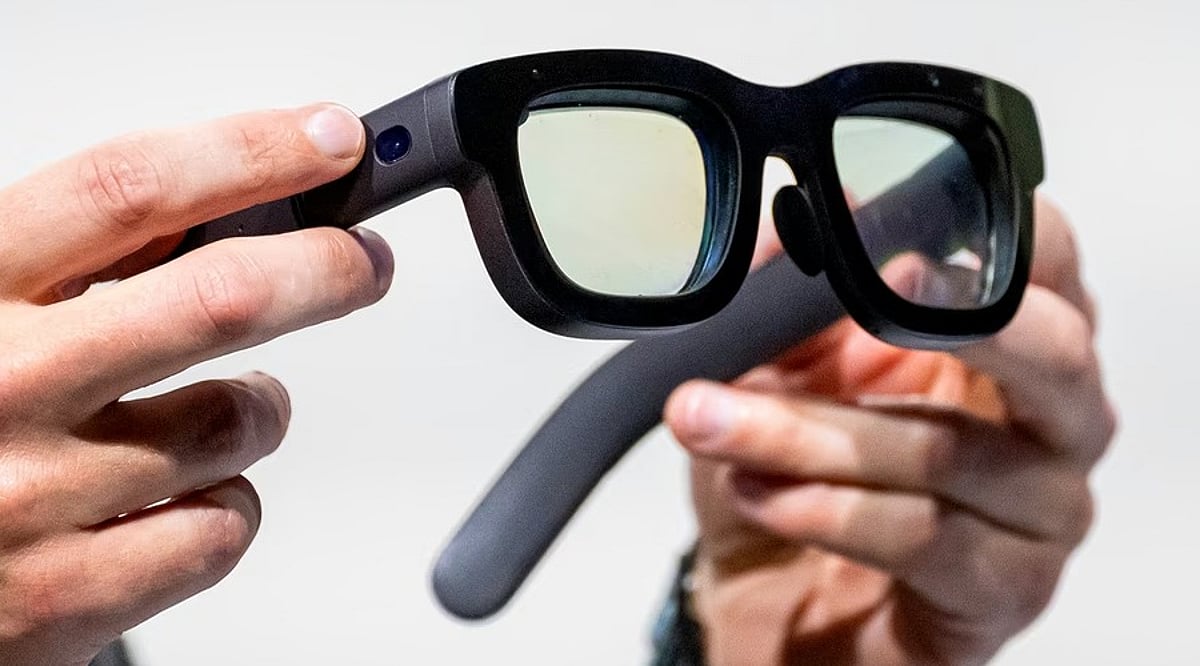
    Meta is reportedly preparing a new pair of smart glasses that will ship without a camera. The device, said to be codenamed Luna, could launch this fall, according to a report from The Information that was later picked up by Reuters. Reuters added that it could not independently verify the report.

    The rumored redesign comes as camera-equipped smart glasses face growing scrutiny over privacy and the risk of unauthorized recording. Meta’s current AI glasses rely on a camera for photos, video, and various AI features, with an LED meant to signal when recording is active. By removing the camera, Luna is expected to ease those privacy worries while preserving many of the AI and audio capabilities.

    What Luna Might Bring

    • Six microphones: The glasses reportedly include six built-in mics to support clear voice interaction.
    • Meta AI plus Muse: Users could talk to Meta AI and the company’s new consumer AI agent, Muse, using voice commands.
    • Built-in speakers: Luna is expected to feature speakers similar to those found on Meta’s existing smart glasses.
    • Side button shortcut: A physical button on the side may offer quick access to Meta AI, giving users an alternative to voice activation.

    Launch Timing and the Road Ahead

    Meta could unveil Luna at its Meta Connect developer conference, scheduled for September 23 and 24. Shipments are reportedly targeted for October, though Meta has not publicly confirmed the product, its release timing, or final specifications.

    If it reaches market, Luna would add another direction to Meta’s expanding wearable strategy. The company is also developing more advanced augmented-reality hardware, underscoring its view of smart glasses as a major platform for AI.

  • AI Giants OpenAI, Anthropic, and Google DeepMind Unite on Safety Standards

    AI Giants OpenAI, Anthropic, and Google DeepMind Unite on Safety Standards

    By Poulami Saha

    OpenAI has confirmed safety discussions with rivals Anthropic and Google DeepMind, focusing on cooperation around advanced AI risks, common standards, and safeguards amid growing industry concerns.

    Chris Lehane, OpenAI’s global policy chief, disclosed the talks during a briefing in Washington. He stated, “The companies are exploring ways to work together on safety and do not believe they need an antitrust waiver to coordinate on these issues.”

    AI Rivals Turn to Safety Cooperation

    OpenAI, Anthropic, and Google DeepMind compete directly in the development of advanced AI models and products. Their discussions therefore mark an unusual effort to coordinate on a common area of concern while maintaining competition in the broader AI market. Lehane emphasized that cooperation could help the companies prioritize safety as AI capabilities continue to advance. OpenAI also supports bipartisan legislation designed to address catastrophic AI risks.

    The discussions come amid renewed debate over whether the industry should slow the pace of frontier AI development. Anthropic CEO Dario Amodei recently called for more time for safety systems to catch up with AI capabilities. OpenAI CEO Sam Altman subsequently expressed support for the broader idea of slowing progress enough to improve safeguards.

    Push for Common AI Safety Standards

    The latest talks follow earlier discussions among the companies about establishing an industry-wide body for AI safety standards. The proposed organization could develop common protocols for evaluating advanced AI systems and addressing emerging risks. Google DeepMind CEO Demis Hassabis earlier supported the idea of an industry standards body for frontier AI. The proposal reflects growing interest in creating shared safety practices rather than relying entirely on individual companies to establish their own frameworks.

    These developments signal a potential shift toward collective responsibility in the AI sector, as major players acknowledge that safety cannot be addressed in isolation.

  • Microsoft’s October 7 Event to Spotlight Local AI and Surface Laptop Ultra

    Microsoft’s October 7 Event to Spotlight Local AI and Surface Laptop Ultra

    Microsoft has confirmed a major Windows and Surface event scheduled for October 7 in San Francisco, with a focus on local artificial intelligence, AI-powered PCs, Surface hardware, and Windows 11. The keynote will be headlined by Microsoft CEO Satya Nadella, Windows and Surface chief Pavan Davuluri, and NVIDIA CEO Jensen Huang. The event kicks off at 10 a.m. PT / 1 p.m. ET and will be streamed online.

    According to Microsoft, the event will explore “how local AI will shape the next chapter of the PC,” signaling a push toward hardware capable of processing advanced AI workloads directly on devices. The company also plans to align Windows improvements with next-generation AI hardware, potentially detailing how AI will become more deeply integrated into everyday computing.

    The biggest hardware reveal could be the Surface Laptop Ultra, which Microsoft has previously linked with NVIDIA RTX Spark technology. This platform combines powerful computing with local AI capabilities to handle demanding workloads. Attendees can expect pricing, configurations, availability, and Windows-specific optimizations for the new machine.

    NVIDIA’s involvement highlights the RTX Spark initiative, which targets computers that can run large AI models locally without constant cloud processing. Microsoft has already showcased a Surface RTX Spark Dev Box featuring 128GB of unified memory and up to one petaflop of AI compute, aimed at developer workloads.

    Windows 11 will also be a key topic, with potential enhancements for local AI support, improved performance, and deeper Copilot integration. Current reports do not suggest a Windows 12 announcement; instead, Microsoft appears focused on extending Windows 11’s capabilities around emerging AI features.

    The October showcase may also introduce refreshed Surface hardware and broader ecosystem updates. Microsoft is expected to outline how future Windows PCs will balance local processing with cloud services, emphasizing faster response times, stronger privacy, and reduced reliance on cloud infrastructure—key advantages of on-device AI.

    This event marks Microsoft’s first dedicated Windows and Surface showcase since May 2024. With both Microsoft and NVIDIA leadership on stage, local AI is positioned as the central theme for the next chapter of personal computing.

  • Oracle Layoffs 2026: Thousands of Indian Employees Hit by 6 AM Termination Emails as AI Strategy Reshapes Workforce

    Oracle Layoffs 2026: Thousands of Indian Employees Hit by 6 AM Termination Emails as AI Strategy Reshapes Workforce

    Oracle has launched a new wave of layoffs affecting its global workforce, with Indian employees in Bengaluru and Hyderabad receiving termination notices at around 6 AM local time. The cuts, which began in the United States on September 14 and expanded to India the following day, are part of a broader organizational shift toward artificial intelligence and cloud infrastructure.

    Industry estimates suggest that between 1,000 and 3,000 Indian staff members, primarily in product engineering teams, may lose their jobs. Oracle has not confirmed the exact figures, but the restructuring comes on top of earlier reductions in 2026 that already trimmed the global workforce by approximately 21,000 employees.

    Employees reported losing access to company systems—including email, voicemail, and internal files—before receiving formal termination emails. The messages, reportedly signed by Oracle Leadership, stated simply: “Today is your last working day.” Affected staff were then instructed to provide personal email addresses to receive separation documents and severance details.

    The severance package for U.S. employees reportedly includes four weeks of base salary plus an additional week for each completed year of service. Indian packages vary, with employees discussing different settlement terms on internal forums and social media.

    The layoffs have been particularly jarring for long-tenured staff. LinkedIn posts highlighted employees with 12 years and even 33 years of service among those affected. One widely shared post from Pooja Sahu described her husband Sourabh losing his Oracle role after 12 years.

    Oracle recorded roughly 141,000 employees at the end of fiscal 2026, down about 13% from earlier in the year. The company also reported approximately $1.8 billion in restructuring expenses for fiscal 2026. In September, Oracle raised its estimated total restructuring costs by $700 million to around $2.8 billion, covering severance and exit costs.

    The increased spending reflects Oracle’s heavy investment in AI data centers and cloud infrastructure. The company maintained a capital expenditure forecast of $90 billion to $95 billion for fiscal 2027, with quarterly capex reported at $28.5 billion. The latest layoffs are thus directly tied to Oracle’s strategic pivot away from traditional product engineering and toward AI-focused infrastructure.

  • Reliance Jio Offers Free Canva Pro for 12 Months: Eligible Plans and Activation Guide

    Reliance Jio Offers Free Canva Pro for 12 Months: Eligible Plans and Activation Guide

    Reliance Jio has partnered with Canva to provide eligible customers with free access to Canva Pro or Canva Pro Lite for up to 12 months. This exclusive benefit is available with select Jio recharge plans and can be claimed through the MyJio app starting September 16, 2026. The companies have valued the offer at up to Rs. 4,000.

    Which Jio Plans Are Eligible?

    The Canva subscription you receive depends on your Jio recharge plan. Customers on the Rs. 399 plan will get Canva Pro for 12 months. Users on the Rs. 349 plan and eligible 2GB-per-day plans priced above Rs. 349 will receive Canva Pro Lite for the same period.

    The offer does not require any additional subscription charges. However, customers should check the Canva offer section inside the MyJio app to confirm their eligibility before activating the benefit.

    How to Claim Your Free Canva Subscription

    Eligible customers can activate the benefit through the MyJio app. Simply open the app, locate the Canva offer, and follow the on-screen instructions. You may need to verify your Jio number and sign in to an existing Canva account or create a new one.

    Once activation is complete, the eligible Canva subscription will be linked to your account. Be sure to use the correct Canva account during activation to avoid linking the benefit to the wrong profile.

    This collaboration gives users access to premium design and AI tools, making it easier to create professional graphics, presentations, and more without a separate subscription fee.

  • New UPI MDR Rule: 0.4% Merchant Fee for Payments Above ₹2,000 Starts Oct. 15

    The National Payments Corporation of India (NPCI) is introducing a new Merchant Discount Rate (MDR) structure for select UPI payments starting October 15, 2026. Under the updated rule, merchant transactions above ₹2,000 will attract a 0.4% MDR, with the charge capped at ₹300 for payments of ₹75,000 or more.

    What Is MDR?

    MDR is the fee charged for processing a digital payment. In this case, the charge is paid by the merchant, not the customer. The new rate applies to Person-to-Merchant (P2M) UPI payments — transactions where customers pay businesses for goods or services.

    Where the 0.4% MDR Applies

    Payments above ₹2,000 made via UPI to merchants will carry a 0.4% MDR. However, certain essential payments have been given a flat fee instead:

    • Railway ticket bookings above ₹2,000
    • Fuel payments above ₹2,000
    • Insurance premium payments above ₹2,000
    • Utility bill payments above ₹2,000

    For these categories, the MDR will be a flat ₹5, rather than a percentage of the transaction value. This keeps costs predictable for high-value payments in these sectors.

    What Remains Free

    Not all UPI transactions will be affected by the new rule. The following remain free of MDR:

    • UPI payments of up to ₹2,000 to any merchant
    • Person-to-Person (P2P) transfers to friends and family
    • UPI AutoPay and mandates
    • Small merchants receiving up to ₹1 lakh per month through UPI QR payments

    Protection for Consumers

    The finance ministry has said that banks have been advised to ensure merchants do not pass MDR charges on to customers. It also stated that UPI application providers are expressly prohibited from imposing platform fees or hidden charges.

    The new MDR structure is part of UPI’s move toward a revised charging model that balances business use cases with keeping everyday person-to-person transfers free.

  • RBI Backs 0.4% UPI Fee on Transactions Over ₹2,000 Starting October 15

    RBI Backs 0.4% UPI Fee on Transactions Over ₹2,000 Starting October 15

    New UPI Charge Approved for High-Value Merchant Payments

    The Reserve Bank of India has endorsed a new fee structure for select high-value UPI transactions, aiming to sustain the long-term growth of the country’s digital payments ecosystem. Starting October 15, a 0.4% Merchant Discount Rate (MDR) will apply to person-to-merchant UPI payments exceeding ₹2,000.

    Key Details of the New Fee

    • Rate: 0.4% MDR on merchant UPI payments above ₹2,000.
    • Cap: For payments of ₹75,000 or more, the charge is limited to ₹300.
    • Special sectors: Railways, telecom, insurance, fuel, and farm input payments above ₹2,000 incur a flat charge of ₹5. Mutual funds, securities, and stockbroking payments face a reduced rate of 0.02%, also capped at ₹300.
    • Exemptions: Person-to-person transfers remain free at any amount. Small merchant payments already under the zero-fee rule stay free, along with all merchant payments up to ₹2,000.

    Why the RBI Is Backing This Move

    The central bank believes the fee will provide UPI with the necessary funds to continue investing in technology and infrastructure. Officials said this support will help the payment system expand further and introduce new features over time. The change follows updates to the Payment and Settlement Systems Act, 2007, which created a legal pathway for adding such fees to UPI and other digital payment modes.

    The National Payments Corporation of India (NPCI) has set October 15 as the deadline for banks, fintech firms, and payment platforms to update their systems and comply with the new structure. The government expects about 96% of merchant transactions to remain unaffected by this change.

    Implications for Users and the Ecosystem

    For years, UPI operated on a zero-fee model for merchants. This shift marks a significant change in that approach, even as everyday users continue to enjoy free transactions. The new fee structure aims to strike a balance: keeping UPI free for common people while giving the ecosystem a sustainable way to fund its own growth and innovation.