Blog

  • India’s Consumer Regulator Investigates Apple Over iOS 18 iPhone Failures and Repair Costs

    India’s Consumer Regulator Investigates Apple Over iOS 18 iPhone Failures and Repair Costs

    India’s Central Consumer Protection Authority (CCPA) has escalated its probe into Apple over alleged iPhone problems linked to iOS 18. The regulator ordered a detailed investigation on July 29 after receiving complaints about display and microphone failures, and it will now examine whether Apple unfairly shifted repair costs onto consumers.

    What triggered the CCPA investigation?

    The case began after users reported green, pink, and white lines appearing on iPhone screens following the iOS 18 update. Some affected owners said they had to pay for display replacements and other repairs. The CCPA noted that an iPhone 15 screen repair could cost around Rs. 27,900 — more than one-third of the handset’s retail price.

    Warranty terms under scrutiny

    Apple’s limited warranty covers hardware, while its software license excludes software defects. The investigation will assess whether that exclusion remains fair if Apple’s own update allegedly triggers device problems. The CCPA has said the complaints may involve consumer rights violations.

    Apple defends iOS 18 and its warranty approach

    Apple disputed the allegations, saying iOS 18 has no systemic problems in India and that it found no safety concerns linked to the update. In an August response, Apple noted that the case involved only 75 complaints and that about 11% of iPhones still ran iOS 18 by June 2026. The company also said users received information about software terms before installing the update.

    Apple also cautioned against treating every software fault as a warranty breach, arguing that such rules could turn software providers into insurers against technological risks.

    Potential outcomes

    The investigation could lead to document requests, hearings, and a final regulatory report. If violations are established, Apple could face financial penalties, refunds, or changes to its business practices. Any changes to warranty terms could also set a significant consumer protection precedent.

    Why it matters for India

    The case comes as Apple expands its manufacturing footprint and market presence in India. The company’s iPhone share in India reached 9% last year, compared with 4% in 2022. The outcome could influence how software-related device failures receive warranty protection across India’s smartphone market.

  • Googlebook Pre-Orders Launch September 21: Gemini AI, Android Integration, and What to Know

    Googlebook Pre-Orders Launch September 21: Gemini AI, Android Integration, and What to Know

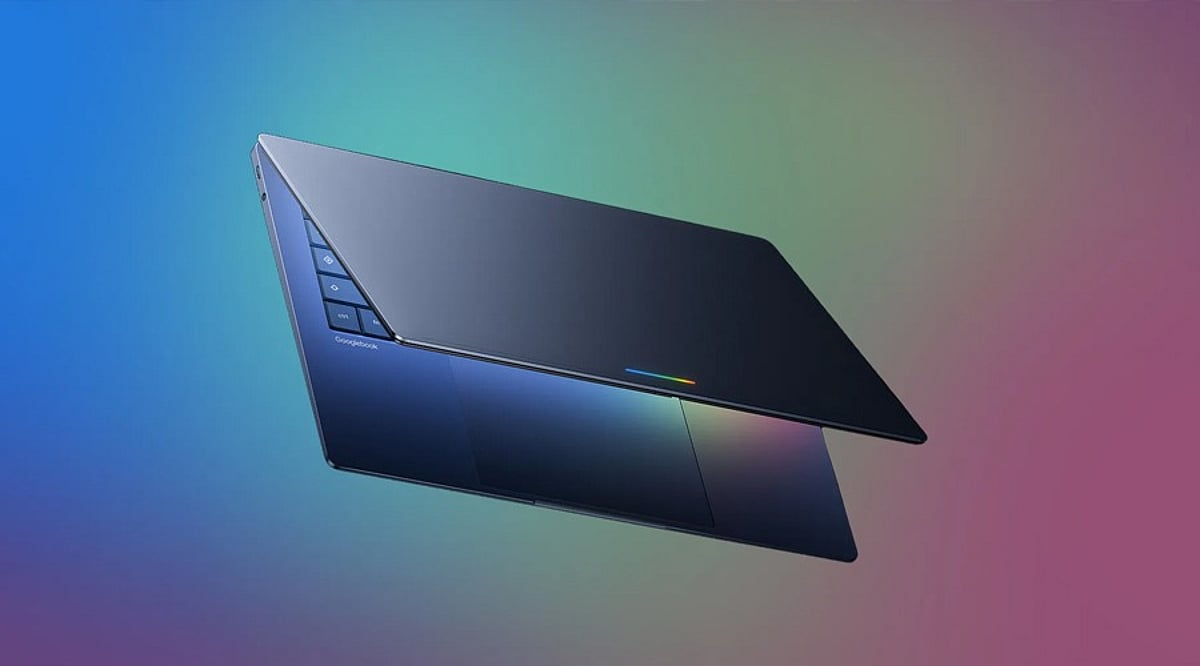
    Google has confirmed that Googlebook pre-orders will open on September 21 at 9 a.m. ET (6:30 p.m. IST), officially launching its new laptop category. The first wave of devices will be produced by Acer, ASUS, Dell, HP, and Lenovo, with Google positioning the lineup as a premium computing experience.

    What we know so far

    • Pre-order start: September 21, 2026, at 9 a.m. ET through Google’s official Googlebook website.
    • Hardware partners: Acer, ASUS, Dell, HP, and Lenovo will supply the initial devices.
    • Unconfirmed details: Pricing, final configurations, shipping dates, and India availability have not been announced.

    Shift from Chromebook to Android

    Googlebook marks a departure from the traditional Chromebook model. Instead of ChromeOS, the new category runs on an Android-based technology stack. The goal is to connect everyday laptop work, AI assistance, and Android phone interactions in a single, seamless experience.

    Magic Pointer brings Gemini to anything on screen

    One of the standout software features is Magic Pointer, which lets users point at on-screen content and ask Gemini for analysis, comparisons, or content creation without switching apps. The feature is designed to make AI assistance feel more natural during routine tasks.

    Create My Widget

    Googlebook also introduces Create My Widget, which builds custom desktop widgets from natural language requests. In a demo, Google showed a travel tracker that combined flight, accommodation, and restaurant details in a single interface, giving Gemini a practical role beyond chatbot-style conversations.

    Android phone integration

    The Android connection goes further with Cast My Apps, which brings Android phone apps to the laptop, and Quick Access, which provides direct access to phone files. Google notes that these capabilities require Android 17 or newer on the connected phone.

    Hardware and design

    While exact launch configurations are unconfirmed, reports point to premium displays and powerful processors across the initial Googlebook lineup. Google is also bringing back the Glowbar, a multicolor light strip above the keyboard first seen on the Chromebook Pixel, now serving as a visual marker for Googlebooks.

    The September 21 opening may reveal more than just availability. Pricing and hardware choices will show whether Google’s Gemini-first strategy can challenge established Windows laptops and premium MacBooks.

  • BitMine’s Ethereum Holdings Approach 5% as Exchange Supply Slumps to 11-Year Low

    BitMine’s Ethereum Holdings Approach 5% as Exchange Supply Slumps to 11-Year Low

    BitMine Expands Ethereum Treasury, Eyes 5% Milestone

    BitMine Immersion Technologies has purchased an additional 27,180 Ether (ETH), worth approximately $68 million, boosting its total Ethereum reserves to 5.96 million ETH. This represents 4.9% of the total circulating supply, inching the company closer to its self-imposed 5% target—dubbed the “Alchemy of 5%.”

    Weekly Accumulation Strategy

    Since launching its crypto strategy on June 30, 2025, BitMine has executed weekly Ethereum buys. The latest transaction was roughly in line with the prior week’s $69 million acquisition. The company now needs only about 144,000 more ETH to cross the 5% threshold.

    BitMine already holds the largest Ethereum treasury of any company globally and ranks second among all corporate crypto treasuries, trailing only Strategy Inc., which holds 845,080 BTC valued at about $71 billion.

    Staking Generates Recurring Revenue

    BitMine’s total crypto portfolio is valued at $15.8 billion, comprising 5.96 million ETH, 212 BTC, and $549 million in cash and securities. The company also holds equity stakes in Beast Industries and Eightco Holdings, valued at roughly $180 million and $98 million, respectively.

    Approximately 85% of BitMine’s ETH (5,067,309 ETH) is currently staked, yielding a seven-day annualized return of 2.62%. That translates to annualized staking revenue of $334 million. Chairman Tom Lee has indicated that if all ETH were staked, revenue could reach $392 million annually. BitMine uses its institutional validation platform, MAVAN, which launched in early 2026.

    This scale makes BitMine a major Ethereum validator, but it also raises concerns about concentration risk, given that the firm aims to control nearly 5% of the total supply.

    Exchange Supply Hits Multi-Year Low

    Ethereum balances on centralized exchanges have fallen to just 14.88 million ETH as of September 8—the lowest level in 11 years, according to CryptoQuant. Since July 2025, over 6.42 million ETH has left exchange wallets. While reduced exchange supply suggests fewer tokens are readily available for sale, it does not guarantee higher prices. Tokens can return from private wallets or staking platforms, and the ultimate price impact depends on whether demand rises in tandem.

    Market participants are closely monitoring spot volumes, ETF flows, whale activity, and price momentum as signals of genuine demand. If buying pressure increases while exchange supply remains constrained, Ethereum could see upward price support. Conversely, weak demand could render the supply drop irrelevant.

  • ITAT Delhi Allows Real Estate Trader to Treat Rs 25.09 Lakh F&O Loss as Business Loss

    ITAT Delhi Allows Real Estate Trader to Treat Rs 25.09 Lakh F&O Loss as Business Loss

    A real estate trader from Mathura has won a partial victory before the Income Tax Appellate Tribunal (ITAT) in Delhi over the treatment of losses from futures and options (F&O) trading.

    The taxpayer, who reported income of Rs 8.64 crore from his real estate trading business, had declared a total stock market trading loss of Rs 34.21 lakh in his income tax return. The Assessing Officer (AO) classified the entire loss as speculative, arguing that the taxpayer’s main business was real estate and not stock market trading.

    F&O losses treated as business loss

    In an order dated July 10, 2026, the ITAT Delhi ruled that Rs 25.09 lakh of the loss from exchange-traded derivatives could be treated as a normal business loss. The remaining Rs 9.11 lakh, which arose from the actual purchase and sale of shares, remained classified as speculative loss.

    The tribunal rejected the AO’s application of the Explanation to Section 73 of the Income Tax Act, which had been invoked based on the Delhi High Court ruling in CIT vs DLF Commercial Developers Ltd. ITAT Delhi observed that the provision applies to businesses involving the purchase and sale of shares of other companies, and does not specifically cover eligible exchange-traded F&O transactions.

    Referring to Section 43(5)(d), the tribunal noted that eligible derivative transactions carried out on a recognised stock exchange are excluded from the definition of speculative transactions. It also relied on the Bombay High Court ruling in Souvenir Developers (India) Pvt. Ltd. vs Union of India, which had examined the DLF Commercial Developers decision.

    Expense disallowance reduced

    The AO had also disallowed Rs 10 lakh from the taxpayer’s business expenses, estimating that the amount related to share trading activity. ITAT Delhi found no calculation, evidence, or clear basis for the Rs 10 lakh figure and reduced the disallowance to Rs 1 lakh.

    Consequently, the total disallowance linked to share and derivative transactions fell from Rs 44.21 lakh to Rs 10.11 lakh. This comprised Rs 9.11 lakh of speculative share-trading loss and Rs 1 lakh of related expenditure. The tribunal deleted the remaining addition of Rs 34.09 lakh.

    Section 14A disallowance deleted

    The tribunal also struck down a separate disallowance of Rs 9,910 made under Section 14A read with Rule 8D, as the taxpayer had not earned any exempt dividend income during the relevant financial year. Relying on rulings such as Cheminvest Ltd. vs CIT, CIT vs Holcim India Pvt. Ltd. and South Indian Bank Ltd. vs CIT, ITAT Delhi held that Section 14A cannot be applied when no exempt income exists.

    The appeal was partly allowed. The tribunal upheld only the actual share-trading loss of Rs 9.11 lakh as speculative and Rs 1 lakh of related expenses. Chartered Accountant Suresh Surana noted that the case highlighted the distinction between direct share transactions and exchange-traded derivatives under the Income Tax Act.

  • US Justice Department Files $61M Crypto Forfeiture Case Over Iranian Oil Sales

    US Justice Department Files $61M Crypto Forfeiture Case Over Iranian Oil Sales

    The US Justice Department has initiated a civil forfeiture action targeting more than $61 million in cryptocurrency allegedly connected to Iran’s black-market oil operations. Prosecutors assert that the proceeds were funneled through digital assets to finance Iran’s military and support terrorist activities.

    DOJ Targets Crypto Tied to Sanctioned Oil Network

    According to the complaint, Iran leveraged sanctioned crude oil sales to generate revenue outside conventional banking channels. Authorities allege a broader cryptocurrency network facilitated the movement of proceeds from these transactions. The Justice Department claims that crypto actors in China and other jurisdictions laundered over $1.5 billion from illicit Iranian oil sales, channeling funds toward Iran, its agents, and proxies.

    FBI officials stated the investigation traced money flows linked to sanctions evasion and suspected terrorist financing. This filing adds to a series of recent US legal actions against Iran-related financial networks.

    Binance Accounts Central to Laundering Allegations

    Prosecutors identified two Chinese companies—Blessed Trust and Hexa Whale—in the complaint, alleging both used Binance trading accounts to process proceeds from black-market Iranian oil sales. Blessed Trust is described as a wealth management or virtual asset custodian entity that also handled transfers and provided fiat-to-crypto on-ramp services. Hexa Whale allegedly offered similar services and collaborated with Blessed Trust and related entities. Authorities further claim both companies sent or received tens of millions of dollars through the US financial system.

    Binance responded, stating it does not tolerate sanctions violations or illicit activity. The exchange said it investigates risks, restricts or freezes accounts when appropriate, removes users, and reports cases to authorities.

    Tether Tokens to Be Replaced in Forfeiture Process

    The complaint notes that Tether Ltd will burn tokens held in the targeted addresses and issue replacement tokens of equal value for transfer into US government custody. The filing also indicates Blessed Trust and Hexa Whale served clients in China’s petroleum and petroleum-products sector. CNBC reported it could not reach either company for comment, while Tether had not responded.

    Washington sanctioned a Chinese independent refinery in April and warned financial institutions about dealings with Chinese refineries processing Iranian oil. Reuters later reported that Iran used barter-like arrangements to buy billions of dollars in goods from China. China ranked among the largest buyers of Iranian oil in 2025, taking more than 80% of Iran’s shipped oil, averaging about 1.4 million barrels per day.

    Conclusion

    The Justice Department’s $61 million forfeiture case centers on alleged crypto flows tied to sanctioned Iranian oil sales. Prosecutors say Blessed Trust and Hexa Whale used Binance accounts and the US financial system, while Tether’s token replacement process would place the targeted value under US government custody.

  • KULR Technology Group Exits Bitcoin Holdings, Sells 764 BTC for $58.6 Million

    KULR Technology Group Exits Bitcoin Holdings, Sells 764 BTC for $58.6 Million

    US-listed KULR Technology Group has fully exited its Bitcoin position, selling its remaining 764 Bitcoin between August 20 and September 11 for gross proceeds of approximately $58.6 million. The weighted average sale price was about $76,633 per Bitcoin, according to a regulatory filing.

    KULR Cuts Bitcoin Holdings to Zero

    As of September 11, KULR held no Bitcoin after completing open-market sales to unrelated buyers. The company described the transactions as part of its treasury management activities. The filing did not disclose the cost basis for the coins sold or indicate whether the final disposal resulted in a realized gain or loss. However, the average sale price was below KULR’s reported average acquisition cost of about $100,579 per Bitcoin at the end of the second quarter.

    KULR first purchased Bitcoin in December 2024 and steadily increased its holdings. By August 2026, management had begun reversing that strategy as financial priorities shifted.

    Company Ends Mining and Repays Coinbase Loans

    The Bitcoin sale followed other steps that reduced KULR’s cryptocurrency exposure. The company ended its Bitcoin mining operation after the second quarter and repaid its Coinbase loans in full.

    Chief Executive Michael Kimmel said the measures aimed to limit stock dilution while reducing balance-sheet volatility. KULR also introduced a policy designed to improve financial visibility. Management redirected funds and operational resources toward growth in the company’s core energy business.

    The September 11 Bitcoin sale completed the treasury side of that shift, removing KULR’s remaining direct exposure to Bitcoin price changes. Previously, movements in Bitcoin could increase or reduce the value of assets on its balance sheet.

    USD 58.6 Million Sale Adds Liquidity

    The Bitcoin disposal generated approximately $58.6 million in gross proceeds and increased KULR’s available liquidity. The filing did not explain how the company plans to use that cash, leaving investors without details on whether the proceeds will go toward operations, debt reduction, acquisitions, or other balance-sheet priorities.

    KULR has not ruled out future Bitcoin purchases. The filing records the sale of its remaining holdings but does not prevent the company from rebuilding a position later.

  • Indian Stocks Plunge: Sensex Drops 778 Points, Nifty Hits 5-Month Low on Crude Surge

    Indian Stocks Plunge: Sensex Drops 778 Points, Nifty Hits 5-Month Low on Crude Surge

    Indian stock markets ended sharply lower on Tuesday, with the BSE Sensex falling 777.94 points (1.04%) to close at 74,003.82, while the NSE Nifty dropped 279.50 points (1.19%) to 23,118.60—its lowest close since April 6. The selloff was driven by surging crude oil prices, elevated global bond yields, rate hike fears, and weak global market sentiment.

    Markets had opened higher, with the Nifty trading near 23,495 and the Sensex above 75,100, but selling pressure intensified later in the session. The Sensex settled at a three-month low.

    Oil Prices and Rate Hike Fears Weigh on Sentiment

    Brent crude traded above USD 107 per barrel during the session, while WTI crude remained above USD 102. India, a major crude importer, remains highly sensitive to energy price spikes. Higher oil prices raise import costs, fuel inflation, and put pressure on the rupee, which weakened against the U.S. dollar.

    Vinod Nair, Head of Research at Geojit Investments Limited, said, “Domestic markets remained under pressure, extending their recent correction as elevated crude oil prices and rising global bond yields weighed on sentiment.” He added that expectations of tighter monetary policy also kept investors cautious, with U.S. Treasury yields near multi-year highs.

    Bharat Electronics Leads Losses; IT Stocks Buck Trend

    Bharat Electronics was the biggest loser among Sensex stocks, falling about 6%. Other laggards included InterGlobe Aviation, Titan, Bajaj Finserv, Adani Ports, Mahindra & Mahindra, and State Bank of India. Selling spread across banking, auto, energy, and metal sectors.

    However, information technology stocks rallied. HCL Technologies rose 3.98%, Infosys gained 3.64%, Tech Mahindra advanced 2.31%, and Tata Consultancy Services climbed 2.18%. According to Nair, IT stocks benefited from recent comments suggesting slower development of advanced AI, easing concerns about disruption to traditional tech services.

    Global Markets Add Pressure

    Asian markets ended lower: South Korea’s Kospi, Japan’s Nikkei 225, China’s Shanghai Composite, and Hong Kong’s Hang Seng all closed in negative territory. European markets traded lower, while U.S. stocks ended Monday with losses.

    Hariselvan Radhakrishnan, Founder and CEO of HST Wealth, commented, “Indian equities suffered a sharp reversal on Tuesday, surrendering their opening gains as Brent crude hovered near USD 107.40 a barrel, US bond yields remained elevated and investors adopted a cautious stance ahead of the Federal Reserve’s policy decision.”

    Foreign institutional investors sold shares worth Rs 930.90 crore on Friday, according to exchange data. The Indian equity market was closed Monday for Ganesh Chaturthi.

    Going forward, investors will track crude oil prices, the Federal Reserve’s policy decision, global bond yields, foreign fund flows, and geopolitical developments for market direction.

  • Filecoin (FIL) Jumps 22% as Trading Volume Pushes Price Toward $1

    Filecoin (FIL) Jumps 22% as Trading Volume Pushes Price Toward $1

    Filecoin’s native token FIL has surged more than 22% in the past day, climbing from the mid-$0.80 range to roughly $1.00. The sharp move was fueled by a massive spike in spot trading volume, which surpassed $500 million and jumped more than 1,000% compared with recent activity. Derivatives data also shows rising funding rates and elevated short liquidations, adding extra buying pressure during the rally.

    What Is Driving the Filecoin Rally?

    The latest price action did not follow a single major announcement. Instead, the move was driven by a combination of higher spot liquidity, forced buybacks from short sellers, and momentum-based trading. As FIL moved higher, traders with short positions were liquidated, creating additional demand and accelerating the climb.

    With the token now testing the psychologically important $1.00 level, the key question is whether buyers can hold the line or whether the market needs to cool off after such a rapid advance.

    Solstice Proposal and Network Developments in Focus

    The Filecoin team continues to work on long-term network improvements. The Solstice proposal, published on July 17, 2026, aims to remove bottlenecks in Filecoin Plus datacap approvals for storage providers. The governance plan is designed to improve storage efficiency and make it easier for providers to participate in the network.

    Filecoin is also expanding its role in decentralized storage as AI applications generate larger datasets and demand more reliable storage capacity. Activity around the Filecoin Virtual Machine is broadening the network’s use cases beyond simple file storage.

    Another key event on the horizon is the scheduled end of Filecoin’s vesting program on October 15, 2026. Market expectations point to a 75% reduction in FIL token emissions after that date, a supply-side change that could support the token’s longer-term outlook even as short-term trading stays volatile.

    FIL Price Levels and Technical Signals

    FIL traded near $0.9949, sitting just below the $1.00 resistance level. A sustained breakout above that area could open the path toward $1.05 and $1.10. However, the Relative Strength Index (RSI) has reached 76.31, placing the market in overbought territory. The chart also shows bearish divergence, with momentum weakening even as price moved higher.

    If buyers lose control of $1.00, immediate support is expected near $0.95 and $0.90. Earlier technical analysis pointed to Ichimoku Kijun resistance near $0.96385, with FIL trading below its MA-20 and MA-50 on the hourly chart. The MA-200 remained intact as longer-term support, while MACD and ADX indicators suggested bearish momentum at the time.

    Before the latest surge, intraday oscillators including RSI, Stoch RSI, and CCI showed oversold conditions. Bull/Bear Power and the Awesome Oscillator reflected seller dominance, and the previous outlook projected a range of approximately $0.8289 to $0.9483 over two to three sessions, with a 60% probability of a support break and 40% probability of an upside move.

    Outlook

    Filecoin’s 22% rally has brought FIL to a critical decision point. Spot volume, short liquidations, and momentum buying powered the move, but overbought conditions and bearish divergence raise caution flags. Near-term volatility is likely to remain elevated as traders watch the $1.00 level, while Solstice developments and the expected reduction in token emissions continue to shape the longer-term narrative.

  • Wednesday Season 3: Summer 2027 Release, Cast Updates, and Aunt Ophelia Mystery

    Wednesday Season 3: Summer 2027 Release, Cast Updates, and Aunt Ophelia Mystery

    Netflix’s Wednesday remains one of the streaming platform’s most popular shows, blending mystery, dark comedy, and the supernatural. The series follows Wednesday Addams (Jenna Ortega) as she navigates life at Nevermore Academy, a school for students with unusual powers. Now, details for Season 3 are emerging, including a possible release window, plot developments, and new cast members.

    Release Date

    Netflix has not officially announced the release date for Wednesday Season 3, but reports indicate it may arrive in summer 2027. The upcoming season will stream exclusively on Netflix, following the success of the first two chapters.

    Plot

    Season 3 is expected to delve into the mystery surrounding Aunt Ophelia, whose disappearance becomes central to the storyline. The season will also focus more on Enid Sinclair (Emma Myers), whose friendship with Wednesday has become a key element of the series. Tyler Galpin (Hunter Doohan) may return, though his involvement is not yet fully confirmed.

    Co-creator Alfred Gough stated, “Our goal for season 3 is the same as it is for every season: to make it the best season of Wednesday we possibly can.”

    Cast

    Jenna Ortega will reprise her role as Wednesday Addams. Catherine Zeta-Jones returns as Morticia Addams, and Luis Guzmán is expected to return as Gomez Addams. New additions include Lena Headey, Andrew McCarthy, James Lance, Winona Ryder, Chris Sarandon, Noah Taylor, Oscar Morgan, and Kennedy Moyer. Eva Green has joined the cast as Aunt Ophelia.

  • Samsung Galaxy S27 Ultra Leaks Hint at ₹1,49,990 Price, Horizontal Camera and 200MP Sensor

    Samsung Galaxy S27 Ultra Leaks Hint at ₹1,49,990 Price, Horizontal Camera and 200MP Sensor

    Fresh leaks surrounding the Samsung Galaxy S27 Ultra suggest an early 2027 launch in India, with a rumored starting price of ₹1,49,990. While Samsung has not confirmed the device or its specifications, CAD renders and insider reports point to one of the most significant design changes in the Ultra series in years.

    The most notable visual shift could be a horizontal camera module, replacing the familiar separate camera rings seen on recent Ultra models. Leaked renders show three cameras aligned inside a single wide island, resulting in a cleaner, more streamlined rear panel.

    Camera specifications are expected to remain impressive: a 200MP primary sensor with optical image stabilization, a 50MP ultrawide lens, and a 50MP 5x telephoto camera. Notably, Samsung may drop the dedicated 3x telephoto sensor, leaning more heavily on computational photography to cover the mid-range zoom gap.

    Under the hood, the Galaxy S27 Ultra is rumored to pack a 6.9-inch Dynamic LTPO AMOLED 2X display with a 120Hz adaptive refresh rate and a peak brightness of 3,000 nits. Processing duties should fall to Qualcomm’s Snapdragon 8 Elite Gen 6 Pro chip, though an Exynos variant remains possible for certain markets.

    Battery capacity could see a significant boost to 5,700mAh, with charging speeds potentially reaching 65W — up from earlier expectations of 45W. The larger battery would likely become one of the device’s standout features, alongside brighter display technology and improved power efficiency.

    Higher storage variants may cost considerably more than the base model. All details remain preliminary until Samsung officially unveils the phone, expected around February 2027.